You are currently browsing the category archive for the 'Expedition' category.
A technical account of Anglo-Scottish Greenland Expedition is featured in 2009 American Alpine Journal: The World’s Most Significant Climbs.
ISBN: 978-1-933056-09-8

Knud Rasmussens Land, 2006 ascents. In August 2006 Jennifer Escott, Jonathan Hunter, Nick Mills, and I visited Knud Rasmussens Land, landing on the icecap at N 69°38.9′, W 27°44.0′.
This spot was the base camp for an out-going expedition from the Brathay Exploration Group, and we took over some of their vital pieces of kit, such as satellite phone and shotgun.
We planned to divide the expedition into three phases of roughly a week each: one on the icecap, exploring an impressive massif near the drop-off; one pulk-pulling across the icecap; and the third attempting unclimbed peaks around the glacier to the south, down from the icecap. Peaks on the icecap (nunataks) generally rise only a few hundred meters above the ice. Peaks on the lower glacier, although of similar altitude, generally involve climbs of much greater length and commitment, with exposed ridges of snow and friable basalt. From the air these peaks appeared quite challenging.

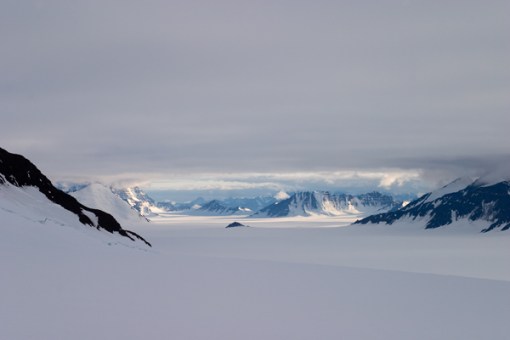
Moving south down White Bird Glacier in Knud Rasmussens Land, with Big White Pyramid on the left. The high peak in the distance is Ejnar Mikkelsens Fjeld (3,308m), one of the most impressive on the east coast.
After establishing base camp east of our drop-off point, we ascended three peaks: Lunar Peak (N 69°34.2′, W 27°11.7′, 2,230m), Sunrise Peak (N 69°35.2′, W 27°12.2′, 2,270m), and Bowhead Peak (N 69°33.6′, W 27°29.4′, 2,065m). During our second week we broke the monotony of hauling pulks south along the icecap by tackling unclimbed summits that lay along our route. We first climbed the Four Sisters: Saamik (N 69°23.0′, W 27°35.6′, 2,130m), Seqineq (N 69°24.5′, W 27°34.8′, 2,100m), Sikkersoq (N 69°24.0′, W 27°33.9′, 2,090m), and Sissinnguaq (N 69°24.4′, W 27°33.9′, 2,030m). All were straightforward ascents. As with most other summits we climbed, coordinates and altitude were surveyed by GPS.
Next we climbed the Devil’s Fingers: Promontory Peak (N 69°27.7′, W 27°42.9′, 2,360m), Windslab Peak (N 69°26.7′, W 27°46.8′, 2,310m), and Lion’s Head Peak (N 69°26.2′, W 27°45.1′, 2,340m). We then continued our journey, arriving at the foot of an isolated snow peak, the last on our route before the edge of the ice cap. It provided another straightforward ascent, of Dreamer’s Peak (N 69°26.0′, W 27°45.1′, 2,280m). A day and a half of pulking then brought us to the edge of the icecap.

British Camp 8 at the southern end of the White Bird Glacier. The route up An Stuc (ca 2,190m) is marked. The large snowy peak to the right is the Big White Pyramid (ca 2,250–2,500m), attempted to 100m of the summit by Engel and Spencer (see AAJ 2007).
Our final phase consisted of a week at Camp 8 (N 69°007′, W 28°025′) at the southern end of White Bird Glacier. We were here from August 20 till our pickup on the 28th. This camp was located 10.5km south of the base camp used by Bob Dawson’s British expedition in 2003 (AAJ 2004, p. 253). Our first new summit was Heart Peak (N 69°09.4′, W 28°32.2′, 2,570m; estimated values, not from GPS). It was named after an unusual heart-shaped lake that had formed in the middle of the large glacier separating the Watkins Mountains and the west Knud Rasmussens Range. It lay adjacent to the start of the south ridge, a moderate rock climb up a pinnacled crest, which we used for our ascent. We followed this with ascents of Peak Hubris (N 69°06.2′, W 28°18.5′, 2,225m), Peak Aurora (N 69°06.4′, W 28°17.5′, 2,230m, not from GPS), and the Castle (N 69°06.6′, W 28°17.5′, 2,245m, not from GPS; Scottish 3 traversing below pinnacles). Our last climb was An Stuc (N 69°06.1′, W 28°24.4′, 2,190m, not from GPS; Scottish 2 with the summit pinnacle a British Difficult rock climb). We summited 16 new peaks and travelled 100km of untouched territory. The weather was generally good, with temperatures between 5 and 10°C during mid-day, dropping to as low as –20°C at night.
QUINTINLAKE, U.K.
View Expedition report here Download PDF of feature here
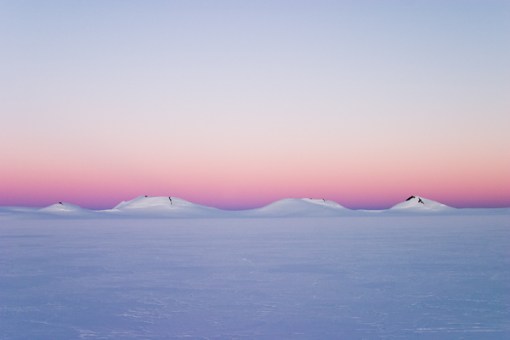
Gallery of arctic landscape photographs from the expedition here

Most SLRs cope remarkably well with freezing temperatures. I’ve had no problem using Canon EOS SLR cameras below zero for weeks on end, often down to -20°C and in extreme down to -30°C. This article is for those trying to keep such a camera going under expedition conditions, such as an icecap crossing or mountaineering expedition in the arctic: ie no power sockets, adverse weather, sleeping in tents on the ice and for a period of weeks. However much of the advice also applies to using a camera in cold conditions generally.
The two main technical problems to overcome are :
1. Condensation
Condensation forms when moving from a cold to a warmer environment, you don’t need to worry about damage to your camera moving from a warmer to a colder environment. Even in arctic conditions the temperature inside a tent is often well above zero yet well below zero in the shade. this means there is often a temperature gradient when bringing a camera into a tent which leads to condensation forming. Condensation on the front element or view finder is an inconvenience, but condensation on the electronics can give permanent malfunction, and condensation in the inside glass elements can write off the camera off for hours or days till the lens totally dries out.
2. Reduced Battery efficiency
Batteries are many times less efficient in cold weather due to the reduced speed of the chemical reaction that powers them.

Tips for Reducing Condensation
1. Place camera in plastic bag
The camera should be placed inside a polypropylene freezer bag, loosely knotted or twisted and then placed back inside the camera bag. You don’t want to put a waterproof bag around the entire camera bag as any moisture in the camera bag would then condense on the camera body. Ziploc bags, and Ortlieb style dry bags may sound better but often don’t fit neatly inside the camera bag and are much heavier and more expensive. The freezer bag also has the major advantage that you can stuff it below your camera in the bag when not in use, but you need to take spares for when it gets damaged.
2. Use camera bag insulation
The padding on most camera bags (especially the holster style common on expeditions) offers some insulation value which can reduce the dramatic temperature change, when moving from environments of different temperatures.
3. Try and warm up slowly
If there are environments of differing temperatures try and make the warm up process for the camera as gradual as possible.
4. Avoid breathing on the lens
Obvious maybe, but If you need to clean the lens just use a camera cloth to avoid ice forming.

Tips for dealing with Reduced Battery Efficiency
1. Carry multiple batteries
As a rough guide plan to take 2/3 times the number of batteries you’d need for equivalent shooting in temperate climates. My personal strategy if to take multiple batteries for an extended trip in the wilderness rather than deal with the uncertainties of solar chargers. This makes planning easy as one can ration a battery to last a given amount of time.
2. Warm batteries by keeping close to skin
Carry your spare close to your skin so your body can warm then. An apparently dead battery can be given more life by warming in this way so on very cold days you may find yourself rotating batteries in this way.
3. Adjust shooting style to conserve power
Accept you will get less out of your batteries so adjust you shooting style to conserve power. The biggest thing you can do is turn off after shot preview and reduce to a minimum previewing your images later. Addition power saving tips to get the most out of your battery are to turn off image stabilisation, don’t use flash and minimise half-press pre-focus.
View Light & Ice: East Greenland photographs here
Text & Photography © Quintin Lake, 2009
[Competition Category: Creative Visions of Nature]
Buy Print/License this image here

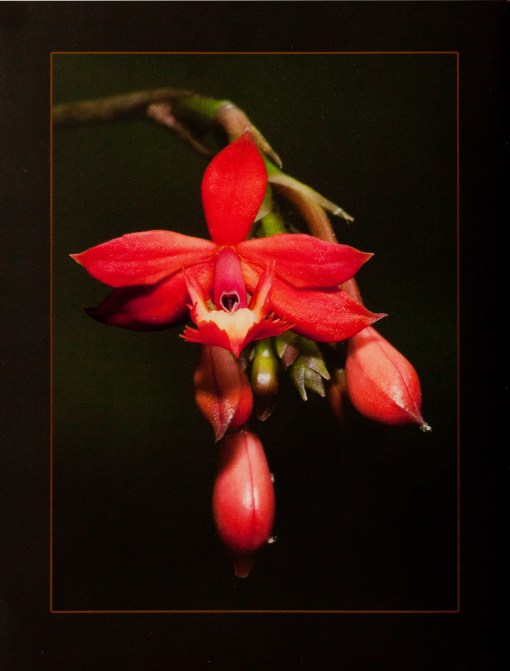
Peruvian Orchid (Lepanthes sp. Orchid near the Interoceanic highway in Peru) Giclee Print, 50×33cm, Edition of 25 + 1 A/P
[Competition Category: Creative Visions of Nature]
Buy Print/License this image here

Pripyat 21 Years after Chernobyl (Hotel Polissia Terrace) Giclee Print, 50×33cm, Edition of 25 + 1 A/P
[Competition Category: Urban and Garden Wildlife]
Buy Print/License this image here
Photography © Quintin Lake, 2009

For the second year running I’m delighted to be a panellist on the expedition photography panel at this years “Explore – expedition & fieldwork planning weekend” at the Royal Geographical Society which is always the most exciting event of the year for me.
The event runs 22nd & 23rd November, 2008 and the photography workshop is on Sunday afternoon.
Tom Ang, Who chaired the panel asked us to come up with our personal three golden rules. These are mine aimed at the novice expedition photographer:
1. Make sure your camera is accessible
Its no good if your camera is hidden inside your rucksack, canoe or vehicle. Be prepared that some of the best shots may be when you are most scared or in the worst weather.
2. Don’t get too hung up on kit
Its where you go, how you interact with people, your patience and how you use your camera that makes a good picture. However do backup your digital files and physically protect your camera from dust, moisture and impact.
3. Edit in camera and thematically
With digital its easy to return with too many pictures so edit in camera..before you press the shutter release.
Post-expedition the editing process can tell many stories, choosing themes can help make your editing more distinctive.

Download the full expedition report as a PDF here
A printed copy of the report is also available to view at: The Royal Geographical Society, The British Mountaineering council, Tangent Expeditions, The Mountaineering Council of Scotland, The Alpine Club, The Mount Everest Foundation, Arctic Club, Scottish Arctic Club, and the Danish Polar Centre

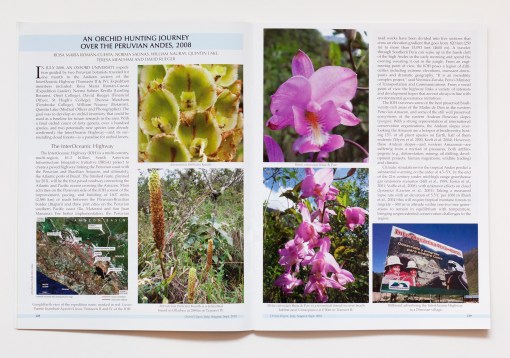
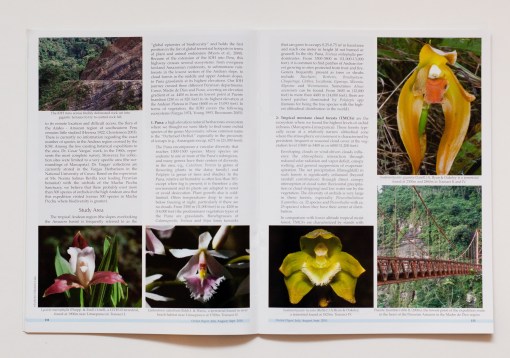
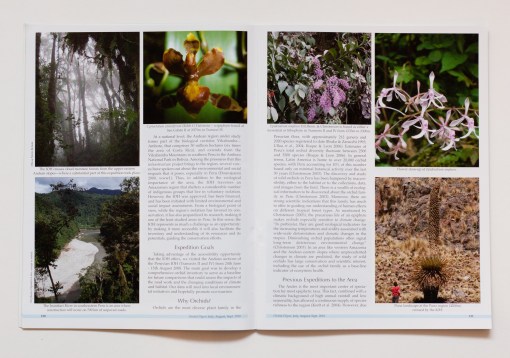
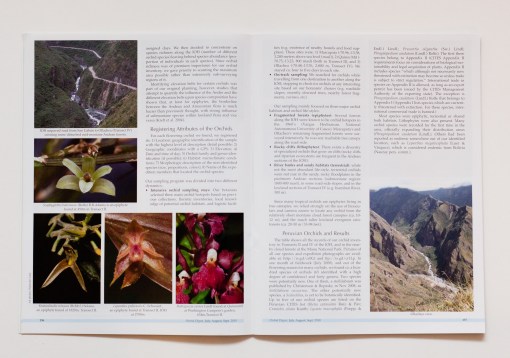
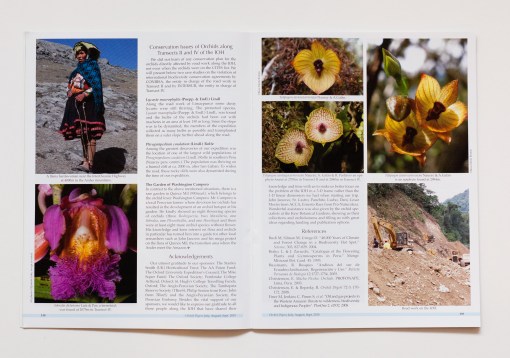
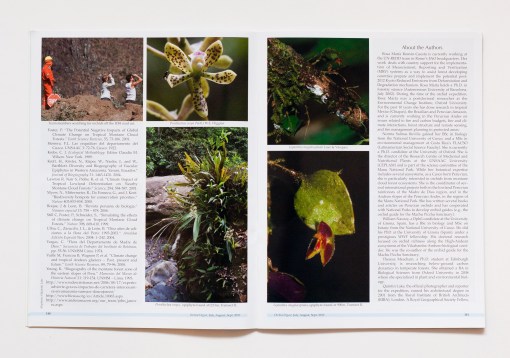
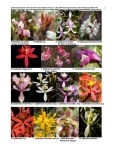
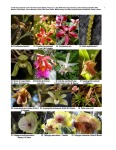
An orchid, Telipogon peruvianus, found near the Interoceanic Highway in the Peruvian Andes
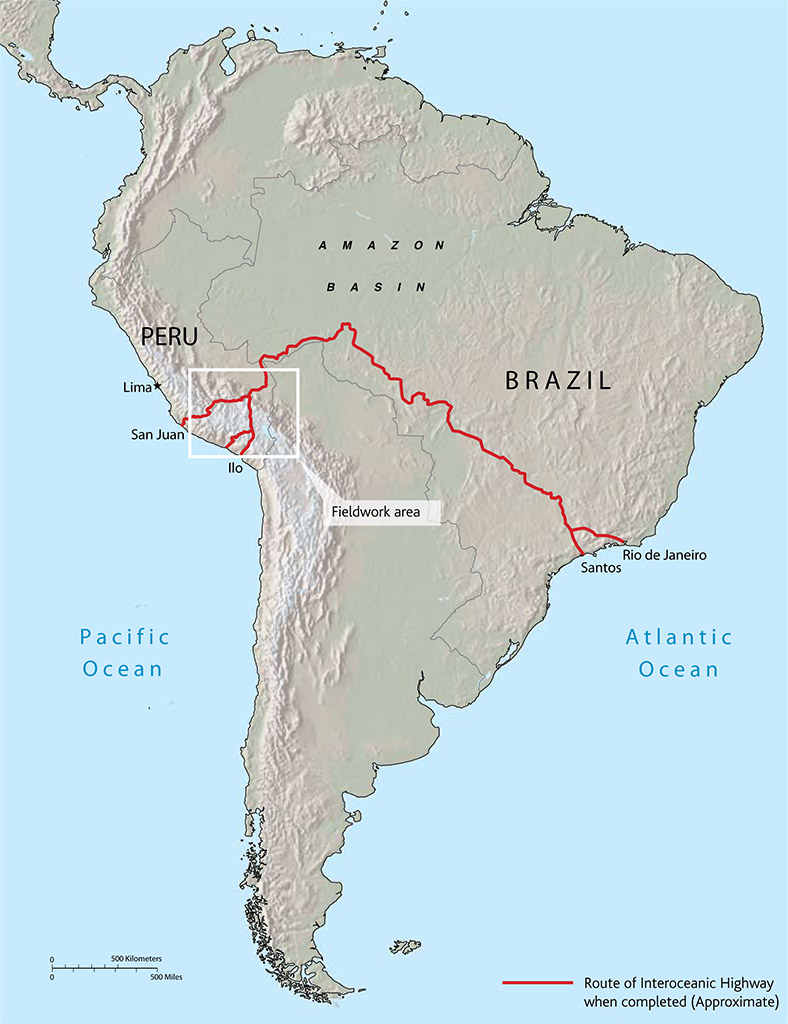
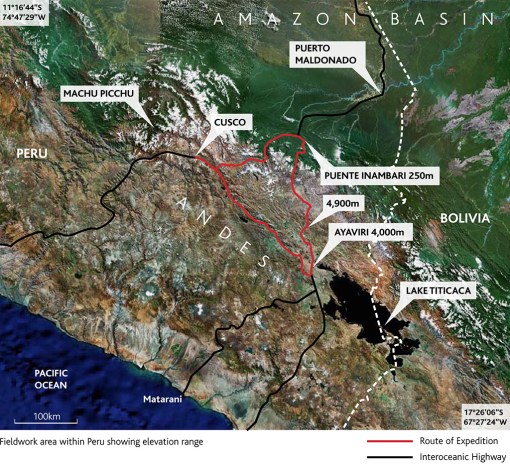
The Interoceanic highway crosses the Amazon Basin and Peruvian Andes linking the Pacific and Atlantic coasts of South America.
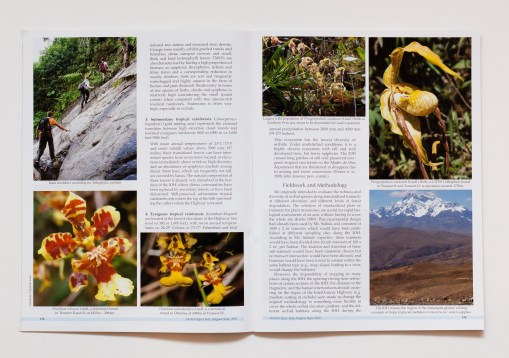
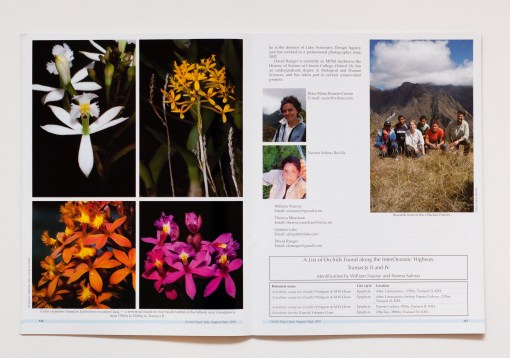
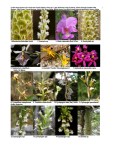
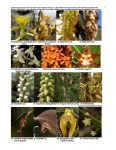
British photographer Quintin Lake joined an Oxford University Expedition which included Peruvian botanists to locate and identify orchids along two sections of the Interoceanic highway. The exhibition features a selection of the 98 orchid species recorded in flower, the construction of the highway and the lives of those for whom the road is their porch.
orchidexpedition.com
A full gallery of photographs documenting the Interoceanic Highway can be seen here, the Interoceanic orchids here, the Interoceanic flora here and the Peruvian Orchid Expedition here.
Exhibition at Canning House
Orquídeas Interoceánicas Photographs By Quintin Lake
Private View 12 November 2008 6.00PM
Exhibition 13- 21 November 2008
2 Belgrave Square,
London SW1X 8PJ
The event on Canning House’s website
canninghouse.com
Limited Edition Prints
A limited edition of 12 hand printed 41×41cm (16″x16″) Framed and mounted Fuji Crystal Archive prints of the orchids are available for sale here


Suggested interpretation. Note that the reconstruction has been done with reference to Images of Power and other seminal works but remains tentative – above all the top left figure.
Lesotho Rock Art Survey 2000 is a Royal Geographical Society Sponsored expedition which discovered 10 previously unrecorded rock art sites in the remote Lesobeng Valley in Lesotho.
Ha Mokati is one of these sites and was featured in the Sunday Times Magazine April 15, 2001 under the heading “Eyeopener: Vanishing Dreams”.
Photography & Illustration © Quintin Lake, 2000

Download the full expedition report as a PDF here
A printed copy of the report is also available to view at: the Department of Archaeology, University of the Witwatersrand, Johannesburg, South Africa, the Cambridge University Expedition Society and the Royal Geographical Society
Text & Photography © Quintin Lake, 2000

High Cup Nick, North Pennines Day: 49 km: 949
Mid-point of Pennine way. By this point my body was adapting and things started getting easier.

Border of Scotland, Cheviot Hills, Pennine Way Day 54 km:1098
Bizarre sign on the border between Scotland & England. Gruelling final section of the pennine way, it really does feel like one is entering a different land

Glen Tilt, Borders Day 64 km: 1382
One of the things which surprised me was the difficulty of navigation when one has to proceed everyday no matter the weather. At one point continuous rain tapping on the waterproof’s hood and then on the bivi bag for 4 days.

The Lairig Ghru , Caingorn Mountains Day 72 km: 1459
838 m high – higher than many British mountain summits

Day 81: The End
Interestingly by the end of 3 months I was physically so used to the lifestyle I could have turned around and done it again. Nothing hurt any more and I felt fresh every morning.
After 81 days I arrived at the northern most point of Britain. Mentally I was so prepared for an anti climax looking out over towards Orkney, but in fact it was a quiet happiness I felt, of slowly getting to know this mysterious island.
I end with this image which reminds me of the simple pleasure of filling up a flask of delicious peaty water from a Scottish burn.
Photography © Quintin Lake, 1998