Archives for the month of: June, 2010

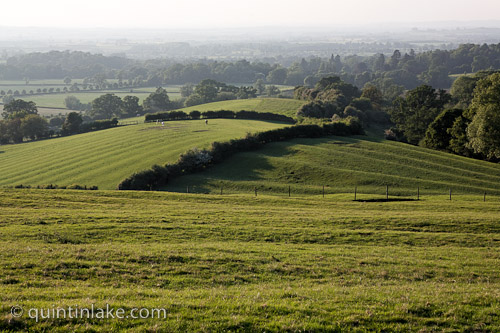
Fields of pronounced Ridge and furrow patterns, Lower Coscombe Wood Stanway, Gloucestershire, England

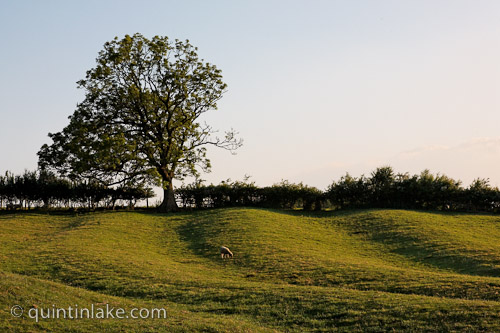
A sheep in a field showing Ridge and furrow pattern, Lower Coscombe Wood Stanway, Gloucestershire, England

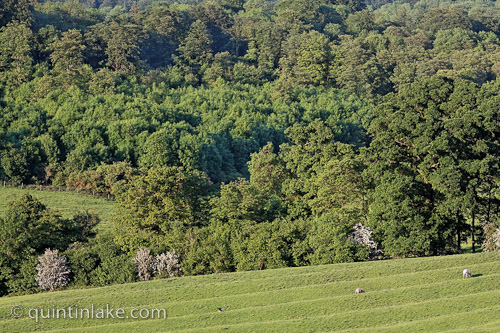
A field of pronounced Ridge and furrow pattern contrasts with a wood, Lower Coscombe Wood Stanway, Gloucestershire, England

VIEW MORE IMAGES / BUY PRINTS / LICENCE photographs of Ridge and Furrow archaeological field pattern here

Photography © Quintin Lake, 2010

Golf carts, Lonely horse, Walled hall, Collabsed barn, Bee swarm, Fibre factory, Empty factory, Toilet for sale, Busy tea rooms, Verdant meadow, Gas pipe line, Ruined abbey, Steam train whistling, Sapling alley, Floating house, Ridge & Furrow, Coffin in wall

Honey Bee Swarm starting to leave for a new location in a field near Postlip, Gloucestershire

Early growth crop of corn (maize). Field near Postlip, Gloucestershire

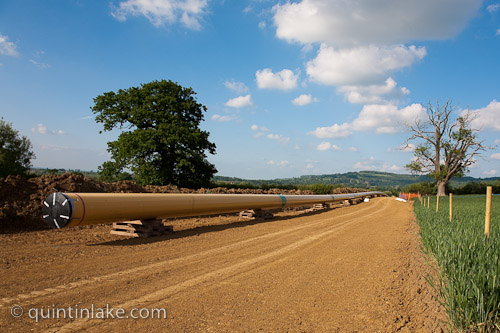
Wormington to Sapperton high pressure Gas Pipeline in the Cotswolds waiting to be buried in a field near Hailes, Gloucestershire, England

Row of Saplings forming an avenue with Stanway House Fountain at Coscombe corner on the Cotswold Way

A field of pronounced Ridge and furrow pattern contrasts with a wood, Lower Coscombe Wood Stanway, Gloucestershire, England

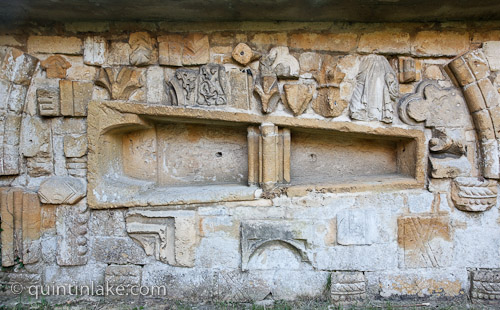
Churchyard Wall, North Side of Churchyard, Church of St Peter, Stanway, reused stone from church including stone coffin

Churchyard Wall, North Side of Churchyard, Church of St Peter, Stanway, reused stone from church including stone coffin

< Back to Day 8: Seven Springs to Cleeve hill

On to Day 10:  Stanway to Chipping Campden >

VIEW MORE IMAGES / BUY PRINTS / LICENCE photographs of the Cotswold Way here

Photography © Quintin Lake, 2010

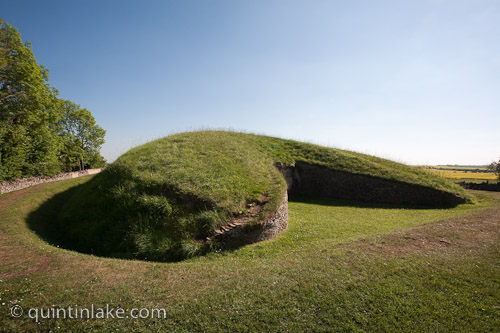
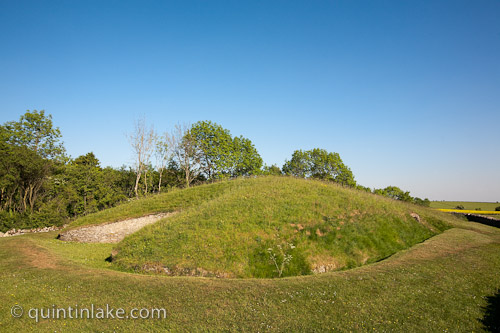
Belas Knap neolithic long barrow, Northern False Portal

Belas Knap is a neolithic long barrow, situated on Cleeve Hill, near Cheltenham and Winchcombe, in Gloucestershire, England. It is in the care of English Heritage. “Belas” is possibly derived from the Latin word bellus, ‘beautiful’, which could describe the hill or its view. “Knap” is derived from the Old English for the top, crest, or summit of a hill.
Belas Knap neolithic burial mound , Northern False Portal at left with Western Chamber just visible at right

What appears to be the main entrance to the barrow, with intricate dry-stone walling and large limestone jambs and lintels is, in fact, a false one. The actual burial chambers are down the long East and West sides of the barrow and at its Southern foot. There are four burial chambers, two on opposite sides near the middle, one at the South-East angle and one at the South end. These are formed of upright stone slabs, linked by dry-stone walling and originally had corbelled roofs.
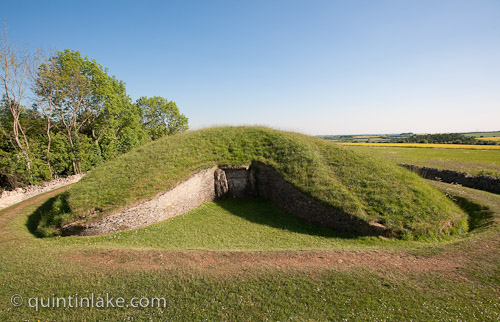
Belas Knap neolithic long barrow, Northern False Portal from 4m high vantage

This northern end measures about 26 metres wide and the barrow then tapers towards the south where it measures 17 metres in width and less than a metre in height. The whole of this trapezoid mound is around 70 metres in length.

VIEW MORE IMAGES/ BUY PRINTS / LICENCE photographs of Belas Knap here

Text from wikipedia article
Photography © Quintin Lake, 2010