Archives For author

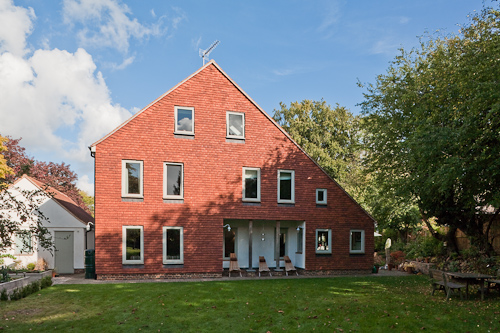
Two architectural photography assignments for Oriel Prizeman Architect in Cambridge, England, that show great understanding of places to be lived in, light, natural materials and functional quality of finishes.

Latham Road

House extension to a period house, swimming pool and ancillary buildings.

View the entire photoshoot here

Latham Road Residence: Architect, Oriel Prizeman

Latham Road Residence: Architect, Oriel Prizeman

Latham Road Residence: Architect, Oriel Prizeman

Latham Road Residence: Architect, Oriel Prizeman

Latham Road Residence: Architect, Oriel Prizeman

Newton Road

American colonial Saltbox inspired family house.

View the entire photoshoot here

Newton Road House, Oriel Prizeman Architect

Newton Road House, Oriel Prizeman Architect

Newton Road House, Oriel Prizeman Architect

Newton Road House, Oriel Prizeman Architect

Newton Road House, Oriel Prizeman Architect

Photography © Quintin Lake, 2009

Concert hall, Pripyat

Concert hall, Pripyat, Chernobyl

Pripyat 21 Years after Chernobyl (The Concert Hall), Giclee Print, 50x33cm, Edition of 25 + 1 A/P

BUY PRINTS/LICENSE more Pripyat (Pripiat) 21 years after Chernobyl images here

This image of a soviet sculpture behind a piano in the exclusion zone next to Chernobyl has been selected for the Royal West of England Academy Autumn Show

Cat no 403

Royal West of England Academy, Queen’s Road, Clifton, Bristol
1 November – 13 December 10.00-5.30pm Monday-Saturday 2009

The print was previously on show at the Architectural Association. In an exhibition entitled “Pripyat: 21 Years after Chernobyl”

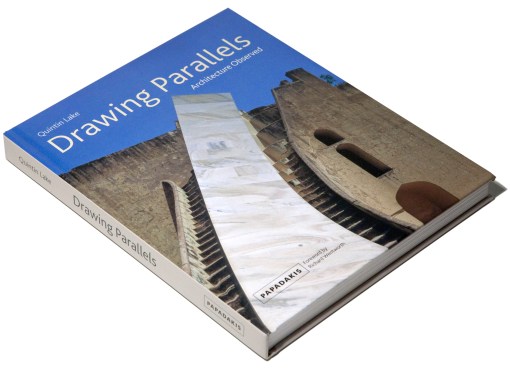
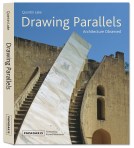
See more architectural photography in my book Drawing Parallels: Architecture Observed

Photography © Quintin Lake, 2010

Drawing-Parallels-Architecture-Observed

Drawing-Parallels-amazon

Drawing Parallels: Architecture Observed by Quintin Lake is now available for order at amazon.co.uk

Author Quintin Lake was on hand to sign copies of his new book to a crowd of 130 people including architects, photographers, designers, and supporters.

Drawing-Parallels-Book-Launch
People gathering outside 11 Shepherd Market during the launch of Drawing Parallels: Architecture Observed at Papadakis Studio, Shepherd Market, London

Drawing-Parallels-Papadakis
The publishing team:
Hugh Cumming, Quintin Lake, Alexandra Papadakis & Sarah Roberts

Drawing-Parallels-Architecture-Observed

Drawing-Parallels-Papadakis-web

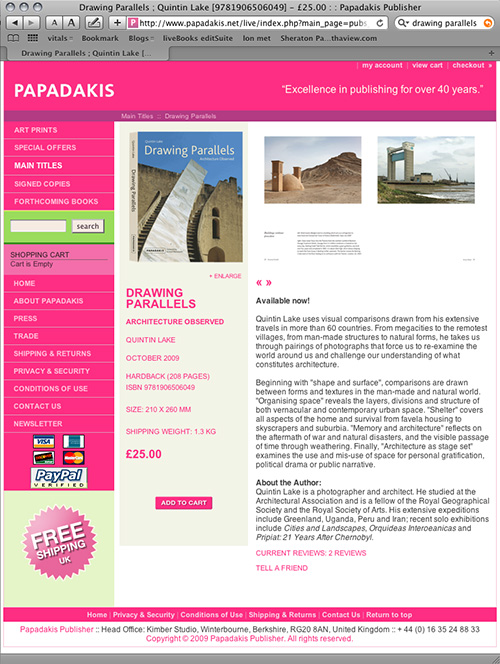
Drawing Parallels: Architecture Observed by Quintin Lake is now available for preview and order at Papadakis Publisher

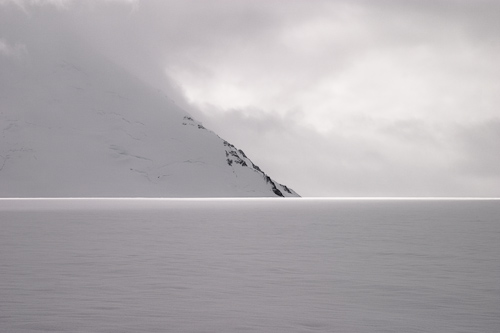
Light & Ice: East Greenland Landscape

Most SLRs cope remarkably well with freezing temperatures. I’ve had no problem using Canon EOS SLR cameras below zero for weeks on end, often down to -20°C and in extreme down to -30°C. This article is for those trying to keep such a camera going under expedition conditions, such as an icecap crossing or mountaineering expedition in the arctic: ie no power sockets, adverse weather, sleeping in tents on the ice and for a period of weeks. However much of the advice also applies to using a camera in cold conditions generally.

The two main technical problems to overcome  are :

1. Condensation

Condensation forms when moving from a cold to a warmer environment, you don’t need to worry about damage to your camera moving from a warmer to a colder environment. Even in arctic conditions the temperature inside a tent is often well above zero yet well below zero in the shade. this means there is often a temperature gradient when bringing a camera into a tent which leads to condensation forming. Condensation on the front element or view finder is an inconvenience, but condensation on the electronics can give permanent malfunction, and condensation in the inside glass elements can write off the camera off for hours or days till the lens totally dries out.

2. Reduced Battery efficiency

Batteries are many times less efficient in cold weather due to the reduced speed of the chemical reaction that powers them.
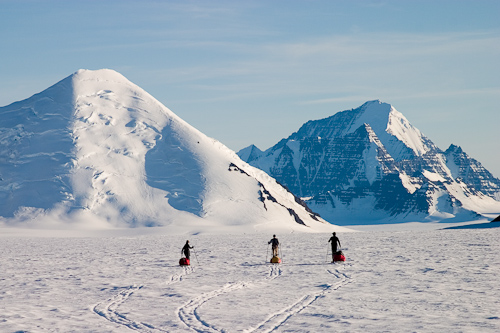
quintin-lake-arctic01-4

Tips for Reducing Condensation

1. Place camera in plastic bag
The camera should be placed inside a polypropylene freezer bag, loosely knotted or twisted and then placed back inside the camera bag. You don’t want to put a waterproof bag around the entire camera bag as any moisture in the camera bag would then condense on the camera body. Ziploc bags, and Ortlieb style dry bags may sound better but often don’t fit neatly inside the camera bag and are much heavier and more expensive. The freezer bag also has the major advantage that you can stuff it below your camera in the bag when not in use, but you need to take spares for when it gets damaged.

2. Use camera bag insulation
The padding on most camera bags (especially the holster style common on expeditions) offers some insulation value which can reduce the dramatic temperature change, when moving from environments of different temperatures.

3. Try and warm up slowly
If there are environments of differing temperatures try and make the warm up process for the camera as gradual as possible.

4. Avoid breathing on the lens
Obvious maybe, but If you need to clean the lens just use a camera cloth to avoid ice forming.
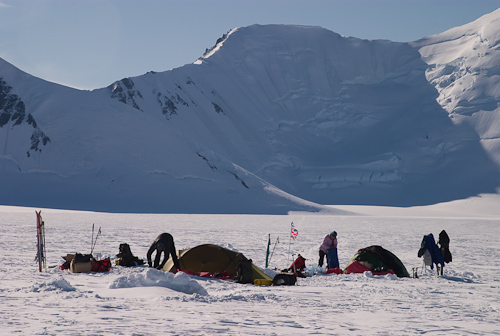
Light & Ice: East Greenland Landscape

Tips for dealing with Reduced Battery Efficiency

1. Carry multiple batteries
As a rough guide plan to take 2/3 times the number of batteries you’d need for equivalent shooting in temperate climates. My personal strategy if to take multiple batteries for an extended trip in the wilderness rather than deal with the uncertainties of solar chargers. This makes planning easy as one can ration a battery to last a given amount of time.

2. Warm batteries by keeping close to skin
Carry your spare close to your skin so your body can warm then. An apparently dead battery can be given more life by warming in this way so on very cold days you may find yourself rotating batteries in this way.

3. Adjust shooting style to conserve power
Accept you will get less out of your batteries so adjust you shooting style to conserve power. The biggest thing you can do is turn off after shot preview and reduce to a minimum previewing your images later. Addition power saving tips to get the most out of your battery are to turn off image stabilisation, don’t use flash and minimise half-press pre-focus.

View Light & Ice: East Greenland photographs here

Text & Photography © Quintin Lake, 2009

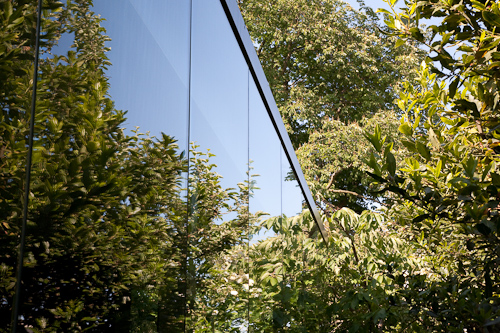
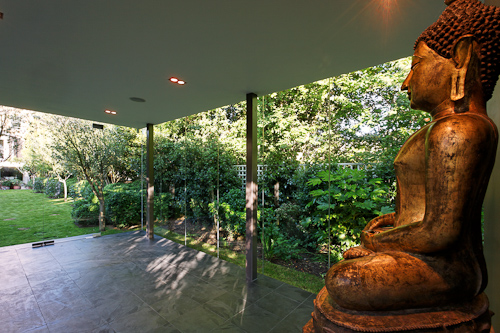
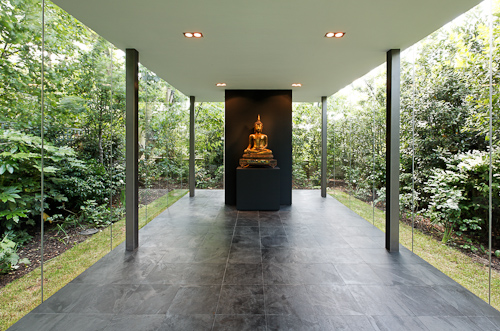
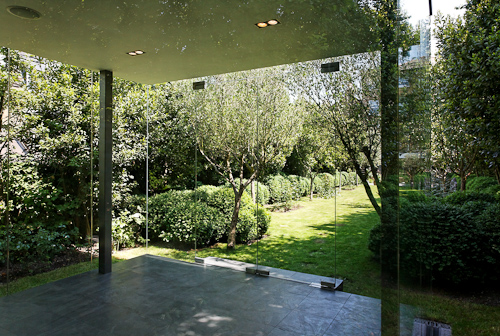
An architectural photography assignment for Julia Haensel Architecture documenting an exquisite almost-not-there glass walled meditation space in a garden in Richmond, London, England.

All building materials were brought into the tight garden site by hand via a narrow passage.

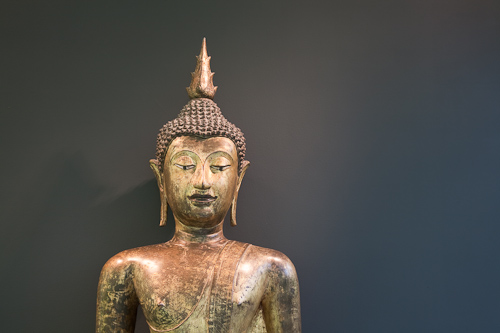
The 4 x 8 x 3.2 meter steel & glass meditation and contemplation space is based on Vastu principles. The construction was originally instigated by (Swami) Sri Kaleshwar. The buddha is a 16th century Khmer statue.

The shoot emphasised the quality of architectural detailing and the interplay of reflections with the transparency of the glass walls.

View the entire photoshoot here

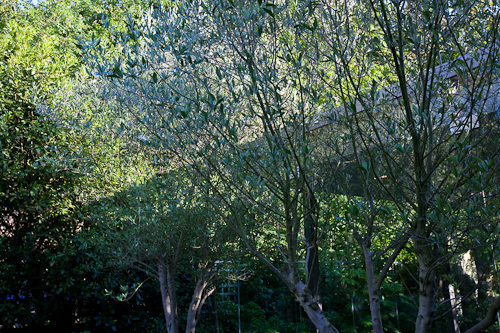
Meditation space, 53 Mount Ararat Road

Meditation space, 53 Mount Ararat Road

Meditation space, 53 Mount Ararat Road

Meditation space, 53 Mount Ararat Road

Meditation space, 53 Mount Ararat Road

Meditation space, 53 Mount Ararat Road

See more architectural photography by Quintin Lake in the book Drawing Parallels, Architecture Observed

Photography © Quintin Lake, 2009

Cloud forest moss

Cloud Mountain Moss, Peru Giclee Print, 50×33cm, Edition of 25 + 1 A/P

[Competition Category: Creative Visions of Nature]

Buy Print/License this image here

Lepanthes sp. Orchid near the Interoceanic highway in Peru

Peruvian Orchid (Lepanthes sp. Orchid near the Interoceanic highway in Peru) Giclee Print, 50×33cm, Edition of 25 + 1 A/P

[Competition Category: Creative Visions of Nature]

Buy Print/License this image here

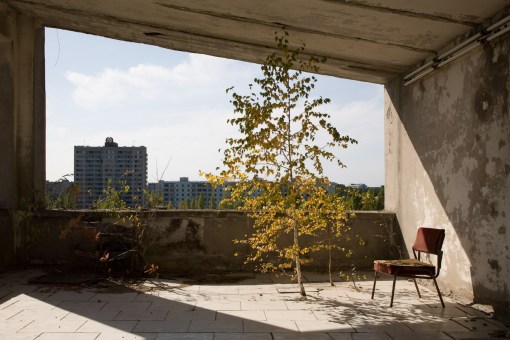
Hotel Polissia Terrace, Pripyat

Pripyat 21 Years after Chernobyl (Hotel Polissia Terrace) Giclee Print, 50×33cm, Edition of 25 + 1 A/P

[Competition Category: Urban and Garden Wildlife]

Buy Print/License this image here

See more photography Quintin Lake in the book Drawing Parallels: Architecture Observed

Photography © Quintin Lake, 2009