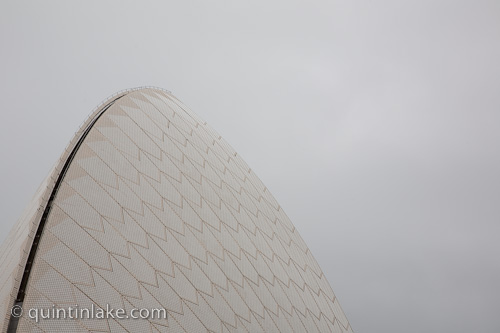
Into Silent Skies #1. Images of Sydney Opera House Roof Shells
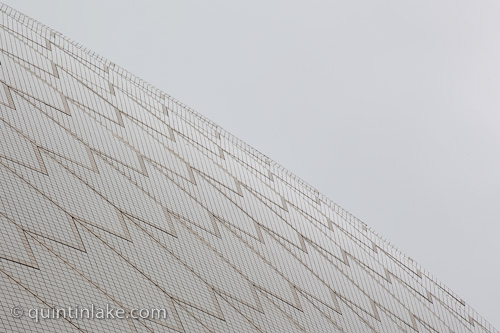
Into Silent Skies #4. Images of Sydney Opera House Roof Shells

Into Silent Skies #5. Images of Sydney Opera House Roof Shells
Photography © Quintin Lake, 2010
Into Silent Skies #1. Images of Sydney Opera House Roof Shells
Into Silent Skies #4. Images of Sydney Opera House Roof Shells
Into Silent Skies #5. Images of Sydney Opera House Roof Shells
Photography © Quintin Lake, 2010
BUY PRINTS/LICENSE more abstract images of the Sydney Opera House roof here
The roof is constructed of a series of precast concrete “shells”. The roofs of the Sydney Opera House are covered in a subtle chevron pattern with 1,056,006 glossy white- and matte-cream-colored Swedish-made glazed ceramic tiles from Höganäs AB though, from a distance, the shells appear a uniform white.
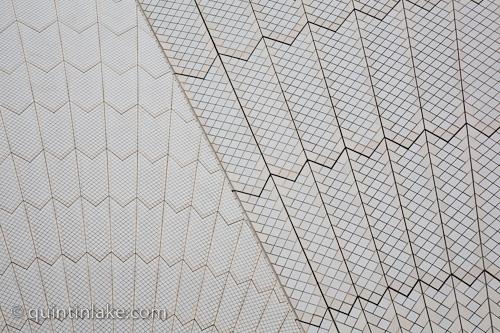
Abstract image of the tiled fan pattern on two shells of the roof of Sydney Opera House
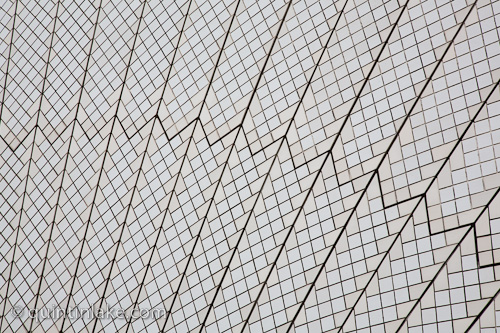
Abstract image of the tiled fan pattern of the roof Sydney Opera
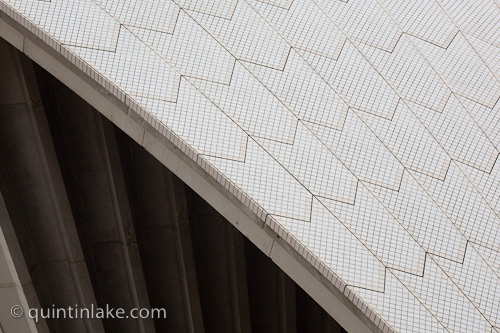
Abstract image of the tiled fan pattern of the roof Sydney Opera
BUY PRINTS/LICENSE more abstract images of the Sydney Opera House roof here
BUY PRINTS/LICENSE more Pripyat (Pripiat) 21 years after Chernobyl images here
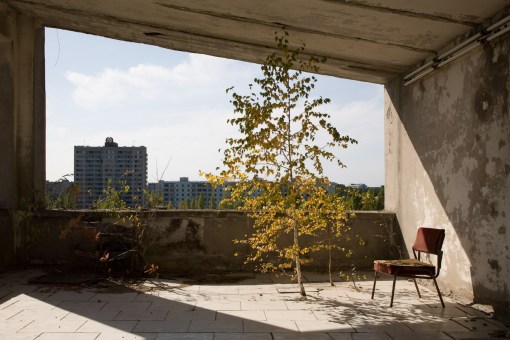
A silver birch tree grows through the floor on the terrace of Hotel Polissia. The hammer and sickle is visible atop the distant building
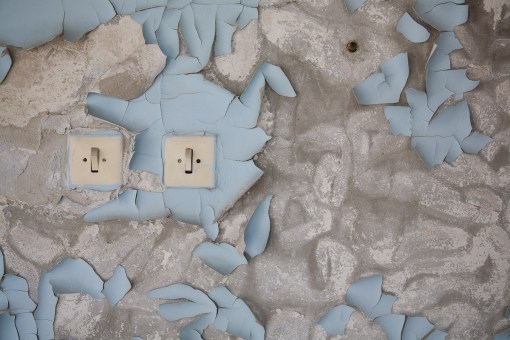
Light switches in a bedroom of Hotel Polissia. The peeling paint is the result of 21 years decay.
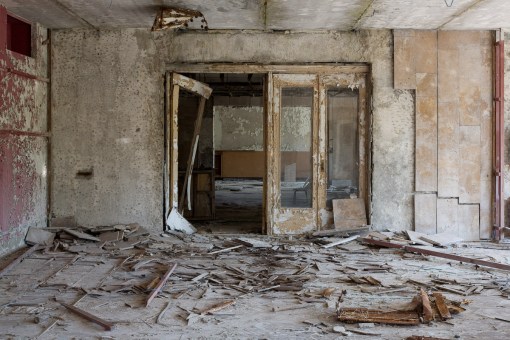
Lobby of Hotel Polissia. The check-in desk is in the background. Marble wall cladding has been removed by looters.
BUY PRINTS/LICENSE more Pripyat (Pripiat) 21 years after Chernobyl images here
See more architectural photography including Pripyat in my book Drawing Parallels: Architecture Observed
Photography © Quintin Lake, 2007
The skyline of downtown CBD Sydney seen from the Botanical Gardens at dusk.
The photograph includes the architecturally prominent buildings: Deutsche Bank Place. Architect: Norman Foster of Foster and Partners (triangular form). Chifley Tower. Architect: Kohn Pedersen Fox (centre) Aurora Place. Architect: Renzo Piano (curved form)
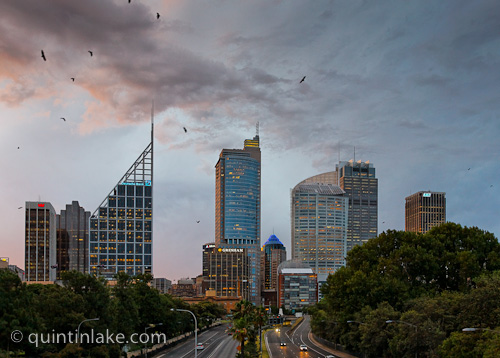
Downtown Sydney at dusk with Flying Fox Bats
BUY/LICENSE more Sydney downtown architecture images here
Photography © Quintin Lake, 2010
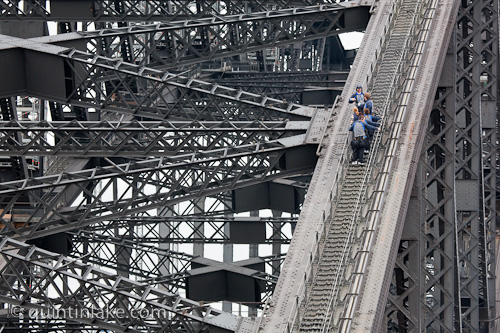
BridgeClimb participants and guide on the Sydney Harbour Bridge, Sydney, Australia
BUY/LICENSE more Sydney harbour bridge structure images here
Photography © Quintin Lake, 2010
The Waverley Cemetery opened in 1877 and is a cemetery located on top of the cliffs at Bronte in the eastern suburbs of Sydney. It is noted for its largely intact Victorian and Edwardian monuments. The cemetery contains the graves of many significant Australians including and the poet Henry Lawson and Australia’s first Prime Minister, Sir Edmund Barton, who is interred at South Head.
View the entire set of Waverley Cemetery, Sydney photographs here

Graves in Waverley Cemetery overlooking the Pacific Ocean
Architecturally, Waverley Cemetery is significant in that it showcases examples of Stonemasonry and funerary art dating back from the 19th century,with features (such as the gates, buildings and fencing) that due to their intact nature are considered of outstanding aesthetic value.

Cross memorial in front of graves at Waverley Cemetery
Poetically, the juxtaposition of the tombs and memorials overlooking the pacific ocean of the sea makes the cemetery a unique place. The cemetery is a popular tourist attraction and is on the route of Bondi to Coogee coastal walk.

Row of graves at Waverley Cemetery, Sydney
View the entire set of Waverley Cemetery, Sydney photographs here
Photography © Quintin Lake, 2010
Pick Up Sticks Enterprises, Studio & Workshop of Architect & Artist Christopher Dukes, Kingsford, Sydney, New South Wales, Australia.
View the entire set of Pick Up Sticks Enterprises photographs here

Sculpture detail made from weathered timber off cuts
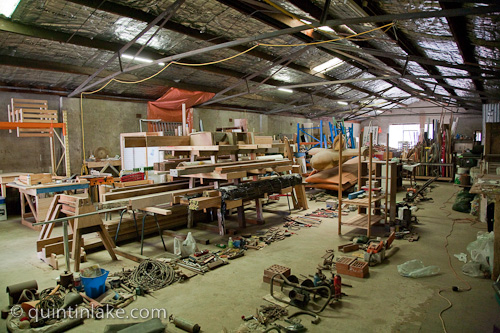
Workshop interior

Two states of consciousness: the awakened state & the state of self-identification
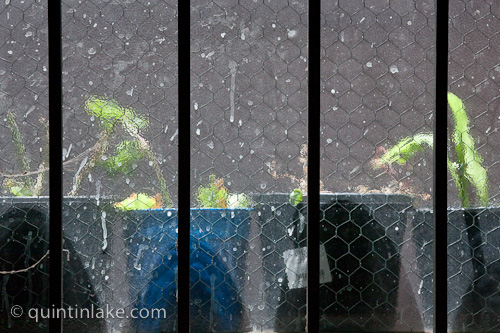
Plants through the window
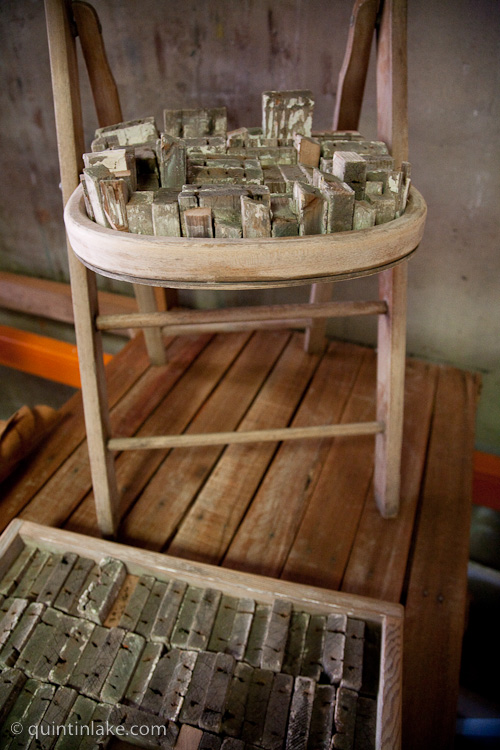
A Tale of Two Cities: Christopher Dukes

Drawing board in the studio
View the entire set of Pick Up Sticks Enterprises photographs here
Photography © Quintin Lake, 2010
BUY/LICENSE more SS Great Britain images here
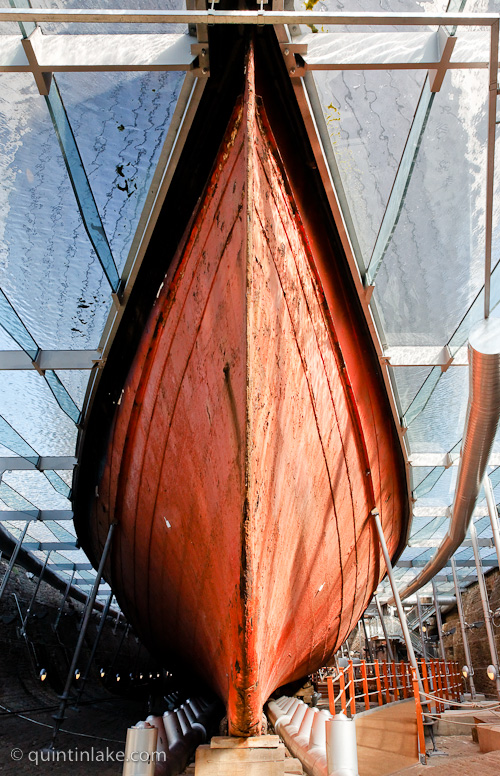
Bow of the SS Great Britain in the Great Western Dockyard, Bristol
Unique Design by Brunel
SS Great Britain was an advanced passenger steamship designed by Isambard Kingdom Brunel for the Great Western Steamship Company’s transatlantic service between Bristol and New York. While other ships had previously been built of iron or equipped with a screw propeller, Great Britain was the first to combine these features in a large ocean-going ship.
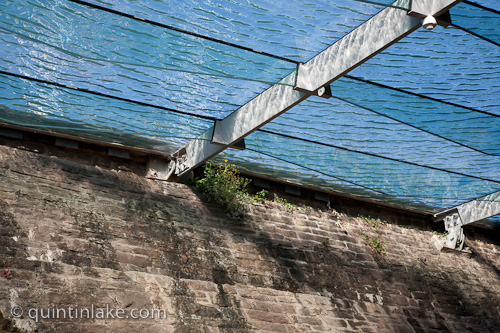
Glass roof covered with water creating an air seal around the hull seen from below
Stranded and Scuttled
When launched in 1843, Great Britain was by far the largest vessel afloat. However, her protracted construction and high cost had left her owners in a difficult financial position, and they were forced out of business in 1846 after the ship was stranded by a navigational error.
Sold for salvage and repaired, Great Britain carried thousands of immigrants to Australia until converted to sail in 1881. Three years later, the vessel was retired to the Falkland Islands where she was utilised as a warehouse, quarantine ship and coal hulk until scuttled in 1937.

Hull and glass air seal seen from ground level
Return to Bristol
In 1970, Great Britain was returned to the Bristol dry dock where she was first built. Now listed as part of the National Historic Fleet, Core Collection, the vessel is an award-winning visitor attraction and museum ship in Bristol Harbour, with between 150,000-170,000 visitors annually.
After Recovery she then spent two weeks in the Cumberland Basin, until a high enough tide occurred that would get her back through the locks to Bristol’s Floating Harbour, back to her birthplace, the dry dock in the Great Western Dockyard in which she had been built (now a grade II* listed building, it had been disused since bomb damage during World War II).

Public walkway next to the hull in the Great Western Dockyard dry dock
Restoration and design of the glass air seal around the hull
The original intent was to restore her to her 1843 state. However, the philosophy of the project changed in recent years and the conservation of all surviving pre-1970 material became the aim.
By 1998, an extensive survey discovered that the hull was continuing to corrode in the humid atmosphere of the dock and estimates gave her 20 years before she corroded away. Extensive conservation work began which culminated in the installation of a glass plate across the dry dock at the level of her water line, with two dehumidifiers, keeping the space beneath at 22% relative humidity, sufficiently dry to preserve the surviving material of the hull. This was completed, the ship was “re-launched” in July 2005, and visitor access to the dry dock was restored.
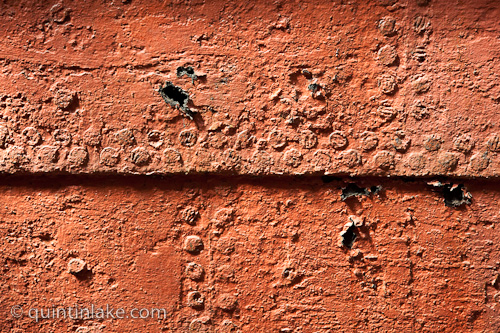
Detail of damage on the original riveted plates on the hull
BUY/LICENSE more SS Great Britain images here
Photography © Quintin Lake, 2009


 Geometry & Silence