Archives for category: Expedition Photography

BUY PRINTS/LICENSE more Pripyat (Pripiat) 21 years after Chernobyl images here

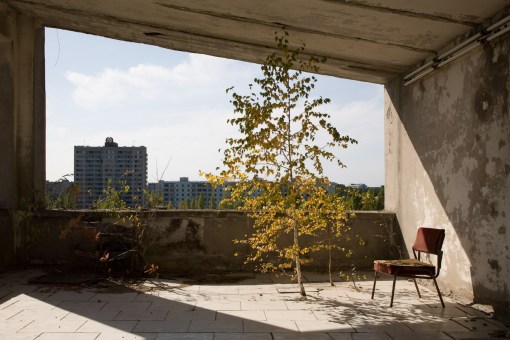
Hotel Polissia Terrace, Pripyat

A silver birch tree grows through the floor on the terrace of Hotel Polissia. The hammer and sickle is visible atop the distant building

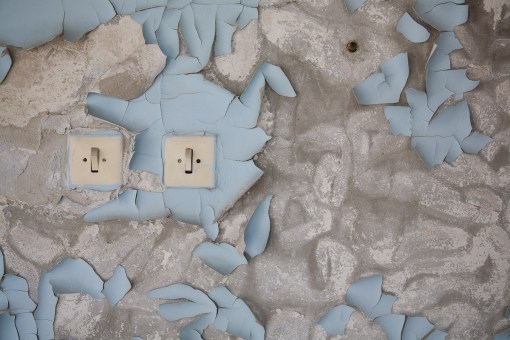
Light switches in a bedroom of Hotel Polissia. The peeling paint is the result of 21 years decay.

Light switches in a bedroom of Hotel Polissia. The peeling paint is the result of 21 years decay.

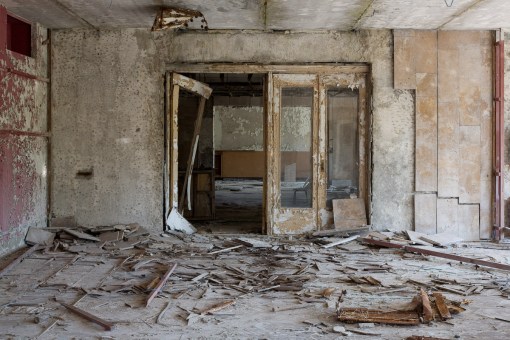
Lobby of Hotel Polissia. The check-in desk is in the background. Marble wall cladding has been removed by looters.

Lobby of Hotel Polissia. The check-in desk is in the background. Marble wall cladding has been removed by looters.

BUY PRINTS/LICENSE more Pripyat (Pripiat) 21 years after Chernobyl images here

See more architectural photography including Pripyat in my book Drawing Parallels: Architecture Observed

Photography  © Quintin Lake, 2007

A technical account of Anglo-Scottish Greenland Expedition is featured in 2009 American Alpine Journal: The World’s Most Significant Climbs.

ISBN: 978-1-933056-09-8

A098

Greenland Expedition

Knud Rasmussens Land, 2006 ascents. In August 2006 Jennifer Escott, Jonathan Hunter, Nick Mills, and I visited Knud Rasmussens Land, landing on the icecap at N 69°38.9′, W 27°44.0′.
This spot was the base camp for an out-going expedition from the Brathay Exploration Group, and we took over some of their vital pieces of kit, such as satellite phone and shotgun.

We planned to divide the expedition into three phases of roughly a week each: one on the icecap, exploring an impressive massif near the drop-off; one pulk-pulling across the icecap; and the third attempting unclimbed peaks around the glacier to the south, down from the icecap. Peaks on the icecap (nunataks) generally rise only a few hundred meters above the ice. Peaks on the lower glacier, although of similar altitude, generally involve climbs of much greater length and commitment, with exposed ridges of snow and friable basalt. From the air these peaks appeared quite challenging.
quintin-lake-arctic01-4
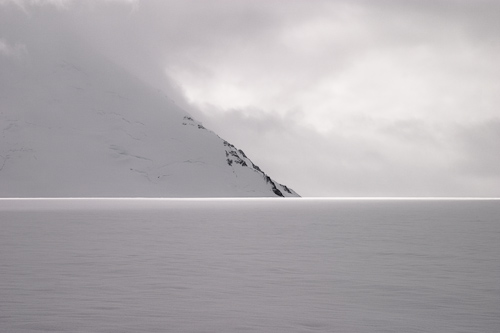
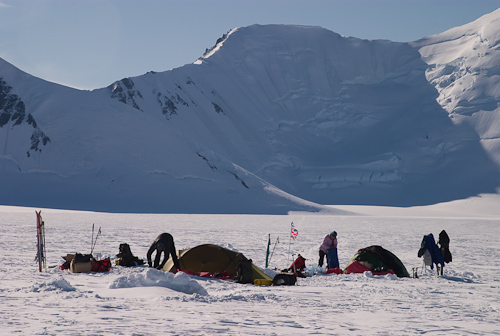
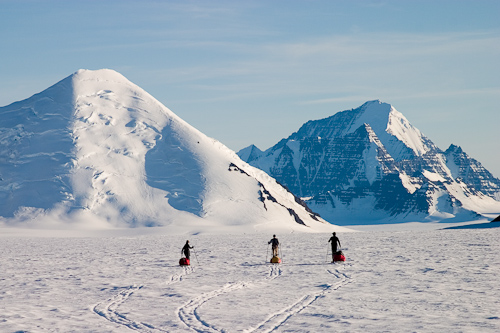
Moving south down White Bird Glacier in Knud Rasmussens Land, with Big White Pyramid on the left. The high peak in the distance is Ejnar Mikkelsens Fjeld (3,308m), one of the most impressive on the east coast.

After establishing base camp east of our drop-off point, we ascended three peaks: Lunar Peak (N 69°34.2′, W 27°11.7′, 2,230m), Sunrise Peak (N 69°35.2′, W 27°12.2′, 2,270m), and Bowhead Peak (N 69°33.6′, W 27°29.4′, 2,065m). During our second week we broke the monotony of hauling pulks south along the icecap by tackling unclimbed summits that lay along our route. We first climbed the Four Sisters: Saamik (N 69°23.0′, W 27°35.6′, 2,130m), Seqineq (N 69°24.5′, W 27°34.8′, 2,100m), Sikkersoq (N 69°24.0′, W 27°33.9′, 2,090m), and Sissinnguaq (N 69°24.4′, W 27°33.9′, 2,030m). All were straightforward ascents. As with most other summits we climbed, coordinates and altitude were surveyed by GPS.

Next we climbed the Devil’s Fingers: Promontory Peak (N 69°27.7′, W 27°42.9′, 2,360m), Windslab Peak (N 69°26.7′, W 27°46.8′, 2,310m), and Lion’s Head Peak (N 69°26.2′, W 27°45.1′, 2,340m). We then continued our journey, arriving at the foot of an isolated snow peak, the last on our route before the edge of the ice cap. It provided another straightforward ascent, of Dreamer’s Peak (N 69°26.0′, W 27°45.1′, 2,280m). A day and a half of pulking then brought us to the edge of the icecap.
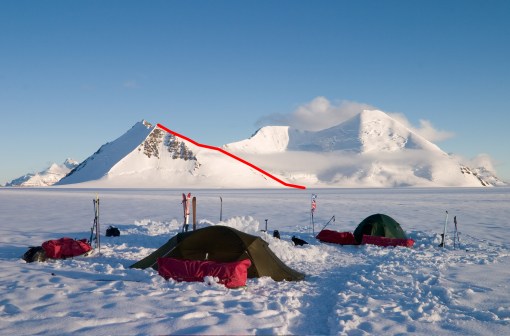

British Camp 8 at the southern end of the White Bird Glacier. The route up An Stuc (ca 2,190m) is marked. The large snowy peak to the right is the Big White Pyramid (ca 2,250–2,500m), attempted to 100m of the summit by Engel and Spencer (see AAJ 2007).

Our final phase consisted of a week at Camp 8 (N 69°007′, W 28°025′) at the southern end of White Bird Glacier. We were here from August 20 till our pickup on the 28th. This camp was located 10.5km south of the base camp used by Bob Dawson’s British expedition in 2003 (AAJ 2004, p. 253). Our first new summit was Heart Peak (N 69°09.4′, W 28°32.2′, 2,570m; estimated values, not from GPS). It was named after an unusual heart-shaped lake that had formed in the middle of the large glacier separating the Watkins Mountains and the west Knud Rasmussens Range. It lay adjacent to the start of the south ridge, a moderate rock climb up a pinnacled crest, which we used for our ascent. We followed this with ascents of Peak Hubris (N 69°06.2′, W 28°18.5′, 2,225m), Peak Aurora (N 69°06.4′, W 28°17.5′, 2,230m, not from GPS), and the Castle (N 69°06.6′, W 28°17.5′, 2,245m, not from GPS; Scottish 3 traversing below pinnacles). Our last climb was An Stuc (N 69°06.1′, W 28°24.4′, 2,190m, not from GPS; Scottish 2 with the summit pinnacle a British Difficult rock climb). We summited 16 new peaks and travelled 100km of untouched territory. The weather was generally good, with temperatures between 5 and 10°C during mid-day, dropping to as low as –20°C at night.

QUINTINLAKE, U.K.

View Expedition report here Download PDF of feature here

Gallery of arctic landscape photographs from the expedition here

Buy 2009 American Alpine Journal from Amazon UK here
Light & Ice: East Greenland Landscape

Most SLRs cope remarkably well with freezing temperatures. I’ve had no problem using Canon EOS SLR cameras below zero for weeks on end, often down to -20°C and in extreme down to -30°C. This article is for those trying to keep such a camera going under expedition conditions, such as an icecap crossing or mountaineering expedition in the arctic: ie no power sockets, adverse weather, sleeping in tents on the ice and for a period of weeks. However much of the advice also applies to using a camera in cold conditions generally.

The two main technical problems to overcome  are :

1. Condensation

Condensation forms when moving from a cold to a warmer environment, you don’t need to worry about damage to your camera moving from a warmer to a colder environment. Even in arctic conditions the temperature inside a tent is often well above zero yet well below zero in the shade. this means there is often a temperature gradient when bringing a camera into a tent which leads to condensation forming. Condensation on the front element or view finder is an inconvenience, but condensation on the electronics can give permanent malfunction, and condensation in the inside glass elements can write off the camera off for hours or days till the lens totally dries out.

2. Reduced Battery efficiency

Batteries are many times less efficient in cold weather due to the reduced speed of the chemical reaction that powers them.

quintin-lake-arctic01-4

Tips for Reducing Condensation

1. Place camera in plastic bag
The camera should be placed inside a polypropylene freezer bag, loosely knotted or twisted and then placed back inside the camera bag. You don’t want to put a waterproof bag around the entire camera bag as any moisture in the camera bag would then condense on the camera body. Ziploc bags, and Ortlieb style dry bags may sound better but often don’t fit neatly inside the camera bag and are much heavier and more expensive. The freezer bag also has the major advantage that you can stuff it below your camera in the bag when not in use, but you need to take spares for when it gets damaged.

2. Use camera bag insulation
The padding on most camera bags (especially the holster style common on expeditions) offers some insulation value which can reduce the dramatic temperature change, when moving from environments of different temperatures.

3. Try and warm up slowly
If there are environments of differing temperatures try and make the warm up process for the camera as gradual as possible.

4. Avoid breathing on the lens
Obvious maybe, but If you need to clean the lens just use a camera cloth to avoid ice forming.

Light & Ice: East Greenland Landscape

Tips for dealing with Reduced Battery Efficiency

1. Carry multiple batteries
As a rough guide plan to take 2/3 times the number of batteries you’d need for equivalent shooting in temperate climates. My personal strategy if to take multiple batteries for an extended trip in the wilderness rather than deal with the uncertainties of solar chargers. This makes planning easy as one can ration a battery to last a given amount of time.

2. Warm batteries by keeping close to skin
Carry your spare close to your skin so your body can warm then. An apparently dead battery can be given more life by warming in this way so on very cold days you may find yourself rotating batteries in this way.

3. Adjust shooting style to conserve power
Accept you will get less out of your batteries so adjust you shooting style to conserve power. The biggest thing you can do is turn off after shot preview and reduce to a minimum previewing your images later. Addition power saving tips to get the most out of your battery are to turn off image stabilisation, don’t use flash and minimise half-press pre-focus.

View Light & Ice: East Greenland photographs here

Text & Photography © Quintin Lake, 2009

Cloud forest moss

Cloud Mountain Moss, Peru Giclee Print, 50×33cm, Edition of 25 + 1 A/P

[Competition Category: Creative Visions of Nature]

Buy Print/License this image here

Lepanthes sp. Orchid near the Interoceanic highway in Peru

Peruvian Orchid (Lepanthes sp. Orchid near the Interoceanic highway in Peru) Giclee Print, 50×33cm, Edition of 25 + 1 A/P

[Competition Category: Creative Visions of Nature]

Buy Print/License this image here

Hotel Polissia Terrace, Pripyat

Pripyat 21 Years after Chernobyl (Hotel Polissia Terrace) Giclee Print, 50×33cm, Edition of 25 + 1 A/P

[Competition Category: Urban and Garden Wildlife]

Buy Print/License this image here

See more photography Quintin Lake in the book Drawing Parallels: Architecture Observed
Photography © Quintin Lake, 2009


THE FIFTH SEASON: SUBLIME IN THE CITY

By Quintin Lake

featured in the book Cinematic Architecture 1993-2008

Cinematic Architecture Book, Quintin Lake, The Fifth Season

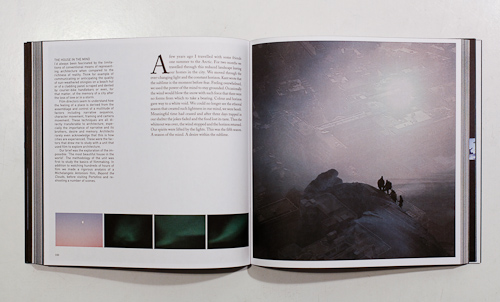
A few years ago I travelled with some friends one summer to the arctic. For two month we travelled through this reduced landscape leaving our homes in the city. We moved through the ever-changing light and the constant horizon. Kant wrote that the sublime is the moment before fear, feeling overwhelmed and yet using the power of the mind to stay grounded. Occasionally the wind would blow the snow with such force that there were no forms from which to take a bearing.

Cinematic Architecture Book, Quintin Lake, The Fifth Season

It sometimes seems bizarre when our desires are so ephemeral, that we live and move in such fixed forms. I yearn for a space of the fifth season within the city: a horizon and no walls, a house constructed of light, whose presence takes one by surprise. and responds to the seasons.

Cinematic Architecture Book, Quintin Lake, The Fifth Season

The house of the fifth season is located beyond the houses in a position of lightness where the possibilities of a new horizon can be seen. In the city the light sits perched on a raised structure, its form is created with a laser-light projection. The ephemeral edges are barely visible during the day. At night the reflective coating of the sky mesh screen glows with the laser light. The seasons of nature and the mind are the house. The layered transparent interior filters the city. The house has become the horizon.

Text & Photography © Quintin Lake, 2009

Oxford University Expedition 2008: An orchid inventory along the transects II and IV of the InterOceanic Highway.

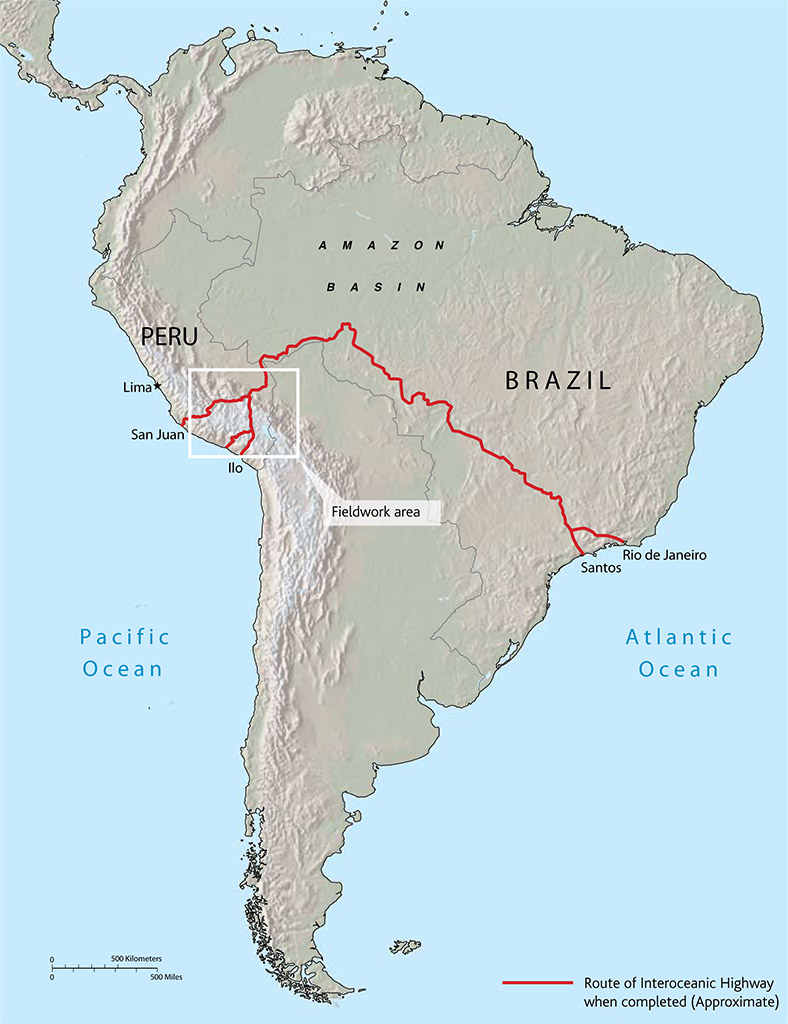
Location of the Interoceanic Highway in Latin America

Location of the Interoceanic Highway in Latin America

The Interoceanic Highway is a multi-country, multi-region, $1.3-billion project to create a paved highway that links the Peruvian coast with the lowland Amazon Jungle and ultimately the Atlantic ports of Brazil. Peru is counting on the road as a means of opening up its long-neglected interior for development. Brazil is looking for access to Pacific ports. The finished route, planned for 2009, will create the first paved roadway connecting the Atlantic and Pacific oceans on the South American Continent.

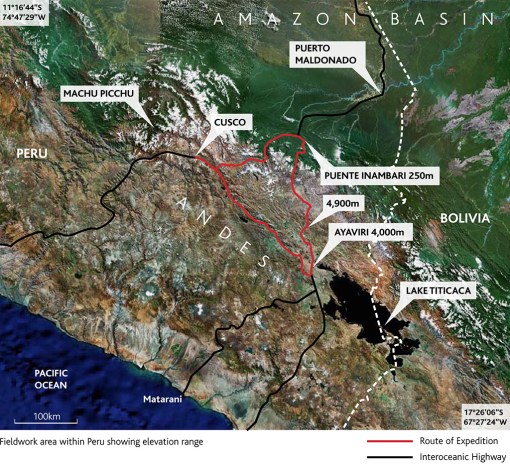
A traveller through Southern Peru can wake up in the harsh chill of the high Andes in the early morning and spend the evening sweating it out in the jungle. From an engineering point of view the IOH poses a legion of difficulties including extreme elevations, incessant downpours and dramatic geography. “It is an incredibly complex project”, says Peru’s Minister of Transportation and Communications, Veronica Zavala. From a social point of view the highway links a variety of interests and development hopes that are not always lined with environmental governance initiatives.

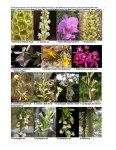
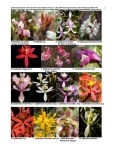
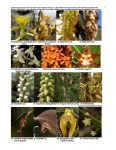
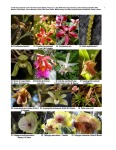
Among the major goals of our expedition was the development of a comprehensive inventory of as many orchid species as we could identify (e.g. we found 103 species of orchids in flower, 1 of them has already been confirmed as new to science (Telipogon manucensis), and 3 others are pending examination. Orchids are an excellent ‘indicator species’ in ecology, and their delicate, often soil-less existence usually renders them the most sensitive residents of a changing environment. We now possess a snapshot of the ecosystem from July 2008, ready to be compared to a later snapshot to evaluate how seriously industrial road-building, climate, and social pressures can affect biodiversity.

In order to share our data with the scientific botanical community, our records will be entered at Oxford’s Virtual Field Herbarium, and also transformed into Rapid Color Guides at the Chicago Field Museum’s website. Our inventory is also being used as part of an ecotouristic initiative to promote green tourism along the Interoceanic Highway.

Expedition members: Rosa María Román-Cuesta (Expedition Leader), Norma Salinas Revilla (Leading Botanist, Oriel College), David Rueger (Financial Officer, St Hugh’s College), Theresa Meacham (Pembroke College), William Nauray (Botanist), Quintin Lake (Medical Officer and Photographer).

Our utmost gratitude to our sponsors: The Stanley Smith (UK) Horticultural Trust; The AA Paton Fund; The Oxford University Expedition’s Council; The Mike Soper Fund; The Oxford Society; Pembroke College JCR,, Oxford; St. Hugh’s College Travelling Funds, Oxford; The Anglo-Peruvian Society; The Tambopata Reserve Society (TReeS)

Download the PDF Expedition report here


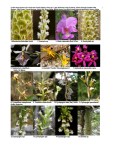
Download the PDF photo summary of the orchids here

VIEW MORE IMAGES of the Orchids here

VIEW MORE IMAGES of the Expedition here

VIEW MORE IMAGES of the Interoceanic Highway here

Text © 2008 Rosa Maria Roman Cuesta

Maps & Photography © 2008 Quintin Lake


BUY PRINTS/LICENSE more Pripyat (Pripiat) 21 years after Chernobyl images here

Concert hall, Pripyat

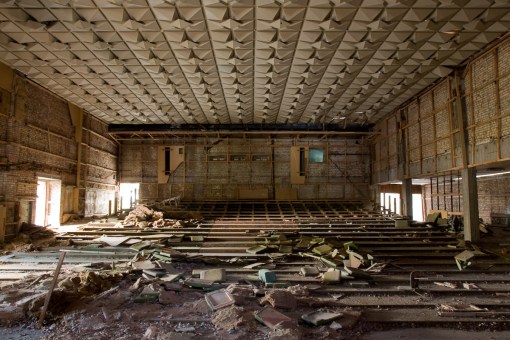
Concert hall with water damaged soviet relief sculpture and piano, Pripyat, Chernobyl

Palace of Culture Theatre seating, Pripyat

The looted seating area in the Palace of Culture theatre, Pripyat

Palace of Culture prop room, Pripyat

Palace of Culture Theatre prop room with paintings of Lenin and dignitaries, Pripyat (Pripiat), Chernobyl, Ukraine

BUY PRINTS/LICENSE more Pripyat (Pripiat) 21 years after Chernobyl images here

Photography  © Quintin Lake, 2007

BUY PRINTS/LICENSE more Pripyat (Pripiat) 21 years after Chernobyl images here

Hospital reception, Pripyat

Hospital reception with doctor's appointment boards, Pripyat

Lenin and the pot plant, Pripyat

Lenin and the pot plant in the hospital, Pripyat, Chernobyl

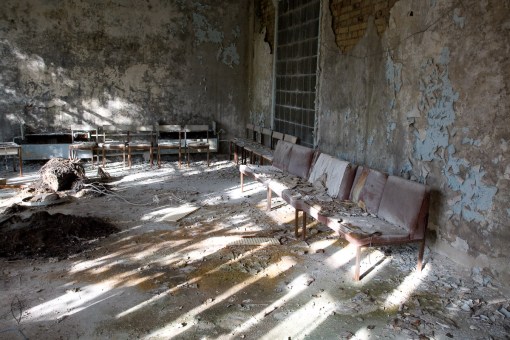
Hospital waiting room, Pripyat

Hospital waiting room with discarded pot plant.

BUY PRINTS/LICENSE more Pripyat (Pripiat) 21 years after Chernobyl images here

Photography  © Quintin Lake, 2007