Archives for category: Fine Art Photography
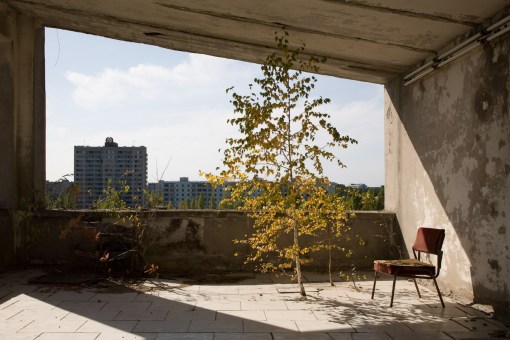
Hotel Polissia Terrace, Pripyat

Pripyat: 21 Years after Chernobyl. 50×33cm, Edition of 25 + 1 A/P Quintin Lake

This photograph of Hotel Polissia in Pripyat  is one of the 50 selected images that will be traveling to the Crane Kalman Gallery in Brighton to be part of HOST @ Crane Kalman Brighton, an exhibition featuring a selection from the 3rd annual Foto8 Summer Show. This exhibition will run from the 11th to the 29th of September 2010. “Pripyat: 21 Years after Chernobyl” has been previously been exhibited at the Architectural Association, London; The Royal West of England Academy, Bristol and Host Gallery, London.

The image is for sale at £355 framed or £295 unframed in an edition of 25. To purchase a print please contact me

VIEW MORE IMAGES from Pripyat (Pripiat) 21 years after Chernobyl Series

Photography © Quintin Lake

Hotel Polissia Terrace, Pripyat

Pripyat: 21 Years after Chernobyl. A silver birch tree grows through the floor on the terrace of Hotel Polissia. The hammer and sickle is visible atop the distant building. 50×33cm, Edition of 25 + 1 A/P

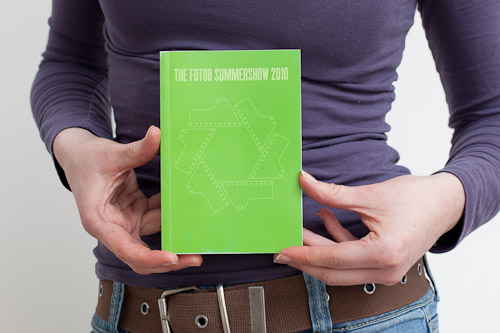
Foto8 Summershow 2010, Exhibition Catalogue Cover

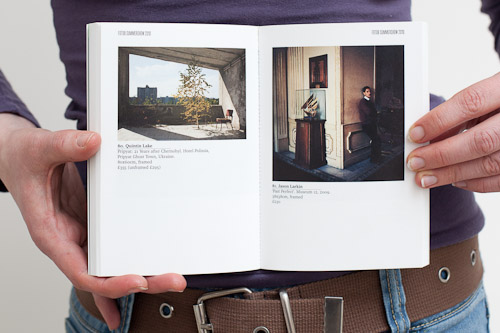
Foto8 Summershow 2010, Exhibition Catalogue

150 images were chosen for exhibition from Over 2500 individual images were received from photographers representing the six continents. From landscape and portraiture to documentary and fashion and everything in between, the Summershow celebrates the photographic talent of established names and aspiring photographers alike.

The Foto8 Summershow 2010 runs from 26 July to 4 September Buy Exhibition Catalogue

HOST GALLERY
1-5 Honduras Street
London EC1Y 0TH
UK

The image is for sale at £355 framed or £295 unframed in an edition of 25

VIEW MORE IMAGES from Pripyat (Pripiat) 21 years after Chernobyl

Foto8 Summershow 2010 at Host Gallery Honduras Street, London

Foto8 Summershow 2010 at Host Gallery Honduras Street, London

Foto8 Summershow 2010 at Host Gallery Honduras Street, London

Photography © Quintin Lake

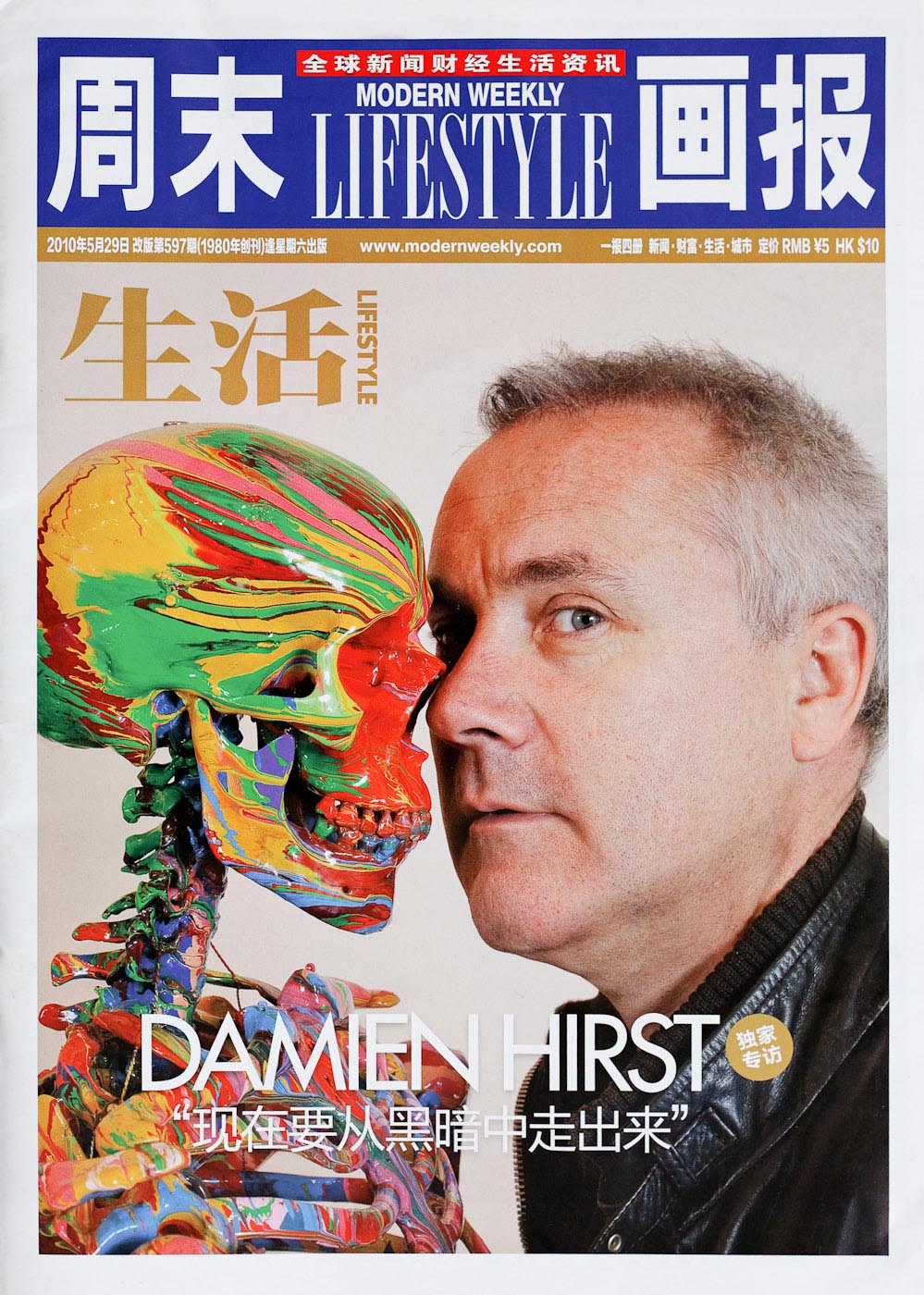
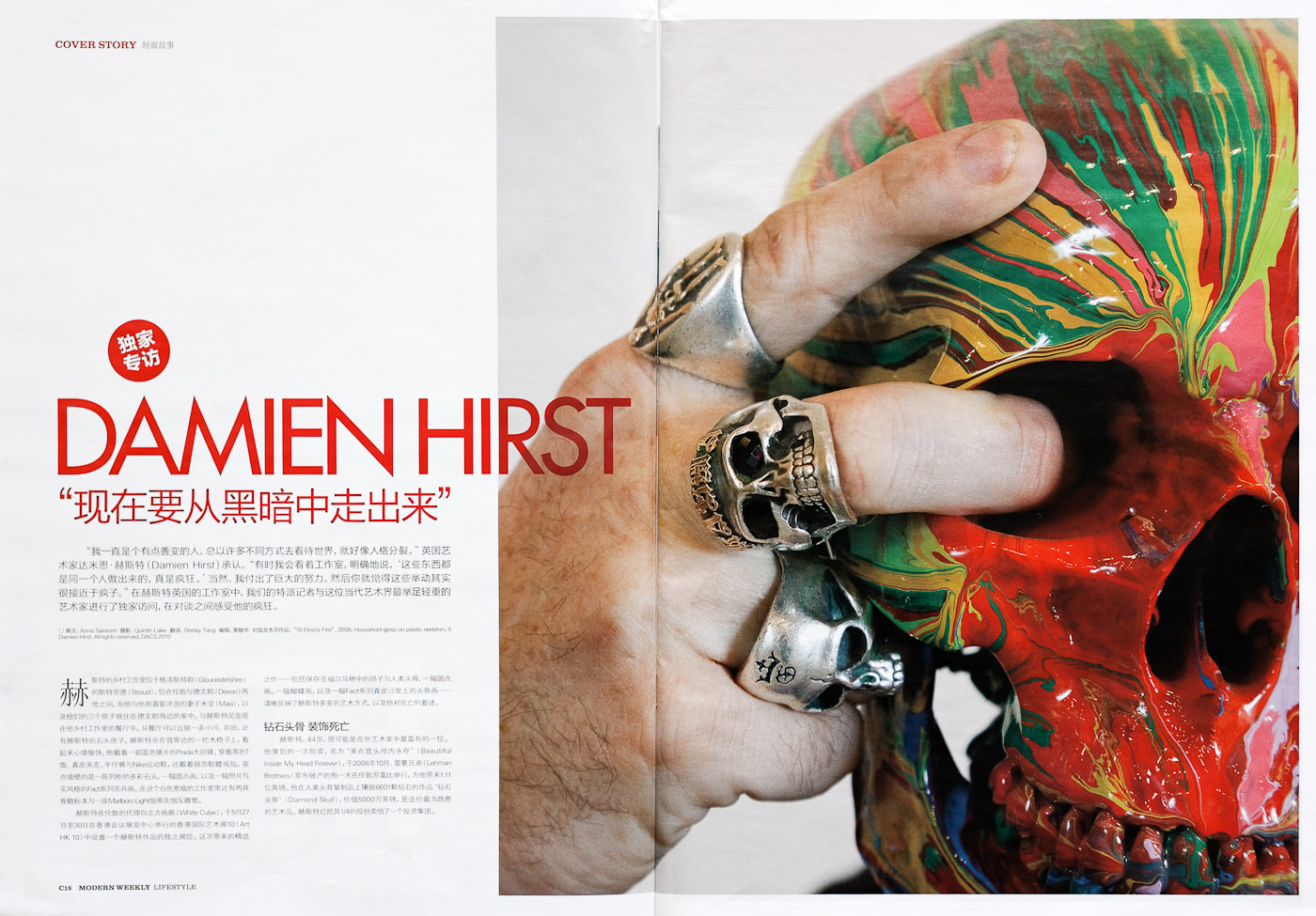
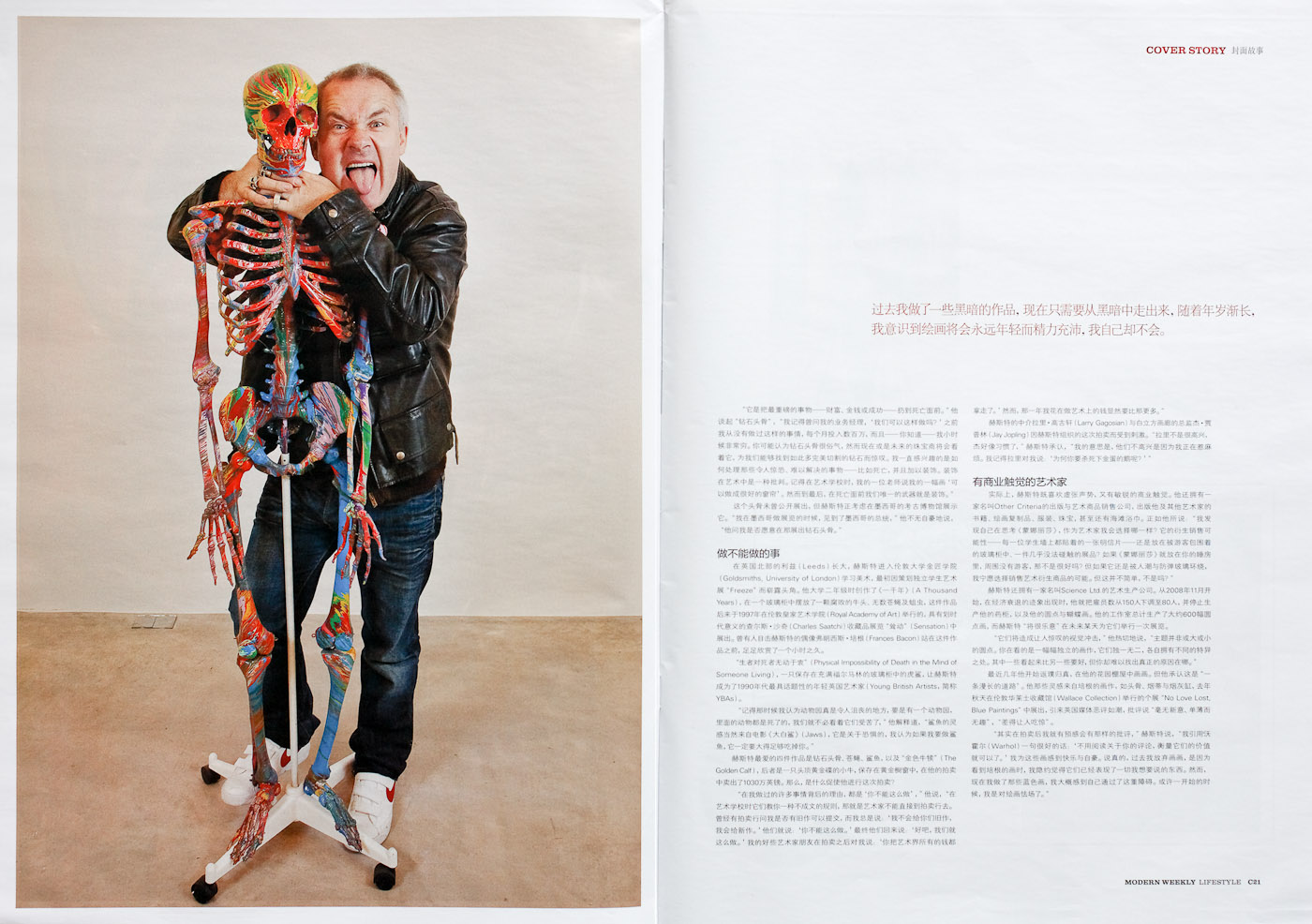
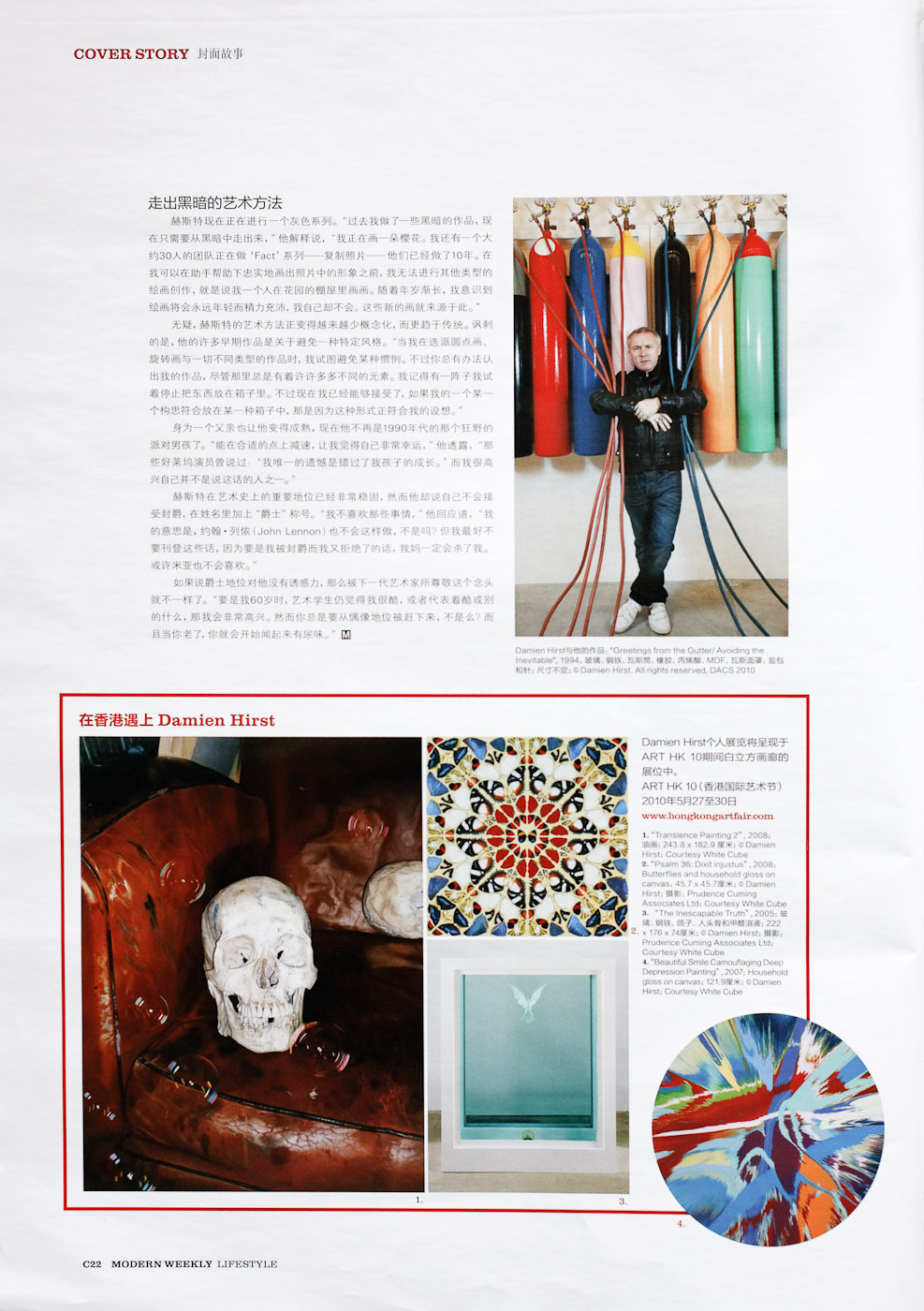
Damien Hirst Cover Feature in Modern Weekly China (Photo: Quintin Lake)

Damien Hirst Cover Feature in Modern Weekly China (Photo: Quintin Lake)

Damien Hirst Cover Feature in Modern Weekly China (Photo: Quintin Lake)

Damien Hirst Cover Feature in Modern Weekly China (Photo: Quintin Lake)

Photoshoot commissioned by Callum Sutton PR for the cover feature of Modern Weekly Lifestyle for the launch of the Hong Kong Art Fair for which Hirst and his gallery White Cube are participating. Interview by Anna Sansom.

Modern Weekly is the grand-daddy of lifestyle weeklies with a circulation of half a million. Published out of Guangzhou, it set the trend of putting out one magazine in several separately-bound sections – for news, life, finance, and urban fashion

VIEW MORE IMAGES of Damien Hirst portrait in his Studio here

Artworks © Damien Hirst. All rights reserved, DACS 2010

Photography © Quintin Lake, 2010

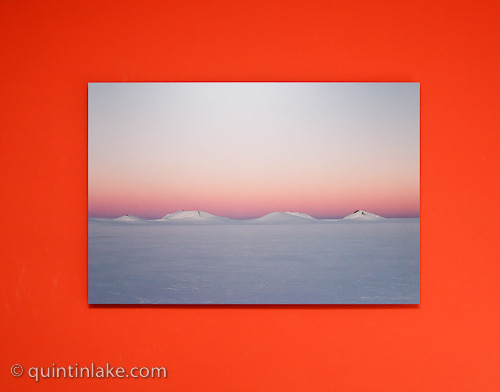
Selected images in my Archive are available as large format Lightjet Prints for display as wall art.

About the Aluminium Float Frame Lightjet Prints

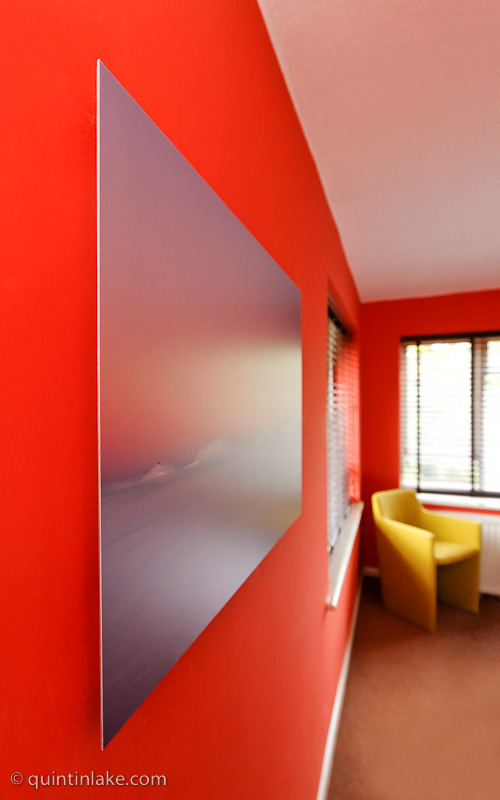
Lightjet are archival quality traditional photographic prints produced from digital source with laser light. The prints are laminated on a 4mm aluminium backing panel and aluminium sub-frame providing an absolutely flat surface. The frameless print appears to float 20mm off the surface of the wall. The 4mm edge of the aluminium panel is brushed raw aluminium. The print surface is sealed with a satin finish to protect from damage.

Available sizes

90x60cm lightjet print mounted on aluminium with aluminium sub-frame and seal

100x150cm lightjet print mounted on aluminium with aluminium sub-frame and seal

Sealed photograph laminated onto Aluminium gives a reflection-free absolutely flat image

90x60cm Print appears to float in front of wall, fitting in with modern decor. Angle of view also shows satin lamination.

Detail of corner of 100x150cm print showing print laminated to aluminum backing panel and aluminium sub-frame behind

Photography © Quintin Lake, 2010

“A thought-provoking and beautifully-photographed collection to which I have found myself returning on many occasions.”
William Arthurs, Editor, London Society Journal

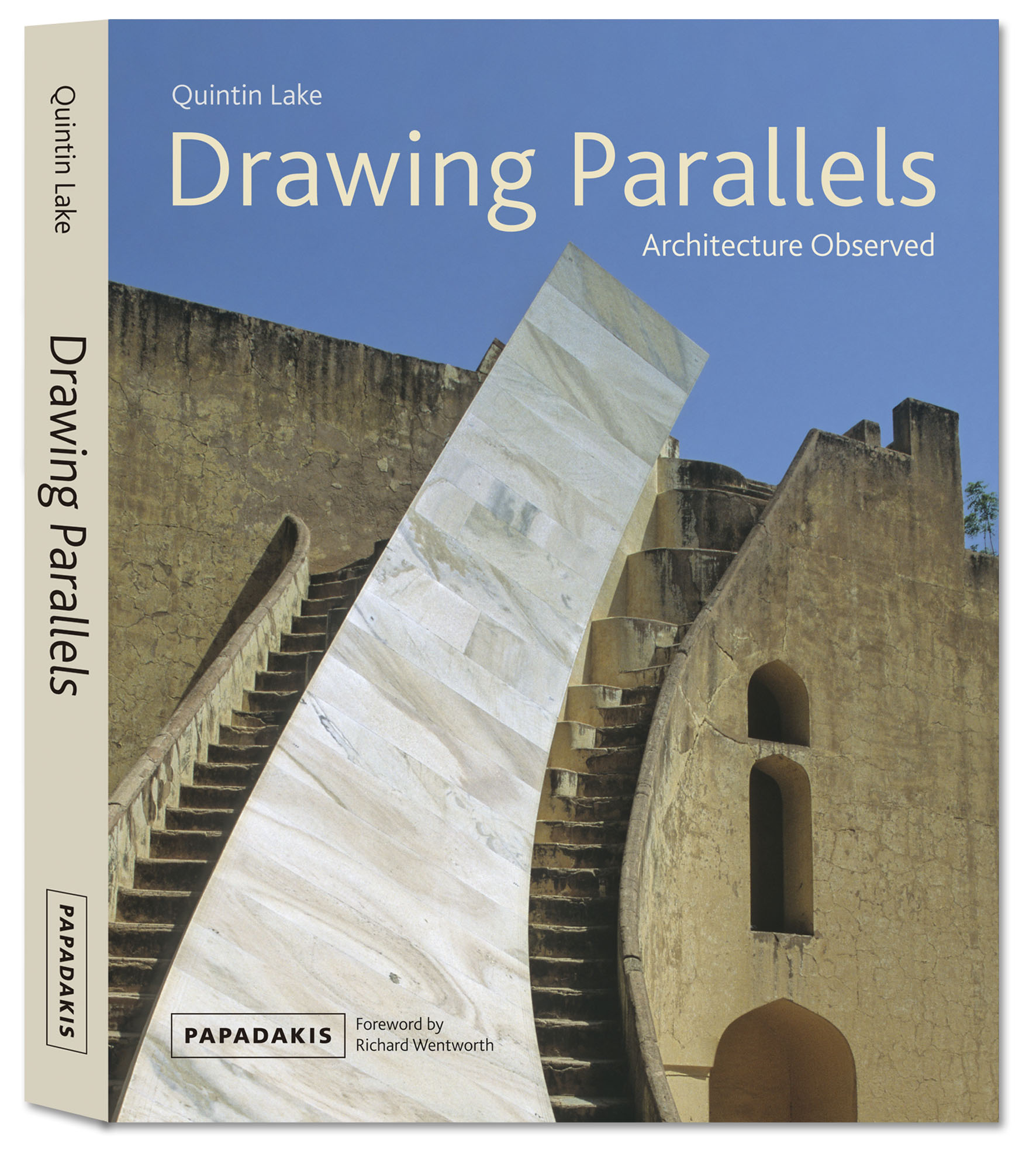
Sources of architectural inspiration from around the world

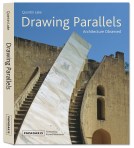
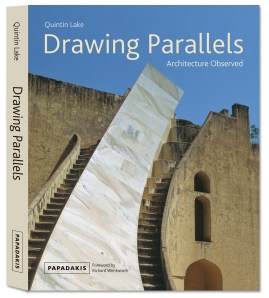
In this fascinating “un-guide book” Quintin Lake uses visual comparisons drawn from his extensive travels in more than 60 countries. From mega cities to the remotest villages, from man-made structures to natural forms, he takes us through series of pairings of photographs that that reveal hidden harmonies in the world around us and challenge our understanding of what constitutes architecture.

Beginning with ‘shape and surface’, comparisons are drawn between forms and textures in the man-made and natural world. ‘Organising space’ reveals the layers, divisions and structure of both vernacular and contemporary urban space. ‘Shelter’ covers all aspects of the home and survival from favela housing to skyscrapers and suburbia. ‘Memory and architecture’ reflects on the powerful aftermath of war and natural disasters and the visible passage of time through weathering. And finally ‘Architecture as Stage set’ examines the use or rather the mis-use of space for personal gratification, political drama or public narrative.

Quintin Lake is a photographer and architect. He studied at the Architectural Association and is a fellow of the Royal Geographical Society and the Royal Society of Arts. His extensive expeditions include Greenland, Uganda, Peru and Iran; recent solo exhibitions include Cities and Landscapes, Orquideas Interoceanicas and Pripiat: 21 Years After Chernobyl.

General Information

Press Release containing brief description, author biography and technical information from Papadakis Publisher (PDF) here

Book Cover Image (high res jpg)

An Architecture of Looking, Some directions for use. Foreword By Richard Wentworth

UK Stockists here

Media and Credit Information

Should you wish to feature any material from Drawing Parallels, I request that the following information be included within your piece:

  1. Book Cover image (high res jpg)
  2. Drawing Parallels: Architecture Observed by Quintin Lake
  3. £25  www.papadakis.net

Should you wish to include any additional material, I would be happy to provide it on request. Questions may me emailed to me at mail@quintinlake.com

For review copy request please contact my publisher, Papadakis Publisher

Chapter Extracts

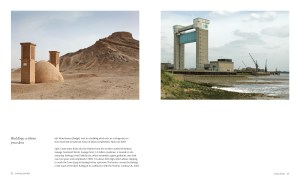
Summary text and two print resolution (300dpi) sample spreads from each chapter available to download as a PDF .

1. Seeing Shapes CLICK HERE FOR EXTRACT

2. Surface and Texture CLICK HERE FOR EXTRACT

3. Organising Space CLICK HERE FOR EXTRACT

4. Shelter and Home CLICK HERE FOR EXTRACT

5. Memory and Place CLICK HERE FOR EXTRACT

6. Architecture as Stage Set CLICK HERE FOR EXTRACT

7. Urban Horizons CLICK HERE FOR EXTRACT

All text and images © Quintin Lake. 2009

“When you look at a city, it’s like reading the hopes, aspirations and pride of everyone who built it.”
Hugh Newell Jacobsen

The greatest architectural gestures of our civilisation, the very epitome and physical embodiment of that civilisation, the apparently random and chaotic surge of something intended and planned, the phenomenal paradox of achievement and disaster, the home of ultimate construction and destruction, the Twenty-First century city, is outpacing any attempt to define its nature the very second an image is formed of it. How to represent, how to see, how to know, this most mercurial of forms, that constantly defies notions of what is attainable? As a photographer, the emerging conurbations, the fresh unimagined megalopolises demand a perspective. This is a quest for scope. These horizons, where the patterns and grids of vast populations are assembled out of seeming chaos, are a bright optimistic contribution, a means of attempting to see a future that is happening right now.

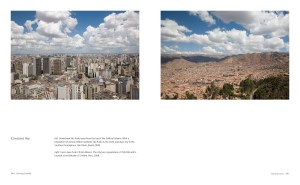
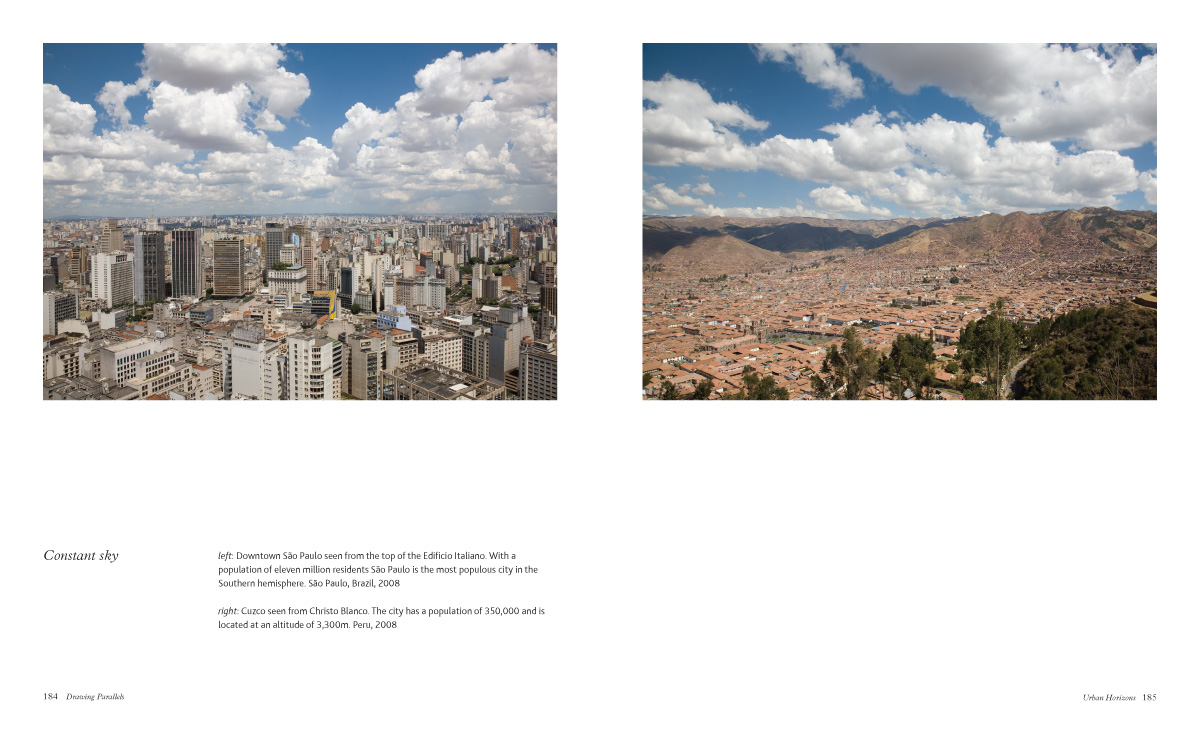
Constant sky

left: Downtown São Paulo seen from the top of the Edificio Italiano.With a population of eleven million residents São Paulo is the most populous city in the Southern hemisphere. São Paulo, Brazil, 2008

right: Cuzco seen from Christo Blanco. The city has a population of 350,000 and is located at an altitude of 3,300m. Peru, 2008

Click on image to enlarge or download Print Res (300dpi) PDF of this spread here

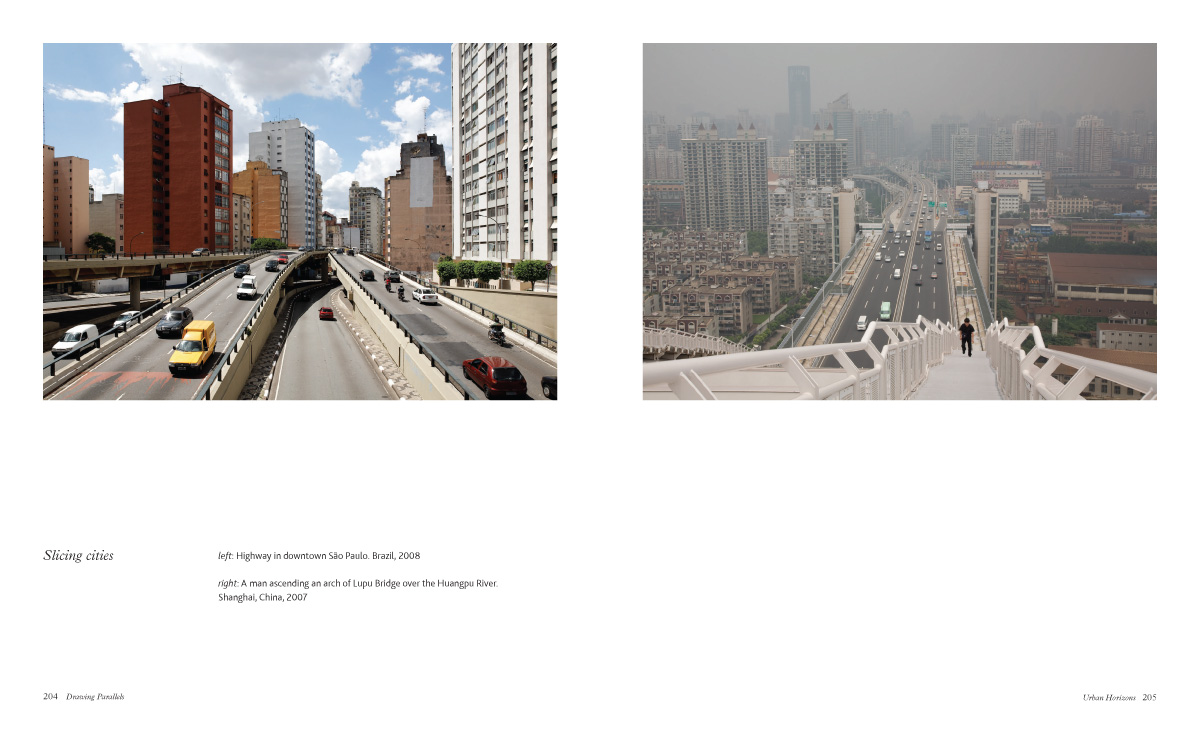
Slicing cities

left: Highway in downtown São Paulo. Brazil, 2008

right: A man ascending an arch of Lupu Bridge over the Huangpu River. Shanghai, China, 2007

Click on image to enlarge or download Print Res (300dpi) PDF of this spread here

< Previous Chapter Extract

“Architecture [is] a theatre stage setting where the leading actors are the people, and to dramatically direct the dialogue between these people and space is the technique of designing.”
Kisho Kurokawa

Public places and buildings have the added dimension of acting as arenas for our lives. In the virtual era we have a heightened awareness of the nature of illusion, of the fact that we are at one and the same time both observing and participating.We see buildings as the backdrop to history and human drama, no longer as organic wholes to which we are connected. In a global village we become tourists and visitors to the sets of a world of other cultures. The photographer, always the contriver and exposer of visual illusion, is attuned to this particularly contemporary phenomenon. Cities and places continually present new ironies, making the observer constantly aware of the layers of transparency. People become orchestrated crowds, and architecture a grand theatrical set, yet individuals are still glimpsed, asserting the defiantly human amongst the towering forests of forms.

Up to the neck

left: Fibreglass shark sculpture erected in 1986, on the 41st anniversary of the dropping of the first atomic bomb. Created by sculptor John Buckley for Bill Heine, who lives in the house. Neighbours tried to force Heine to remove the shark, but after an appeal to the UK’s Secretary of State for the Environment, it was allowed to remain. Oxford, England, 2009

right: Sculpted heads surrounding a front door in Lambeth. London, England, 2009

Click on image to enlarge or download Print Res (300dpi) PDF of this spread here

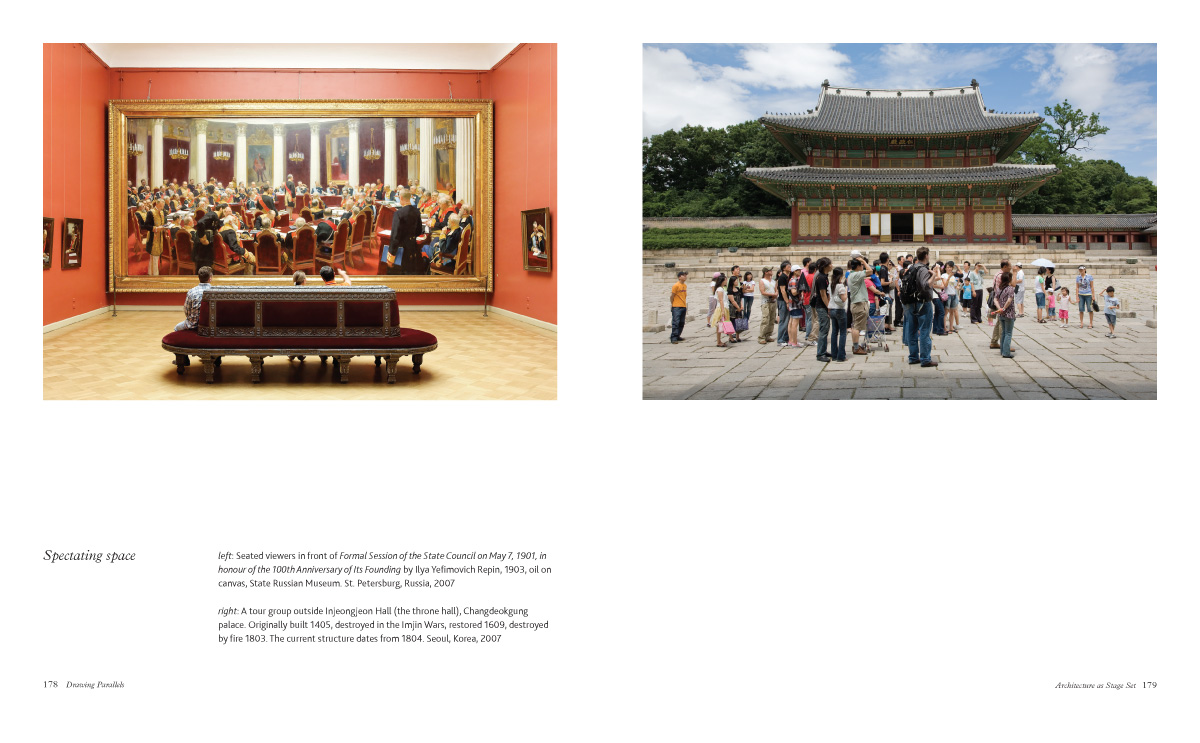
Spectating space

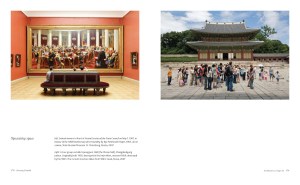
left: Seated viewers in front of Formal Session of the StateCouncil onMay 7, 1901, in honour of the 100th Anniversary of Its Founding by Ilya Yefimovich Repin, 1903, oil on canvas, State Russian Museum. St. Petersburg, Russia, 2007

right: A tour group outside Injeongjeon Hall (the throne hall), Changdeokgung palace. Originally built 1405, destroyed in the ImjinWars, restored 1609, destroyed by fire 1803. The current structure dates from 1804. Seoul, Korea, 2007

Click on image to enlarge or download Print Res (300dpi) PDF of this spread here

< Previous Chapter Extract

Next Chapter Extract>
Foreword to Drawing Parallels: Architecture Observed

As you read this, look about you. Note the shapes and functions that surround you, the squares and right angles, the circles and cylinders, the coarse surfaces and the fine finishes. Try naming those materials – animal, vegetable, mineral.

The earliest ideas for Drawing Parallels were first generated by Quintin Lake over ten years ago when I happened to see a draft for a glossary of structures, buildings and architectural eventuality.

Even at that time, when a young student, Lake’s desire to steer the compendium of his experience towards fresh audiences showed an exceptional clarity of purpose. I was struck by the way that all his images emerged from travel and encounter and articulated real experience in real time and space. Real conditions, real weather and real seasons. I remember thinking that perhaps the images could one day assemble themselves into a magnetic needle which would point a way across the whole puzzling field of cultural energy, the things which humans make and destroy, the things which humans leave behind, and the things which humans come upon. This is something that a good eye and a commitment to travel, not tourism, can set in motion.

The camera is a strange editorial tool – the world of ‘seeing’ has no edges, no right angles, only the marvels of peripheral vision and the edginess which is the gift of being human, that sensation of being curious and always wanting to know more than we can see. In English, this mongrel language, we are as likely to begin sentences with‘I think…’as with‘I feel…’ and we often show our understanding of others by saying ‘I see’. The camera can do none of this but editorial intelligence can. Our ability to do things comes as much from the gift of sight as from the capacity for thought. The eye, like the camera may be ‘stupid’, but it is the owner of the eye who makes ‘pictures’.

Seeing, looking, watching, eyeing, observing, noticing, witnessing – together they add up to a prodigious critical process, one of the great things that all humans share. With the eye of Quintin Lake, you are reminded to look up.

He alerts you to both meanings, not just the spatial one,‘looking upwards’, but also the pleasurable pursuit of information, or the tracking down of an acquaintance, whether a person, a building, or a space. He reminds you that the past is turning into the future. One verb, associated with vigilance, slips into a noun to remind us of the biggest question of all – time. In English, we may ‘watch’, but we also may wear one.

The object which you hold is another of those small, portable, architectural marvels – a book. A cousin of the hinge (and so a relation of both the door and the window) it pivots on its spine and allows a furling process, of befores and afters, of images and type, set in sequences that mirror, remind and rehearse. The reader (we don’t say ‘looker’) brings to a book his own special powers of intervention and interpretation, moving back and forth through the territory before him. This too is how we become spatially intelligent, coursing to and fro in cities and beyond, acquiring our own thesaurus of spaces and places, as much as we map a sense of ourselves as temporary occupants of the world. We discover our ‘whereabouts’ surrounded by our ‘belongings’. We learn to‘belong’.

All those questions of utility and serviceability, which architecture and urbanism can never escape, are played out in the utensils which populate our lives. Many of these mini architectures come with ‘directions for use’, whose counter-intuitivity thwarts and frustrates us.

Drawing Parallels is itself a utensil of a special kind, an un-guide book where the imagination which we associate with the promise of all books is the primary agent for giving directions. Drawing Parallels honours and dignifies the pleasure of inhabiting a haptic world. Its comparisons remind us how we come to differentiate between things, how we sort and re-sort. These multiple acts of recognition, which we store in our own reservoirs of experience, overflow into fresh conversations we come to share. It’s unstoppable.

Text © Richard Wentworth, 2009

First Chapter Extract>