BUY PRINTS/LICENSE more Pripyat (Pripiat) 21 years after Chernobyl images here
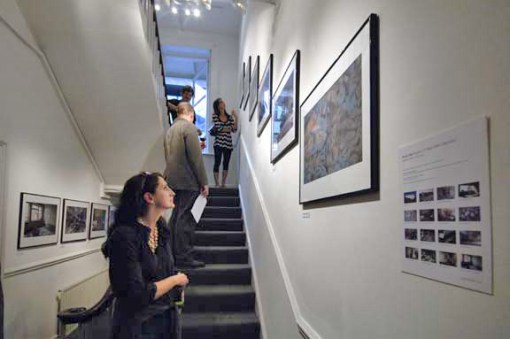
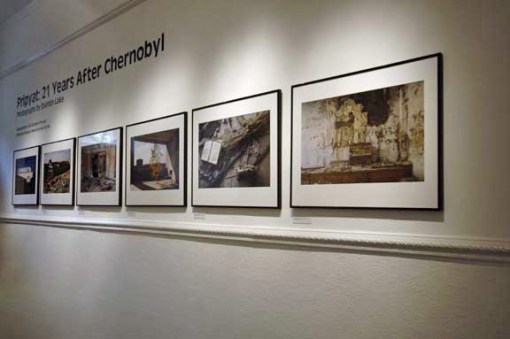
Photographs courtesy of Valerie Bennett
BUY PRINTS/LICENSE more Pripyat (Pripiat) 21 years after Chernobyl images here
Photographs courtesy of Valerie Bennett

Three Arctic Greenland Landscape Christmas / Greetings cards by Quintin Lake.
Photographed during Anglo-Scottish Greenland Expedition 2006
Blank inside. All cards 10 for £5.00
Available from Valerie Bennett in the AA Photo Library +44 020 7887 4066
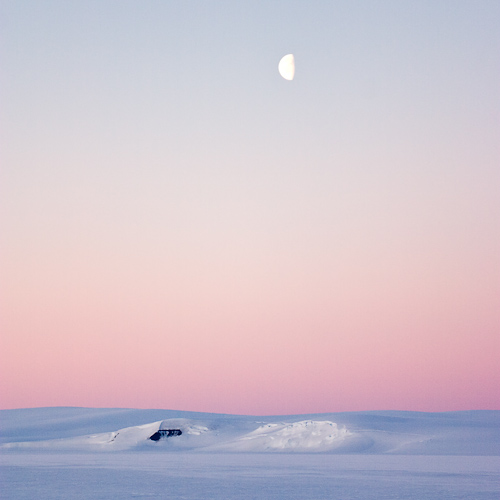
The moon at night

Wind-blown ice

Shadow of clouds
Photography © Quintin Lake, 2006

An orchid, Telipogon peruvianus, found near the Interoceanic Highway in the Peruvian Andes.Orquídeas Interoceánicas Photographic Exhibition at Canning House by Quintin Lake
The Interoceanic highway crosses the Amazon Basin and Peruvian Andes linking the Pacific and Atlantic coasts of South America.
British photographer Quintin Lake joined an Oxford University Expedition which included Peruvian botanists to locate and identify orchids along two sections of the Interoceanic highway. The exhibition features a selection of the 98 orchid species recorded in flower, the construction of the highway and the lives of those for whom the road is their porch.
orchidexpedition.com
A full gallery of photographs documenting the Interoceanic Highway can be seen here, the Interoceanic orchids here, the Interoceanic flora here and the Peruvian Orchid Expedition here.
Exhibition at Canning House
Orquídeas Interoceánicas Photographs By Quintin Lake
Private View 12 November 2008 6.00PM
Exhibition 13- 21 November 2008
2 Belgrave Square,
London SW1X 8PJ
The event on Canning House’s website
canninghouse.com
Limited Edition Prints
A limited edition of 12 hand printed 41x41cm (16″x16″) Framed and mounted Fuji Crystal Archive prints of the orchids are available for sale here
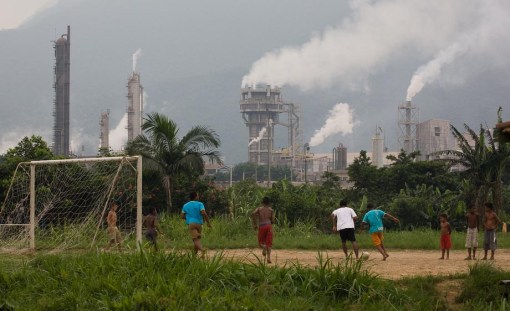
Football game at Jardim São Marcos favela, Cubatão adjacent to the Fosfertil fertiliser factory.
You know you’ve arrived by the chemical smell, but it used to be worse, much worse. An hour’s drive from São Paulo, Cubatão used to be Brazil’s dirty little secret. Host to 24 industries including oil, steel and fertilizers, the city used to be dubbed “The Valley of Death”. The heavy smog trapped by the jungle-clad valleys made the city one of the world’s most polluted places.
Now many of the factories have cleaned up their act and are in the process of transformation. The mangrove swamps are cleaner and the Scarlet Ibis, vibrant against the lush jungle, is flourishing again.
Cubatão defies easy description as the perimeter fences of the factories push against the rainforest on one side and favellas (shanty towns) on the other. Cubatão is a rich city with a poor population, the favella inhabitants being in large part economic migrants.
The favellas have developed around the factories, along the inlets and along the motorway construction roads, the massive arteries feeding the relentless hunger of Cubatão, piercing the surrounding hills and flying above the heads of improvised houses below. These favellas appear to be in such a state of flux they are known by their altitude only.
Fear is ubiquitous for the foreigner in Cubatão. Fear of the air, fear of the water or fear of violence. The outsider must come to their own conclusion. Like Johannesburg, Hiroshima or Chernobyl, the name Cubatão has a weighted meaning that has little or nothing to do with the lives of the local people. A city with such a strong stereotype is almost bound to delight.
In another sense, Cubatão is a city wide manifestation of gambiarra, the Brazilian talent and admiration of making do and improvisation. Plywood and timber form the houses of the fishermen’s village. At the samba school, slit cola bottles are made curvaceous under candle flame and painted as flowers for the carnival floats. Even the very location of houses constructed under a flyover or next to a factory demonstrates this spirit of inventiveness.
Many of the local people often display a total mastery of the body and beat: the drumming of the samba school, the silky shuffle of samba beats danced in flip flops or bare feet on a concrete floor, the kite flying or the astonishing acrobatics of Capoeira (a martial art symbolic of freedom against domination, with roots in Brazil’s historical slave culture).
The surprise came after a couple of weeks living here. Raw nature set against mankind’s machines for sustaining the industrial world can be simultaneously beautiful and disconcerting. At times when the forest-clad hills and the factory smoke merge with the clouds and the light illuminates both the chimney stack and cloud, it is hard to know if it’s creation or Armageddon one is witnessing.
Quintin Lake visited Cubatão as part of the crew of the film “Cubatão” by Rubens Azevedo.
A full gallery of documentary photographs can be seen here and making of photographs from the film here
This is great news for owners of Canon EOS 5D cameras as it allows the use of CF cards greater than 8GB for the first time.
Download this update here:
http://web.canon.jp/imaging/eos5d/eos5d_firmware-e.html
Further information from Canon’s website:
The following fixes and improvements have been incorporated:
Previously, when using an 8GB CF card or greater (e.g.,12GB, 16GB), even after initializing the card in the camera, the CF card capacity could not correctly be detected.
This phenomenon has been fixed so that the camera will correctly recognize high-capacity CF cards.
The lens IDs of lenses released after EOS5D are not in the camera; so these lens names could not be recorded in the Exif information of images.
The lens IDs for the follwing new lenses are now included, so that the correct lens names will be recorded in the Exif information of images.-EF 14mm f/2.8L II USM *1)
-EF 50mm f/1.2L USM *1)
-EF 85mm f/1.2L II USM *2)
-EF 16-35mm f/2.8L II USM *1)
The correct lens names for the lenses above marked *1) will be recorded in the Exif information of images.
The lens marked *2) has been added, if the firmware is version 1.1.0 or later.
More lenses will be supported by the lens aberration correction function of Digital Photo Professional 3.2, Canon’s RAW image viewer/editing software.
Specifically, the four lenses listed in item 2 above have been added.In images taken with these lenses and cameras updated to v1.1.1, the lens aberration correction function can be used.
For other supported lenses, see the user manual for DPP 3.2.

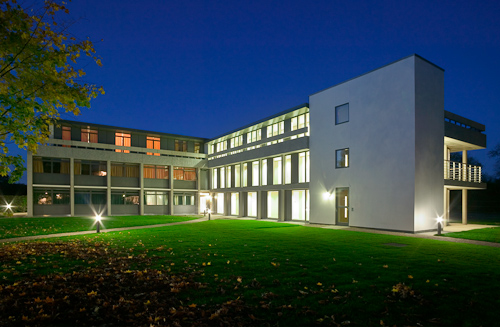
An architectural photography assignment for Berman Guedes Stretton Architects for their marketing portfolio and website.
“The strong architectural language of the existing 1960s Powell & Moya building inspired the form of the two new blocks of 37 graduate rooms 13 flats at Wolfson College in Oxford.
The horizontal granite aggregate bands and concrete columns of the original building have been sensitively translated into a contemporary design using the appropriate scale and materials.
Set adjacent to ancient meadow and the River Cherwell, the ´L´ shaped building, the second of two, makes the most of its green setting and has been carefully sited to maximise aspect and views. A new garden has been partially enclosed which together with the existing building forms an additional quad. Common rooms and top floor flats have large private balconies, which provide solar shading to the south elevation.” Berman Guedes Stretton
View the entire photoshoot here


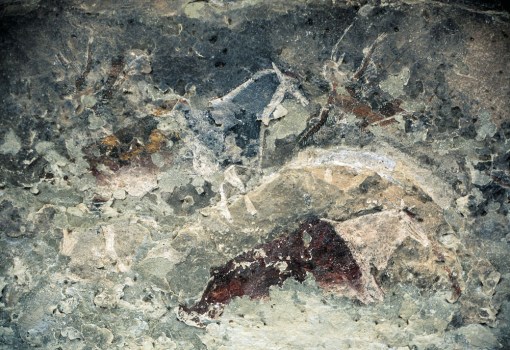
Ha Mokati Rock Art Site, Lesotho featured in the Sunday Times Magazine and the book Drawing Parallels. Photo: Quintin Lake
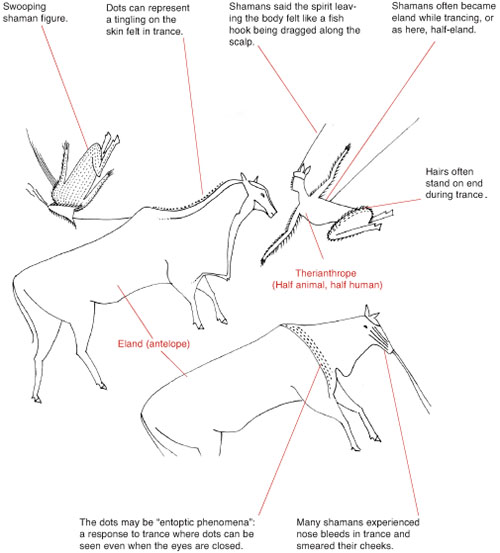
Suggested interpretation. Note that the reconstruction has been done with reference to Images of Power and other seminal works but remains tentative – above all the top left figure.
Lesotho Rock Art Survey 2000 is a Royal Geographical Society Sponsored expedition which discovered 10 previously unrecorded rock art sites in the remote Lesobeng Valley in Lesotho.
Ha Mokati is one of these sites and was featured in the Sunday Times Magazine April 15, 2001 under the heading “Eyeopener: Vanishing Dreams”.
Photography & Illustration © Quintin Lake, 2000


 Geometry & Silence