Archives for posts with tag: London

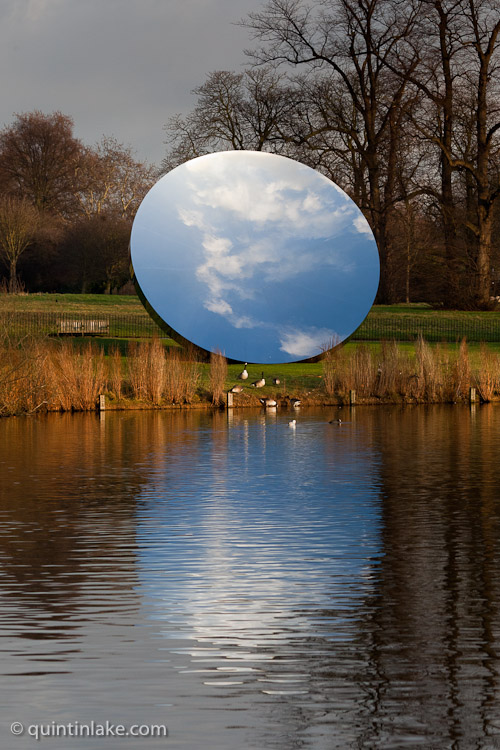
Anish Kapoor, Sky Mirror 2006, Stainless steel,1066.8 x 1066.8 cm. Installation view of Serpentine Gallery exhibition Turning the World Upside Down, Kensington Gardens. Photo: Quintin Lake

Anish Kapoor, Sky Mirror 2006, Stainless steel,1066.8 x 1066.8 cm. Detail. Photo: Quintin Lake

Anish Kapoor, Sky Mirror 2006, Stainless steel,1066.8 x 1066.8 cm. Installation view of Serpentine Gallery exhibition Turning the World Upside Down, Kensington Gardens. Photo: Quintin Lake

Anish Kapoor, Sky Mirror 2006, Stainless steel,1066.8 x 1066.8 cm. Installation view of Serpentine Gallery exhibition Turning the World Upside Down, Kensington Gardens, London 28 September 2010 – 13 March 2011.

VIEW MORE IMAGES of the Sky Mirror here >>

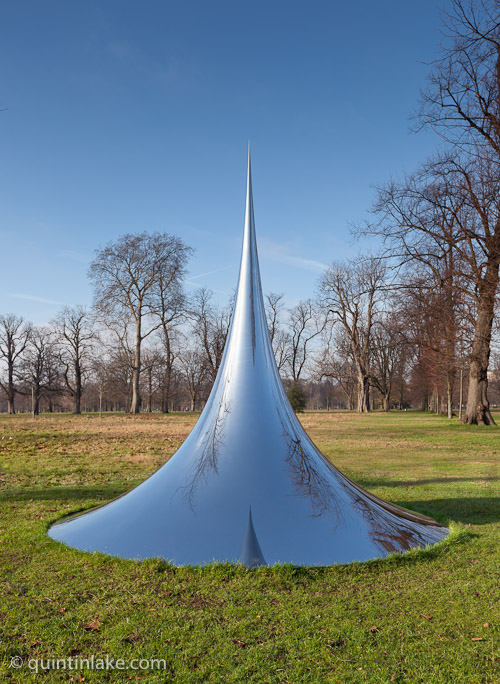
Anish Kapoor, Non Object (Spire) 2008, Stainless steel, 302 x 300 x 300 cm. Installation view. (barrier and path around artwork digitally removed). Photo: Quintin Lake

Anish Kapoor, Non Object (Spire) 2008, Stainless steel, 302 x 300 x 300 cm. Detail of tree reflection. Kensington Gardens, London. Photo: Quintin Lake

Anish Kapoor, Non Object (Spire) 2008, Stainless steel, 302 x 300 x 300 cm. Detail of abstract reflections of trees on side of spire. Photo: Quintin Lake

Anish Kapoor, Non Object (Spire) 2008, Stainless steel, 302 x 300 x 300 cm. Installation view of Serpentine Gallery exhibition Turning the World Upside Down in Kensington Gardens, London 28 September 2010 – 13 March 2011.

VIEW MORE IMAGES of Non Object here >>

Anish Kapoor, C-Curve 2007, Stainless steel, 220 x 770 x 300 cm. Installation view of Serpentine Gallery exhibition Turning the World Upside Down, Kensington Gardens, London 28 September 2010 - 13 March 2011 (reflection of photographer digitally removed). Photo: Quintin Lake

Anish Kapoor, C-Curve 2007, Stainless steel. Detail of Installation. Photo: Quintin Lake

Anish Kapoor, C-Curve 2007, Stainless steel. Installation view. Photo: Quintin Lake

Anish Kapoor, C-Curve 2007, Stainless steel, 220 x 770 x 300 cm. Installation view of Serpentine Gallery exhibition Turning the World Upside Down, Kensington Gardens, London 28 September 2010 – 13 March 2011

VIEW MORE IMAGES of C-Curve here >>

All images available as fine art prints or for publication / licensing contact me for pricing and to arrange use. Photographs © Quintin Lake  

Anish Kapoor, Non Object (Spire) 2008, Stainless steel, 302 x 300 x 300 cm. Installation view. (barrier and path around artwork digitally removed). Photo: Quintin Lake

Anish Kapoor, Non Object (Spire) 2008, Stainless steel, 302 x 300 x 300 cm. Detail of tree reflection. Kensington Gardens, London. Photo: Quintin Lake

Anish Kapoor, Non Object (Spire) 2008, Stainless steel, 302 x 300 x 300 cm. Detail of abstract reflections of trees on side of spire. Photo: Quintin Lake

Anish Kapoor, Non Object (Spire) 2008, Stainless steel, 302 x 300 x 300 cm. Installation view of Serpentine Gallery exhibition Turning the World Upside Down in Kensington Gardens, London 28 September 2010 – 13 March 2011.

VIEW MORE / BUY PRINTS / LICENSE IMAGES of the sculpture Anish Kapoor, Non Object here >>

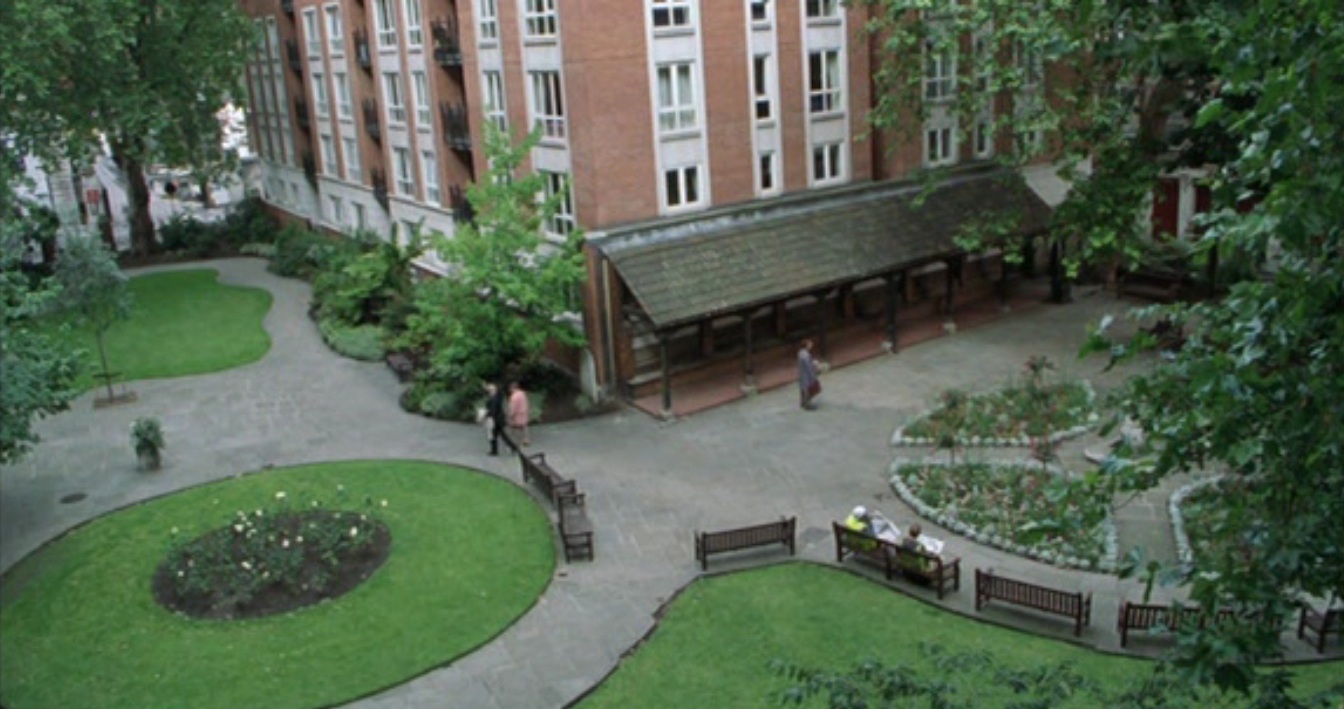
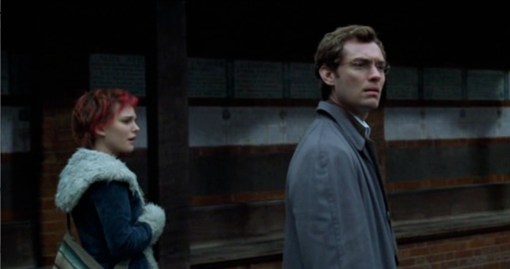
Alice Ayres (Natalie Portman) & Dan Woolf (Jude Law) in front of Memorial to Heroic Self Sacrifice in the movie Closer
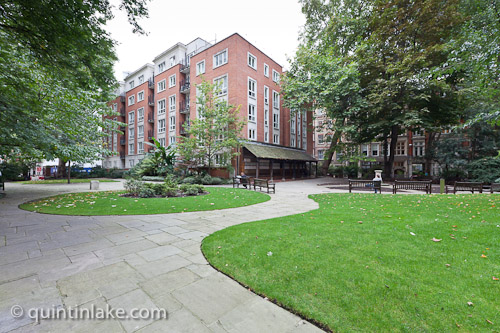
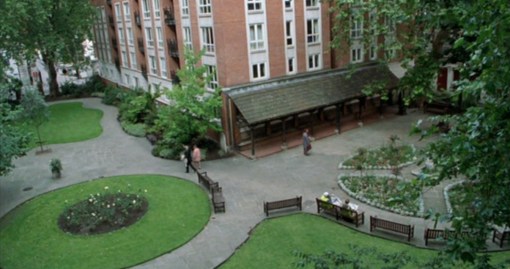
Postman's Park located between St Martin’s le Grand and King Edward Street in the City of London (Photo: Quintin Lake)
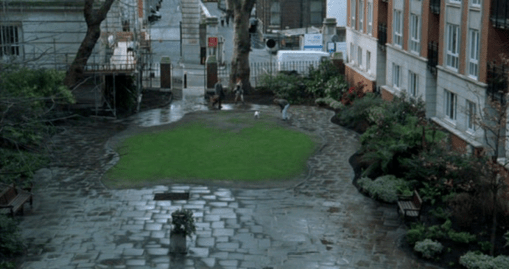
Alice Ayres (Natalie Portman) & Dan Woolf (Jude Law) enter Postman's park in the movie Closer
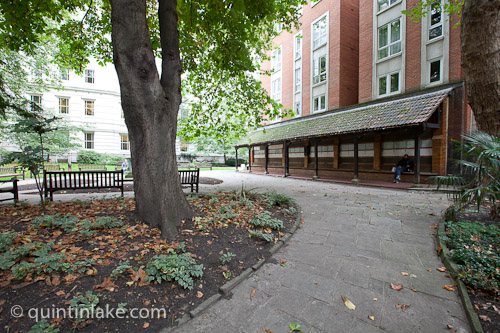
Postman's Park view of the loggia that makes up the Memorial to Heroic Self Sacrifice , City of London (Photo: Quintin Lake)
Dan Woolf (Jude Law) returns to the Memorial in Postman's Park at the end of the film Closer
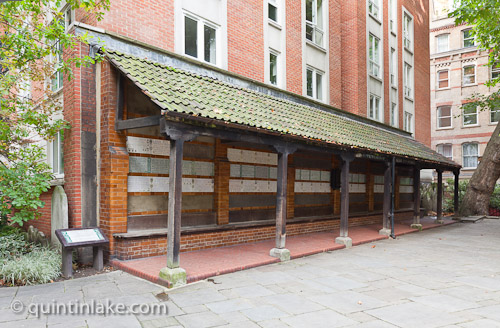
Memorial to Heroic Self Sacrifice Loggia in Postman's Park, City of London (Photo: Quintin Lake)

"In commemoration of Heroic Self Sacrifice" Postman's Park, City of London (Photo: Quintin Lake)
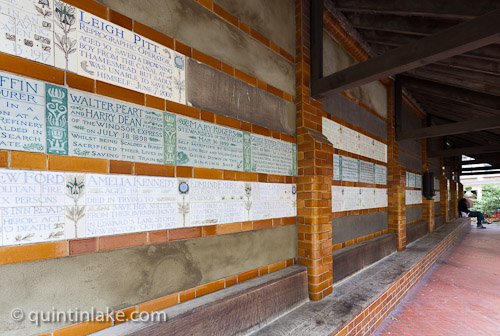
Arrangement of the tiles in the Memorial to Heroic Self Sacrifice, Postman's Park, City of London (Photo: Quintin Lake)

Statue of George Frederic Watts by T. H. Wren inscription reads "The Utmost for the Highest" "In memorial of George Frederic Watts, who desiring to honour heroic self-sacrifice placed these records here" (Photo: Quintin Lake)

1900 tile by William De Morgan. one of the first to be installed "Walter Peart, Driver and Harry Dean, Fireman of the Windsor Express on July 18 1898 Whilst being scalded and burnt sacrificed their lives in saving the train" (Photo: Quintin Lake)
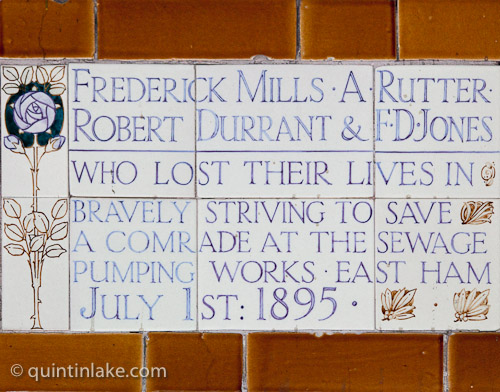
1902 tile by Royal Doulton "Frederick Mills · A Rutter Robert Durant & F D Jones Who lost their lives in bravely striving to save a comrade at the Sewage Pumping Works East Ham July 1st 1895" (Photo: Quintin Lake)

1902 tile by William De Morgan "Alice Ayres Daughter of a bricklayer's labourer Who by intrepid conduct saved 3 children from a burning house in Union Street Borough at the cost of her own young life April 24 1885" In the movie Closer Alice Ayres is played by Natalie Portman and Dan Woolf by Jude Law who notices this tile which features in the film. (Photo: Quintin Lake)
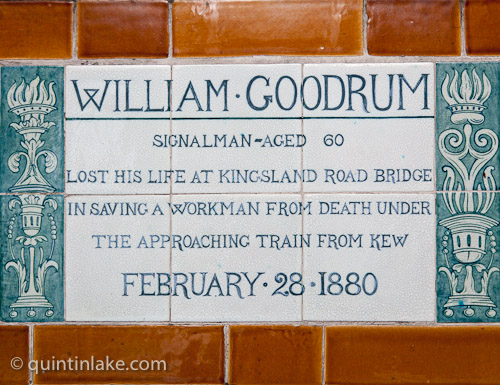
1905 tile by William De Morgam "William Goodrum Signalman · Aged 60 Lost his life at Kingsland Road Bridge in saving a workman from death under the approaching train from Kew February 28 1880" (Photo: Quintin Lake)

1908 tile by Royal Doulton "Thomas Simpson Died of exhaustion after saving many lives from the breaking ice at Highgate Ponds Jan 25 1885" (Photo: Quintin Lake)

1930 tile by Royal Doulton "P.C. Percy Edwin Cook Metropolitan Police Voluntarily descended high-tension chamber at Kensington to rescue two workmen overcome by poisonous gas" (Photo: Quintin Lake)
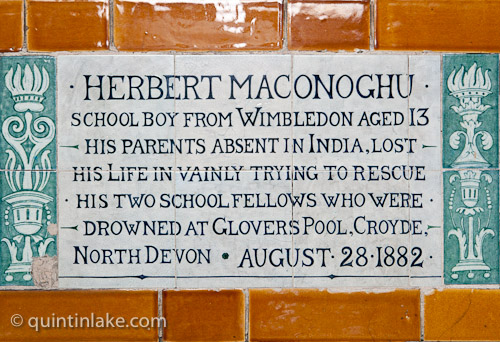
1931 tile by Fred Passenger "Herbert Maconoghu School boy from Wimbledon aged 13 His parents absent in India, lost his life in vainly trying to rescue his two school fellows who were drowned at Glovers Pool, Croyde, North Devon August 28 1882" (Photo: Quintin Lake)
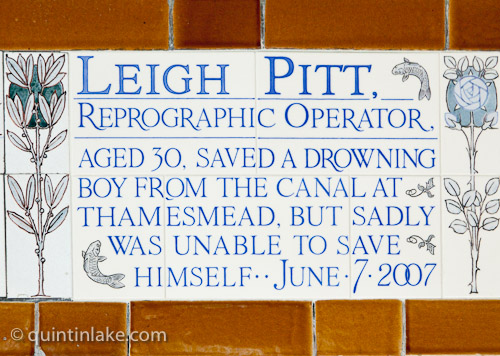
the most recent 2009 tile by Craven Dunnill Jackfield Ltd "Leigh Pitt Reprographic operator Aged 30, saved a drowning boy from the canal at Thamesmead, but sadly was unable to save himself" (Photo: Quintin Lake)

Postman’s Park is hidden away park in central London, a short distance north of St Paul’s Cathedral. Bordered by Little Britain, Aldersgate Street, King Edward Street, and the site of the former head office of the General Post Office (GPO), it is one of the largest parks in the City of London, the walled city which gives its name to modern London. A shortage of space for burials in London meant that corpses were often laid on the ground and covered over with soil instead of being buried, and thus Postman’s Park, built on the site of former burial grounds, is significantly elevated above the streets which surround it. It is best known as the location of the Memorial to Heroic Self Sacrifice.

Opened in 1880 on the site of the former churchyard and burial ground of St Botolph’s Aldersgate church, it expanded over the next 20 years to incorporate the adjacent burial grounds of Christ Church Greyfriars and St Leonard, Foster Lane, as well as the site of housing demolished during the widening of Little Britain in 1880, the ownership of which became the subject of a lengthy dispute between the church authorities, the General Post Office, the Treasury, and the City Parochial Foundation. The park’s name reflects its popularity amongst workers from the nearby GPO’s headquarters.

In 1900, the park became the location for George Frederic Watts’s Memorial to Heroic Self Sacrifice (also known as the Wall of Heroes), a memorial to ordinary people who died saving the lives of others and might otherwise have been forgotten, in the form of a loggia and long wall housing ceramic memorial tablets. At the time of its opening, only four of the planned 120 memorial tablets were in place, with a further nine tablets added during Watts’s lifetime. Following Watts’s death in 1904, his wife Mary Watts took over the management of the project and oversaw the installation of a further 35 memorial tablets in the following four years, as well as a small monument to Watts. However, disillusioned with the new tile manufacturer and with her time and money increasingly occupied by the running of the Watts Gallery, Mary Watts lost interest in the project and only five further tablets were added during her lifetime.

Although Watts’s plans for the memorial had envisaged names inscribed on the wall, in the event the memorial was designed to hold panels of hand-painted and glazed ceramic tiles. Watts was an acquaintance of William De Morgan, at that time one of the world’s leading tile designers, and consequently found them easier and cheaper to obtain than engraved stone.

In 1972, key elements of the park, including the Memorial to Heroic Self Sacrifice, were grade II listed to preserve their character. Following the 2004 film Closer, based on the 1997 play Closer by Patrick Marber, Postman’s Park experienced a resurgence of interest; key scenes of both were set in the park itself. In June 2009 the Diocese of London added a new tablet to the Memorial in the style of the Royal Doulton tiles for Leigh Pitt, a print technician from Surrey, had died on 7 June 2007 rescuing nine-year-old Harley Bagnall-Taylor who was drowning in a canal in Thamesmead. This tile the first new addition for 78 years and the 54th tablet

These photographs were commissioned by Thames & Hudson / View Pictures for an upcoming book on the architecture of the City of London

View more images of Postman’s Park and all 54 tiles in the  Memorial to Heroic Self Sacrifice, London here

Photography © Quintin Lake, 2010

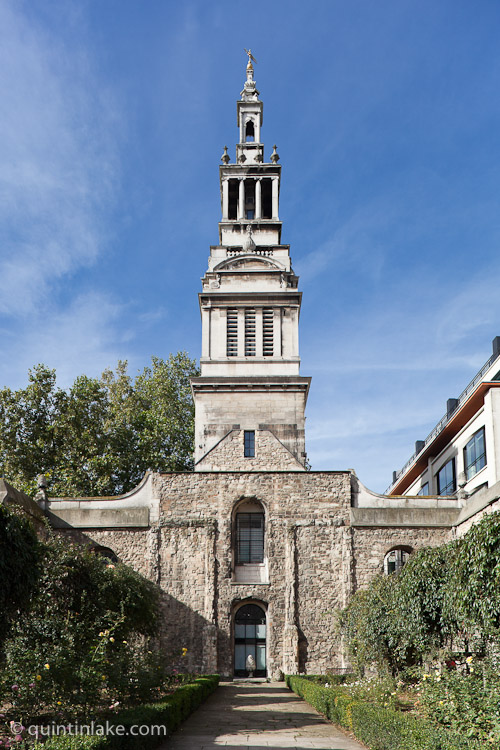
Blitz damaged nave and steeple of Christ Church Greyfriars, by Christopher Wren in the City of London. The tower, rising from the west end of the church, had a simple round-arched main entranceway and, above, windows decorated with neoclassical pediments. Large carved pineapples, symbols of welcome, graced the four roof corners of the main church structure. Unique among the Wren churches, the east and west walls had buttresses. (Photo: Quintin Lake)

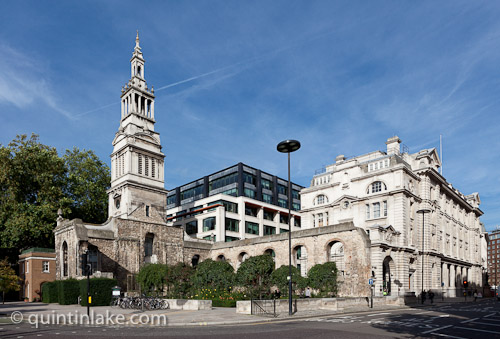
Remains of the Second World War damaged nave of Christ Church Greyfriars, London by Christopher Wren, 1687. Former General Post office buildings at right, now Merrill Lynch regional headquarters, contemporary Merrill Lynch offices at rear. (Photo: Quintin Lake)

Christ Church Greyfriars, also known as Christ Church Newgate, was an Anglican church located at the junction of Newgate Street and Montague Street, opposite St Paul’s Cathedral in the City of London. Built first in the gothic style, then in the English Baroque style by Sir Christopher Wren in 1687, it ranked among the City’s most notable pieces of architecture and places of worship.

The church was destroyed in the Second World War during the Blitz on December 29, 1940. A firebomb struck the roof and tore into the nave. Much of the surrounding neighbourhood was also set alight—a total of eight Wren churches burned that night. At Christ Church, the only fitting known to have been saved was the cover of the finely carved wooden font, recovered by an unknown postman who ran inside as the flames raged. The roof and vaulting collapsed into the nave; the tower and four main walls, made of stone, remained standing but were smoke-scarred and gravely weakened. A photograph taken in the light of the following day shows two firemen hosing down smouldering rubble in the nave. The ruins are now a public garden.

In 2002, the financial firm Merrill Lynch completed a regional headquarters complex on land abutting to the north and the west. In conjunction with that project, the Christ Church site got a major renovation and archeological examination. Construction workers put King Edward Street back to its former course so that the site regained its pre-war footprint. The churchyard was spruced up, its metal railings restored. In 2006, work was completed to convert the tower and spire into a modern twelve-level private residence. The nave area continues as a memorial; the wooden font cover, topped by a carved angel, can today be seen in the porch of St Sepulchre-without-Newgate.

These photographs were made during a commission by Thames & Hudson / View Pictures for a book on the architecture of the City of London.

View more images of Christ Church Greyfriars Here

Photography © Quintin Lake, 2010
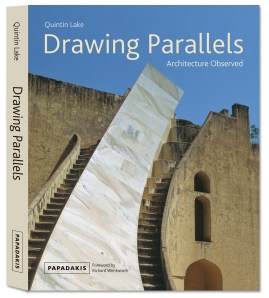
Quintin Lake “Drawing Parallels: Architecture Observed” Papadakis, 2009
ISBN 978-1906506-04-9 (Hardcover, 208 pages. £25. Colour throughout)

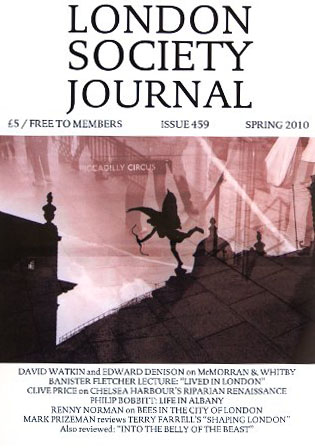
Reviewed by William Arthurs, Editor, London Society Journal

This fascinating book collects about 200 photographs of natural features, buildings and architectural detail from many countries around the world. Each page spread presents two photographs, with brief commentary, for the reader to compare and contrast. It is reviewed here because fifteen of the images are drawn from the London area and it is on some of these that I comment below, along with their comparisons.

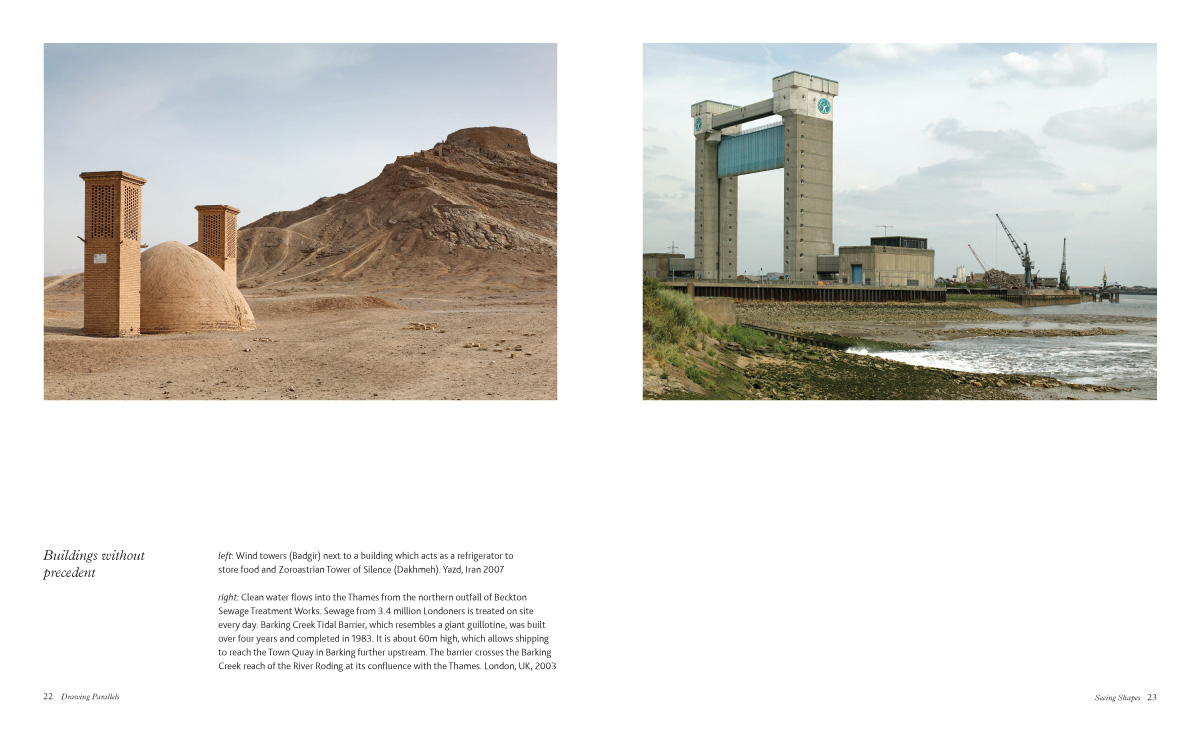
On pp. 22-3, a bleak Thames estuary landscape comprising the Barking Creek tidal barrier, resembling a giant guillotine, and the outfall of the Beckton Sewage Treatment works, is compared with a drier and more mysterious landscape in Yazd, Iran, with two square brick wind-towers, a conical brick building used as a refrigerator, and in the background a Zoroastrian Tower of Silence. I noted here the hidden nature of disposal – in the case of the Tower of Silence, the laying out of the corpses of the deceased on top of the tower is ritualistic, while the sewage works operate a mechanised and secular process of disposal (though one could compare some Victorian views of the sewer system, outlined by Dobraszczyk in “Into the Belly of the Beast”, also reviewed in this issue, and for which Quintin Lake provided the dustjacket image).

Next, on pp. 32-3, a comparison between the stump of one of the demolished Moorish-style chimneys at Abbey Mills pumping station (1865-8; these chimneys became redundant in the 1930s and were demolished during the Second World War) and the stump of the 14 th century Alau Minar brick minaret in Delhi, never completed. (Incidentally the Abbey Mills station as originally built is depicted on p. 114 of “Into the Belly of the Beast” and the chimneys are described on pp. 139 ff.). The Abbey Mills chimneys were 209 feet tall. The Delhi minaret was a more ambitious project as it was originally intended to be taller than its extant neighbour, Qutb Minar, at 240 feet the world’s tallest brick minaret.

On pp. 36-7, a view familiar to our readers from the cover of issue 457 – the columns of the old Blackfriars Railway Bridge – are compared with some Doric columns at the Temple of Hera at Paestum (550 BC). In both cases, columns are left supporting not much, but still standing – but compare the materials and finish, and how they have weathered.

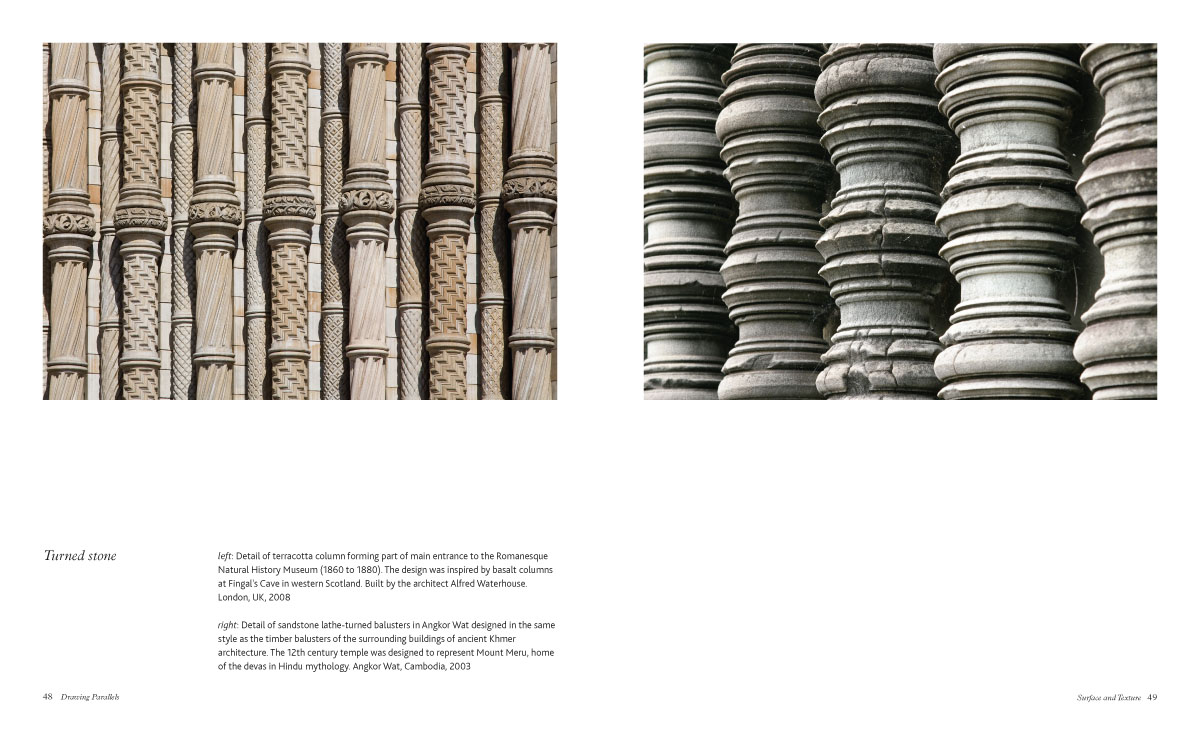
On pp. 48-9 a detail of the terracotta columns around the main entrance to the Natural History Museum (Alfred Waterhouse, 1860-1880) are compared with 12th century lathe-turned sandstone temple balusters at Angkor Wat. Here we are invited to compare texture, colour, to imagine the different processes for firing terracotta and turning sandstone, and to consider the
function of the buildings – a temple of science, and a Hindu temple.

Later photographs include the Gherkin, the Tower of London, Rachel Whiteread’s “House”, and vernacular settings in Walthamstow and in South London. A thought-provoking and beautifully-photographed collection to which I have found myself returning on many occasions.

William Arthurs, Editor, London Society Journal

The London Society Journal is the magazine for members of the London Society and is published twice a year. The London Society was founded in 1912 and works to stimulate appreciation of London, to encourage excellence in planning and development, and to preserve its amenities and the best of its buildings.

Buy Drawing Parallels from Amazon UK here