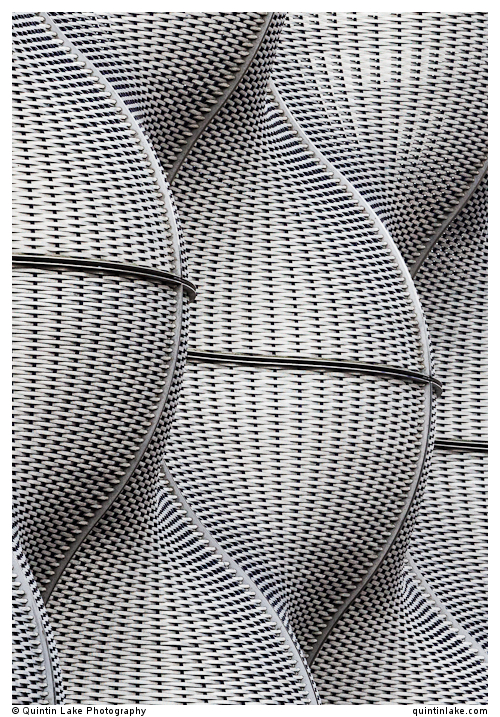
Detail of Boiler Suit, Guy’s Hospital, London designed by Heatherwick Studio
Boiler Suit is an undulating skin of woven steel panels encasing the boiler house at Guy’s Hospital, London designed by Heatherwick Studio

Detail of Boiler Suit, Guy’s Hospital, London designed by Heatherwick Studio
Boiler Suit is an undulating skin of woven steel panels encasing the boiler house at Guy’s Hospital, London designed by Heatherwick Studio
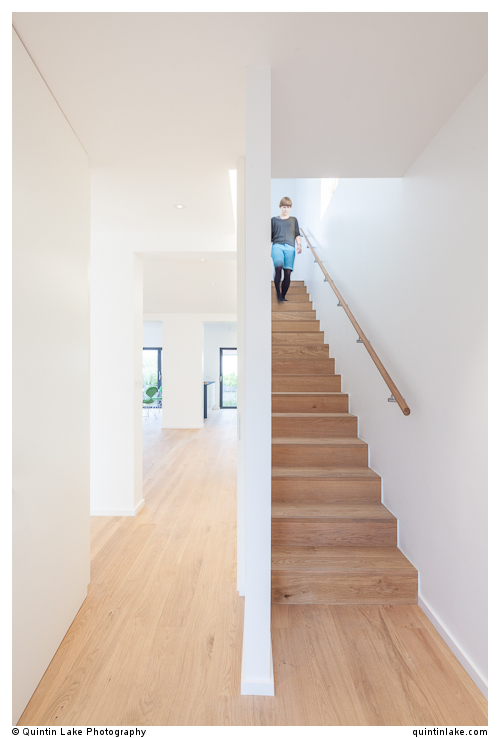
At the front door, the house opens up to provide clear views through to the garden and staircase
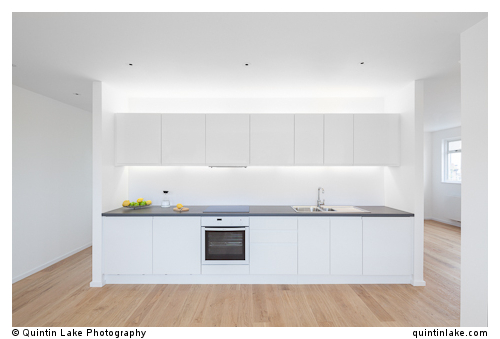
The kitchen on the first floor, serves both a functional purpose and defines the surrounding spaces
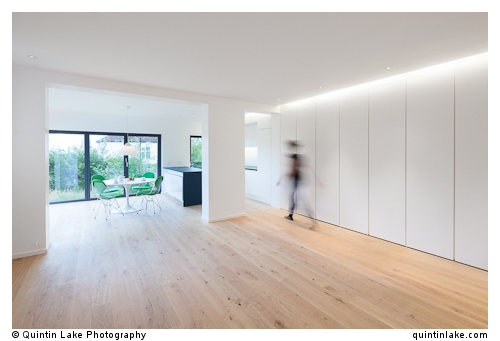
The discrete wall panelling provides an understated backdrop to the ground floor living activities
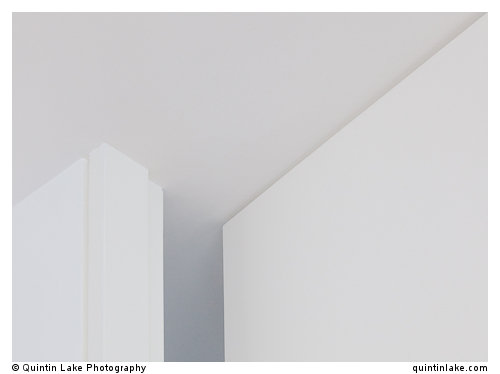
Full-height doors allow the spaces of the house to flow into each other
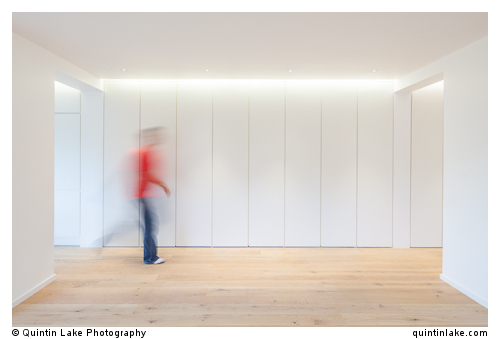
Hidden doors conceal laundry and storage spaces beyond
Contemporary fit out to 1930’s semi detached house in North London by Krause Architects. This photoshoot was about getting the right simplicity of composition and colour tone to compliment the minimal and refined design. Most shots were taken with a 17mm tilt shift lens with fill-in flash when needed. As the interiors had mixed natural and artificial light sources (which appear as different colours in camera) these were balanced by masking in post production.
Click Here for More from this Photoshoot >>
All images available for publication / licensing contact me for pricing.

Drawing Parallels: Architecture Observed, By Quintin Lake Foreword by Richard Wentworth. Published by Papadakis
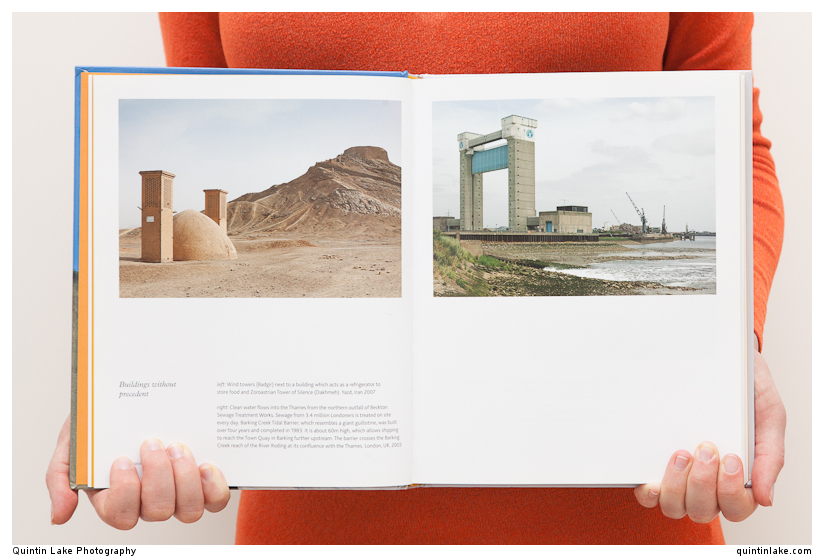
Buildings without precedent
left: Wind towers (Badgir) next to a building which acts as a refrigerator to store food and Zoroastrian Tower of Silence (Dakhmeh). Yazd, Iran 2007
right: Clean water flows into the Thames from the northern outfall of Beckton Sewage Treatment Works. Sewage from 3.4 million Londoners is treated on site every day. Barking Creek Tidal Barrier, which resembles a giant guillotine, was built over four years and completed in 1983. It is about 60m high, which allows shipping to reach the Town Quay in Barking further upstream. The barrier crosses the Barking Creek reach of the River Roding at its confluence with the Thames. London, UK, 2003
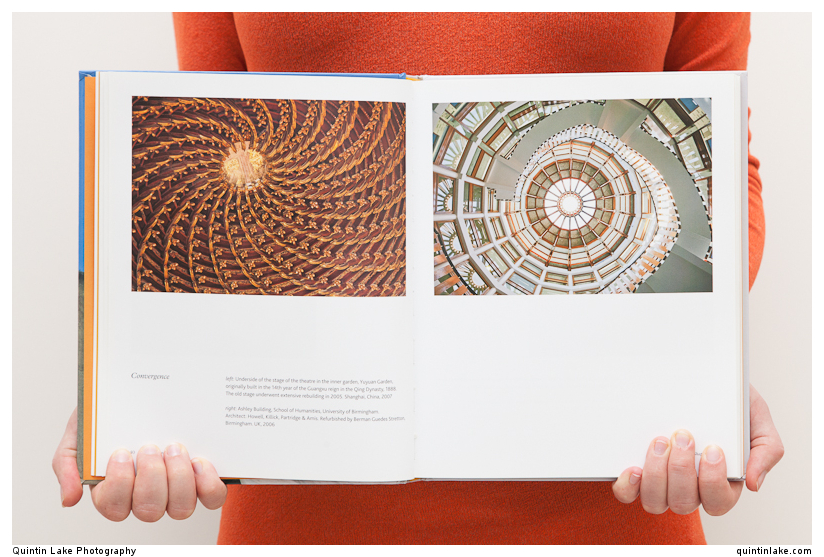
Convergence
left: Underside of the stage of the theatre in the inner garden, Yuyuan Garden, originally built in the 14th year of the Guangxu reign in the Qing Dynasty, 1888. The old stage underwent extensive rebuilding in 2005. Shanghai, China, 2007
right: Ashley Building, School of Humanities, University of Birmingham. Architect: Howell, Killick, Partridge & Amis. Refurbished by Berman Guedes Stretton, Birmingham. UK, 2006
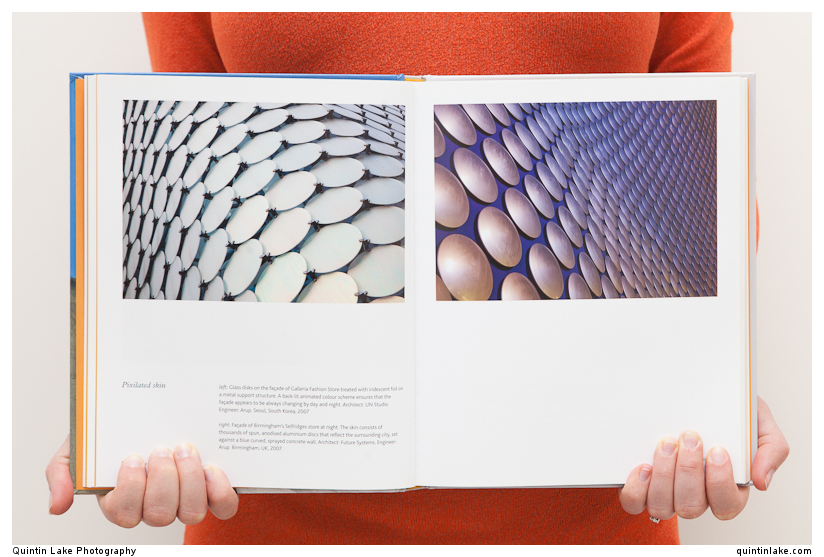
Pixilated skin
left: Glass disks on the facade of Galleria Fashion Store treated with iridescent foil on a metal support structure. A back-lit animated colour scheme ensures that the facade appears to be always changing by day and night. Architect: UN Studio. Engineer: Arup. Seoul, South Korea, 2007
right: Façade of Birminghamâs Selfridges store at night. The skin consists of thousands of spun, anodised aluminium discs that reflect the surrounding city, set against a blue curved, sprayed concrete wall. Architect: Future Systems. Engineer: Arup. Birmingham, UK, 2007
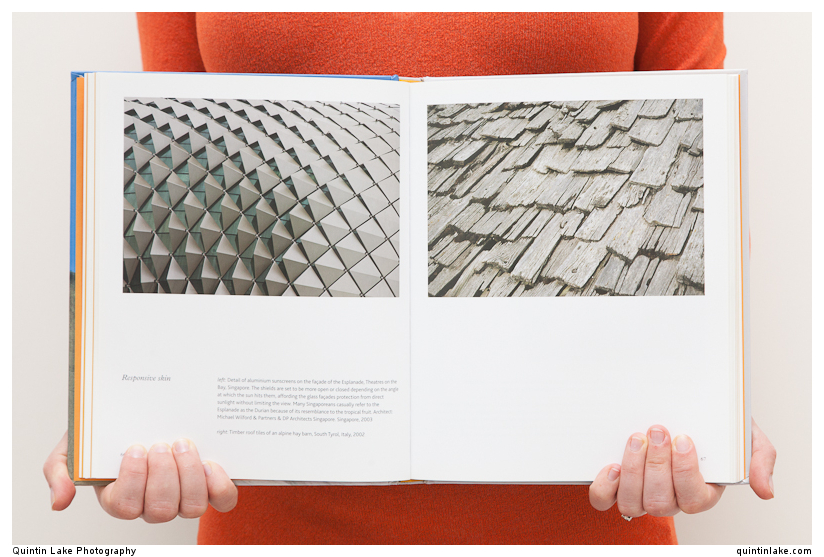
Responsive skin
left: Detail of aluminium sunscreens on the facade of the Esplanade, Theatres on the Bay, Singapore. The shields are set to be more open or closed depending on the angle at which the sun hits them, affording the glass facades protection from direct sunlight without limiting the view. Many Singaporeans casually refer to the Esplanade as the Durian because of its resemblance to the tropical fruit. Architect: Michael Wilford & Partners & DP Architects Singapore. Singapore, 2003
right: Timber roof tiles of an alpine hay barn, South Tyrol, Italy, 2002

Absolute boundaries
left: Tourist viewing platformfor looking into North Korea from the South Korean side of the 38th parallel. Situated on top of Dorasan (Mount Dora), the observatory looks across the Demilitarized Zone. It is the part of South Korea closest to the North. Mount Dora, South Korea, 2007
right: Road barrier above a steep drop at the edge of a newly completed section of the Interoceanic Highway in the Peruvian Andes. Above Cuzco, Peru, 2008
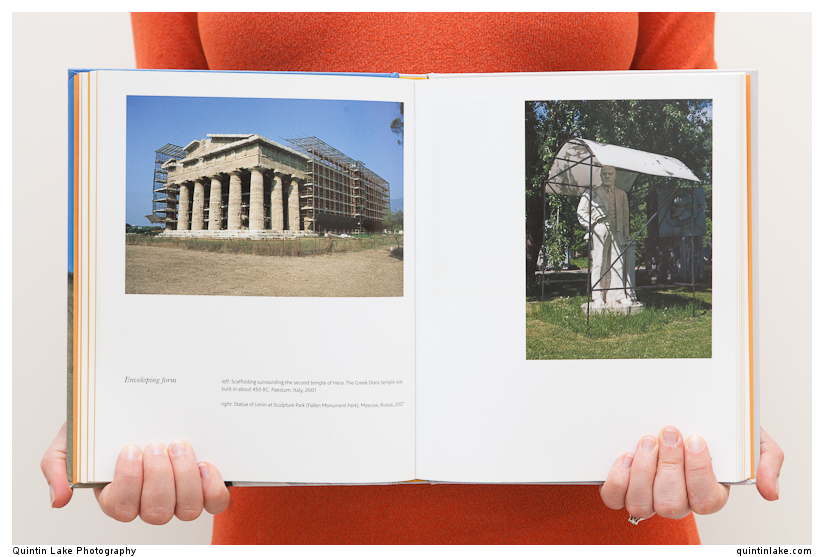
Enveloping form
left: Scaffolding surrounding the second temple of Hera. The Greek Doric temple was built in about 450 BC. Paestum, Italy, 2001
right: Statue of Lenin at Sculpture Park (Fallen Monument Park), Moscow, Russia, 2007
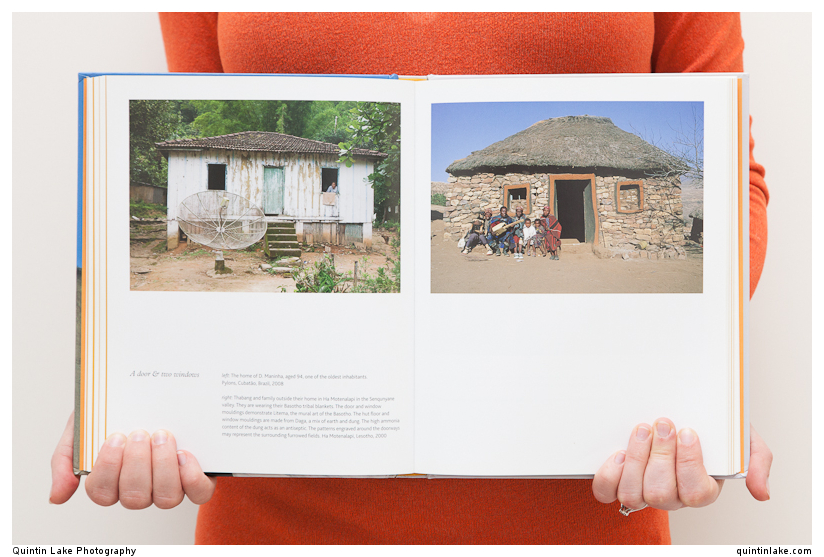
A door & two windows
left: The home of D. Maninha, aged 94, one of the oldest inhabitants. Pylons, Cubatao, Brazil, 2008
right: Thabang and family outside their home in Ha Motenalapi in the Senqunyane valley. They are wearing their Basotho tribal blankets. The door and window mouldings demonstrate Litema, the mural art of the Basotho. The hut floor and window mouldings are made from Daga, a mix of earth and dung. The high ammonia content of the dung acts as an antiseptic. The patterns engraved around the doorways may represent the surrounding furrowed fields. Ha Motenalapi, Lesotho, 2000
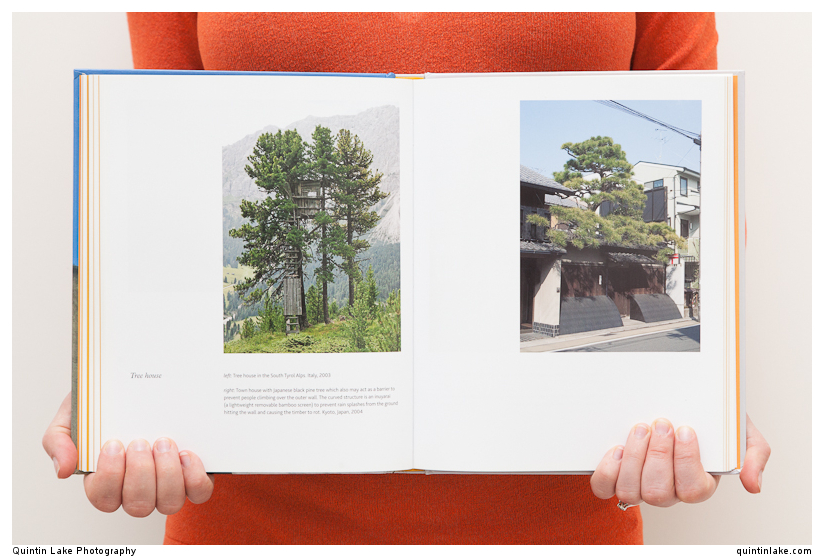
Tree house
left: Tree house in the South Tyrol Alps. Italy, 2003
right: Town house with Japanese black pine tree which also may act as a barrier to prevent people climbing over the outer wall. The curved structure is an inuyarai (a lightweight removable bamboo screen) to prevent rain splashes from the ground hitting the wall and causing the timber to rot. Kyoto, Japan, 2004
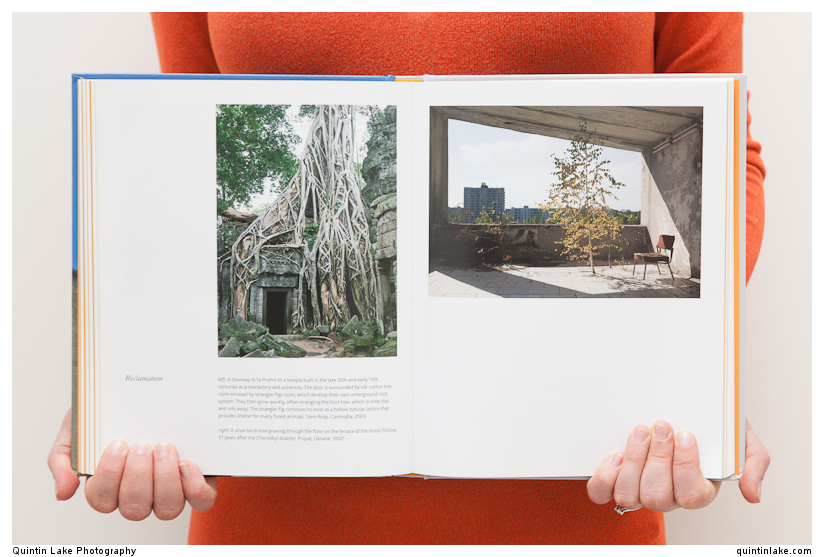
Reclamation
left: A doorway in Ta Prohm to a temple built in the late 12th and early 13th centuries as a monastery and university. The door is surrounded by silk cotton tree roots encased by strangler figs roots, which develop their own underground root system. They then grow quickly, often strangling the host tree, which in time dies and rots away. The strangler fig continues to exist as a hollow tubular lattice that provides shelter for many forest animals. Siem Reap, Cambodia, 2003
right: A silver birch tree growing through the floor on the terrace of the Hotel Polissia 21 years after the Chernobyl disaster. Pripiat, Ukraine, 2007
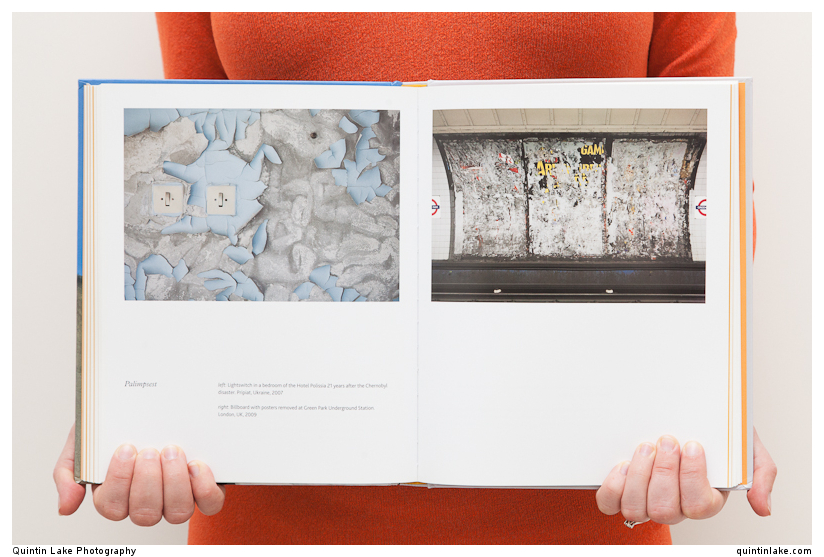
Palimpsest
left: Lightswitch in a bedroom of the Hotel Polissia 21 years after the Chernobyl disaster. Pripiat, Ukraine, 2007
right: Billboard with posters removed at Green Park Underground Station. London, UK, 2009
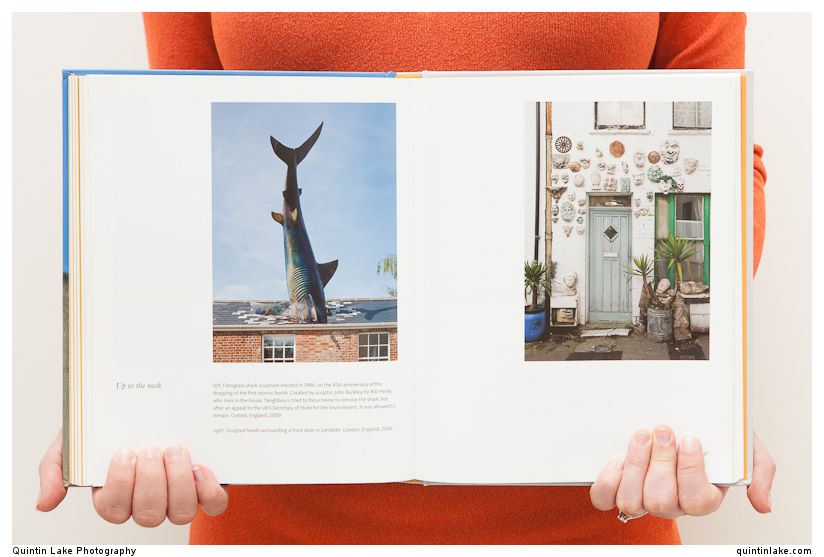
Up to the neck
left: Fibreglass shark sculpture erected in 1986, on the 41st anniversary of the dropping of the first atomic bomb. Created by sculptor John Buckley for Bill Heine, who lives in the house. Neighbours tried to force Heine to remove the shark, but after an appeal to the UK’s Secretary of State for the Environment, it was allowed to remain. Oxford, England, 2009
right: Sculpted heads surrounding a front door in Lambeth. London, England, 2009
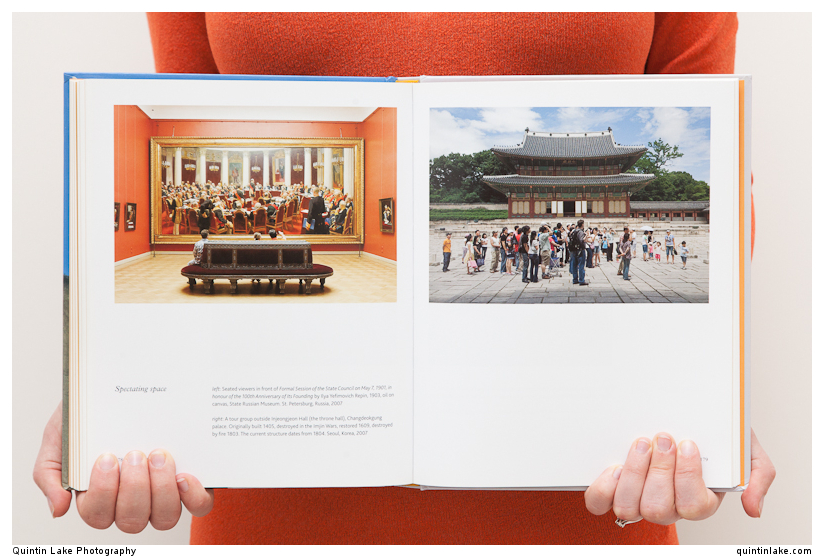
Spectating space
left: Seated viewers in front of Formal Session of the StateCouncil onMay 7, 1901, in honour of the 100th Anniversary of Its Founding by Ilya Yefimovich Repin, 1903, oil on canvas, State Russian Museum. St. Petersburg, Russia, 2007
right: A tour group outside Injeongjeon Hall (the throne hall), Changdeokgung palace. Originally built 1405, destroyed in the ImjinWars, restored 1609, destroyed by fire 1803. The current structure dates from 1804. Seoul, Korea, 2007
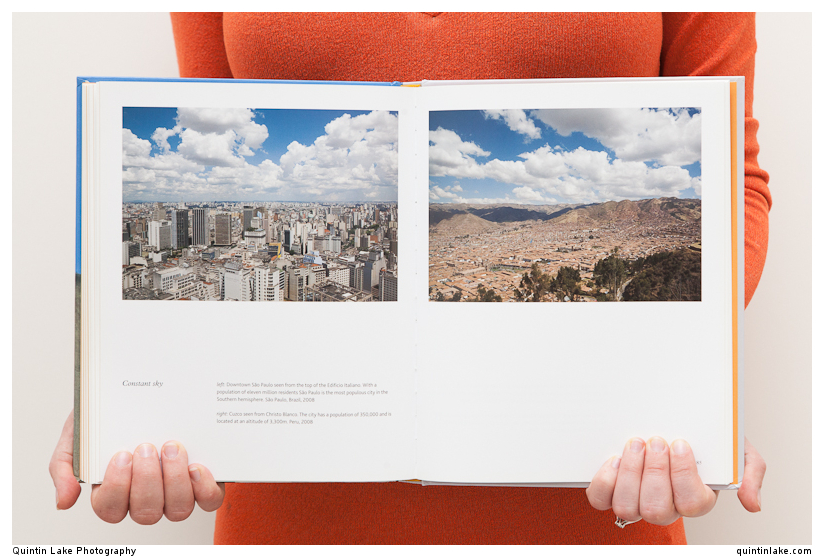
Constant sky
left: Downtown Sao Paulo seen from the top of the Edificio Italiano.With a population of eleven million residents Sao Paulo is the most populous city in the Southern hemisphere. Sao Paulo, Brazil, 2008
right: Cuzco seen from Christo Blanco. The city has a population of 350,000 and is located at an altitude of 3,300m. Peru, 2008
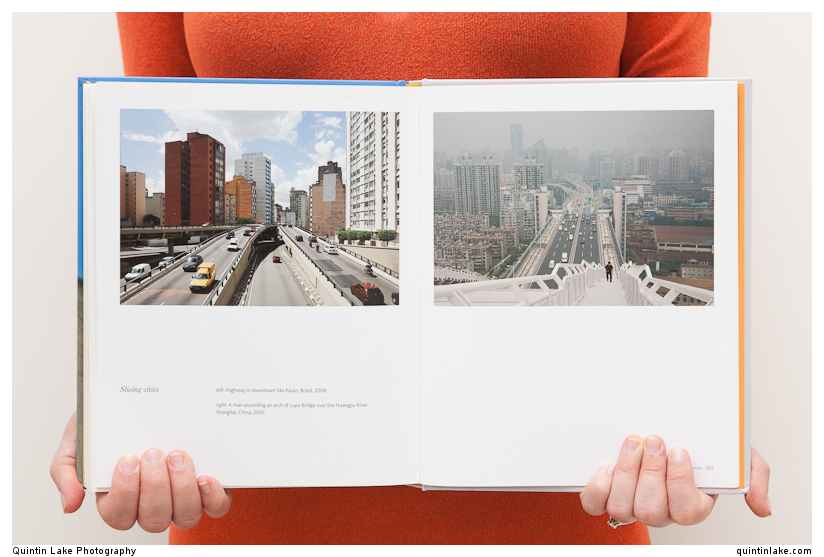
Slicing cities
left: Highway in downtown Sao Paulo. Brazil, 2008
right: A man ascending an arch of Lupu Bridge over the Huangpu River. Shanghai, China, 2007
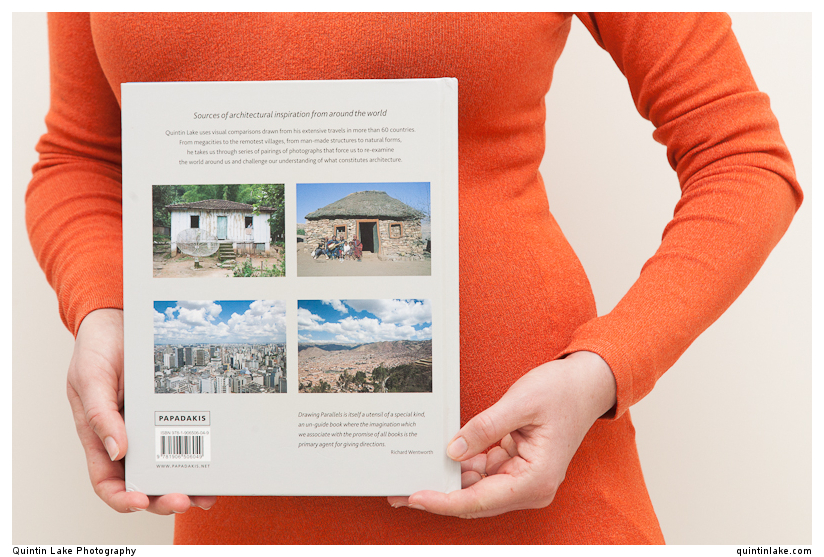
Sources of architectural inspiration rom around the world
BUY Drawing Parallels: Architecture Observed on Amazon >>
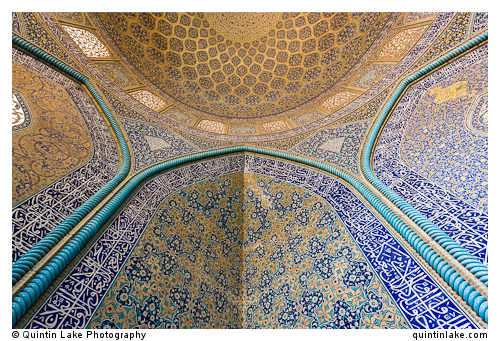
Interior Dome of Sheikh Lotf Allah Mosque, Naghsh-i Jahan Square, Isfahan, Iran.
Sheikh Lotfallah Mosque was completed in 1619 after nearly 20 years of construction by Architect Shaykh Bahai. Today, the mosque stands as a magnificent and detailed public work. However, when it was originally built it was a private and luxurious place of worship for Shah Abbas I and the women of his court.

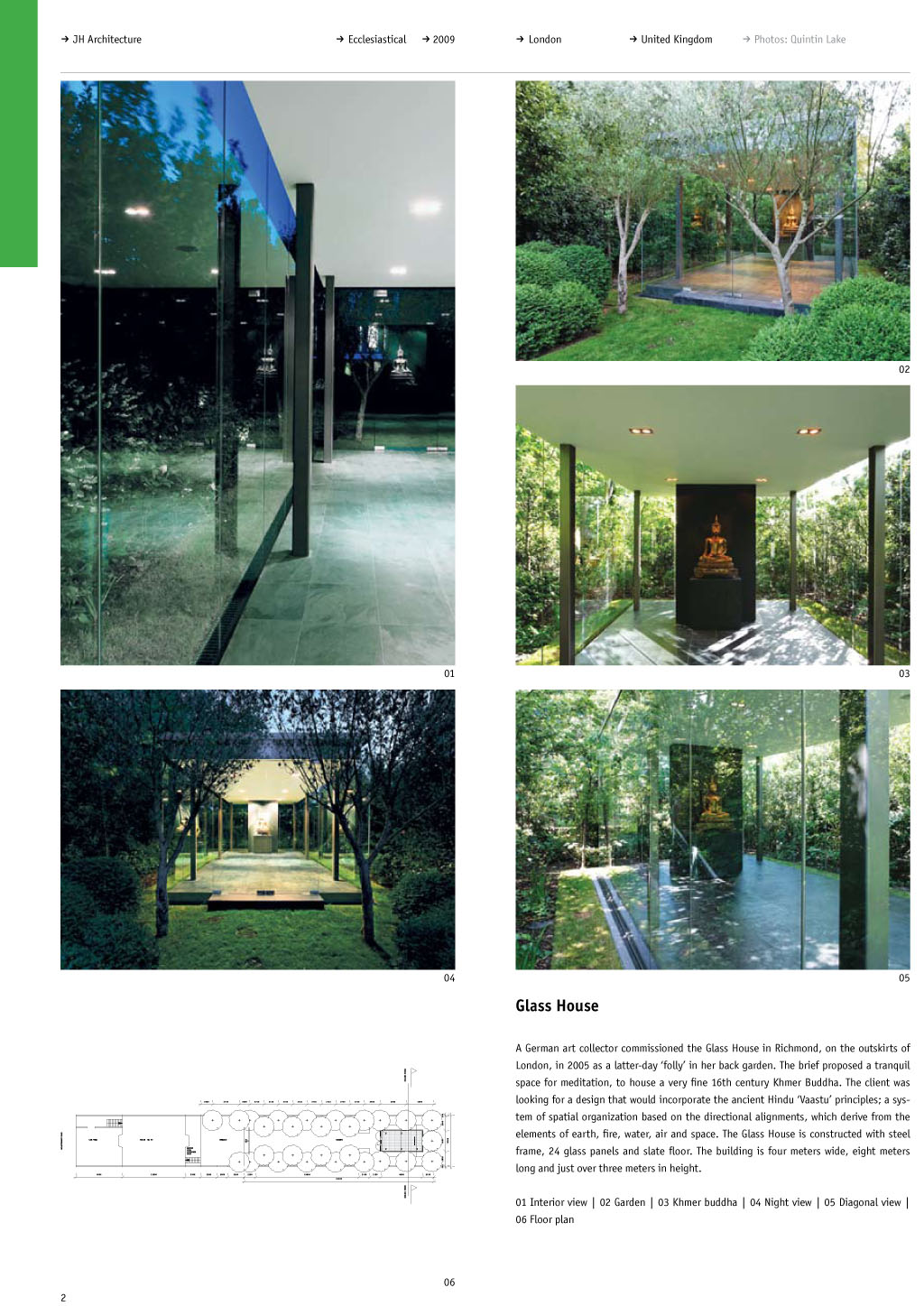
My photographs of Julia Haensel Architecture‘s glass walled meditation space were recently published in 1000x European Architecture by Braun Architecture. See more images of this building.
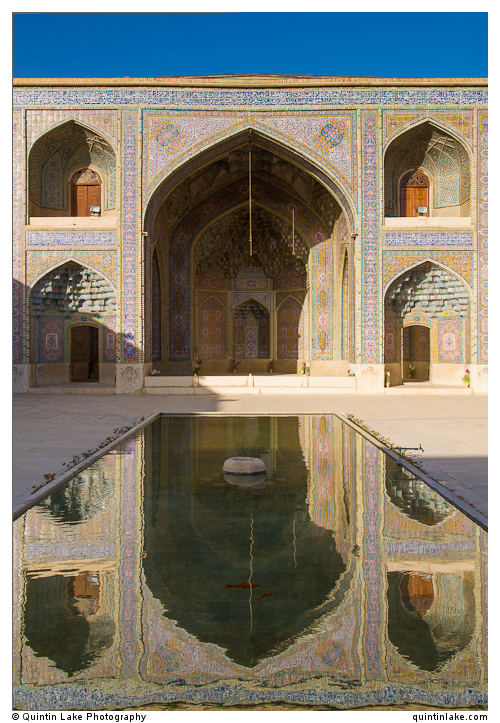
North Iwan at Nasir al-Mulk Mosque, (aka the Pink Mosque) Shiraz, Iran
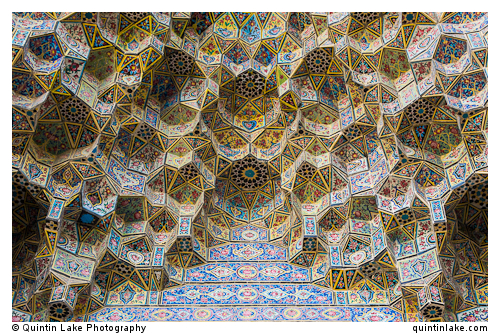
Ceramic tiles ceiling decorating a muqarnas vault at Nasir al-Mulk Mosque,
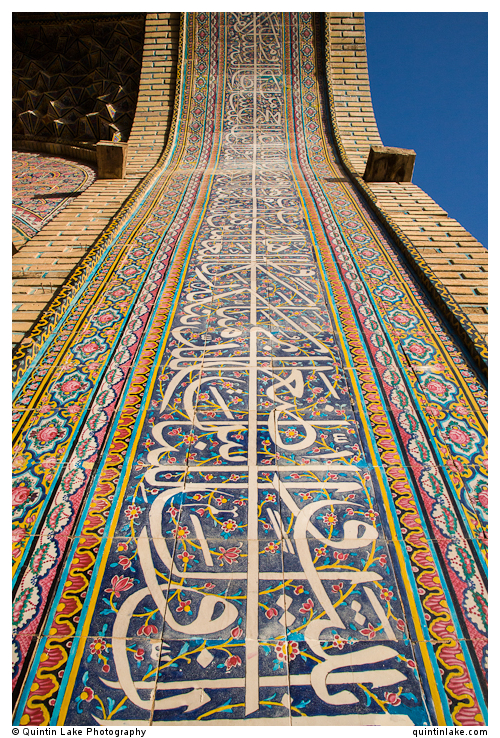
Glazed tile Inscription dating from the 19th century in the northern iwan (semiopen.space on the edge of a courtyard wall), Nasir-al-Mulk Mosque. Flexible timber, visible poking out of the wall at the top of the image, is used for earthquake resistance. The text is from Al Imran, the 3rd chapter of the Koran
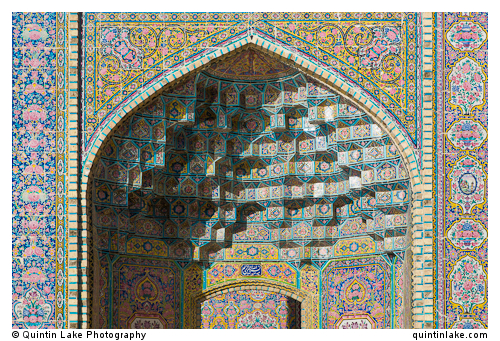
Ceramic tiles ceiling decorating a vault at Nasir al-Mulk Mosque
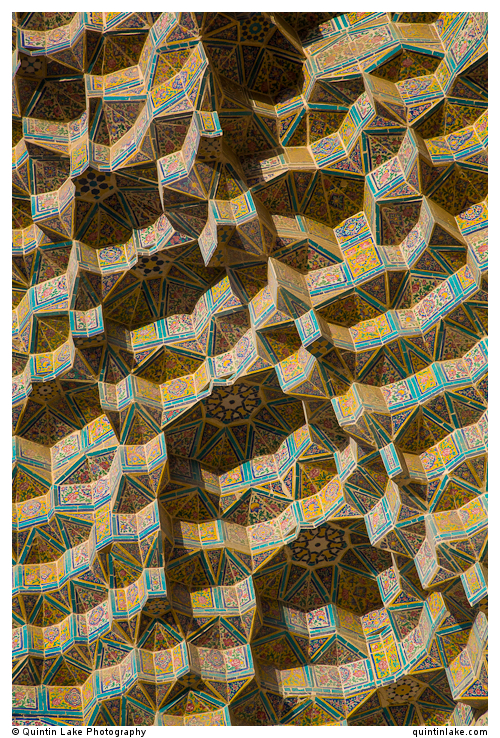
Detail of muqarnas at Nasir al-Mulk Mosque, (aka the Pink Mosque) Shiraz, Iran.
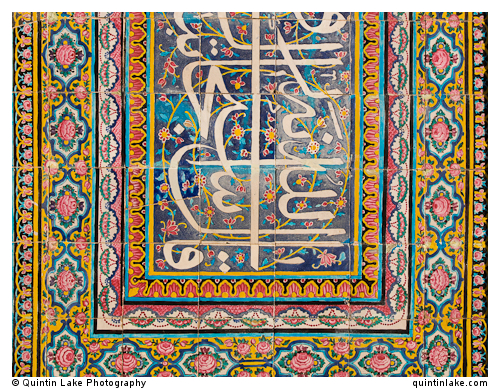
Decorated tiled islamic inscription at Nasir al-Mulk Mosque
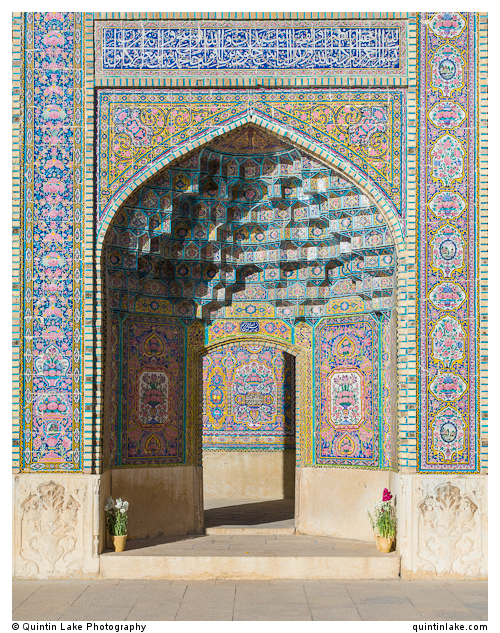
Nasir al-Mulk Mosque, (aka the Pink Mosque) Shiraz, Iran
Nasir al-Mulk Mosque, (aka the Pink Mosque) Shiraz, Iran is unique and delightful for the widespread use of pink tiling in the decoration. Built 1876 -1888. Architects: Muhammad Hasan-e-Memar and Muhammad Reza Kashi Paz-e-Shirazi.
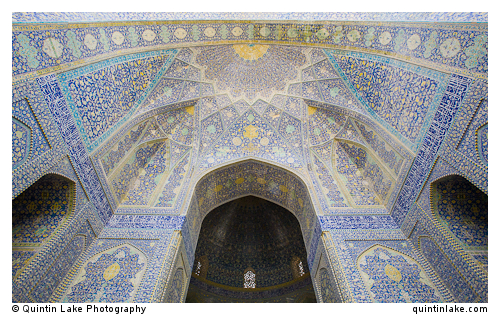
South Iwan, entrance to main sanctuary. Imam Mosque (Masjed-e Imam), Isfahan, Iran
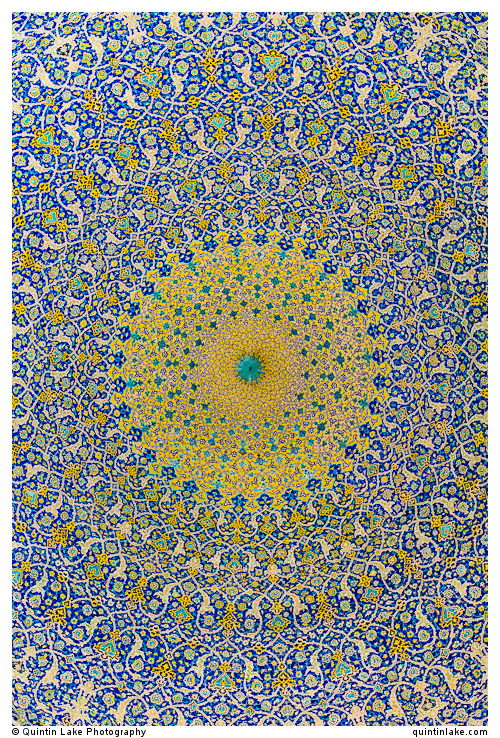
Dome of the main sanctuary. Imam Mosque, Isfahan, Iran
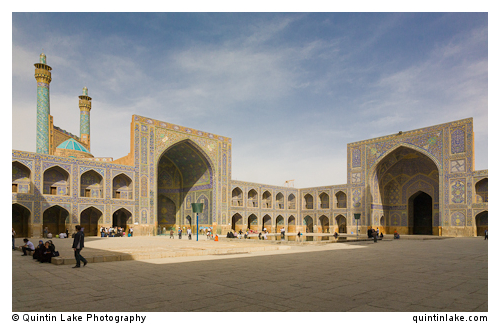
Courtyard of the Imam Mosque, Isfahan, Iran
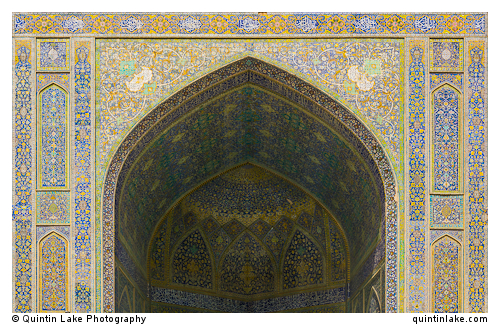
North iwan coverd in polychromatic tiles. Imam Mosque, Isfahan, Iran
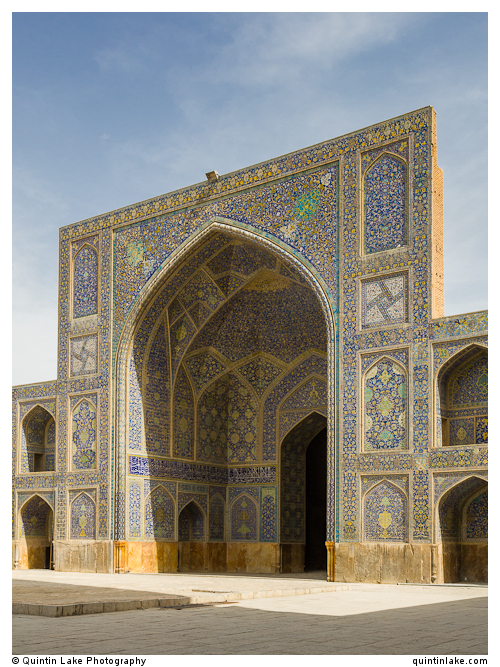
West iwan. Imam Mosque, Isfahan, Iran
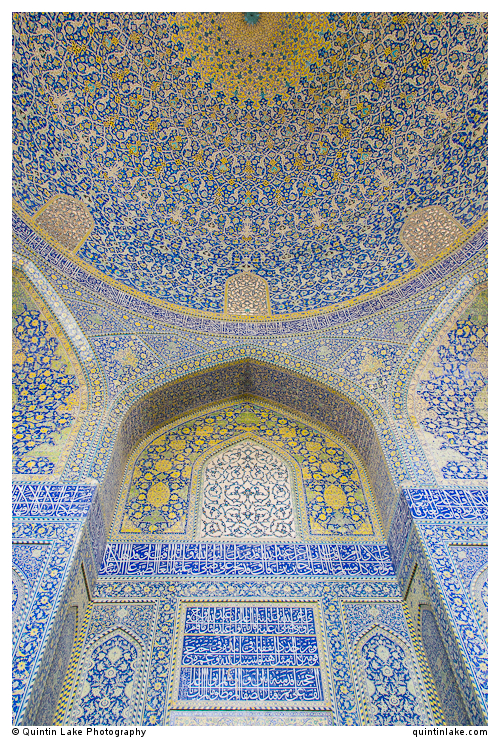
Dome of the main sanctuary. Imam Mosque, Isfahan, Iran
Built during the Safavid period between 1611 to 1629 by architect Shaykh Baha, the Imam Mosque of Isfahan it is an excellent example of Islamic architecture of Iran, and regarded as one of the masterpieces of Persian Architecture. It is registered, along with the Naghsh-i Jahan Square, as a UNESCO World Heritage Site. Although the Imam mosque is massive and initially impressive, in my view the neighbouring Sheikh Lotf Allah Mosque and the Jameh Mosque of Isfahan are of greater scuptural subtlety and sublime geometrical beauty.
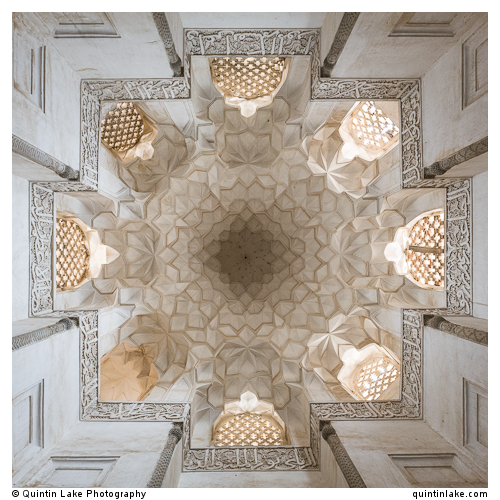
Interior of Octagonal Pavilion Tomb of the Sheikh Abdolsamad, Natanz, Iran.
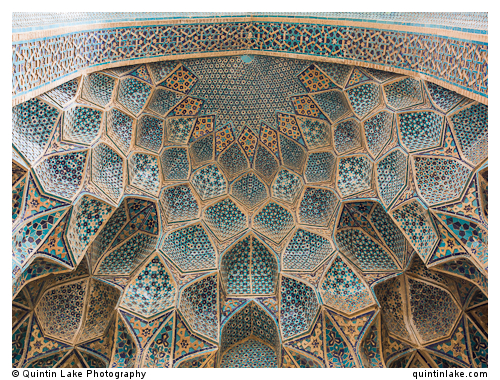
Detail view of khanqah portal; muqarnas semi-dome, Shaykh ‘Abd al-Samad Mosque, Natanz, Iran.
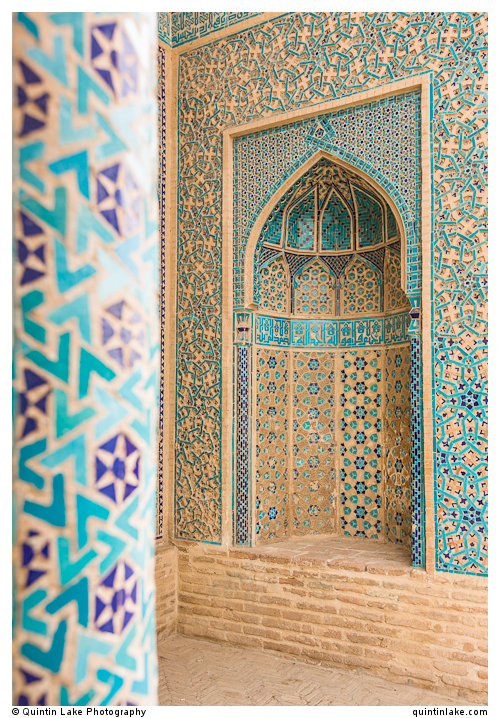
Portal of Abd-al-Samad-tomb
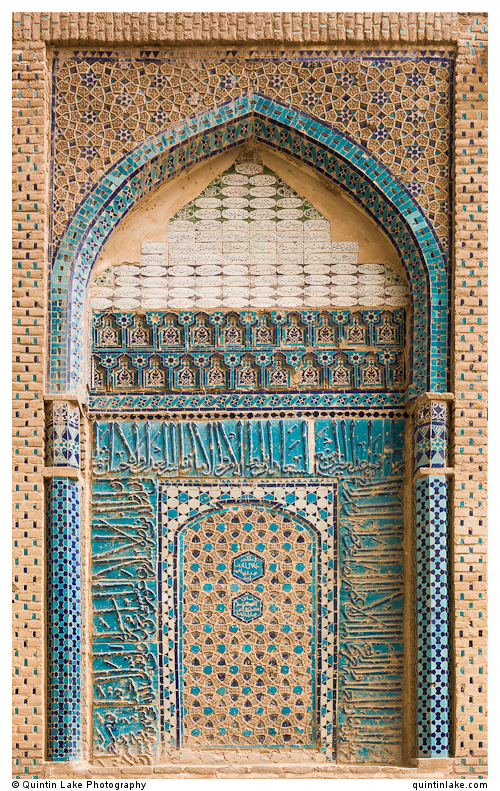
Facade of Shaykh ‘Abd al-Samad Mosque
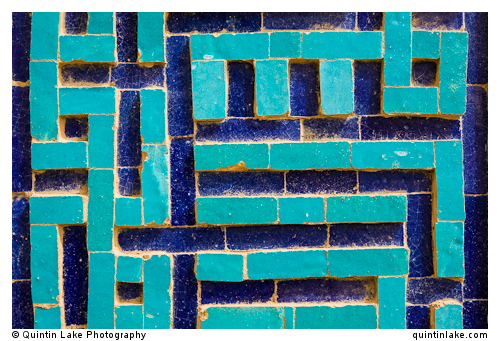
Detail of mosaic tiling
Natanz gets in the news as the location of Iran’s nuclear facility but much more interesting is the beautiful Abdolsamad Tomb & Mosque. This is a large funerary complex which has grown up organically around the tomb of Abd al-Samad, a follower of the famous Sufi saint Abu Said who died in 1049. The central feature of the site is the octagonal tomb around which is built a four-iwan congregational mosque dated to 1309. Internally the tomb is a cruciform chamber which is converted to an octagon at roof level. The roof is a blue-tiled octagonal pyramid dome outside and internally comprises a tall muqarnas vault.


 Geometry & Silence