Archives For author

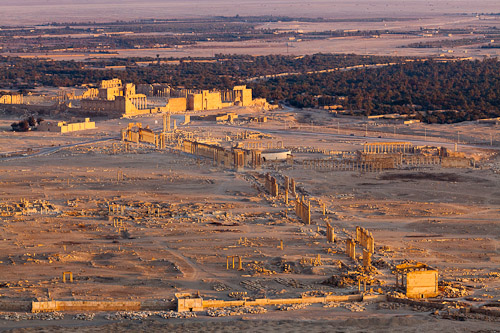
Overview of Palmyra at sunset showing the Great Colonnade running from the Funerary Temple in the foreground to the Temple of Bel at rear. Photo: Quintin Lake
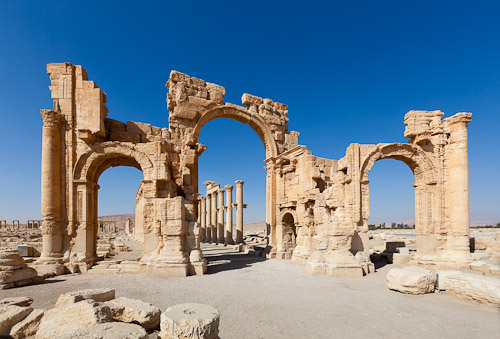
Monumental Arch, the entrance to the city, Palmyra, Syria. Photo: Quintin Lake
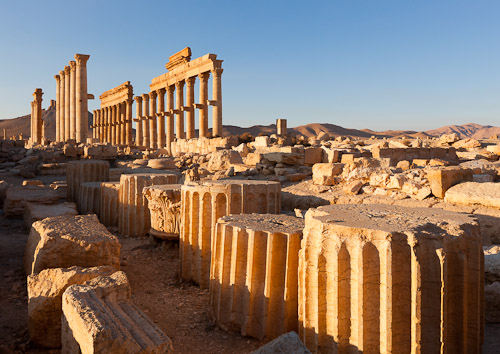
Great Colonnade, Palmyra. Photo: Quintin Lake
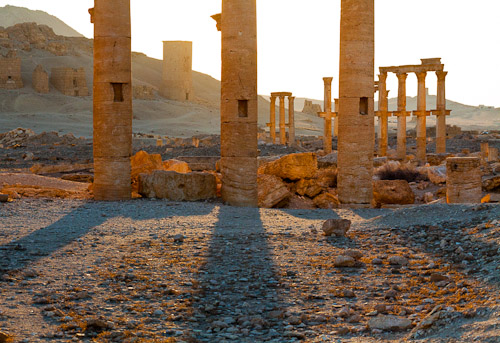
Columns of the Great Colonnade in front of the Valley of the Tombs, Palmyra. Photo: Quintin Lake
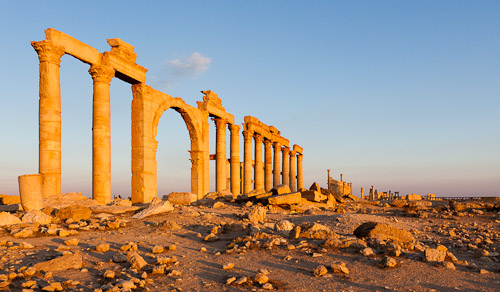
Arch of the Great Colonnade at sunset, Palmyra, Syria. Photo: Quintin Lake
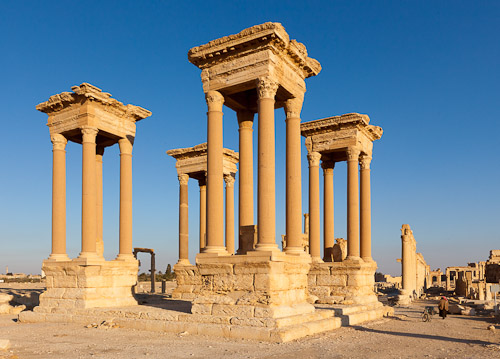
Tetrapylon, placed at a crossroads, Palmyra, Syria. Photo: Quintin Lake
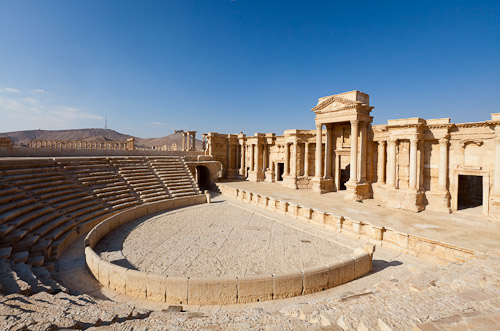
Theatre, Palmyra, Syria. Photo: Quintin Lake
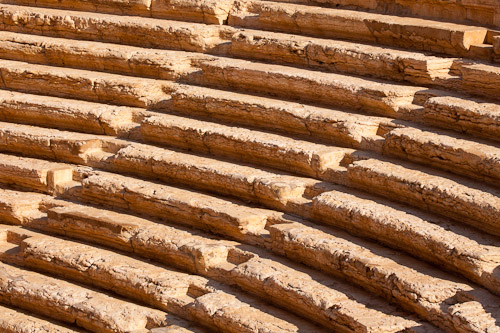
Stone seats and steps in the theatre at Palmyra, Syria. Photo: Quintin Lake
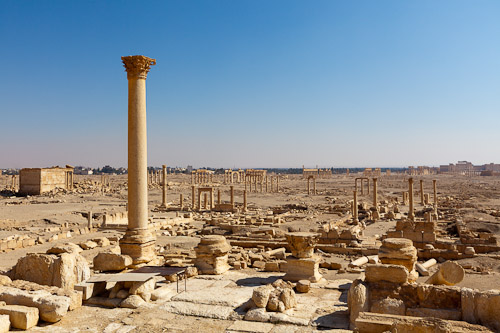
A commanding view of Palmyra seen from the Temple of the Standards in Diocletian's Camp (said to be the location of the Palace of Zenobia) Photo: Quintin Lake
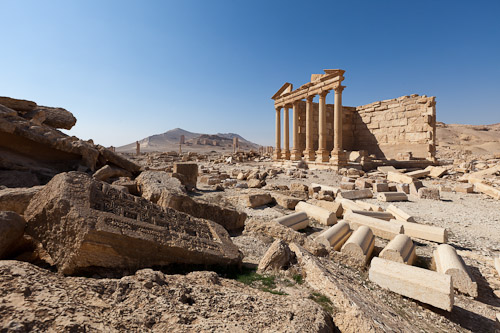
Funerary Temple at Diocletian's Camp. Palmyra, Syria. Photo: Quintin Lake
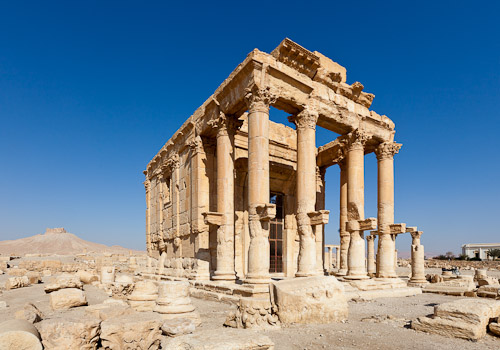
Temple of Baal Shamin. Palmyra. Photo: Quintin Lake
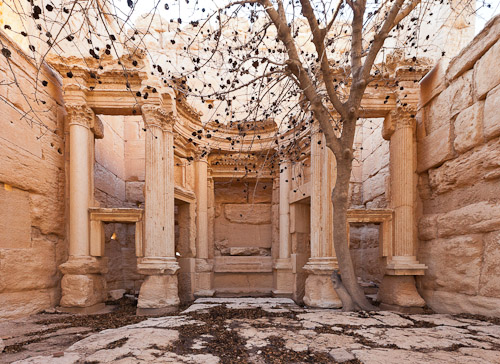
Temple of Baal Shamin Interior. Palmyra. Photo: Quintin Lake
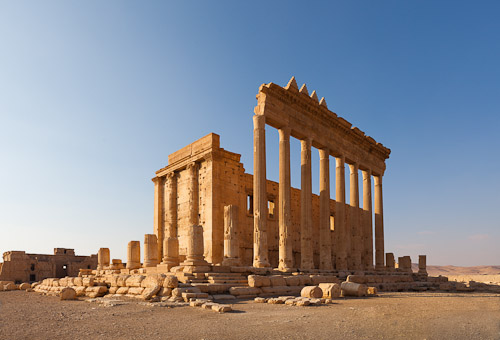
Cella or Inner Temple of the Temple of Bel, Palmyra. Photo: Quintin Lake
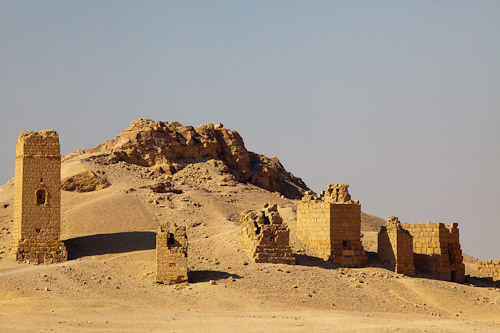
Towers of Yemliko, Valley of the Tombs, Palmyra, Syria. Photo: Quintin Lake
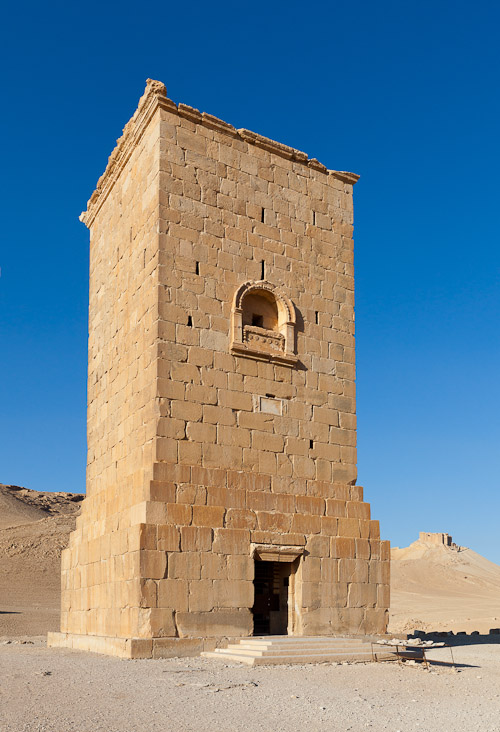
Tower of Elahbel, burial tower, Palmyra, Syria. Photo: Quintin Lake
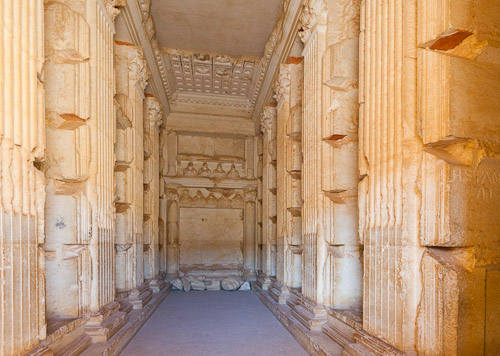
Burial Chambers inside Tower of Elahbel, burial tower, Palmyra. Photo: Quintin Lake
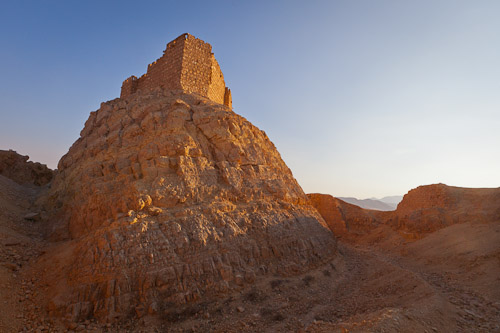
Muslim Castle, Palmyra (Qala'at ibn Maan or Fakhr-al-Din al-Maani Castle), built by the Mamluks in the 13th century. The castle overlooks Palmyra. Photo: Quintin Lake
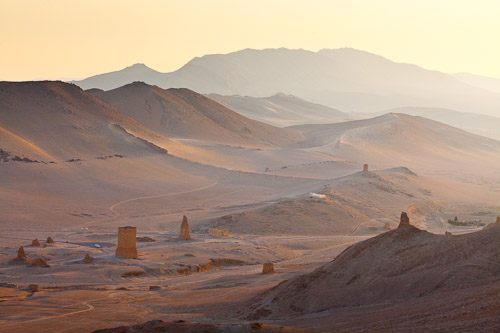
Valley of the Tombs at sunset, Palmyra. Photo: Quintin Lake
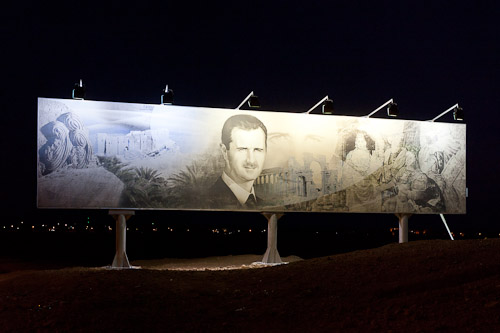
Roadside poster of Bashar al-Assad, president of Syria, February 2011 depicted with the ruins of Palmyra. Photo: Quintin Lake

An oasis in the Syrian desert, north-east of Damascus, Palmyra contains the monumental ruins of a great city that was one of the most important cultural centres of the ancient world. From the 1st to the 2nd century, the art and architecture of Palmyra, standing at the crossroads of several civilizations, married Graeco-Roman techniques with local traditions and Persian influences.

It had long been a vital caravan city for travellers crossing the Syrian desert and was known as the Bride of the Desert. The earliest documented reference to the city by its Semitic name Tadmor, Tadmur or Tudmur (which means “the town that repels” in Amorite and “the indomitable town” in Aramai is recorded in Babylonian tablets found in Mari.

Palmyra became the capital of the short-lived Palmyrene Empire (260–273) which was a splinter empire, that broke off of the Roman Empire during the the Third Century. It encompassed the Roman provinces of Syria Palaestina, Egypt and large parts of Asia Minor. The Palmyrene Empire was ruled by Queen Zenobia.

Click Here for 128 More images from this Photoshoot >>

All images available as fine art prints or for publication / licensing contact me for pricing and to arrange use. Photographs © Quintin Lake  

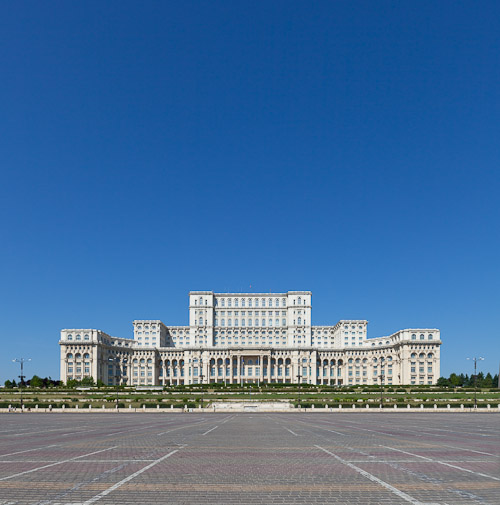
Sensitivity to context is neatly sidestepped by razing the 30,000 homes, churches & synagogues - an area of the old city the size of Venice - which once stood here. Front Facade. The Palace of the Parliament (Also known as Ceausescu'€™s Palace or House of The People) in Bucharest, Romania. Built 1983-1989. Architect: Anca Petrescu

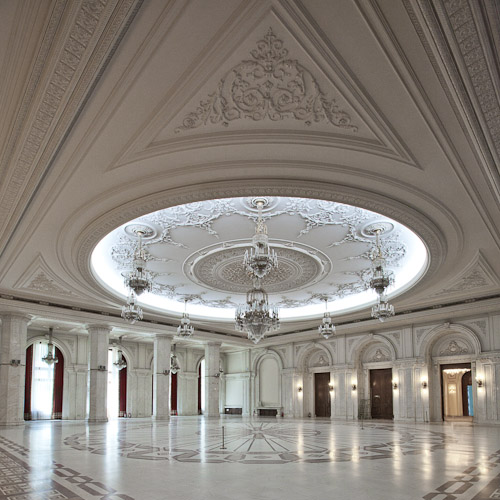
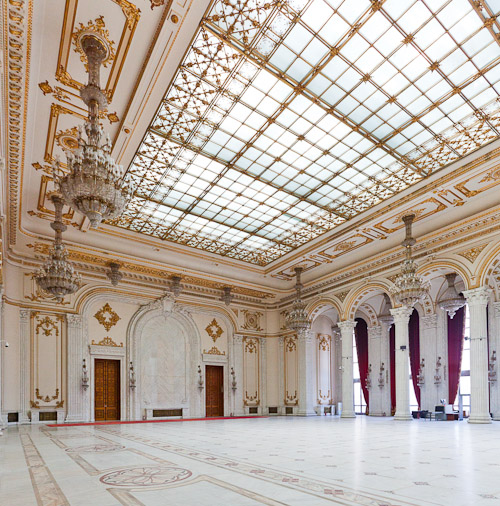
Unirii Hall, the largest of the 1,100 rooms in the entire building. Available for wedding hire should you wish to entertain 2,000 guests or enact a megalomaniac fantasy. Photo: Quintin Lake

I. I. C. Bratianu Hall. The building is so out of scale to the human body that it feels uncomfortable to walk about - as if one has been shrunk. Photo: Quintin Lake

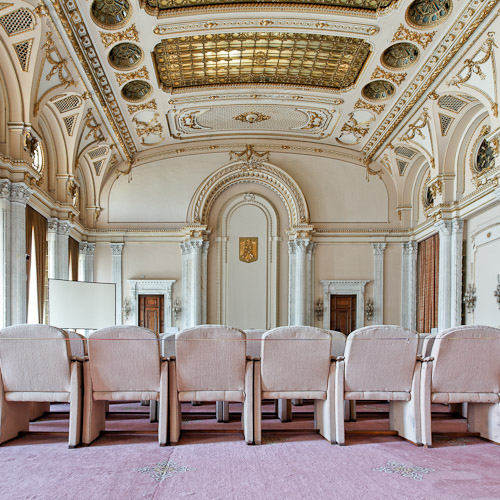
This room was intended as Nicolae Ceauşescu's office with direct access to the balcony, now Al. I. Cuza Hall. The blank space at the end of the room was originally intended for a painting of the modest fellow - perfectly positioned to be admired by his number one fan. Photo: Quintin Lake

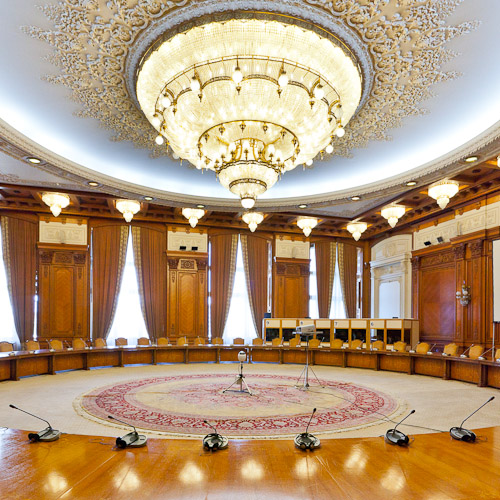
Currently entitled the Human Rights Hall, it seems droll that the round table - symbol of democracy should be housed in such totalitarian architecture. The room hosted the 20th Nato summit and other EU conferences. Photo: Quintin Lake

The Palace of the Parliament in Bucharest, Romania designed by architect Anca Petrescu for Nicolae Ceauşescu is today a multi-purpose building that contains both chambers of the Romanian Parliament. According to the Guinness Book of World Records, the Palace is the world’s largest civilian administrative building, most expensive administrative building, and the heaviest building.

Entire neighborhoods were destroyed to make way for the building, equating to an area the size of Venice. Among that which has been lost are churches, synagogues, valuable historic constructions and 40.000 people were forced to move. Most of them, to newly constructed communist blocks of flats of a poor quality in the city.

At the time of Nicolae Ceauşescu’s 1989 overthrow and execution, the building structure and design were complete. With supreme irony he never had the chance to occupy the monster he created. Subsequently, many of the furnishings were never installed (mostly evident because of the many large, empty spaces throughout the palace), while the last three basement levels and a large clock tower (that would display the official Romanian time) were never finished. During the regime change, the new leaders of Romania referred to the building as the House of Ceauşescu, to highlight the excessive luxury in which Ceauşescu would have lived, in stark contrast to the squalor and poverty endured by many people living in the surrounding neighbourhoods.

Everything about the building is supersized: Petrescu led a team of 700 architects to build the project. In the ’80s 20,000 men worked in shifts for 24 hours a day. The building contains 1,100 rooms. Today the building has a symbolic ambiguity, after so many Romanian people laboured over it’s construction it is hardly surprising it was not demolished. Like it or not, the portentous building over which so much was lost and so many suffered has become the architectural symbol of Bucharest.

Click Here for More from this Photoshoot >>

All images available as fine art prints or for publication / licensing contact me for pricing and to arrange use. Photographs © Quintin Lake  
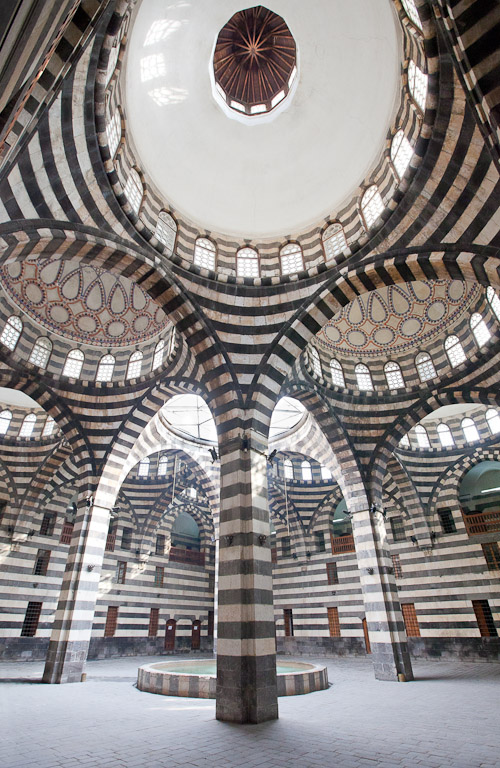
Courtyard of Khan As'ad Pasha Damascus, Syria. Photo: Quintin Lake

The khan or Caravanserai of As’ad Pasha al-Azem is situated along Suq al-Buzuriyyah in the old city of Damascus. It was built between 1751 and 1752 by the city governor As’ad Pasha al-Azem. It is one the most prominent khans of the old city, and covers an area of 2500 square meters.

The building follows a typical khan layout with two floors giving onto a central courtyard. The Khan is entered from Suq al-Buzuriyyah, through a monumental gateway lavishly decorated with stone carvings and roofed by a muqarnas semi-dome. The entrance leads to a square courtyard with shops on the ground floor, used for commerce and storage. The second floor, accessible by a staircase located to the right of the main entrance was used mainly for loadging, and has eighty rooms arranged along a gallery facing the courtyard.

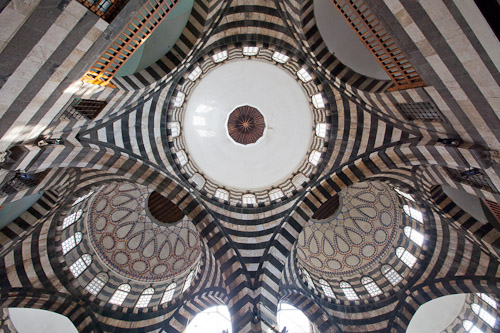
Looking up to the domes of Khan As'ad, Damascus, Syria. Photo: Quintin Lake

The space of the courtyard is divided into nine equal square modules, where each module is covered with a dome raised on a drum pierced with twenty windows. The domes are supported by pendentives that transfer the load onto four piers and to the courtyard walls. An octagonal marble fountain occupies the center of the courtyard below the central dome. Each of the four courtyard walls has three doorways on the ground floor, flanked by two rectangular windows. The symmetry is maintained on the second floor where each gallery façade has three archways flanked by two smaller ones. The khan is built of alternating courses of basalt and limestone.

Three of the courtyard domes were destroyed in an earthquake seven years after the khan’s completion. The openings were covered with wooden planks until 1990 when the khan was restored and the domes rebuilt. No longer used for commerce at the beginning of the twentieth century, the khan was used for manufacture and storage until it was restored in 1990 winning the Aga Khan Award for Architecture.

Click Here for More from this Photoshoot >>

All images available as fine art prints or for publication / licensing contact me for pricing and to arrange use. Photographs © Quintin Lake  
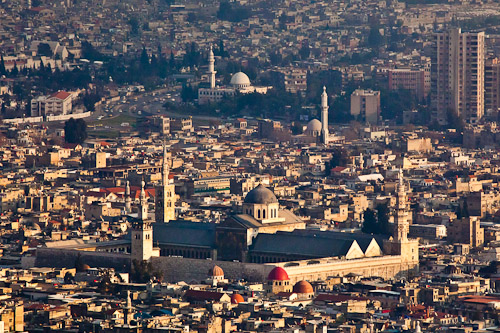
Umayyad Mosque, Damascus viewed from Mount Qassiun

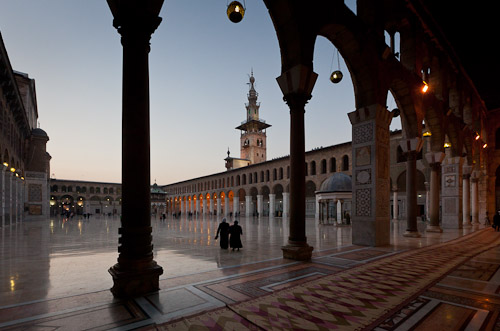
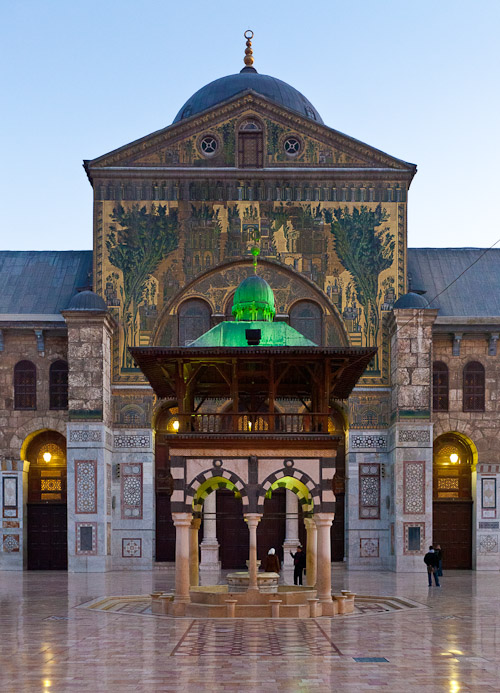
Courtyard and The Minaret of the Bride at dusk after prayers, Umayyad Mosque

Ablution fountain in front of the main prayer hall decorated with mosaics said to depict paradise.

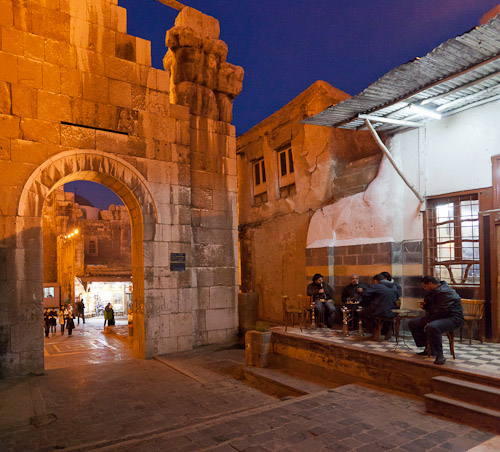
Roman arch east of Umayyad Mosque and sheesha cafe, Damascus, Syria

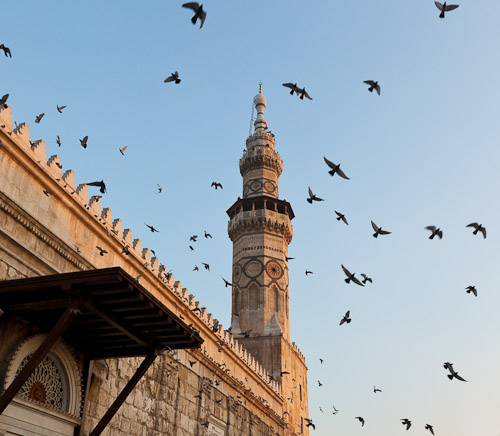
Birds fly by the Minaret of Qaitbayt, Umayyad Mosque, Damascus

The Umayyad Mosque also known as the Great Mosque of Damascus is the first monumental work of architecture in Islamic history; the building served as a central gathering point after Mecca to consolidate the Muslims in their faith and conquest to rule the surrounding territories under the Umayyad Caliphate. It is considered the fourth-holiest place in Islam.

Click Here for More from this Photoshoot >>

Photographs © Quintin Lake
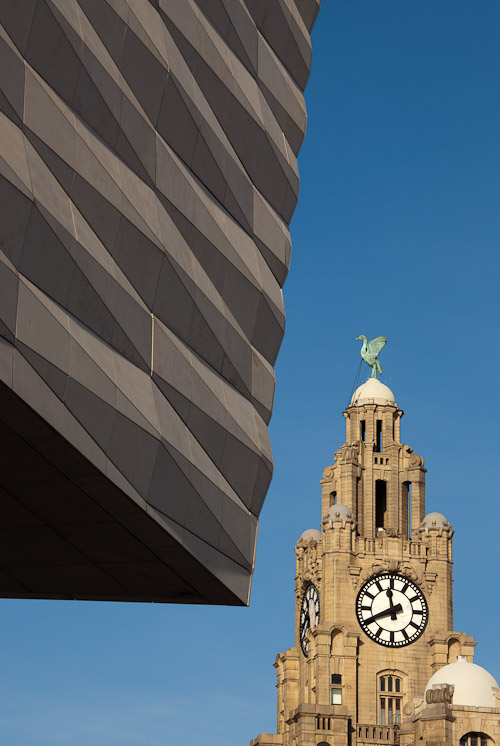
Museum of Liverpool Facade with Royal Liver Building behind topped with the iconic Liver Bird.

The Museum of Liverpool façade’s relief pattern puts forward a new interpretation of the historical architectural detail in the ‘Three Graces”, the UNESCO listed maritime buildings adjacent to the museum. The new building is somewhat underwhelming inside but externally the bold contrast of old and new is very exciting giving the city a modern European feel.  The wave form was inspired by origami and to give the façade an element of variation, as the changing light and shadow affect the facades appearance.  The building opened to the public in July 2011.

Click Here for More from this Photoshoot >>

Photographs © Quintin Lake
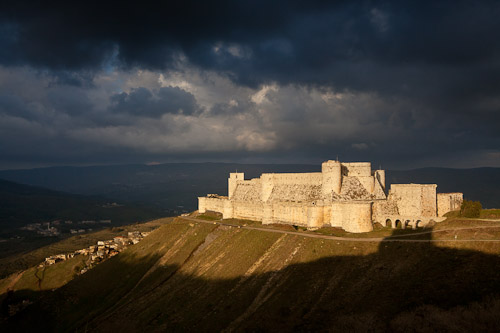
Krak des Chevaliers Castle from the south West, Homs Gap, Syria. Photo: Quintin Lake

“The Krak of the Knights [Krak des Chevaliers], described by T.E. Lawrence as ‘the best preserved and most wholly admirable castle in the world,’ is the easternmost of a chain of five castles sited so as to secure the Homs Gap…The castle stands upon a southern spur of the Gebel Alawi, on the site of an earlier Islamic ‘Castle of the Kurds.’ In 1142 it was given by Raymond, Count of Tripoli, into the care of the Knights Hospitallers, and it was they who, during the ensuing fifty years, remodelled and developed it as the most distinguished work of military architecture of its time.”Sir Banister Fletcher. A History of Architecture

Click Here for More from this Photoshoot >>

Photographs © Quintin Lake

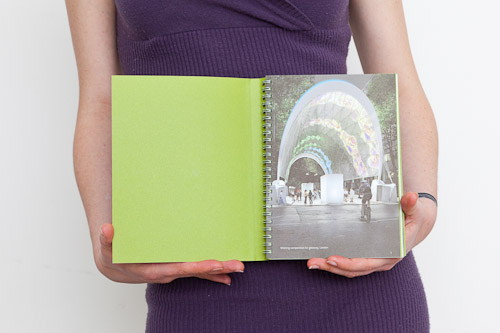
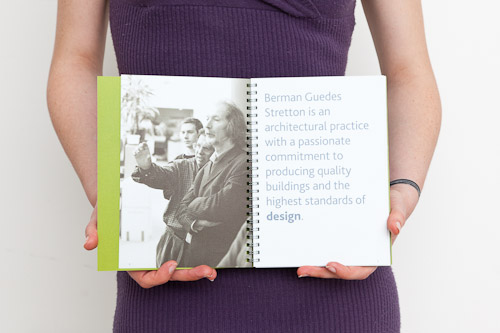
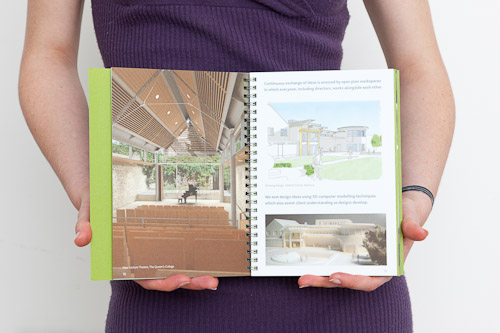
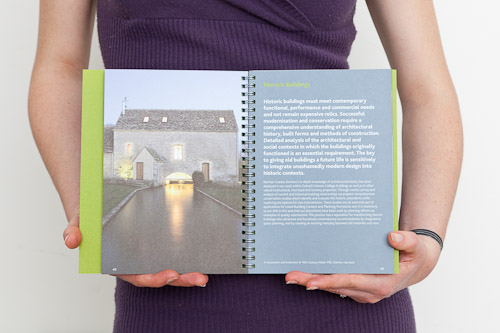
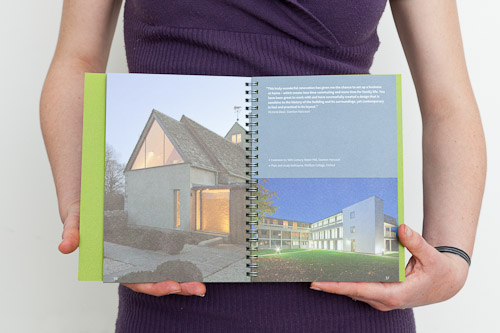
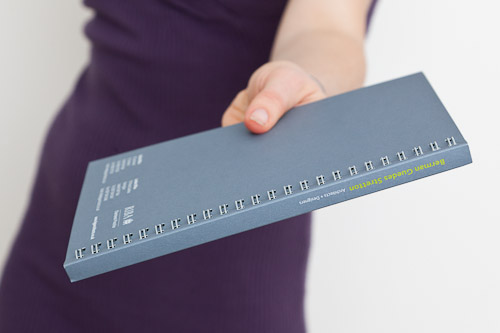
I designed this brochure and produced photography for architects Berman Guedes Stretton with a wrap-around cover which allows them flexibility to update their project pages or add specific pages in the brochure for a particular presentation. The wire bound format also has the advantage that the document lies flat on a desk when opened.

BGS architects pride themselves on their green credentials and this was carried through into the brochure design with uses 100% recycled paper, eco inks and no plastics, laminates or glazes over the print. This was also a factor in choosing the smaller A5 brochure size as it uses less paper.

I’d previously designed their corporate identity based on the beautiful typeface Bliss designed by Jermey Tankard and a green and dark grey colour scheme which are here printed as spot colours lithographically but were chosen to translate well in four colour printing if required.

When photographing their architectural projects for inclusion in the brochure, visualising the format of printed page and the colour scheme the images were intended to work with helped to create suitable photographs on site.

I’m currently documenting each month the major design and redevelopment project Berman Guedes Stretton are undertaking for Pembroke College, Oxford University. The project involves a new quad in Oxford, a radical new bridge, an Art Gallery, Theatre, Cafe and Accommodation due to be finished summer 2012.

Detail of West front of St Paul's Cathedral, London. Completed 1697 by architect Sir Christopher Wren.

Click Here for More from this Photoshoot >>

photographs © Quintin Lake