Archives For author

An architectural photography assignment for Atkins Architecture.

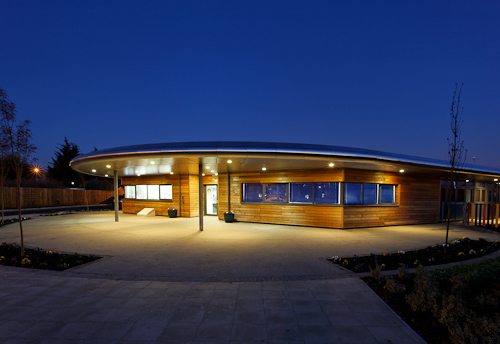
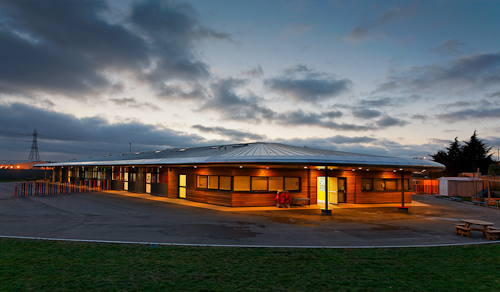
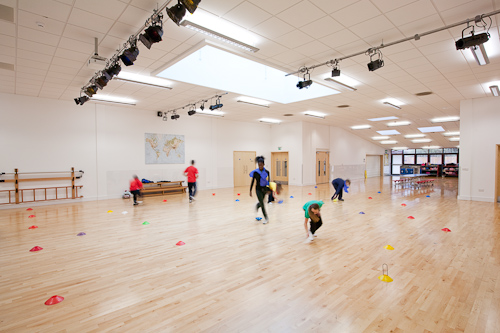
The £4.7 million West Thurrock Primary School is based on a triangular plan with a circulation corridor that includes a library and social spaces. The IT centre is unusual for this age group, known as the ‘fishbowl’ the room has been designed with special windows giving glimpses in and out.

The photographic brief was to show the pupils using the school, emphasising movement where possible and the architecture of the building for Atkins Education marketing.

View the photoshoot exteriors here interiors here and dusk here

Photography © Quintin Lake, 2009

The following UK bookshops hold stock of Drawing Parallels: Architecture Observed in store. Reserve your copy or place an order with your preferred bookshop:

AA Bookshop Architectural Association, 36 Bedford Square +44 (0)20 7887 4041

Waterstones Larger branches including Kensington, Kings Road, Trafalgar Square in London buy online here

Foyles Charing Cross Road, London  buy online here

Tate Modern Bookshop, London +44 (0)20 7887 8869

Victoria & Albert Museum LondonV&A +44 (0)20 7942 2696

Stanfords Travel Bookshop  Covent Garden, London +44 (0) 20 7836 1321

RIBA bookshop Royal Institute of British Architects, 66 Portland place, London  buy online here

Arts Bibliographic Cumberland Avenue, London +44 (0)20 8961 4277

Building Centre Bookshop 22 Store Street London buy online here

ICA Bookshop Institute of Contemporary Arts, Carlton House Terrace, London +44 (0)20 7766 1452

Arts & Artisan Bookshop 26 High Street, Bishop’s Castle, Shropshire +44 (0)1588 630435

Blackwells London Charing Cross Road & Oxford, Art & Poster bookshop, Broad Street buy online here

Heffers 20 Trinity Road Cambridge buy online here

Arnolfini Gallery Bookshop 16 Narrow Quay, Bristol +44 (0)117 917 2300

ONLINE BOOKSHOPS

Papadakis Publisher here

Amazon.co.uk here

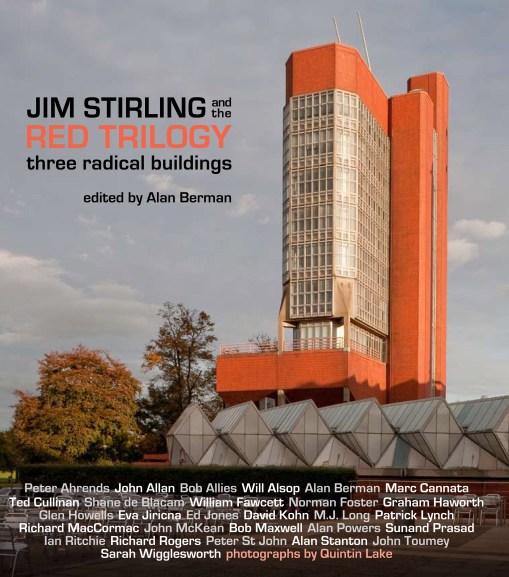
Book cover of "Jim Stirling and The Red Trilogy: three Radical Buildings" Photo: Quintin Lake

An assignment to photograph three seminal buildings by British architect James Stirling for an upcoming book edited by Alan Berman and published by Frances Lincoln featuring essays by prominent contemporary architects. The book is titled “Jim Stirling and  The Red Trilogy“.

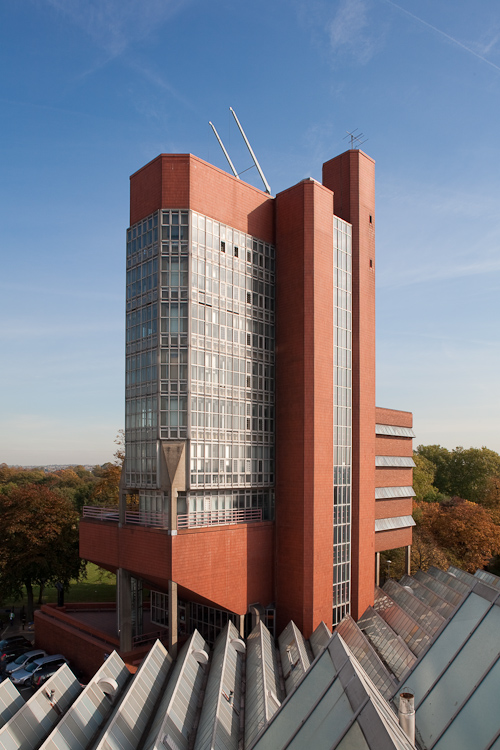
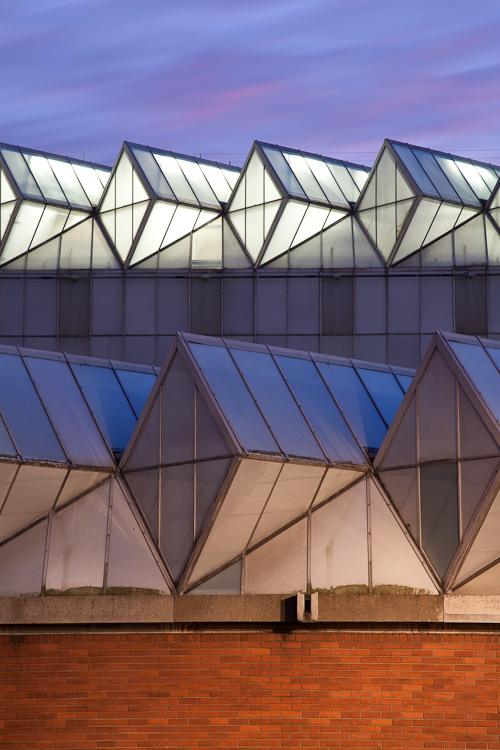
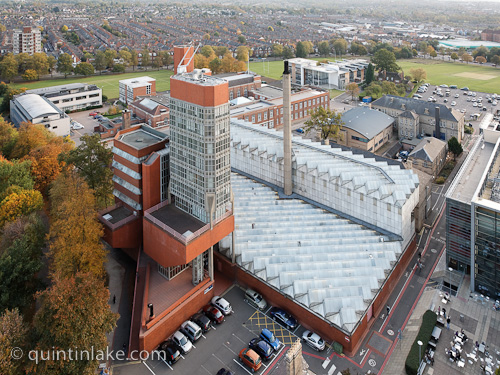
The three buildings featured in the book are The Florey Building at Oxford University, The History Faculty Building at Cambridge University and the Engineering Building at Leicester University.

The book includes essays by: Eva Jiricna, Mark Cannata, Richard Rogers, Alan Stanton, Will Alsop, Norman Foster, Sunand Prasad, Richard MacCormac, Peter Ahrends, Ian Ritchie, John Tuomey, Peter St John, Ted Cullinan, M.J. Long, Ed Jones, Spencer de Grey, Glenn Howells, Bob Allies, Patrick Lynch, Graham Haworth, Shane de Blacam , John Allan, Sarah Wigglesworth and David John.

BUY PRINTS/LICENSE and see more Architectural Photography of James Stirling’s Architecture here

Detail of Engineering Building, Leicester University by James Stirling Architect

Engineering Building, Leicester University by James Stirling & James Gowan, Architects. Photo: Quintin Lake

Detail of Engineering Building, Leicester University by James Stirling Architect

Detail of Engineering Building, Leicester University by James Stirling & James Gowan, Architects Photo: Quintin Lake

Axonometric style aerial view of Leicester University, Engineering Building. Photo: Quintin Lake

History Faculty Building, Cambridge University, James Stirling, Architect completed 1968. Photo: Quintin Lake

Interior of History Faculty Building, Cambridge University, James Stirling, Architect. Photo: Quintin Lake

Florey Building, Queens College, Oxford University, Designed by James Stirling, Architect, Completed 1966. Photo: Quintin Lake

Detail of Florey Building, Queens College, Oxford University, Designed by James Stirling, Architect. Photo: Quintin Lake

BUY PRINTS/LICENSE and see more Architectural Photography of James Stirling’s Architecture here

See more architectural photography in my book Drawing Parallels: Architecture Observed

Text & Photography © Quintin Lake, 2010


A technical account of Anglo-Scottish Greenland Expedition is featured in 2009 American Alpine Journal: The World’s Most Significant Climbs.

ISBN: 978-1-933056-09-8

A098

Greenland Expedition

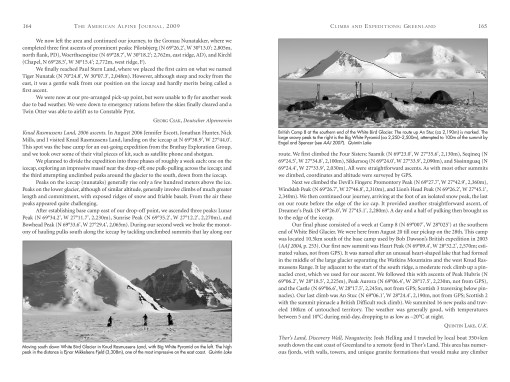
Knud Rasmussens Land, 2006 ascents. In August 2006 Jennifer Escott, Jonathan Hunter, Nick Mills, and I visited Knud Rasmussens Land, landing on the icecap at N 69°38.9′, W 27°44.0′.
This spot was the base camp for an out-going expedition from the Brathay Exploration Group, and we took over some of their vital pieces of kit, such as satellite phone and shotgun.

We planned to divide the expedition into three phases of roughly a week each: one on the icecap, exploring an impressive massif near the drop-off; one pulk-pulling across the icecap; and the third attempting unclimbed peaks around the glacier to the south, down from the icecap. Peaks on the icecap (nunataks) generally rise only a few hundred meters above the ice. Peaks on the lower glacier, although of similar altitude, generally involve climbs of much greater length and commitment, with exposed ridges of snow and friable basalt. From the air these peaks appeared quite challenging.
quintin-lake-arctic01-4
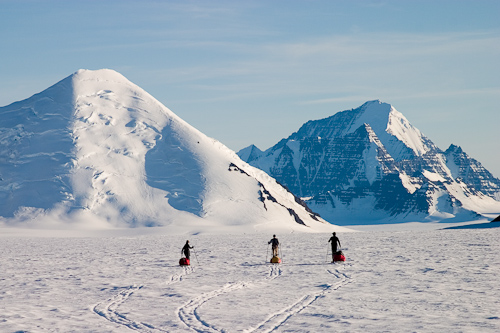
Moving south down White Bird Glacier in Knud Rasmussens Land, with Big White Pyramid on the left. The high peak in the distance is Ejnar Mikkelsens Fjeld (3,308m), one of the most impressive on the east coast.

After establishing base camp east of our drop-off point, we ascended three peaks: Lunar Peak (N 69°34.2′, W 27°11.7′, 2,230m), Sunrise Peak (N 69°35.2′, W 27°12.2′, 2,270m), and Bowhead Peak (N 69°33.6′, W 27°29.4′, 2,065m). During our second week we broke the monotony of hauling pulks south along the icecap by tackling unclimbed summits that lay along our route. We first climbed the Four Sisters: Saamik (N 69°23.0′, W 27°35.6′, 2,130m), Seqineq (N 69°24.5′, W 27°34.8′, 2,100m), Sikkersoq (N 69°24.0′, W 27°33.9′, 2,090m), and Sissinnguaq (N 69°24.4′, W 27°33.9′, 2,030m). All were straightforward ascents. As with most other summits we climbed, coordinates and altitude were surveyed by GPS.

Next we climbed the Devil’s Fingers: Promontory Peak (N 69°27.7′, W 27°42.9′, 2,360m), Windslab Peak (N 69°26.7′, W 27°46.8′, 2,310m), and Lion’s Head Peak (N 69°26.2′, W 27°45.1′, 2,340m). We then continued our journey, arriving at the foot of an isolated snow peak, the last on our route before the edge of the ice cap. It provided another straightforward ascent, of Dreamer’s Peak (N 69°26.0′, W 27°45.1′, 2,280m). A day and a half of pulking then brought us to the edge of the icecap.
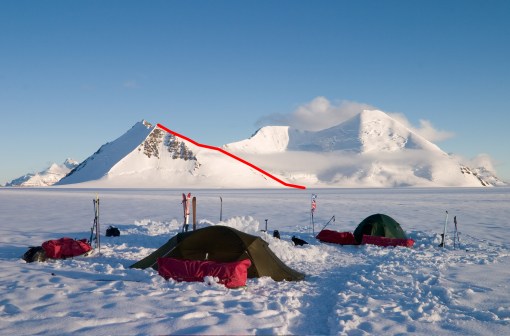

British Camp 8 at the southern end of the White Bird Glacier. The route up An Stuc (ca 2,190m) is marked. The large snowy peak to the right is the Big White Pyramid (ca 2,250–2,500m), attempted to 100m of the summit by Engel and Spencer (see AAJ 2007).

Our final phase consisted of a week at Camp 8 (N 69°007′, W 28°025′) at the southern end of White Bird Glacier. We were here from August 20 till our pickup on the 28th. This camp was located 10.5km south of the base camp used by Bob Dawson’s British expedition in 2003 (AAJ 2004, p. 253). Our first new summit was Heart Peak (N 69°09.4′, W 28°32.2′, 2,570m; estimated values, not from GPS). It was named after an unusual heart-shaped lake that had formed in the middle of the large glacier separating the Watkins Mountains and the west Knud Rasmussens Range. It lay adjacent to the start of the south ridge, a moderate rock climb up a pinnacled crest, which we used for our ascent. We followed this with ascents of Peak Hubris (N 69°06.2′, W 28°18.5′, 2,225m), Peak Aurora (N 69°06.4′, W 28°17.5′, 2,230m, not from GPS), and the Castle (N 69°06.6′, W 28°17.5′, 2,245m, not from GPS; Scottish 3 traversing below pinnacles). Our last climb was An Stuc (N 69°06.1′, W 28°24.4′, 2,190m, not from GPS; Scottish 2 with the summit pinnacle a British Difficult rock climb). We summited 16 new peaks and travelled 100km of untouched territory. The weather was generally good, with temperatures between 5 and 10°C during mid-day, dropping to as low as –20°C at night.

QUINTINLAKE, U.K.

View Expedition report here Download PDF of feature here

Gallery of arctic landscape photographs from the expedition here

Buy 2009 American Alpine Journal from Amazon UK here

Picture 22

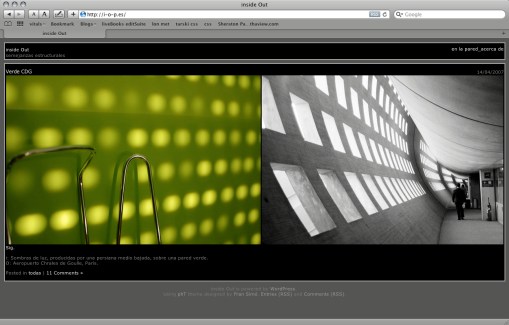
The Spanish website Inside Out explores photographic diptych and visual comparisons in architecture created by photographers Fran Simó and Benjamín Julve. Their work explores photographic pairing as a way of representing the built environment in a similar way to my project Drawing Parallels: Architecture Observed


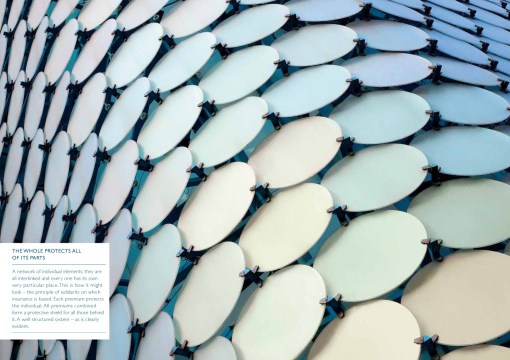
Facade of Galleria Fashion Store, Seoul, South Korea

Facade of Galleria Fashion Store, Seoul, South Korea. Photo: Quintin Lake

untitled

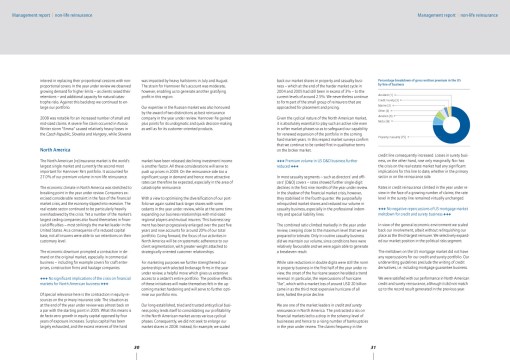
Example Spread from Hannover Re Annual Report

Lights above Nanjing East Road, Shanghai, China

Lights above Nanjing East Road, Shanghai, China. Photo: Quintin Lake

untitled

Example Spread from Hannover Re Annual Report

untitled

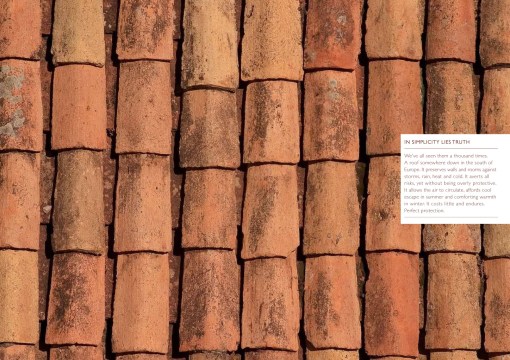
Detail Roof tiles Dubrovnik, Croatia. Photo: Quintin Lake

untitled

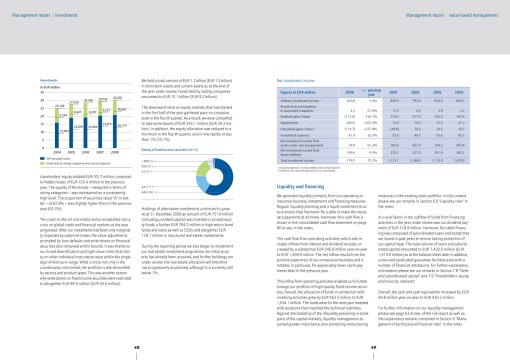
Example Spread from Hannover Re Annual Report

untitled

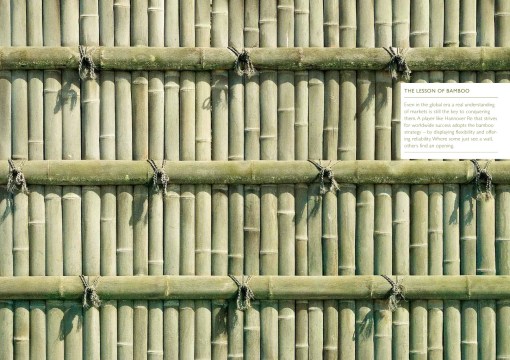
Bamboo fence next to Nijo Castle, Kyoto, Japan. Photo: Quintin Lake

untitled

Example Spread from Hannover Re Annual Report

untitled

Hannover Re Annual Report Cover 2008

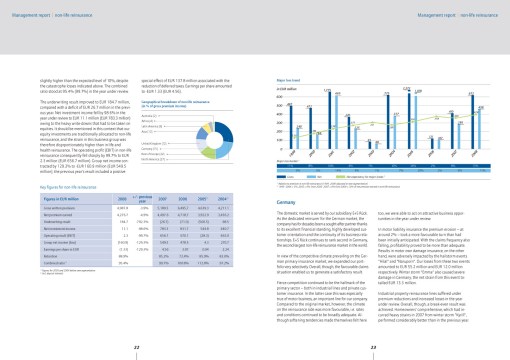
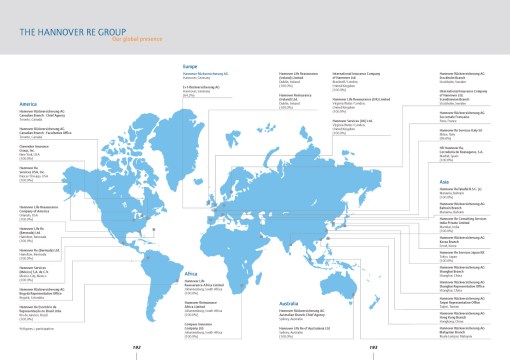
German design agency Anzinger Wüschner Rasp selected my architectural texture photographs from Dubrovnik, Shanghai, Seoul and Kyoto to illustrate the international nature of the business of Hannover Re, one of the leading reinsurance groups in the world, in their 2008 Annual Report. The previous year’s annual report featured photographs by Yann Arthus-Bertrand.View the photographs on the Hanover re website here. Download a PDF of the report in German here and English here.
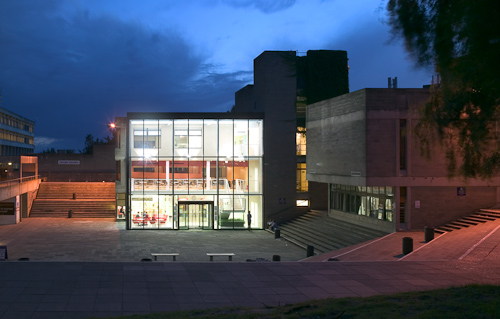
See more architectural photography including the images featured here in my book Drawing Parallels: Architecture Observed
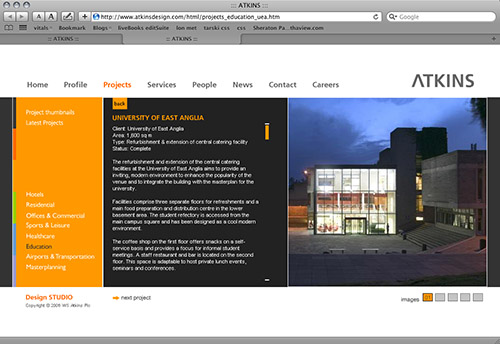
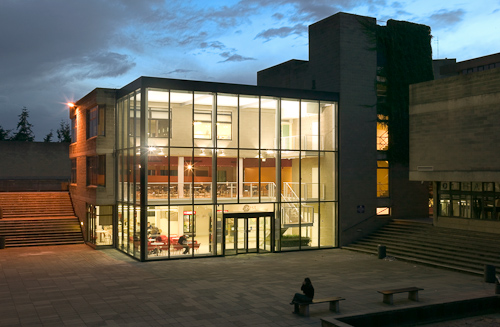
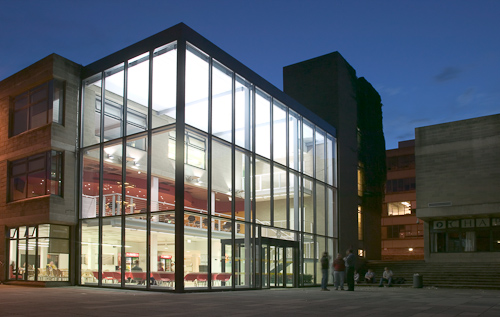
An architectural photography assignment for Atkins Design Studio for inclusion on their website and marketing material.

View the entire photoshoot here

University of East Anglia, Catering Facility

University of East Anglia, Catering Facility

University of East Anglia, Catering Facility

UEA-4

Photography © Quintin Lake, 2009

An architectural photography assignment for Atkins for inclusion in their annual report.

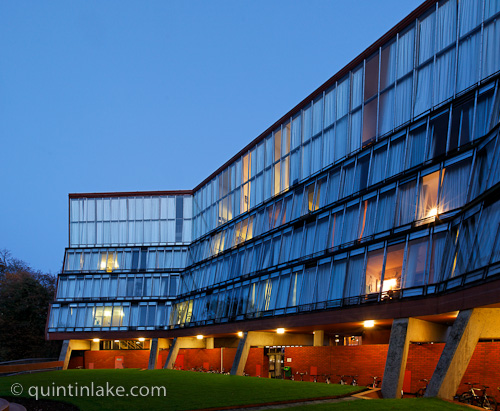
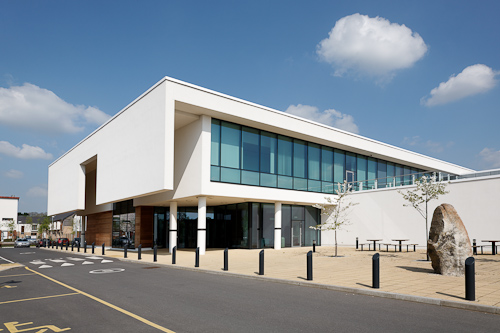
This photoshoot makes optimum use use of the the glowing sky at dusk and tilt/shift lenses to correct perspective distortion which enhance the clean modern lines of the building.

The new £12 million Wiltshire & Swindon History Centre is one of a small number of specialist public facilities which house & preserve the ancient documents, objects and archaeology of the United Kingdom in local centres overseen by the National Archives of England. It carries out important custodial, educational and promotional roles in a super modern holistic 21st Century Library, Archive & History Centre.

View the entire photoshoot here

Swindon04

Swindon01-3

Swindon01

See more architectural photography by Quintin Lake in the  book Drawing Parallels, Architecture Observed

Photography © Quintin Lake, 2009