Archives for category: Assignments

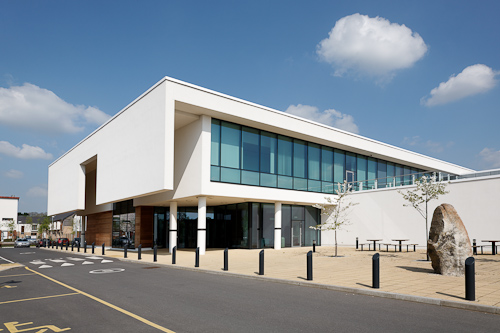
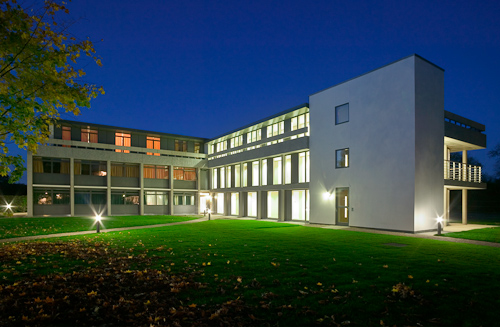
An architectural photography assignment for Atkins for inclusion in their annual report.

This photoshoot makes optimum use use of the the glowing sky at dusk and tilt/shift lenses to correct perspective distortion which enhance the clean modern lines of the building.

The new £12 million Wiltshire & Swindon History Centre is one of a small number of specialist public facilities which house & preserve the ancient documents, objects and archaeology of the United Kingdom in local centres overseen by the National Archives of England. It carries out important custodial, educational and promotional roles in a super modern holistic 21st Century Library, Archive & History Centre.

View the entire photoshoot here

Swindon04

Swindon01-3

Swindon01

See more architectural photography by Quintin Lake in the  book Drawing Parallels, Architecture Observed

Photography © Quintin Lake, 2009

Two architectural photography assignments for Oriel Prizeman Architect in Cambridge, England, that show great understanding of places to be lived in, light, natural materials and functional quality of finishes.

Latham Road

House extension to a period house, swimming pool and ancillary buildings.

View the entire photoshoot here

Latham Road Residence: Architect, Oriel Prizeman

Latham Road Residence: Architect, Oriel Prizeman

Latham Road Residence: Architect, Oriel Prizeman

Latham Road Residence: Architect, Oriel Prizeman

Latham Road Residence: Architect, Oriel Prizeman

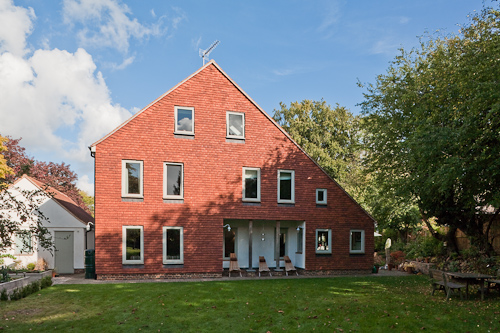
Newton Road

American colonial Saltbox inspired family house.

View the entire photoshoot here

Newton Road House, Oriel Prizeman Architect

Newton Road House, Oriel Prizeman Architect

Newton Road House, Oriel Prizeman Architect

Newton Road House, Oriel Prizeman Architect

Newton Road House, Oriel Prizeman Architect

Photography © Quintin Lake, 2009

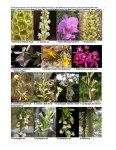
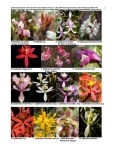
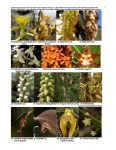
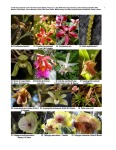
Oxford University Expedition 2008: An orchid inventory along the transects II and IV of the InterOceanic Highway.

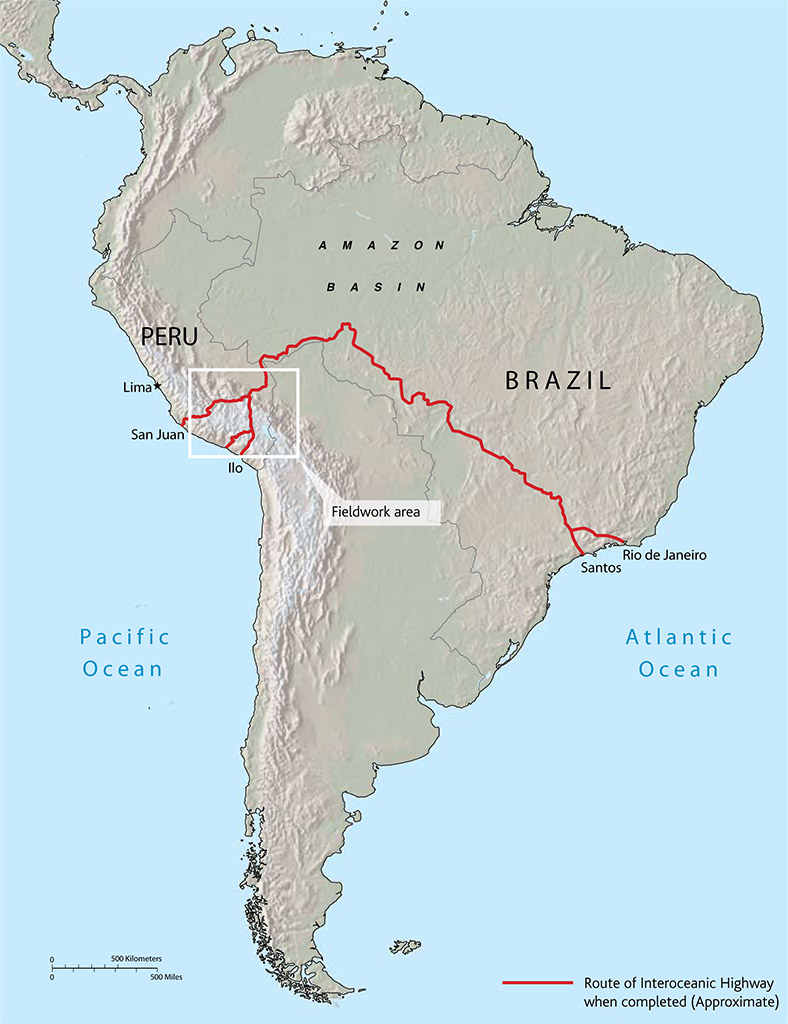
Location of the Interoceanic Highway in Latin America

Location of the Interoceanic Highway in Latin America

The Interoceanic Highway is a multi-country, multi-region, $1.3-billion project to create a paved highway that links the Peruvian coast with the lowland Amazon Jungle and ultimately the Atlantic ports of Brazil. Peru is counting on the road as a means of opening up its long-neglected interior for development. Brazil is looking for access to Pacific ports. The finished route, planned for 2009, will create the first paved roadway connecting the Atlantic and Pacific oceans on the South American Continent.

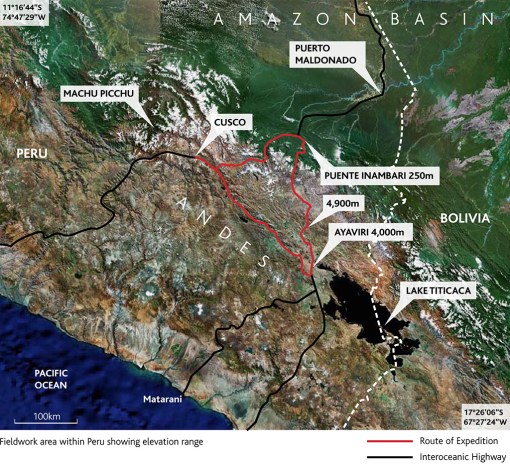
A traveller through Southern Peru can wake up in the harsh chill of the high Andes in the early morning and spend the evening sweating it out in the jungle. From an engineering point of view the IOH poses a legion of difficulties including extreme elevations, incessant downpours and dramatic geography. “It is an incredibly complex project”, says Peru’s Minister of Transportation and Communications, Veronica Zavala. From a social point of view the highway links a variety of interests and development hopes that are not always lined with environmental governance initiatives.

Among the major goals of our expedition was the development of a comprehensive inventory of as many orchid species as we could identify (e.g. we found 103 species of orchids in flower, 1 of them has already been confirmed as new to science (Telipogon manucensis), and 3 others are pending examination. Orchids are an excellent ‘indicator species’ in ecology, and their delicate, often soil-less existence usually renders them the most sensitive residents of a changing environment. We now possess a snapshot of the ecosystem from July 2008, ready to be compared to a later snapshot to evaluate how seriously industrial road-building, climate, and social pressures can affect biodiversity.

In order to share our data with the scientific botanical community, our records will be entered at Oxford’s Virtual Field Herbarium, and also transformed into Rapid Color Guides at the Chicago Field Museum’s website. Our inventory is also being used as part of an ecotouristic initiative to promote green tourism along the Interoceanic Highway.

Expedition members: Rosa María Román-Cuesta (Expedition Leader), Norma Salinas Revilla (Leading Botanist, Oriel College), David Rueger (Financial Officer, St Hugh’s College), Theresa Meacham (Pembroke College), William Nauray (Botanist), Quintin Lake (Medical Officer and Photographer).

Our utmost gratitude to our sponsors: The Stanley Smith (UK) Horticultural Trust; The AA Paton Fund; The Oxford University Expedition’s Council; The Mike Soper Fund; The Oxford Society; Pembroke College JCR,, Oxford; St. Hugh’s College Travelling Funds, Oxford; The Anglo-Peruvian Society; The Tambopata Reserve Society (TReeS)

Download the PDF Expedition report here


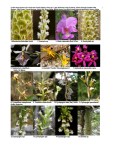
Download the PDF photo summary of the orchids here

VIEW MORE IMAGES of the Orchids here

VIEW MORE IMAGES of the Expedition here

VIEW MORE IMAGES of the Interoceanic Highway here

Text © 2008 Rosa Maria Roman Cuesta

Maps & Photography © 2008 Quintin Lake


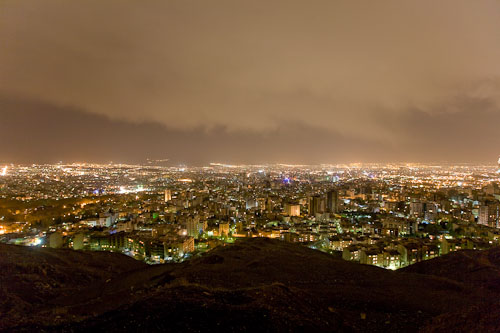
img_6555These are the high points around Tehran (Teheran) which are called Bam-e-Tehran (The Roof of Tehran), where you can see all over Tehran. Tehran is the largest city in the Middle East and is the most populated city in South Western Asia with a population of 7.5 million and approximately 15 million in Greater Tehran. Milad Tower is just visible at the far right of the frame.

Pembroke College, Oxford University

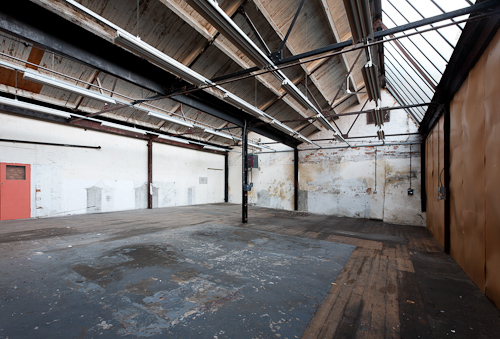
An ongoing assignment to provide Pembroke College, Oxford University with images documenting, archaeology, buildings to be demolished, demolitions and construction  of a major new addition to the college by architects Berman Guedes Stretton.

The portfolio will be an historical archive for the college as well as a recourse of images for marketing purposes.

“Planning consent has been granted for one of Oxford’s largest and most dramatic college developments of recent times. A glass-sided bridge overflies the ancient City wall and Brewer Street to connect Pembroke College’s main site to five new buildings on a site which also capitalises on the view towards Lutyens’ imposing Campion Hall. At the centre of Berman Guedes Stretton’s design is a large new quad shared between the Lutyens and proposed buildings.”

The photo archive, which will be ongoing during the construction process can be seen here

Pembroke College Redevelopment: Archaeological Dig at No 7 & The

Hall the Printer, Oxford

Photography © Quintin Lake, 2008

cubatao_ql-01
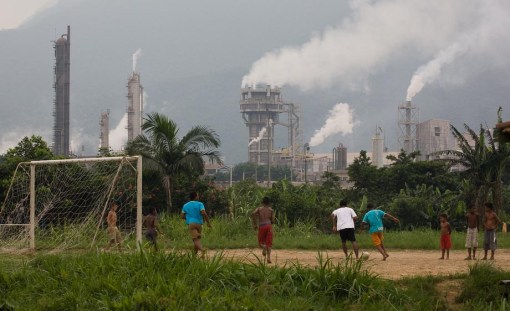
Football game at Jardim São Marcos favela, Cubatão adjacent to the Fosfertil fertiliser factory.

You know you’ve arrived by the chemical smell, but it used to be worse, much worse. An hour’s drive from São Paulo, Cubatão used to be Brazil’s dirty little secret. Host to 24 industries including oil, steel and fertilizers, the city used to be dubbed “The Valley of Death”. The heavy smog trapped by the jungle-clad valleys made the city one of the world’s most polluted places.

Now many of the factories have cleaned up their act and are in the process of transformation. The mangrove swamps are cleaner and the Scarlet Ibis, vibrant against the lush jungle, is flourishing again.

Cubatão defies easy description as the perimeter fences of the factories push against the rainforest on one side and favellas (shanty towns) on the other. Cubatão is a rich city with a poor population, the favella inhabitants being in large part economic migrants.

The favellas have developed around the factories, along the inlets and along the motorway construction roads, the massive arteries feeding the relentless hunger of Cubatão, piercing the surrounding hills and flying above the heads of improvised houses below. These favellas appear to be in such a state of flux they are known by their altitude only.

Fear is ubiquitous for the foreigner in Cubatão. Fear of the air, fear of the water or fear of violence. The outsider must come to their own conclusion. Like Johannesburg, Hiroshima or Chernobyl, the name Cubatão has a weighted meaning that has little or nothing to do with the lives of the local people. A city with such a strong stereotype is almost bound to delight.

In another sense, Cubatão is a city wide manifestation of gambiarra, the Brazilian talent and admiration of making do and improvisation. Plywood and timber form the houses of the fishermen’s village. At the samba school, slit cola bottles are made curvaceous under candle flame and painted as flowers for the carnival floats. Even the very location of houses constructed under a flyover or next to a factory demonstrates this spirit of inventiveness.

Many of the local people often display a total mastery of the body and beat: the drumming of the samba school, the silky shuffle of samba beats danced in flip flops or bare feet on a concrete floor, the kite flying or the astonishing acrobatics of Capoeira (a martial art symbolic of freedom against domination, with roots in Brazil’s historical slave culture).

The surprise came after a couple of weeks living here. Raw nature set against mankind’s machines for sustaining the industrial world can be simultaneously beautiful and disconcerting. At times when the forest-clad hills and the factory smoke merge with the clouds and the light illuminates both the chimney stack and cloud, it is hard to know if it’s creation or Armageddon one is witnessing.

Quintin Lake visited Cubatão as part of the crew of the film “Cubatão” by Rubens Azevedo.

A full gallery of documentary photographs can be seen here and making of photographs from the film here

An architectural photography assignment for Berman Guedes Stretton Architects for their marketing portfolio and website.

“The strong architectural language of the existing 1960s Powell & Moya building inspired the form of the two new blocks of 37 graduate rooms 13 flats at Wolfson College in Oxford.
The horizontal granite aggregate bands and concrete columns of the original building have been sensitively translated into a contemporary design using the appropriate scale and materials.

Set adjacent to ancient meadow and the River Cherwell, the ´L´ shaped building, the second of two, makes the most of its green setting and has been carefully sited to maximise aspect and views. A new garden has been partially enclosed which together with the existing building forms an additional quad. Common rooms and top floor flats have large private balconies, which provide solar shading to the south elevation.” Berman Guedes Stretton

View the entire photoshoot here