Archives for category: Documentary Photography

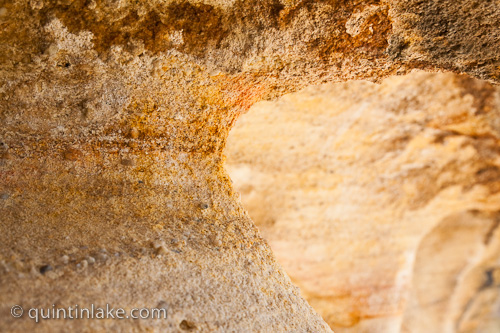
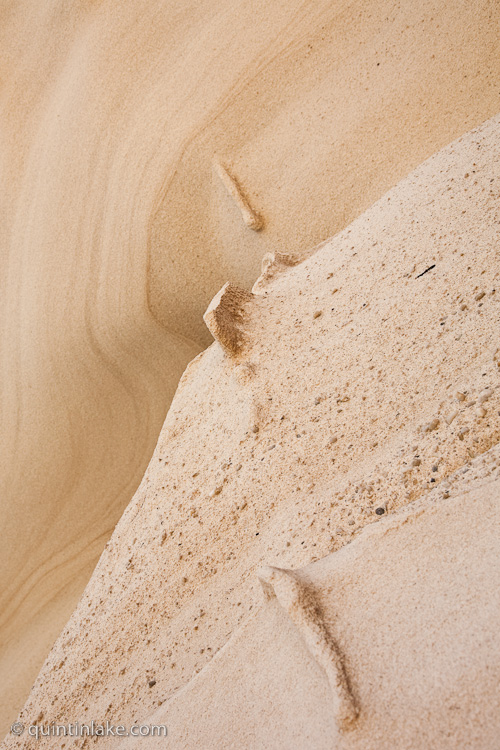
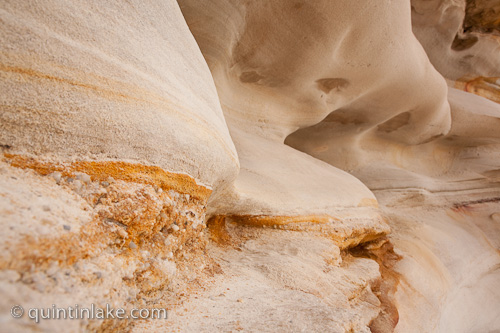
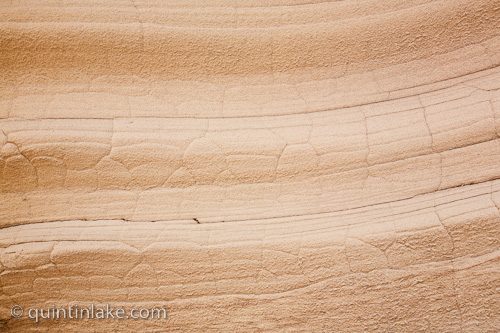
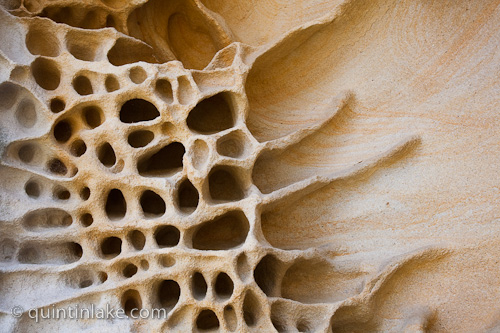
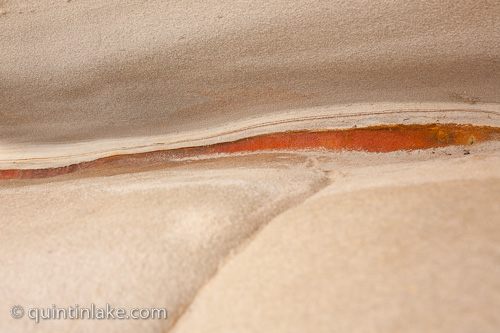
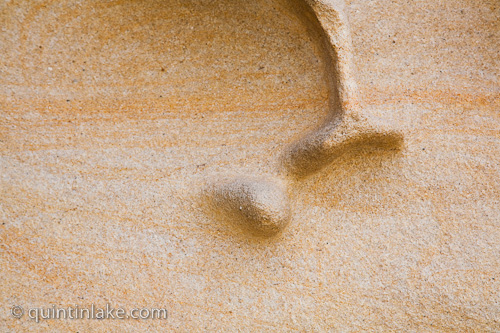
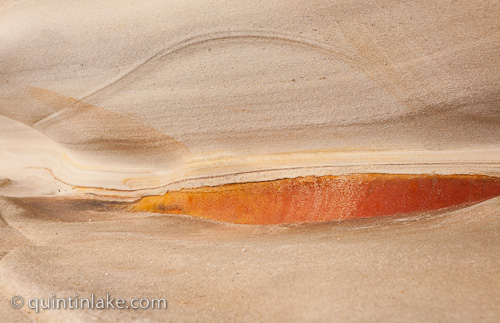
The remarkable wind-sculpted sandstone rock formations a short walk south from Bondi beach on the coast walk between Bondi & Coogee via Bronte beach. Sydney, New South, Wales, Australia. “Bondi” or “Boondi” is an Aboriginal word meaning water breaking over rocks or noise of water breaking over rocks.

Sensual and suggestive in their abstract form and subtle ochre palette the rocks make an exquisite natural sculpture.

Buy/License more of Bondi Rocks, Sydney images here

Detail of Bondi Rocks #1 Sydney, Australia

Detail of Bondi Rocks #2 Sydney, Australia

Detail of Bondi Rocks #4 Sydney, Australia

Detail of Bondi Rocks #7 Sydney, Australia

Detail of Bondi Rocks #10 Sydney, Australia

Detail of Bondi Rocks #14 Sydney, Australia

Detail of Bondi Rocks #15 Sydney, Australia

Detail of Bondi Rocks #17 Sydney, Australia

Detail of Bondi Rocks #19 Sydney, Australia

Buy/License more of Bondi Rocks, Sydney images here

Photography © Quintin Lake, 2010

Pascal Schoning, Photography by Rubens Azevedo

Pascal Schoening with Cinematic Architecture Book. Photo: Rubens Azevedo

The book looks at 17 years of Architectural Association Diploma Unit 3 work and the past present and future of cinematic architecture.

Buy the Book on Amazon

Editors: Pascal Schoning, Julian Loffler & Rubens Azevedo. Design Stephan Doesinger. Published by AA publications

Featured content by Quintin Lake:

THE FIFTH SEASON: SUBLIME IN THE CITY

Photograph and design of the Cinematic House installation
from the chapter OF CLOUDS AND SHADOWS by Ron Kenley

Buy Cinematic Architecture 1993-2008 from Amazon UK here

Photograph of Briey: Cité Radieuse by Le Corbusier
from the chapter BRIEY CONVERSATIONS

Buy Cinematic Architecture 1993-2008 Book from Amazon UK

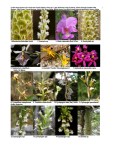
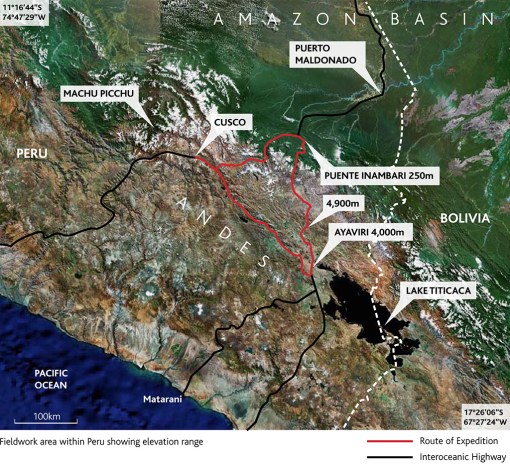
Oxford University Expedition 2008: An orchid inventory along the transects II and IV of the InterOceanic Highway.

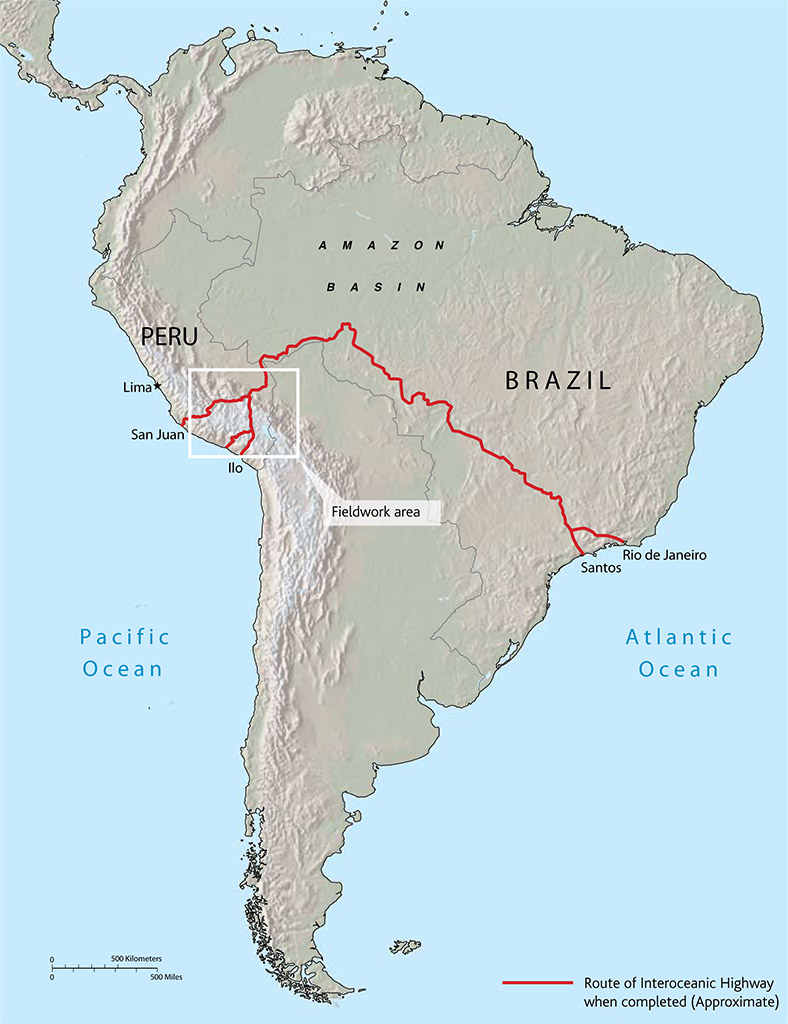
Location of the Interoceanic Highway in Latin America

Location of the Interoceanic Highway in Latin America

The Interoceanic Highway is a multi-country, multi-region, $1.3-billion project to create a paved highway that links the Peruvian coast with the lowland Amazon Jungle and ultimately the Atlantic ports of Brazil. Peru is counting on the road as a means of opening up its long-neglected interior for development. Brazil is looking for access to Pacific ports. The finished route, planned for 2009, will create the first paved roadway connecting the Atlantic and Pacific oceans on the South American Continent.

A traveller through Southern Peru can wake up in the harsh chill of the high Andes in the early morning and spend the evening sweating it out in the jungle. From an engineering point of view the IOH poses a legion of difficulties including extreme elevations, incessant downpours and dramatic geography. “It is an incredibly complex project”, says Peru’s Minister of Transportation and Communications, Veronica Zavala. From a social point of view the highway links a variety of interests and development hopes that are not always lined with environmental governance initiatives.
Among the major goals of our expedition was the development of a comprehensive inventory of as many orchid species as we could identify (e.g. we found 103 species of orchids in flower, 1 of them has already been confirmed as new to science (Telipogon manucensis), and 3 others are pending examination. Orchids are an excellent ‘indicator species’ in ecology, and their delicate, often soil-less existence usually renders them the most sensitive residents of a changing environment. We now possess a snapshot of the ecosystem from July 2008, ready to be compared to a later snapshot to evaluate how seriously industrial road-building, climate, and social pressures can affect biodiversity.

In order to share our data with the scientific botanical community, our records will be entered at Oxford’s Virtual Field Herbarium, and also transformed into Rapid Color Guides at the Chicago Field Museum’s website. Our inventory is also being used as part of an ecotouristic initiative to promote green tourism along the Interoceanic Highway.

Expedition members: Rosa María Román-Cuesta (Expedition Leader), Norma Salinas Revilla (Leading Botanist, Oriel College), David Rueger (Financial Officer, St Hugh’s College), Theresa Meacham (Pembroke College), William Nauray (Botanist), Quintin Lake (Medical Officer and Photographer).

Our utmost gratitude to our sponsors: The Stanley Smith (UK) Horticultural Trust; The AA Paton Fund; The Oxford University Expedition’s Council; The Mike Soper Fund; The Oxford Society; Pembroke College JCR,, Oxford; St. Hugh’s College Travelling Funds, Oxford; The Anglo-Peruvian Society; The Tambopata Reserve Society (TReeS)
Download the PDF Expedition report here


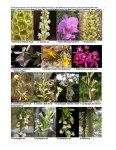
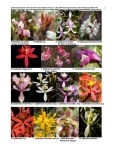
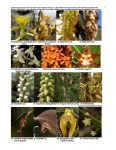
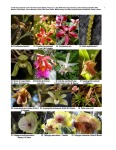
Download the PDF photo summary of the orchids here

VIEW MORE IMAGES of the Orchids here

VIEW MORE IMAGES of the Expedition here

VIEW MORE IMAGES of the Interoceanic Highway here

Text © 2008 Rosa Maria Roman Cuesta

Maps & Photography © 2008 Quintin Lake


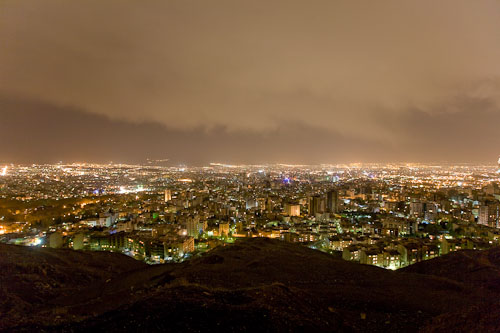
img_6555These are the high points around Tehran (Teheran) which are called Bam-e-Tehran (The Roof of Tehran), where you can see all over Tehran. Tehran is the largest city in the Middle East and is the most populated city in South Western Asia with a population of 7.5 million and approximately 15 million in Greater Tehran. Milad Tower is just visible at the far right of the frame.

img_5748
img_57501
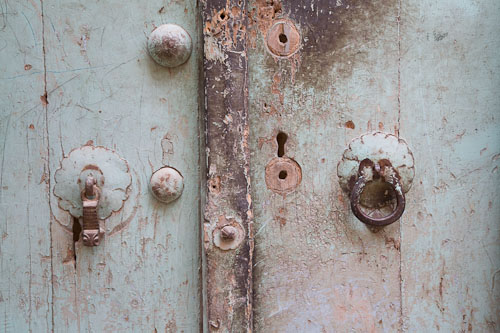
His and hers door knockers, Yazd, Iran. The masculine door knocker is rigid and heavy that makes a strong sound. People inside the house wil be informed that a man is behind the door. The feminine door knocker is curly and ring like and makes a lighter sound. It informs the people inside the house that a woman is behind the door. This system is in place due to the Islamic custom that women should be private from men except their intimate ones.

BUY PRINTS/LICENSE more Pripyat (Pripiat) 21 years after Chernobyl images here

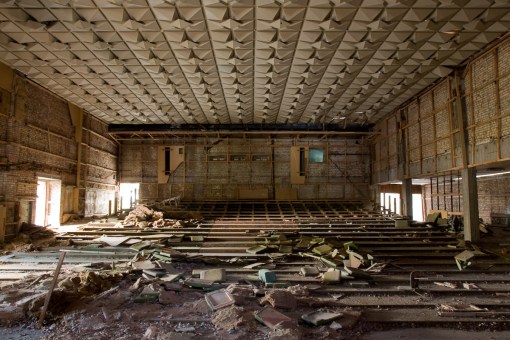
Concert hall, Pripyat

Concert hall with water damaged soviet relief sculpture and piano, Pripyat, Chernobyl

Palace of Culture Theatre seating, Pripyat

The looted seating area in the Palace of Culture theatre, Pripyat

Palace of Culture prop room, Pripyat

Palace of Culture Theatre prop room with paintings of Lenin and dignitaries, Pripyat (Pripiat), Chernobyl, Ukraine

BUY PRINTS/LICENSE more Pripyat (Pripiat) 21 years after Chernobyl images here

Photography  © Quintin Lake, 2007

BUY PRINTS/LICENSE more Pripyat (Pripiat) 21 years after Chernobyl images here

Hospital reception, Pripyat

Hospital reception with doctor's appointment boards, Pripyat

Lenin and the pot plant, Pripyat

Lenin and the pot plant in the hospital, Pripyat, Chernobyl

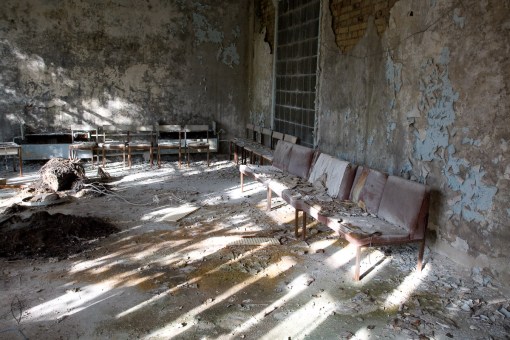
Hospital waiting room, Pripyat

Hospital waiting room with discarded pot plant.

BUY PRINTS/LICENSE more Pripyat (Pripiat) 21 years after Chernobyl images here

Photography  © Quintin Lake, 2007

2008Explore01

For the second year running I’m delighted to be a panellist on the expedition photography panel at this years “Explore – expedition & fieldwork planning weekend” at the Royal Geographical Society which is always the most exciting event of the year for me.

The event runs 22nd & 23rd November, 2008 and the photography workshop is on Sunday afternoon.

Tom Ang, Who chaired the panel asked us to come up with our personal three golden rules. These are mine aimed at the novice expedition photographer:

1. Make sure your camera is accessible
Its no good if your camera is hidden inside your rucksack, canoe or vehicle. Be prepared that some of the best shots may be when you are most scared or in the worst weather.

2. Don’t get too hung up on kit
Its where you go, how you interact with people, your patience and how you use your camera that makes a good picture. However do backup your digital files and physically protect your camera from dust, moisture and impact.

3. Edit in camera and thematically
With digital its easy to return with too many pictures so edit in camera..before you press the shutter release.
Post-expedition the editing process can tell many stories, choosing themes can help make your editing more distinctive.