Archives for category: Documentary Photography
peruvian_orchids

An orchid, Telipogon peruvianus, found near the Interoceanic Highway in the Peruvian Andes.Orquídeas Interoceánicas Photographic Exhibition at Canning House by Quintin Lake


The Interoceanic highway crosses the Amazon Basin and Peruvian Andes linking the Pacific and Atlantic coasts of South America.

British photographer Quintin Lake joined an Oxford University Expedition which included Peruvian botanists to locate and identify orchids along two sections of the Interoceanic highway. The exhibition features a selection of the 98 orchid species recorded in flower, the construction of the highway and the lives of those for whom the road is their porch.

orchidexpedition.com

A full gallery of photographs documenting the Interoceanic Highway can be seen here, the Interoceanic orchids here, the Interoceanic flora here and the Peruvian Orchid Expedition here.

Exhibition at Canning House

Orquídeas Interoceánicas Photographs By Quintin Lake

Private View 12 November 2008 6.00PM
Exhibition 13- 21 November 2008

2 Belgrave Square,
London SW1X 8PJ

The event on Canning House’s website

canninghouse.com

Limited Edition Prints

A limited edition of 12 hand printed 41x41cm (16″x16″) Framed and mounted Fuji Crystal Archive prints of the orchids are available for sale here

cubatao_ql-01
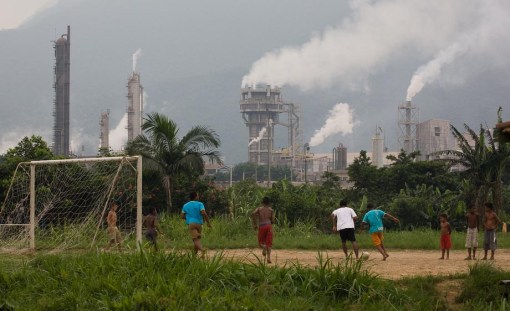
Football game at Jardim São Marcos favela, Cubatão adjacent to the Fosfertil fertiliser factory.

You know you’ve arrived by the chemical smell, but it used to be worse, much worse. An hour’s drive from São Paulo, Cubatão used to be Brazil’s dirty little secret. Host to 24 industries including oil, steel and fertilizers, the city used to be dubbed “The Valley of Death”. The heavy smog trapped by the jungle-clad valleys made the city one of the world’s most polluted places.

Now many of the factories have cleaned up their act and are in the process of transformation. The mangrove swamps are cleaner and the Scarlet Ibis, vibrant against the lush jungle, is flourishing again.

Cubatão defies easy description as the perimeter fences of the factories push against the rainforest on one side and favellas (shanty towns) on the other. Cubatão is a rich city with a poor population, the favella inhabitants being in large part economic migrants.

The favellas have developed around the factories, along the inlets and along the motorway construction roads, the massive arteries feeding the relentless hunger of Cubatão, piercing the surrounding hills and flying above the heads of improvised houses below. These favellas appear to be in such a state of flux they are known by their altitude only.

Fear is ubiquitous for the foreigner in Cubatão. Fear of the air, fear of the water or fear of violence. The outsider must come to their own conclusion. Like Johannesburg, Hiroshima or Chernobyl, the name Cubatão has a weighted meaning that has little or nothing to do with the lives of the local people. A city with such a strong stereotype is almost bound to delight.

In another sense, Cubatão is a city wide manifestation of gambiarra, the Brazilian talent and admiration of making do and improvisation. Plywood and timber form the houses of the fishermen’s village. At the samba school, slit cola bottles are made curvaceous under candle flame and painted as flowers for the carnival floats. Even the very location of houses constructed under a flyover or next to a factory demonstrates this spirit of inventiveness.

Many of the local people often display a total mastery of the body and beat: the drumming of the samba school, the silky shuffle of samba beats danced in flip flops or bare feet on a concrete floor, the kite flying or the astonishing acrobatics of Capoeira (a martial art symbolic of freedom against domination, with roots in Brazil’s historical slave culture).

The surprise came after a couple of weeks living here. Raw nature set against mankind’s machines for sustaining the industrial world can be simultaneously beautiful and disconcerting. At times when the forest-clad hills and the factory smoke merge with the clouds and the light illuminates both the chimney stack and cloud, it is hard to know if it’s creation or Armageddon one is witnessing.

Quintin Lake visited Cubatão as part of the crew of the film “Cubatão” by Rubens Azevedo.

A full gallery of documentary photographs can be seen here and making of photographs from the film here

RGS_logo
I’m delighted to be a panellist on the expedition photography panel on Sunday afternoon chaired by Tom Ang at this years “Explore – expedition & fieldwork planning weekend“.
The event runs throughout the weekend of 22nd & 23rd November 2007 at the Royal Geographical Society
Lesotho-Ha-Mokati

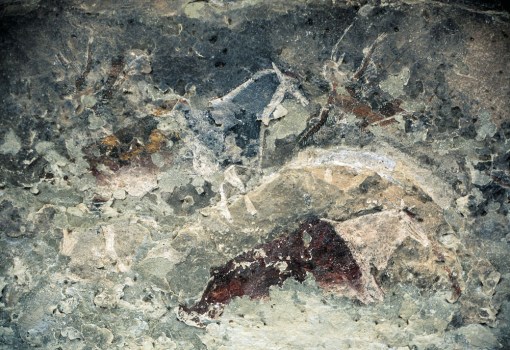
Ha Mokati Rock Art Site, Lesotho featured in the Sunday Times Magazine and the book Drawing Parallels. Photo: Quintin Lake

05 Final Lesotho Report
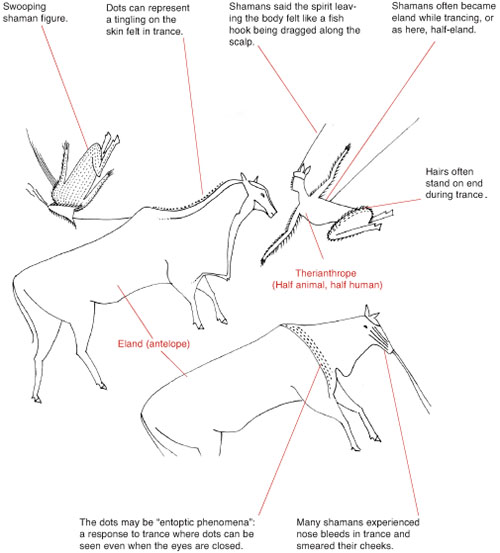
Suggested interpretation. Note that the reconstruction has been done with reference to Images of Power and other seminal works but remains tentative – above all the top left figure.

Lesotho Rock Art Survey 2000 is a Royal Geographical Society Sponsored expedition which discovered 10 previously unrecorded rock art sites in the remote Lesobeng Valley in Lesotho.

Ha Mokati is one of these sites and was featured in the Sunday Times Magazine April 15, 2001 under the heading “Eyeopener: Vanishing Dreams”.

Photography & Illustration © Quintin Lake, 2000

Lesotho-Rock-Art-Report-Quintin-Lake

Lesotho Rock Art Survey 2000: Expedition Report by Simon Aitken & Quintin Lake

Download the full expedition report as a PDF here

A printed copy of the report is also available to view at: the Department of Archaeology, University of the Witwatersrand, Johannesburg, South Africa, the Cambridge University Expedition Society and the Royal Geographical Society

Text & Photography © Quintin Lake, 2000

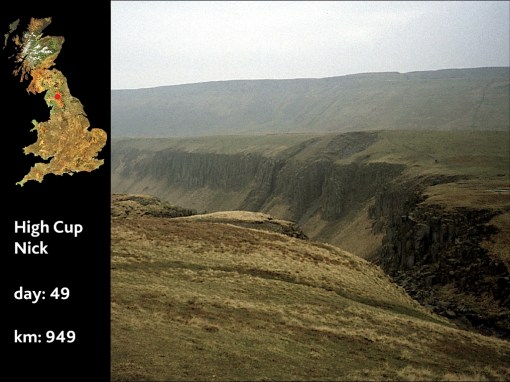
High Cup Nick, North Pennines Day: 49   km: 949

Mid-point of Pennine way. By this point my body was adapting and things started getting easier.

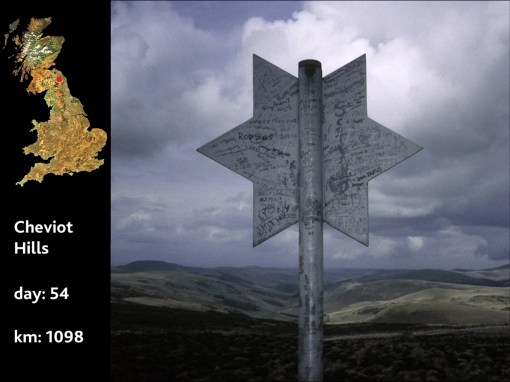
Border of Scotland, Cheviot Hills, Pennine Way Day 54   km:1098

Bizarre sign on the border between Scotland & England. Gruelling final section of the pennine way, it really does feel like one is entering a different land

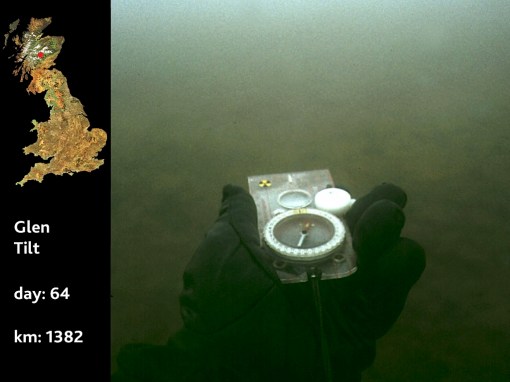
Glen Tilt, Borders Day 64   km: 1382

One of the things which surprised me was the difficulty of navigation when one has to proceed everyday no matter the weather. At one point continuous rain tapping on the waterproof’s hood and then on the bivi bag for 4 days.

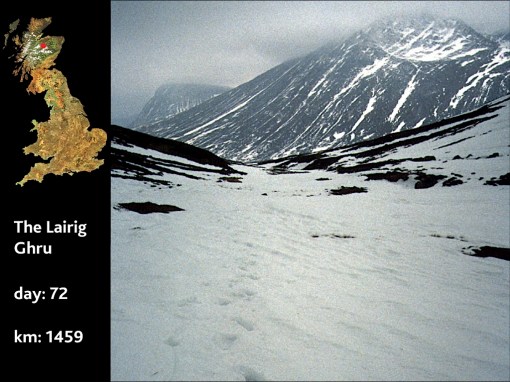
The Lairig Ghru , Caingorn Mountains Day 72   km: 1459

838 m high – higher than many British mountain summits

Day 81: The End

Interestingly by the end of 3 months I was physically so used to the lifestyle I could have turned around and done it again. Nothing hurt any more and I felt fresh every morning.

After 81 days I arrived at the northern most point of Britain. Mentally I was so prepared for an anti climax looking out over towards Orkney, but in fact it was a quiet happiness I felt, of slowly getting to know this mysterious island.

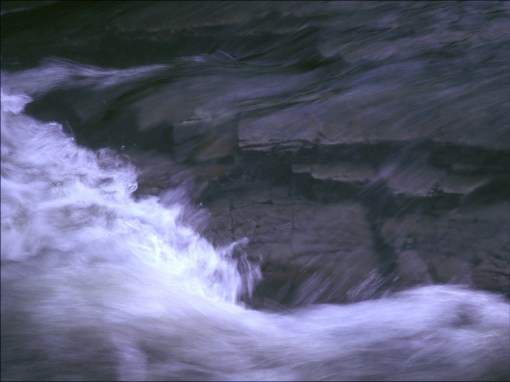
I end with this image which reminds me of the simple pleasure of filling up a flask of delicious peaty water from a Scottish burn.

< Back to part two

Photography © Quintin Lake, 1998

South Dartmoor Day:10   Km: 232

Interesting thing is how one gradually and uncontrollably becomes an outsider as my beard grew and appearance became more bedraggled. When I bought more fuel for my stove near Plymouth and was pouring it into my fuel bottle a man looked at me and said to his wife “look dear that man is drinking meths’

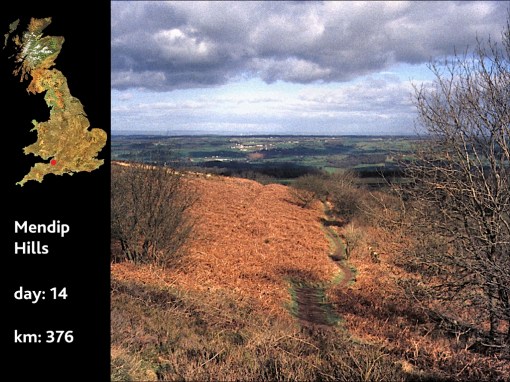
Mendip Hills, Approaching Bristol Day: 14   km: 376

Also met with incredible kindness of strangers the night before this picture a family let me stay the night in their old caravan. Farmers were also very kind often letting me sleep in their barns.

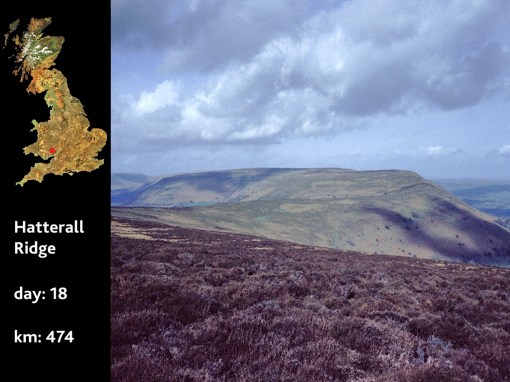
Hatterall Ridge, Offa’s Dyke Path Day: 18   km 474

Fields of England to the right Wales and the Brecon Beacons to the left, Offa’s Dyke
Low point physically each day had got harder than the last, skin had gone on much of my back and my feet were a mess despite best attempts to remedy the situation.

Laddow rocks cave, Peak District, Pennine Way Day: 34   km: 749

Most memorable night sleep woken by the sun shining on my sleeping bag. A well known gritstone climb starts from from the cave.

< Back to part one

Continue to part three >

Photography © Quintin Lake, 1998

Aim:

  • walk between the two furthest points in the uk,
  • unsupported in winter
  • avoiding roads
  • solo with no support

How:

  • 20-40km day 1.5 day off a week
  • Sleeping in a bivi to reduce weight as lighter than a tent.
  • 20-13kg carried, Single set of clothes,
  • Cooked food bought in villages every 3/4 days

Result:

  • incomparable freedom!

I sometimes I walked two or three  days without seeing a person which struck me as remarkable in the UK

Continue to part two >

Photography © Quintin Lake, 1998