Archives for category: Fine Art Photography

Tim Ashley interviewed me for his fine art photography blog. Here’s a reblog as featured on his website also interesting is his interview with Nadav Sander and post “What is Fine Art Photography” 

Quintin and I first met some years ago at the same crossroads in our photographic careers. It’s a long story but we were both thinking of taking the same big step and, as it happens, neither of us did. But we kept in contact and I became a great fan of his work.

Quintin is ‘mainly’ an architectural photographer: that is the core of his business, his primary bread and butter. But like many photographers, his career is also his passion and his Fine Art work, which often combines elements of his architectural practice with travel, documentary and landscape styles, is a very natural extension of this core practice.

The two series featured here, Chernobyl and Sweet Thames, are very different. Chernobyl is a fusion of architectural discipline, documentary bravery, intrepid travel photography and a Fine Art sensibility. Sweet Thames, one the other hand, is far less structured, more fluid (as befits its theme) and more obviously lyrical. Both avoid cod narrative in favour of a form of quietly passionate dispassion, if that makes sense.

It’s worth adding that it’s not just me that rates his work highly: Quintin has recently been awarded 1st place in the ‘Architecture – Historic’ category for the Chernobyl series in the 2012 International Photography Awards. He also received three honourable mentions in the categories for Fine Art – Landscape, Architecture – Cityscapes and Architecture – Buildings.

The rest of the words that follow are Quintin’s, and I hope you enjoy them and the images as much as I have. Because both series are quite long, I have embedded them as slideshows to expedite loading of this page.

I also recommend Quintin’s blog, where you can see some of his architectural work, as well as more of his landscape and travel photography.

Finally, don’t miss the ‘Methods and Approach’ section at the end. It is brief but highly informative!

Pripyat: 21 years after Chernobyl

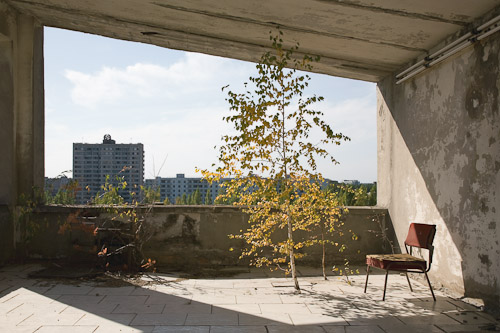
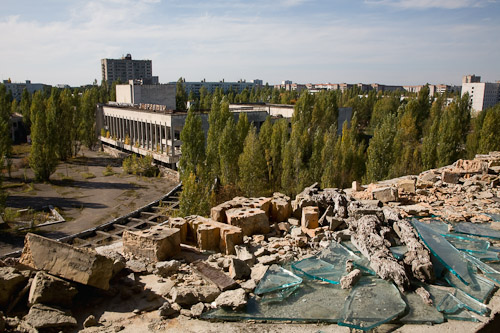
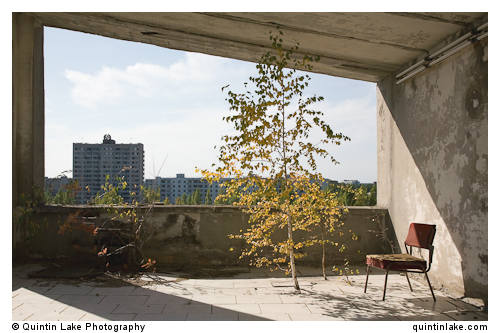
A silver birch tree grows through the floor on the terrace of Hotel Polissia. The hammer and sickle is visable atop the distant appartments.

A silver birch tree grows through the floor on the terrace of Hotel Polissia. The hammer and sickle is visable atop the distant appartments.

When reactor number four at the Chernobyl Nuclear Power Plant exploded in 1986 the result was the worst nuclear accident in history. Large areas of Ukraine, Belarus, and Russia were severely contaminated, requiring the evacuation and resettlement of over 336,000 people.

Pripyat, 1km from the reactor, was designed as an exemplar of Soviet planning for the 50,000 people who worked at the power plant. A funfair, with bumper cars and Ferris wheel, was due to open two days after the reactor exploded.

These photographs, inspired by Robert Polidori’s earlier images of Chernobyl, were shot in 2007 over 5 hours, apparently the safe period of exposure. Although a Geiger counter was carried in case of localised high emissions, certain areas of vegetation which attract a higher concentration of radiation were avoided.

The physical devastation stems from looting and gradual building collapse, not from the explosion. Over the last ten years people have intruded regularly into the military exclusion zone, stealing everything from irradiated toilet seats to the marble cladding from hotel walls. Photographs of the town capture a memory of three traumas: the invisible radiation, the visible looting and the gradual collapse of a ghost town.

See the full series here

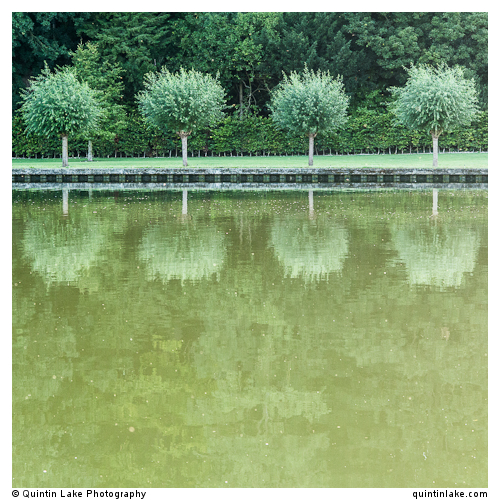
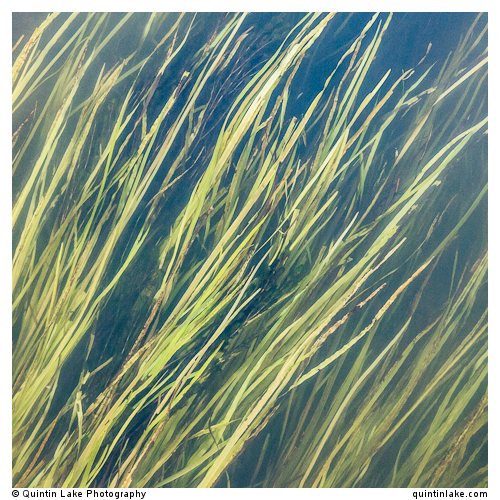
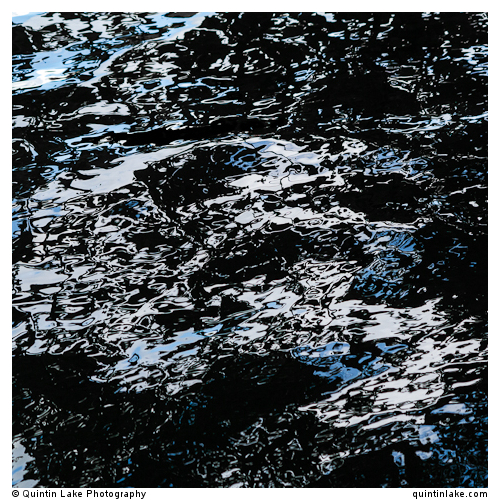
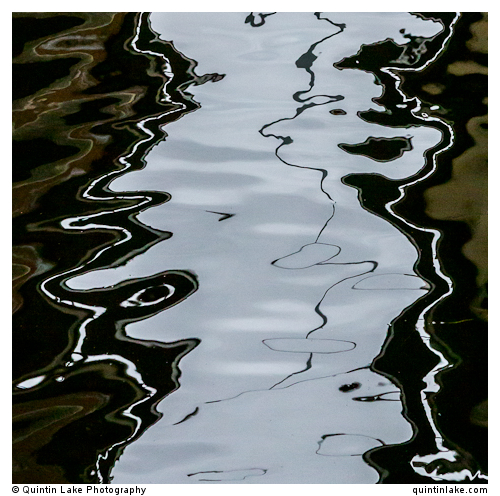
Sweet Thames, Run Softly

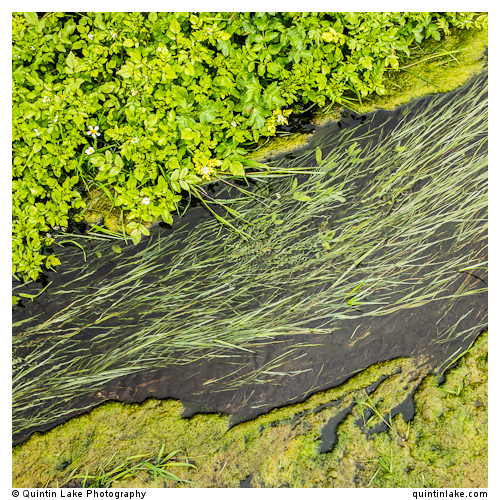
Thames Waters IV5 Miles downstream (near Ashton Keynes)

Thames Waters IV
5 Miles downstream (near Ashton Keynes)

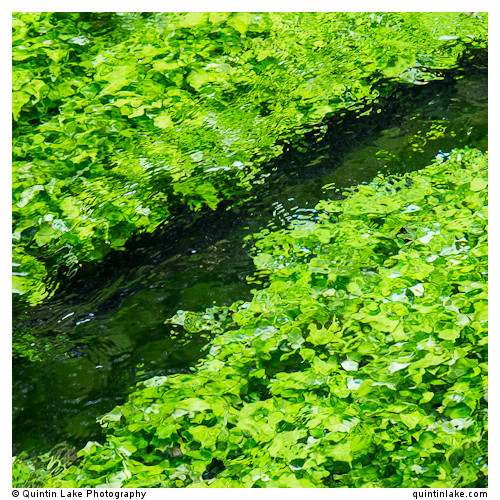
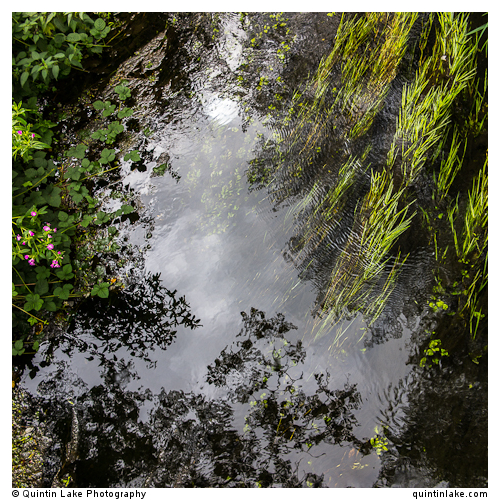
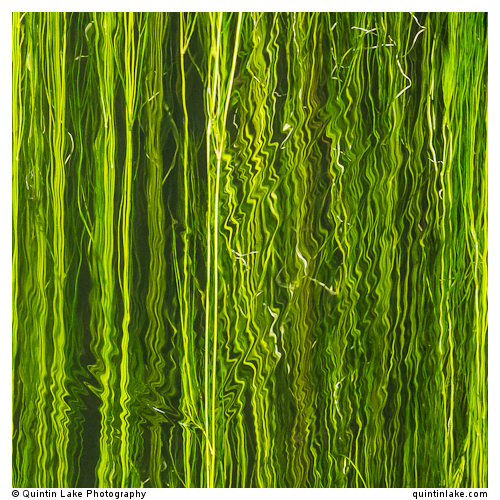
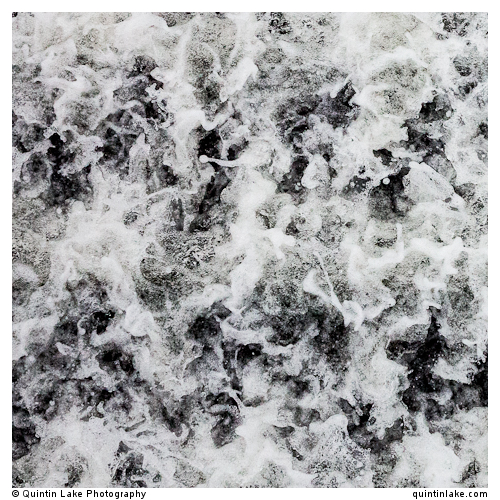
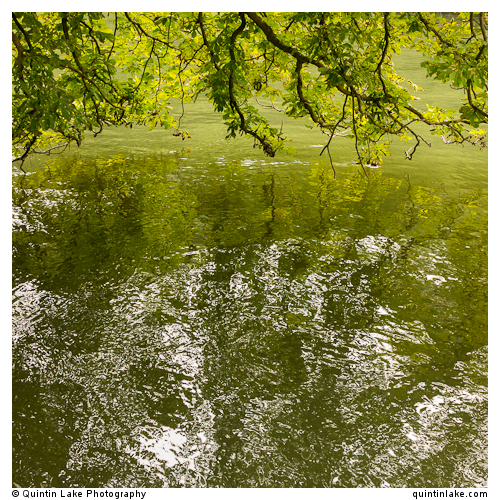
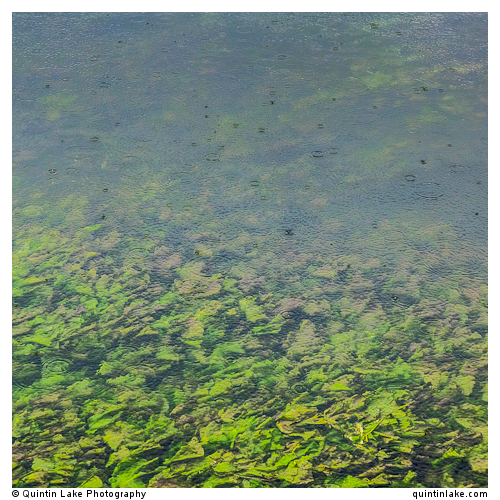
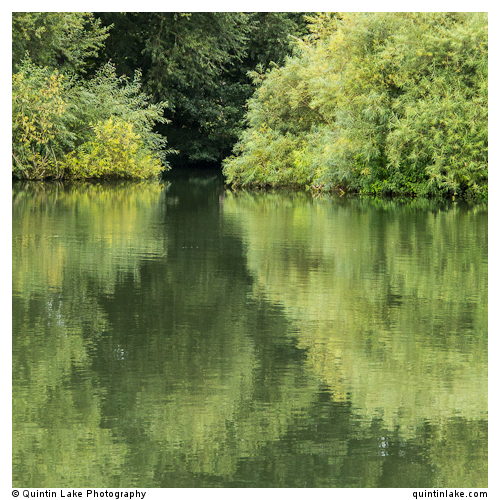
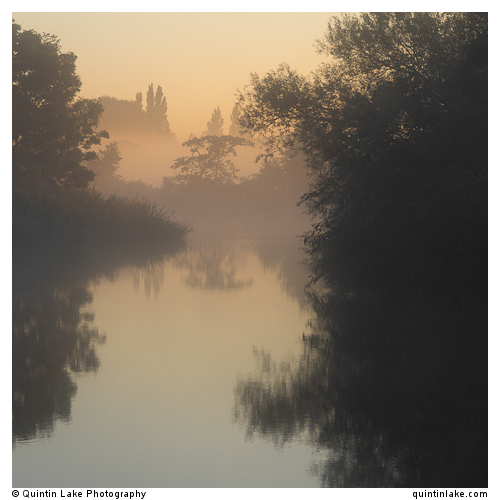
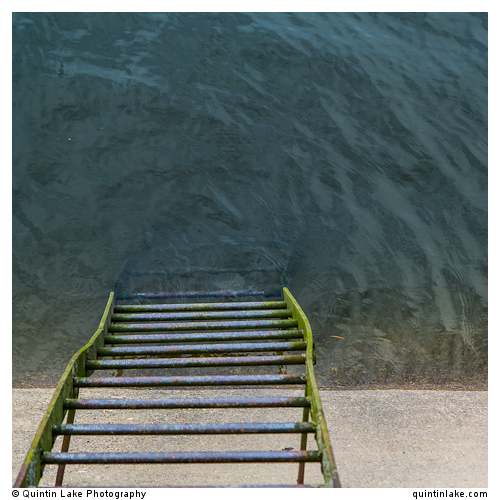
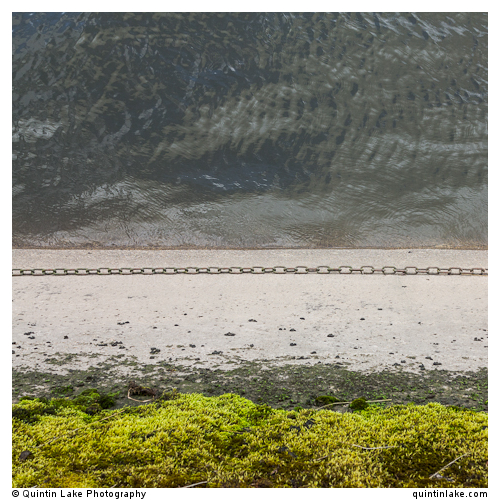
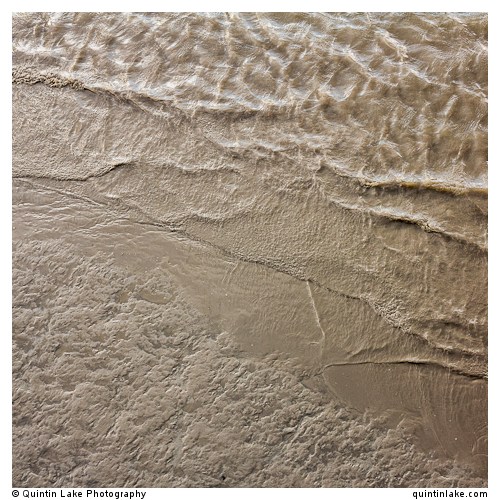
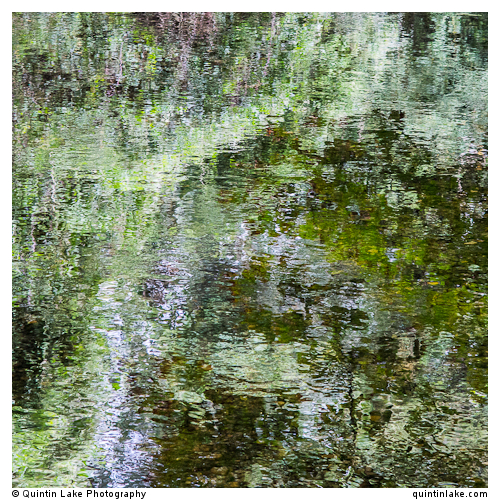
The idea for the project started when watching the first few minutes of Danny Boyle’s Olympic Opening ceremony. Seeing the sped up aerial journey starting at the source of the Thames and ending up in London I immediately realised I wanted to walk the length of the river and try to produce an artwork based on that experience. I’ve recently got married and live with my wife in Cheltenham near the source, my childhood was in Oxford, half way along and I lived in London for seven years as a student so the river has a very personal connection for me. Earlier in the year I’d been in hospital with meningitis and then immediately afterwards witnessed the birth of my son so I started the journey with more sensitively to the notion of the river as a metaphor of life than I might have done otherwise.

I’ve always been a keen long distance walker having backpacked Land’s End to John O’Groats and many of the long distance trails in Britain. I always travel alone and camp, as its cheaper (much cheaper in the Thames valley!) and gives me a greater connection to the landscape and allows me the concentration necessary to think about and notice interesting light for photography. It was surprisingly difficult to camp along the Thames as it relatively populated and I prefer to wild camp so I often pitched after dark and broke camp at dawn. The journey was 170 miles and it took me ten days.

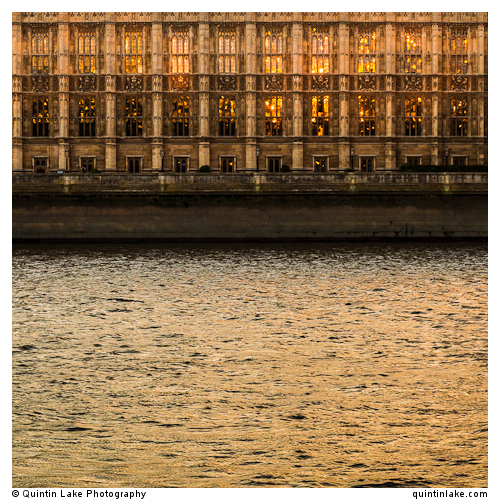
Whenever I work on a photographic project I think of the images as a series, to which I endeavour to give a particular and constant feeling. I never know what this feeling will be before I start a journey which is part of the thrill. In the artic this was the play of light, In Iran it was the architectural symmetry and on the Thames I felt it was the pattern and texture of the water. I purposely cropped out the landmarks to emphasise the difference of the texture and colour of the water. Before I started the journey I would never have thought that the water at the source could look quite so different to the same water as it passed under the M25 bridge.

See the full series here

Practice Statement

I make photographs of things I’ve never seen before. The desire to understand the visual world is the inspiration for my work. Geometry and stillness are qualities of space I’m particularly fascinated by. My background in architecture means I tend to abstract the world in terms of line, surface and form.

My working method involves two parts. Firstly extensive walking and looking, photographing intuitively if a place interests me. Subsequently I’ll edit the material I have collected while thinking consciously about a theme or idea that the images suggest to me.

Methods and Approach

My background was working with a 5×4″ sinar view camera but now, the 20+ megapixel full frame 35mm sensor cameras more than meet the technical demands of the industry (architects, developers and design press). I’m not excited about the new generation of 40 megapixel full frame sensor 35mm cameras as I consider the extra detail excessive and it increases processing time. Far more important than resolution is a flair for composition and light. The cost of buying or hiring a Phase One back and associated digital lenses is not proportional to what the industry pays and this type of camera reduces the propensity to experiment and play which can reduce creativity of composition.

35mm full frame lenses with excellent corner to corner sharpness and low distortion are essential. Tilt shift movements are useful not just for correcting perspective but for shifting the compositional emphasis of a scene. I work with Canon and my preferred lenses are 17mm f4 TS-E L,  24 f4 TS-E L and 70-200 f4 L. The ubiquitous 24-105 f4 L is also fantastically versatile and most of its problems can be removed in Lightroom; the Chernobyl series was shot with this lens as I was so short of time due to fears of radiation exposure. Architectural Photography is particularly sensitive to lens/ body calibration and I send my equipment to be calibrated annually.

Useful techniques for architectural photography depending on the situation are exposure fusion which is a naturalistic version of HDR which increases the dynamic range by blending bracketed exposures. I use LR/Enfuse lightroom plugin for this. For interiors, tethered shooting can be very useful for previewing often complex Lightroom adjustments on the fly. Mirror lock up and a high end tripod and head are essential for pin sharp results. Aperture is best kept no higher than the f8-f14 range to avoid problems with diffraction softening the image. A Hoodman loupe helps focus the manual tilt shift lenses. Wearing a fluorescent worker’s jacket when using a tripod reduces people’s suspicion in urban areas and tends to make people walk quickly past the building. And I always carry a couple of door wedges for interiors photography!
More from Tim Ashley’s blog here

I’m delighted to announce that my work was awarded: 1st place in Architecture – Historic category for the winning entry “Pripyat: 21 Years After Chernobyl” in the 2012 International Photography Awards. I also received three honourable mentions in the categories for Fine Art – Landscape, Architecture – Cityscapes and Architecture – Buildings.

21 years after the Chernobyl Nuclear Power Plant exploded these images of the town capture a memory of three traumas: the invisible radiation, the visible looting and the gradual collapse of a ghost town.

Click the images below to visit my online gallery to view larger or purchase a print

A silver birch tree grows through the floor on the terrace of Hotel Polissia.

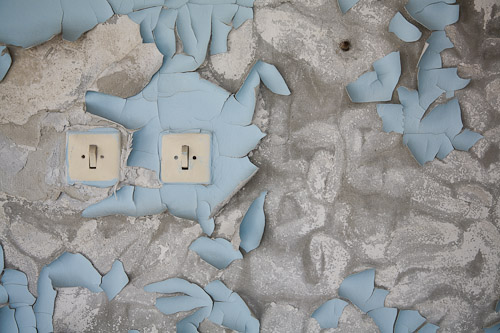
Light switches in a bedroom of Hotel Polissia.

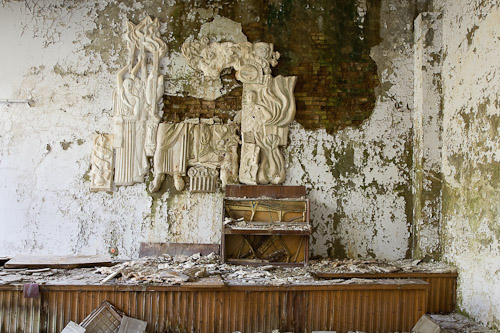
Concert hall with water damaged soviet relief sculpture and piano.

Light shines across climbing bars and broken basketball hoop in a gymnasium.

Lobby of Hotel Polissia. Marble wall cladding has been removed by looters.

The 2012 International Photography Awards received nearly 15,000 submissions from 103 countries across the globe. IPA is a sister-effort of the Lucie Foundation, where the top three winners are announced at the annual Lucie Awards gala ceremony. The Foundation’s mission is to honor master photographers, to discover new and emerging talent and to promote the appreciation of photography. Since 2003, IPA has had the privilege and opportunity to acknowledge and recognize contemporary photographers’ accomplishments in this specialized and highly visible competition. Visit www.photoawards.com for more details.

Thames Waters I
1/2 Mile downstream, Thames Head

Thames Waters II
2 Miles downstream, near Kemble

Thames Waters III
3 Miles downstream, near Ewen

Thames Waters IV
5 Miles downstream, near Ashton Keynes

Thames Waters V
15 Miles downstream, near Cricklade

Thames Waters VI
64 Miles downstream, Abingdon Lock

Thames Waters VII
85 Miles downstream, near Goring

Thames Waters VIII
96 Miles downstream, near Reading

Thames Waters IX
99 Miles downstream, near Sonning

Thames Waters X
100 miles downstream, dawn near Shiplake

Thames Waters XI
103 Miles downstream, near Henley-on-Thames

Thames Waters XII
104 Miles downstream, Marsh Lock. Henley-on-Thames

Thames Waters XIII
129 Miles downstream, near Runnymede

Thames Waters XIV
132 Miles downstream, Under M25 bridge near Staines

Thames Waters XV
158 Miles downstream, near Richmond, London

Thames Waters XVI
160 Miles downstream, near Kew, London

Thames Waters XVII
165 Miles downstream, Wandsworth, London

Thames Waters XVIII
169 Miles downstream, Houses of Parliament, London

Photographs of the mercurial River Thames made during a 10 day walk in August 2012 backpacking and wild camping where possible along 170 miles of the Thames Path from the source near Kemble in Gloucestershire to the City of London, I chose to end my journey on the steps of St Pauls.

Sweet Thames, run softly till I end my song,
Sweet Thames, run softly, for I speak not loud or long
TS Eliot.

Signed limited edition prints available at £195 each (40x40cm). To purchase please contact me. Larger sizes also available

Concrete entrance sign to Pripyat. Now a memorial, it is surrounded by plastic flowers.

Lobby of Hotel Polissia. Marble wall cladding has been removed by looters.

Light switches in a bedroom of Hotel Polissia.

Palace of Culture, central square and apartment blocks viewed from the terrace of hotel Polissia.

A silver birch tree grows through the floor on the terrace of Hotel Polissia. The hammer and sickle is visible atop the distant apartments.

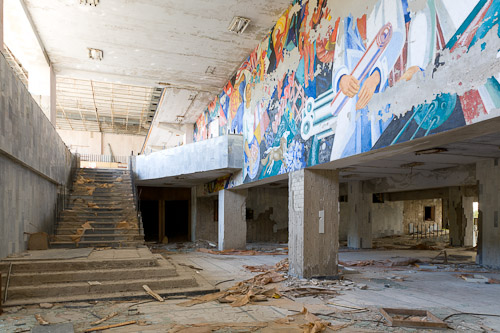
Palace of Culture foyer with Soviet mural.

Abandoned dodgems from the fun fair due to open 4 days after the explosion.

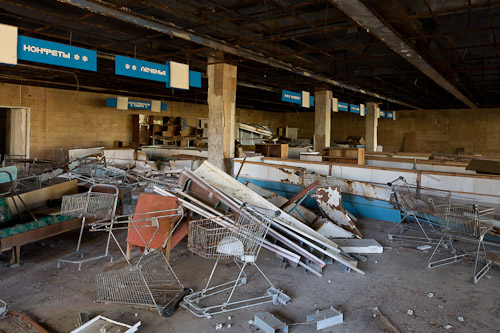
Supermarket interior with abandoned shopping trolleys.

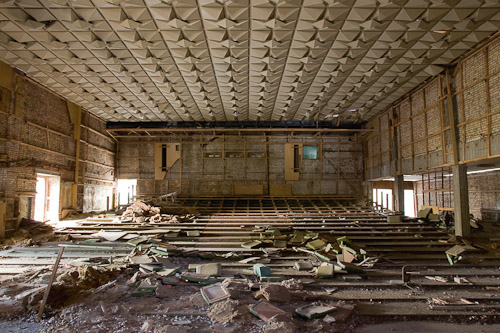
The looted seating area in the Palace of Culture theatre.

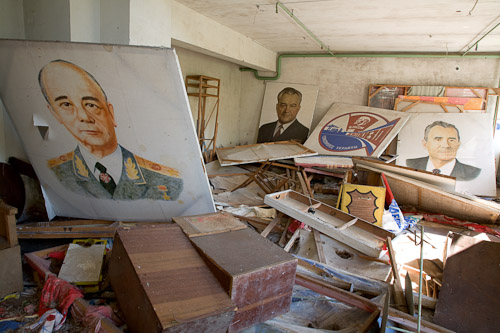
Palace of Culture Theatre prop room with paintings of Lenin and dignitaries.

Looted department store next to central square. The floor is covered with decayed ceiling tiles.

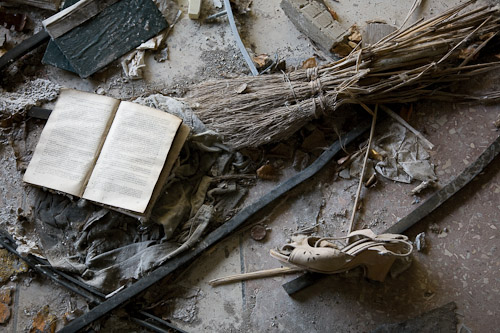
Single shoe, glazing gaskets, book and broom on floor of Department Store.

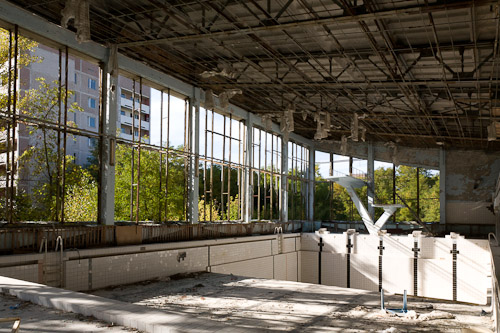
Abandoned Swimming Pool, Pripyat.

Light shines across climbing bars and broken basketball hoop in a gymnasium.

Abandoned and never used Ferris wheel, Pripyat. Due to open four days after the explosion.

Children’s exercise books and broken glass on a classroom floor.

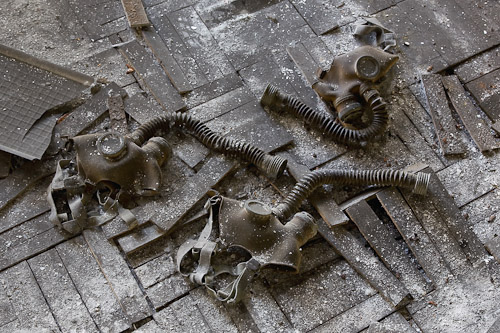
Children’s gas masks, the silver filter elements removed by looters. They had ben issued according to soviet policy in case of nuclear attack from the West.

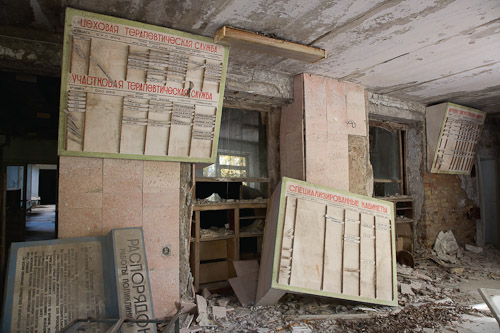
Hospital reception with doctor’s appointment boards.

Concert hall with water damaged soviet relief sculpture and piano.

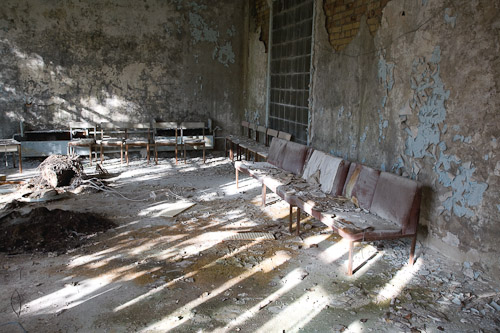
Hospital waiting room, Pripyat.

Drawing of Lenin with dead house plant in the hospital.

When reactor number four at the Chernobyl Nuclear Power Plant exploded in 1986 the result was the worst nuclear accident in history. Large areas of Ukraine, Belarus, and Russia were severely contaminated, requiring the evacuation and resettlement of over 336,000 people.

Pripyat, 1km from the reactor, was designed as an exemplar of Soviet planning for the 50,000 people who worked at the power plant. A funfair, with bumper cars and Ferris wheel, was due to open two days after the reactor exploded.

These photographs, inspired by Robert Polidori’s earlier images of Chernobyl, were shot in 2007 over 5 hours, apparently the safe period of exposure. Although a Geiger counter was carried in case of localised high emissions, certain areas of vegetation which attract a higher concentration of radiation were avoided.

The physical devastation stems from looting and gradual building collapse, not from the explosion. Over the last ten years people have intruded regularly into the military exclusion zone, stealing everything from irradiated toilet seats to the marble cladding from hotel walls. Photographs of the town capture a memory of three traumas: the invisible radiation, the visible looting and the gradual collapse of a ghost town.

Now with the nuclear disaster at Fukushima Reactor, Japan as a result of the 2011 Tōhoku earth quake and tsunami  these images of Chernobyl have a renewed poignancy.

Selected images from this series been exhibited at the Crane Kalman Gallery in Brighton, the Architectural Association in London, the Royal West of England Academy Autumn Show in Bristol  and the Host Gallery in London. Images from the series are also published in my book Drawing Parallels: Architecture Observed

BUY PRINTS / LICENSE IMAGES of Pripyat and the Chernobyl Nuclear Disaster here >>

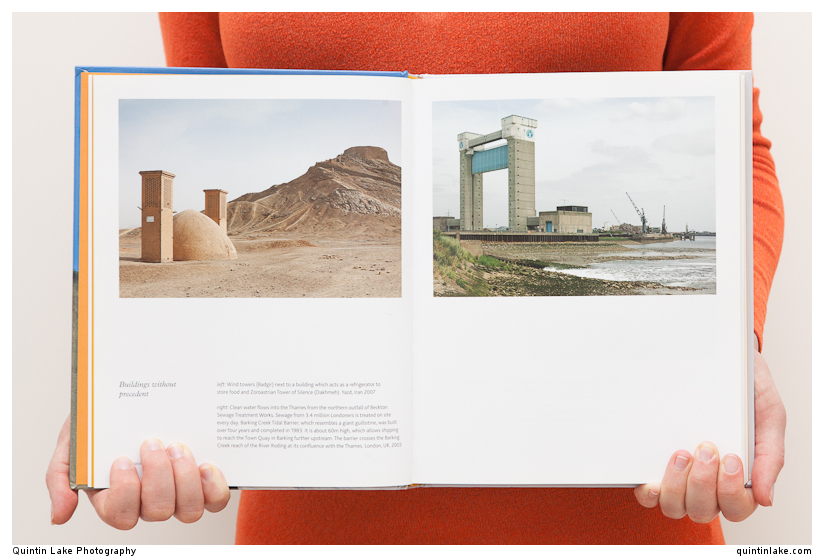
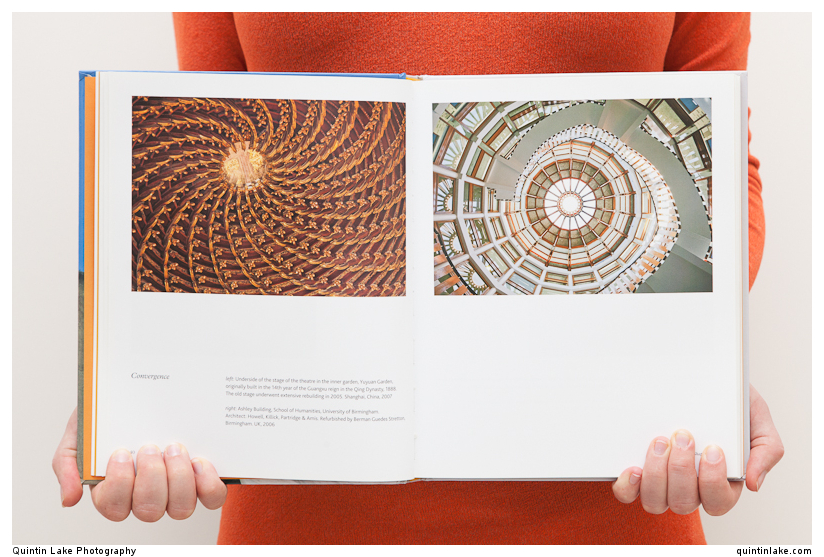
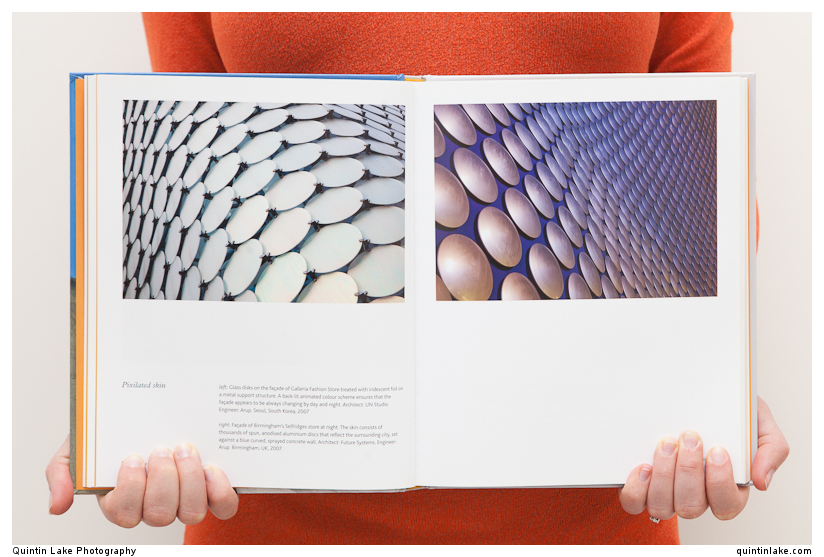
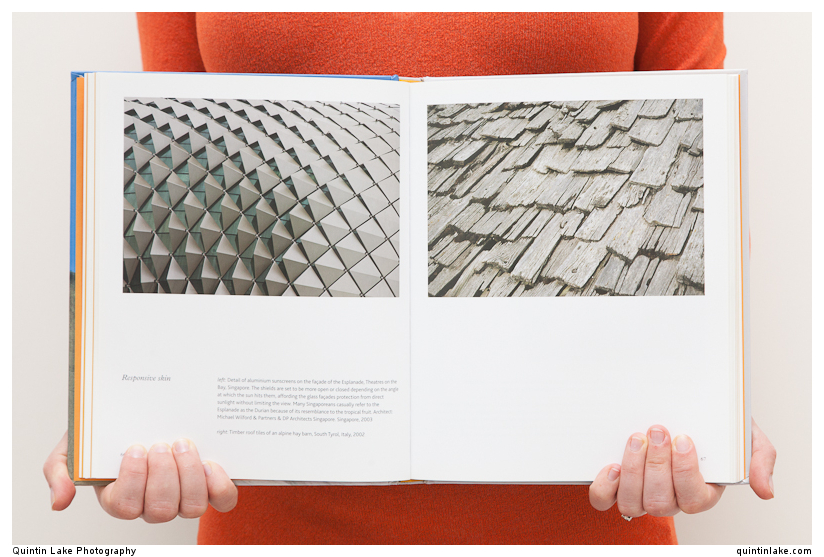
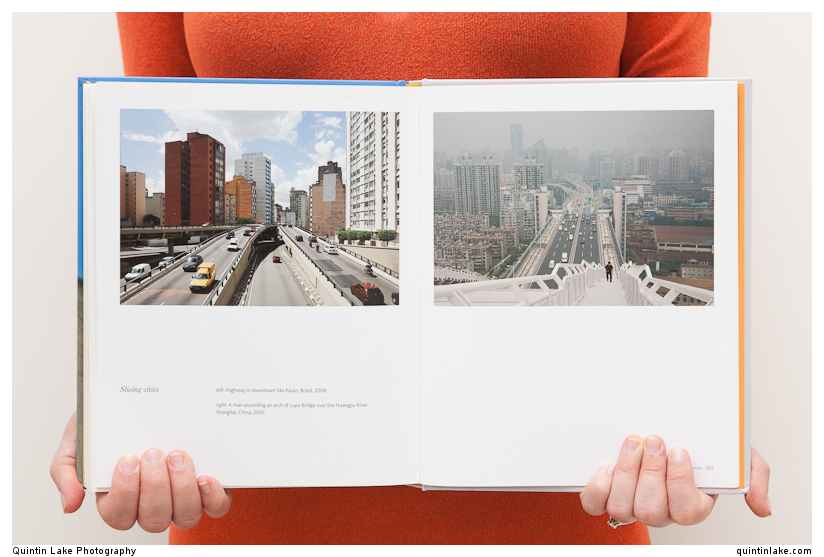
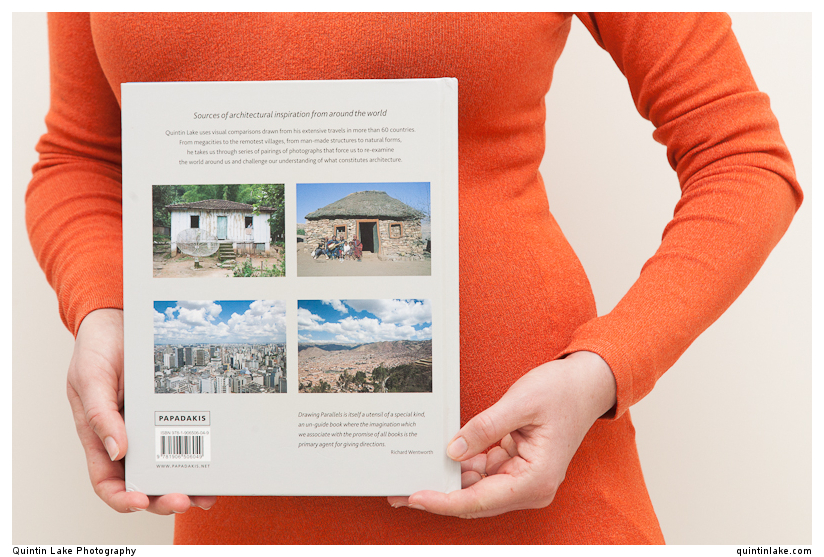
Drawing Parallels: Architecture Observed, By Quintin Lake Foreword by Richard Wentworth. Published by Papadakis

Buildings without precedent
left: Wind towers (Badgir) next to a building which acts as a refrigerator to store food and Zoroastrian Tower of Silence (Dakhmeh). Yazd, Iran 2007
right: Clean water flows into the Thames from the northern outfall of Beckton Sewage Treatment Works. Sewage from 3.4 million Londoners is treated on site every day. Barking Creek Tidal Barrier, which resembles a giant guillotine, was built over four years and completed in 1983. It is about 60m high, which allows shipping to reach the Town Quay in Barking further upstream. The barrier crosses the Barking Creek reach of the River Roding at its confluence with the Thames. London, UK, 2003

Convergence
left: Underside of the stage of the theatre in the inner garden, Yuyuan Garden, originally built in the 14th year of the Guangxu reign in the Qing Dynasty, 1888. The old stage underwent extensive rebuilding in 2005. Shanghai, China, 2007
right: Ashley Building, School of Humanities, University of Birmingham. Architect: Howell, Killick, Partridge & Amis. Refurbished by Berman Guedes Stretton, Birmingham. UK, 2006

Pixilated skin
left: Glass disks on the facade of Galleria Fashion Store treated with iridescent foil on a metal support structure. A back-lit animated colour scheme ensures that the facade appears to be always changing by day and night. Architect: UN Studio. Engineer: Arup. Seoul, South Korea, 2007
right: Façade of Birmingham’s Selfridges store at night. The skin consists of thousands of spun, anodised aluminium discs that reflect the surrounding city, set against a blue curved, sprayed concrete wall. Architect: Future Systems. Engineer: Arup. Birmingham, UK, 2007

Responsive skin
left: Detail of aluminium sunscreens on the facade of the Esplanade, Theatres on the Bay, Singapore. The shields are set to be more open or closed depending on the angle at which the sun hits them, affording the glass facades protection from direct sunlight without limiting the view. Many Singaporeans casually refer to the Esplanade as the Durian because of its resemblance to the tropical fruit. Architect: Michael Wilford & Partners & DP Architects Singapore. Singapore, 2003
right: Timber roof tiles of an alpine hay barn, South Tyrol, Italy, 2002

Absolute boundaries
left: Tourist viewing platformfor looking into North Korea from the South Korean side of the 38th parallel. Situated on top of Dorasan (Mount Dora), the observatory looks across the Demilitarized Zone. It is the part of South Korea closest to the North. Mount Dora, South Korea, 2007
right: Road barrier above a steep drop at the edge of a newly completed section of the Interoceanic Highway in the Peruvian Andes. Above Cuzco, Peru, 2008

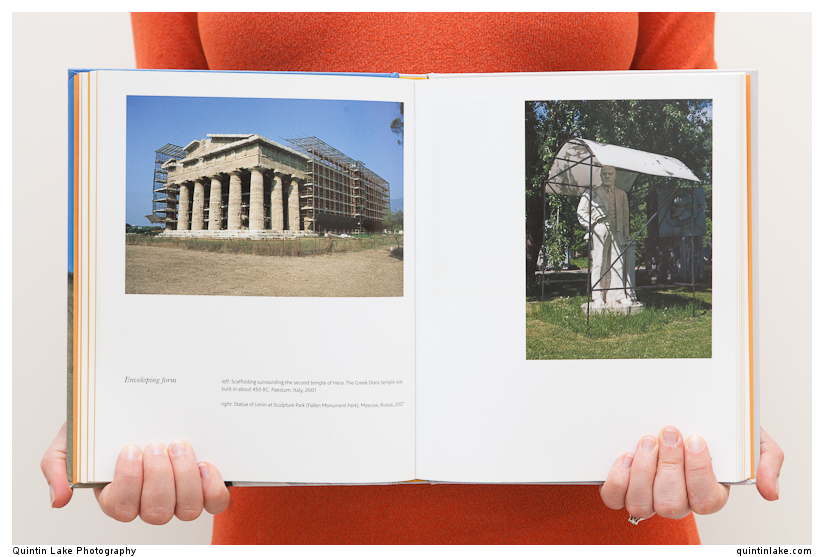
Enveloping form
left: Scaffolding surrounding the second temple of Hera. The Greek Doric temple was built in about 450 BC. Paestum, Italy, 2001
right: Statue of Lenin at Sculpture Park (Fallen Monument Park), Moscow, Russia, 2007

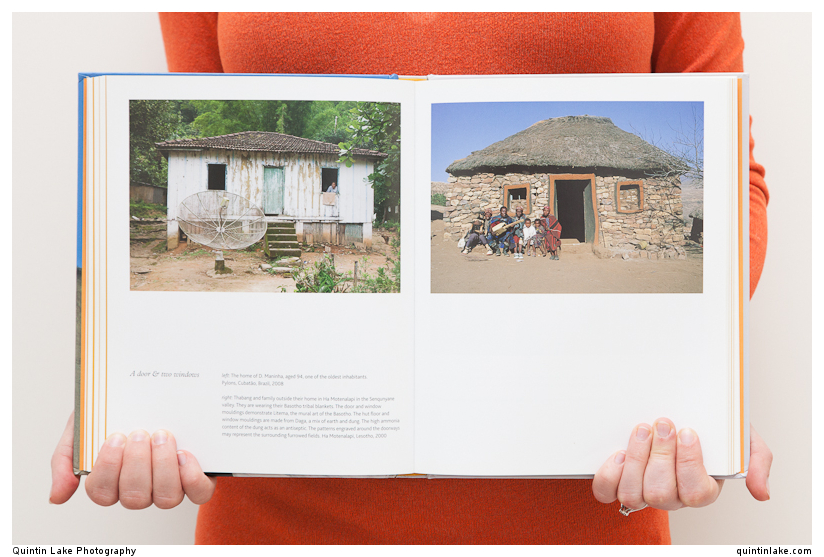
A door & two windows
left: The home of D. Maninha, aged 94, one of the oldest inhabitants. Pylons, Cubatao, Brazil, 2008
right: Thabang and family outside their home in Ha Motenalapi in the Senqunyane valley. They are wearing their Basotho tribal blankets. The door and window mouldings demonstrate Litema, the mural art of the Basotho. The hut floor and window mouldings are made from Daga, a mix of earth and dung. The high ammonia content of the dung acts as an antiseptic. The patterns engraved around the doorways may represent the surrounding furrowed fields. Ha Motenalapi, Lesotho, 2000

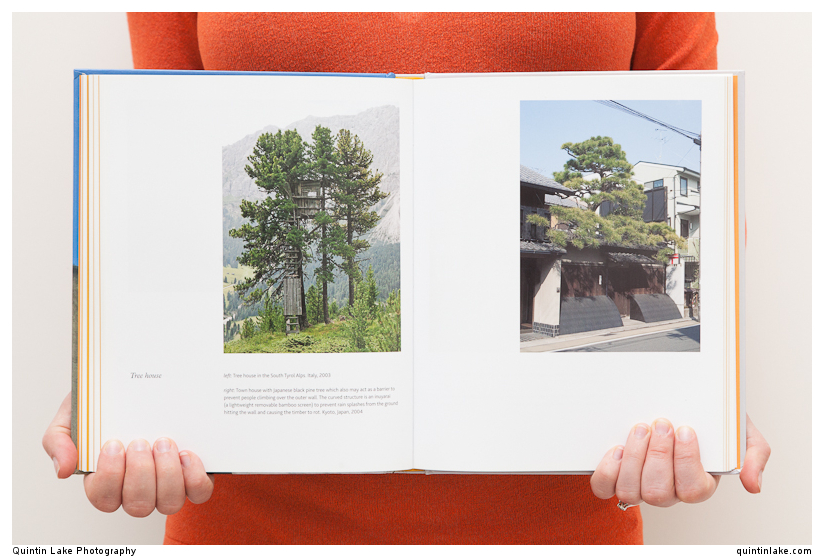
Tree house
left: Tree house in the South Tyrol Alps. Italy, 2003
right: Town house with Japanese black pine tree which also may act as a barrier to prevent people climbing over the outer wall. The curved structure is an inuyarai (a lightweight removable bamboo screen) to prevent rain splashes from the ground hitting the wall and causing the timber to rot. Kyoto, Japan, 2004

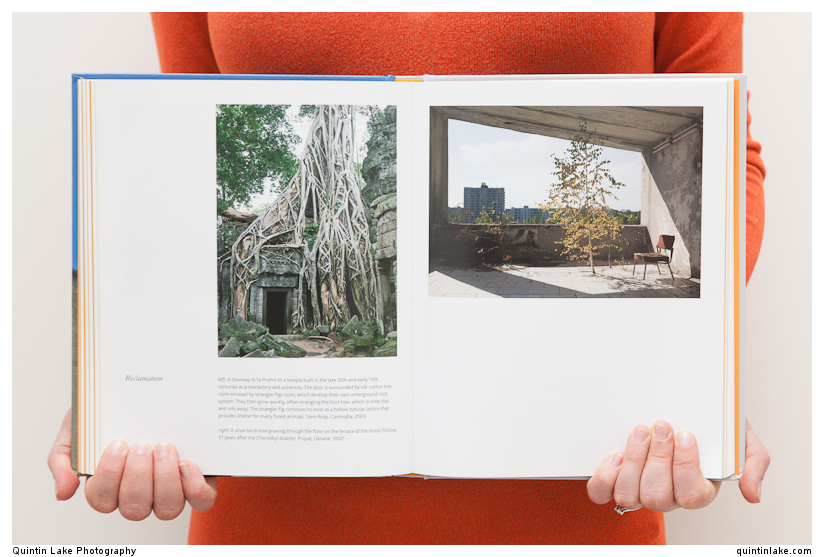
Reclamation
left: A doorway in Ta Prohm to a temple built in the late 12th and early 13th centuries as a monastery and university. The door is surrounded by silk cotton tree roots encased by strangler figs roots, which develop their own underground root system. They then grow quickly, often strangling the host tree, which in time dies and rots away. The strangler fig continues to exist as a hollow tubular lattice that provides shelter for many forest animals. Siem Reap, Cambodia, 2003
right: A silver birch tree growing through the floor on the terrace of the Hotel Polissia 21 years after the Chernobyl disaster. Pripiat, Ukraine, 2007

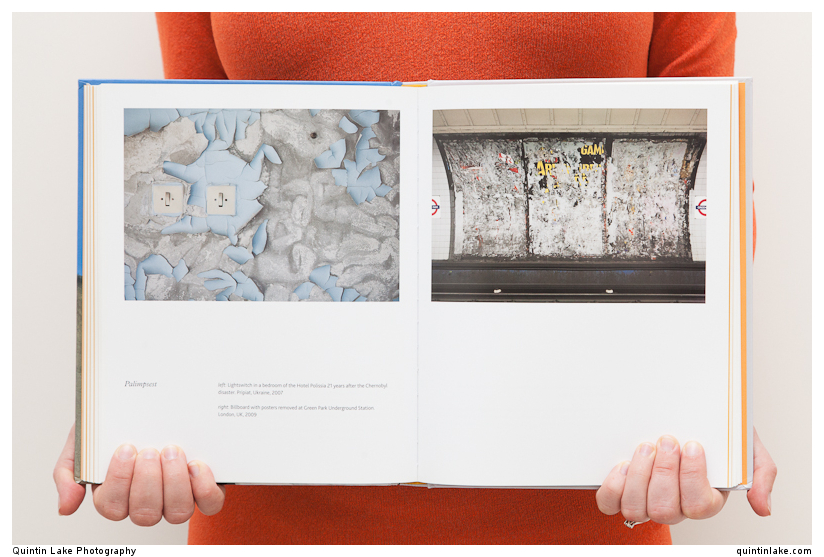
Palimpsest
left: Lightswitch in a bedroom of the Hotel Polissia 21 years after the Chernobyl disaster. Pripiat, Ukraine, 2007
right: Billboard with posters removed at Green Park Underground Station. London, UK, 2009

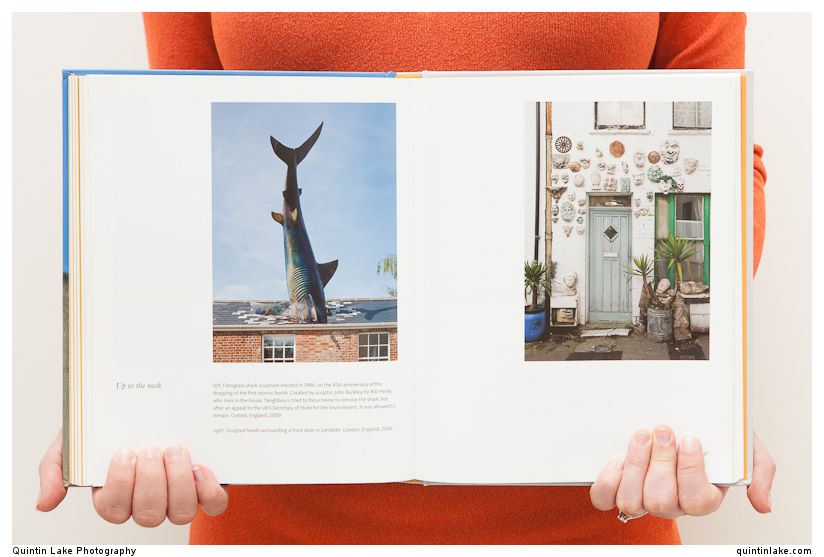
Up to the neck
left: Fibreglass shark sculpture erected in 1986, on the 41st anniversary of the dropping of the first atomic bomb. Created by sculptor John Buckley for Bill Heine, who lives in the house. Neighbours tried to force Heine to remove the shark, but after an appeal to the UK’€™s Secretary of State for the Environment, it was allowed to remain. Oxford, England, 2009
right: Sculpted heads surrounding a front door in Lambeth. London, England, 2009

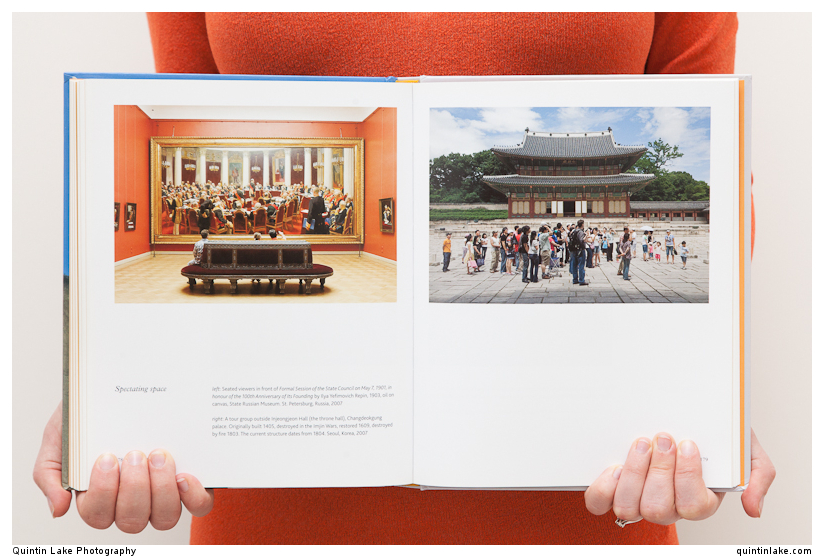
Spectating space
left: Seated viewers in front of Formal Session of the StateCouncil onMay 7, 1901, in honour of the 100th Anniversary of Its Founding by Ilya Yefimovich Repin, 1903, oil on canvas, State Russian Museum. St. Petersburg, Russia, 2007
right: A tour group outside Injeongjeon Hall (the throne hall), Changdeokgung palace. Originally built 1405, destroyed in the ImjinWars, restored 1609, destroyed by fire 1803. The current structure dates from 1804. Seoul, Korea, 2007

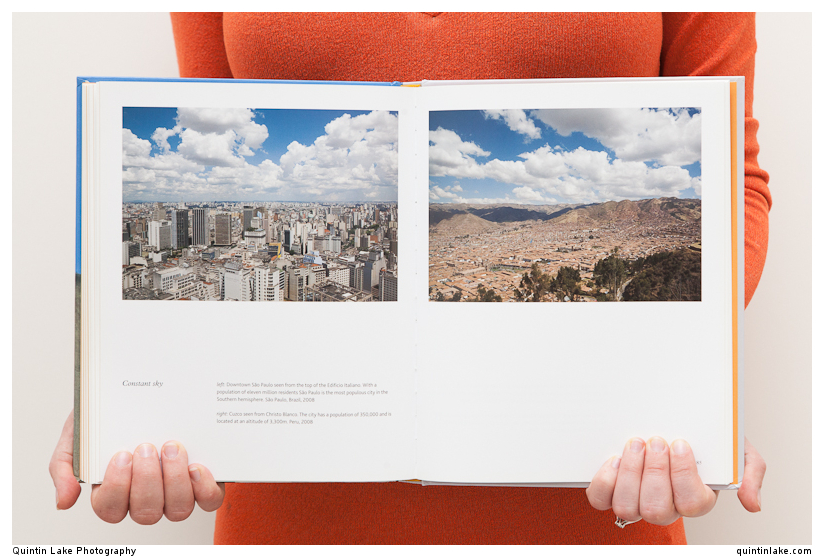
Constant sky
left: Downtown Sao Paulo seen from the top of the Edificio Italiano.With a population of eleven million residents Sao Paulo is the most populous city in the Southern hemisphere. Sao Paulo, Brazil, 2008
right: Cuzco seen from Christo Blanco. The city has a population of 350,000 and is located at an altitude of 3,300m. Peru, 2008

Slicing cities
left: Highway in downtown Sao Paulo. Brazil, 2008
right: A man ascending an arch of Lupu Bridge over the Huangpu River. Shanghai, China, 2007

Sources of architectural inspiration rom around the world

BUY Drawing Parallels: Architecture Observed on Amazon >> 

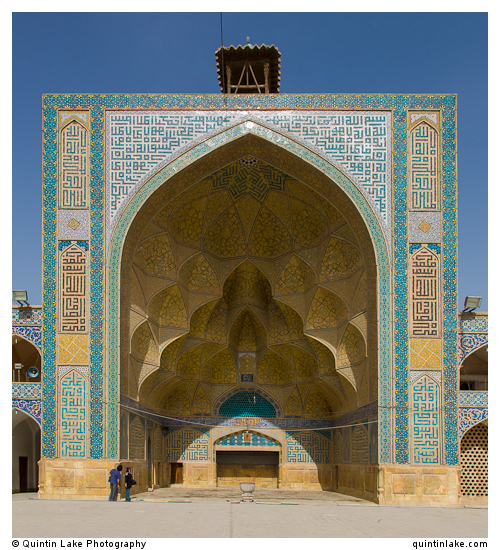
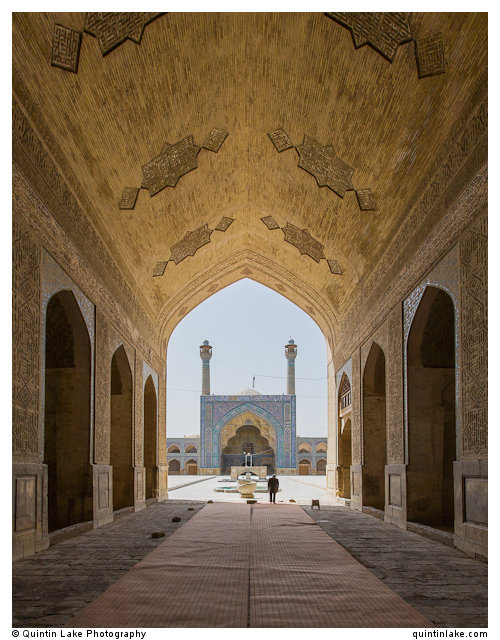
West-side iwan of the Jameh Mosque, Isfahan

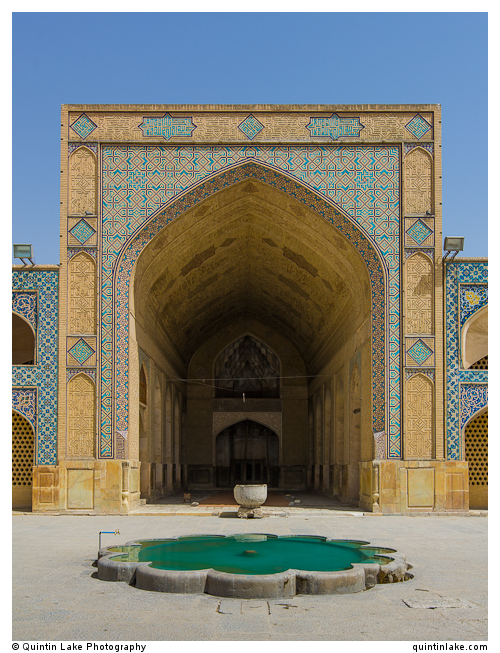
North-side iwan, Jameh Mosque, Isfahan

South-side iwan seen from North-side arch, Jameh Mosque, Isfahan

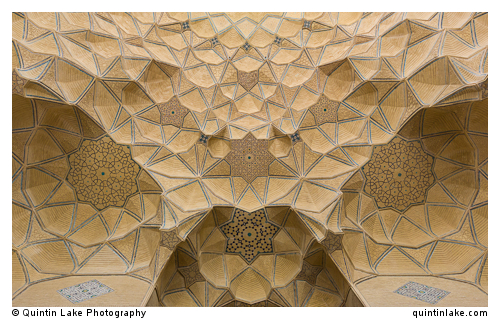
Muqarnas (decorative corbel) Jameh Mosque, Isfahan

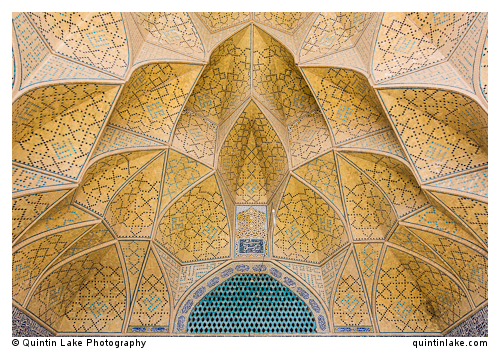
Muqarnas (decorative corbel) Jameh Mosque, Isfahan

The Jameh Mosque is the congregational mosque (Jameh) of Isfahan city, Iran (Persian: مسجد جامع اصفهان‎ – Masjid-e-Jāmeh). The mosque is the result of continual construction and reconstruction from around 771 to the end of the 20th century making it one of the oldest mosques still standing in Iran. I felt the Muqarnas (decorative corbels) are amongst the most beautiful in Islamic architecture for their sublime combination of subtle colour, complex geometry and heavily sculptural form.

Click Here for More from this Photoshoot >>

All images available as prints or for publication / licensing contact me for pricing. 

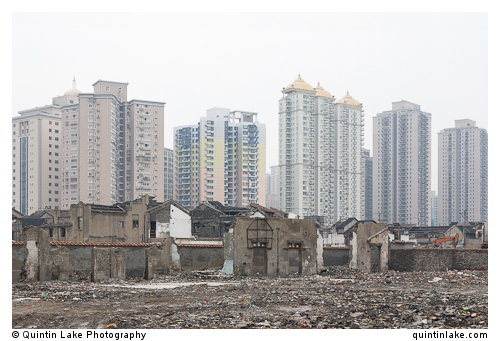
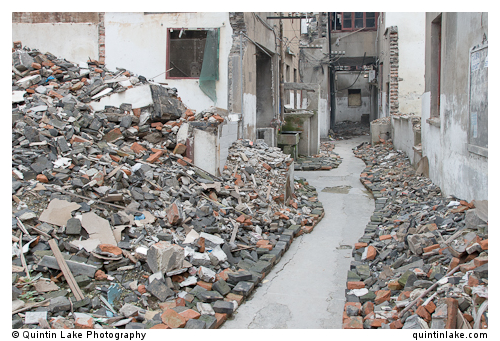
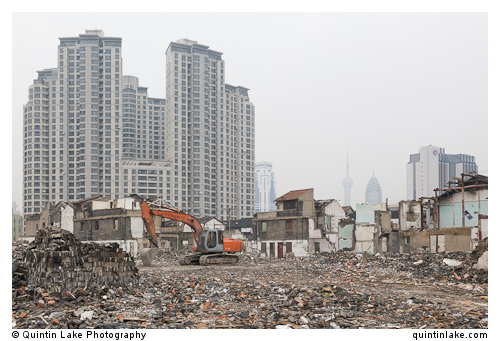
Vanishing Shanghai I. An area of Hutongs or traditional low-rise housing sits between already demolished housing and new high rise developments behind. 2007

Vanishing Shanghai II. The writing on the wall reads, “Overusage of Electricity Prohibited”. 2007

Vanishing Shanghai III. Path through the rubble of demolished houses that are still inhabited before the construction of new buildings. 2007

Vanishing Shanghai IV. The Oriental Pearl TV Tower is viable in the distance. 2007

I visited Shanghai in 2007 and the city was metamorphosing at breakneck speed perhaps due to the Shanghai Expo and the the Beijing Olympics of 2008. One area of the city that caught my imagination in particular was where the the traditional low houses known as Hutongs were being torn down to make way for the modern high rises. In between the new and the demolished buildings people lived amongst the rubble, the sides of their houses ripped open as if in the aftermath of shelling. As well as this melancholy contrast I tried to capture the strange emptiness and theatricality of this temporary part of the city.
Signed gallery prints available here >>

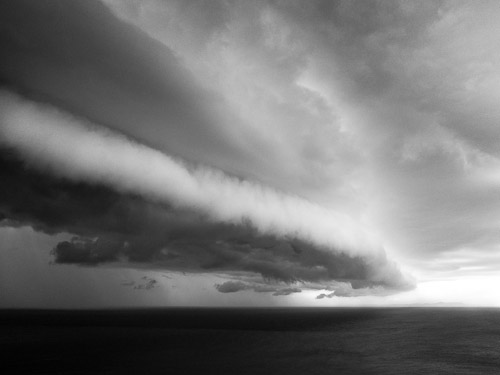
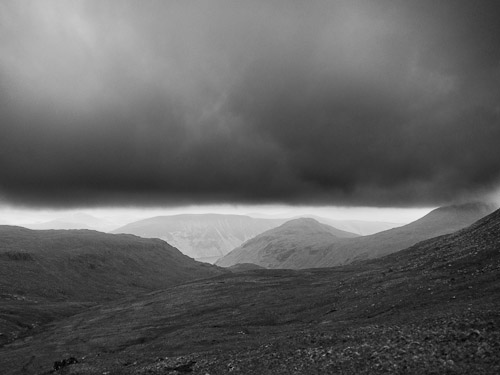
Coast to Coast I. Storm clouds over the Irish Sea.

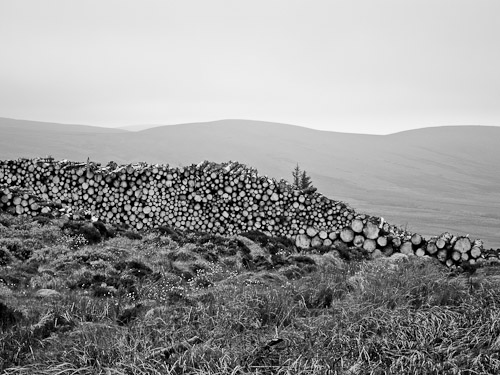
Coast to Coast IV. Forestry in the Lake District.

Coast to Coast V. Low cloud in the Lake District.

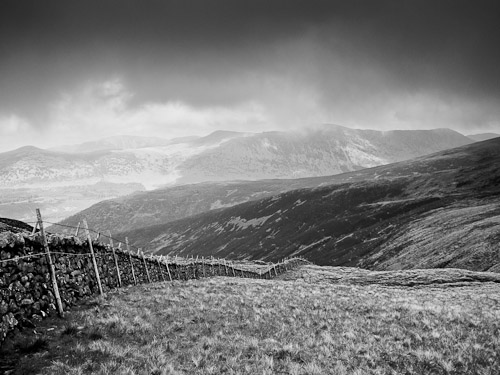
Coast to Coast VI. Stone wall in the Lake District.

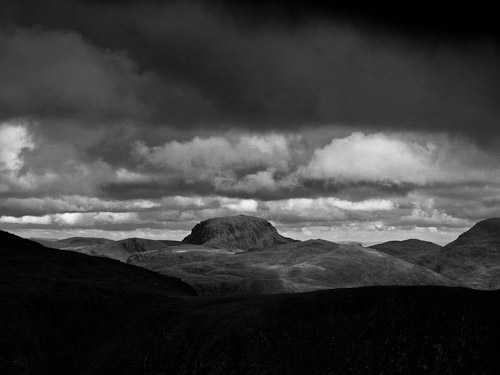
Coast to Coast VII. Great Gable in the Lake District.

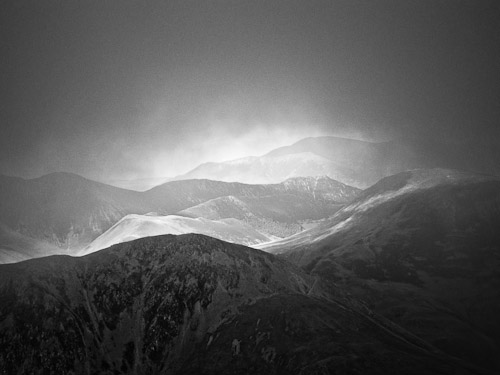
Coast to Coast VIII. Parting clouds in the Lake District.

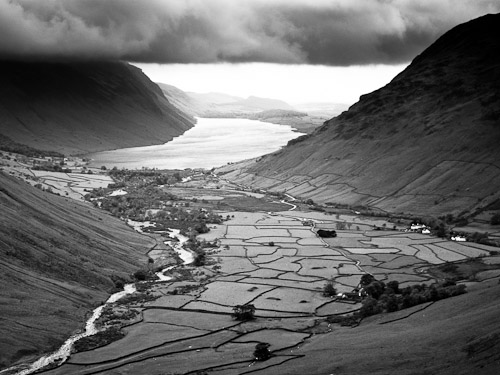
Coast to Coast IX. Wast Water in the Lake District.

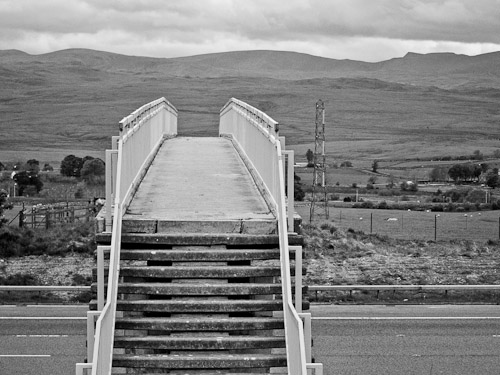
Coast to Coast XI. Footbridge over the M6.

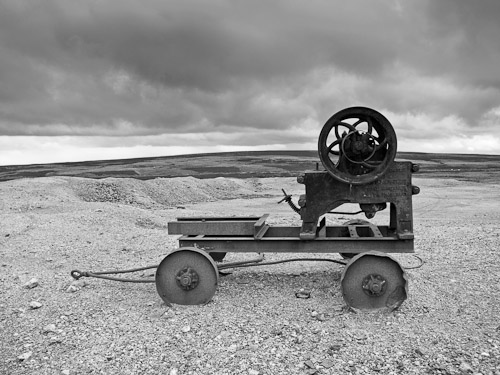
Coast to Coast XII. Stone Breaker at Bunton Hush, Yorkshire Dales.

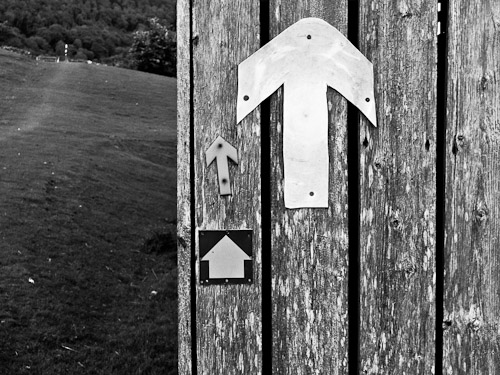
Coast to Coast XVI. Footpath arrows near Richmond.

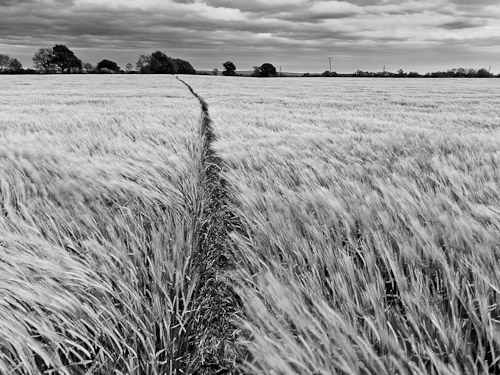
Coast to Coast XIX. Barley field in the Vale of Mowbray.

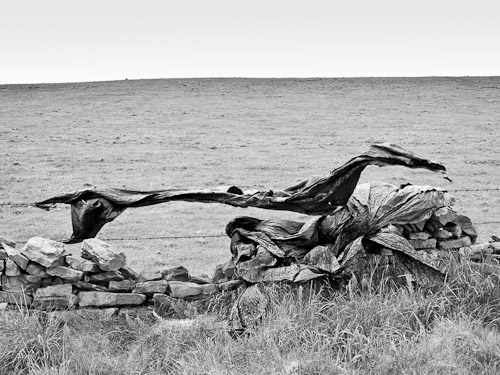
Coast to Coast XXIII. Rubbish bag near Robin Hood's Bay

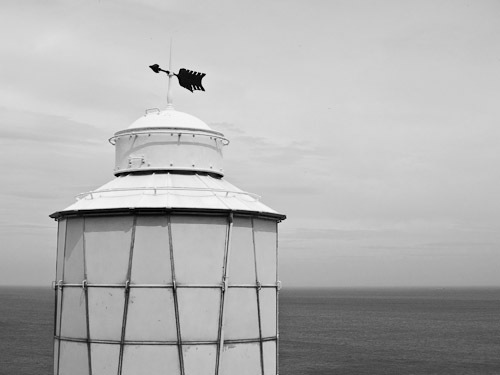
Coast to Coast XXIV. Lighthouse overlooks the North Sea.

This series of twenty four photographs were made during a 20 day 340km solo backpacking trip in May 2011 from the Irish Sea at St Bees to the North Sea at Whitby. My route was based loosely on Wainwright’s classic walk joining the Lake District National Park, the Yorkshire Dales with and the North York Moors National Park. The main additions I made to his route included walking over and camping amongst the summits in the Lakes rather than following the valleys, which added 4 days travel time to the official route, and ending the walk at Whitby, as it seemed a more satisfying end to me than Robins Hood Bay. Of the 20 days travelling I had a lot of storms as you can see in the photos. These became especially frisky during the Yorkshire Dales section – which resulted in the scarcity of photos during this section. I normally think poor weather leads to more interesting photos but here the limit was reached! I hope these photos show an intimate portrayal of the drama and allure of the English Landscape an environment that, for me at least, manages to never look familiar.

All prints 42x58cm, Giclee Print on Cotton Rag, edition of 25 +1 A/P

For queries about pricing or to purchase work please either contact me of order online at the link below.

Click Here for More from this Series >>

Photographs © Quintin Lake 2011