Archives for category: Photography

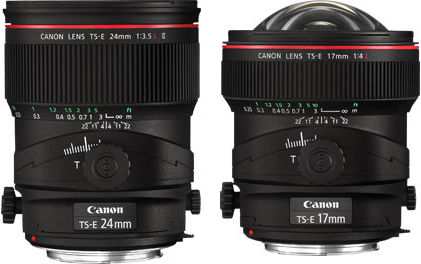
ts-e_17mm_24mm_w421_tcm13-628491

Key features of the TS-E 17mm f/4L and TS-E 24mm f/3.5L II include:

  • Tilt and shift lenses compatible with all Canon EOS cameras
  • Ultra Wide 17mm / wide 24mm focal length, ideal for architecture and landscapes
  • High precision lens elements for low distortion and high resolution to the edge of the image
  • ± 6.5° Tilt and ±12mm Shift (TS-E 17mm f/4L) ± 8.5° Tilt and ±12mm Shift (TS-E 24mm f/3.5L II)
  • Tilt and shift mechanism rotates +/-90° allowing shift in any direction
  • Tilt mechanism rotates +/-90° allowing tilt in any direction relative to the shift
  • Aspherical and UD lens elements minimise chromatic aberration
  • Sub-wavelength structure and super-spectra coatings minimise ghosting and flare
  • Circular aperture for creative, blurred highlights
  • TS-E 17mm f/4L has a floating internal focus mechanism delivers high image quality throughout focus range

View the full press release on canons site here

This article may be useful to you if like me you had trouble with the seemingly simple task of sourcing a threaded rod to fit your tripod or camera.

My search for this item was for the following purposes:

1. To attach a Gitzo monopod and tripod to a Really Right Stuff (RRS) Ball head and Manfrotto geared head ( 3/8″ thread)

2. To connect a Hama Accessory Shoe with Insulating Plate to a Lastolite umbrella swivel as I was always breaking the plastic manfrotto style accessory shoe (1/4″ thread)

3. To attach a ball head to a Manfrotto super clamp. (1/4 inch thread with 1/4 – 3/8″ adapter bushing needed on the head)

The problem I discovered is that most camera stores in the UK do not sell the compatible threaded rod. Outside of the photographic world the thread pitch is an old type known as whitworth so cannot be picked up at a regular hardware store. The pitch of whitworth is a 55 degree thread angle, and UNC (coarse) is the size which superseded whitworth is 60 degrees.

However UNC (coarse) is more easily obtainable from specialist suppliers in varied lengths and for photographic purposed they are interchangeable. Stainless steel should be used as it is the strongest which is advisable if you have a heavy camera and lens combination.


The solution and where to source in the UK

Depending on your tripod setup what you need is:

1/4″ UNC stainless steel threaded rod (grub screw) or socket setscrew

3/8″ UNC stainless steel threaded rod (grub screw) or socket setscrew

Required length will vary for your individual use, I found the 1″ length has worked well for ball head to monopod and general head to tripod mounting. This length also worked well to attach a Hama Accessory Shoe to a Lastolite umbrella swivel.

In the uk I have purchased these from http://www.a2stainless.co.uk/ to which I am not connected in any way.


Locking the connection

Once the correct thread has been obtained most people want to lock the threads using a removable threadlocker so their tripod/monopod head does not loosen during normal use.

The often recommended brand is Loctite 242 which is hard to purchase in small quantities in the uk. The difference between this and Loctite 243 is only related to oil repellence so will make no difference for photographic application

In the UK Loctite 243 Lock ‘n’ seal is easily obtainable for less than £3 for a 3ml tube from Halfords

Once this is applied to the thread and the items assembled as required the bond should be allowed to cure overnight.

Memories of Hall the Printers in Oxford prior to demolition, who judging scattered ephemera, printed a lot of 2000AD comics. Even though the machinery is long gone I love how resilient the marks and character of the previous occupants remain.

BUY PRINTS/LICENSE more Hall the Printer Ltd, Oxford images here

Hall the Printer, Oxford

BUY PRINTS/LICENSE more Hall the Printer Ltd, Oxford images here

Photography © Quintin Lake, 2009

2008Explore01

For the second year running I’m delighted to be a panellist on the expedition photography panel at this years “Explore – expedition & fieldwork planning weekend” at the Royal Geographical Society which is always the most exciting event of the year for me.

The event runs 22nd & 23rd November, 2008 and the photography workshop is on Sunday afternoon.

Tom Ang, Who chaired the panel asked us to come up with our personal three golden rules. These are mine aimed at the novice expedition photographer:

1. Make sure your camera is accessible
Its no good if your camera is hidden inside your rucksack, canoe or vehicle. Be prepared that some of the best shots may be when you are most scared or in the worst weather.

2. Don’t get too hung up on kit
Its where you go, how you interact with people, your patience and how you use your camera that makes a good picture. However do backup your digital files and physically protect your camera from dust, moisture and impact.

3. Edit in camera and thematically
With digital its easy to return with too many pictures so edit in camera..before you press the shutter release.
Post-expedition the editing process can tell many stories, choosing themes can help make your editing more distinctive.

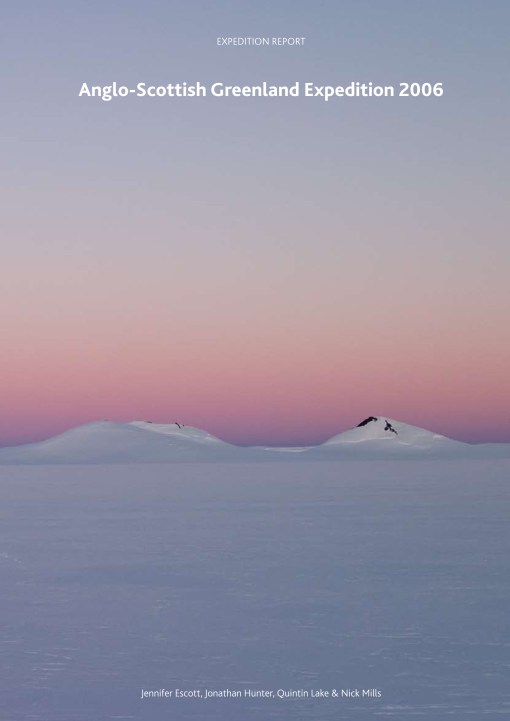
Greenland_Report_Quintin_Lake-1

Download the full expedition report as a PDF here

A printed copy of the report is also available to view at: The Royal Geographical Society, The British Mountaineering council, Tangent Expeditions, The Mountaineering Council of Scotland, The Alpine Club, The Mount Everest Foundation, Arctic Club, Scottish Arctic Club, and the Danish Polar Centre

Quintin_Lake_Architectural_Association_1

Three Arctic Greenland Landscape Christmas / Greetings cards by Quintin Lake.
Photographed during Anglo-Scottish Greenland Expedition 2006

Blank inside. All cards 10 for £5.00

Available from Valerie Bennett in the AA Photo Library +44 020 7887 4066

Light & Ice: East Greenland Landscape

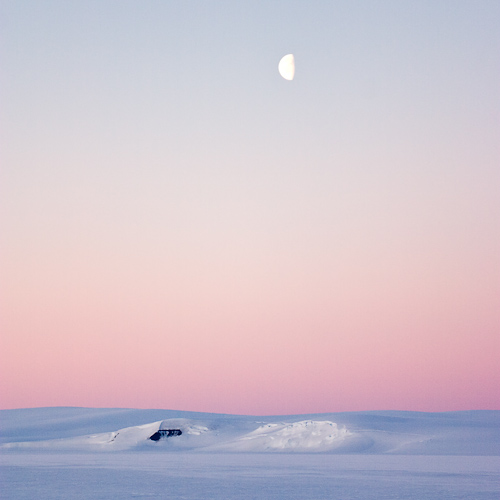
The moon at night

Light & Ice: East Greenland Landscape

Wind-blown ice

Light & Ice: East Greenland Landscape

Shadow of clouds

Photography  © Quintin Lake, 2006

peruvian_orchids

An orchid, Telipogon peruvianus, found near the Interoceanic Highway in the Peruvian Andes.Orquídeas Interoceánicas Photographic Exhibition at Canning House by Quintin Lake


The Interoceanic highway crosses the Amazon Basin and Peruvian Andes linking the Pacific and Atlantic coasts of South America.

British photographer Quintin Lake joined an Oxford University Expedition which included Peruvian botanists to locate and identify orchids along two sections of the Interoceanic highway. The exhibition features a selection of the 98 orchid species recorded in flower, the construction of the highway and the lives of those for whom the road is their porch.

orchidexpedition.com

A full gallery of photographs documenting the Interoceanic Highway can be seen here, the Interoceanic orchids here, the Interoceanic flora here and the Peruvian Orchid Expedition here.

Exhibition at Canning House

Orquídeas Interoceánicas Photographs By Quintin Lake

Private View 12 November 2008 6.00PM
Exhibition 13- 21 November 2008

2 Belgrave Square,
London SW1X 8PJ

The event on Canning House’s website

canninghouse.com

Limited Edition Prints

A limited edition of 12 hand printed 41x41cm (16″x16″) Framed and mounted Fuji Crystal Archive prints of the orchids are available for sale here

cubatao_ql-01
Football game at Jardim São Marcos favela, Cubatão adjacent to the Fosfertil fertiliser factory.

You know you’ve arrived by the chemical smell, but it used to be worse, much worse. An hour’s drive from São Paulo, Cubatão used to be Brazil’s dirty little secret. Host to 24 industries including oil, steel and fertilizers, the city used to be dubbed “The Valley of Death”. The heavy smog trapped by the jungle-clad valleys made the city one of the world’s most polluted places.

Now many of the factories have cleaned up their act and are in the process of transformation. The mangrove swamps are cleaner and the Scarlet Ibis, vibrant against the lush jungle, is flourishing again.

Cubatão defies easy description as the perimeter fences of the factories push against the rainforest on one side and favellas (shanty towns) on the other. Cubatão is a rich city with a poor population, the favella inhabitants being in large part economic migrants.

The favellas have developed around the factories, along the inlets and along the motorway construction roads, the massive arteries feeding the relentless hunger of Cubatão, piercing the surrounding hills and flying above the heads of improvised houses below. These favellas appear to be in such a state of flux they are known by their altitude only.

Fear is ubiquitous for the foreigner in Cubatão. Fear of the air, fear of the water or fear of violence. The outsider must come to their own conclusion. Like Johannesburg, Hiroshima or Chernobyl, the name Cubatão has a weighted meaning that has little or nothing to do with the lives of the local people. A city with such a strong stereotype is almost bound to delight.

In another sense, Cubatão is a city wide manifestation of gambiarra, the Brazilian talent and admiration of making do and improvisation. Plywood and timber form the houses of the fishermen’s village. At the samba school, slit cola bottles are made curvaceous under candle flame and painted as flowers for the carnival floats. Even the very location of houses constructed under a flyover or next to a factory demonstrates this spirit of inventiveness.

Many of the local people often display a total mastery of the body and beat: the drumming of the samba school, the silky shuffle of samba beats danced in flip flops or bare feet on a concrete floor, the kite flying or the astonishing acrobatics of Capoeira (a martial art symbolic of freedom against domination, with roots in Brazil’s historical slave culture).

The surprise came after a couple of weeks living here. Raw nature set against mankind’s machines for sustaining the industrial world can be simultaneously beautiful and disconcerting. At times when the forest-clad hills and the factory smoke merge with the clouds and the light illuminates both the chimney stack and cloud, it is hard to know if it’s creation or Armageddon one is witnessing.

Quintin Lake visited Cubatão as part of the crew of the film “Cubatão” by Rubens Azevedo.

A full gallery of documentary photographs can be seen here and making of photographs from the film here