Archives for category: Photography

This is great news for owners of Canon EOS 5D cameras as it allows the use of CF cards greater than 8GB for the first time.

Download this update here:

http://web.canon.jp/imaging/eos5d/eos5d_firmware-e.html

Further information from Canon’s website:

The following fixes and improvements have been incorporated:

  1. It now supports high-capacity CF cards.

Previously, when using an 8GB CF card or greater (e.g.,12GB, 16GB), even after initializing the card in the camera, the CF card capacity could not correctly be detected.

This phenomenon has been fixed so that the camera will correctly recognize high-capacity CF cards.

  1. It allows the latest lens names to be recorded in the Exif information of images taken.

The lens IDs of lenses released after EOS5D are not in the camera; so these lens names could not be recorded in the Exif information of images.
The lens IDs for the follwing new lenses are now included, so that the correct lens names will be recorded in the Exif information of images.

-EF 14mm f/2.8L II USM *1)

-EF 50mm f/1.2L USM *1)

-EF 85mm f/1.2L II USM *2)

-EF 16-35mm f/2.8L II USM *1)

The correct lens names for the lenses above marked *1) will be recorded in the Exif information of images.

The lens marked *2) has been added, if the firmware is version 1.1.0 or later.

  1. Lenses that are compatible with the Digital Photo Professional 3.2 lens aberration correction function have been added.

More lenses will be supported by the lens aberration correction function of Digital Photo Professional 3.2, Canon’s RAW image viewer/editing software.

Specifically, the four lenses listed in item 2 above have been added.In images taken with these lenses and cameras updated to v1.1.1, the lens aberration correction function can be used.

For other supported lenses, see the user manual for DPP 3.2.

RGS_logo
I’m delighted to be a panellist on the expedition photography panel on Sunday afternoon chaired by Tom Ang at this years “Explore – expedition & fieldwork planning weekend“.
The event runs throughout the weekend of 22nd & 23rd November 2007 at the Royal Geographical Society

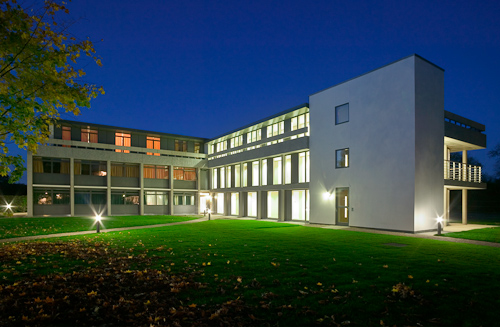
An architectural photography assignment for Berman Guedes Stretton Architects for their marketing portfolio and website.

“The strong architectural language of the existing 1960s Powell & Moya building inspired the form of the two new blocks of 37 graduate rooms 13 flats at Wolfson College in Oxford.
The horizontal granite aggregate bands and concrete columns of the original building have been sensitively translated into a contemporary design using the appropriate scale and materials.

Set adjacent to ancient meadow and the River Cherwell, the ´L´ shaped building, the second of two, makes the most of its green setting and has been carefully sited to maximise aspect and views. A new garden has been partially enclosed which together with the existing building forms an additional quad. Common rooms and top floor flats have large private balconies, which provide solar shading to the south elevation.” Berman Guedes Stretton

View the entire photoshoot here


Lesotho-Ha-Mokati

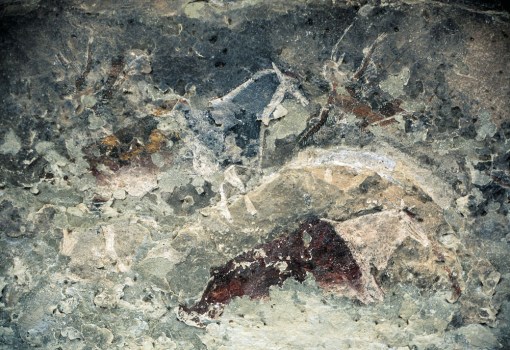
Ha Mokati Rock Art Site, Lesotho featured in the Sunday Times Magazine and the book Drawing Parallels. Photo: Quintin Lake

05 Final Lesotho Report
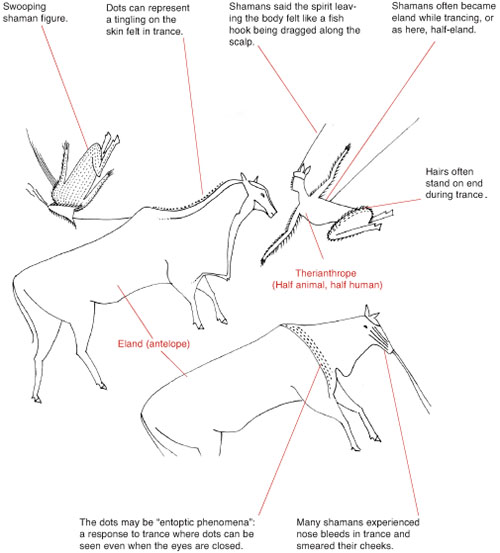
Suggested interpretation. Note that the reconstruction has been done with reference to Images of Power and other seminal works but remains tentative – above all the top left figure.

Lesotho Rock Art Survey 2000 is a Royal Geographical Society Sponsored expedition which discovered 10 previously unrecorded rock art sites in the remote Lesobeng Valley in Lesotho.

Ha Mokati is one of these sites and was featured in the Sunday Times Magazine April 15, 2001 under the heading “Eyeopener: Vanishing Dreams”.

Photography & Illustration © Quintin Lake, 2000

Lesotho-Rock-Art-Report-Quintin-Lake

Lesotho Rock Art Survey 2000: Expedition Report by Simon Aitken & Quintin Lake

Download the full expedition report as a PDF here

A printed copy of the report is also available to view at: the Department of Archaeology, University of the Witwatersrand, Johannesburg, South Africa, the Cambridge University Expedition Society and the Royal Geographical Society

Text & Photography © Quintin Lake, 2000

Aim:

  • walk between the two furthest points in the uk,
  • unsupported in winter
  • avoiding roads
  • solo with no support

How:

  • 20-40km day 1.5 day off a week
  • Sleeping in a bivi to reduce weight as lighter than a tent.
  • 20-13kg carried, Single set of clothes,
  • Cooked food bought in villages every 3/4 days

Result:

  • incomparable freedom!

I sometimes I walked two or three  days without seeing a person which struck me as remarkable in the UK

Continue to part two >

Photography © Quintin Lake, 1998