
Detail of tensile fabric facade, The Wave Car park, Cardiff Bay, Wales. Architects: Scott Brownrigg
Click Here for More from this Photoshoot >>
All images available for publication / licensing contact me for pricing.
Detail of tensile fabric facade, The Wave Car park, Cardiff Bay, Wales. Architects: Scott Brownrigg
Click Here for More from this Photoshoot >>
All images available for publication / licensing contact me for pricing.
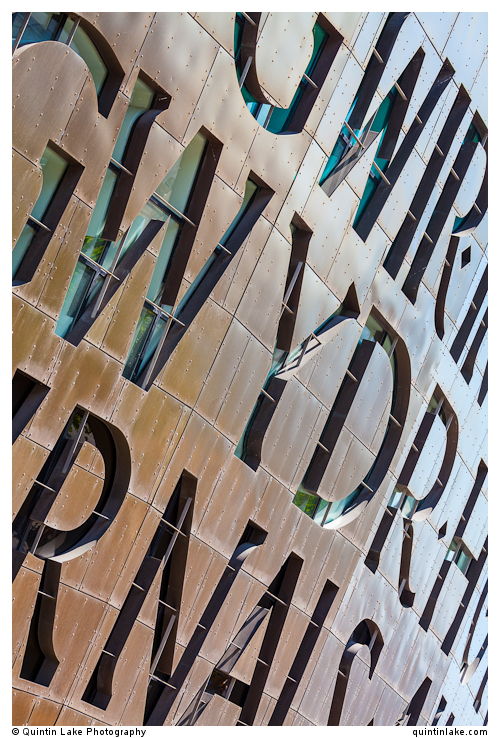
Detail of Copper oxide coated sheet steel cladding, Wales Millennium Centre by Percy Thomas Architects, 2004. Cardiff Bay, Wales. Calligraphy reads Creu Gwir Fel Gwydr O Ffwrnais Awen (Welsh) In These Stones Horizons Sing (English)
Click Here for More from this Photoshoot >>
All images available for publication / licensing contact me for pricing.
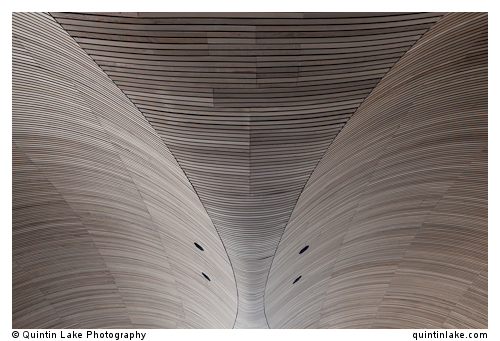
Cedar wood ceiling inside the National Assembly for Wales Senedd (Senate) Building. Architect: Richard Rogers Partnership, 2006. Cardiff Bay, Wales.
Click Here for More from this Photoshoot >>
All images available for publication / licensing contact me for pricing.
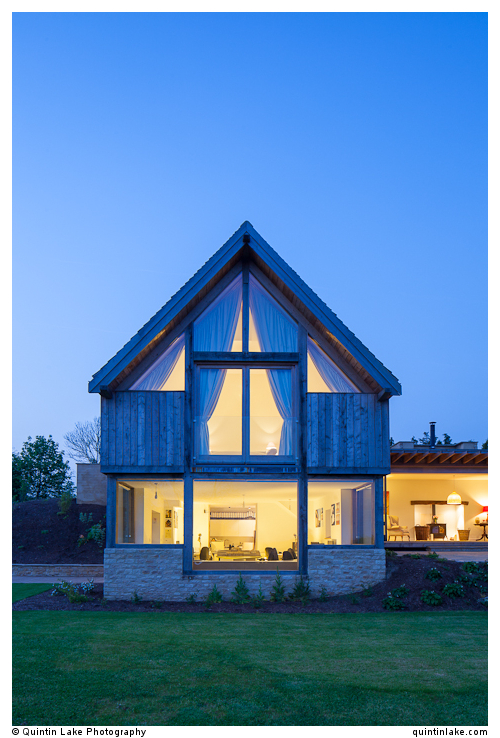
Cockadilly, Nympsfield, Gloucestershire. Architect Millar+Howard
An architectural photography assignment for Millar + Howard Workshop of their HQ and private residence at Cockadilly, Nympsfield in Gloucestershire which is a large extension to an existing Cotswold house. Large sliding windows open out onto the Uley Valley below.
Click Here for More from this Photoshoot >>
All images available for publication / licensing contact me for pricing.
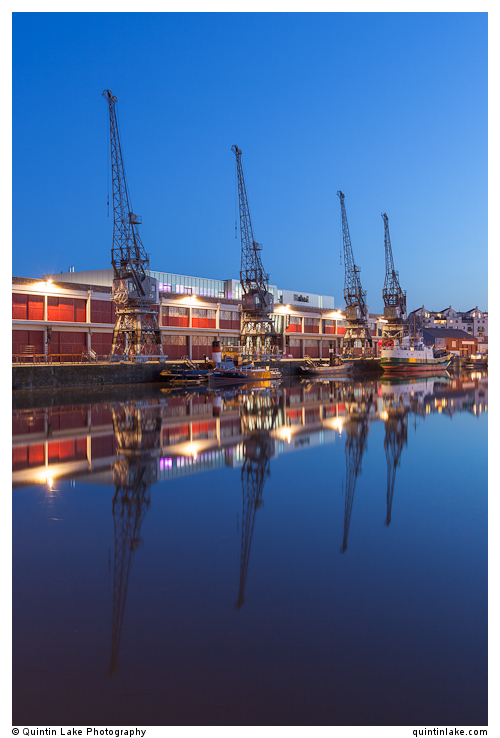
M Shed, Bristol at Dusk. Architect: LAB Architecture Studio
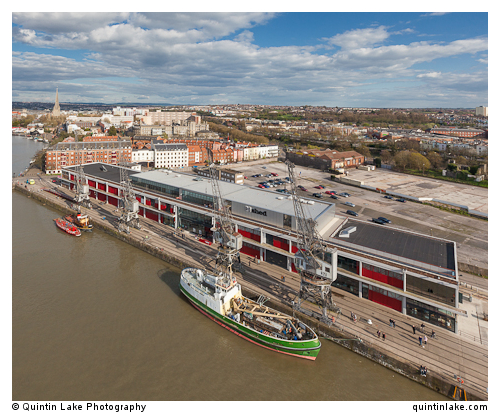
M Shed and Prince’s Wharf from above. Thanks to UK Bungee Club for letting me use their crane!
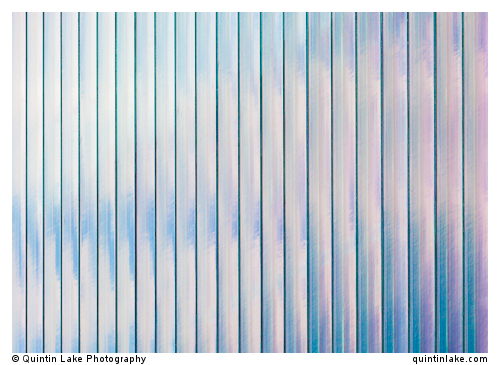
M Shed glass facade detail
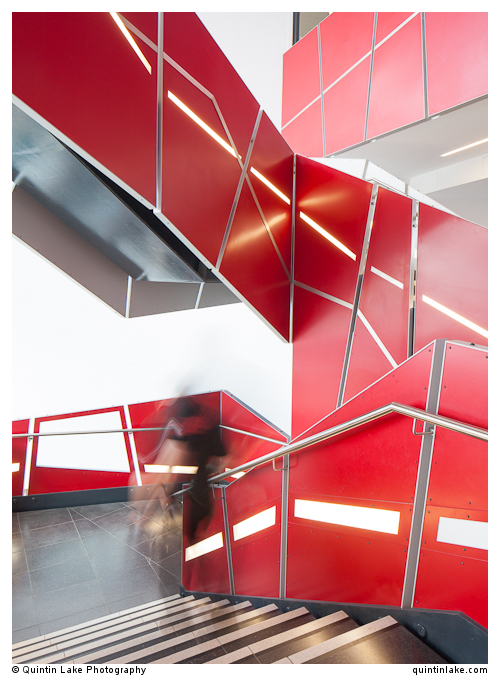
Faceted staircase at M Shed
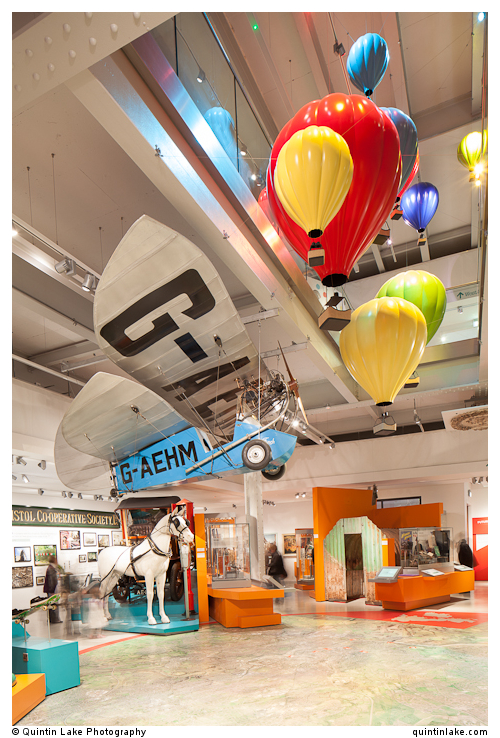
Main exhibition space at M Shed
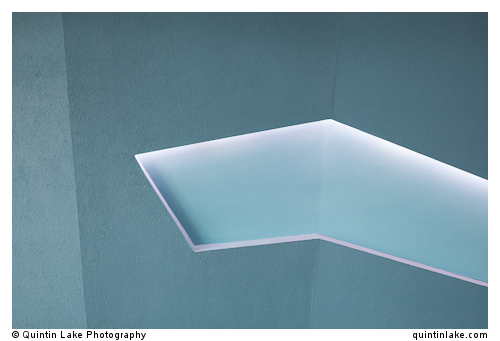
Staircase detail at M Shed
An architectural photography assignment for the architect of the museum, LAB Architecture Studio. M Shed is a museum located on Prince’s Wharf in Bristol, England. The building opened in June 2011 with exhibits exploring life and work in the city.
Click Here for More from this Photoshoot >>
All images available for publication / licensing contact me for pricing.
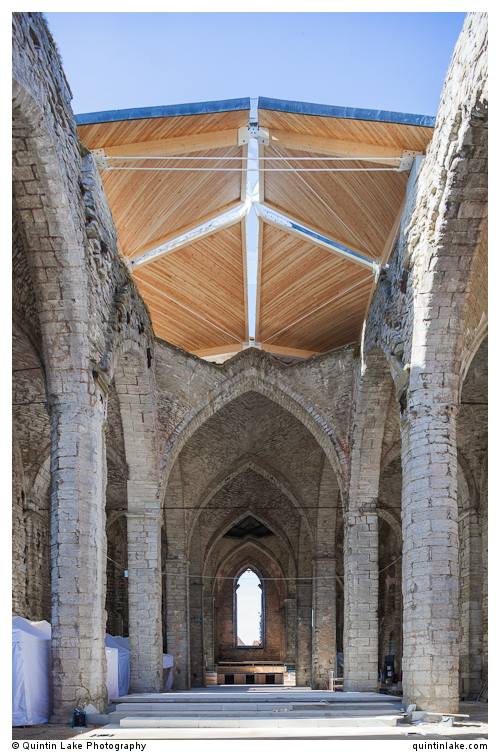
New laminated timber roof over the concert hall, under construction, in the original 1230 nave of St.Nicolai (St.Nicolaus) church ruins, Visby, Gotland, Sweden

Detail of glulam roof
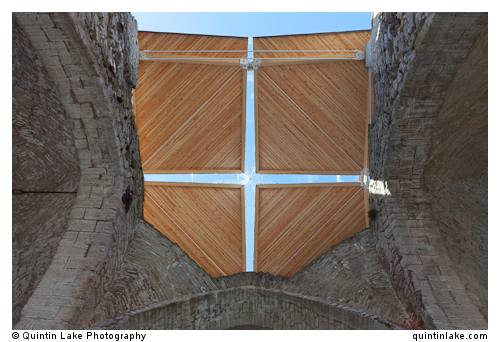
The cross shape of the glazing seen from below

Contrast of old and new within the church ruin

St.Nicolai church ruins seen in front of the sea in Visby, Gotland
An architectural photography assignment for Søren Jensen engineers, Denmark to create a portfolio of images of the new roof at St.Nicolai church, Visby. St.Nicolai (St.Nicolaus) church ruins, Visby, Gotland, Sweden was originally built in 1230 and is being adapted into a concert hall. The images will be used to enter the project into the Structural Engineers award. Architect: Exners Tegnestue A/S, Engineer: Søren Jensen
Click Here for More from this Photoshoot >>
All images available for publication / licensing contact me for pricing.
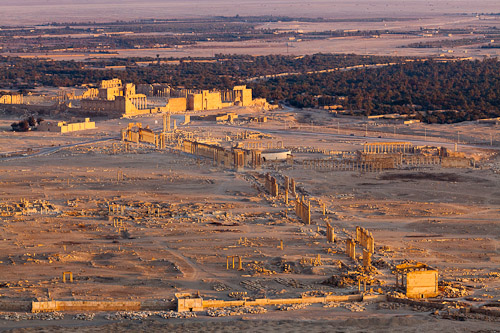
Overview of Palmyra at sunset showing the Great Colonnade running from the Funerary Temple in the foreground to the Temple of Bel at rear. Photo: Quintin Lake
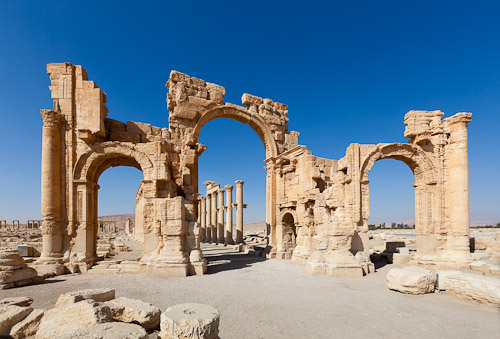
Monumental Arch, the entrance to the city, Palmyra, Syria. Photo: Quintin Lake
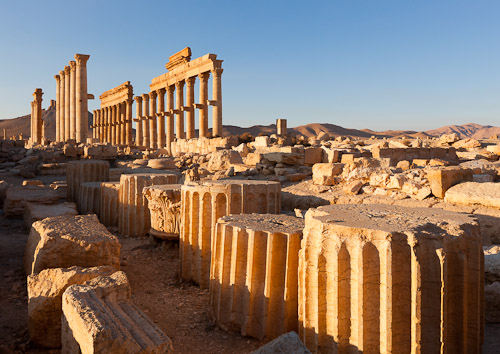
Great Colonnade, Palmyra. Photo: Quintin Lake
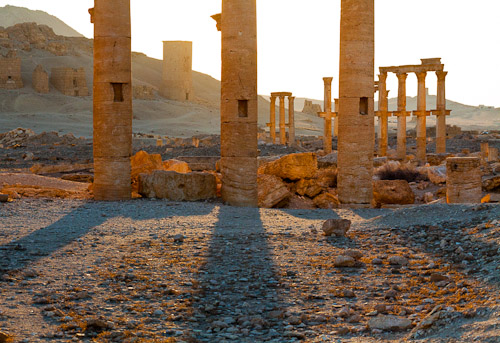
Columns of the Great Colonnade in front of the Valley of the Tombs, Palmyra. Photo: Quintin Lake
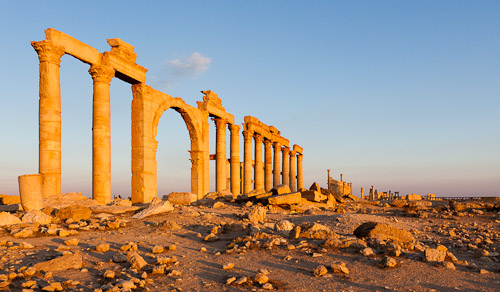
Arch of the Great Colonnade at sunset, Palmyra, Syria. Photo: Quintin Lake
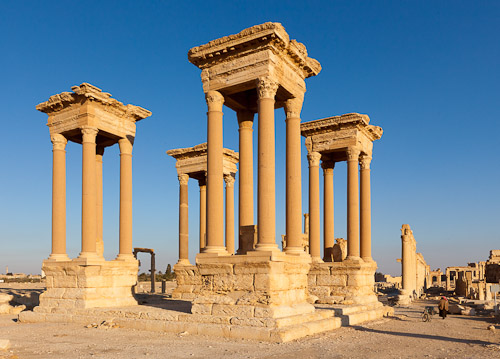
Tetrapylon, placed at a crossroads, Palmyra, Syria. Photo: Quintin Lake
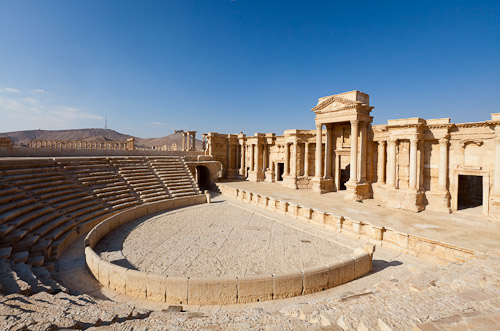
Theatre, Palmyra, Syria. Photo: Quintin Lake
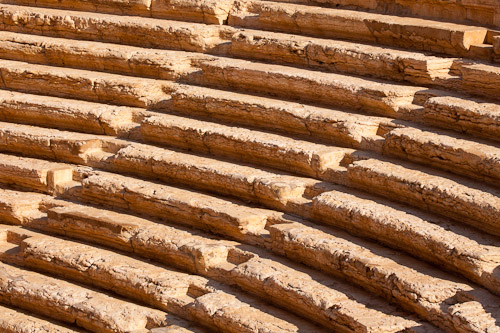
Stone seats and steps in the theatre at Palmyra, Syria. Photo: Quintin Lake
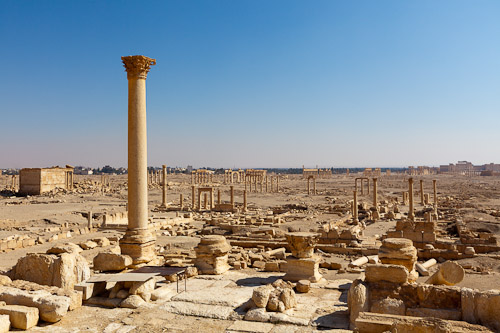
A commanding view of Palmyra seen from the Temple of the Standards in Diocletian's Camp (said to be the location of the Palace of Zenobia) Photo: Quintin Lake
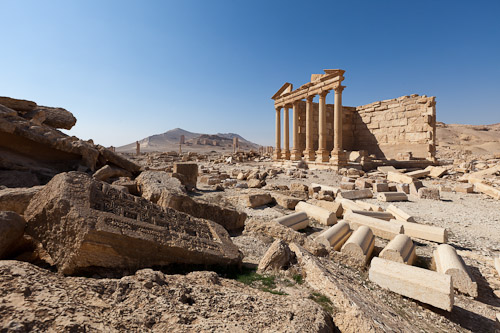
Funerary Temple at Diocletian's Camp. Palmyra, Syria. Photo: Quintin Lake
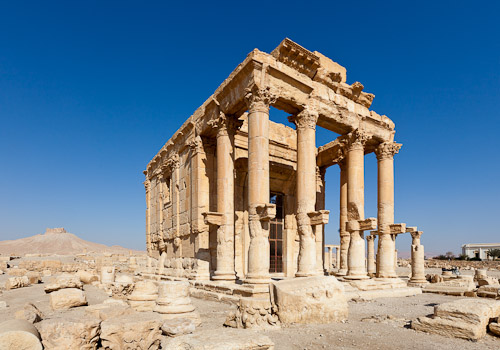
Temple of Baal Shamin. Palmyra. Photo: Quintin Lake
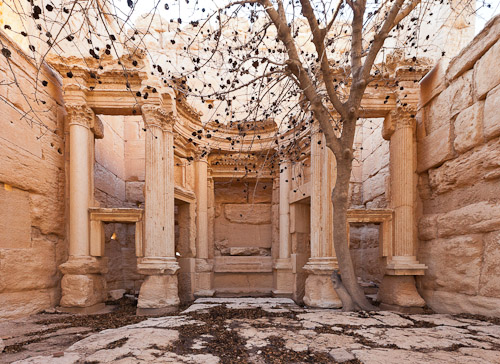
Temple of Baal Shamin Interior. Palmyra. Photo: Quintin Lake
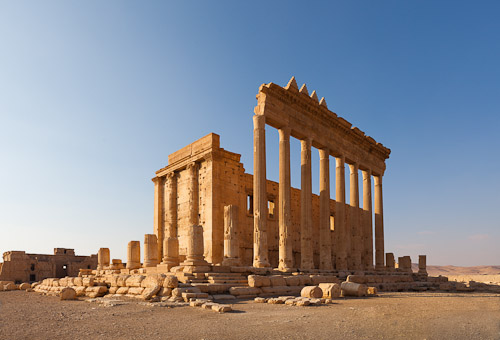
Cella or Inner Temple of the Temple of Bel, Palmyra. Photo: Quintin Lake
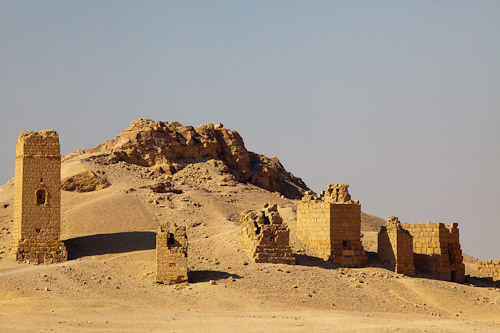
Towers of Yemliko, Valley of the Tombs, Palmyra, Syria. Photo: Quintin Lake
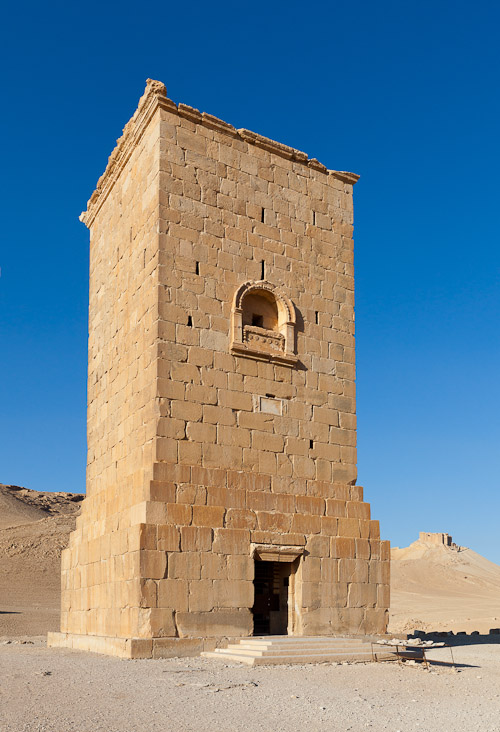
Tower of Elahbel, burial tower, Palmyra, Syria. Photo: Quintin Lake
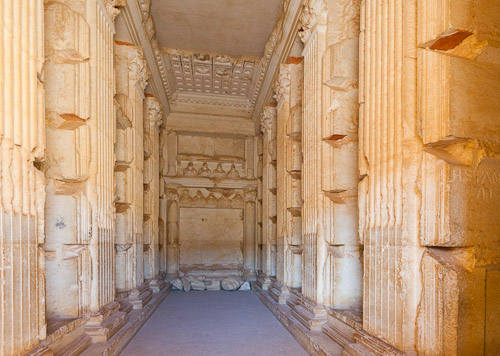
Burial Chambers inside Tower of Elahbel, burial tower, Palmyra. Photo: Quintin Lake
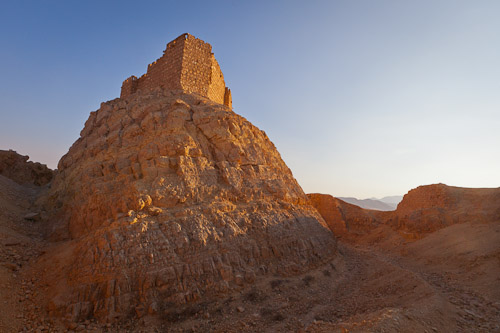
Muslim Castle, Palmyra (Qala'at ibn Maan or Fakhr-al-Din al-Maani Castle), built by the Mamluks in the 13th century. The castle overlooks Palmyra. Photo: Quintin Lake
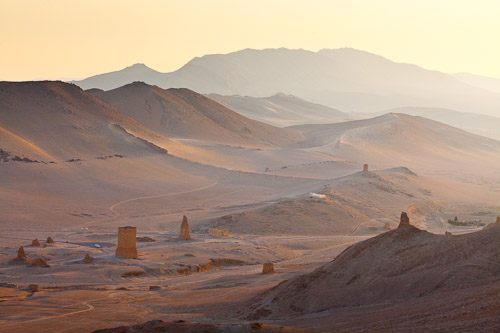
Valley of the Tombs at sunset, Palmyra. Photo: Quintin Lake
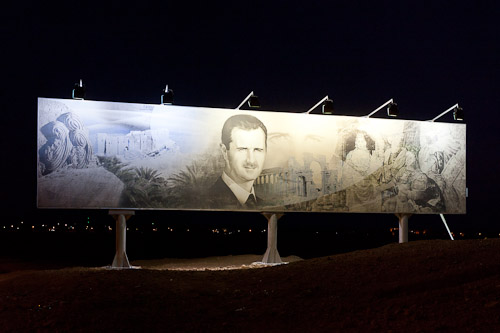
Roadside poster of Bashar al-Assad, president of Syria, February 2011 depicted with the ruins of Palmyra. Photo: Quintin Lake
An oasis in the Syrian desert, north-east of Damascus, Palmyra contains the monumental ruins of a great city that was one of the most important cultural centres of the ancient world. From the 1st to the 2nd century, the art and architecture of Palmyra, standing at the crossroads of several civilizations, married Graeco-Roman techniques with local traditions and Persian influences.
It had long been a vital caravan city for travellers crossing the Syrian desert and was known as the Bride of the Desert. The earliest documented reference to the city by its Semitic name Tadmor, Tadmur or Tudmur (which means “the town that repels” in Amorite and “the indomitable town” in Aramai is recorded in Babylonian tablets found in Mari.
Palmyra became the capital of the short-lived Palmyrene Empire (260–273) which was a splinter empire, that broke off of the Roman Empire during the the Third Century. It encompassed the Roman provinces of Syria Palaestina, Egypt and large parts of Asia Minor. The Palmyrene Empire was ruled by Queen Zenobia.
Click Here for 128 More images from this Photoshoot >>
All images available as fine art prints or for publication / licensing contact me for pricing and to arrange use. Photographs © Quintin Lake
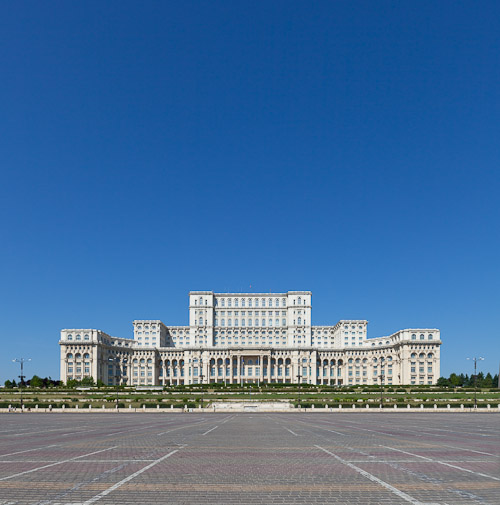
Sensitivity to context is neatly sidestepped by razing the 30,000 homes, churches & synagogues - an area of the old city the size of Venice - which once stood here. Front Facade. The Palace of the Parliament (Also known as Ceausescu's Palace or House of The People) in Bucharest, Romania. Built 1983-1989. Architect: Anca Petrescu
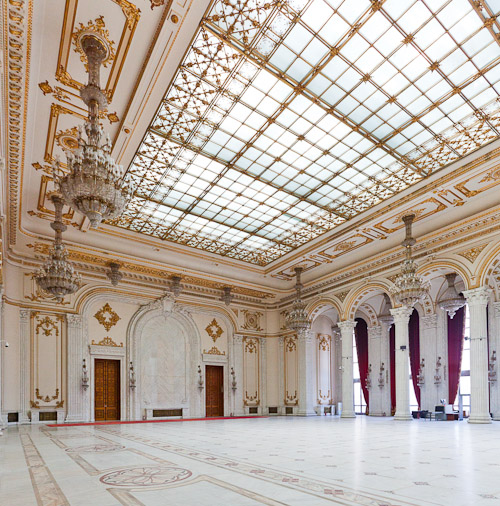
Unirii Hall, the largest of the 1,100 rooms in the entire building. Available for wedding hire should you wish to entertain 2,000 guests or enact a megalomaniac fantasy. Photo: Quintin Lake
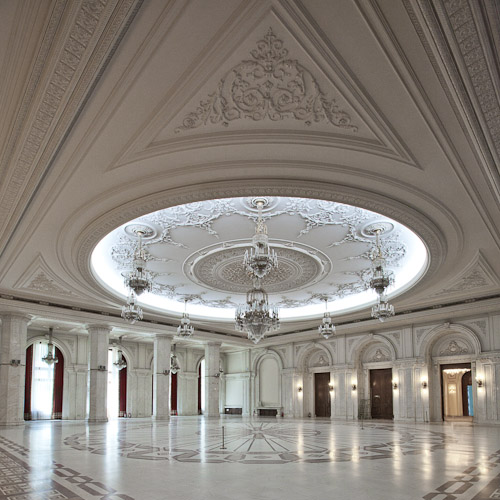
I. I. C. Bratianu Hall. The building is so out of scale to the human body that it feels uncomfortable to walk about - as if one has been shrunk. Photo: Quintin Lake
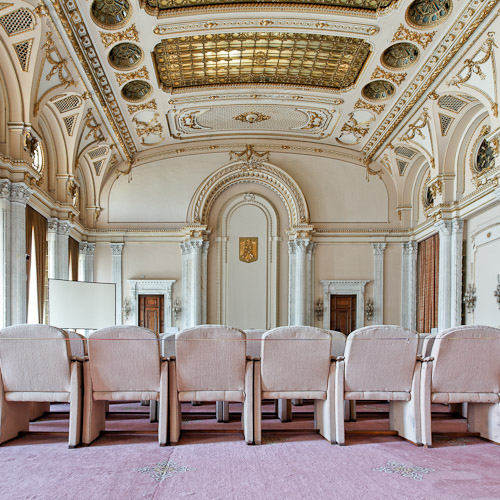
This room was intended as Nicolae Ceauşescu's office with direct access to the balcony, now Al. I. Cuza Hall. The blank space at the end of the room was originally intended for a painting of the modest fellow - perfectly positioned to be admired by his number one fan. Photo: Quintin Lake
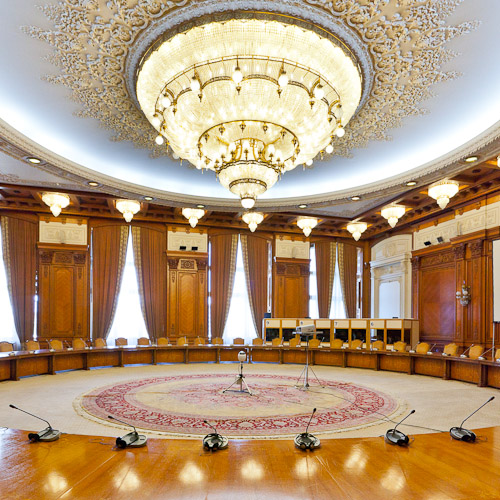
Currently entitled the Human Rights Hall, it seems droll that the round table - symbol of democracy should be housed in such totalitarian architecture. The room hosted the 20th Nato summit and other EU conferences. Photo: Quintin Lake
The Palace of the Parliament in Bucharest, Romania designed by architect Anca Petrescu for Nicolae Ceauşescu is today a multi-purpose building that contains both chambers of the Romanian Parliament. According to the Guinness Book of World Records, the Palace is the world’s largest civilian administrative building, most expensive administrative building, and the heaviest building.
Entire neighborhoods were destroyed to make way for the building, equating to an area the size of Venice. Among that which has been lost are churches, synagogues, valuable historic constructions and 40.000 people were forced to move. Most of them, to newly constructed communist blocks of flats of a poor quality in the city.
At the time of Nicolae Ceauşescu’s 1989 overthrow and execution, the building structure and design were complete. With supreme irony he never had the chance to occupy the monster he created. Subsequently, many of the furnishings were never installed (mostly evident because of the many large, empty spaces throughout the palace), while the last three basement levels and a large clock tower (that would display the official Romanian time) were never finished. During the regime change, the new leaders of Romania referred to the building as the House of Ceauşescu, to highlight the excessive luxury in which Ceauşescu would have lived, in stark contrast to the squalor and poverty endured by many people living in the surrounding neighbourhoods.
Everything about the building is supersized: Petrescu led a team of 700 architects to build the project. In the ’80s 20,000 men worked in shifts for 24 hours a day. The building contains 1,100 rooms. Today the building has a symbolic ambiguity, after so many Romanian people laboured over it’s construction it is hardly surprising it was not demolished. Like it or not, the portentous building over which so much was lost and so many suffered has become the architectural symbol of Bucharest.
Click Here for More from this Photoshoot >>
All images available as fine art prints or for publication / licensing contact me for pricing and to arrange use. Photographs © Quintin Lake


 Geometry & Silence