Archives for the month of: June, 2010

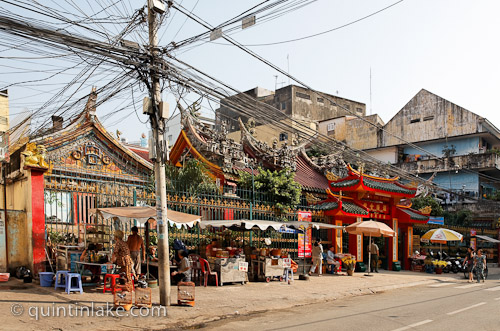
Quan Am Pagoda from the street, Cholon, Ho Chi Minh City
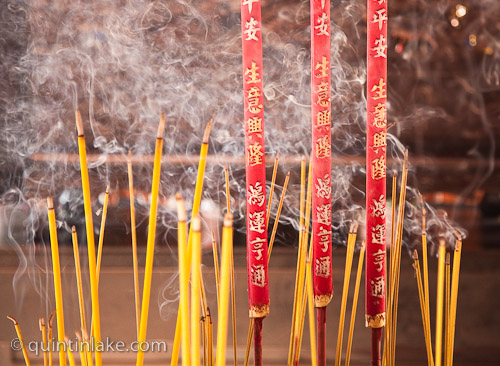
Burning incense sticks and smoke in Quan Am Pagoda, Cholon, Ho Chi Minh City
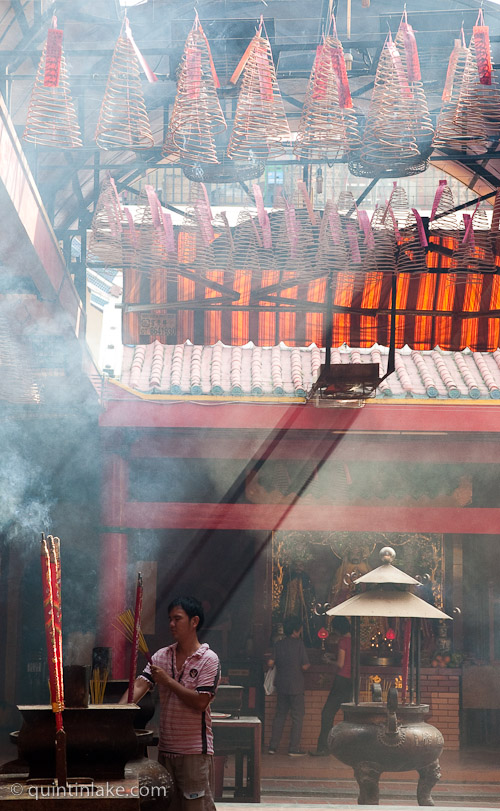
A man prays with incense sticks in a shaft of light in the rear courtyard of Quan Am Pagoda, Cholon, Ho Chi Minh City

Chùa Quan Âm (Avalokiteshvara Pagoda) is a Chinese style Buddhist pagoda located on Lao Tu Street in Cho Lon, District 5, Ho Chi Minh City, Vietnam. Founded in the 19th century, it is dedicated to the bodhisattva Quan Âm (Avalokiteshvara in Sanskrit, Guan Yin in Chinese). The pagoda is very popular among both Vietnamese and Chinese Buddhists. Most of the inscriptions are in Chinese characters, but some labels have been added in Vietnamese. The spirituality of the pagoda is a mixture of Pure Land Buddhism centered on the figure of Amitabha Buddha, special veneration of the female bodhisattva Quan Am, Taoism, and traditional Chinese religion, the latter including the devotion to Thien Hau (the Lady of the Sea) that is so typical of traditionally seafaring Chinese communities of Fukien, Canton, Taiwan, and Southeast Asia.

VIEW MORE IMAGES of Quan Am Pagoda

Photography © Quintin Lake, 2010

Entrance courtyard of Thien Hau Temple, Ho Chi Minh City, Vietnam

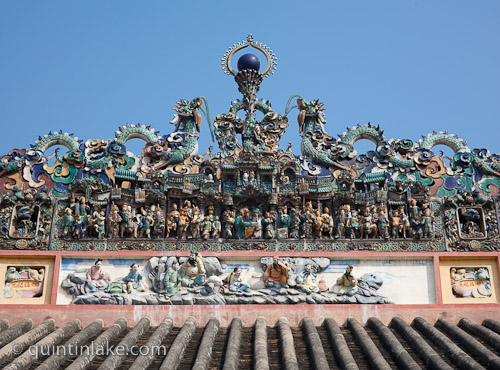
Porcelain dragons and figurines expressing themes from Chinese religion and legends on the roof of Thien Hau Temple, Ho Chi Minh City, Vietnam

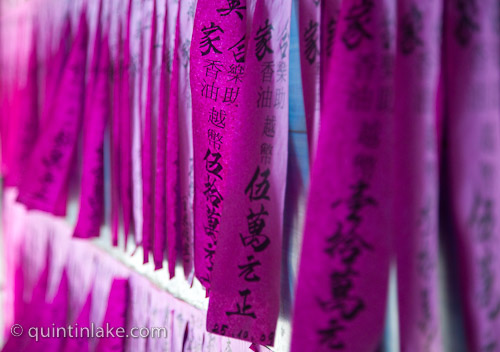
The pink tissue paper prayer flags, contain the names of people who have made donations for the upkeep of the temple, Chua Thien Hau Temple, Ho Chi Minh City, Saigon, Vietnam

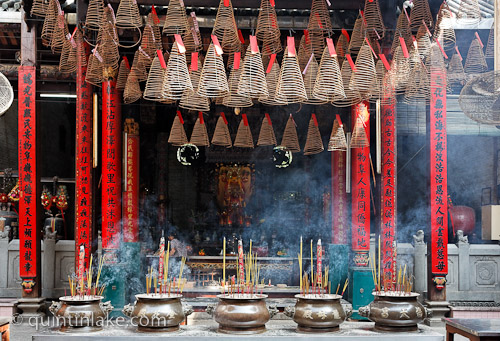
Smoking conical incense coils and urns at Chua Thien Hau Temple in Cho Lon, Ho Chi Minh City, Vietnam.

Conical incense coils hanging on wires below the roof at Chua Thien Hau Temple in Cho Lon, Ho Chi Minh City, Vietnam.

A family lighting conical incense coils and sticks at Chua Thien Hau Temple in Cho Lon, Ho Chi Minh City, Vietnam.

The roof is decorated with small delicately fashioned porcelain figurines expressing themes from Chinese religion and legends. Lanterns and wooden models of Chinese theaters hang over the entrance.Chùa Bà Thiên Hậu (The Pagoda of the Lady Thien Hau) is a Chinese style temple located on Nguyen Trai Street in the Cho Lon (Chinatown) district of Ho Chi Minh City, Vietnam. It is dedicated to Thiên Hậu, the Lady of the Sea (“Tian Hou” as transcribed from the Chinese), who is also known as “Mazu”.

VIEW MORE IMAGES of Thien Hau Temple

Photography © Quintin Lake, 2010

Carved stone dragon pillars by burning incense, Ha Chuong Hoi Quan Pagod

Burning incense cauldron, Ha Chuong Hoi Quan, Fijian Pagoda, Ho Chi Minh City

Detail Ceramic relief of the roof apex of Ha Chuong Hoi Quan, Fijian Pagoda contrast with modern towers, Ho Chi Minh City

The typical Fujian Ha Chuong Hoi Quan Pagoda  is dedicated to Thien Hau, who was born in Fujian. The four carved stone pillars, wrapped in painted dragons, were made in China and brought to Vietnam by boat. There are interesting murals to each side of the main altar and impressive ceramic relief scenes on the roof.

VIEW MORE IMAGES of Ha Chuong Hoi Quan Pagoda

Photography © Quintin Lake, 2010

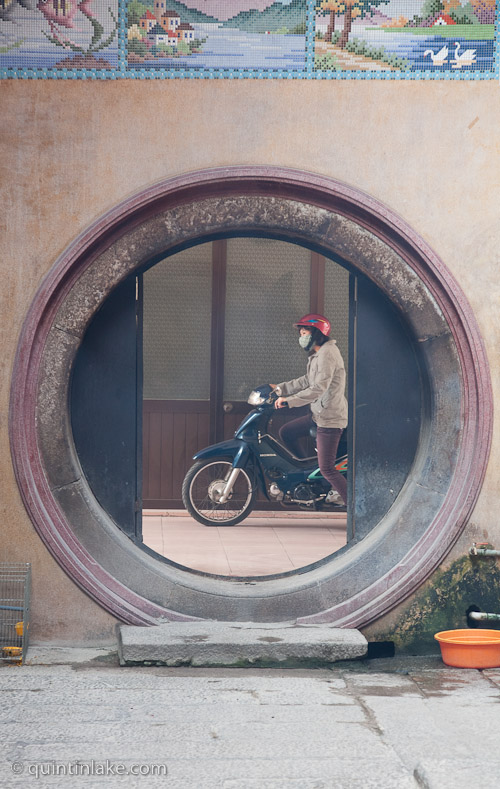
Masked women on a moped seen through a round door of Nghia An Hoi Quan Pagoda, Cholon, HCMC

Built by the Chaozhou Chinese Congregation, Nghia An Hoi Quan Pagoda on 678 Nguyen Trai Street in Cholon, Ho Chi Minh City

VIEW MORE IMAGES of Nghia An Hoi Quan Pagoda

Photography © Quintin Lake, 2010
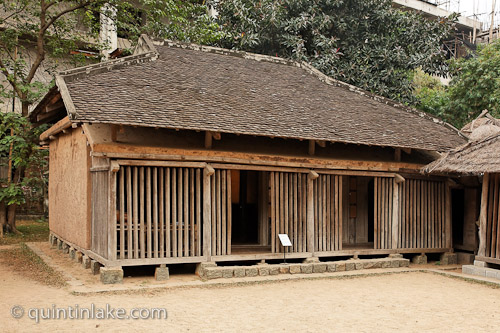
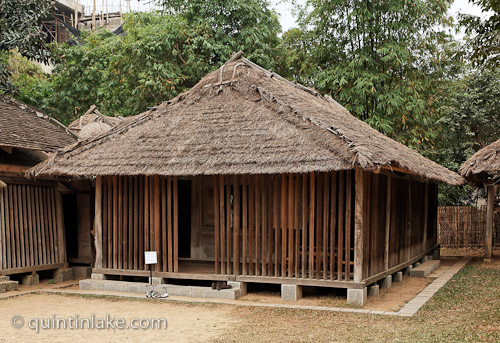
Cham House, Ninh Thuan province, Vietnamese Museum of Ethnology, Hanoi

Cham House, Ninh Thuan province, Vietnamese Museum of Ethnology, Hanoi

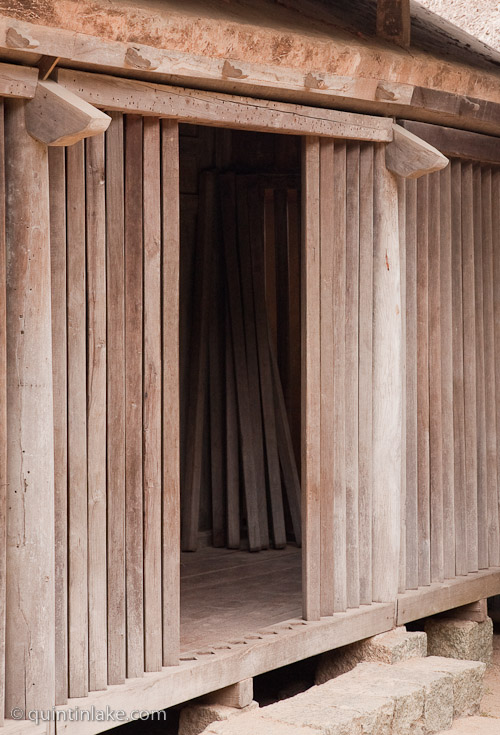
Removable posts allow adjustable entrance door on Cham House, Ninh Thuan province, Vietnamese Museum of Ethnology, Hanoi

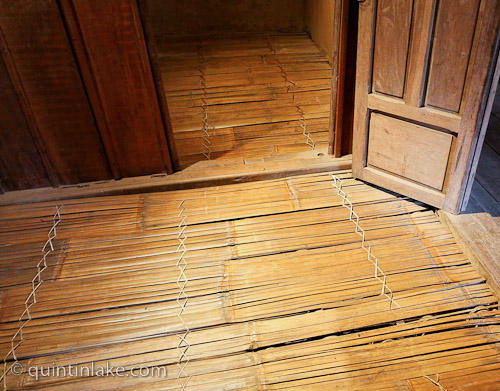
Bamboo floor of Cham House, Ninh Thuan province, Vietnamese Museum of Ethnology, Hanoi

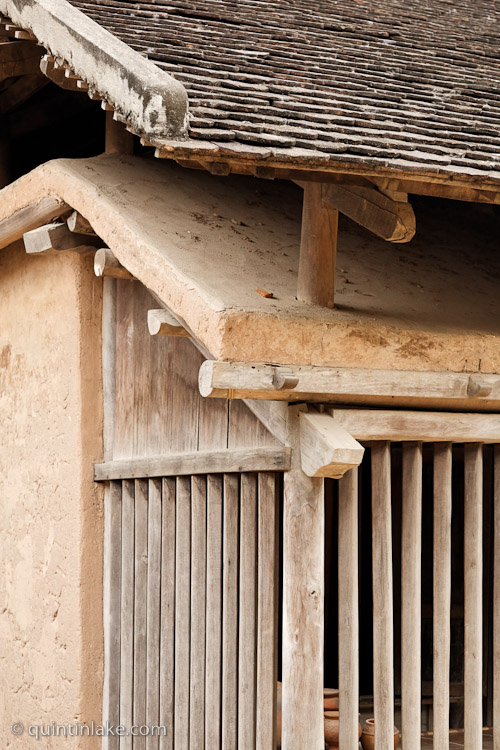
Double roof of Cham House for natural cooling in intense sunlight, Vietnamese Museum of Ethnology, Hanoi

One of the most characteristic tangible cultural heritages of the Cham and also one of the most sensitive to change is their house. The Cham build their houses on the ground and arrange them in orderly rows. Their houses are surrounded by a garden with a wall or hedge. The doors open to the south-west or between. The architectural style is similar to that of the Viet with walls made of brick or a mixture of lime and shells, and covered with tiles or thatch. Houses of more than one storey are rare. In certain localities, houses on stilts are found but the floor is only 30 cm above the ground. The rooms of Cham houses are arranged according to a particular order: the sitting room, rooms for the parents, children, and married women, the kitchen and ware- house (including the granary), and the nuptial room for the youngest daughter. This arrangement reflects the break-up of the matrilineal extended family system among the Cham.

The Cham living in Ninh Thuan and Binh Thuan believe that they have to perform certain religious rituals before the building of a new house, particularly praying for the Land God and asking for his permission to cut down trees in the forest. A ritual is also held to receive the trees when they are transported to the village. A ground-breaking ceremony called phat moc is also held. The precinct of the Cham traditional house is the residence site of a Cham family. It is an assembly of several houses with different functions and these houses relate closely with each others.

VIEW MORE IMAGES of the Cham House

Photography © Quintin Lake, 2010

Text © 2005 Vietnam Museum of Ethnology

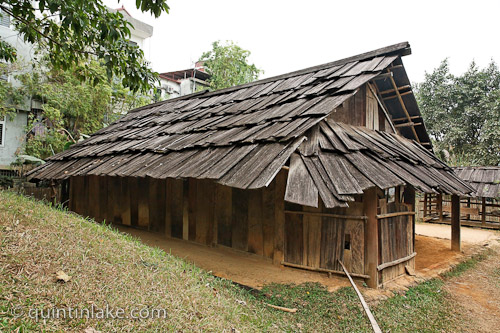
Hmong House, Vietnamese Museum of Ethnology, Hanoi

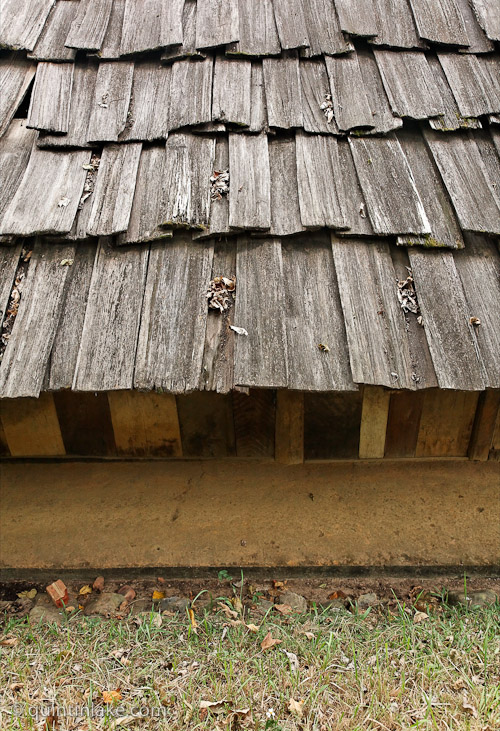
Roof of Hmong House, Vietnamese Museum of Ethnology, Hanoi

This house was built in 1984 by father of the last owner, Mr. Thao Phang Khay (born in 1972), of De Cho Chua A village, Pung Luong commune, Mu Cang Chai district, Yen Bai province. This was the home of a family of four. Hmong houses are built of wood, directly on the ground. For the flower Hmong of Mu Cang Chai, the wood must be that of the po mu tree (visible growing behind this house). House-building is men’s work. Only axes and knives are used as tools, and all of the pieces are lashed together. This house was reconstructed at the museum in six days in 1999, by a group of seven Hmong villagers.

VIEW MORE IMAGES of the Hmong House

Photography © Quintin Lake, 2010

Text © 2005 Vietnam Museum of Ethnology

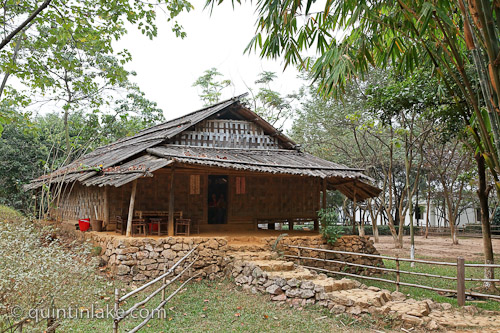
Yao Ho Granary, Vietnamese Museum of Ethnology, Hanoi

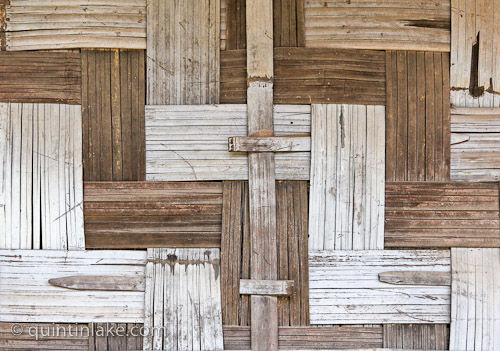
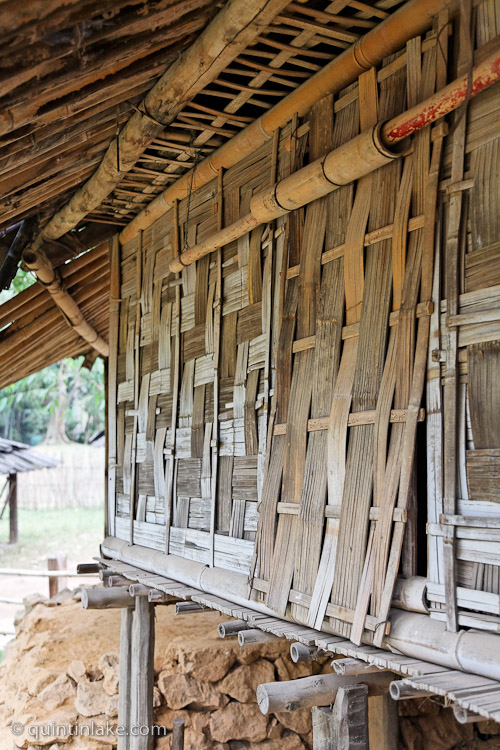
Woven Bamboo wall, Yao Ho Granary, Vietnamese Museum of Ethnology, Hanoi

Woven Bamboo window, Yao Ho Granary, Vietnamese Museum of Ethnology, Hanoi

The Yao Ho people traditionally built a separate granary next to the house. In the past, if the family had many fields, it usually had two or three granaries. the architecture of the  granary is that of a stilt house, with a small door large enough for a person to pass through. the floor, made or plaited bamboo, rests on four columns, and there is a bamboo roof.

VIEW MORE IMAGES of the Yao Ho Granary

Photography © Quintin Lake, 2010

Text © 2005 by Vietnam Museum of Ethnology

Carved Sexually explicit figures at Giarai (Jarai) Tomb, Vietnamese Museum of Ethnology, Hanoi

Built in 1998 by Rchom Ju, Rchom Ek, Rchom Uek, Ksor Ul, and Ksor Ka-ro (Giarai Arap group), from Mrong Ngo village, Ia Ka commune, Chu Pa district, Gia Lai province. The most prominent decorations on the Giarai tomb are large wooden sculptures carved from tree trunks using adzes, cutlasses and knives. Carvings of sexually-explicit men and women and pregnant women symbolise fertility and birth. Other carvings of seated children (often placed at the four corners), animals, and everyday people are the ‘servants’ of the dead in the afterlife. Broken or inverted serving dishes, bottles, cups and trays, and wooden models of tools are placed inside the tomb to provide the deceased with the necessities they will need in the other world. The tomb’s wooden roof is covered with a tightly plaited bamboo matting. Men join together to embellish this with delicate, curvilinear designs painted with natural red pigments. Crowning the roof is an intricately carved openwork panel depicting the rituals that accompany the tomb and its abandonment ceremony. Once the ceremony is concluded, the tomb will be abandoned to fall to pieces.

VIEW MORE IMAGES of Giarai (Jarai) Tomb

Photography © Quintin Lake, 2010

Text © 2005 by Vietnam Museum of Ethnology