Archives For author

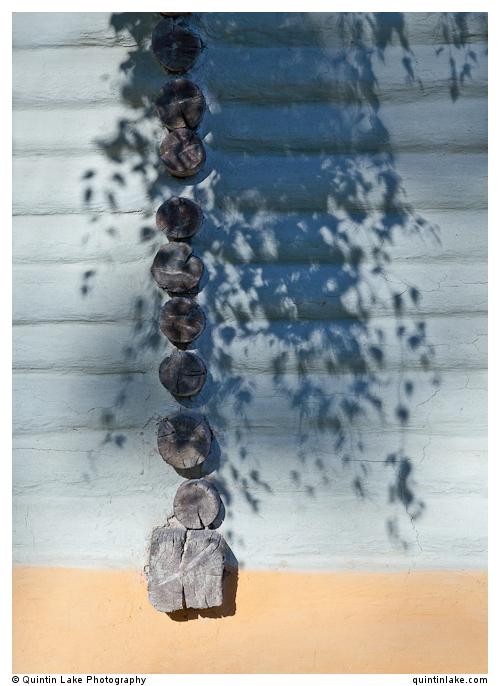
Shadows on a wooden house from Naruja, Vrancea, Romania. Built C19
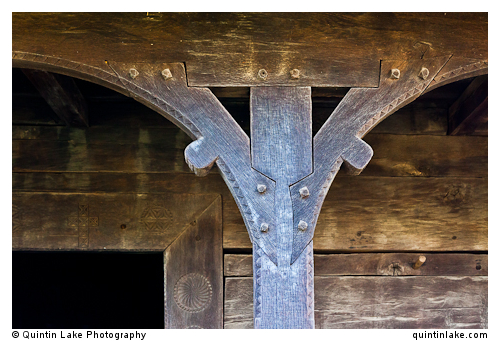
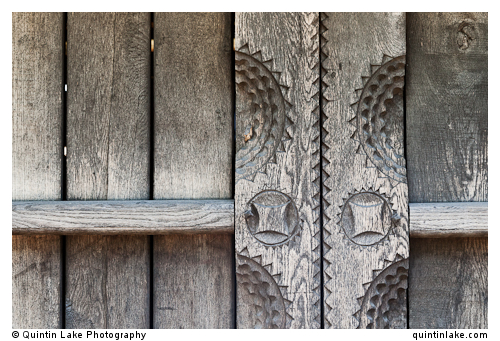
Decorated beam and column of veranda of wooden vernacular house built by “Pasco of the Salaje” (county Salaj) in 1775, Berbesti, Maramures, Romania
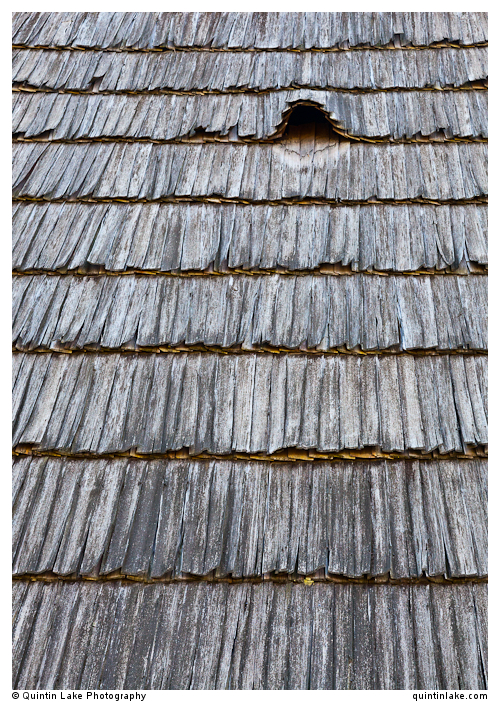
Wooden shingle roof of wooden vernacular house built by “Pasco of the Salaje” (county Salaj) in 1775, Berbesti, Maramures, Romania
Carved Wooden vernacular shed door detail built by “Pasco of the Salaje” (county Salaj) in 1775, Berbesti, Maramures. Dimitrie, Romania
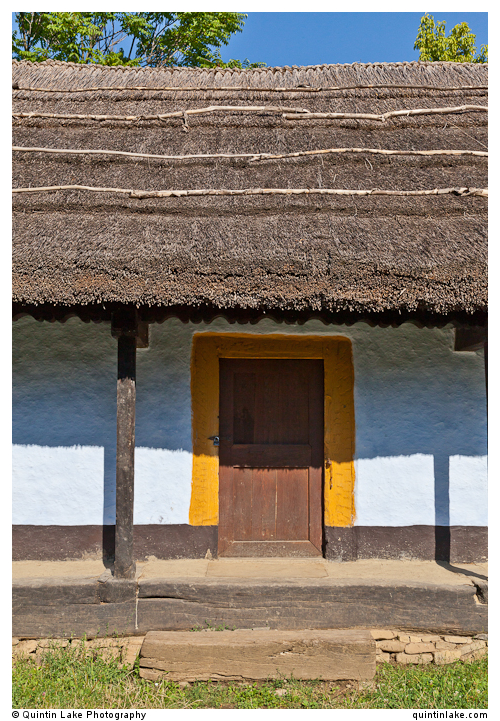
Door detail from thatched and painted vernacular house Dumitra, Alba. Built: C19
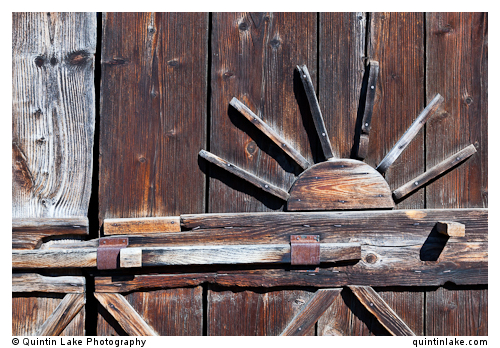
Door of Thatched wooden vernacular shed / stables from Surdesti, Maramures. Built: C17
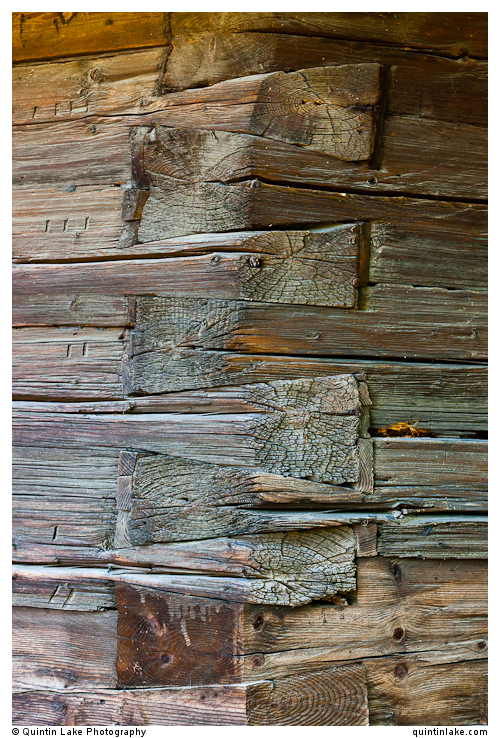
Corner joint of Wooden church from Dragomiresti village, Romania
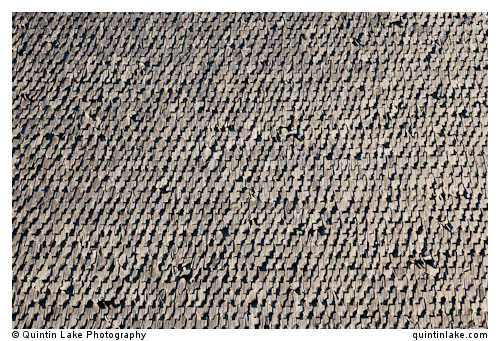
Wooden roof shingles on church from Dragomiresti village, Romania. Built: 1722

Dimitrie Gusti National Village Museum (Muzeul Satului) in Bucharest, Romania gathers together a beautiful collection of endangered vernacular buildings from around Romania.

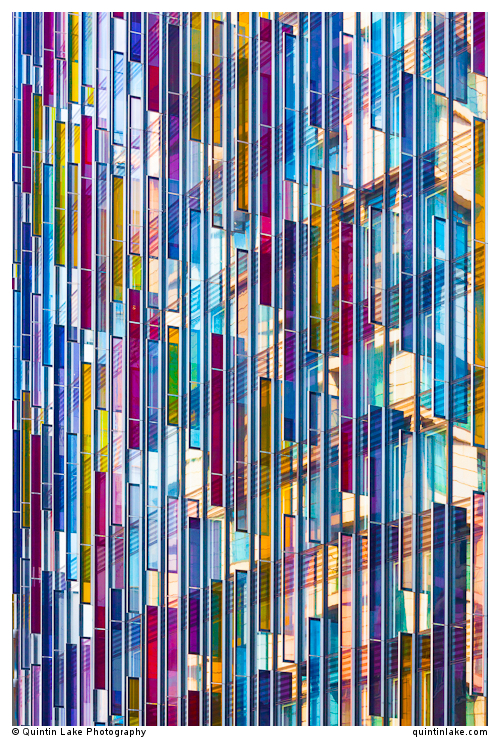
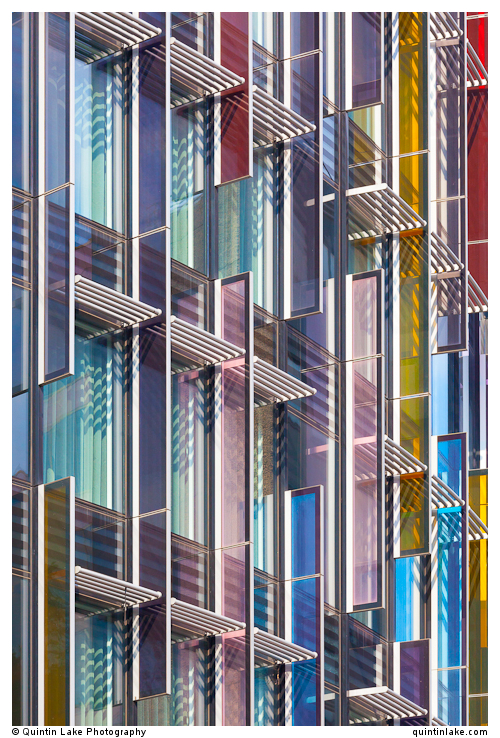
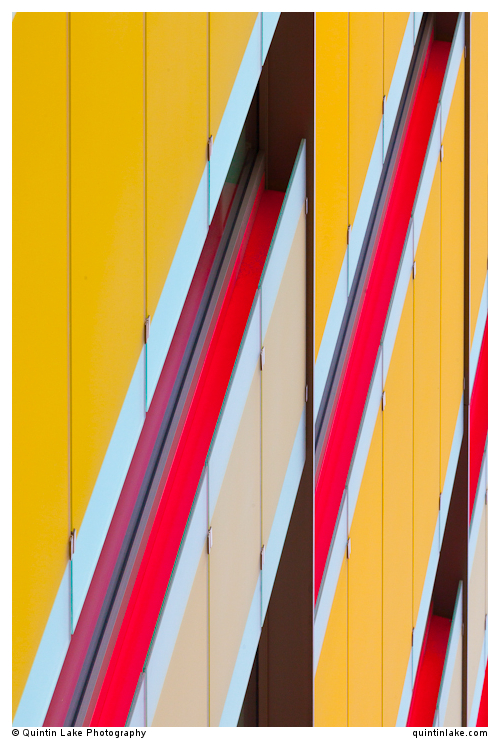
Park Plaza Hotel coloured glass facade, Westminster Bridge, London

Park Plaza Hotel coloured glass facade, Westminster Bridge London

Westminster Park Plaza Hotel is another colourful addition to the urban fabric of London. Built 2010, Architect: BUJ architects.

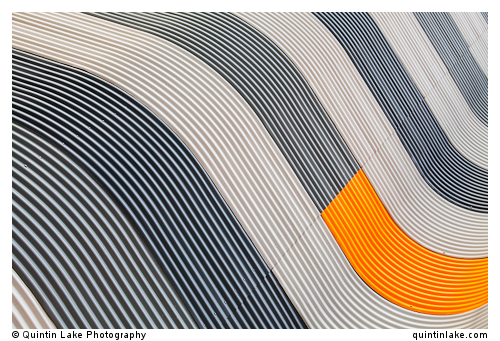
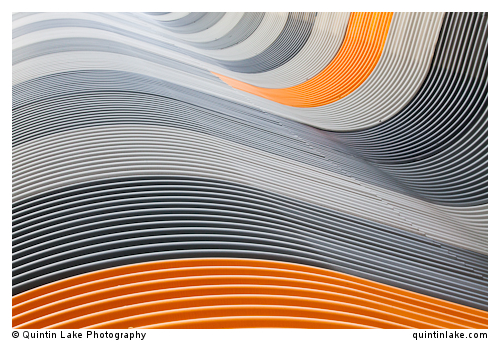
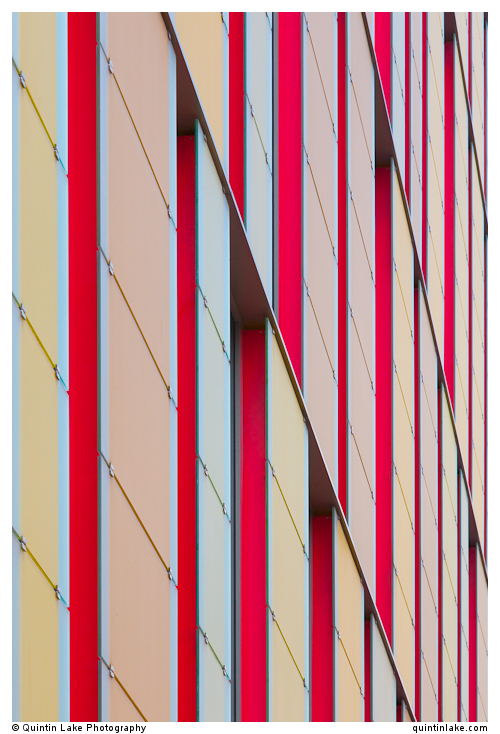
Detail of apartments at 171 Tower Bridge Road, Southwark, London

Detail of apartments at 171 Tower Bridge Road, Southwark, London.

Detail of apartments at 171 Tower Bridge Road, Southwark, London

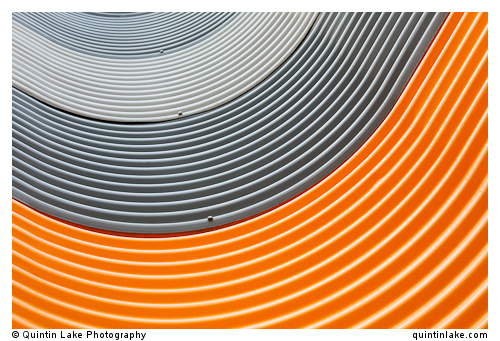
Clad in brightly coloured horizontal bands of corrugated aluminium, the building is intended to emulate the red and white streaks of the surrounding traffic flows caught on a long-exposure camera shot. The building’s rounded corners reduce its visual bulk and also reflect the constant movement around its base. Built 2006. Architect: Glas Architects. Structural Engineers: Barton Engineers

Ian Davenport “Poured Lines: Southwark”, Liquid enamel on steel, 2006. Southwark Bridge, London

I really like how the artwork relates to the painted lines on the road

Ian Davenport’s “Poured Lines: Southwark” Is a 50 by 3 metre Liquid enamel painting on steel running under Southwark Bridge. The work is so successful as if adds vibrancy to the gloomy experience of walking under the bridge. In addition the aesthetics of the work relate to the painted road markings and contrast with the heavy engineering textures of the bricks and painted steel of the bridge.

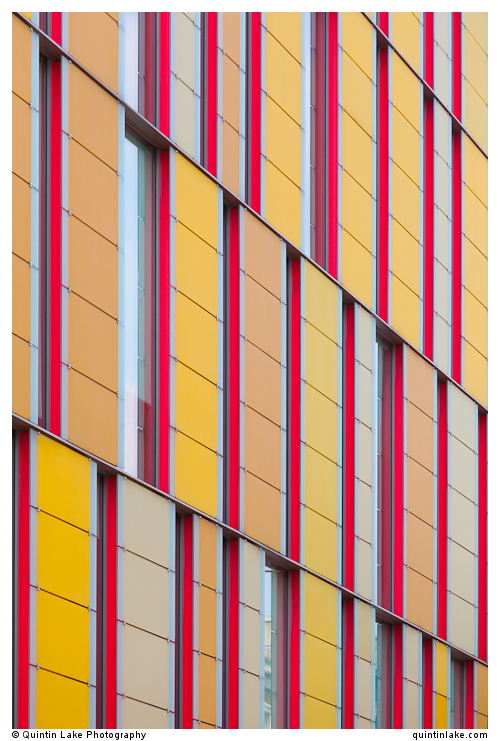
Coin Street Neighbourhood Centre yellow, red and orange glass facade detail, London.

The colour intensity changes depending on the angle of light hitting the glass cladding

Coin Street Neighbourhood Centre facade. Architect: Haworth Tompkins. Artist Collaborator: Antoni Malinowski

I’m all for the tasteful use of vibrant colour in London’s new buildings and Coin Street Neighbourhood Centre is a great example. Built: 2007. Architect: Haworth Tompkins. Artist Collaborator: Antoni Malinowski

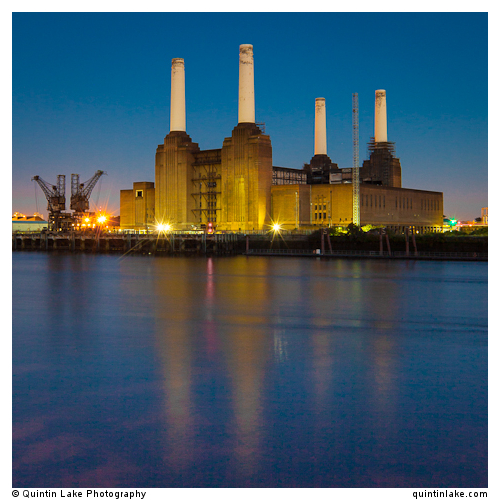
Battersea power station viewed from the north bank of the Thames at dusk. July 2012

One of my favourite buildings in London – I wonder what the future holds for her? Battersea power station viewed from the north bank of the Thames at dusk. Built: 1933-55 Decommissioned: 1983.  Architect: Sir Giles Gilbert Scott (designer of the red telephone box).

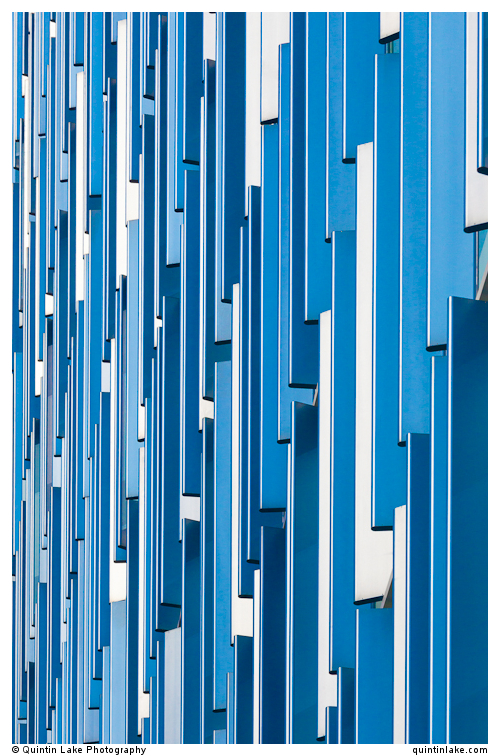
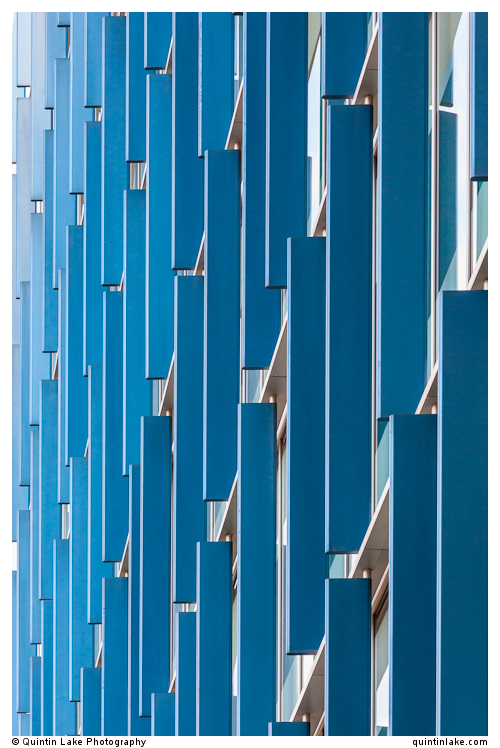
Facade detail of Blue Fin Building also known as Bankside 1, London

Blue Fin Building facade detail

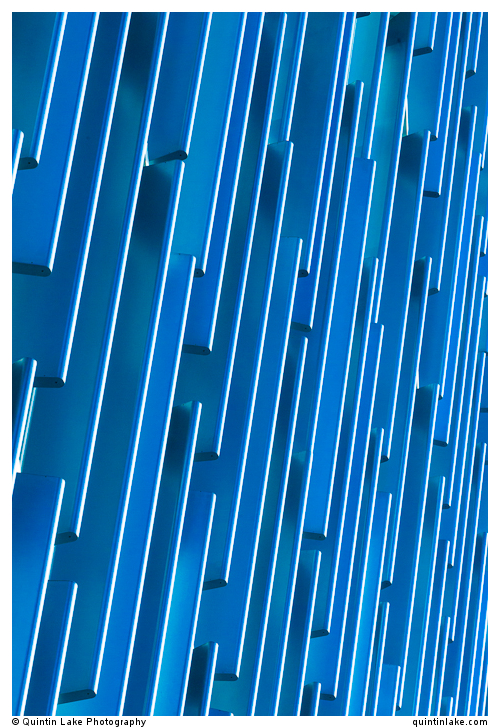
Graduated tone of the Blue Fin Building facade, London

The Blue Fin Building also known as Bankside 1, London takes its name from the 2,000 vertical fins on it of varying blue colours to provide solar shading for the offices within. Built: 2008. Architect: Allies and Morrison

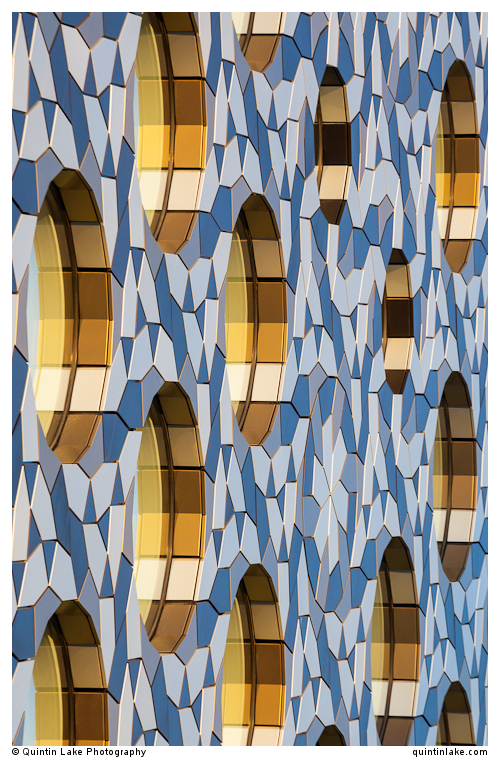
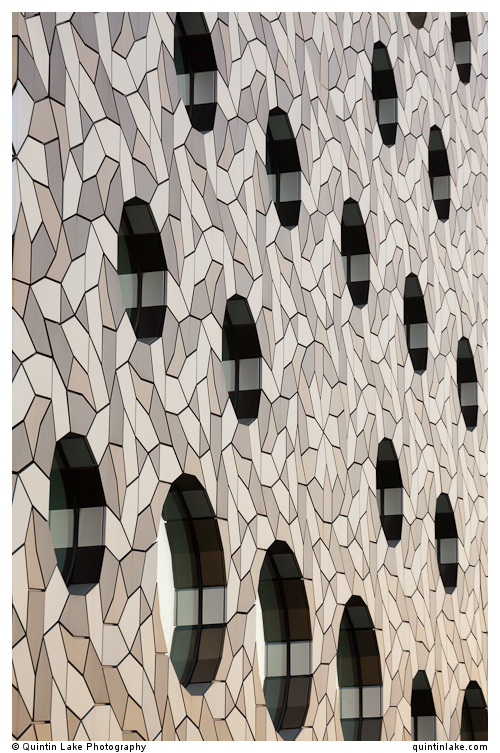
Aluminium tiles and round windows of Ravensbourne College catch the evening sun.

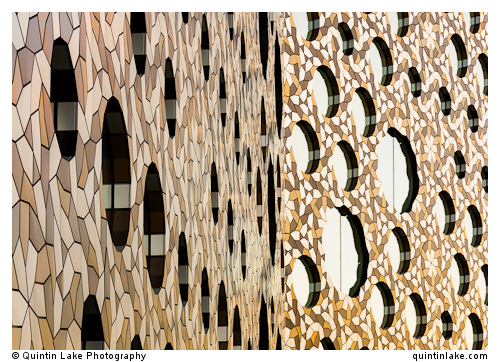
Facade showing different sized windows created with only three tile types.

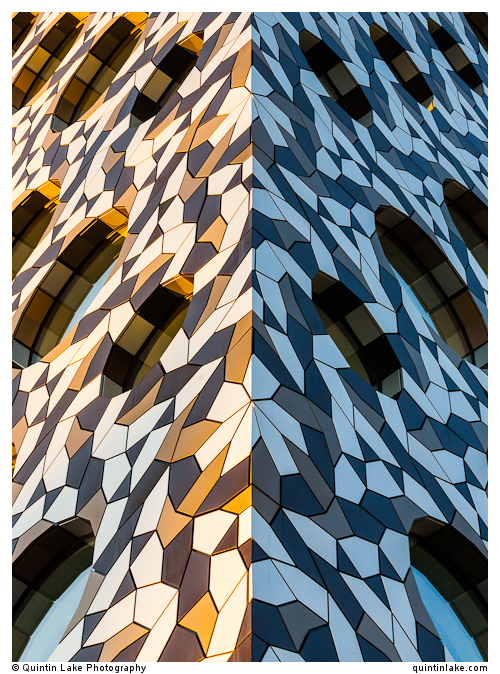
Corner detail of tiling on Ravensbourne College by Foreign Office Architects

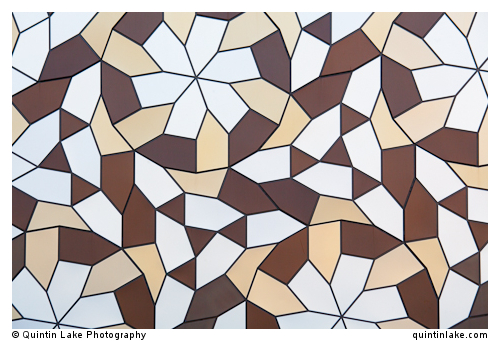
Detail of the tessellating pattern of three tile shapes

The cladding appearance changes dramatically according to the prevailing light strength

The facade of Ravensbourne College, London is created by an interesting system of tessellation geometries which allows the creation of seven different types and diameter of windows out of only three different tiles. The pattern is so unique it has now been patented to protect its use. The building was designed by Alejandro Zaero-Polo and Farshid Moussavi of Foreign Office Architects in 2010.