Archives For author

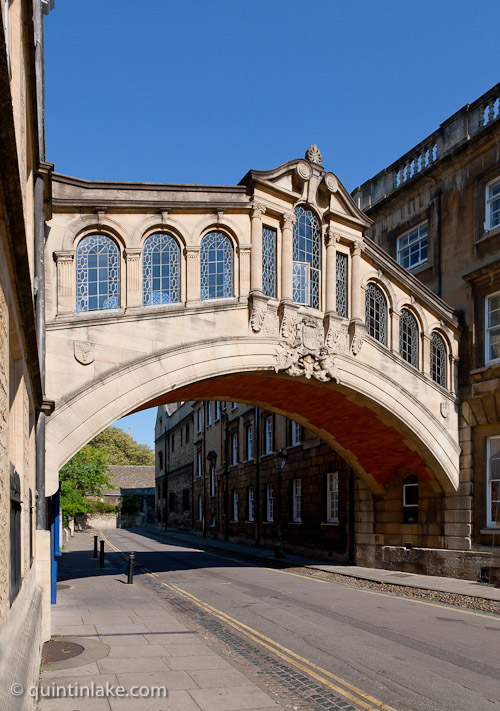
Bridge of Sighs, or Hertford Bridge in Oxford a pedestrian bridge linking together the Old and New Quadrangles of Hertford College. Built 1913. Architect: Sir Thomas Jackson. Photo: Quintin Lake

Architectural Photography of the Bridge of Sighs, or Hertford Bridge in Oxford a pedestrian bridge linking together the Old and New Quadrangles of Hertford College. Built 1913. Architect: Sir Thomas Jackson

View more / Buy Prints / License Stock images from this photoshoot here

More Stock Photography of Oxford

Photography © Quintin Lake, 2010

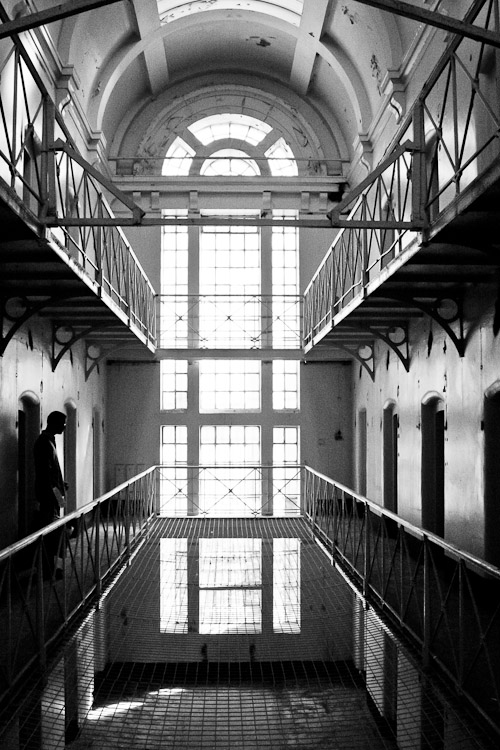
Oxford Prison "A" Wing part of Oxford Castle in August 2004 on the last Open Day before redevelopment as Malmaison hotel (Photo: Quintin Lake)

Oxford Prison was built in 1870. A product of Victorian enlightenment, all the cells had windows, and its massive central gallery (A Wing) — three tiers of cells — was brightened by sunlight pouring through three-storey-tall, barred casement windows. If you’re a fan of British television and movies, you’ll recognize A Wing from episodes of the Oxford-based Inspector Morse, series or from the 1969 version of The Italian Job.

In its day, Oxford Prison was considered airy, healthful, and light. But when the prison closed in 1996 it was so overcrowded that prisoners were apportioned three to a cell. Nevertheless, the once-revolutionary design qualified parts of the building for coveted protection status. Malmaison, which has earned a reputation for converting unusual city center locations into luxury hotels, was one of the few companies willing to take on a project that involved keeping A Wing virtually intact.

These photos were taken on the last Open Day before the Oxford Prison site closed for redevelopment in 2004 before reopening as a Hotel, Malmaison Oxford.

From Wikipedia : “The county gaol gradually grew to take over most of the site. In 1888 it became HM Prison Oxford (Oxford Prison). The prison was closed in 1996 and the site reverted to Oxfordshire County Council. It has since been redeveloped as a shopping and heritage complex, with open courtyards for markets and theatrical performances. The scheme also includes a hotel in the Malmaison chain, Malmaison Oxford, occupying a large part of the former prison block, with converted jail cells as guest rooms. This is the first time in the UK that a prison has been turned into a hotel. The redeveloped site also includes apartments, bars, restaurants, events venues, and a visitor centre operating as “Oxford Castle–Unlocked”

View / Buy more images from this photoshoot here

Photography © Quintin Lake, 2010

Updated: Image Archive featuring over 6,000 Architectural & Fine Art images available for immediate download, license and print purchase

I’ve just completed a major overhaul to my archive website which now contains over 6,000 of my Architectural & Fine Art photographs for sale as prints or download. The website is based on Photoshelter and is used to deliver images to my clients securely, archive my work and integrate commerce. Hope you like it!

Vist the new site here >>

Bright Idea: Haim Steinbach on Shelving His Art at Louis Vuitton

Photography by Quintin Lake © Haim Steinbach Goto Artinfo Article

View more images of Steinbach’s Installation at Louis Vuitton Maison here

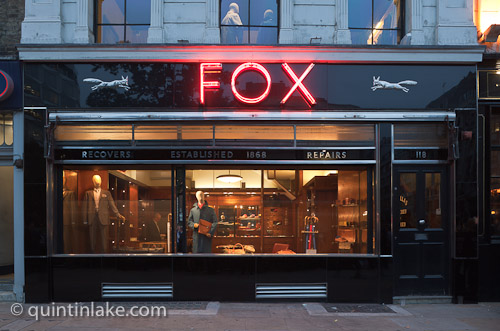
Vitriolite, Neon & Stainless Steel facade of Fox Umbrella Shop (Photo: Quintin Lake)

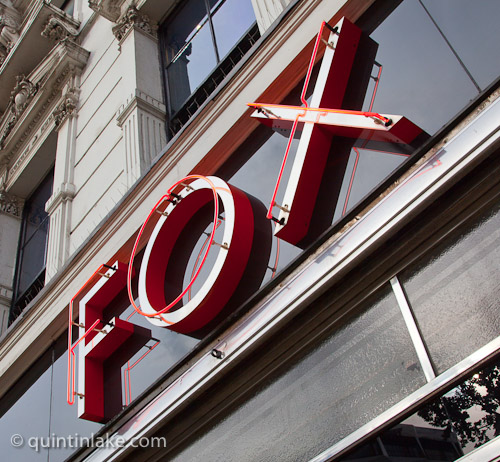
Neon sign at Fox Umbrella Shop (Photo: Quintin Lake)

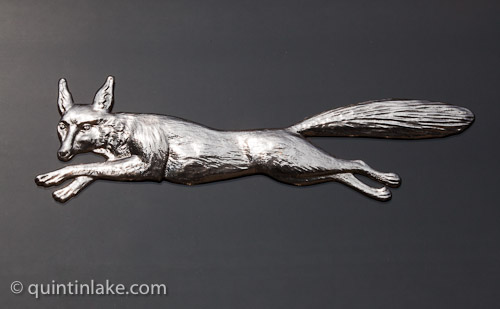
Stainless Steel prancing fox on the facade of Fox Umbrella Shop (Photo: Quintin Lake)

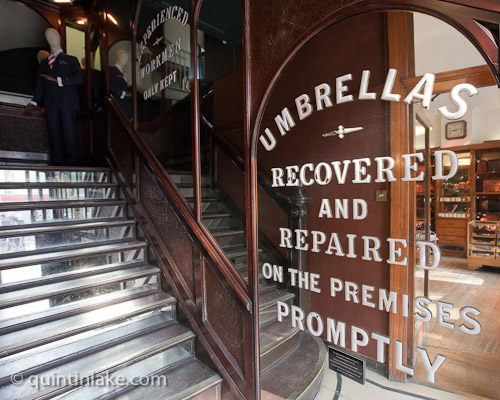
Original enamelled signage set on mirror in the entrance to Fox Umbrella Shop (Photo: Quintin Lake)

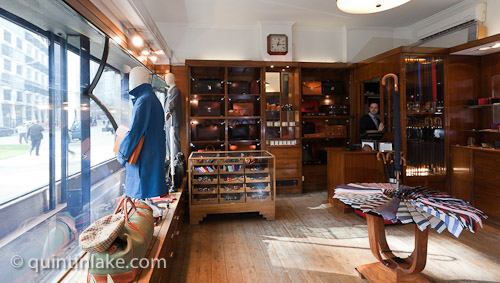
Interior of Fox Umbrella Shop showing curved glass window (Photo: Quintin Lake)

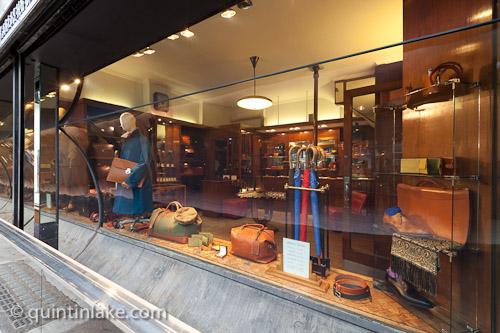
Curved glass ant-reflective shop window at Fox Umbrella Shop (Photo: Quintin Lake)

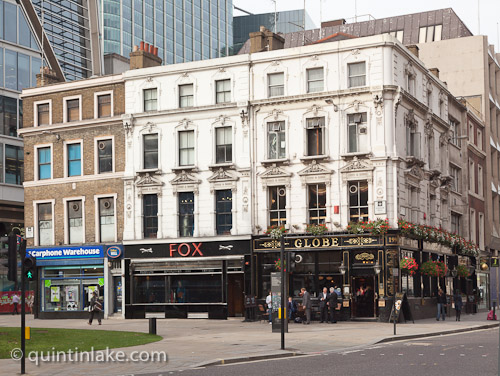
Fox Umbrella Shop, 118 London Wall next to Globe pub in the City of London (Photo: Quintin Lake)

This stylish shop was established by Thomas Fox in 1868, and has passed through a number of hands since then. In the early days the building housed a hair salon and a tailor, also owned by Fox, and it was common for customers to come, leave their umbrella to be repaired and have their hair cut while they were waiting. The extremely stylish exterior was installed in 1936 and was, at the time, the latest in shop-front design. Curved non-reflective glazing later used at heals on Tottenham court road was used for the windows, and the framework was made from black Vitrolite a type of black glass used in the 1930s and chromed steel. Two prancing silver foxes and a neon sign were the finishing touches. Seventy years on, it still looks achingly cool.

Inside, the shop is fitted with cabinets made of solid Canadian black walnut. The staircase boasts framed mirrors, with original advertising graphics dating back to 1868. Right up until 1990, the umbrellas were handmade in the basement workshop to the strictest criteria, and T Fox prides itself on having produced one-off designs for John F Kennedy, a gadget umbrella for a James Bond film, and brollies for John Steed in ‘The Avengers’. Visit the T Fox Website here

These photographs were commissioned by Thames & Hudson / View Pictures for an upcoming book on the architecture of the City of London

View more images from this photoshoot of Fox’s Umbrella Shop here

Photography © Quintin Lake, 2010

Ironmongers' Livery Company Hall, situated between the Barbican and the museum of London, London (Photo: Quintin Lake)

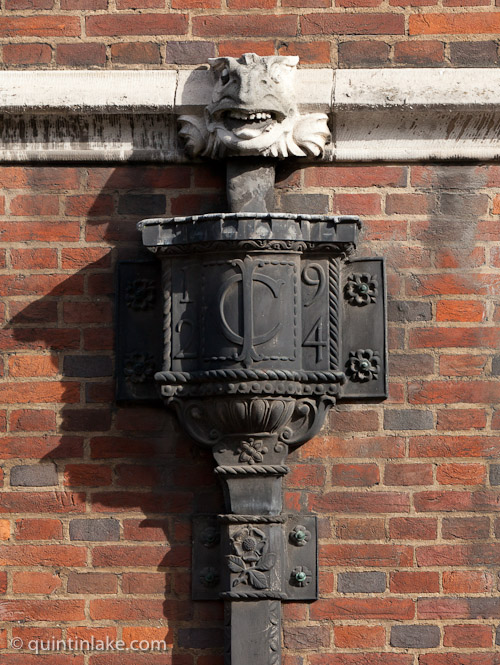
Detail of down-pipe at Ironmongers' Hall, Barbican, London (Photo: Quintin Lake)

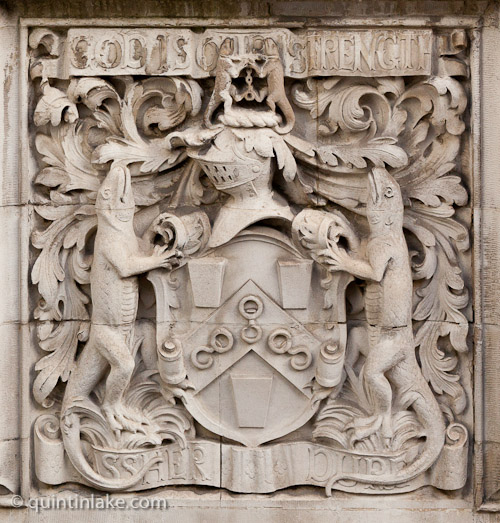
The crest of the Worshipful Company of Ironmongers above the entrance (Photo: Quintin Lake)

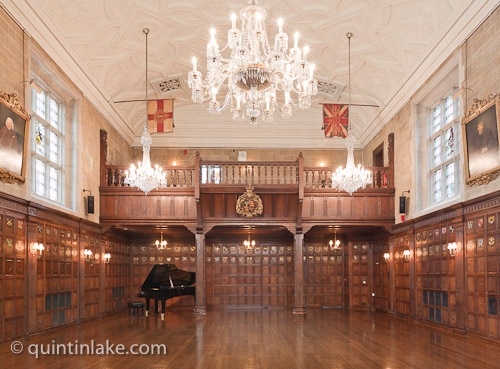
The main banqueting hall in Ironmongers' Hall with with Waterford chandeliers from previous building (Photo: Quintin Lake)

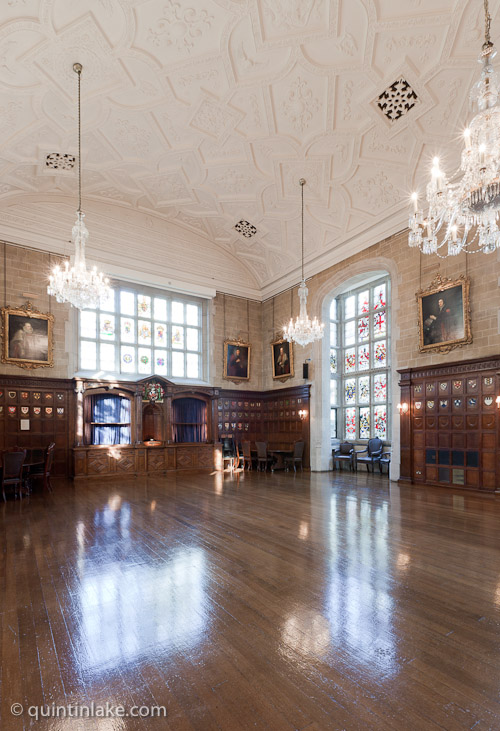
Main Hall of the Jacobean style Ironmongers' Hall, Barbican, London (Photo: Quintin Lake)

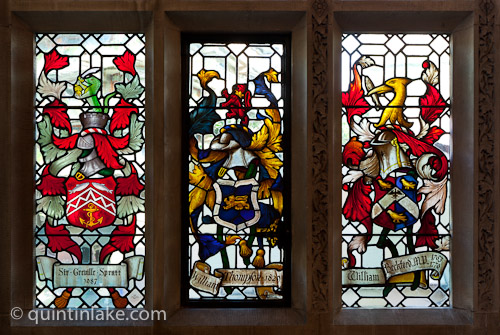
Stained Glass in Main Hall of the Ironmongers' Hall, Barbican, London (Photo: Quintin Lake)

One of Livery Companies of the the of City London, the Ironmongers purchased their first hall in Fenchurch Street in 1457. This was rebuilt by Elias Jarman in 1587 and survived the Great Fire but their third hall of 1745 was one of the few buildings to be bombed in the First World War. The present day Ironmongers’ Hall built in 1925 had a close shave during the incendiary raids of the Second World War in December 1940 when heat melted window glass and lead & asphalt on the roof but the occupants managed to save the building with the use of stirrup pumps.

The present hall was constructed in in a Neo-Tudor style by architect Sydney Tatchell on a site previously occupied by tenement houses, pulled down in 1910. Much of the craftwork being done by hand which is of a fantastic quality which prevents the building feeling like a pastiche despite being built around a steel frame. The banqueting hall is of double height with Waterford chandeliers of 1803 from the previous hall. Today the building sits unexpectedly between the museum of London and the Barbican which adds to its charm making the vistor feel they have discovered something hidden

The hall features as a location on the DVD of  Harry Potter and the Goblet of Fire.

See the Ironmongers’ Hall website for information on hiring the venue.

These photographs were commissioned by Thames & Hudson / View Pictures for an upcoming book on the architecture of the City of London

View more images of Ironmongers’ Hall here

Photography © Quintin Lake, 2010

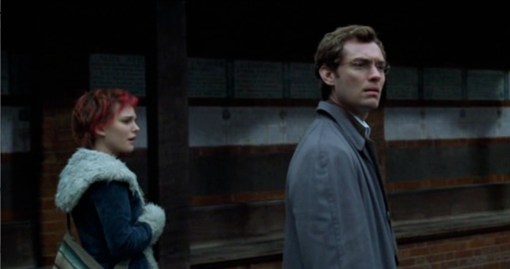
Alice Ayres (Natalie Portman) & Dan Woolf (Jude Law) in front of Memorial to Heroic Self Sacrifice in the movie Closer
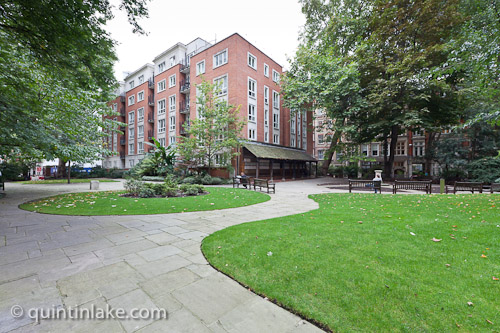
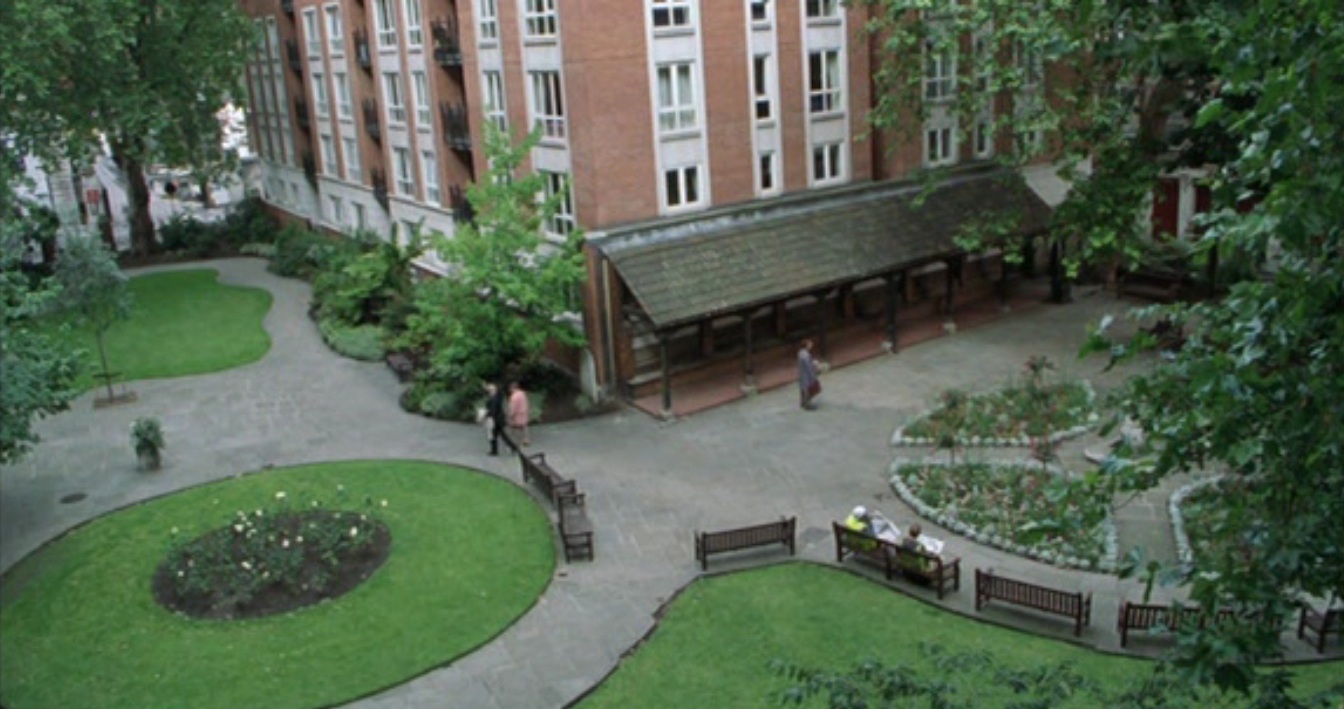
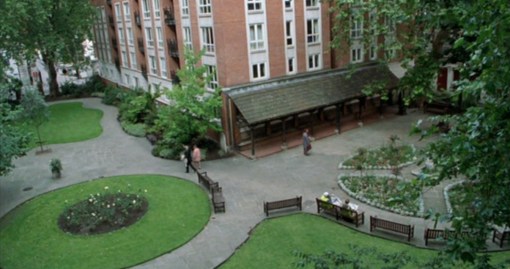
Postman's Park located between St Martin’s le Grand and King Edward Street in the City of London (Photo: Quintin Lake)
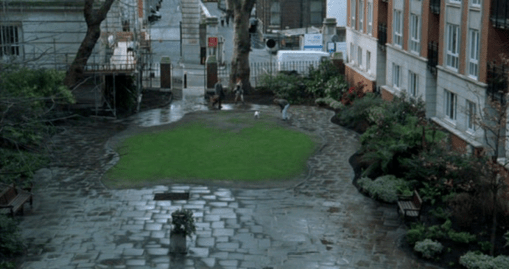
Alice Ayres (Natalie Portman) & Dan Woolf (Jude Law) enter Postman's park in the movie Closer
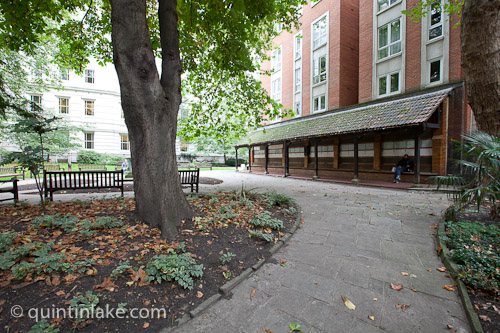
Postman's Park view of the loggia that makes up the Memorial to Heroic Self Sacrifice , City of London (Photo: Quintin Lake)
Dan Woolf (Jude Law) returns to the Memorial in Postman's Park at the end of the film Closer
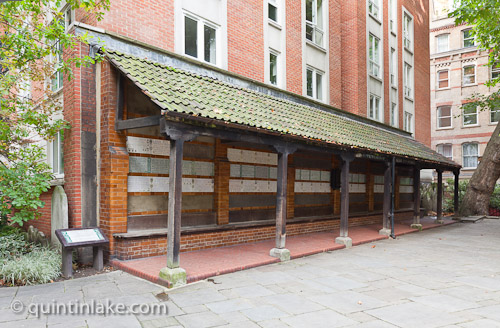
Memorial to Heroic Self Sacrifice Loggia in Postman's Park, City of London (Photo: Quintin Lake)

"In commemoration of Heroic Self Sacrifice" Postman's Park, City of London (Photo: Quintin Lake)
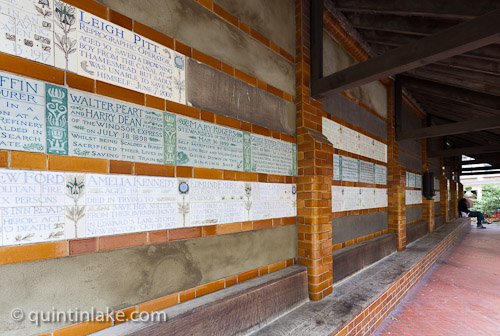
Arrangement of the tiles in the Memorial to Heroic Self Sacrifice, Postman's Park, City of London (Photo: Quintin Lake)

Statue of George Frederic Watts by T. H. Wren inscription reads "The Utmost for the Highest" "In memorial of George Frederic Watts, who desiring to honour heroic self-sacrifice placed these records here" (Photo: Quintin Lake)

1900 tile by William De Morgan. one of the first to be installed "Walter Peart, Driver and Harry Dean, Fireman of the Windsor Express on July 18 1898 Whilst being scalded and burnt sacrificed their lives in saving the train" (Photo: Quintin Lake)
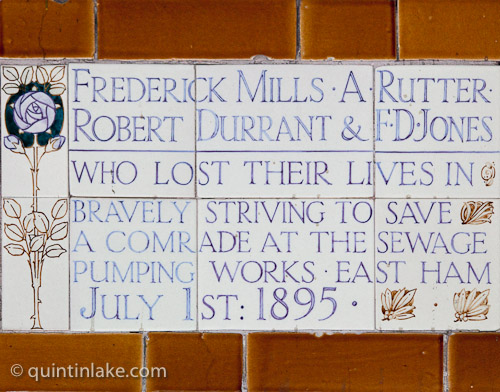
1902 tile by Royal Doulton "Frederick Mills · A Rutter Robert Durant & F D Jones Who lost their lives in bravely striving to save a comrade at the Sewage Pumping Works East Ham July 1st 1895" (Photo: Quintin Lake)

1902 tile by William De Morgan "Alice Ayres Daughter of a bricklayer's labourer Who by intrepid conduct saved 3 children from a burning house in Union Street Borough at the cost of her own young life April 24 1885" In the movie Closer Alice Ayres is played by Natalie Portman and Dan Woolf by Jude Law who notices this tile which features in the film. (Photo: Quintin Lake)
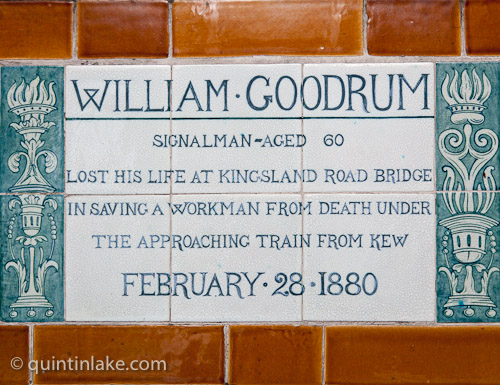
1905 tile by William De Morgam "William Goodrum Signalman · Aged 60 Lost his life at Kingsland Road Bridge in saving a workman from death under the approaching train from Kew February 28 1880" (Photo: Quintin Lake)

1908 tile by Royal Doulton "Thomas Simpson Died of exhaustion after saving many lives from the breaking ice at Highgate Ponds Jan 25 1885" (Photo: Quintin Lake)

1930 tile by Royal Doulton "P.C. Percy Edwin Cook Metropolitan Police Voluntarily descended high-tension chamber at Kensington to rescue two workmen overcome by poisonous gas" (Photo: Quintin Lake)
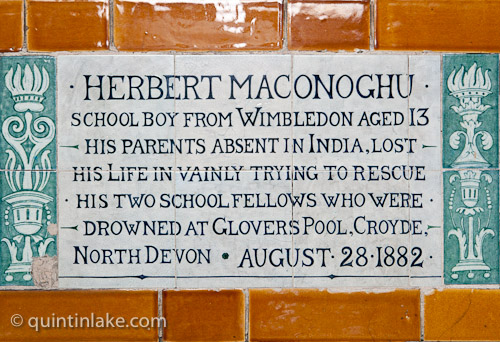
1931 tile by Fred Passenger "Herbert Maconoghu School boy from Wimbledon aged 13 His parents absent in India, lost his life in vainly trying to rescue his two school fellows who were drowned at Glovers Pool, Croyde, North Devon August 28 1882" (Photo: Quintin Lake)
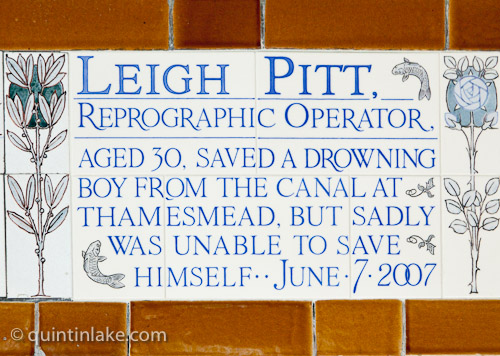
the most recent 2009 tile by Craven Dunnill Jackfield Ltd "Leigh Pitt Reprographic operator Aged 30, saved a drowning boy from the canal at Thamesmead, but sadly was unable to save himself" (Photo: Quintin Lake)

Postman’s Park is hidden away park in central London, a short distance north of St Paul’s Cathedral. Bordered by Little Britain, Aldersgate Street, King Edward Street, and the site of the former head office of the General Post Office (GPO), it is one of the largest parks in the City of London, the walled city which gives its name to modern London. A shortage of space for burials in London meant that corpses were often laid on the ground and covered over with soil instead of being buried, and thus Postman’s Park, built on the site of former burial grounds, is significantly elevated above the streets which surround it. It is best known as the location of the Memorial to Heroic Self Sacrifice.

Opened in 1880 on the site of the former churchyard and burial ground of St Botolph’s Aldersgate church, it expanded over the next 20 years to incorporate the adjacent burial grounds of Christ Church Greyfriars and St Leonard, Foster Lane, as well as the site of housing demolished during the widening of Little Britain in 1880, the ownership of which became the subject of a lengthy dispute between the church authorities, the General Post Office, the Treasury, and the City Parochial Foundation. The park’s name reflects its popularity amongst workers from the nearby GPO’s headquarters.

In 1900, the park became the location for George Frederic Watts’s Memorial to Heroic Self Sacrifice (also known as the Wall of Heroes), a memorial to ordinary people who died saving the lives of others and might otherwise have been forgotten, in the form of a loggia and long wall housing ceramic memorial tablets. At the time of its opening, only four of the planned 120 memorial tablets were in place, with a further nine tablets added during Watts’s lifetime. Following Watts’s death in 1904, his wife Mary Watts took over the management of the project and oversaw the installation of a further 35 memorial tablets in the following four years, as well as a small monument to Watts. However, disillusioned with the new tile manufacturer and with her time and money increasingly occupied by the running of the Watts Gallery, Mary Watts lost interest in the project and only five further tablets were added during her lifetime.

Although Watts’s plans for the memorial had envisaged names inscribed on the wall, in the event the memorial was designed to hold panels of hand-painted and glazed ceramic tiles. Watts was an acquaintance of William De Morgan, at that time one of the world’s leading tile designers, and consequently found them easier and cheaper to obtain than engraved stone.

In 1972, key elements of the park, including the Memorial to Heroic Self Sacrifice, were grade II listed to preserve their character. Following the 2004 film Closer, based on the 1997 play Closer by Patrick Marber, Postman’s Park experienced a resurgence of interest; key scenes of both were set in the park itself. In June 2009 the Diocese of London added a new tablet to the Memorial in the style of the Royal Doulton tiles for Leigh Pitt, a print technician from Surrey, had died on 7 June 2007 rescuing nine-year-old Harley Bagnall-Taylor who was drowning in a canal in Thamesmead. This tile the first new addition for 78 years and the 54th tablet

These photographs were commissioned by Thames & Hudson / View Pictures for an upcoming book on the architecture of the City of London

View more images of Postman’s Park and all 54 tiles in the  Memorial to Heroic Self Sacrifice, London here

Photography © Quintin Lake, 2010
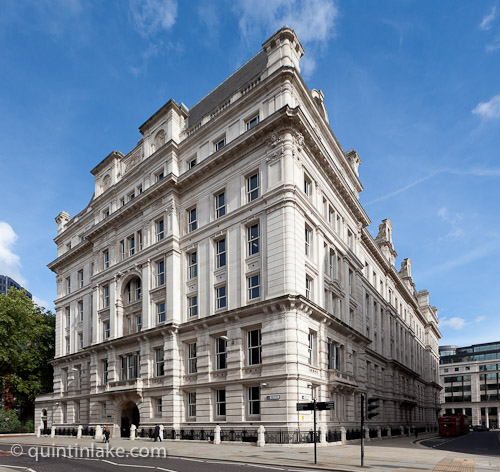
Nomura House formerly North Range of the General Post Office Headquarters located between St Martin’s le Grand and King Edward Street in the City of London (Photo: Quintin Lake)

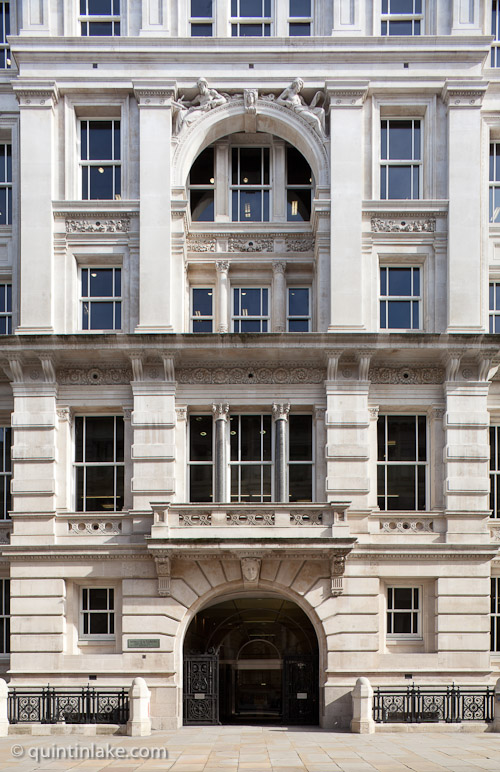
West entrance of Nomura House formerly North Range of the General Post Office Headquarters  (Photo: Quintin Lake)

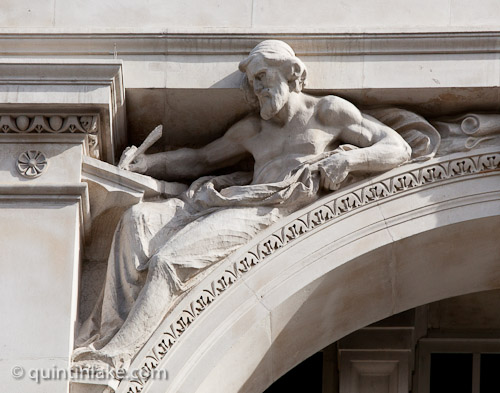
In the left spandrel a reclining male figure is seen writing a letter… (Photo: Quintin Lake)

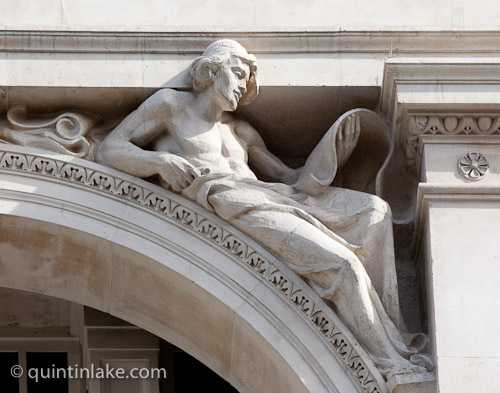
….and on the right a figure is seen reading the letter (Photo: Quintin Lake)

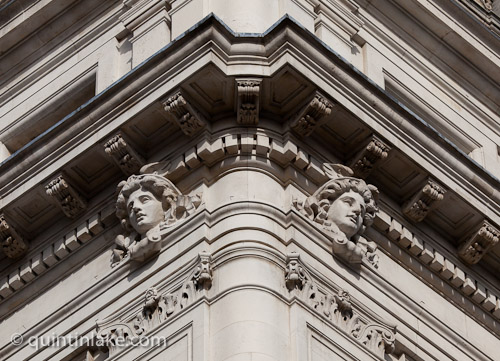
Carved busts below thee cornice line at the corners of Nomura House  (Photo: Quintin Lake)

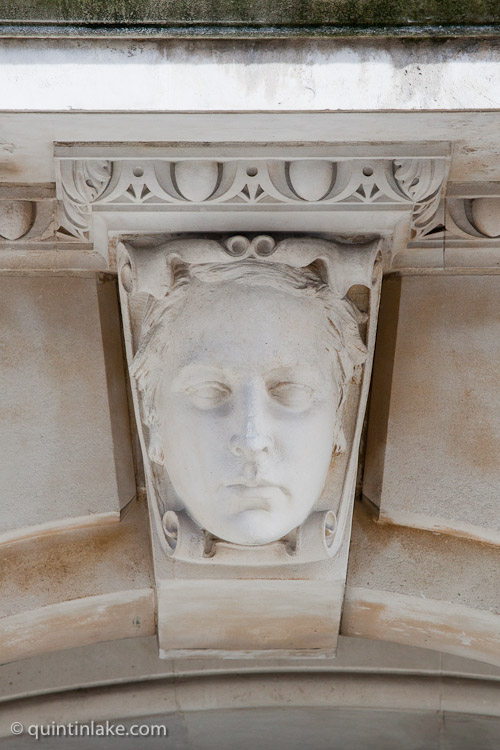
Keystone above the west entrance depicts Arnold Morley, Postmaster General (Photo: Quintin Lake)

Now the UK headquarters of Nomura, the Japanese investment bank, the building was originally a cathedral to the business of the postage stamp. Formerly known as the North Range of the General Post Office Headquarters between St Martin’s le Grand and King Edward Street is one of the remaining buildings of the former G.P.O Headquarters the other being The King Edward Buildings now Merrill Lynch HQ across the street.

Sir Henry Tanner, architect and surveyor in the Office of Works, designed the new building to take full advantage of its island site, with frontages to three streets and to gardens to the north. Faced entirely in Portland stone, its most prominent features were the corner towers, now capped with mansard roofs. Built from 1889-9 it housed the General Post Office’s headquarters staff and meetings from 1895 to 1984.

The Nomura Group bought the site in 1986. The building was then rebuilt internally by the Fitzroy Robinson Partnership behind the original façades, which were retained and cleaned. The Italianate cliffs of Portland stone with banded rustication and flat pilasters above are characteristic of the Georgian approach to public building. Relief from the severity is provided by the more lyrical stone carving.

These photographs were commissioned by Thames & Hudson / View Pictures for an upcoming book on the architecture of the City of London

View more images of Nomura House formerly North Range of the General Post Office Here

Photography © Quintin Lake, 2010