





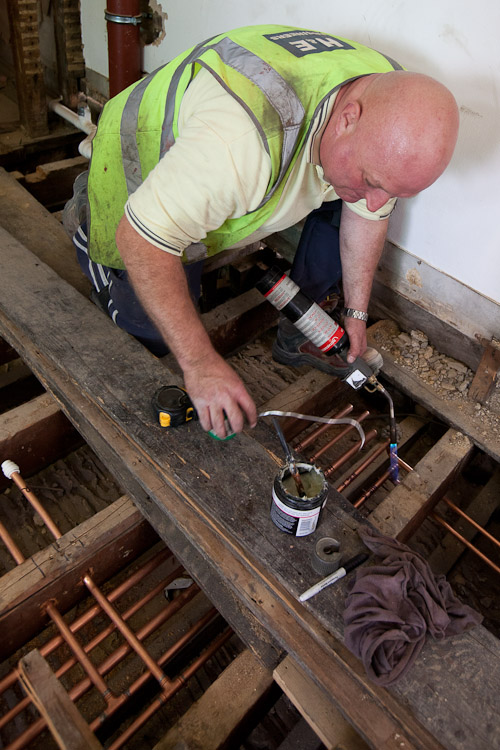
View all posts of the Pembroke College Bridging Centuries Project >>
VIEW MORE / BUY PRINTS / LICENSE IMAGES from Pembroke College Redevelopment here >>

New Clubhouse for Aarhus Rowing Club at dusk. Photo: Quintin Lake

New Clubhouse seen from the pontoon in Braband Lake. Photo: Quintin Lake
New Clubhouse, opened in 2010, for Aarhus Rowing Club (Århus Roklub klubhus), by Braband Lake Aarhus, Denmark.
These photos were commissioned by Søren Jensen, the engineering firm of the project.
VIEW MORE / BUY PRINTS / LICENSE IMAGES of New Clubhouse, Aarhus Rowing Club here >>
Photography © Quintin Lake, 2011

Counselling Center (Hejmdal) Danish Cancer Society at dusk, Aarhus, Denmark. Architect: Gehry Partners, LLP. Engineer: Søren Jensen Rådgivende Ingeniørfirma. Photo: Quintin Lake
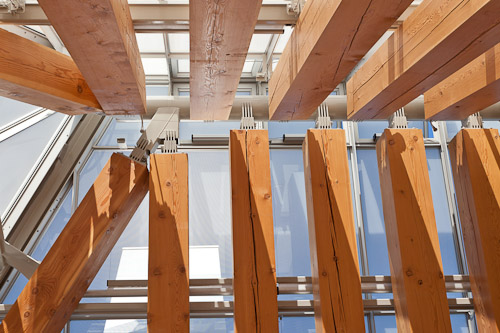
Interior view looking up to roof apex of of 45x45cm solid Douglas Fir members and steel junction. Photo: Quintin Lake
This building which opened in 2009 inspired by the Maggie’s Centres in the UK is the Danish Cancer Society’s first new non-institutional counselling centre. The new counselling centre known as Hejmdal or Cancer Patients House is designed by Architect Gehry Partners & Engineer Søren Jensen. The project is a renovation of an existing 1908 building, designed by the Danish architect Rudolf Clausen, which serves as a gateway to the Aarhus Hospital campus.
The design maintains the existing historic house walls and windows and inserts two new floor levels above the expanded lower level of the house. These floors are supported independently from the existing exterior walls creating an uninterrupted space, or canyon, allowing natural light from the new glass roof to reach all levels of the house.
The preservation of the existing masonry facades is achieved by the use of 45x45cm solid Douglas Fir members for both the new glazed new roof and a highly unusual timber structure inserted into the building posed significant engineering challenges.
These photos were commissioned by the engineering firm of the project: Søren Jensen
Like Gehry’s Architecture? See my photographs of his home and the first deconstructivist building Gehry House in Santa Monica, LA and his later Walt Disney Concert Hall, LA
Photography © Quintin Lake, 2011
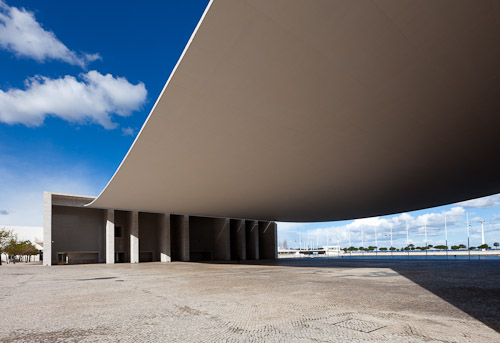
Portuguese Pavilion, Expo 1998, Lisbon. Architect, Alvaro Siza. Two powerful, 15-metre high columns support the no more than 20-centimetre thick concrete ceiling which is reinforced by stainless steel cables set in the walls hanging overhead like a great sail. Photo: Quintin Lake

Portuguese Pavilion, Expo 1998, Lisbon. Architect, Alvaro Siza. Photo: Quintin Lake

Glazed tiles on the Portuguese Pavilion, Expo 1998, Lisbon. Architect, Alvaro Siza. Photo: Quintin Lake
The Pavilion of Portugal in Expo 1998 designed by Portuguese architect Alvaro Siza with the contribution of Eduardo Souto de Moura makes reinforced concrete seem weightless with the building’s elegant sail-like roof.
Photography © Quintin Lake, 2011
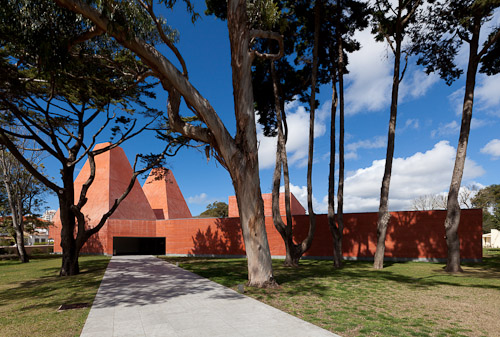
Entrance view of Paula Rego Museum, Cascais, Portugal.
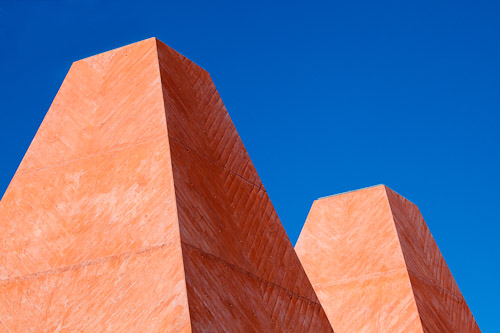
The twin chimneys of the Casa das Historias.
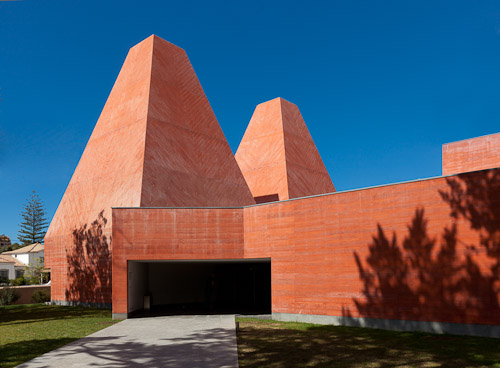
The building is made from concrete that is coloured to reflect local terracotta.
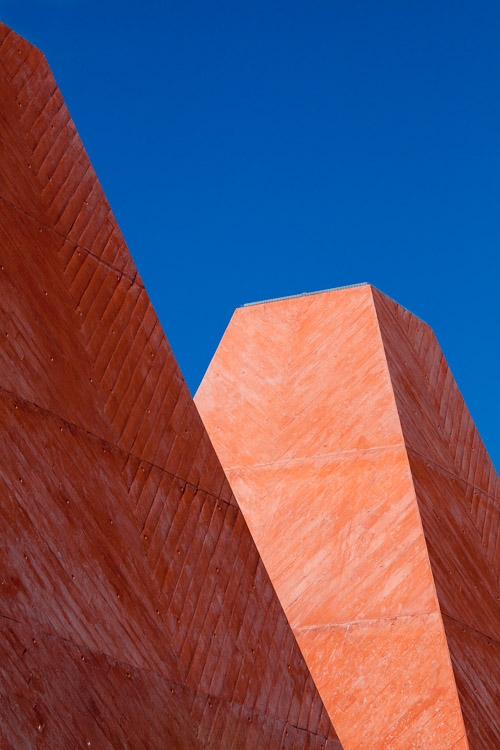
The twin chimneys are inspired by chimneys at Sintra Palace.
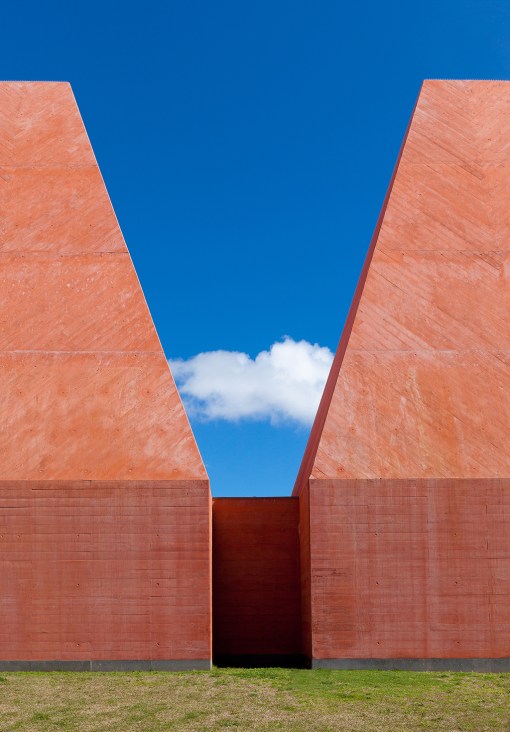
Positive Negative. The concrete is shuttered with planks of timber in a herringbone pattern.
This beautiful building which opened in 2009 was designed by the architect Eduardo Souto de Moura and is called Casa das Histórias Paula Rego / Paula Rego – House of Stories. The twin chimneys of the Casa das Historias are inspired by chimneys at Sintra Palace and made from concrete that is coloured to reflect local terracotta, and shuttered with planks of timber in a herringbone pattern. Did concrete ever look so good?
VIEW MORE / BUY PRINTS / LICENSE IMAGES of the Paula Rego Museum by Souto de Moura here >>
Photography © Quintin Lake, 2011

Roof of the Sage Gateshead reflecting passing clouds on a sunny day. Photo: Quintin Lake
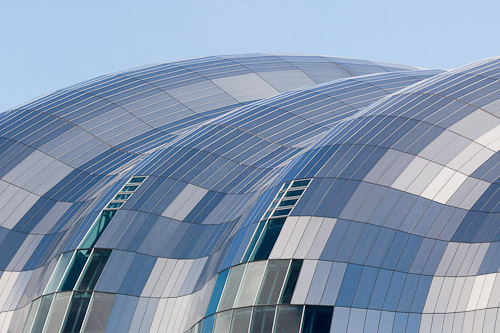
A minute change in the passing clouds changes the appearance and illuminates the edge of the stainless steel panels. Photo: Quintin Lake
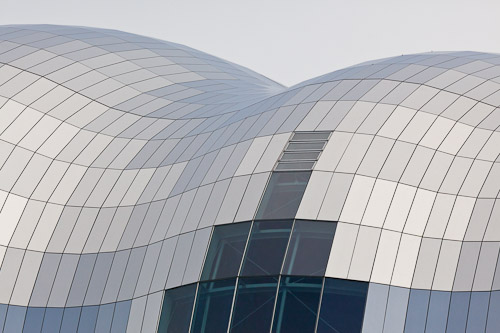
The silky appearance on an overcast day. Photo: Quintin Lake
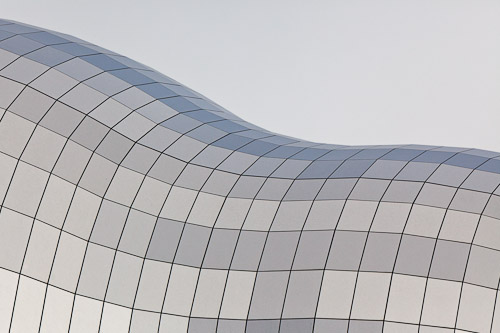
Sensuous curves on the roof of Sage Gateshead. Photo: Quintin Lake

Detail of roof design of the Sage Gateshead. Photo: Quintin Lake
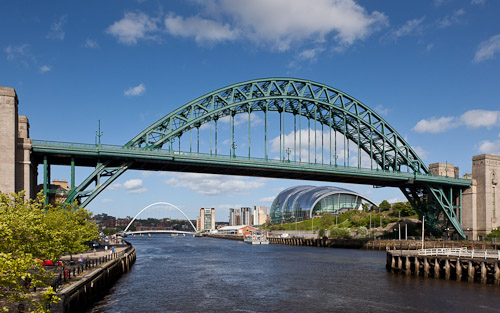
Tyne Bridge over the River Tyne, Newcastle with view to Gateshead Millennium Bridge, The Baltic Centre for Contemporary Art and Sage Gateshead. Photo: Quintin Lake
Designed by architect Foster and Partners and engineer Buro Happold the faceted roof of the Sage Gateshead concert hall changes appearance as it reflects the changeable british weather looking equally alluring on an overcast day or in bright sunlight. The roof of the Sage consists of 3,000 panels made from stainless steel and 250 made of glass. Each stainless steel panel has a linen finish to reduce the glare and is about four metres long and a metre wide. Each panel is solid and designed to prevent noise from heavy rain causing a distraction during concert performances.
Like these? See my photographs of architectural details of Utzon’s Sydney Opera House and Gehry’s Walt Disney Concert Hall, LA
VIEW MORE / BUY PRINTS / LICENSE IMAGES of Sage Gateshead by Norman Foster here >>
Photography © Quintin Lake, 2011
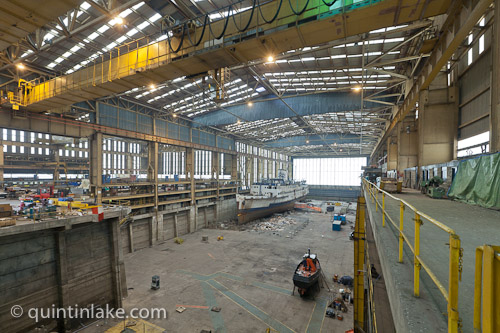
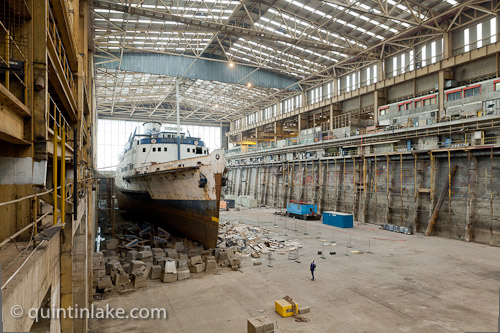
Massive 181m x 49m Dry-dock in the Pallion Shipyard, Sunderland, UK, May 2011
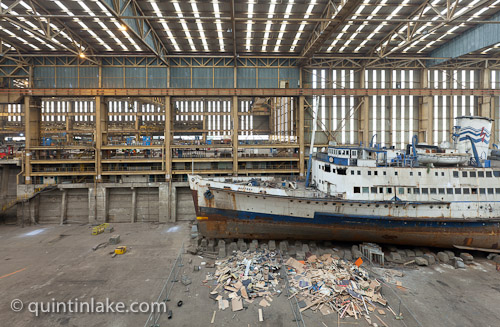
Scrapping of Steamship Manxman in the Pallion Shipyard, Sunderland
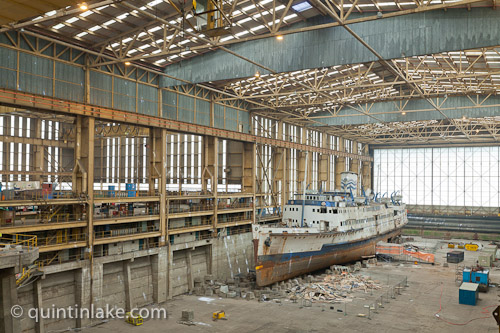
Steamship Manxman in the Pallion Shipyard, Sunderland, UK
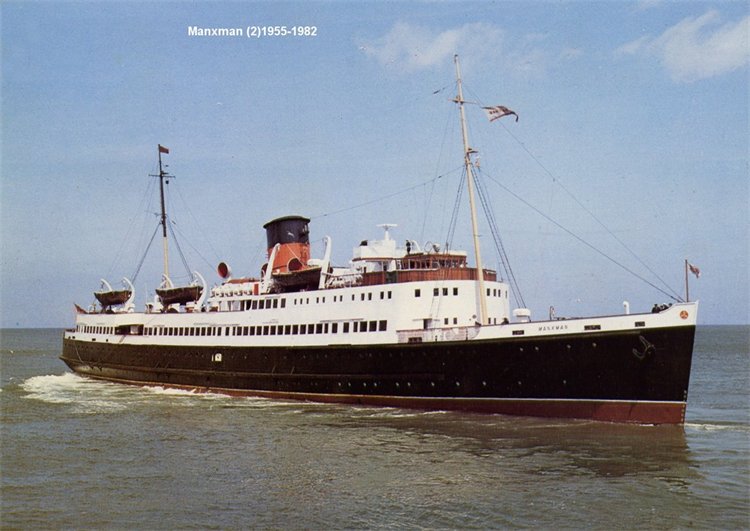
SS Manxman (1955-1982) in her heyday
Architect Jonathan Schwinge stands by Steamship Manxman in the Pallion Shipyard
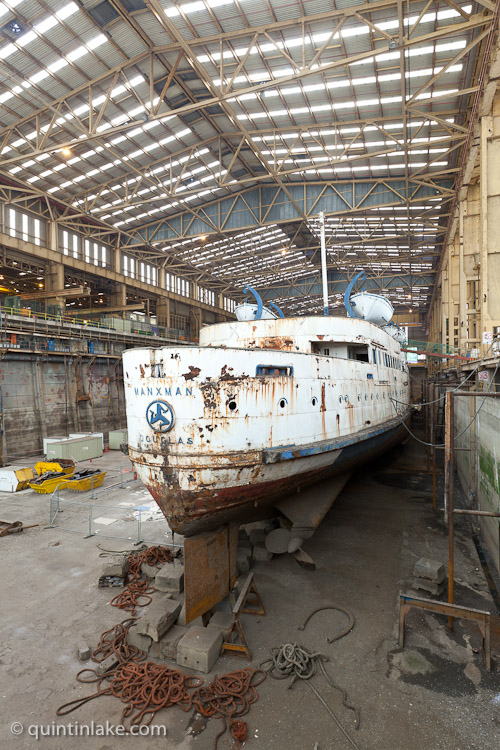
Steamship Manxman in the Pallion Shipyard, Sunderland, UK, May 2011

Rusty stern of Steamship Manxman in the Pallion Shipyard prior to scrapping
The breathtakingly huge main dry-dock of the Pallion Shipyard, Sunderland is one of largest structures I’ve experienced and a bittersweet reminder of when Sunderland was one of the largest shipbuilding towns in the world.
In the boom year of the early 1900s, the yards employed over 12,000 men, a third of the town’s adult population. When the shipbuilding industry was nationalised in 1977, British Shipbuilders took over most of the larger yards. But competition from Japan and Korea was intense, and the yards suffered from shrinking order books. Despite heavy investment in new technology and massive protest, Sunderland’s last shipyards were closed down in 1988.
The air of melancholy is reinforced as the main 181m x 49m dock at Pallion currently holds the historic Isle of Man Steamship Manxman in the process of being scrapped after the result of an unsuccessful campaign to restore her.
SEE MORE Photos of Pallion Shipyard and Steamship Manxman here >>


 Geometry & Silence