Archives for category: Architectural Photography

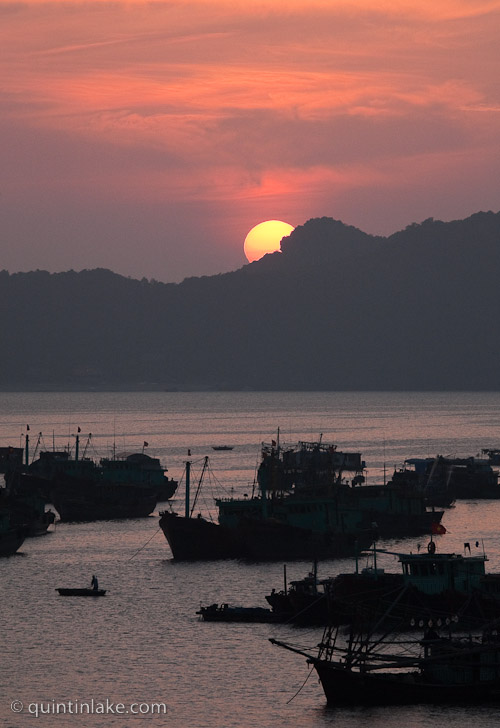
Fishing boats in Cat Ba harbour at sunset , Cat Ba Island, Vietnam

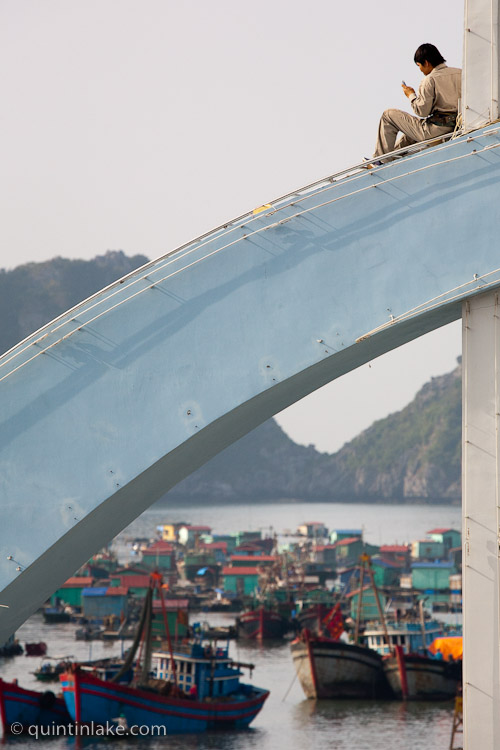
A man with a mobile (cell) phone sitting on Cat Ba harbour ferry terminal arch above fishing boats in Cat Ba Harbour, Vietnam

Unloading fish and loading ice in fishing vessels at Cat Ba town fishing port, Cat Ba Island, Vietnam

Tube houses, mostly hotels along the harbour front in Cat Ba Town, Cat Ba Island, Vietnam

VIEW MORE IMAGES / BUY PRINTS / LICENCE photographs of Cat Ba town, Vietnam HERE

Photography © Quintin Lake, 2010

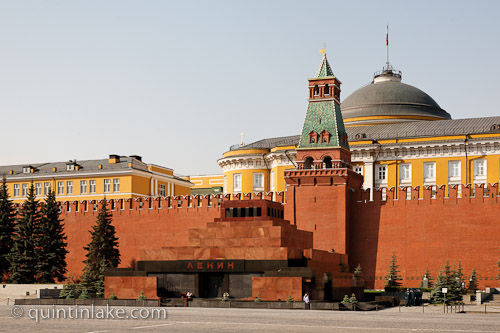
Lenin's Mausoleum, former Soviet Parliament building behind, Red Square, Russia

Lenin’s Mausoleum also known as Lenin’s Tomb, situated in Red Square in Moscow, is the mausoleum that serves as the current resting place of Vladimir Lenin. His embalmed body has been on public display there since shortly after his death in 1924 (with rare exceptions in wartime).

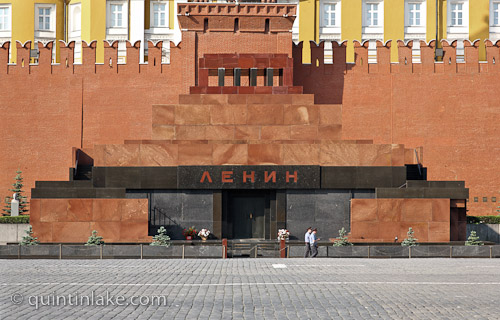
Two policemen walk past the Facade of Lenin's Mausoleum, Red Square, Russia

Aleksey Shchusev’s diminutive but monumental granite structure incorporates some elements from ancient mausoleums, such as the Step Pyramid and the Tomb of Cyrus the Great. More than 10 million people visited Lenin’s tomb between 1924 and 1972. The design was an inspiration  or the Ho Chi Minh Mausoleum in Hanoi, Vietnam See Images here

Saint Basil's Cathedral, Kremlin and Lenin's Mausoleum, Red Square, Russia

VIEW MORE IMAGES / BUY PRINTS / LICENCE photographs of Lenin’s Mausoleum, Red Square, Moscow, Russia

Photography © Quintin Lake, 2007

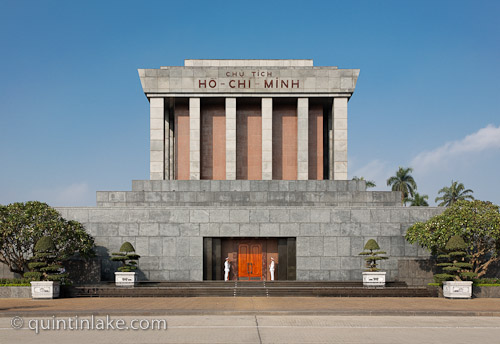
Facade of the Ho Chi Minh Mausoleum "Chủ tịch Hồ Chí Minh" inscribed across it, meaning "President Ho Chi Minh" , Ba Dinh Square Hanoi, Vietnam

The Hồ Chí Minh Mausoleum (Vietnamese: Lăng Chủ tịch Hồ Chí Minh) is a large memorial to the Vietnamese leader in Hanoi, Vietnam. It is located in the center of Ba Dinh Square, which is the place where Ho read the Declaration of Independence on September 2, 1945, establishing the Democratic Republic of Vietnam. Built 1973-1975. Ho Chi Minh’s body is preserved in the cooled, central hall of the mausoleum, with a military honor guard.

Entrance to Ho Chi Minh Mausoleum with guard of honor , Ba Dinh Square Hanoi, Vietnam

The Totalitarian / Stalinist mausoleum was inspired by Lenin’s Mausoleum in Moscow (see images) and is contextual to the extent that the roof lines and peristyle vaguely recall traditional houses. The exterior is made of gray granite, while the interior is gray, black, and red polished stone. The mausoleum’s portico has the words “Chủ tịch Hồ Chí Minh” inscribed across it, meaning “President Ho Chi Minh” inlaid from crimson stone gem of Cao Bang.

Two platforms with seven steps for parade viewing. flanking the Ho Chi Minh Mausoleum, Ba Dinh Square, Hanoi, Vietnam

Construction materials were brought from all over the country and the Soviet Union also sent two thousand slabs of marble and polished marble to decorate the tomb. The structure is 21.6 metres high and 41.2 metres wide. Flanking the mausoleum are two platforms with seven steps for parade viewing.

Ho Chi Minh Mausoleum and Ba Dinh Square, Hanoi, Vietnam

The Mausoleum is designed to have high durability against the bombing and earthquake. There are also special protection against floods and the glass coffin is built to withstand large mechanical force and “special accommodations” are in place to keep the corpse safe in case of war.

VIEW MORE IMAGES / BUY PRINTS / LICENCE photographs of the Ho Chi Minh Mausoleum, Hanoi, Vietnam, here

Photography © Quintin Lake, 2010

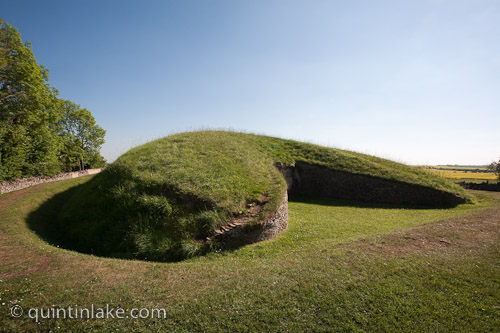
Belas Knap neolithic long barrow, Northern False Portal

Belas Knap is a neolithic long barrow, situated on Cleeve Hill, near Cheltenham and Winchcombe, in Gloucestershire, England. It is in the care of English Heritage. “Belas” is possibly derived from the Latin word bellus, ‘beautiful’, which could describe the hill or its view. “Knap” is derived from the Old English for the top, crest, or summit of a hill.

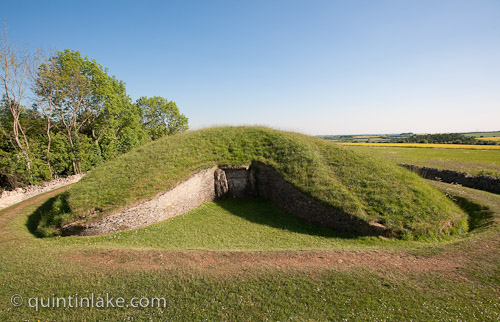
Belas Knap neolithic burial mound , Northern False Portal at left with Western Chamber just visible at right

What appears to be the main entrance to the barrow, with intricate dry-stone walling and large limestone jambs and lintels is, in fact, a false one. The actual burial chambers are down the long East and West sides of the barrow and at its Southern foot. There are four burial chambers, two on opposite sides near the middle, one at the South-East angle and one at the South end. These are formed of upright stone slabs, linked by dry-stone walling and originally had corbelled roofs.

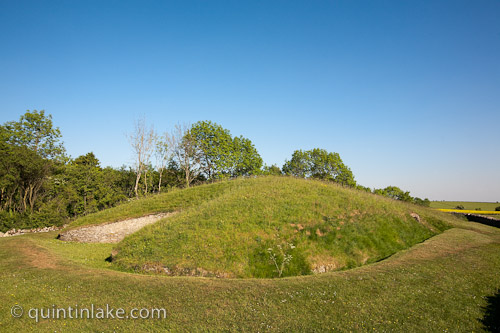
Belas Knap neolithic long barrow, Northern False Portal from 4m high vantage

This northern end measures about 26 metres wide and the barrow then tapers towards the south where it measures 17 metres in width and less than a metre in height. The whole of this trapezoid mound is around 70 metres in length.

VIEW MORE IMAGES/ BUY PRINTS / LICENCE photographs of Belas Knap here

Text from wikipedia article
Photography © Quintin Lake, 2010

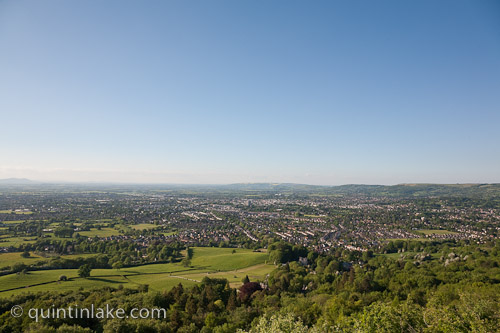
Panoramic View on Cheltenham Spa Town from Leckhampton Hill

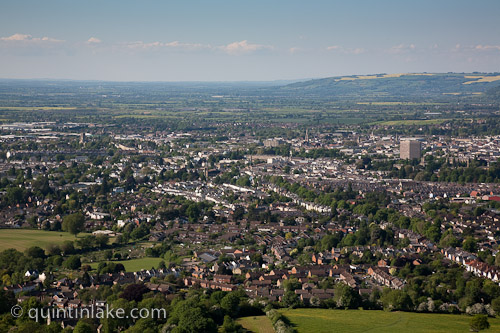
Aerial view of Cheltenham Spa Town centre from Leckhampton Hill

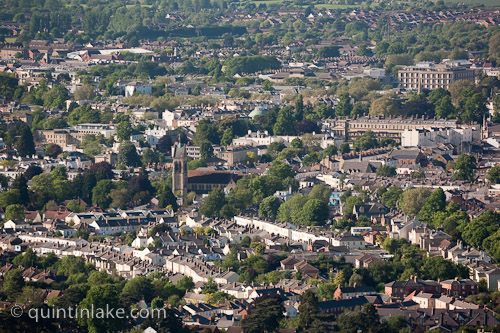
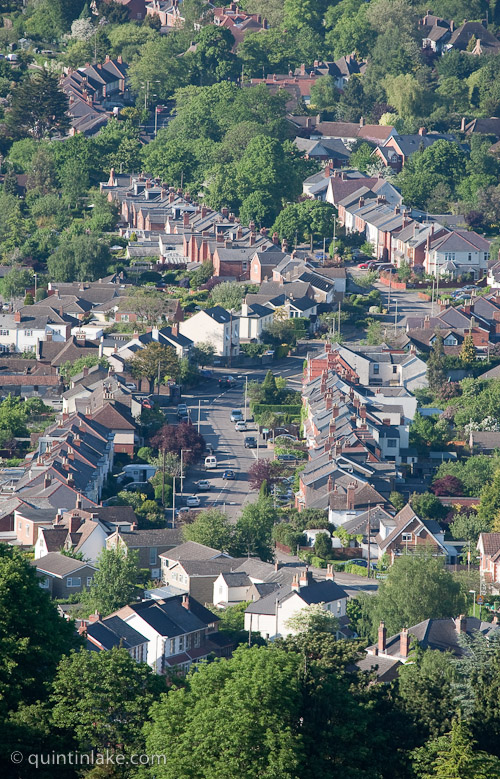
Terraced houses, tower of St Philip and St James Church, Leckhampton and facade of Suffolk square regency architecture (at right) in aerial view of tree lined streets of Cheltenham Spa Town seen from Leckhampton Hill

Cheltenham Eagle tower (the 15-storey building is the town's tallest structure and only only sky scraper) and Cheltenham College chapel (at right) of seen from Leckhampton Hill

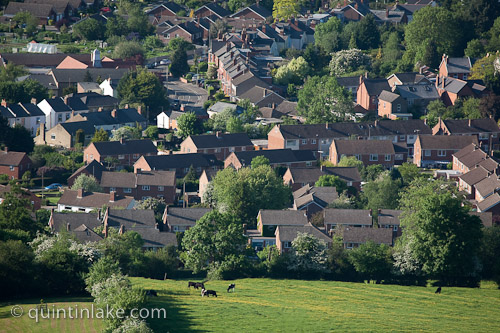
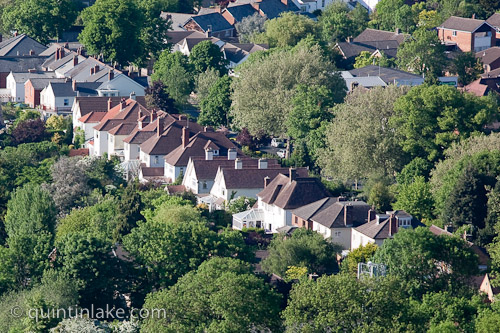
The suburban edge of Leckhampton meets rural fields, Cheltenham Spa Town. Aerial view seen from Leckhampton Hill

A row of suburban houses in leafy Leckhampton Cheltenham Spa Town, Gloucestershire

Suburban houses and tree lined road at the south edge of Cheltenham Spa Town, Gloucestershire. Aerial view seen from Leckhampton Hill

VIEW MORE IMAGES/ BUY PRINTS / LICENCE photographs of Cheltenham Spa here

Photography © Quintin Lake, 2010

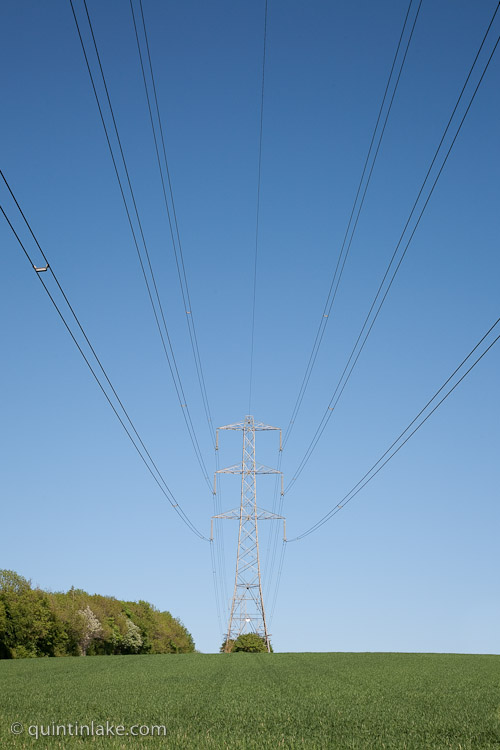
Elegant structures contrasting with the landscape, drawing a line across the landscape, through space and across the sky. Our modern world’s lifeblood elevated above the fields below. Confidently honest in form and function so unlike this deceit in steel.

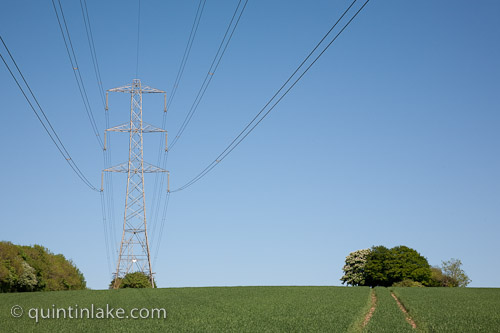
Electricity Pylon, suspension tower design set against a blue sky above a wheat field in early growth stage near Leckhampton Hill in Gloucestershire, England.

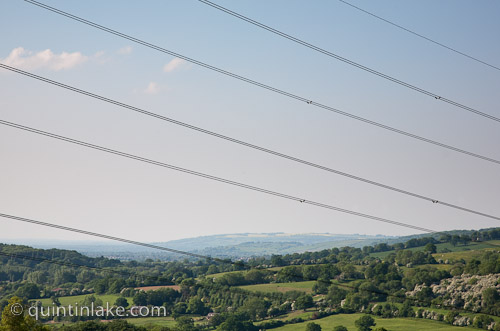
Overhead power lines cut diagonally across the Cotswold landscape of rolling hills and fields Ravensgate Hill in Gloucestershire, England.

Looking up at an Electricity Pylon, carrying overhead power line with suspension tower design set against a blue sky at Ravensgate Hill in Gloucestershire, England.

Overhead power lines diagonally cross the Cotswold landscape of rolling hills and fields Ravensgate Hill in Gloucestershire, England.

Electricity Pylon, suspension tower design set against a blue sky above a wheat field in early growth stage near Leckhampton Hill in Gloucestershire, England

VIEW / LICENCE MORE IMAGES of Pylons & Overhead Power Lines here

Photography © Quintin Lake, 2010

Holidays in Cubatão tells the story of an industrial landscape deep in the forests of Brazil through the eyes of an Australian who chooses this bizarre place to spend his holiday for no apparent reason.
The film was made in the fashion of the former Pascal Schöning’s Diploma Unit 3 and it has in its cast and crew five AA graduates: Chris Dukes, Quintin Lake, Julian Löffler, Isabel Pietri and Rubens Azevedo. More Info

Informa Cubatão News Article (In Portuguese)

A full gallery of documentary photographs can be seen here and making of photographs from the film here

Photography © Quintin Lake

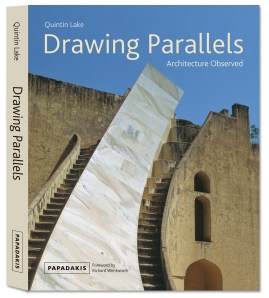
Quintin Lake “Drawing Parallels: Architecture Observed” Papadakis, 2009
ISBN 978-1906506-04-9 (Hardcover, 208 pages. £25. Colour throughout)

Reviewed by William Arthurs, Editor, London Society Journal

This fascinating book collects about 200 photographs of natural features, buildings and architectural detail from many countries around the world. Each page spread presents two photographs, with brief commentary, for the reader to compare and contrast. It is reviewed here because fifteen of the images are drawn from the London area and it is on some of these that I comment below, along with their comparisons.

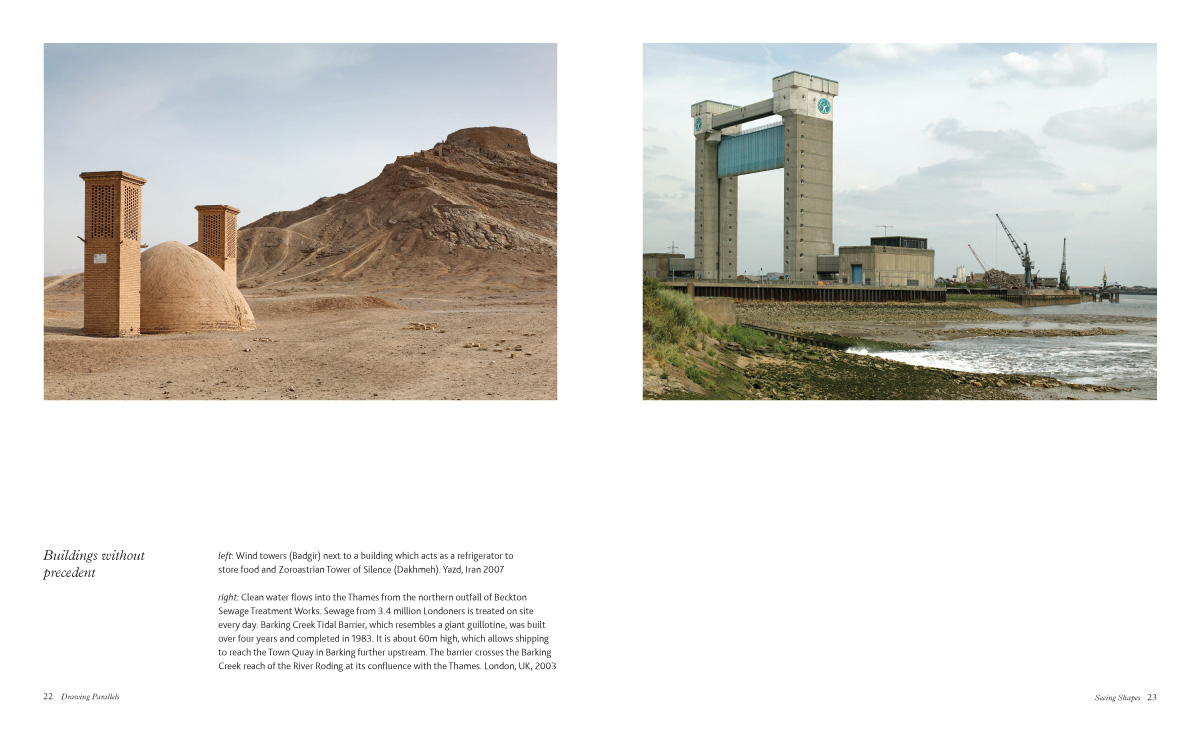
On pp. 22-3, a bleak Thames estuary landscape comprising the Barking Creek tidal barrier, resembling a giant guillotine, and the outfall of the Beckton Sewage Treatment works, is compared with a drier and more mysterious landscape in Yazd, Iran, with two square brick wind-towers, a conical brick building used as a refrigerator, and in the background a Zoroastrian Tower of Silence. I noted here the hidden nature of disposal – in the case of the Tower of Silence, the laying out of the corpses of the deceased on top of the tower is ritualistic, while the sewage works operate a mechanised and secular process of disposal (though one could compare some Victorian views of the sewer system, outlined by Dobraszczyk in “Into the Belly of the Beast”, also reviewed in this issue, and for which Quintin Lake provided the dustjacket image).
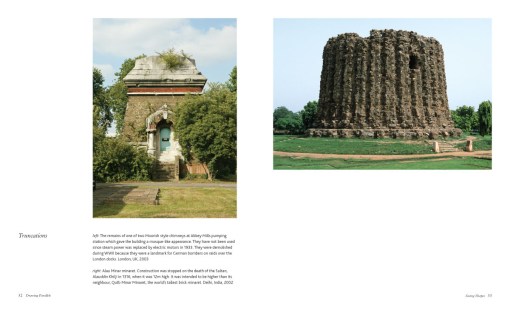
Next, on pp. 32-3, a comparison between the stump of one of the demolished Moorish-style chimneys at Abbey Mills pumping station (1865-8; these chimneys became redundant in the 1930s and were demolished during the Second World War) and the stump of the 14 th century Alau Minar brick minaret in Delhi, never completed. (Incidentally the Abbey Mills station as originally built is depicted on p. 114 of “Into the Belly of the Beast” and the chimneys are described on pp. 139 ff.). The Abbey Mills chimneys were 209 feet tall. The Delhi minaret was a more ambitious project as it was originally intended to be taller than its extant neighbour, Qutb Minar, at 240 feet the world’s tallest brick minaret.
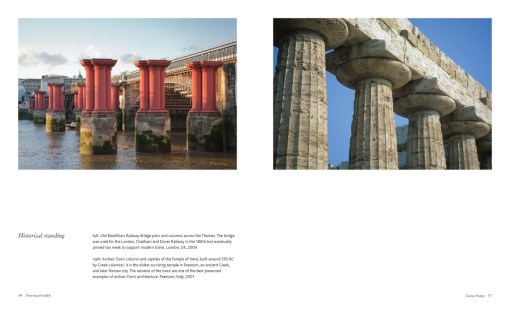
On pp. 36-7, a view familiar to our readers from the cover of issue 457 – the columns of the old Blackfriars Railway Bridge – are compared with some Doric columns at the Temple of Hera at Paestum (550 BC). In both cases, columns are left supporting not much, but still standing – but compare the materials and finish, and how they have weathered.
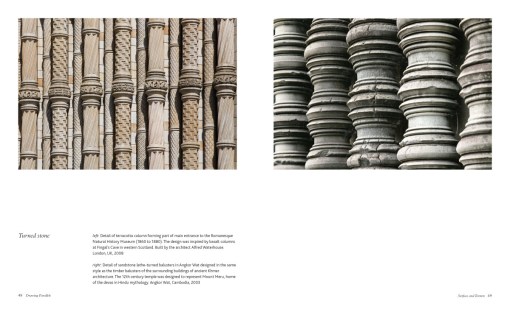
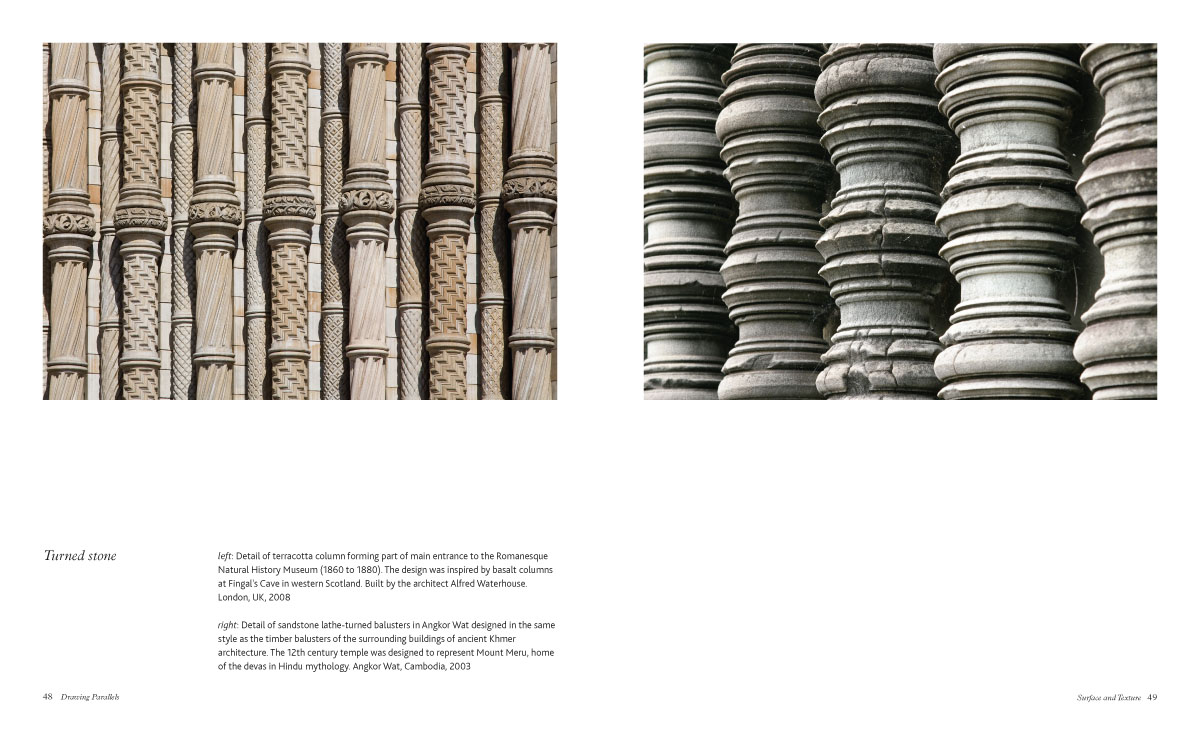
On pp. 48-9 a detail of the terracotta columns around the main entrance to the Natural History Museum (Alfred Waterhouse, 1860-1880) are compared with 12th century lathe-turned sandstone temple balusters at Angkor Wat. Here we are invited to compare texture, colour, to imagine the different processes for firing terracotta and turning sandstone, and to consider the
function of the buildings – a temple of science, and a Hindu temple.

Later photographs include the Gherkin, the Tower of London, Rachel Whiteread’s “House”, and vernacular settings in Walthamstow and in South London. A thought-provoking and beautifully-photographed collection to which I have found myself returning on many occasions.

William Arthurs, Editor, London Society Journal
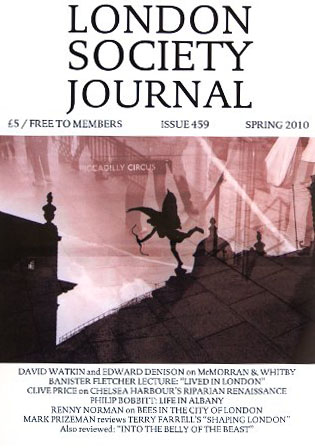
The London Society Journal is the magazine for members of the London Society and is published twice a year. The London Society was founded in 1912 and works to stimulate appreciation of London, to encourage excellence in planning and development, and to preserve its amenities and the best of its buildings.

Buy Drawing Parallels from Amazon UK here