Archives for category: Architectural Photography

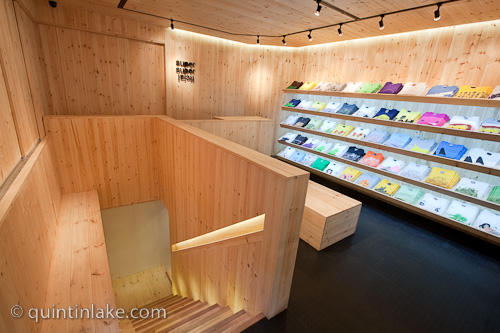
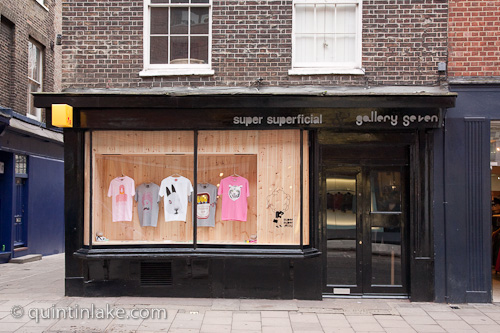
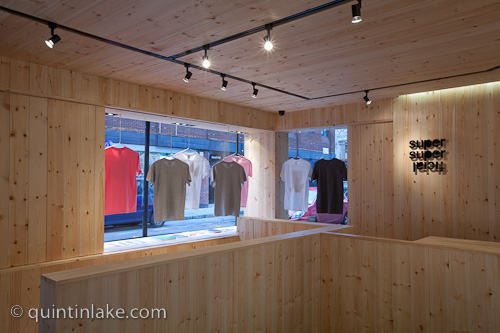
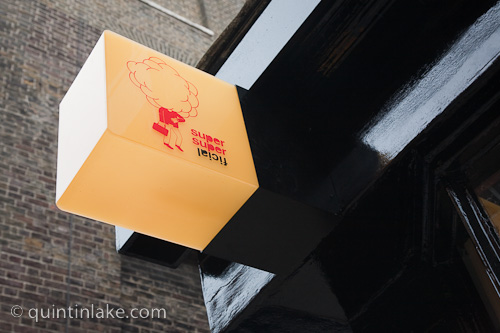
Super Superficial Earlham Street Store. T-shirt boutique designed by Sang Lee Architecture. Located at 22 Earlham Street, Covent Garden London, UK

View the entire set of Super Superficial Earlham Street Photographs here

Super Superficial "Head-in-the-clouds' Lightbox Sign

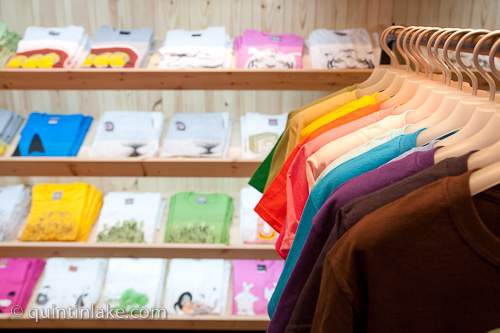
Designer t-shirts arranged on hangers and timber shelves

Monochrome t-shirts

Stairs leading down to Gallery 7

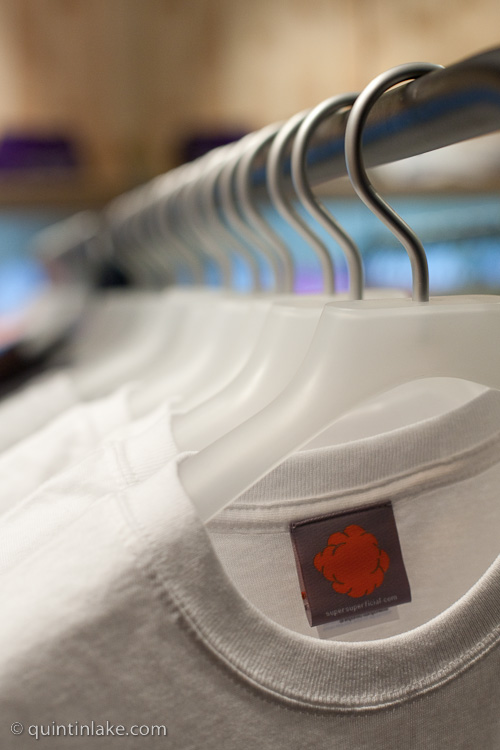
Super Superficial cloud logo on the rail

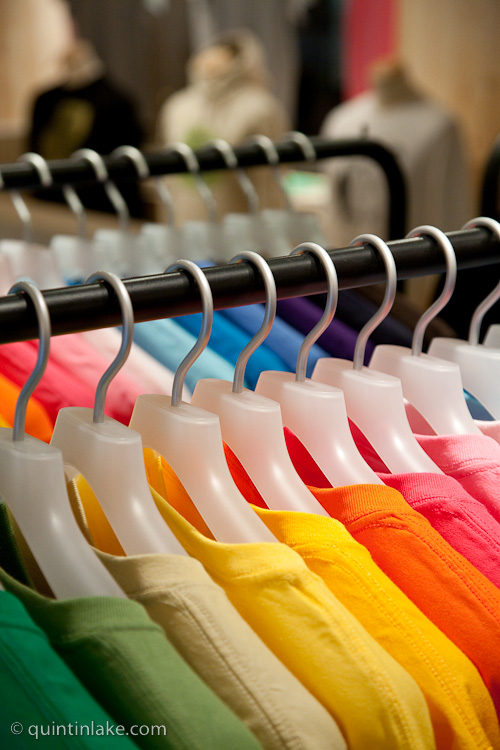
Spectrum of t's

Glossy black shop exterior

The interior is part sauna, part asian sliding screen

The listed building is characteristic of Covent Garden, London

View the entire set of Super Superficial Earlham Street Photographs here

Photography © Quintin Lake, 2010

Thank you for considering Quintin Lake for a commission.

An architectural photography assignment is a commitment of time, of resources and of money. Creating high-quality images on location presents a complex series of challenges. Thorough planning and communication among the client, photographer, location owner and representatives at the site can help ensure maximum efficiency and productivity.

I hope this architectural photography checklist is useful in getting the highest quality results.

1. DESCRIPTION OF ASSIGNMENT

The Client to Specify:

• Exact location map of the site with North point marked.
• Function of building.
• Provide construction progress photos if available.
• Areas to be photographed and number of views expected.
• Are there any key features to highlight – or flaws for the photographer to downplay or avoid?
• What is the purpose of the photographs – how are they to be used and who is the audience.
• Delivery deadline.
• Who is commissioning photography? ie Images for single client only?  Multiple parties sharing photo costs and each using the images? Same rights for all parties?

Photographer to Specify:

• Copyright – this is retained by the photographer unless specifically transferred to the client in writing.
• All pictures are entered into an image archive for potential future publication – unless there is a prior agreement. I believe that getting our pictures seen by a wide audience is good for photographer and client alike.
• For each commission, I would recommend that you sign my building release form as a way of controlling publication of images of your project.

2. SITE CONTACTS AND ACCESS

Contacts – names and numbers should be supplied of:

• Client – office and mobile.
• Building owner.
• Building security personnel.
• Maintenance personnel.
• Any others involved in the project.

Access

• Are the building owners expecting the photographer?
• Do they know what this involves? – doing it properly means using a tripod, maybe lights, taking some time, etc.
• Are the rooms to be photographed accessible? – any keys or security codes involved.
• Can the building lighting be adjusted or controlled for dusk or dawn photography?
• Is there any special security clearance required?
• If photography from a neighbouring building is required, has the necessary permission been obtained?

3. SITE CONDITIONS – Is The Building looking its Best ?

• Has all the construction been completed?
• Has all construction and letting agent signage been removed?
• Are there any skips, scaffolding, fences, debris or portaloos left behind?
• Is the landscaping ready? Has litter been picked up?
• Are the windows and cladding clean?
• Likelihood of delivery vans arriving and staying for long periods?
• Any lights out? Have any been replaced with the wrong colour?
• Any Graffiti on building? Fences? Posters? Signs?
• Christmas or other seasonal decorations?
• Are interior spaces clean?
• Has all the correct furniture been installed?
• Artwork and sculpture in place?
• Flowers and plants available for inclusion in shots? Props arranged?

For information on rates and availability contact Quintin
by telephone on:
07973 139345
or by email at:mail@quintinlake.com

This website is my blog, to view examples of my architectural photography
visit my portfolio at www.quintinlake.com

For further information see the following links:

List of benefits for clients here

List of clients here

Testimonials page here

Frequently Asked Questions here

Corners expressed I

Outer walls and moat of Nijō Castle. The raised corner used to house a five storey tower which served as a look-out in 1750 but was not rebuilt. (Built from 1601 to 1626 by Tokugawa Ieyasu, founder of the Edo Shogunate). Kyoto, Japan, 2004


Corners expressed II

Corner of the three-tier marble terrace leading to the Hall of Preserving Harmony in the Forbidden City. (Built from 1406 to 1420). Beijing, China, 2007

Buy prints and usage rights of these diptych images here which are featured in my architectural photography book, Drawing Parallels, Architecture Observed

Text & Photography © Quintin Lake, 2010

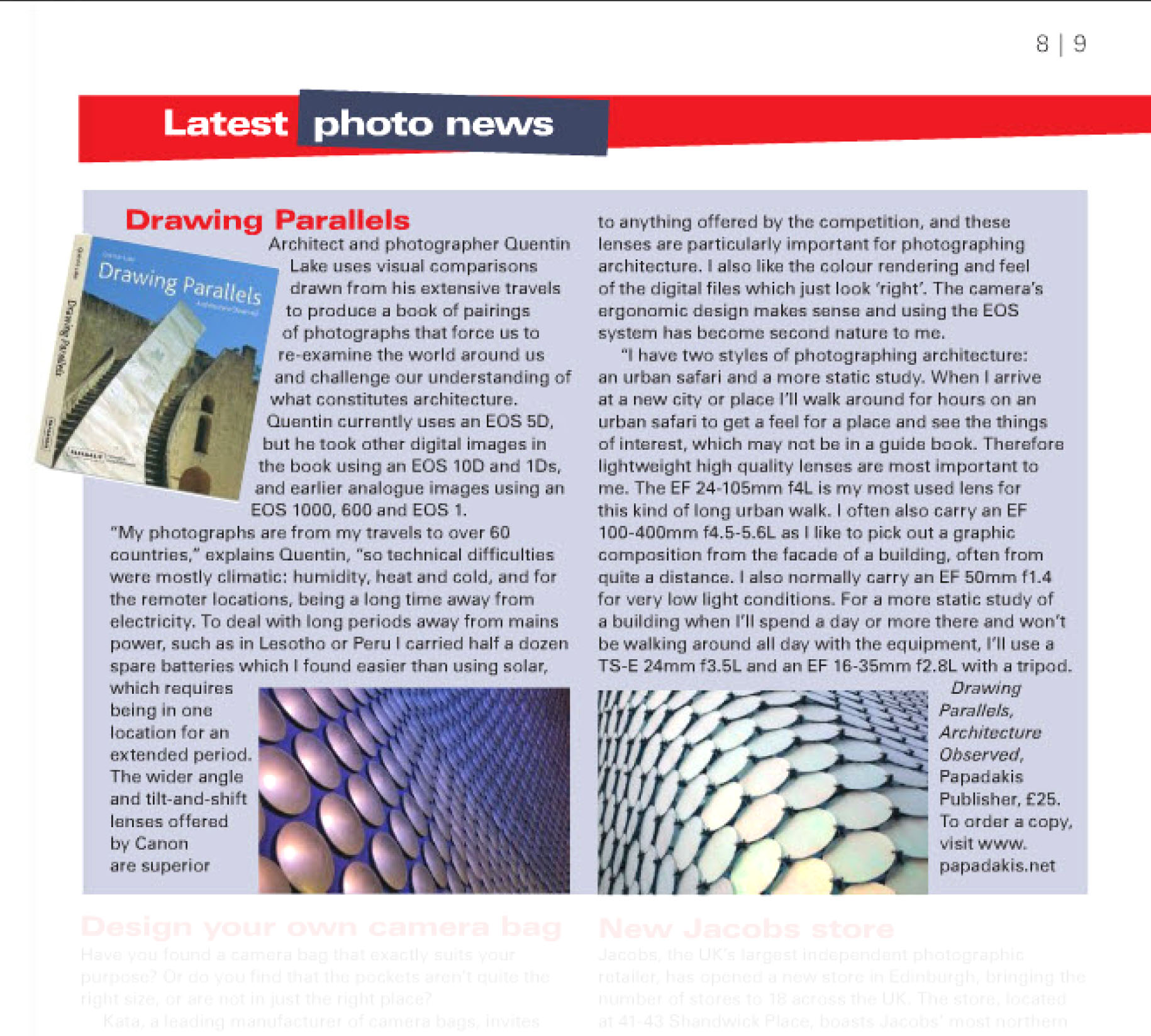
An article on the book Drawing Parallels: Architecture Observed in EOS Magazine January-March 2010 focusing on technique and equipment selection from the Canon EOS system best suited for Architectural Photography.

Drawing Parallels

Architect and photographer Quintin Lake uses visual comparisons drawn from his extensive travels to produce a book of pairings of photographs that force us to re-examine the world around us and challenge our understanding of what constitutes architecture. Quintin currently uses an EOS 5D but he took other digital images in the book using an EOS 10D and 1Ds, and earlier analogue images using an EOS 1000,600 and EOS 1.

‘My photographs are from my travels to over 60 countries,” explains Quintin. “so technical difficulties were mos!ly climatic: humidity, heat and cold, and for the remoter locations, being a long time away from electricity. To deal with long periods away from mains power, such as Lesotho or Peru I carried half a dozen spare batteries which I found easier than using solar, which requires being in one location for an extended period.

“The wider angle and tilt-and-shift lenses offered by Canon are superior to anything offered by the competition, and these lenses are particularly important for photographing architecture. I also like the colour rendering and feel of the digital file. which just look ‘right’. The camera’s ergonomic design makes sense and using the EOS system has become second nature to me.

“I have two styles of photographing architecture: an urban safari and a more static Study. When I arrive at a new city or place I’ll walk around for hours on an urban safari to get a feel for a place and see the things of interest, which may not be in a guide-book. Therefore lightweight high quality lenses are the most important to me. The EF 24·105mm f4L is my most used lens for this kind of long urban walk. I often also carry an EF 100-400m  f4.5-5.6L as I like to pick out a graphic composition from the facade of a building, often from quite a distance. I also normally carry an EF 50mm /1.4 for very low light conditions. For a more static study of a building when I’ll spend a day or more there and won’t be walking around all day with the equipment, I’ll use a TS-E 24mm f3.5L and an EF 16·35mm f2,8L with a tripod.

Drawing Parallels, Architecture observed, Papadakis Publisher, £25 Order a copy from Amazon here


Waves & Ripples I
Lawn, railings and cobbles on Radcliffe Square viewed from St Mary’s, the University Church. Underneath the square is storage space for the Bodleian Library, which contains around 600,000 volumes. Oxford, England, 2009


Waves & Ripples II
Detail of the concrete ribs which make up the façade of the Copan building, built by architect Oscar Niemeyer. São Paulo, Brazil, 2008

Buy prints and usage rights of these diptych images here which are featured in my architectural photography book, Drawing Parallels, Architecture Observed

Text & Photography © Quintin Lake, 2010


Shine through, shine out I
Detail of Lincoln Cathedral East window showing The Creation and Redemption of Man. Stained glass by Ward and Nixon, 1855. Lincoln, UK, 2004


Shine through, shine out II
Neon advertising lights above Nanjing East Road. Shanghai, China, 2007

Buy prints and usage rights of these diptych images here which are featured in my architectural photography book, Drawing Parallels, Architecture Observed

Text & Photography © Quintin Lake, 2010

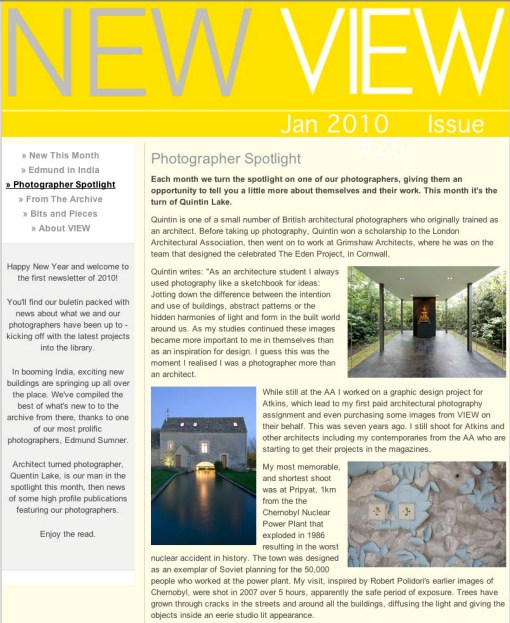
Each month Architectural Photo Library View Pictures turn the spotlight on one of their photographers, giving them an opportunity to tell you a little more about themselves and their work. My turn was in the View Jan 2010 issue #26