Archives for category: Documentary Photography

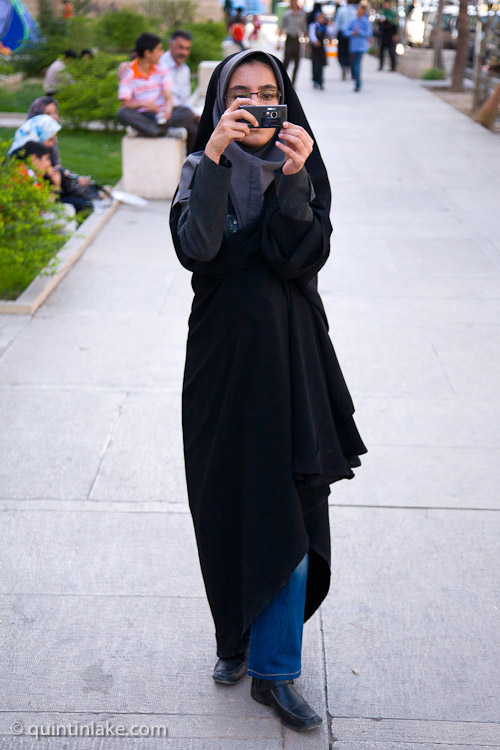
A young woman wearing hijab and jeans takes a photograph with a mobile (cell) phone, Shiraz, Iran

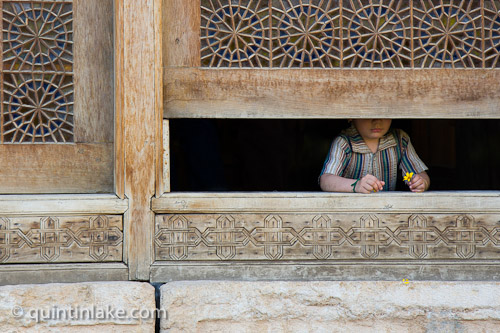
A girl at the window of The Arg (Citadel) of Karim Khan, Shiraz, Iran

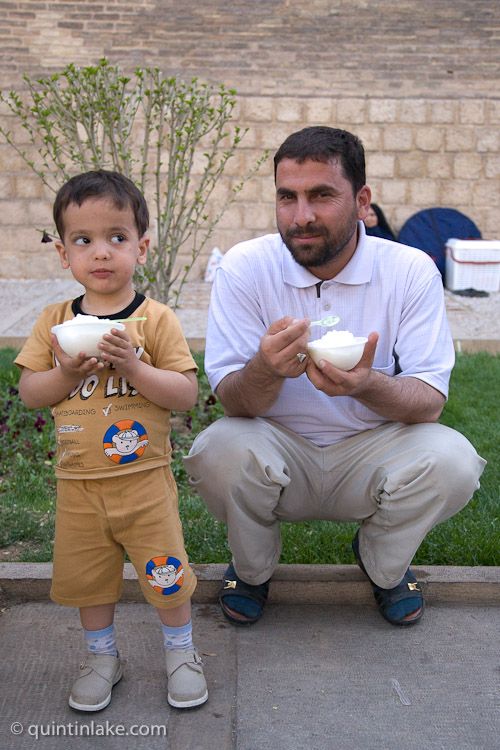
Iranian man and his son eat ice cream Shiraz, Iran

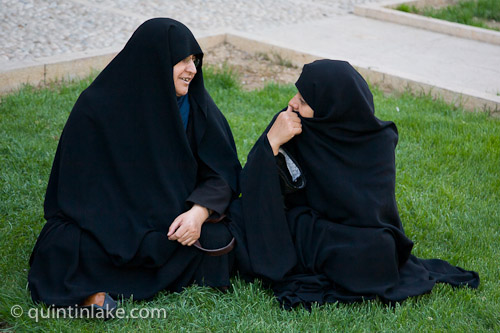
Two Iranian women sit talking while wearing a Chador in Shiraz, Iran

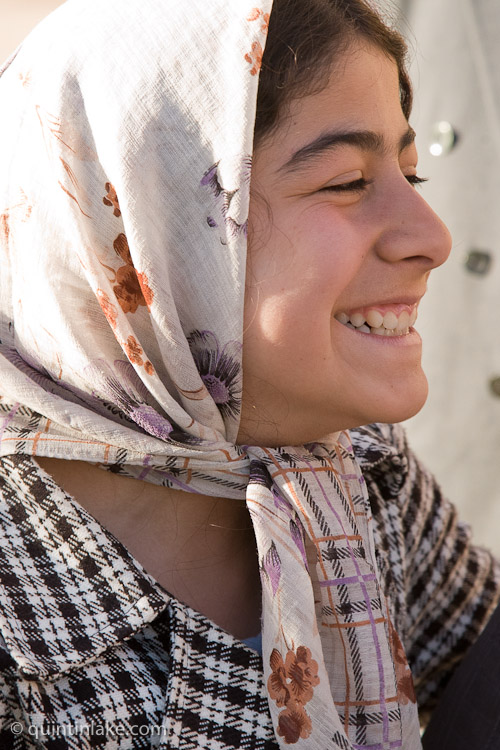
Iranian girl wearing headscarf Shiraz, Iran

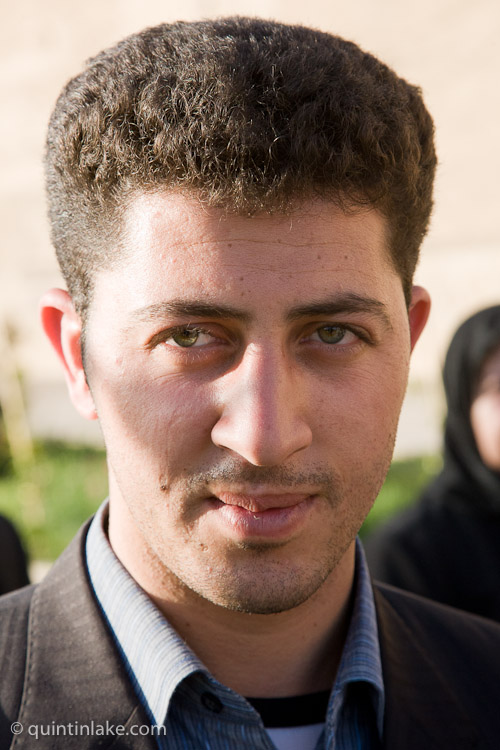
Portrait of a young Iranian man Shiraz, Iran

VIEW/BUY/LICENSE MORE IMAGES from the Faces of Iran Series

Photography © Quintin Lake, 2010

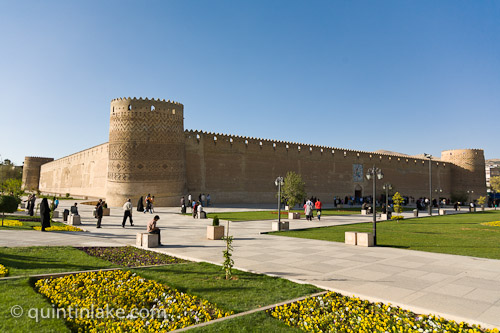
The Arg (Citadel) of Karim Khan, Shiraz, Iran

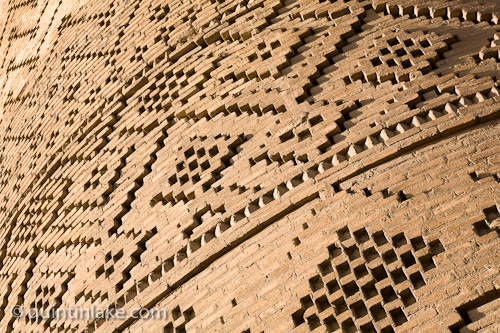
Detail of brickword of The Arg (Citadel) of Karim Khan, Shiraz, Iran

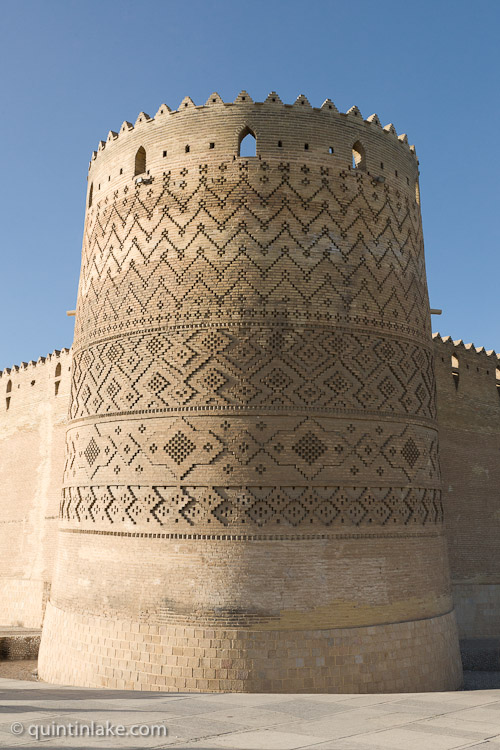
The southeastern tower of The Arg of Karim Khan having partially subsided into the underground sewerage system that served the Args bathhouse

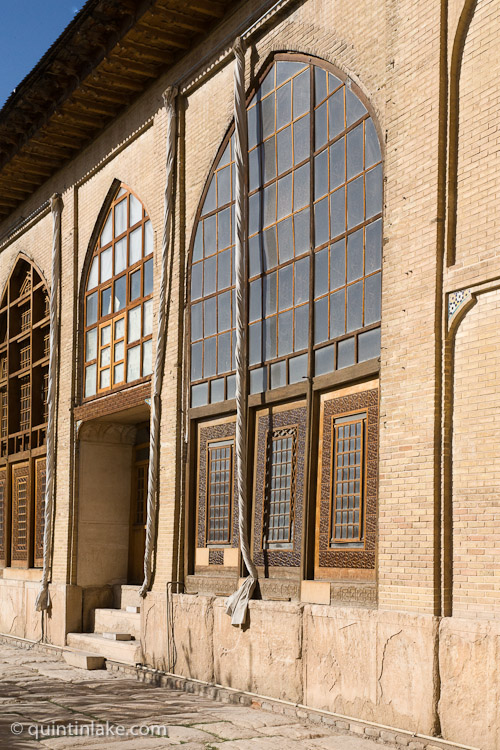
Windows of the Internal courtyard of The Arg (Citadel) of Karim Khan, Shiraz, Iran

Built in 1766 the Arg of Karim Khan is located at Shohada Square, Shiraz, Iran. The citadel of Karim Khan consists of four high walls connected by four 14 m round brick towers at a 90-degree angle. Each 12m wall is crenalized and is 3 metres thick at the base and 2.8 metres at the top. The design of the citadel combines military and residential architecture, for it was the home ofKarim Khan and the military centre of the dynasty.

VIEW/BUY/LICENSE MORE IMAGES of Iranian Architecture

Photography © Quintin Lake, 2010

Muslim schoolgirls wearing Tudong (headscarf or islam's hijab) returning home in the Kampung Ayer (Water village), Bandar Seri Begawan (BSB), Brunei

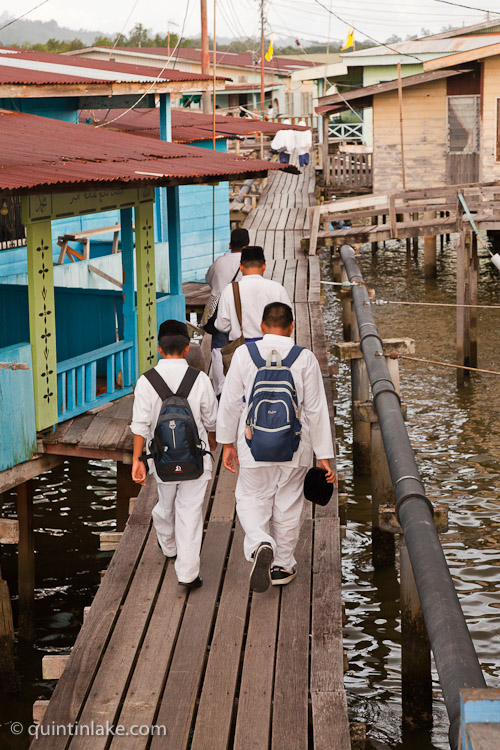
Muslim schoolboys wearing songkok (malay hats) returning home in the Kampung Ayer (Water village), Bandar Seri Begawan (BSB), Brunei

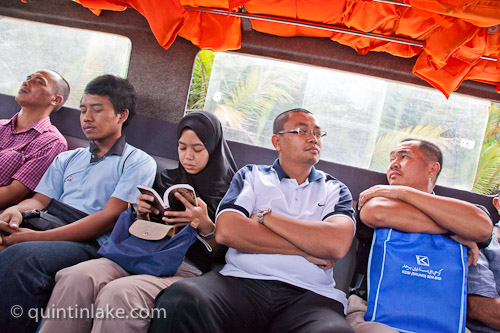
Sleeping, Reading, Watching. Bruneian Commuters take the water taxi through the mangrove swamps from Bangar to Bandar

VIEW/BUY/LICENSE MORE IMAGES of Brunei

Photography © Quintin Lake, 2010


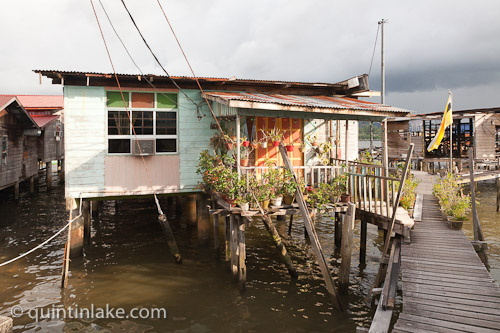
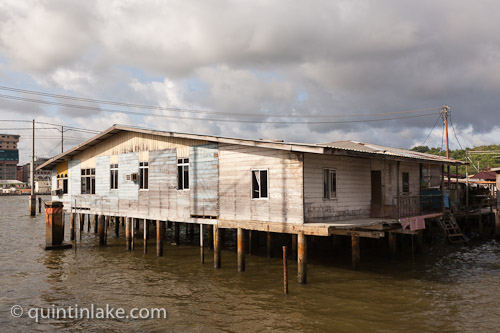
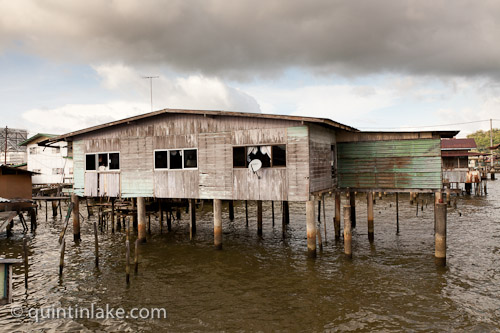
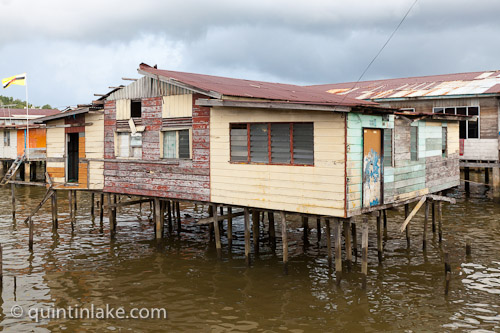
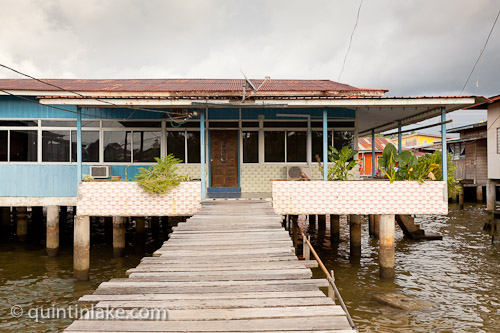
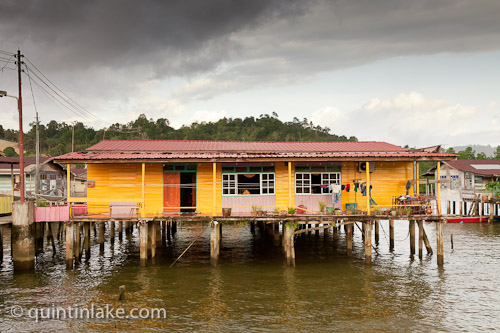
Kampong Ayer, or the Water Village (Malay: Kampong Ayer) is an area of Brunei’s capital city Bandar Seri Begawan that is situated in the middle of the Brunei River. 39,000 people live in the Water Village. This represents roughly ten percent of the nation’s total population. All of the Water Village buildings are constructed on stilts above the Brunei River.

The Water Village is really made up of small villages linked together by more than 29,140 meters of foot-bridges, consisting of over 4200 structures including homes, mosques, restaurants, shops, schools, and a hospital.

VIEW/BUY/LICENSE MORE IMAGES of Brunei

Photography © Quintin Lake, 2010

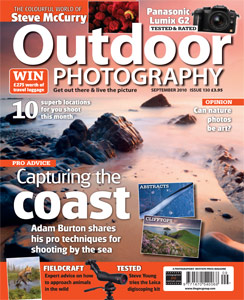
Outdoor Photography Magazine, September 2010
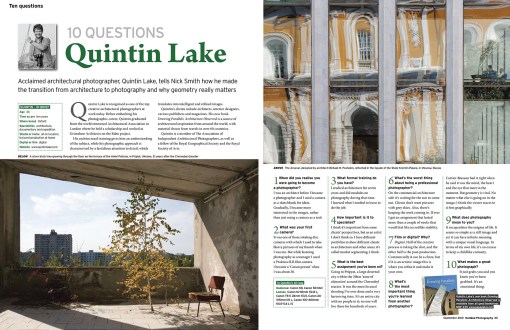
10 Questions interview with Quintin Lake in Outdoor Photography Magazine September 2010 Issue 130

Acclaimed architectural photographer, Quintin Lake, tells Nick Smith how he made the transition from architecture to photography and why geometry really matters

Quintin Lake is recognised as one of the top creative architectural photographers at work today. Before embarking his photographic career, Quintin graduated from the world renowned Architectural Association in London where he held a scholarship and worked at Grimshaw Architects on the Eden project. His architectural training gives him an understanding of the subject, while his photographic approach is characterised by a fastidious attention to detail, which translates into intelligent and refined images.

Quintin’s clients include architects, interior designers, various publishers and magazines. His new book Drawing Parallels: Architecture Observed is a source of architectural inspiration from around the world, with material drawn from travels in over 60 countries. Quintin is a member of The Association of Independent Architectural Photographers, as well as a fellow of the Royal Geographical Society and the Royal Society of Arts.

1 When did you realise you were going to become a photographer?
I was an architect before I became a photographer and I used a camera
as a sketchbook for ideas. Gradually, I became more interested in the images, rather than just using a camera as a tool.

2 What was your first camera?
It was one of those rotating disc cameras with which I used to take blurry pictures of my thumb when I was ten. But while learning photography as a teenager I used a Praktica SLR film camera. I became a ‘Canon person’ when I was about 20.

3 What formal training do you have?
I studied architecture for seven years and did modules on photography during that time. I learned what I needed to learn to do the job.

4 How important is it to specialise?
I think it’s important from some clients’ perspectives, but as an artist I don’t think so. I have different portfolios to show different clients in architecture and other areas; it’s called market segmenting, I think.

5 What is the best assignment you’ve been on?
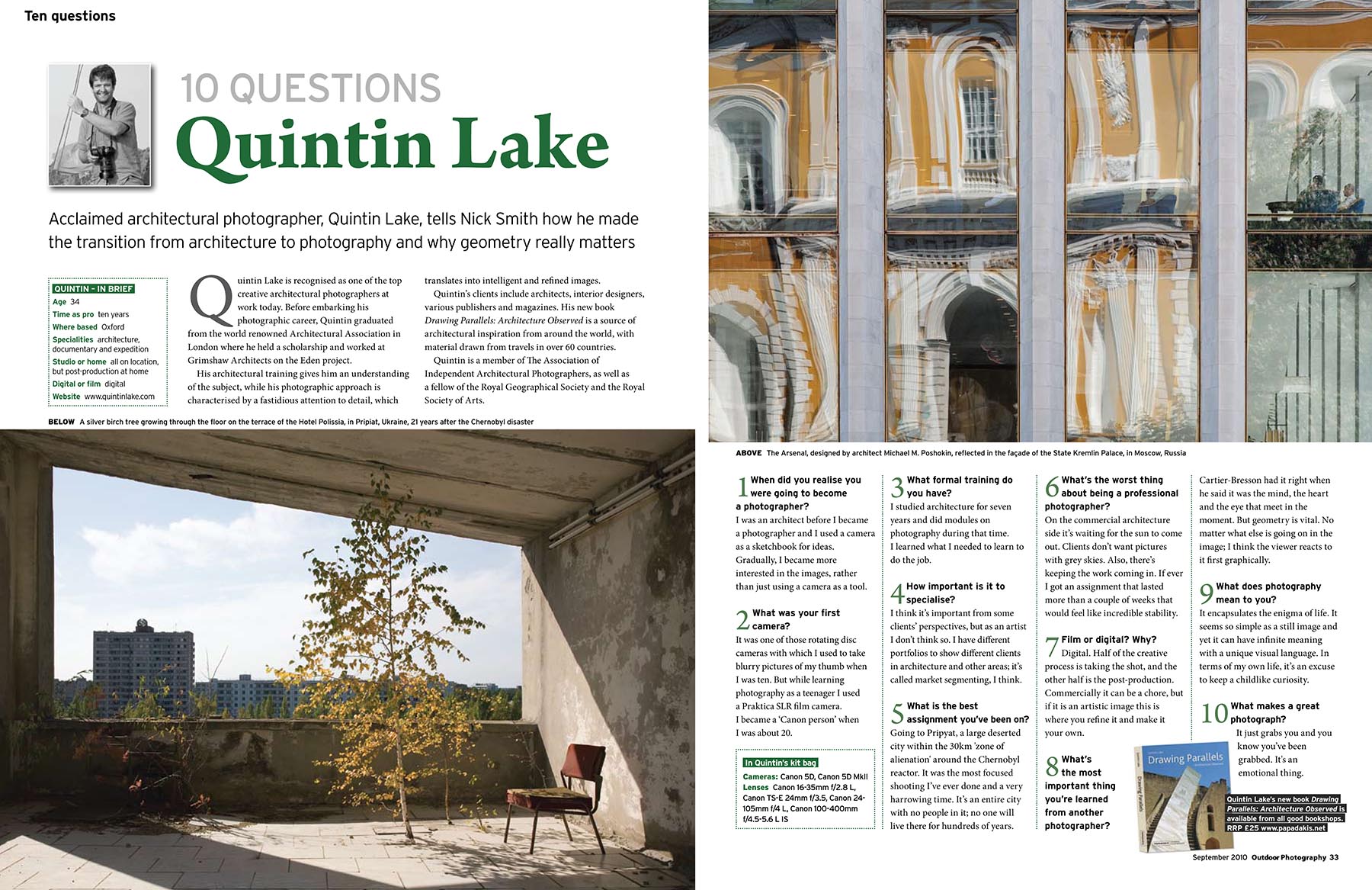
Going to Pripyat, a large deserted city within the 30km ‘zone of alienation’ around the Chernobyl reactor. It was the most focused shooting I’ve ever done and a very harrowing time. It’s an entire city with no people in it; no one will live there for hundreds of years.

6 What’s the worst thing about being a professional photographer?
On the commercial architecture side it’s waiting for the sun to come out. Clients don’t want pictures with grey skies. Also, there’s keeping the work coming in. If ever I got an assignment that lasted more than a couple of weeks that would feel like incredible stability.

7 Film or digital? Why?
Digital. Half of the creative process is taking the shot, and the other half is the post-production. Commercially it can be a chore, but if it is an artistic image this is where you refine it and make it your own.

8 What’s the most important thing you’re learned from another photographer?
Cartier-Bresson had it right when he said it was the mind, the heart and the eye that meet in the moment. But geometry is vital. No matter what else is going on in the image; I think the viewer reacts to it first graphically.

9 What does photography mean to you?
It encapsulates the enigma of life. It seems so simple as a still image and yet it can have infinite meaning with a unique visual language. In terms of my own life, it’s an excuse to keep a childlike curiosity.

10 What makes a great photograph?
It just grabs you and you know you’ve been grabbed. It’s an emotional thing.

Quintin – IN BRIEF
Age: 34
Time as pro: Ten years
Where based: Oxford
Specialities: Architecture, documentary and expedition
Studio or home: All on location, but post-production at home
Digital or film: Digital
Website: www.quintinlake.com

In Quintin’s kit bag
Cameras: Canon 5D, Canon 5D MkII
Lenses: Canon 16-35mm f/2.8 L, Canon TS-E 24mm f/3.5, Canon 24-105mm f/4 L, Canon 100-400mm f/4.5-5.6 L IS
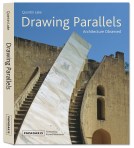
Quintin Lake’s new book Drawing Parallels: Architecture Observed is available from all good bookshops. RRP £25 www.papadakis.net
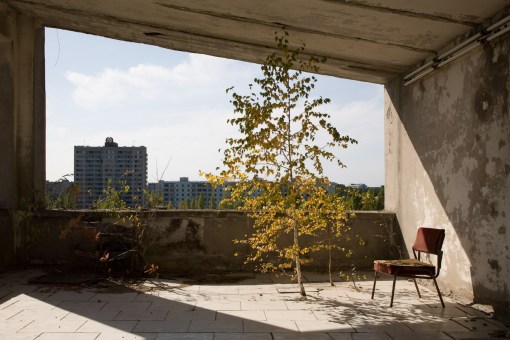
Hotel Polissia Terrace, Pripyat

Pripyat: 21 Years after Chernobyl. A silver birch tree grows through the floor on the terrace of Hotel Polissia. The hammer and sickle is visible atop the distant building. 50×33cm, Edition of 25 + 1 A/P

Foto8 Summershow 2010, Exhibition Catalogue Cover

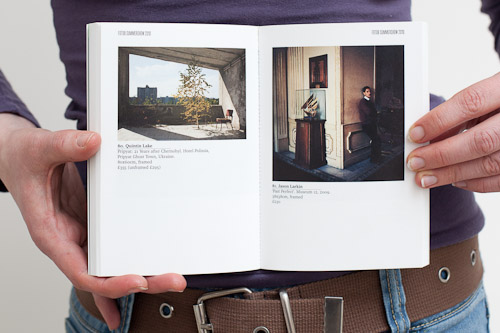
Foto8 Summershow 2010, Exhibition Catalogue

150 images were chosen for exhibition from Over 2500 individual images were received from photographers representing the six continents. From landscape and portraiture to documentary and fashion and everything in between, the Summershow celebrates the photographic talent of established names and aspiring photographers alike.

The Foto8 Summershow 2010 runs from 26 July to 4 September Buy Exhibition Catalogue

HOST GALLERY
1-5 Honduras Street
London EC1Y 0TH
UK

The image is for sale at £355 framed or £295 unframed in an edition of 25

VIEW MORE IMAGES from Pripyat (Pripiat) 21 years after Chernobyl

Foto8 Summershow 2010 at Host Gallery Honduras Street, London

Foto8 Summershow 2010 at Host Gallery Honduras Street, London

Foto8 Summershow 2010 at Host Gallery Honduras Street, London

Photography © Quintin Lake

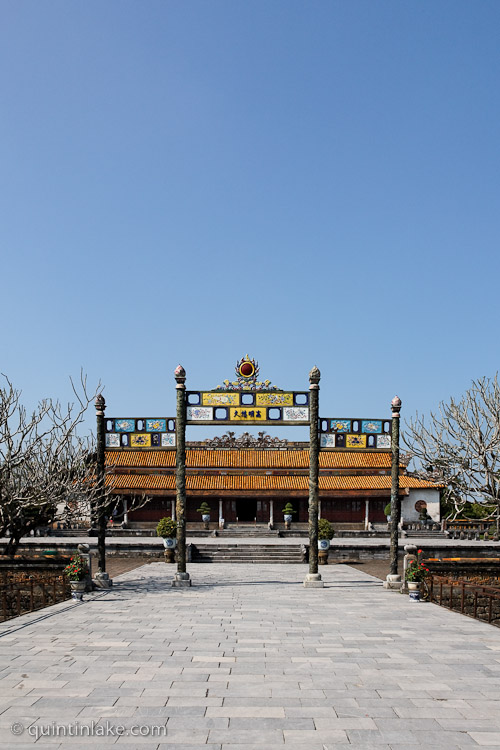
Ornate gateway on the Trung Dao (Central path) Bridge, carved with dragons slithering up and down them, leading to Thai Hoa Palace, Hue Citadel / Imperial City, Hue, Vietnam

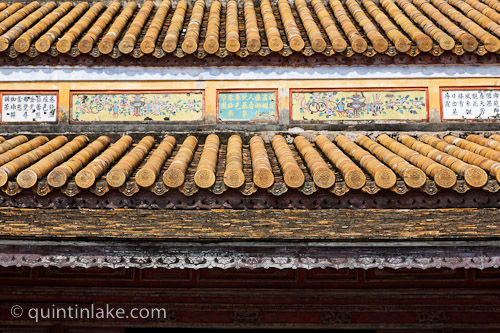
Yellow enamelled roof tiles of the Thai Hoa Palace, Hue Citadel / Imperial City, Hue, Vietnam

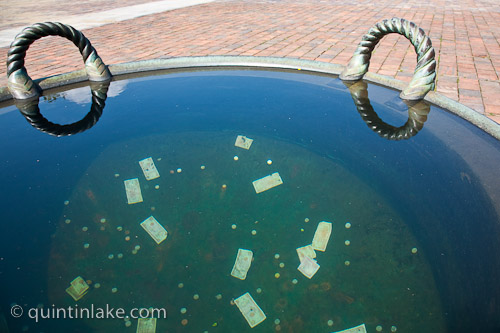
Vietnamese money left as an offering in the ancient bronze cauldron in the courtyard, Halls of the Mandarins

The Throne Palace, also known as the Palace of Supreme Harmony, was the nerve center for the Emperor’s court during its heyday. Built in 1805 by Emperor Gia Long, the Throne Palace was first used in 1806 for the emperor’s coronation. The building is 144 feet long, 100 feet wide, and 38 feet tall, supported by lacquered-red columns entwined with gilded dragons. Over the throne hangs a carved board bearing Chinese characters reading “Palace of Supreme Harmony”.

The insulation and acoustics of the Throne Palace are amazing for a building its age. The Throne Palace enjoyed cool temperatures in the summer, and warm temperatures during the winter season. And anyone standing at the exact center of the Palace – where the throne was normally placed – could hear sounds from any point in the palace. The Throne Palace has been diminished by time and the ravages of war: rains and floods common to Central Vietnam have damaged some parts of the palace, and serious damage was done by American bombs during the Vietnam War.

VIEW MORE IMAGES of Thai Hoa Palace, Imperial City, Hue

VIEW IMAGES of Hue Citadel & Imperial City, Hue, Vietnam

Photography © Quintin Lake, 2010

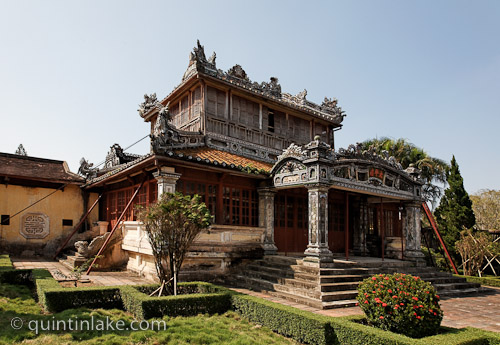
Royal Library or Emperor's Reading Room (Thai Binh Lau) decorated with ceramic mosaics in the Forbidden Purple City, Hue Citadel / Imperial City, Hue, Vietnam

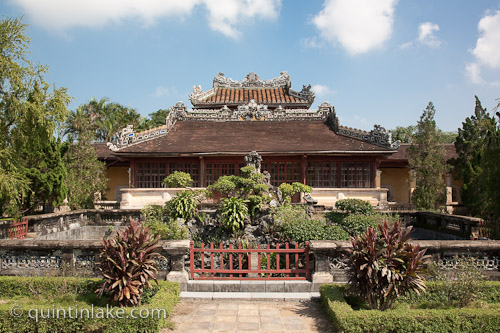
Royal Library or Emperor's Reading Room (Thai Binh Lau) in the Forbidden Purple City, Hue Citadel / Imperial City, Hue, Vietnam

The Royal Reading room (Thai Binh Lau) was the only building to survive the ravages of the 20th century. Both the French reoccupation and American bombs failed to bring it down.

Thai Binh Lau was first built by the Emperor Thieu Tri between 1841 and 1847. The Emperor Khai Dinh later restored the temple in 1921, and civil authorities continued restoration efforts in the early 1990s. In the old days, the Emperors used to retire to Thai Binh Lau to read books and write letters.

VIEW MORE IMAGES of the Emperor’s Reading Room, Imperial City, Hue

VIEW IMAGES of Hue Citadel & Imperial City, Hue, Vietnam

Photography © Quintin Lake, 2010