Archives for category: Travel Photography

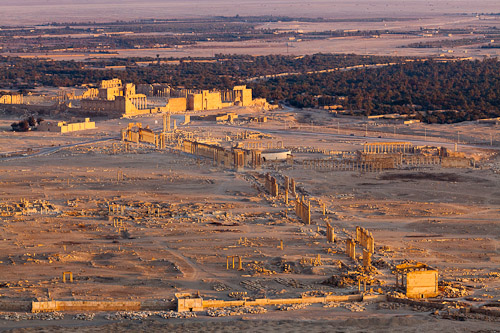
Overview of Palmyra at sunset showing the Great Colonnade running from the Funerary Temple in the foreground to the Temple of Bel at rear. Photo: Quintin Lake
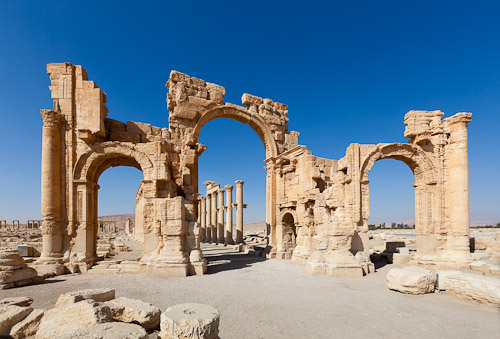
Monumental Arch, the entrance to the city, Palmyra, Syria. Photo: Quintin Lake
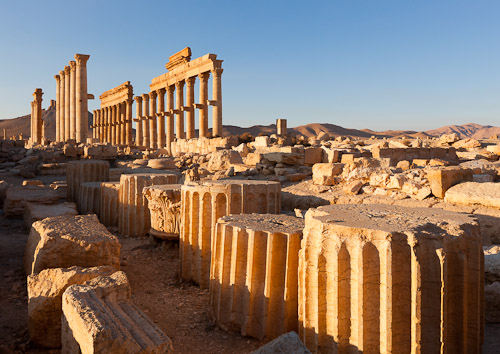
Great Colonnade, Palmyra. Photo: Quintin Lake
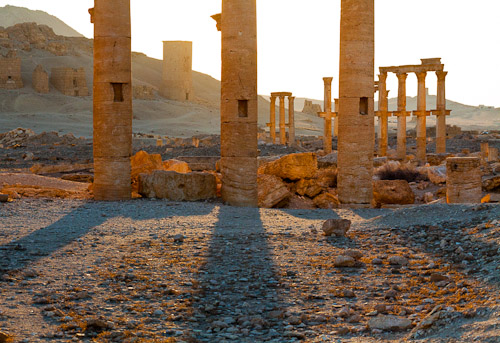
Columns of the Great Colonnade in front of the Valley of the Tombs, Palmyra. Photo: Quintin Lake
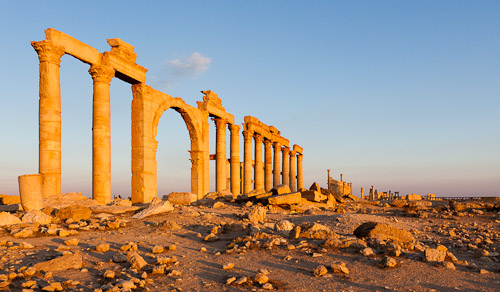
Arch of the Great Colonnade at sunset, Palmyra, Syria. Photo: Quintin Lake
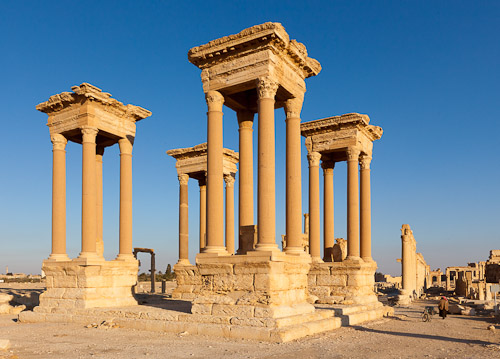
Tetrapylon, placed at a crossroads, Palmyra, Syria. Photo: Quintin Lake
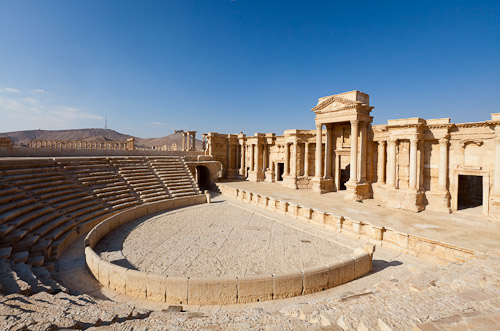
Theatre, Palmyra, Syria. Photo: Quintin Lake
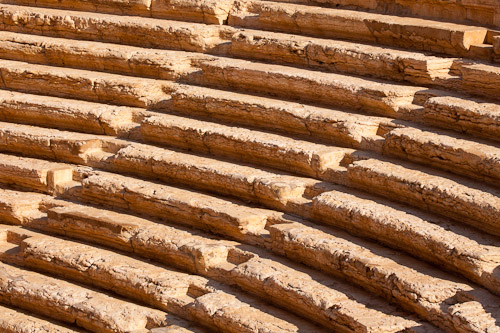
Stone seats and steps in the theatre at Palmyra, Syria. Photo: Quintin Lake
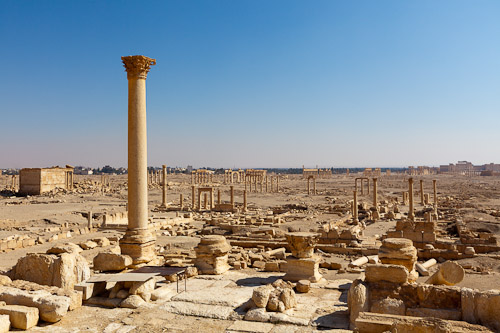
A commanding view of Palmyra seen from the Temple of the Standards in Diocletian's Camp (said to be the location of the Palace of Zenobia) Photo: Quintin Lake
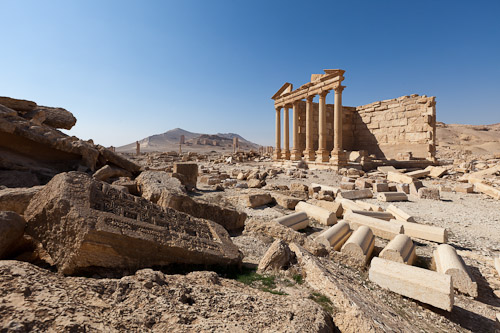
Funerary Temple at Diocletian's Camp. Palmyra, Syria. Photo: Quintin Lake
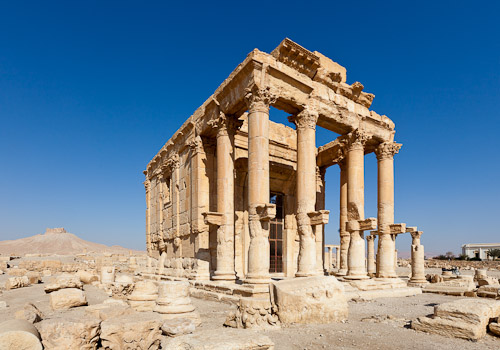
Temple of Baal Shamin. Palmyra. Photo: Quintin Lake
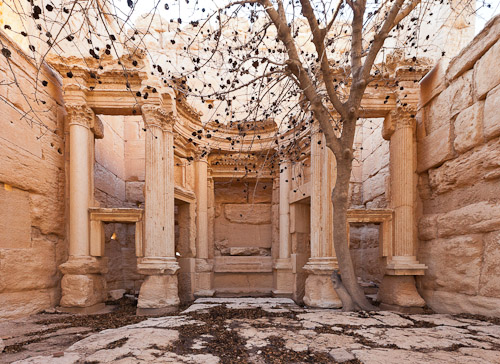
Temple of Baal Shamin Interior. Palmyra. Photo: Quintin Lake
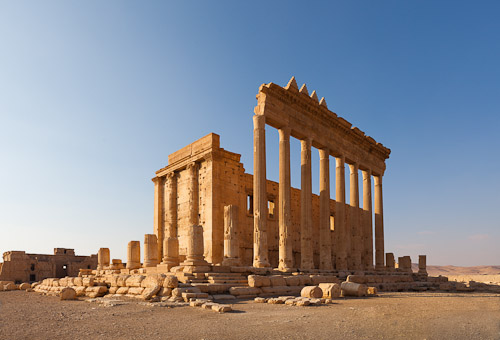
Cella or Inner Temple of the Temple of Bel, Palmyra. Photo: Quintin Lake
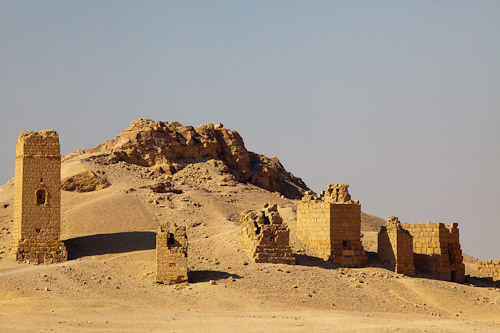
Towers of Yemliko, Valley of the Tombs, Palmyra, Syria. Photo: Quintin Lake
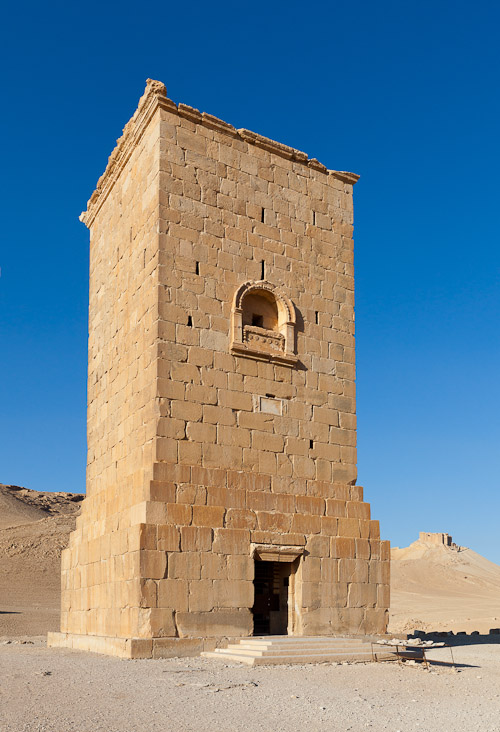
Tower of Elahbel, burial tower, Palmyra, Syria. Photo: Quintin Lake
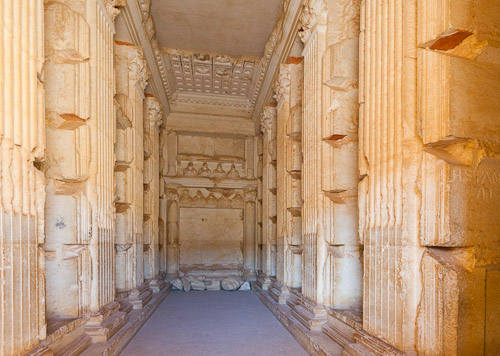
Burial Chambers inside Tower of Elahbel, burial tower, Palmyra. Photo: Quintin Lake
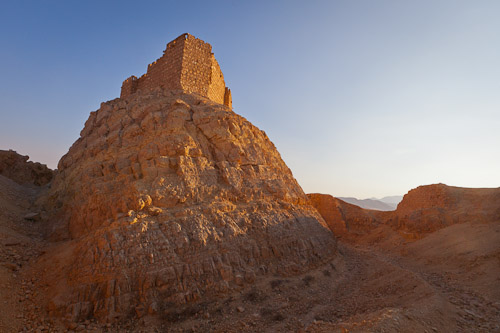
Muslim Castle, Palmyra (Qala'at ibn Maan or Fakhr-al-Din al-Maani Castle), built by the Mamluks in the 13th century. The castle overlooks Palmyra. Photo: Quintin Lake
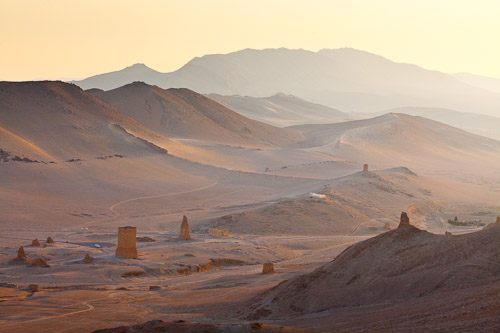
Valley of the Tombs at sunset, Palmyra. Photo: Quintin Lake
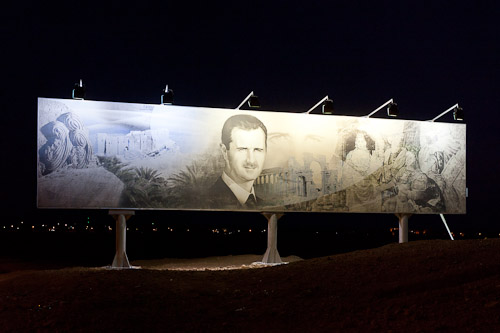
Roadside poster of Bashar al-Assad, president of Syria, February 2011 depicted with the ruins of Palmyra. Photo: Quintin Lake

An oasis in the Syrian desert, north-east of Damascus, Palmyra contains the monumental ruins of a great city that was one of the most important cultural centres of the ancient world. From the 1st to the 2nd century, the art and architecture of Palmyra, standing at the crossroads of several civilizations, married Graeco-Roman techniques with local traditions and Persian influences.

It had long been a vital caravan city for travellers crossing the Syrian desert and was known as the Bride of the Desert. The earliest documented reference to the city by its Semitic name Tadmor, Tadmur or Tudmur (which means “the town that repels” in Amorite and “the indomitable town” in Aramai is recorded in Babylonian tablets found in Mari.

Palmyra became the capital of the short-lived Palmyrene Empire (260–273) which was a splinter empire, that broke off of the Roman Empire during the the Third Century. It encompassed the Roman provinces of Syria Palaestina, Egypt and large parts of Asia Minor. The Palmyrene Empire was ruled by Queen Zenobia.

Click Here for 128 More images from this Photoshoot >>

All images available as fine art prints or for publication / licensing contact me for pricing and to arrange use. Photographs © Quintin Lake  

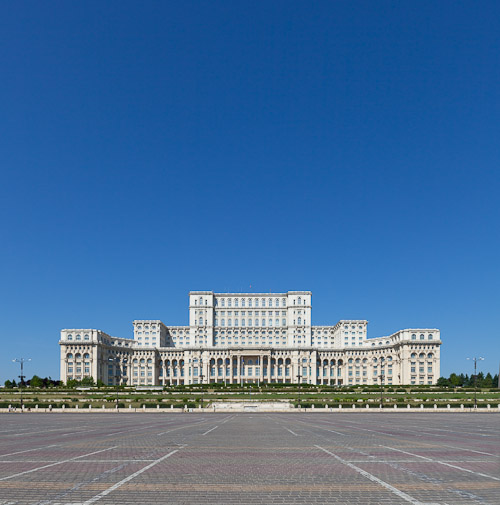
Sensitivity to context is neatly sidestepped by razing the 30,000 homes, churches & synagogues - an area of the old city the size of Venice - which once stood here. Front Facade. The Palace of the Parliament (Also known as Ceausescu'€™s Palace or House of The People) in Bucharest, Romania. Built 1983-1989. Architect: Anca Petrescu

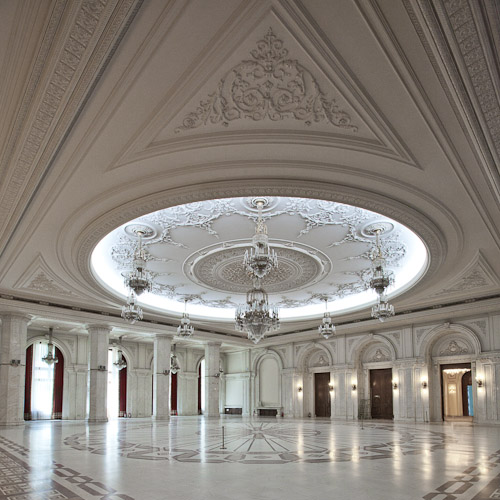
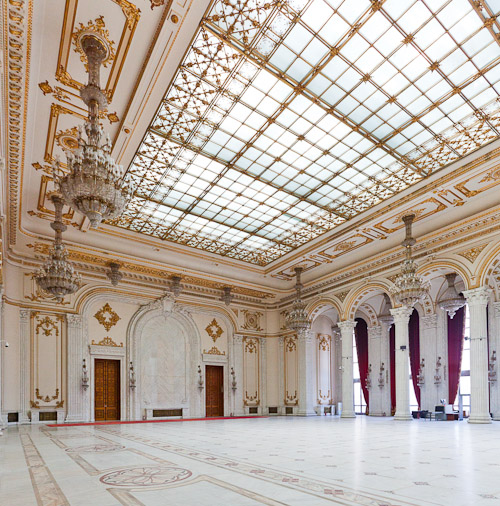
Unirii Hall, the largest of the 1,100 rooms in the entire building. Available for wedding hire should you wish to entertain 2,000 guests or enact a megalomaniac fantasy. Photo: Quintin Lake

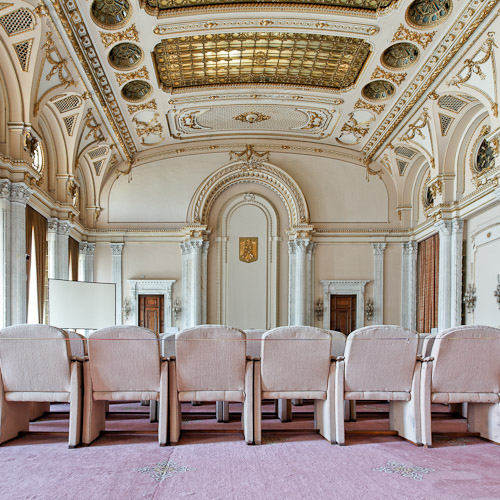
I. I. C. Bratianu Hall. The building is so out of scale to the human body that it feels uncomfortable to walk about - as if one has been shrunk. Photo: Quintin Lake

This room was intended as Nicolae Ceauşescu's office with direct access to the balcony, now Al. I. Cuza Hall. The blank space at the end of the room was originally intended for a painting of the modest fellow - perfectly positioned to be admired by his number one fan. Photo: Quintin Lake

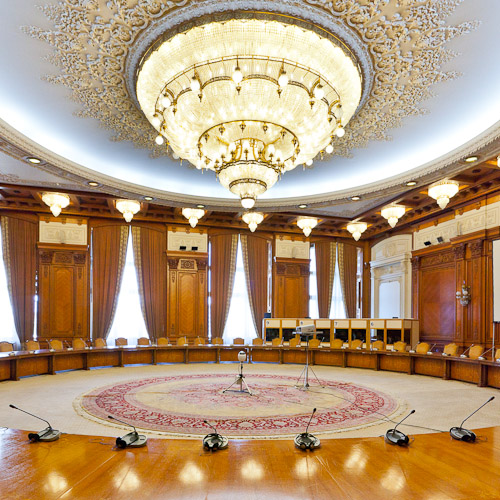
Currently entitled the Human Rights Hall, it seems droll that the round table - symbol of democracy should be housed in such totalitarian architecture. The room hosted the 20th Nato summit and other EU conferences. Photo: Quintin Lake

The Palace of the Parliament in Bucharest, Romania designed by architect Anca Petrescu for Nicolae Ceauşescu is today a multi-purpose building that contains both chambers of the Romanian Parliament. According to the Guinness Book of World Records, the Palace is the world’s largest civilian administrative building, most expensive administrative building, and the heaviest building.

Entire neighborhoods were destroyed to make way for the building, equating to an area the size of Venice. Among that which has been lost are churches, synagogues, valuable historic constructions and 40.000 people were forced to move. Most of them, to newly constructed communist blocks of flats of a poor quality in the city.

At the time of Nicolae Ceauşescu’s 1989 overthrow and execution, the building structure and design were complete. With supreme irony he never had the chance to occupy the monster he created. Subsequently, many of the furnishings were never installed (mostly evident because of the many large, empty spaces throughout the palace), while the last three basement levels and a large clock tower (that would display the official Romanian time) were never finished. During the regime change, the new leaders of Romania referred to the building as the House of Ceauşescu, to highlight the excessive luxury in which Ceauşescu would have lived, in stark contrast to the squalor and poverty endured by many people living in the surrounding neighbourhoods.

Everything about the building is supersized: Petrescu led a team of 700 architects to build the project. In the ’80s 20,000 men worked in shifts for 24 hours a day. The building contains 1,100 rooms. Today the building has a symbolic ambiguity, after so many Romanian people laboured over it’s construction it is hardly surprising it was not demolished. Like it or not, the portentous building over which so much was lost and so many suffered has become the architectural symbol of Bucharest.

Click Here for More from this Photoshoot >>

All images available as fine art prints or for publication / licensing contact me for pricing and to arrange use. Photographs © Quintin Lake  
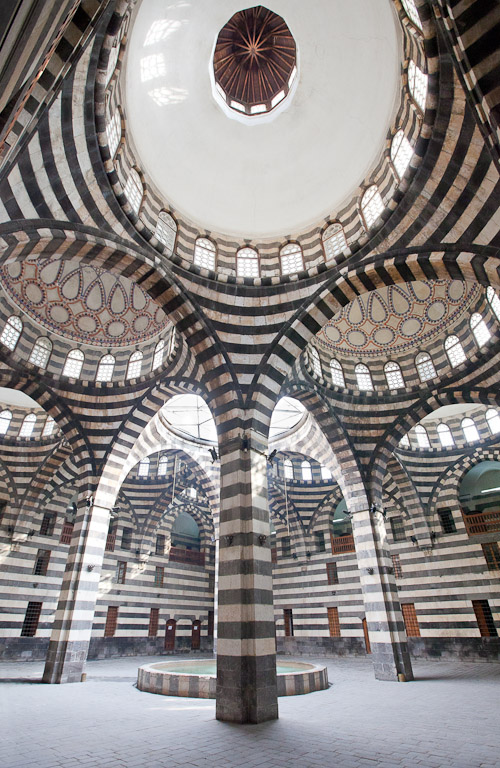
Courtyard of Khan As'ad Pasha Damascus, Syria. Photo: Quintin Lake

The khan or Caravanserai of As’ad Pasha al-Azem is situated along Suq al-Buzuriyyah in the old city of Damascus. It was built between 1751 and 1752 by the city governor As’ad Pasha al-Azem. It is one the most prominent khans of the old city, and covers an area of 2500 square meters.

The building follows a typical khan layout with two floors giving onto a central courtyard. The Khan is entered from Suq al-Buzuriyyah, through a monumental gateway lavishly decorated with stone carvings and roofed by a muqarnas semi-dome. The entrance leads to a square courtyard with shops on the ground floor, used for commerce and storage. The second floor, accessible by a staircase located to the right of the main entrance was used mainly for loadging, and has eighty rooms arranged along a gallery facing the courtyard.

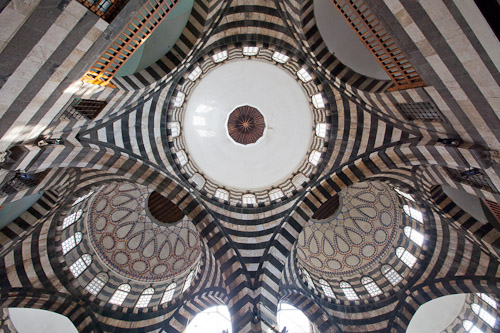
Looking up to the domes of Khan As'ad, Damascus, Syria. Photo: Quintin Lake

The space of the courtyard is divided into nine equal square modules, where each module is covered with a dome raised on a drum pierced with twenty windows. The domes are supported by pendentives that transfer the load onto four piers and to the courtyard walls. An octagonal marble fountain occupies the center of the courtyard below the central dome. Each of the four courtyard walls has three doorways on the ground floor, flanked by two rectangular windows. The symmetry is maintained on the second floor where each gallery façade has three archways flanked by two smaller ones. The khan is built of alternating courses of basalt and limestone.

Three of the courtyard domes were destroyed in an earthquake seven years after the khan’s completion. The openings were covered with wooden planks until 1990 when the khan was restored and the domes rebuilt. No longer used for commerce at the beginning of the twentieth century, the khan was used for manufacture and storage until it was restored in 1990 winning the Aga Khan Award for Architecture.

Click Here for More from this Photoshoot >>

All images available as fine art prints or for publication / licensing contact me for pricing and to arrange use. Photographs © Quintin Lake  
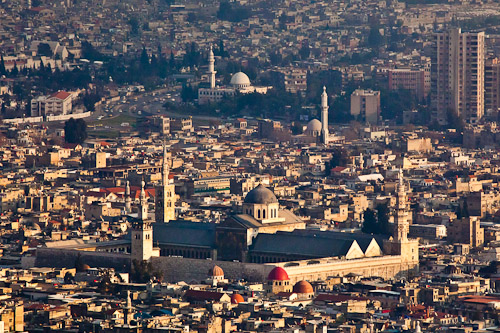
Umayyad Mosque, Damascus viewed from Mount Qassiun

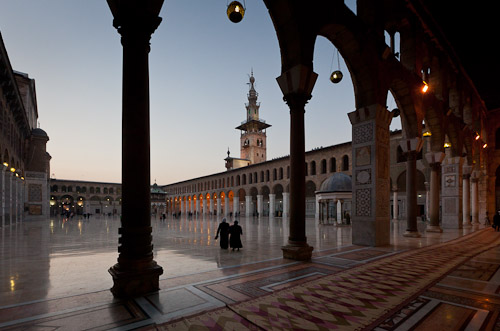
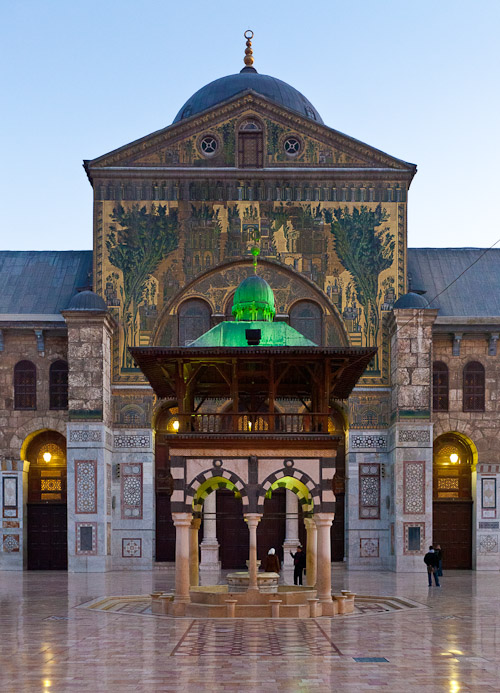
Courtyard and The Minaret of the Bride at dusk after prayers, Umayyad Mosque

Ablution fountain in front of the main prayer hall decorated with mosaics said to depict paradise.

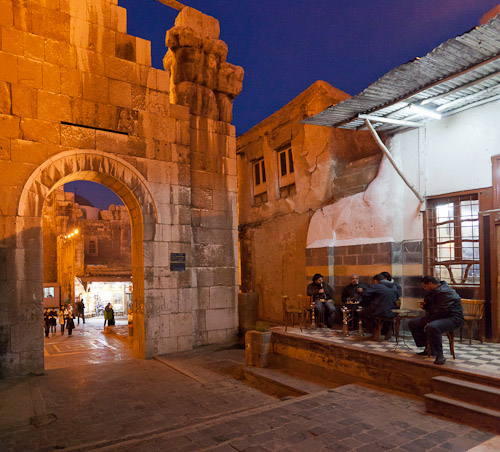
Roman arch east of Umayyad Mosque and sheesha cafe, Damascus, Syria

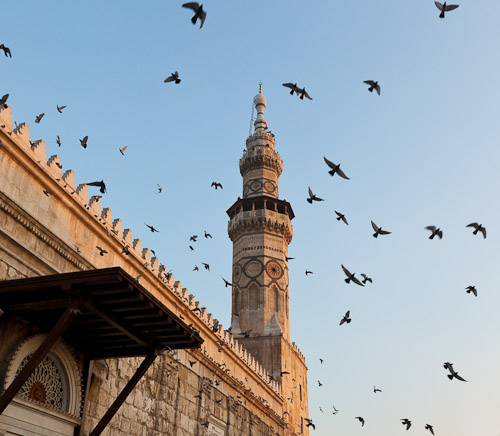
Birds fly by the Minaret of Qaitbayt, Umayyad Mosque, Damascus

The Umayyad Mosque also known as the Great Mosque of Damascus is the first monumental work of architecture in Islamic history; the building served as a central gathering point after Mecca to consolidate the Muslims in their faith and conquest to rule the surrounding territories under the Umayyad Caliphate. It is considered the fourth-holiest place in Islam.

Click Here for More from this Photoshoot >>

Photographs © Quintin Lake
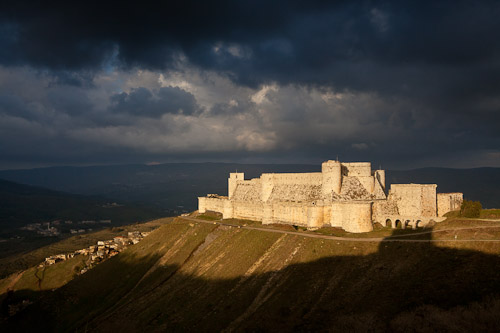
Krak des Chevaliers Castle from the south West, Homs Gap, Syria. Photo: Quintin Lake

“The Krak of the Knights [Krak des Chevaliers], described by T.E. Lawrence as ‘the best preserved and most wholly admirable castle in the world,’ is the easternmost of a chain of five castles sited so as to secure the Homs Gap…The castle stands upon a southern spur of the Gebel Alawi, on the site of an earlier Islamic ‘Castle of the Kurds.’ In 1142 it was given by Raymond, Count of Tripoli, into the care of the Knights Hospitallers, and it was they who, during the ensuing fifty years, remodelled and developed it as the most distinguished work of military architecture of its time.”Sir Banister Fletcher. A History of Architecture

Click Here for More from this Photoshoot >>

Photographs © Quintin Lake
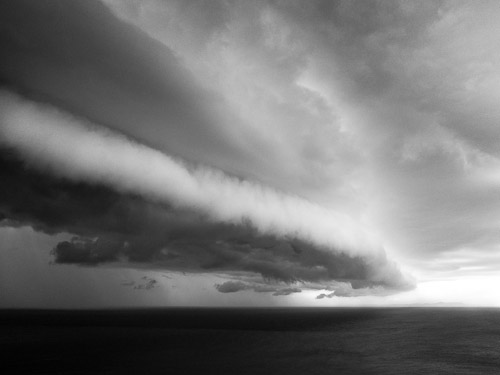
Coast to Coast I. Storm clouds over the Irish Sea.

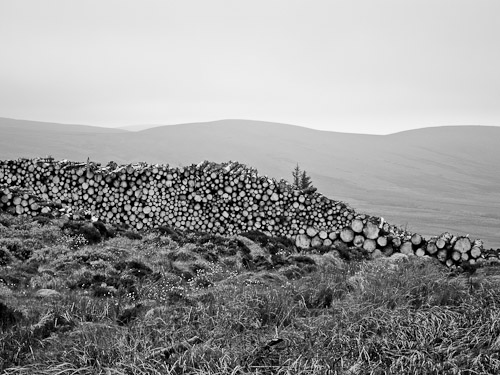
Coast to Coast IV. Forestry in the Lake District.

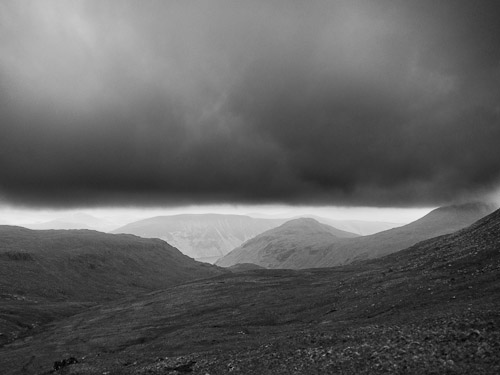
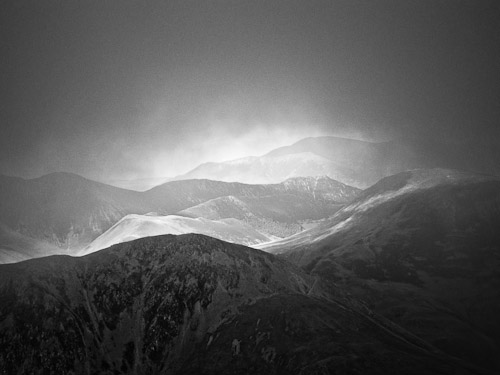
Coast to Coast V. Low cloud in the Lake District.

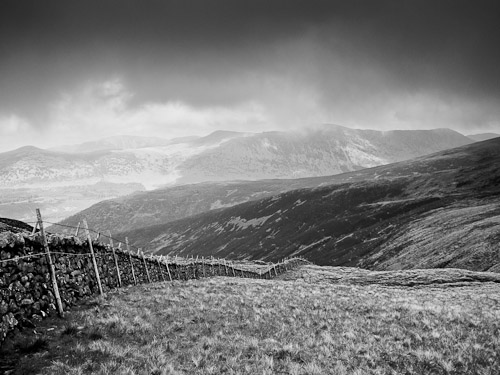
Coast to Coast VI. Stone wall in the Lake District.

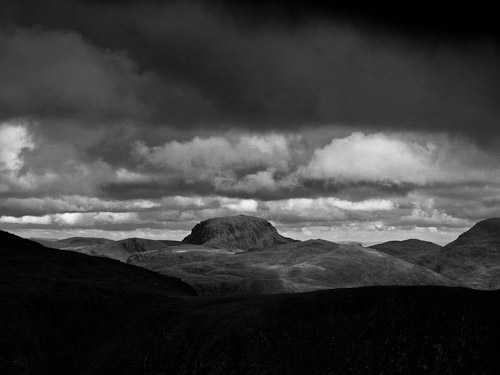
Coast to Coast VII. Great Gable in the Lake District.

Coast to Coast VIII. Parting clouds in the Lake District.

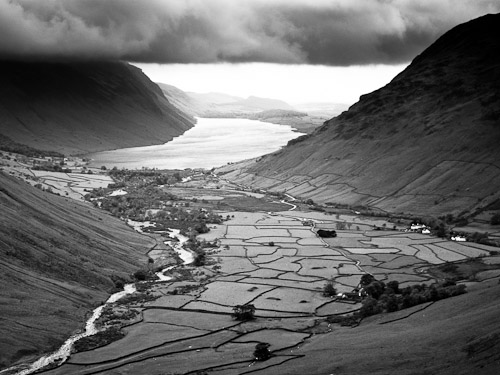
Coast to Coast IX. Wast Water in the Lake District.

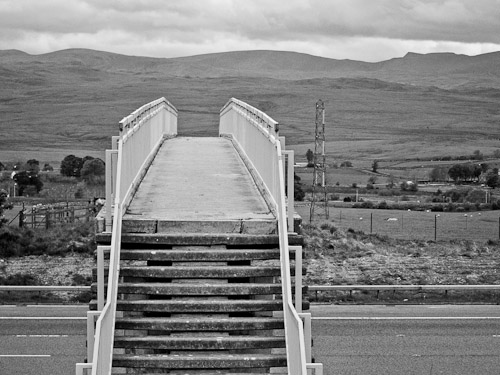
Coast to Coast XI. Footbridge over the M6.

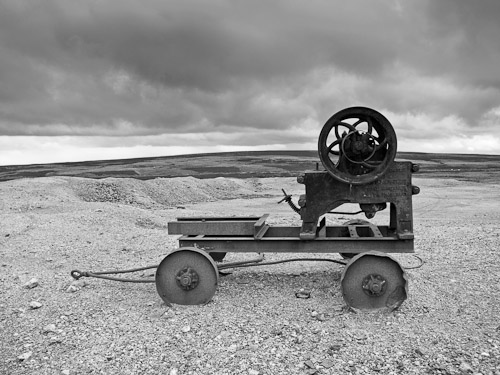
Coast to Coast XII. Stone Breaker at Bunton Hush, Yorkshire Dales.

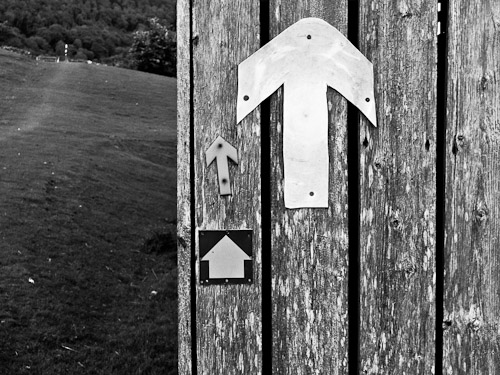
Coast to Coast XVI. Footpath arrows near Richmond.

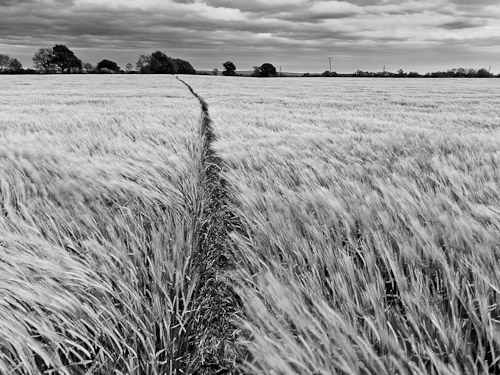
Coast to Coast XIX. Barley field in the Vale of Mowbray.

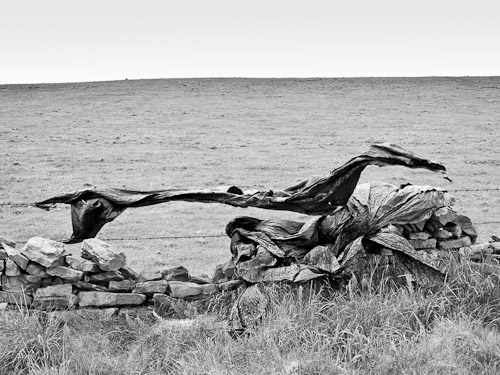
Coast to Coast XXIII. Rubbish bag near Robin Hood's Bay

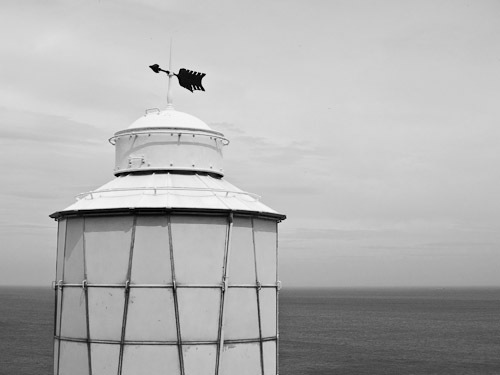
Coast to Coast XXIV. Lighthouse overlooks the North Sea.

This series of twenty four photographs were made during a 20 day 340km solo backpacking trip in May 2011 from the Irish Sea at St Bees to the North Sea at Whitby. My route was based loosely on Wainwright’s classic walk joining the Lake District National Park, the Yorkshire Dales with and the North York Moors National Park. The main additions I made to his route included walking over and camping amongst the summits in the Lakes rather than following the valleys, which added 4 days travel time to the official route, and ending the walk at Whitby, as it seemed a more satisfying end to me than Robins Hood Bay. Of the 20 days travelling I had a lot of storms as you can see in the photos. These became especially frisky during the Yorkshire Dales section – which resulted in the scarcity of photos during this section. I normally think poor weather leads to more interesting photos but here the limit was reached! I hope these photos show an intimate portrayal of the drama and allure of the English Landscape an environment that, for me at least, manages to never look familiar.

All prints 42x58cm, Giclee Print on Cotton Rag, edition of 25 +1 A/P

For queries about pricing or to purchase work please either contact me of order online at the link below.

Click Here for More from this Series >>

Photographs © Quintin Lake 2011
Nick Barnett preparing my Arctic Landscape alu float frame prints for delivery at Bayeux, London

Reverse of the frame showing the aluminium channel that spaces the print off the wall

More info on these frames and photos of how they look on the wall. More info on the Arctic Landscape series

Concert Hall, from Pripyat: 21 Year after Chernobyl Series © Quintin Lake
I’m delighted to be participating in this exhibition & event, here’s the blurb:

UNINTENTION explores the ways in which creativity can manipulate and reinvent the purpose behind ideas, objects, web-sharing, personal and world events. Works include a satirical rehash of a presidential television broadcast by filmmaker Chris Morris; as well as an immersive display of projected stills from the collection Pripyat: 21 Years After Chernobyl by architectural photographer Quintin Lake, documenting both the initial aftermath of the nuclear disaster and the change in its environment since.

Along with the show as a whole, the works use existing material by changing their original intentions; a leaders broadcast becomes a skilled re-edit ridden with satire; the aftermath of a nuclear disaster, via its documentation, inevitably becomes a collection of photographic art. Other new and existing works in the show will include; the focus of normal practical objects being turned into pieces of visual art; a short video art piece encompassing a well known graffiti love-note from the walls of the infamous Park Hill flats in Sheffield; and various pieces looking at Internet Memes and considering their place in the art world.

UNINTENTION  @ WCS | Wolstenholme Creative Space | 11 Wolstenholme Square | Liverpool | L1 4JJ

Preview | 28 September 2011, 6-9pm

Exhibition | 29 September – 2 October 2011, 12-4pm

Admission FREE

UNINTENTION Closing Night Event | 2 October 2011

7pm | The Light Bulb Conspiracy  Admission FREE

Film collective, Tea and Two Slice, present The Light Bulb Conspiracy documentary screening + free tea and toast!

8:30pm | Ruins Alone + live performances  Admission £4

In partnership with WCS, I Am Your Barber, Postmusic and Samzidat present live performances from:

RUINS ALONE (skin graft) Legendary Japanese drum god, showcasingp;the works of Ruins, Koenjihyakkei in his mind melting solo performance

STIG NOISE DIY mariachi trumpet fuelled noise nonsense since 1998

BARBEROS Duel drumming, synth wielding, spandex sporting electro doom jazz noise hollering perverts

The live performances will also include live visuals by video artist Sam Wiehl, manipulating Internet Memes once again reinventing their intention and allowing the meme to evolve within the art gallery setting.

Further Info:

www.wolstenholmecreativespace.com/unintention

http://www.facebook.com/event.php?eid=273447039348731