Archives for posts with tag: Architecture

A photographic assignment by Pembroke College, Oxford University to document the intricate renovation of their Hall, Kitchen and Forte Room in the heart of Oxford. The photographs are produced for Pembroke College’s archival and marketing purposes and a full photographic audit was made of the existing historic buildings at the start of construction. The full archive of images can be seen here which is updated monthly. The architects are Berman Guedes Stretton and the contractors are Benfield & Loxley.

March 2010: Original Pembroke College Kitchen during gutting
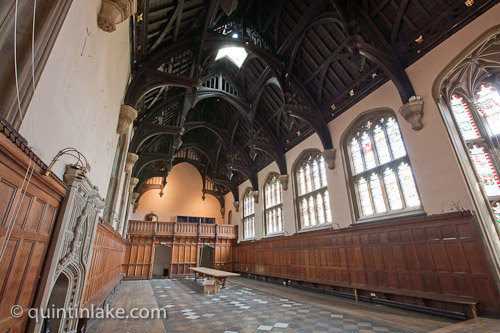
March 2010: Pembroke College Hall before Refurbishment

April 2010: Historic door openings revealed

May 2010: Foundation for one of the new lifts

May 2010: New load-bearing steelwork in old kitchen
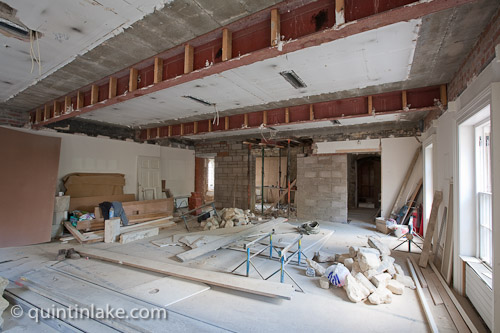
May 2010: New block walls and gutting of Forte room
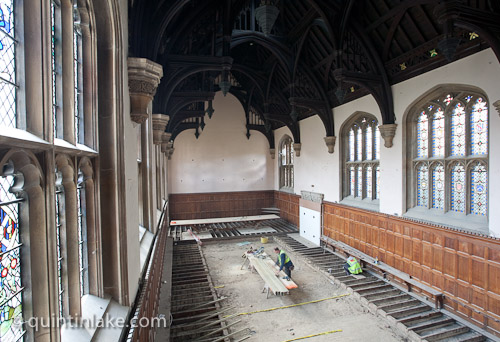
May 2010: Installing new joists in dining hall

June 2010: Installation of underfloor heating in the dining hall
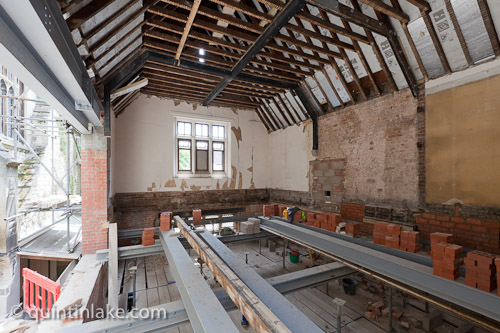
June 2010: New opening floor and restored timber-work in the roof of new kitchen

June 2010: Repairing brickwork in the new kitchen
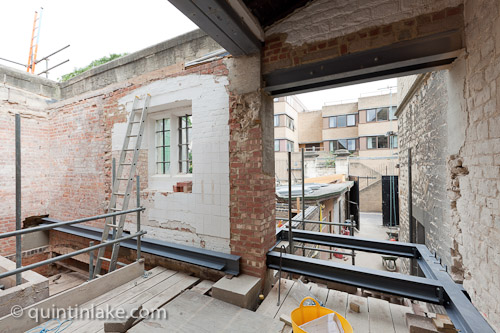
July 2010: New steelwork around new lift shaft

July 2010: New floors in kitchen

July 2010: Uncovering of historic fireplace and groundwork in old kitchen
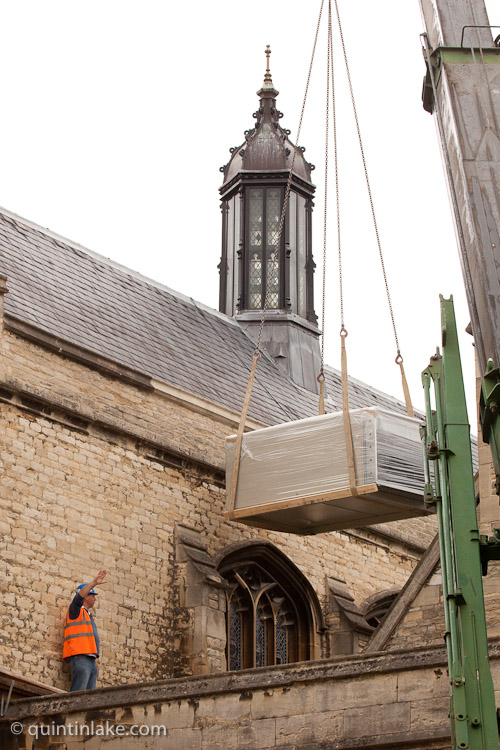
July 2010: Craning in of ventilation units
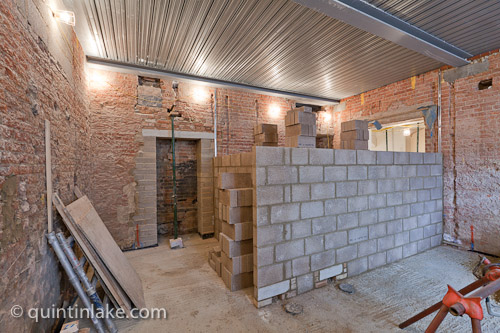
August 2010: New blockwork in old kitchen

August 2010: New blockwork in old cellars

August 2010: Installing props in dining hall wall opening
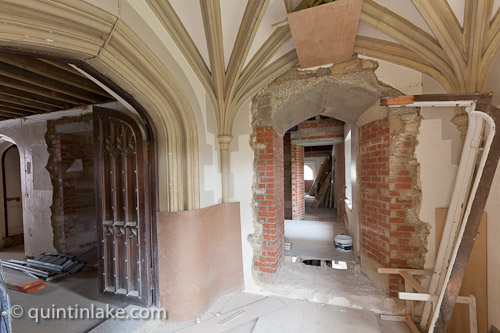
August 2010: New entry next to dining hall entrance
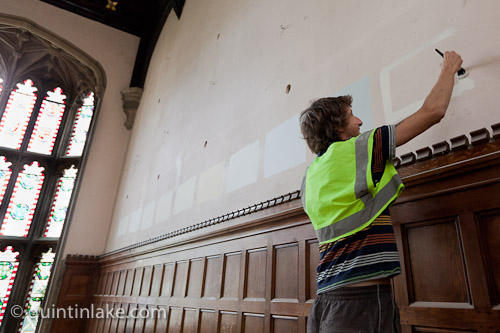
August 2010: Painting colour swatch samples in the dining room
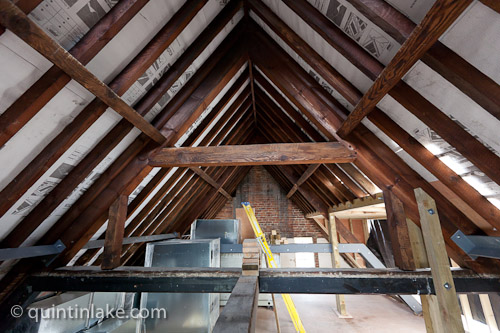
August 2010: Restored roof cavity above new kitchen
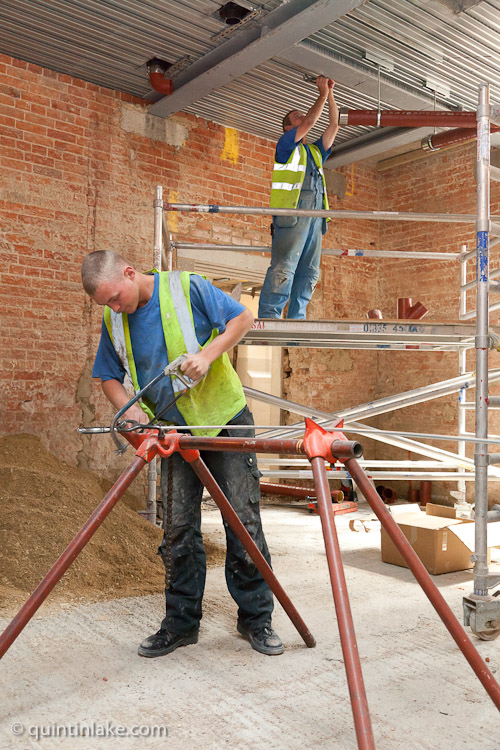
August 2010: Installing new wastewater pipes
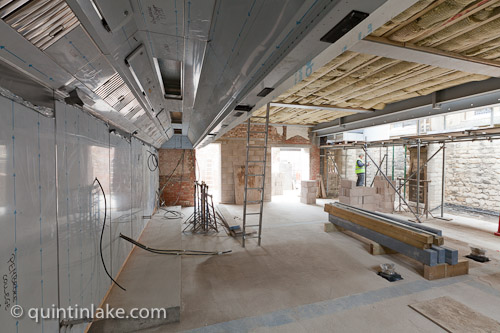
August 2010: Extraction units take shape in new kitchen

For the most up to date photos of the project see the links below:

View all posts of the Pembroke College Bridging Centuries Project >>

VIEW MORE / BUY PRINTS / LICENSE IMAGES from Pembroke College Hall, Bar and Forte Room Redevelopment here >>

Photography © Quintin Lake, 2010
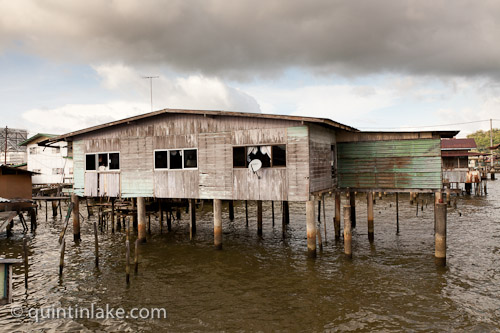


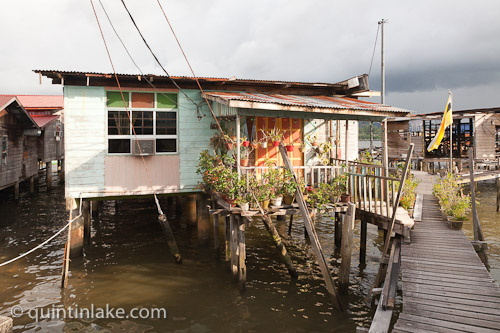
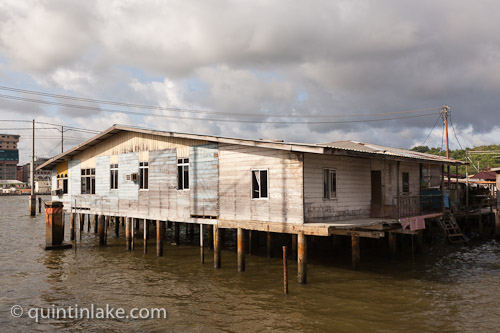
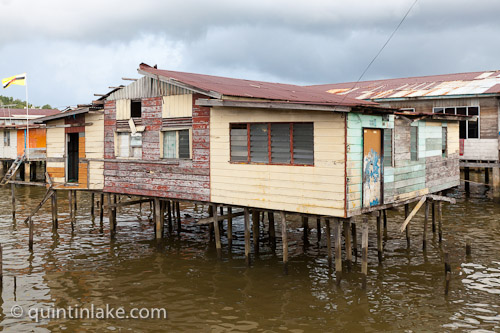
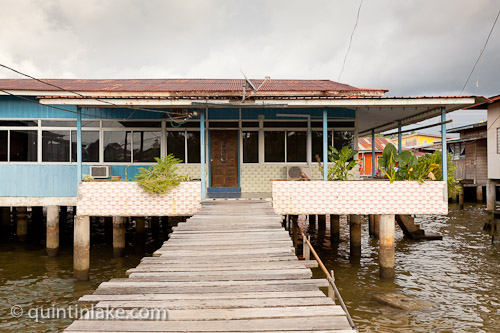
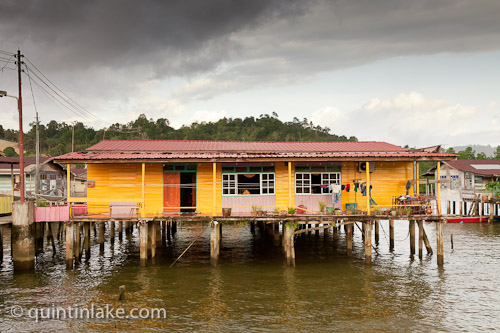
Kampong Ayer, or the Water Village (Malay: Kampong Ayer) is an area of Brunei’s capital city Bandar Seri Begawan that is situated in the middle of the Brunei River. 39,000 people live in the Water Village. This represents roughly ten percent of the nation’s total population. All of the Water Village buildings are constructed on stilts above the Brunei River.

The Water Village is really made up of small villages linked together by more than 29,140 meters of foot-bridges, consisting of over 4200 structures including homes, mosques, restaurants, shops, schools, and a hospital.

VIEW/BUY/LICENSE MORE IMAGES of Brunei

Photography © Quintin Lake, 2010
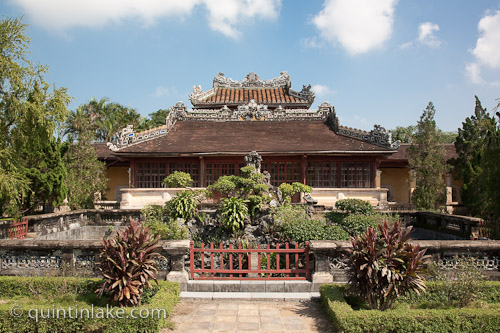
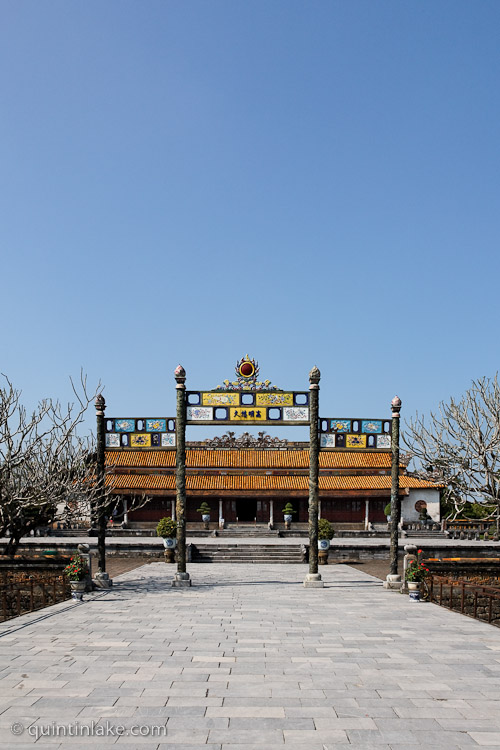
Ornate gateway on the Trung Dao (Central path) Bridge, carved with dragons slithering up and down them, leading to Thai Hoa Palace, Hue Citadel / Imperial City, Hue, Vietnam

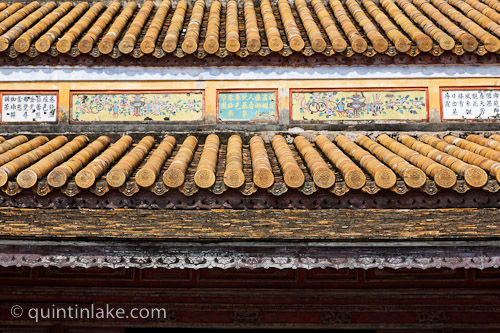
Yellow enamelled roof tiles of the Thai Hoa Palace, Hue Citadel / Imperial City, Hue, Vietnam

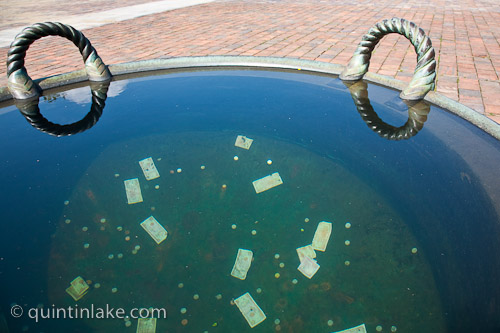
Vietnamese money left as an offering in the ancient bronze cauldron in the courtyard, Halls of the Mandarins

The Throne Palace, also known as the Palace of Supreme Harmony, was the nerve center for the Emperor’s court during its heyday. Built in 1805 by Emperor Gia Long, the Throne Palace was first used in 1806 for the emperor’s coronation. The building is 144 feet long, 100 feet wide, and 38 feet tall, supported by lacquered-red columns entwined with gilded dragons. Over the throne hangs a carved board bearing Chinese characters reading “Palace of Supreme Harmony”.

The insulation and acoustics of the Throne Palace are amazing for a building its age. The Throne Palace enjoyed cool temperatures in the summer, and warm temperatures during the winter season. And anyone standing at the exact center of the Palace – where the throne was normally placed – could hear sounds from any point in the palace. The Throne Palace has been diminished by time and the ravages of war: rains and floods common to Central Vietnam have damaged some parts of the palace, and serious damage was done by American bombs during the Vietnam War.

VIEW MORE IMAGES of Thai Hoa Palace, Imperial City, Hue

VIEW IMAGES of Hue Citadel & Imperial City, Hue, Vietnam

Photography © Quintin Lake, 2010

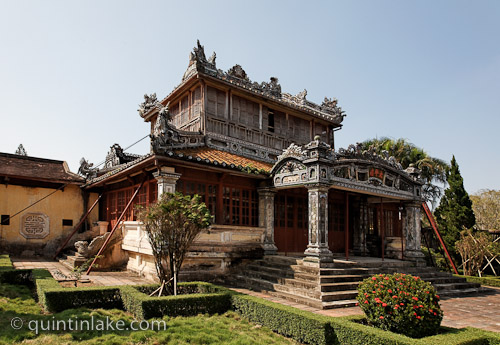
Royal Library or Emperor's Reading Room (Thai Binh Lau) decorated with ceramic mosaics in the Forbidden Purple City, Hue Citadel / Imperial City, Hue, Vietnam

Royal Library or Emperor's Reading Room (Thai Binh Lau) in the Forbidden Purple City, Hue Citadel / Imperial City, Hue, Vietnam

The Royal Reading room (Thai Binh Lau) was the only building to survive the ravages of the 20th century. Both the French reoccupation and American bombs failed to bring it down.

Thai Binh Lau was first built by the Emperor Thieu Tri between 1841 and 1847. The Emperor Khai Dinh later restored the temple in 1921, and civil authorities continued restoration efforts in the early 1990s. In the old days, the Emperors used to retire to Thai Binh Lau to read books and write letters.

VIEW MORE IMAGES of the Emperor’s Reading Room, Imperial City, Hue

VIEW IMAGES of Hue Citadel & Imperial City, Hue, Vietnam

Photography © Quintin Lake, 2010
Gateway to Hien Lam pavilion, Hue Citadel / Imperial City, Hue, Vietnam

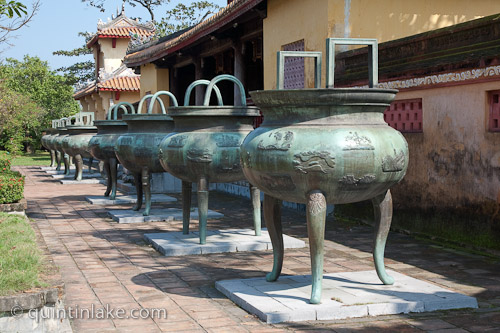
Nine Dynastic Urns, Hue Citadel / Imperial City, Hue, Vietnam

The Hien Lam Cac Pavilion (Pavilion of Everlasting Clarity) was built in 1821-22 in memory of the mandarins who served the Nguyen dynasty. At 13m in height, this is the tallest building in the citadel. In front of the pavilion stand the nine dynastic urns, which were cast in bronze in 1835-37 and which each weigh between 2 and 2.5t. Each urn is dedicated to an emperor, symbolising one of his qualities.

VIEW MORE IMAGES of Hien Lam pavilion & the Nine Dynastic Urns

VIEW IMAGES of Hue Citadel & Imperial City, Hue, Vietnam

Photography © Quintin Lake, 2010
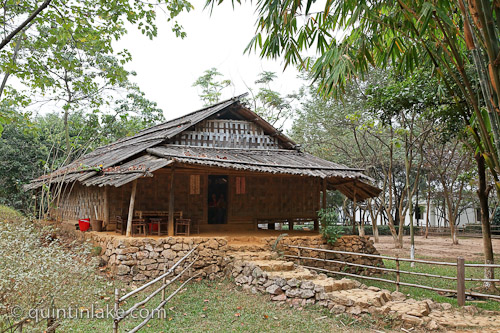
Cham House, Ninh Thuan province, Vietnamese Museum of Ethnology, Hanoi

Cham House, Ninh Thuan province, Vietnamese Museum of Ethnology, Hanoi

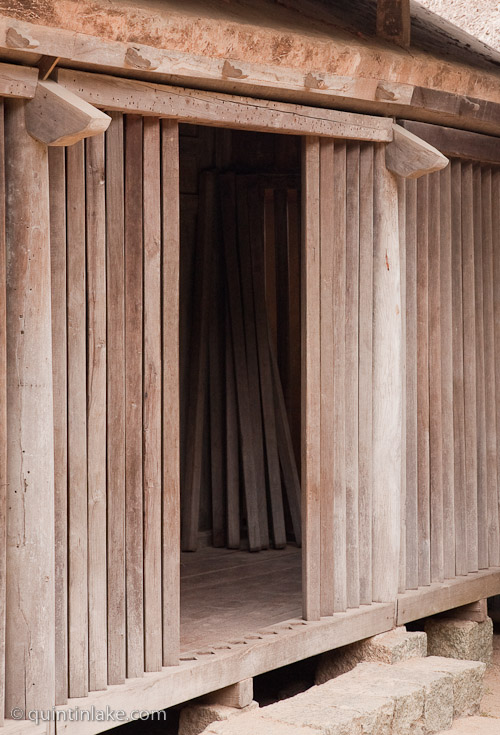
Removable posts allow adjustable entrance door on Cham House, Ninh Thuan province, Vietnamese Museum of Ethnology, Hanoi

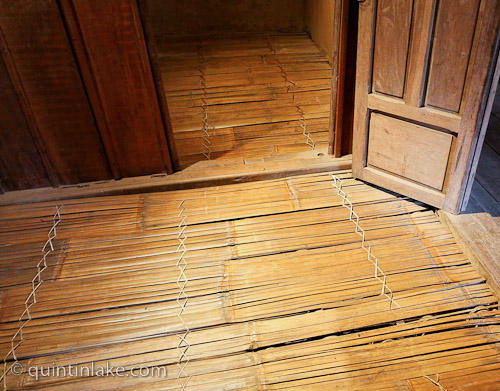
Bamboo floor of Cham House, Ninh Thuan province, Vietnamese Museum of Ethnology, Hanoi

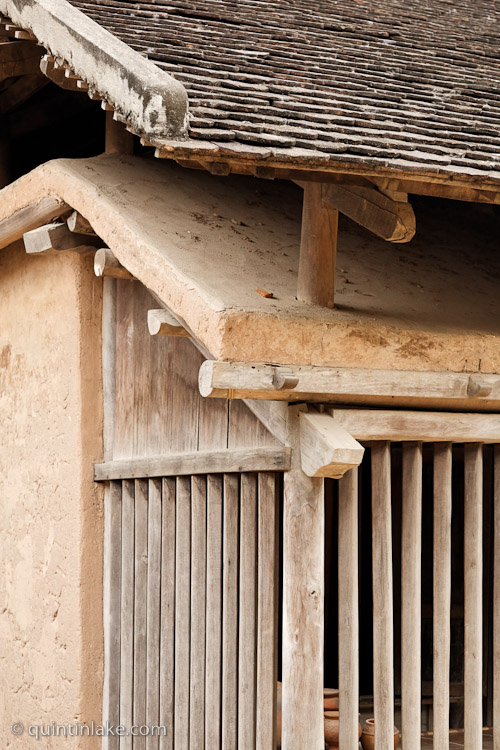
Double roof of Cham House for natural cooling in intense sunlight, Vietnamese Museum of Ethnology, Hanoi

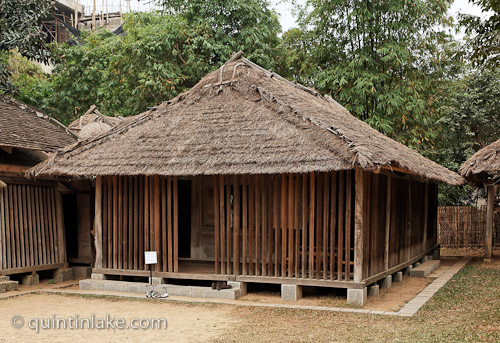
One of the most characteristic tangible cultural heritages of the Cham and also one of the most sensitive to change is their house. The Cham build their houses on the ground and arrange them in orderly rows. Their houses are surrounded by a garden with a wall or hedge. The doors open to the south-west or between. The architectural style is similar to that of the Viet with walls made of brick or a mixture of lime and shells, and covered with tiles or thatch. Houses of more than one storey are rare. In certain localities, houses on stilts are found but the floor is only 30 cm above the ground. The rooms of Cham houses are arranged according to a particular order: the sitting room, rooms for the parents, children, and married women, the kitchen and ware- house (including the granary), and the nuptial room for the youngest daughter. This arrangement reflects the break-up of the matrilineal extended family system among the Cham.

The Cham living in Ninh Thuan and Binh Thuan believe that they have to perform certain religious rituals before the building of a new house, particularly praying for the Land God and asking for his permission to cut down trees in the forest. A ritual is also held to receive the trees when they are transported to the village. A ground-breaking ceremony called phat moc is also held. The precinct of the Cham traditional house is the residence site of a Cham family. It is an assembly of several houses with different functions and these houses relate closely with each others.

VIEW MORE IMAGES of the Cham House

Photography © Quintin Lake, 2010
Text © 2005 Vietnam Museum of Ethnology

Yao Ho Granary, Vietnamese Museum of Ethnology, Hanoi

Woven Bamboo wall, Yao Ho Granary, Vietnamese Museum of Ethnology, Hanoi

Woven Bamboo window, Yao Ho Granary, Vietnamese Museum of Ethnology, Hanoi

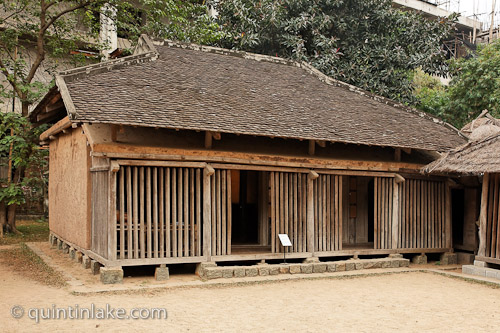
The Yao Ho people traditionally built a separate granary next to the house. In the past, if the family had many fields, it usually had two or three granaries. the architecture of the  granary is that of a stilt house, with a small door large enough for a person to pass through. the floor, made or plaited bamboo, rests on four columns, and there is a bamboo roof.

VIEW MORE IMAGES of the Yao Ho Granary

Photography © Quintin Lake, 2010

Text © 2005 by Vietnam Museum of Ethnology

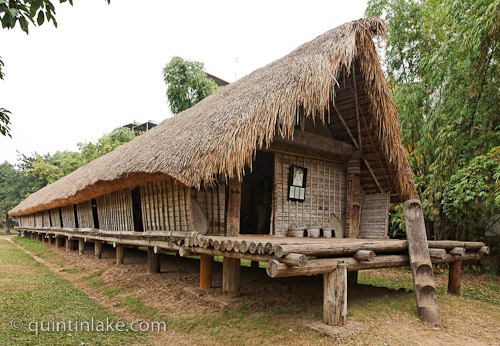
Ede Long House, Vietnamese Museum of Ethnology, Hanoi

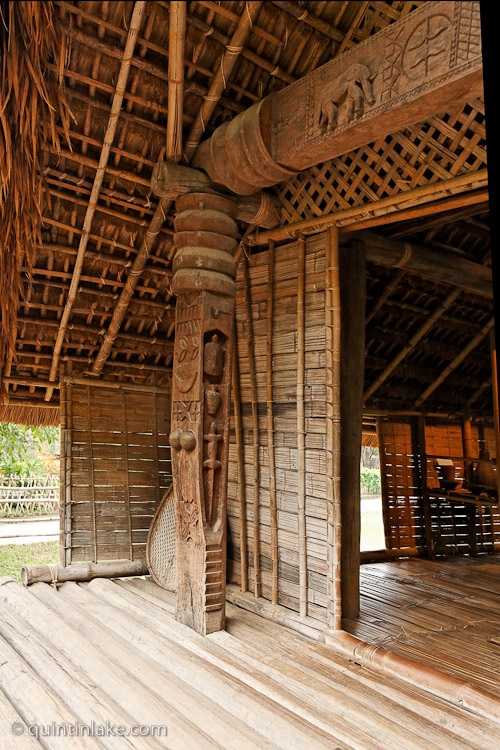
Entrance to Ede Long House, Vietnamese Museum of Ethnology, Hanoi

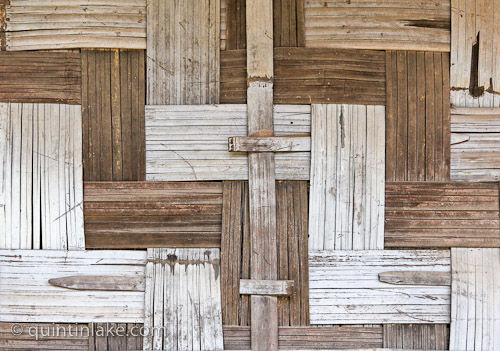
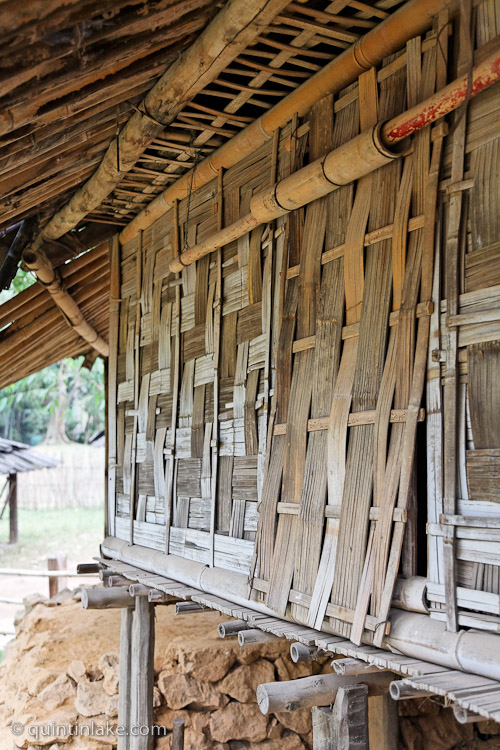
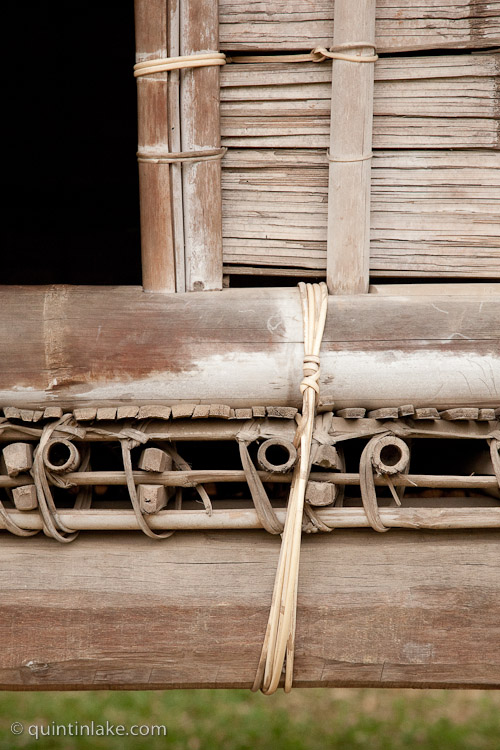
Bamboo construction detail, Ede Long House, Vietnamese Museum of Ethnology, Hanoi

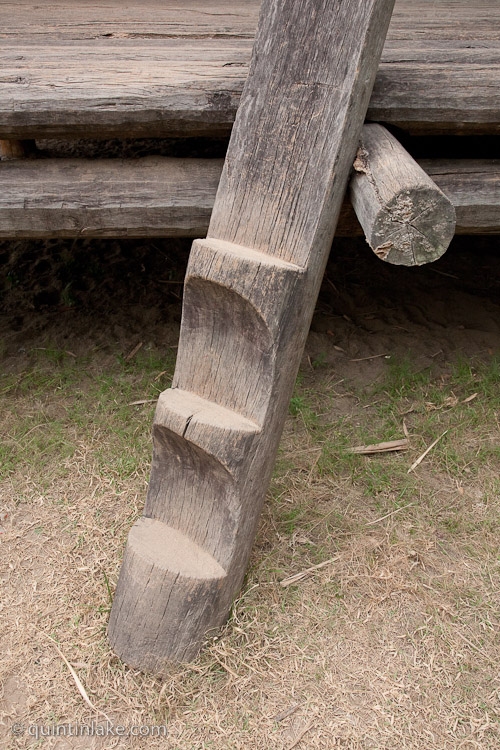
Steps to raised platform of Ede Long House, Vietnamese Museum of Ethnology, Hanoi

The long house and the matrilineal family The long house is the residence of a great matrilineal family. Traditionally, the house accommodates the families of daughters and grand daughters who were the descendants of one mother. Before the middle of the 20th century, there were dozens of families living in the long house. The whole family worked together and shared rice and other food. Property was held in common and customary law of the Ede stipulated that the property should be managed by the household’s most senior woman. After marriage, a son would reside in this wife’s house but still retain a special position in the families of his sisters and his nieces. The important role of women was (and continues to be) a special feature of Ede society.

VIEW MORE IMAGES of Ede Long House

Photography © Quintin Lake, 2010
Text © 2005 by Vietnam Museum of Ethnology