Archives for posts with tag: Art

Concrete entrance sign to Pripyat. Now a memorial, it is surrounded by plastic flowers.

Lobby of Hotel Polissia. Marble wall cladding has been removed by looters.
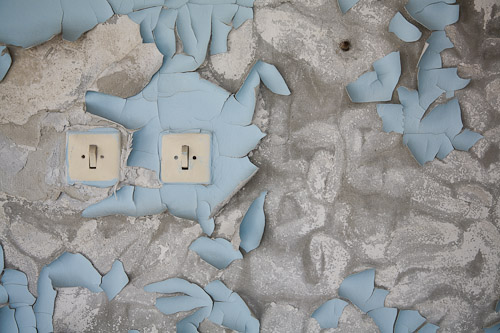
Light switches in a bedroom of Hotel Polissia.
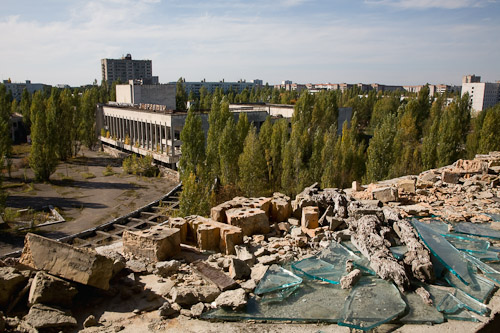
Palace of Culture, central square and apartment blocks viewed from the terrace of hotel Polissia.
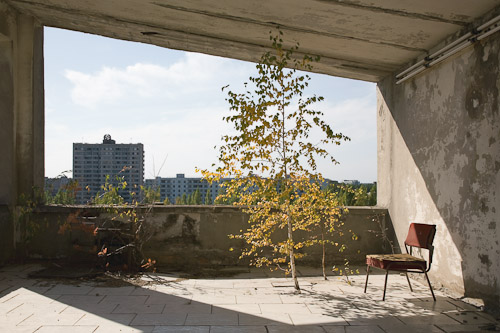
A silver birch tree grows through the floor on the terrace of Hotel Polissia. The hammer and sickle is visible atop the distant apartments.
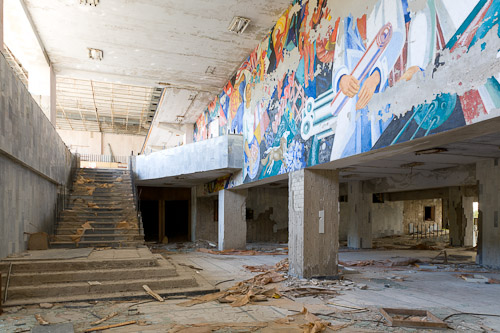
Palace of Culture foyer with Soviet mural.

Abandoned dodgems from the fun fair due to open 4 days after the explosion.
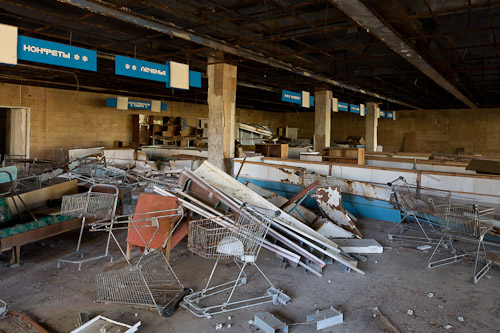
Supermarket interior with abandoned shopping trolleys.
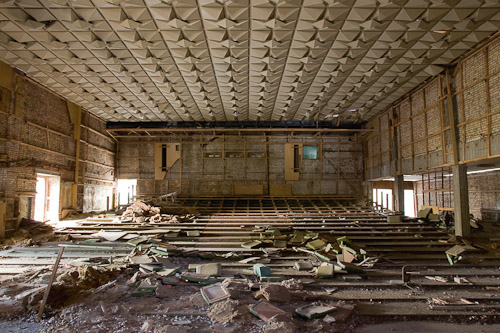
The looted seating area in the Palace of Culture theatre.
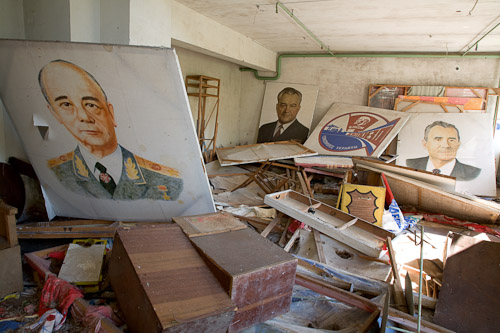
Palace of Culture Theatre prop room with paintings of Lenin and dignitaries.

Looted department store next to central square. The floor is covered with decayed ceiling tiles.
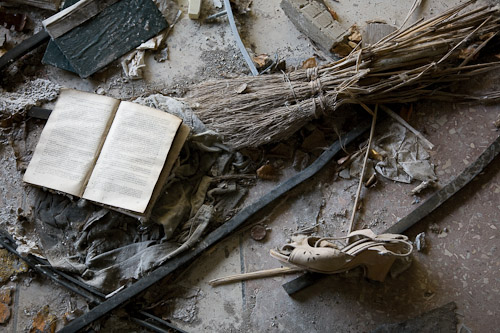
Single shoe, glazing gaskets, book and broom on floor of Department Store.
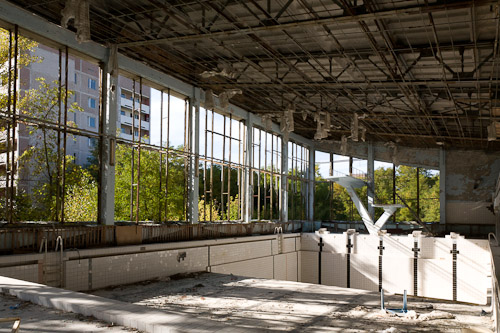
Abandoned Swimming Pool, Pripyat.

Light shines across climbing bars and broken basketball hoop in a gymnasium.

Abandoned and never used Ferris wheel, Pripyat. Due to open four days after the explosion.

Children’s exercise books and broken glass on a classroom floor.
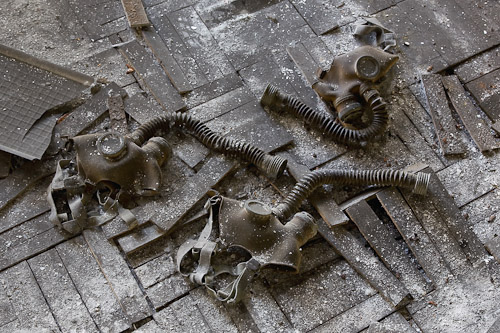
Children’s gas masks, the silver filter elements removed by looters. They had ben issued according to soviet policy in case of nuclear attack from the West.
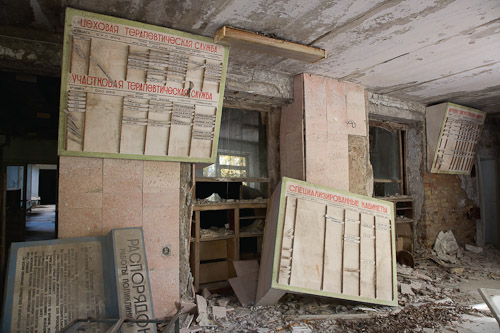
Hospital reception with doctor’s appointment boards.
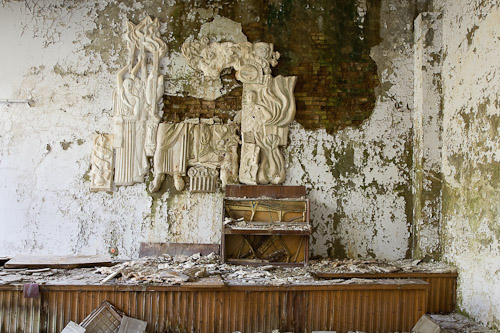
Concert hall with water damaged soviet relief sculpture and piano.
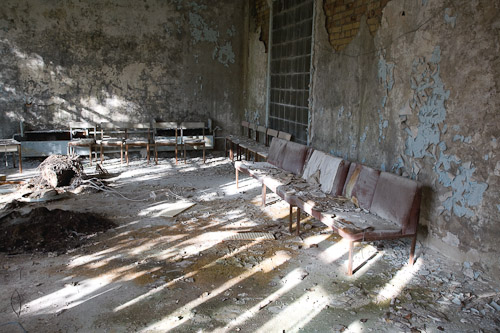
Hospital waiting room, Pripyat.

Drawing of Lenin with dead house plant in the hospital.

When reactor number four at the Chernobyl Nuclear Power Plant exploded in 1986 the result was the worst nuclear accident in history. Large areas of Ukraine, Belarus, and Russia were severely contaminated, requiring the evacuation and resettlement of over 336,000 people.

Pripyat, 1km from the reactor, was designed as an exemplar of Soviet planning for the 50,000 people who worked at the power plant. A funfair, with bumper cars and Ferris wheel, was due to open two days after the reactor exploded.

These photographs, inspired by Robert Polidori’s earlier images of Chernobyl, were shot in 2007 over 5 hours, apparently the safe period of exposure. Although a Geiger counter was carried in case of localised high emissions, certain areas of vegetation which attract a higher concentration of radiation were avoided.

The physical devastation stems from looting and gradual building collapse, not from the explosion. Over the last ten years people have intruded regularly into the military exclusion zone, stealing everything from irradiated toilet seats to the marble cladding from hotel walls. Photographs of the town capture a memory of three traumas: the invisible radiation, the visible looting and the gradual collapse of a ghost town.

Now with the nuclear disaster at Fukushima Reactor, Japan as a result of the 2011 Tōhoku earth quake and tsunami  these images of Chernobyl have a renewed poignancy.

Selected images from this series been exhibited at the Crane Kalman Gallery in Brighton, the Architectural Association in London, the Royal West of England Academy Autumn Show in Bristol  and the Host Gallery in London. Images from the series are also published in my book Drawing Parallels: Architecture Observed

BUY PRINTS / LICENSE IMAGES of Pripyat and the Chernobyl Nuclear Disaster here >>

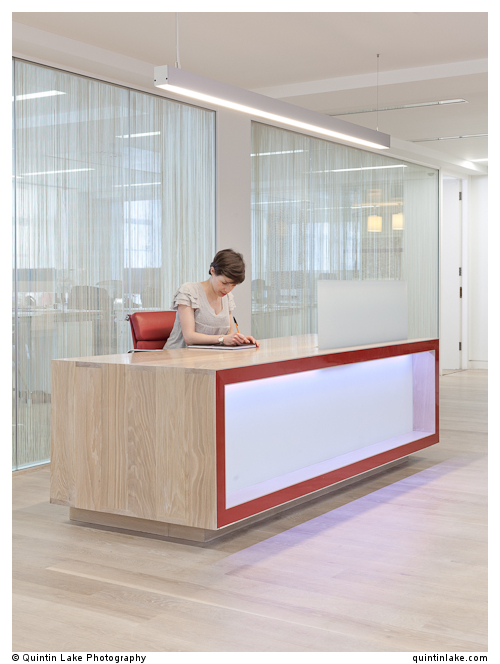
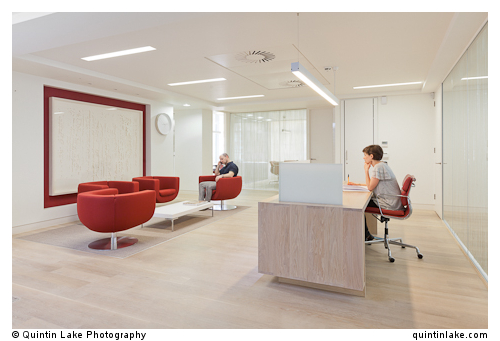
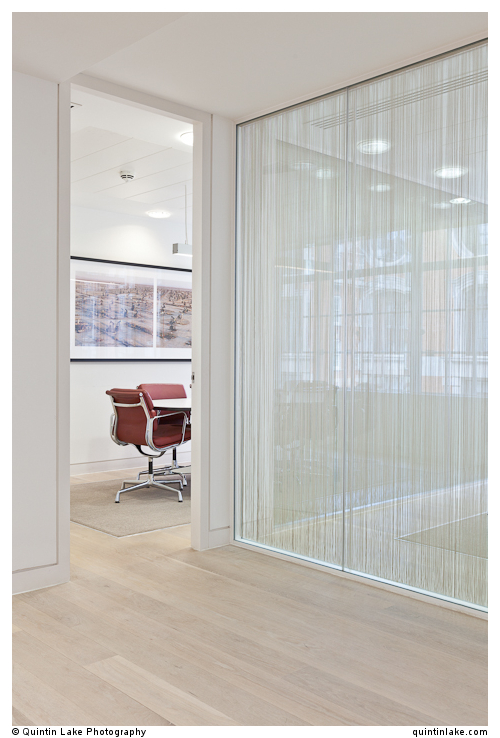
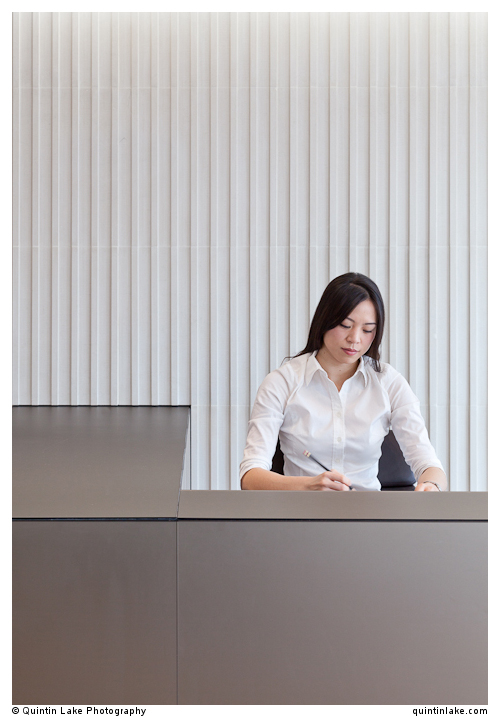
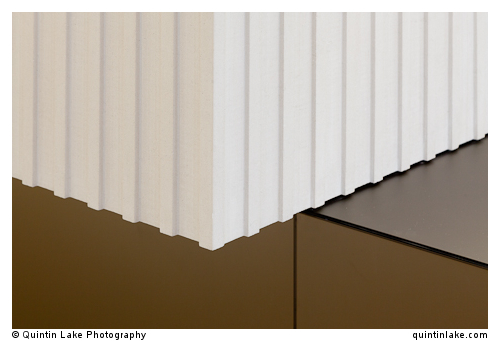
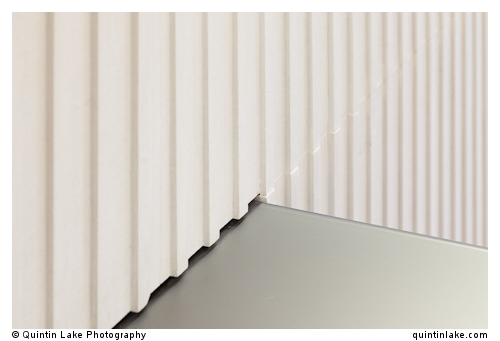
Assignment for architects Data Nature Associates to document their West End office interior in London.

Assignment for architects Data Nature Associates to document their bespoke glass and portland stone office interior in London.

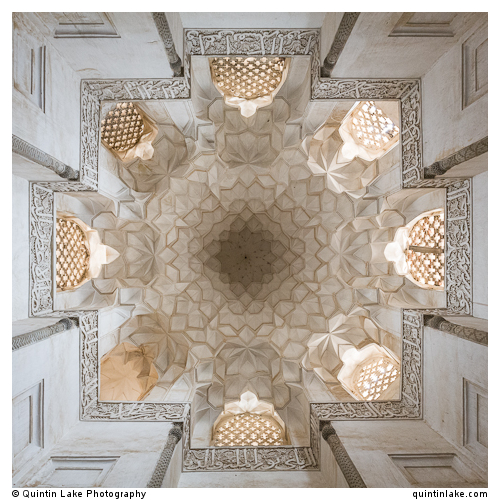
Interior of Octagonal Pavilion Tomb of the Sheikh Abdolsamad, Natanz, Iran.

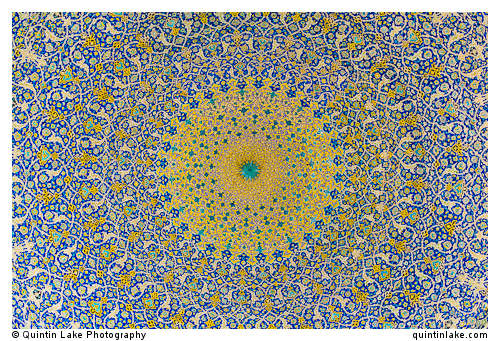
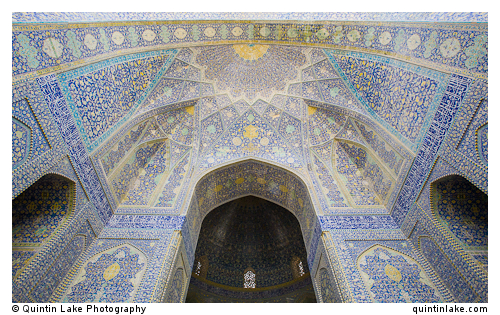
Dome of the main sanctuary. Imam Mosque (Masjed-e Imam), is a mosque in Isfahan, Iran standing in south side of Naghsh-i Jahan Square. Built 1611 – 1629. Architect: Shaykh Bahai

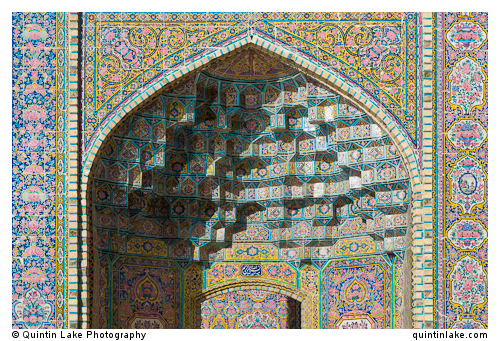
Detail view of khanqah portal; muqarnas semi-dome, Shaykh ‘Abd al-Samad Mosque, Natanz, Iran.

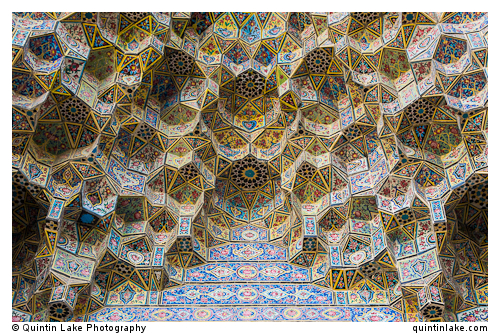
Ceramic tiles ceiling decorating a vault at Nasir al-Mulk Mosque, (aka the Pink Mosque) Shiraz, Iran. Built 1876 -1888. Architects: Muhammad Hasan-e-Memar and Muhammad Reza Kashi Paz-e-Shirazi.

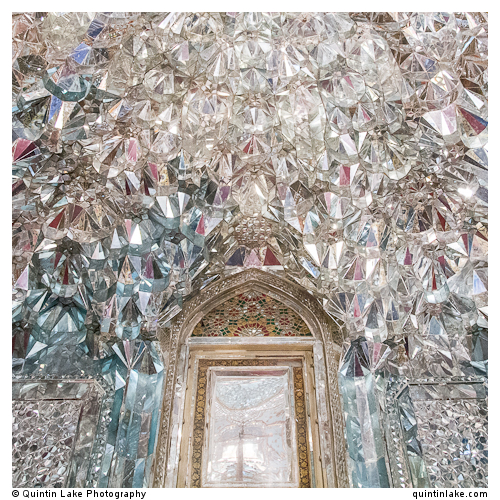
Mirrored muqarnas (decorative corbel) in the Hall of Diamonds (Talar-e Almas) in the Golestan Palace, Tehran. It is called Hall of Diamonds because of the exceptional mirror work inside the building. The construction of this hall dates to the time of Fath Ali Shah (circa1806). Tehran, Iran

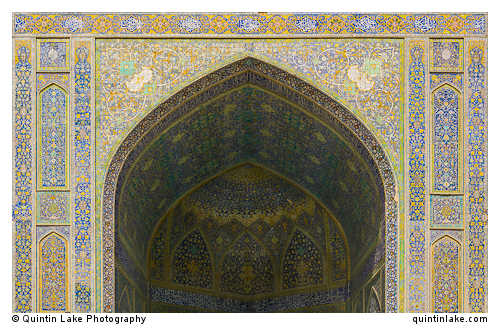
South Iwan, entrance to main sanctuary. Imam Mosque (Masjed-e Imam), is a mosque in Isfahan, Iran standing in south side of Naghsh-i Jahan Square. Built 1611 – 1629. Architect: Shaykh Bahai

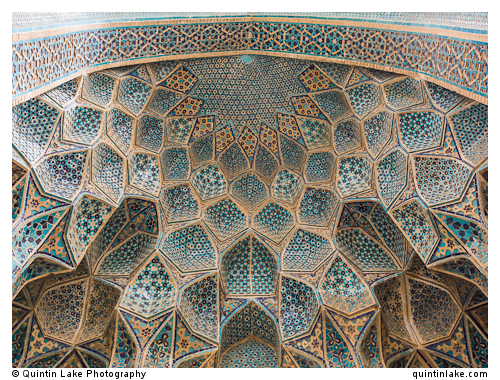
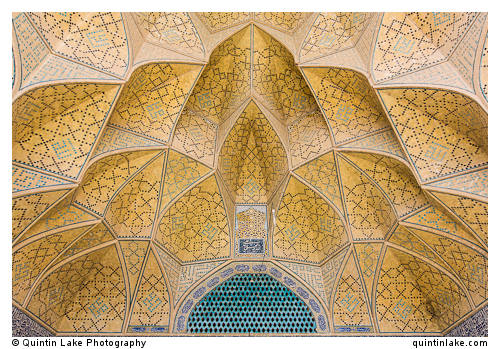
Muqarnas (decorative corbel) Jameh Mosque aka The Congregational Mosque of Isfahan built from 771 to the end of the 20th century. Isfahan, Iran

North iwan coverd in polychromatic tiles. Imam Mosque (Masjed-e Imam), is a mosque in Isfahan, Iran standing in south side of Naghsh-i Jahan Square. Built 1611 – 1629. Architect: Shaykh Bahai

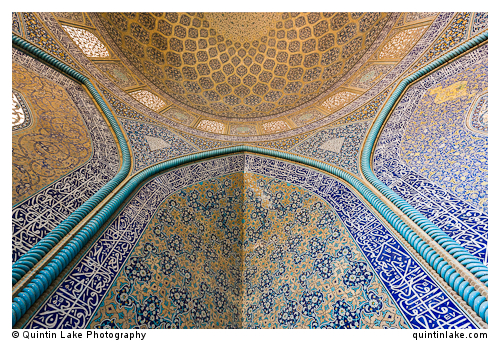
Interior of Dome of Sheikh Lotf Allah Mosque, Naghsh-i Jahan Square, Isfahan, Iran. Built 1603 -1618. Architect: Shaykh Bahai

Ceramic tiles ceiling decorating a vault at Nasir al-Mulk Mosque, (aka the Pink Mosque) Shiraz, Iran. Built 1876 -1888. Architects: Muhammad Hasan-e-Memar and Muhammad Reza Kashi Paz-e-Shirazi.

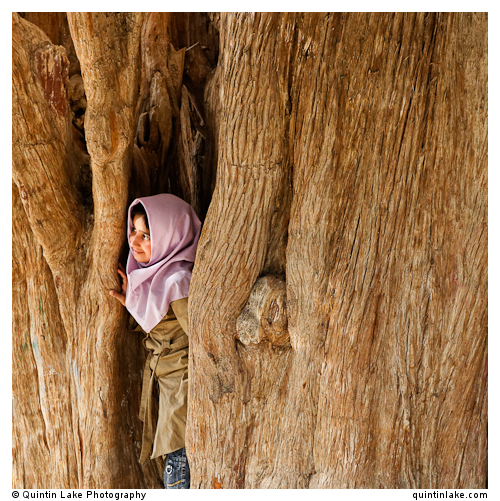
An Iranian girl looks out from the trunk of Sarv-e Abar-Kuh “cypress of Abar-Kuh”, also called the Zoroastrian Sarv, is a Cupressus sempervirens tree in Abarkuh, Yazd Iran. It is estimated to be over four thousand years old and may be the oldest living thing in Asia.

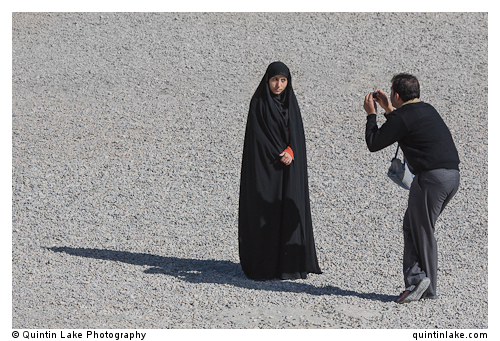
A lady wearing a chador posing for a photo at Persepolis. Persepolis was the ceremonial capital of the Persian Empire (550-330 BC) during the Achaemenid dynasty. Persepolis, Iran

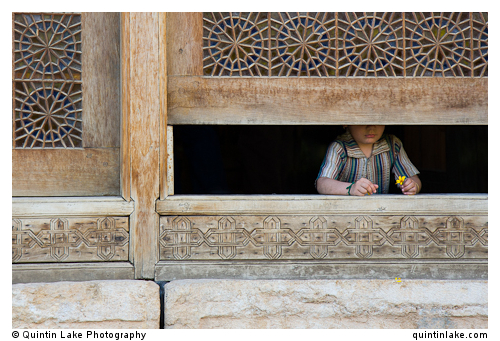
A girl at the window of The Arg (Citadel) of Karim Khan, Shiraz, Iran

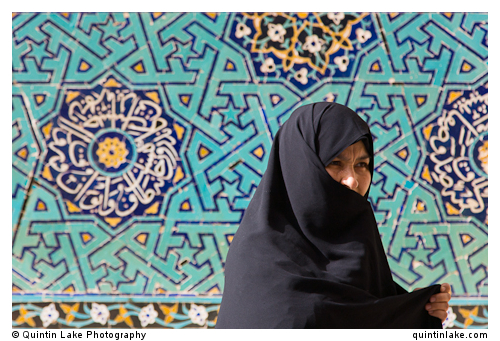
A woman wearing a chador walks past the blue tile work of the the Jameh Mosque of Yazd, Iran

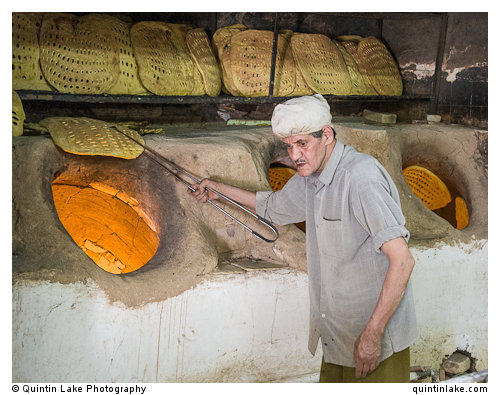
Baker taking bread out of his tandoor oven at his bakery in Yazd, Iran

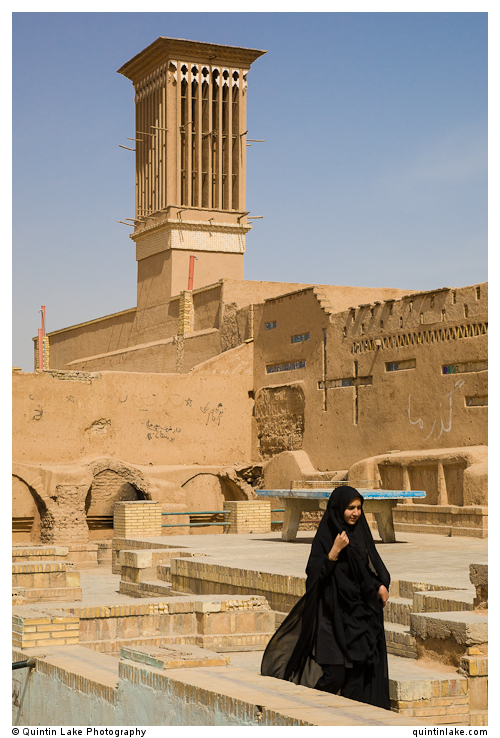
A woman passes in front of a  badgir, the Iranian term for wind tower. These chimney-like structures, which project above the roof, expel warm air during the day and trap cooler breezes at night. Yazd.

Edit: I’m honoured and delighted that this post is featured in Freshly Pressed. Thanks for all your likes and comments and follow my Facebook Page to see my latest work and keep in touch!

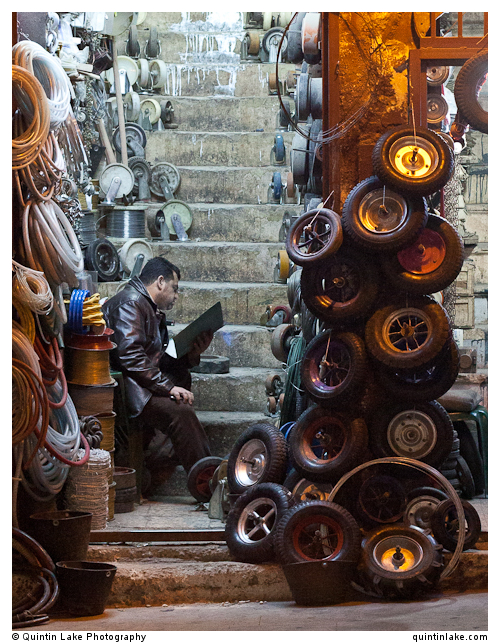
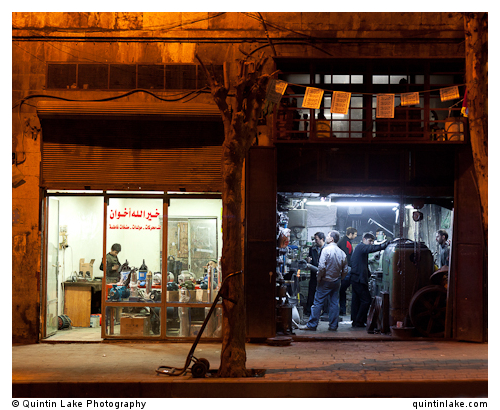
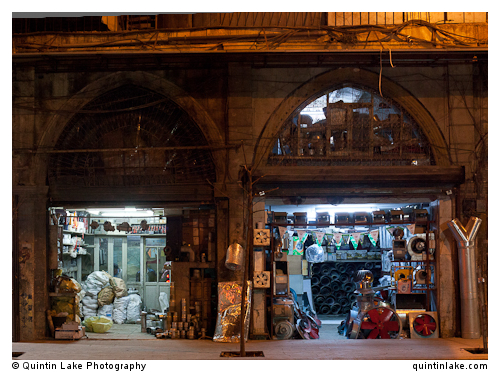
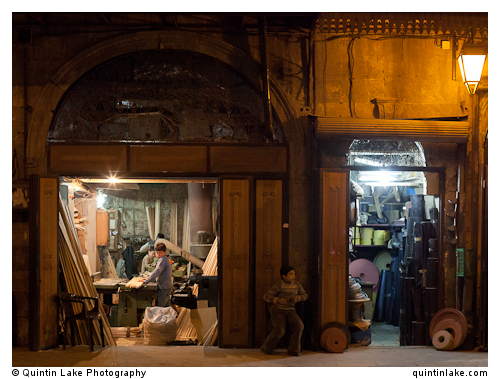
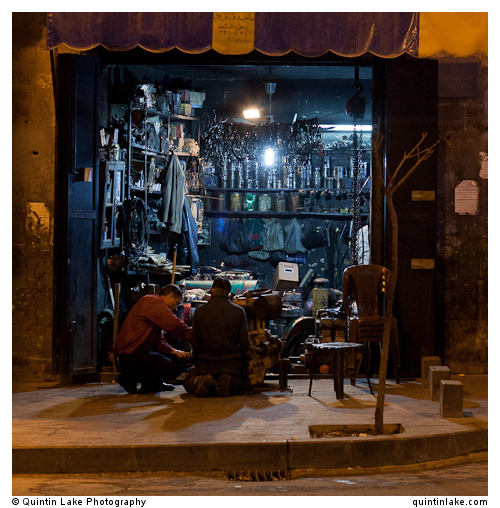
The streets of workshops and hardware stores in Aleppo appear as a row of theatres after dark. Syria 2011

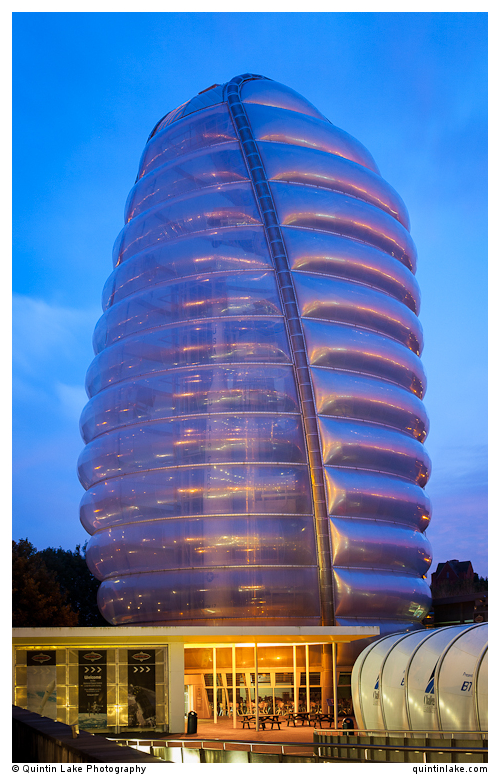
National Space Centre, Rocket Tower, Leicester, UK. Architect: Nicholas Grimshaw, 2001

Semi-transparent ETFE pillows clad the tower

South facing ETFE has a metallic treatment to reduce solar gain

The Rocket Tower contains Blue Streak and PGM-17 Thor rockets visible through the building skin

The rear of the building opens at full height to allow changing of large exhibits

The centre has six main galleries of which the Rocket Tower is one

I used to work at Grimshaw at the end of the 1990’s and ETFE (A transparent durable plastic suitable for making buildings) was flavour of the month after the massive success of the Eden Project. The National Space Centre was built just after the Eden Project clad in the same ETFE pillows, but running longitudinally around the building in rings as opposed to the the hexagonal pillows of the Eden Project.

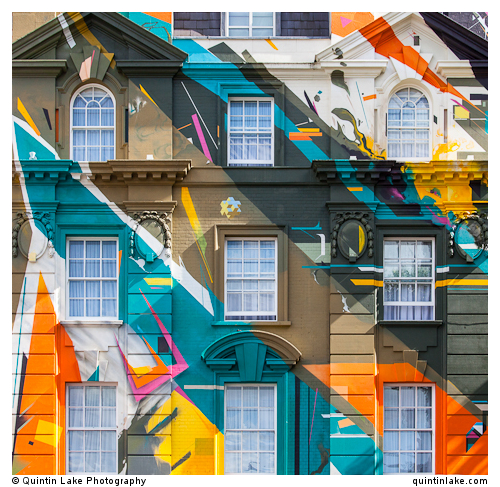
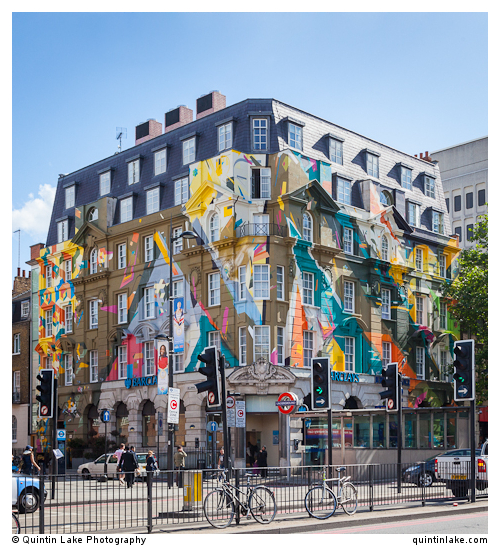
“Marmite” a graffiti mural on Megaro Hotel opposite St Pancras station, London, 2012.

The building is opposite the entrance to Kings Cross & St Pancras Station on Euston Road

The Megaro project a graffiti mural painted on the classical facade of Megaro Hotel opposite St Pancras station, London, 2012. The mural was designed and painted by four members of street art collective, Agents of Change.