Archives for posts with tag: Photography

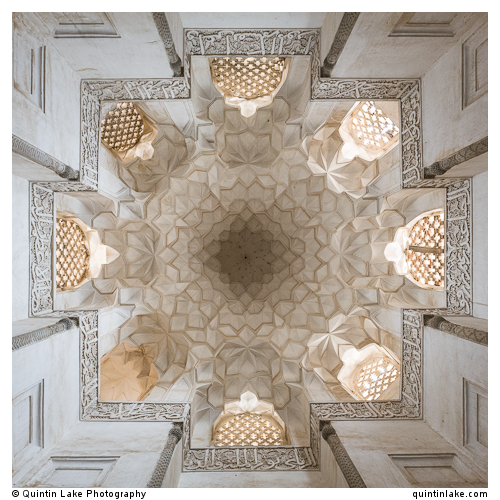
Interior of Octagonal Pavilion Tomb of the Sheikh Abdolsamad, Natanz, Iran.

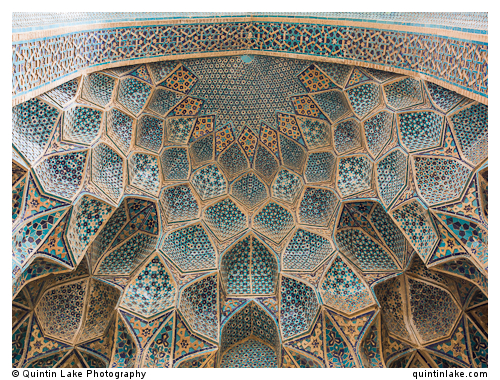
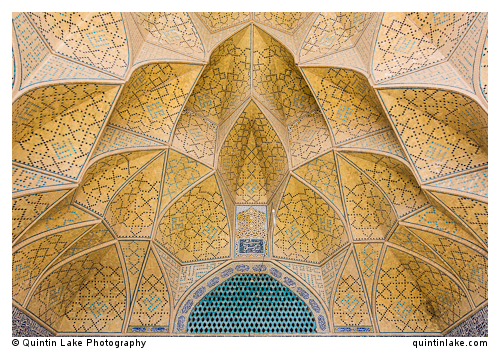
Detail view of khanqah portal; muqarnas semi-dome, Shaykh ‘Abd al-Samad Mosque, Natanz, Iran.

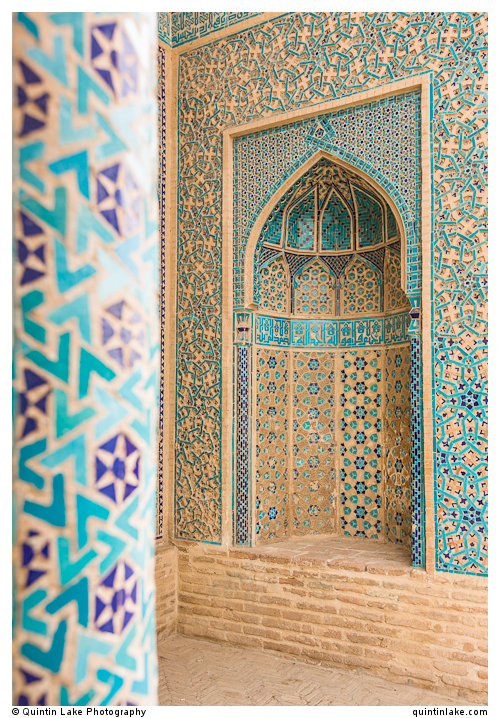
Portal of Abd-al-Samad-tomb

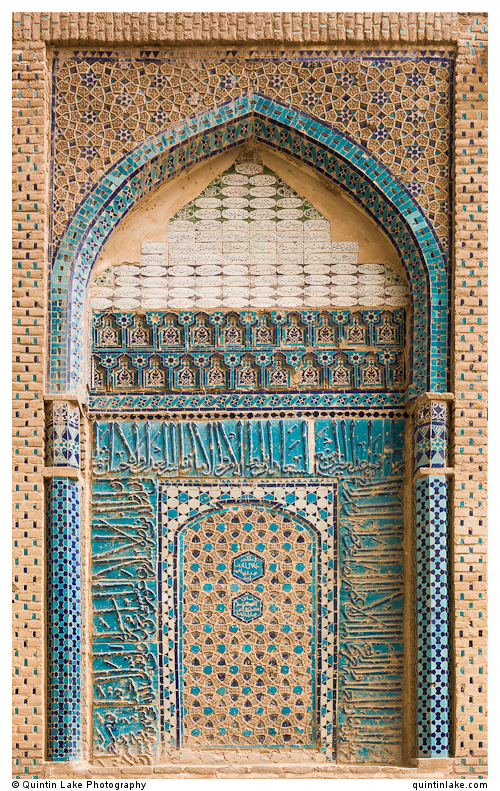
Facade of Shaykh ‘Abd al-Samad Mosque

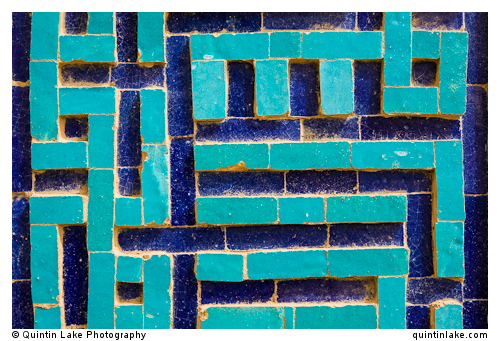
Detail of mosaic tiling

Natanz gets in the news as the location of Iran’s nuclear facility but much more interesting is the beautiful Abdolsamad Tomb & Mosque. This is a large funerary complex which has grown up organically around the tomb of Abd al-Samad, a follower of the famous Sufi saint Abu Said who died in 1049. The central feature of the site is the octagonal tomb around which is built a four-iwan congregational mosque dated to 1309. Internally the tomb is a cruciform chamber which is converted to an octagon at roof level. The roof is a blue-tiled octagonal pyramid dome outside and internally comprises a tall muqarnas vault.

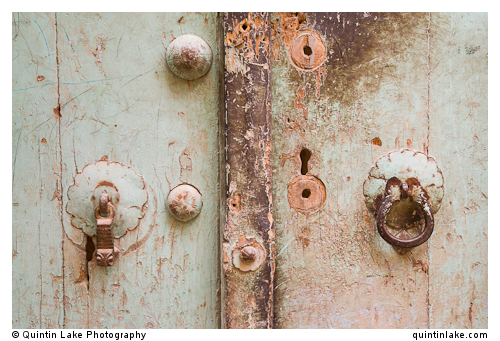
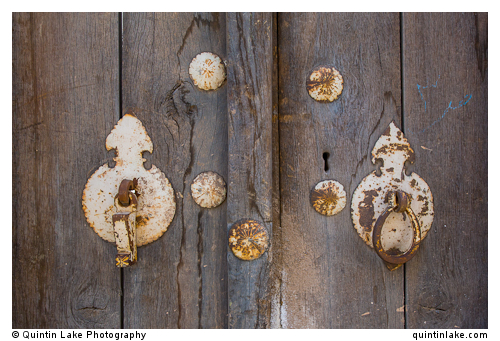
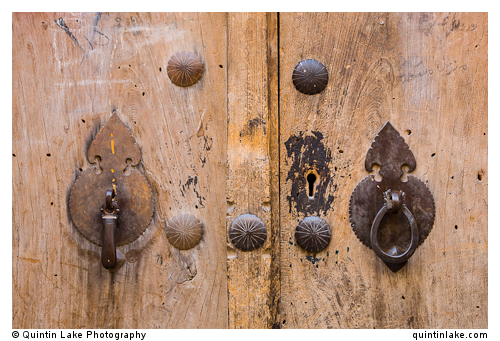
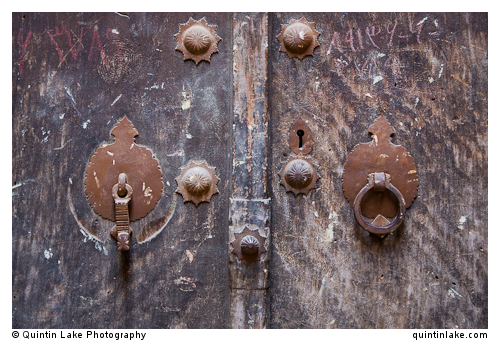
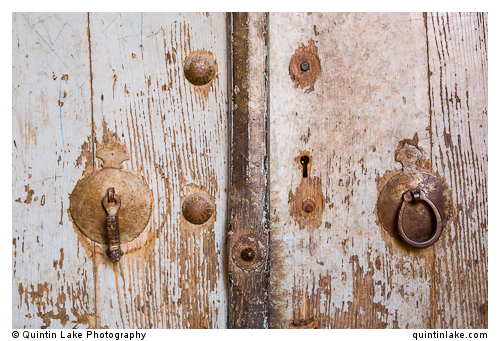
His and hers door knockers, Yazd, Iran. The masculine door knocker is rigid and heavy that makes a strong sound. People inside the house wil be informed that a man is behind the door. The feminine door knocker is curly and ring like and makes a lighter sound. It informs the people inside the house that a woman is behind the door. This system is in place due to the Islamic custom that women should be private from men except their intimate ones.

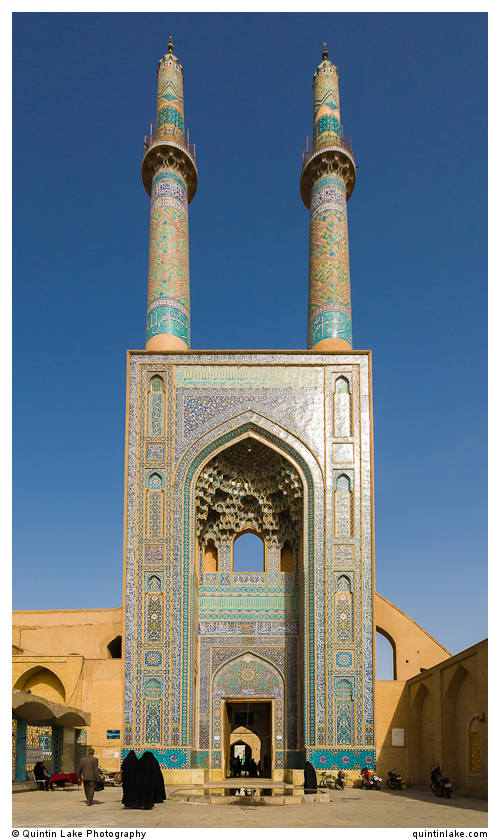
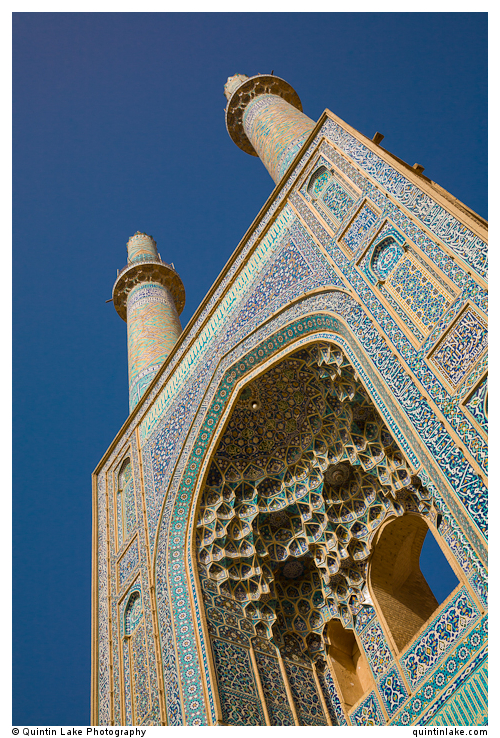
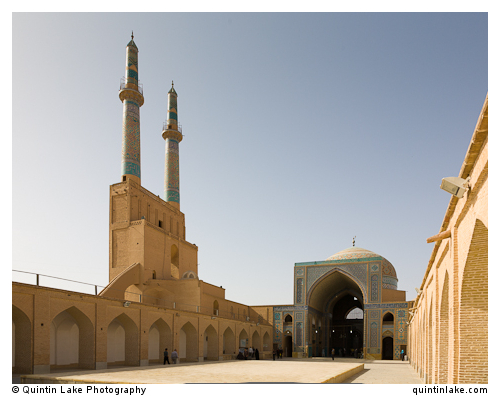
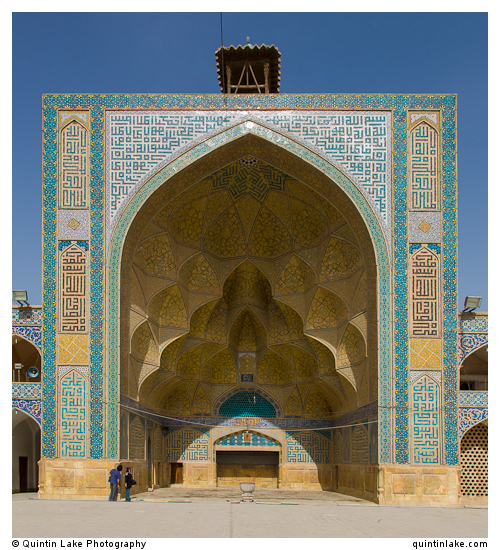
The grand iwan of the  Jameh Mosque of Yazd is crowned by a pair of minarets, the highest in Iran, and the portal’s facade is decorated from top to bottom in dazzling tile work.

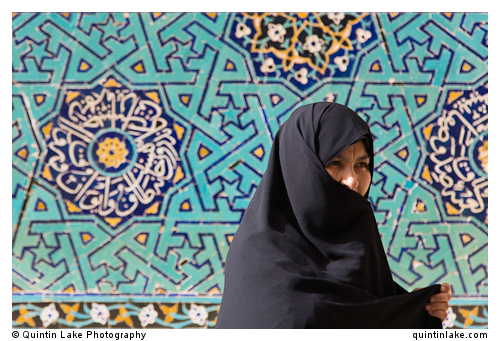
A woman wearing a chador walks past the blue tile work of the the Jameh Mosque of Yazd, Iran

The grand iwan and Muqarnas of the mosque

The Jameh Mosque of Yazd, courtyard

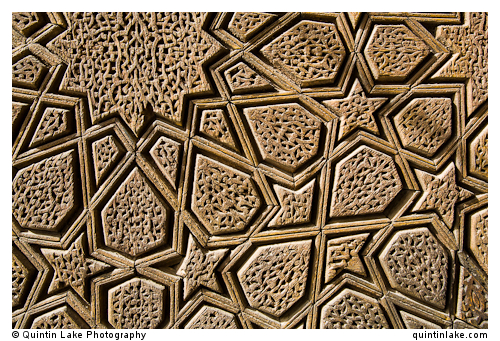
Geometrical timber work, The Jameh Mosque of Yazd

The Jameh Mosque of Yazd (Persian: €“ Masjid-e-Jāmeh Yazd) is the grand, congregational mosque (Jāmeh) of Yazd, Iran. Built 12-14th Century. The grand iwan of the mosque is  crowned by a pair of minarets, the highest in Iran, and the portal’s facade is decorated from top to bottom in dazzling tile work, predominantly blue in colour.

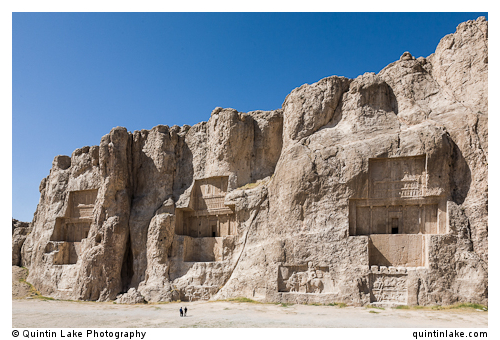
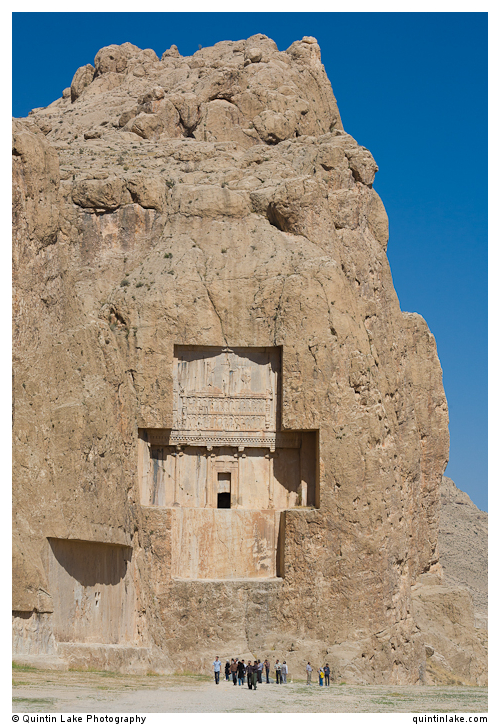
Achaemenid Tombs at Naqsh-e Rustam

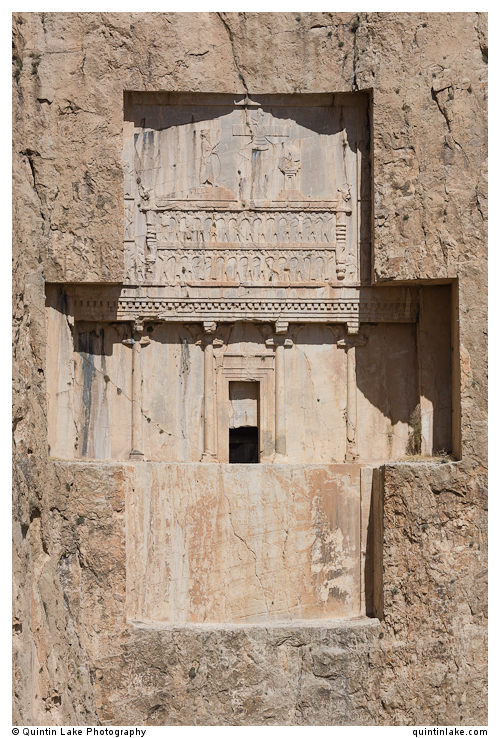
Tomb of Darius II. Achaemenid Tombs at Naqsh-e Rustam, Fars, Iran

Tomb of Darius II. Achaemenid Tombs at Naqsh-e Rustam, Fars, Iran

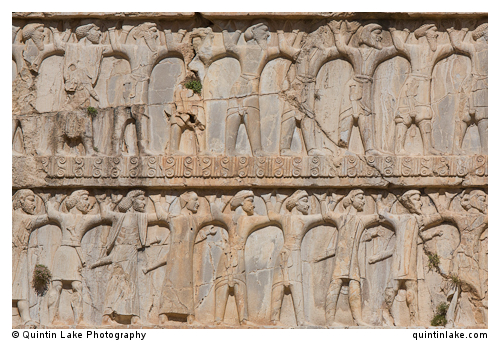
Bas releif detail of Tomb of Darius II

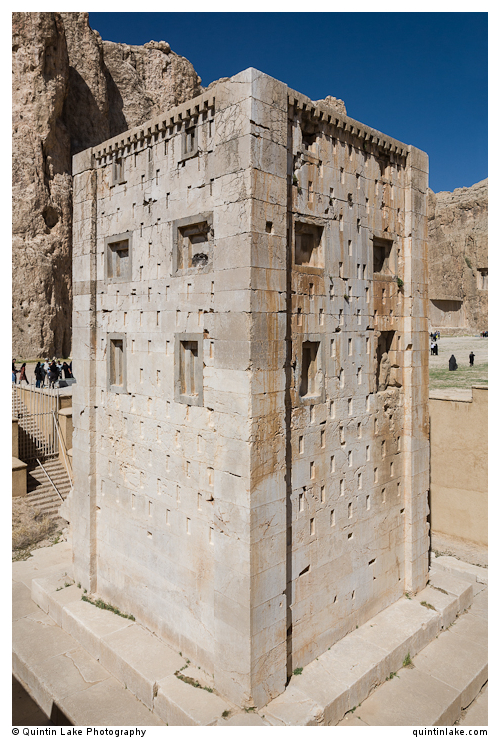
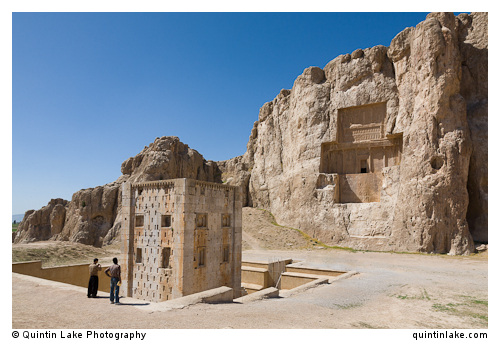
The Ka’ba-ye Zartosht  meaning the “Cube of Zoroaster,”which  is a 5th century B.C.E. Achaemenid-era tower-like construction at Naqsh-e Rustam, an archaeological site just northwest of Persepolis, Iran. This enigmatic structure is one of many surviving examples of the achaemenid architectural design.

“Cube of Zoroaster,”  at Naqsh-e Rustam,

Achaemenid Tombs at Naqsh-e Rustam, also referred to as the Necropolis  of the Persian crosses. The four tombs belonging to the Achaemenid kings are carved out of the rock face with the entrance to each tomb at the center of each cross, this opens onto to a small chamber, where the king lay in a sarcophagus. The horizontal beam of each of the tomb’s facades is believed to be a replica of the entrance of the palace at Persepolis. One of the tombs is that of Darius I the Great (c. 522-486 BC). The other three tombs are believed to be those of Xerxes I (c. 486-465 BC), Artaxerxes I (c. 465-424 BC), and Darius II (c. 423-404 BC) respectively.

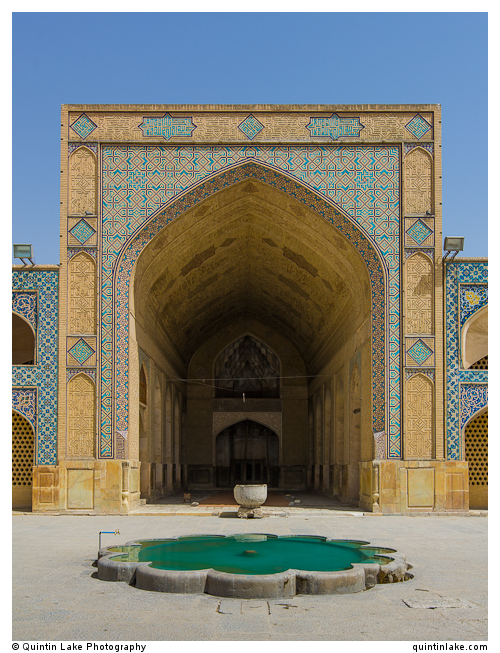
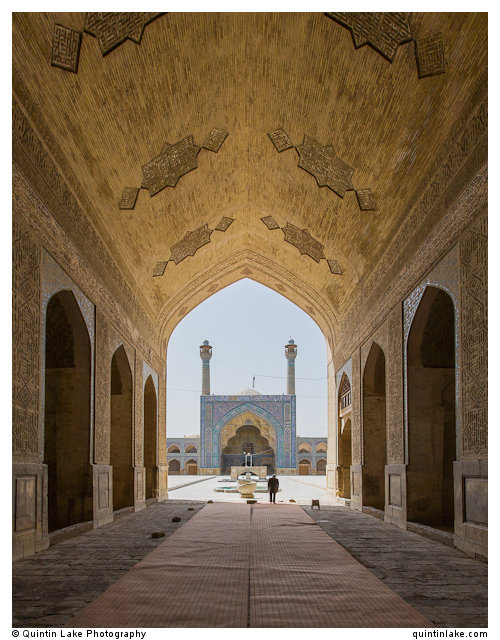
West-side iwan of the Jameh Mosque, Isfahan

North-side iwan, Jameh Mosque, Isfahan

South-side iwan seen from North-side arch, Jameh Mosque, Isfahan

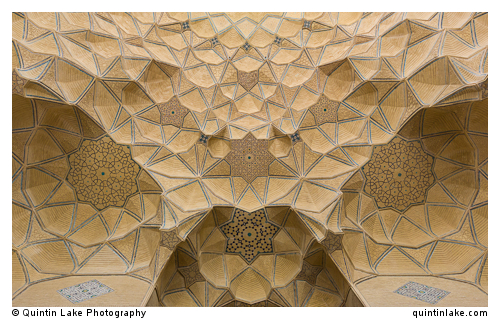
Muqarnas (decorative corbel) Jameh Mosque, Isfahan

Muqarnas (decorative corbel) Jameh Mosque, Isfahan

The Jameh Mosque is the congregational mosque (Jameh) of Isfahan city, Iran (Persian: مسجد جامع اصفهان‎ – Masjid-e-Jāmeh). The mosque is the result of continual construction and reconstruction from around 771 to the end of the 20th century making it one of the oldest mosques still standing in Iran. I felt the Muqarnas (decorative corbels) are amongst the most beautiful in Islamic architecture for their sublime combination of subtle colour, complex geometry and heavily sculptural form.

Click Here for More from this Photoshoot >>

All images available as prints or for publication / licensing contact me for pricing. 

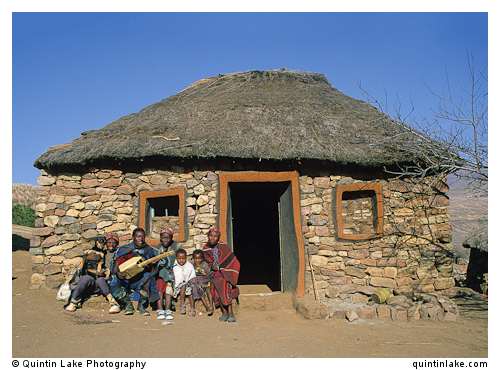
Thabang and family outside their home in Ha Motenalapi in the Senqunyane valley, Lesotho, 2000

Thabang and family outside their home in Ha Motenalapi in the Senqunyane valley, Lesotho. We were camped in tents nearby on an archaeological expedition and they invited us to sleep in this hut for three nights even though this meant the whole family slept in a smaller hut out of frame. They are wearing their Basotho tribal blankets. The door and window mouldings demonstrate Litema, the mural art of the Basotho. The hut floor and window mouldings are made from Daga, a mix of earth and dung. The high ammonia content of the dung acts as an antiseptic. The patterns engraved around the doorways may represent the surrounding furrowed fields.

Signed gallery prints available here >>

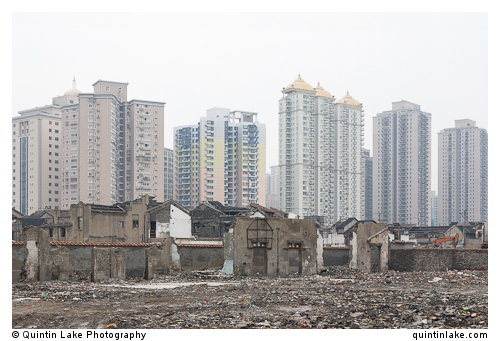
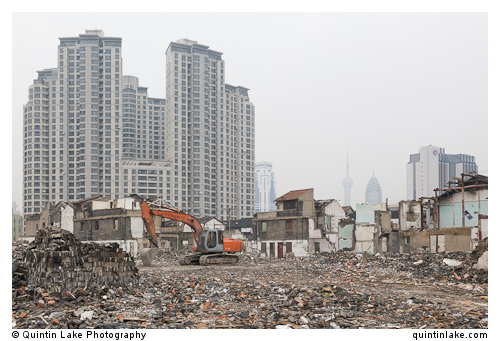
Vanishing Shanghai I. An area of Hutongs or traditional low-rise housing sits between already demolished housing and new high rise developments behind. 2007

Vanishing Shanghai II. The writing on the wall reads, “Overusage of Electricity Prohibited”. 2007

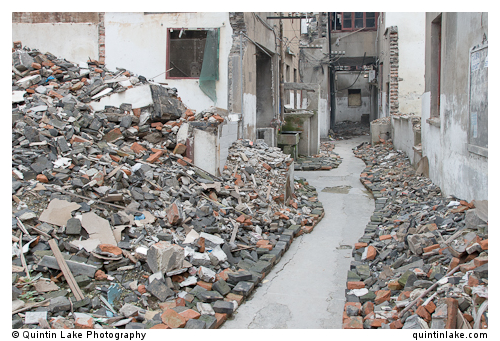
Vanishing Shanghai III. Path through the rubble of demolished houses that are still inhabited before the construction of new buildings. 2007

Vanishing Shanghai IV. The Oriental Pearl TV Tower is viable in the distance. 2007

I visited Shanghai in 2007 and the city was metamorphosing at breakneck speed perhaps due to the Shanghai Expo and the the Beijing Olympics of 2008. One area of the city that caught my imagination in particular was where the the traditional low houses known as Hutongs were being torn down to make way for the modern high rises. In between the new and the demolished buildings people lived amongst the rubble, the sides of their houses ripped open as if in the aftermath of shelling. As well as this melancholy contrast I tried to capture the strange emptiness and theatricality of this temporary part of the city.

Signed gallery prints available here >>

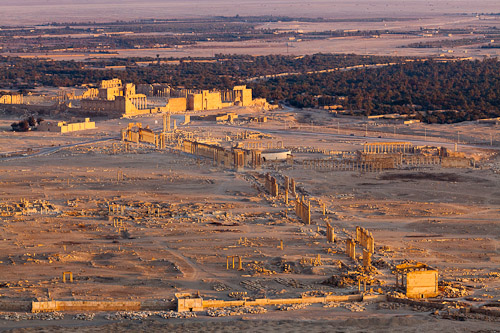
Overview of Palmyra at sunset showing the Great Colonnade running from the Funerary Temple in the foreground to the Temple of Bel at rear. Photo: Quintin Lake
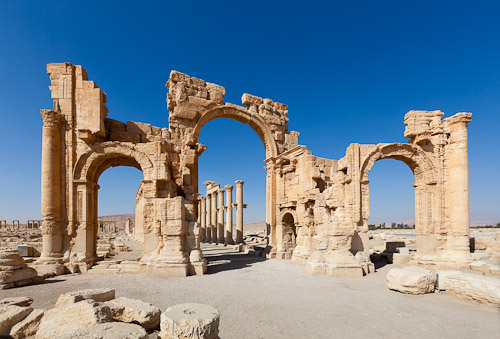
Monumental Arch, the entrance to the city, Palmyra, Syria. Photo: Quintin Lake
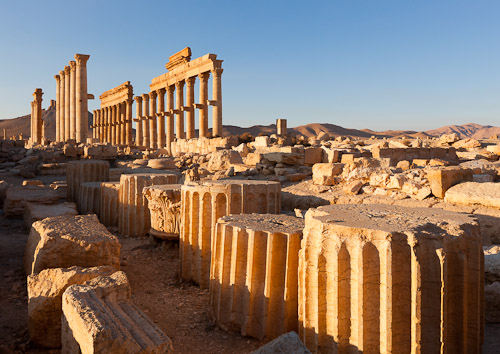
Great Colonnade, Palmyra. Photo: Quintin Lake
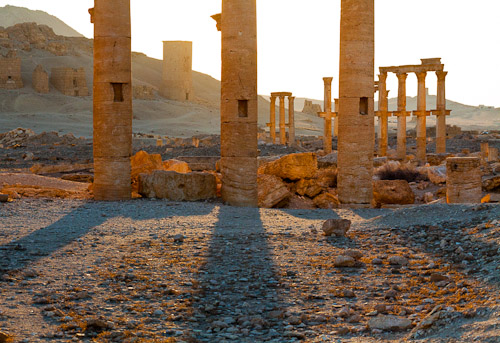
Columns of the Great Colonnade in front of the Valley of the Tombs, Palmyra. Photo: Quintin Lake
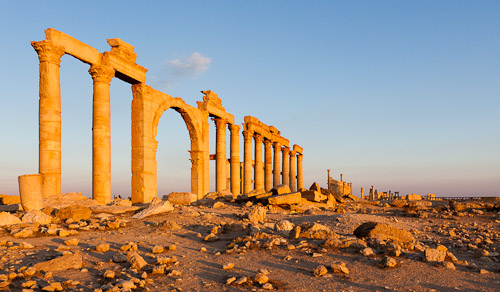
Arch of the Great Colonnade at sunset, Palmyra, Syria. Photo: Quintin Lake
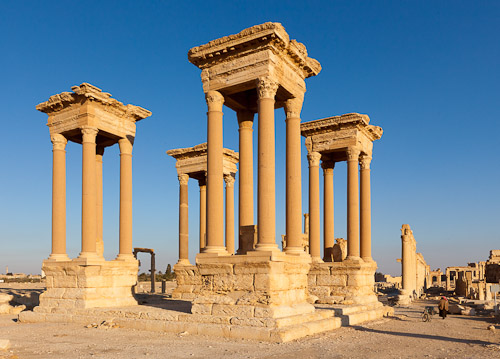
Tetrapylon, placed at a crossroads, Palmyra, Syria. Photo: Quintin Lake
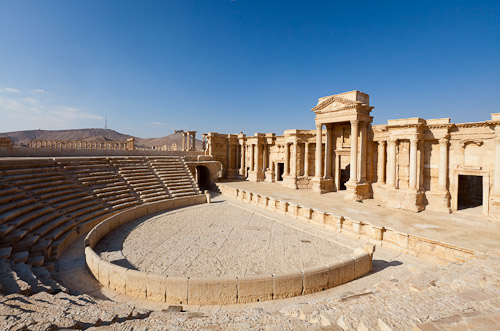
Theatre, Palmyra, Syria. Photo: Quintin Lake
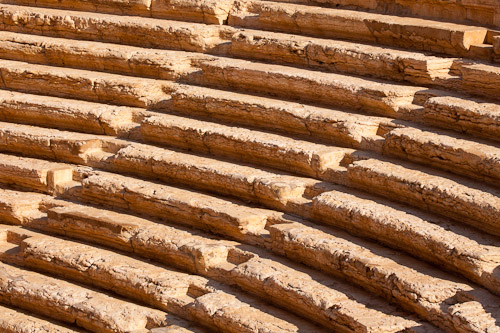
Stone seats and steps in the theatre at Palmyra, Syria. Photo: Quintin Lake
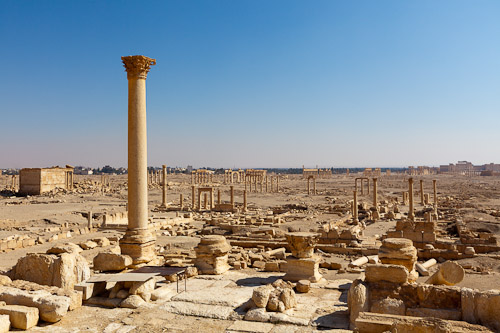
A commanding view of Palmyra seen from the Temple of the Standards in Diocletian's Camp (said to be the location of the Palace of Zenobia) Photo: Quintin Lake
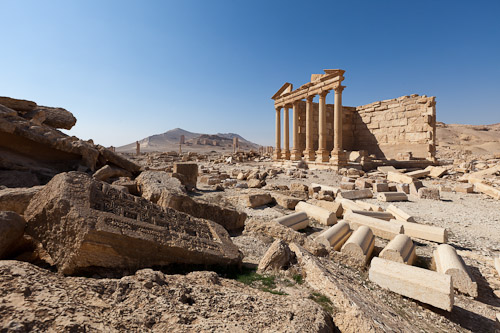
Funerary Temple at Diocletian's Camp. Palmyra, Syria. Photo: Quintin Lake
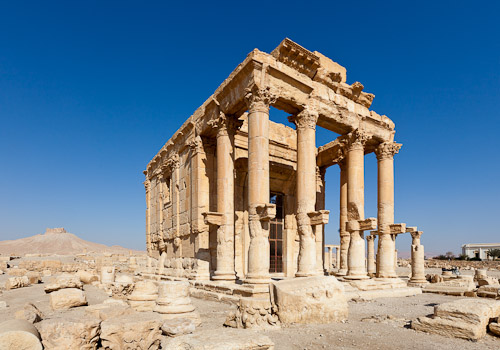
Temple of Baal Shamin. Palmyra. Photo: Quintin Lake
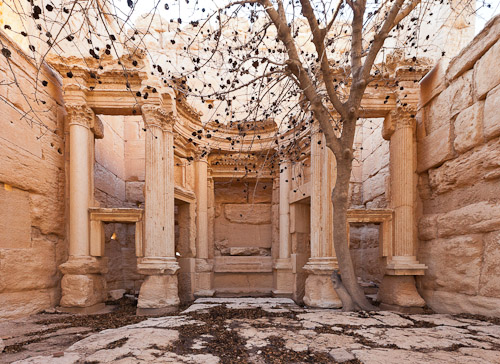
Temple of Baal Shamin Interior. Palmyra. Photo: Quintin Lake
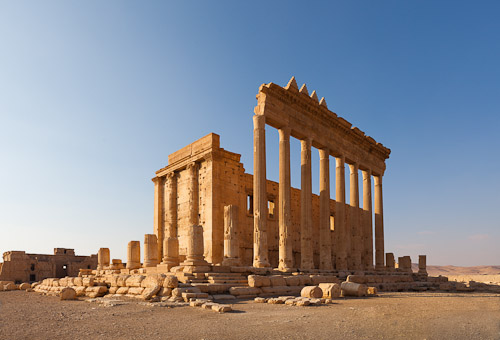
Cella or Inner Temple of the Temple of Bel, Palmyra. Photo: Quintin Lake
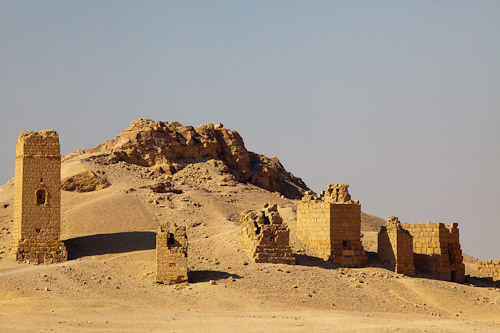
Towers of Yemliko, Valley of the Tombs, Palmyra, Syria. Photo: Quintin Lake
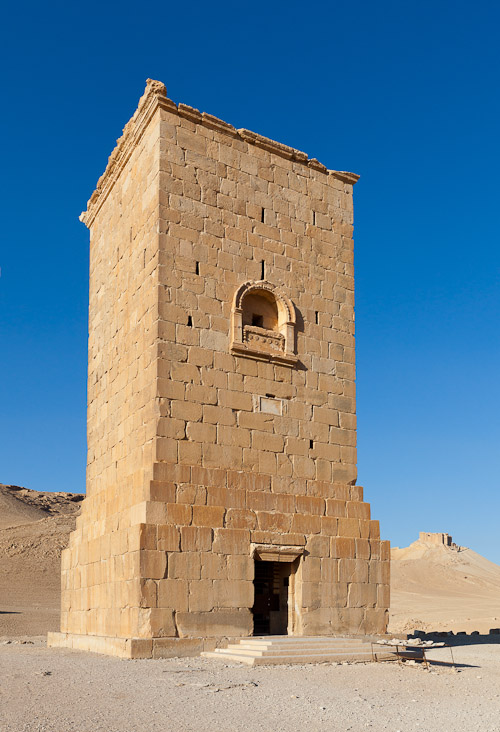
Tower of Elahbel, burial tower, Palmyra, Syria. Photo: Quintin Lake
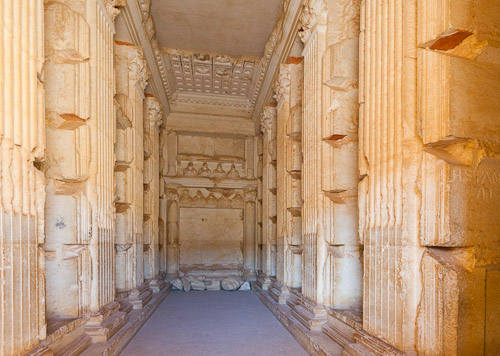
Burial Chambers inside Tower of Elahbel, burial tower, Palmyra. Photo: Quintin Lake
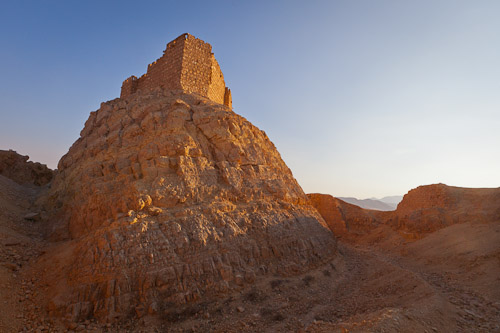
Muslim Castle, Palmyra (Qala'at ibn Maan or Fakhr-al-Din al-Maani Castle), built by the Mamluks in the 13th century. The castle overlooks Palmyra. Photo: Quintin Lake
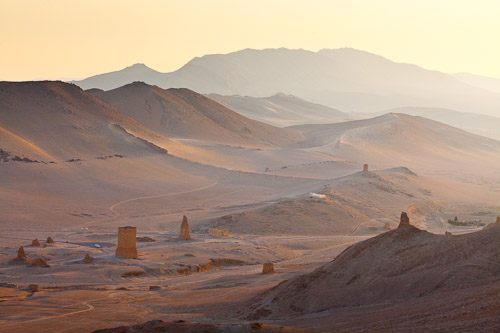
Valley of the Tombs at sunset, Palmyra. Photo: Quintin Lake
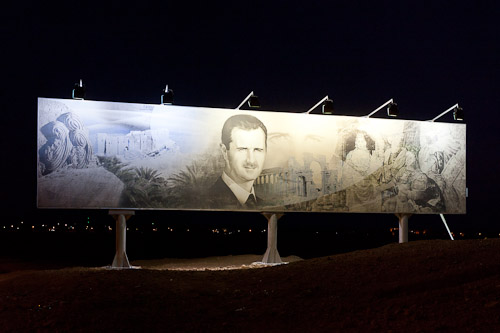
Roadside poster of Bashar al-Assad, president of Syria, February 2011 depicted with the ruins of Palmyra. Photo: Quintin Lake
An oasis in the Syrian desert, north-east of Damascus, Palmyra contains the monumental ruins of a great city that was one of the most important cultural centres of the ancient world. From the 1st to the 2nd century, the art and architecture of Palmyra, standing at the crossroads of several civilizations, married Graeco-Roman techniques with local traditions and Persian influences.

It had long been a vital caravan city for travellers crossing the Syrian desert and was known as the Bride of the Desert. The earliest documented reference to the city by its Semitic name Tadmor, Tadmur or Tudmur (which means “the town that repels” in Amorite and “the indomitable town” in Aramai is recorded in Babylonian tablets found in Mari.

Palmyra became the capital of the short-lived Palmyrene Empire (260–273) which was a splinter empire, that broke off of the Roman Empire during the the Third Century. It encompassed the Roman provinces of Syria Palaestina, Egypt and large parts of Asia Minor. The Palmyrene Empire was ruled by Queen Zenobia.
Click Here for 128 More images from this Photoshoot >>

All images available as fine art prints or for publication / licensing contact me for pricing and to arrange use. Photographs © Quintin Lake