Archives for posts with tag: Photography

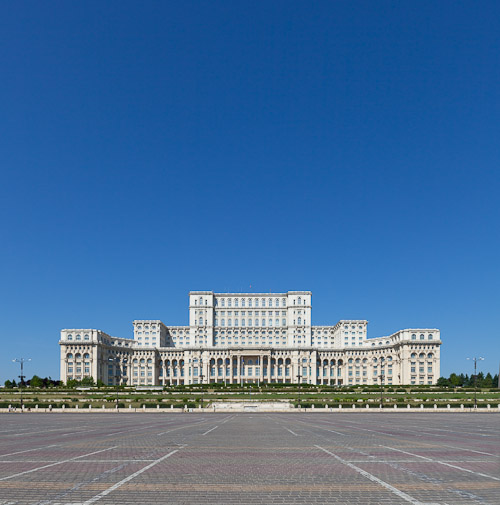
Sensitivity to context is neatly sidestepped by razing the 30,000 homes, churches & synagogues - an area of the old city the size of Venice - which once stood here. Front Facade. The Palace of the Parliament (Also known as Ceausescu'€™s Palace or House of The People) in Bucharest, Romania. Built 1983-1989. Architect: Anca Petrescu
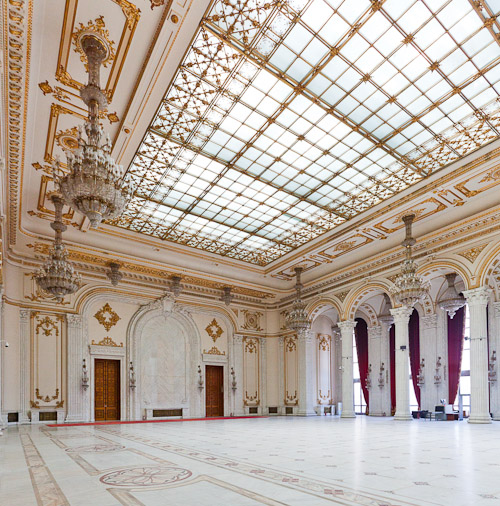
Unirii Hall, the largest of the 1,100 rooms in the entire building. Available for wedding hire should you wish to entertain 2,000 guests or enact a megalomaniac fantasy. Photo: Quintin Lake
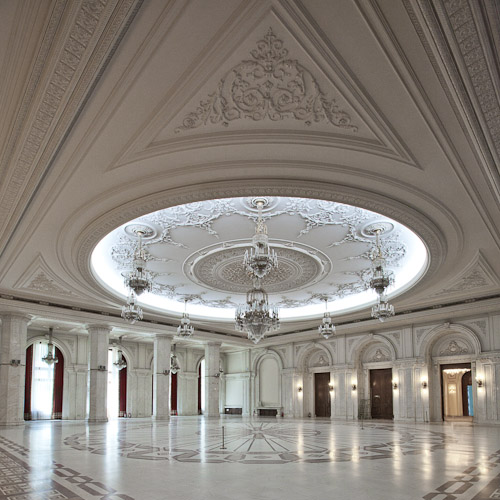
I. I. C. Bratianu Hall. The building is so out of scale to the human body that it feels uncomfortable to walk about - as if one has been shrunk. Photo: Quintin Lake
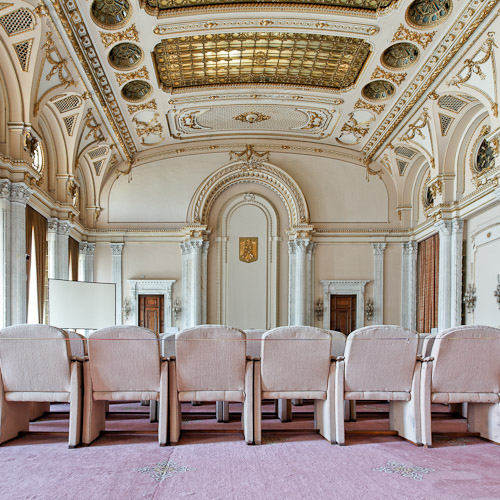
This room was intended as Nicolae Ceauşescu's office with direct access to the balcony, now Al. I. Cuza Hall. The blank space at the end of the room was originally intended for a painting of the modest fellow - perfectly positioned to be admired by his number one fan. Photo: Quintin Lake
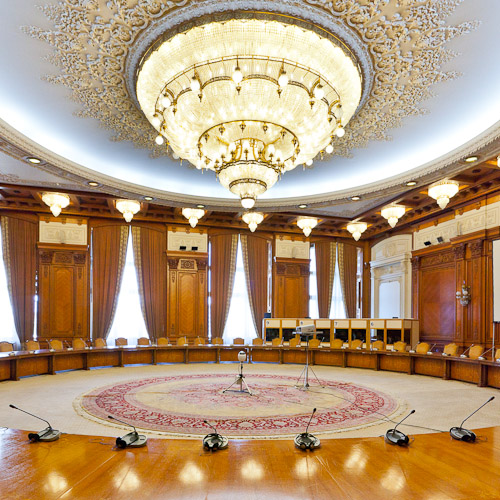
Currently entitled the Human Rights Hall, it seems droll that the round table - symbol of democracy should be housed in such totalitarian architecture. The room hosted the 20th Nato summit and other EU conferences. Photo: Quintin Lake

The Palace of the Parliament in Bucharest, Romania designed by architect Anca Petrescu for Nicolae Ceauşescu is today a multi-purpose building that contains both chambers of the Romanian Parliament. According to the Guinness Book of World Records, the Palace is the world’s largest civilian administrative building, most expensive administrative building, and the heaviest building.

Entire neighborhoods were destroyed to make way for the building, equating to an area the size of Venice. Among that which has been lost are churches, synagogues, valuable historic constructions and 40.000 people were forced to move. Most of them, to newly constructed communist blocks of flats of a poor quality in the city.

At the time of Nicolae Ceauşescu’s 1989 overthrow and execution, the building structure and design were complete. With supreme irony he never had the chance to occupy the monster he created. Subsequently, many of the furnishings were never installed (mostly evident because of the many large, empty spaces throughout the palace), while the last three basement levels and a large clock tower (that would display the official Romanian time) were never finished. During the regime change, the new leaders of Romania referred to the building as the House of Ceauşescu, to highlight the excessive luxury in which Ceauşescu would have lived, in stark contrast to the squalor and poverty endured by many people living in the surrounding neighbourhoods.

Everything about the building is supersized: Petrescu led a team of 700 architects to build the project. In the ’80s 20,000 men worked in shifts for 24 hours a day. The building contains 1,100 rooms. Today the building has a symbolic ambiguity, after so many Romanian people laboured over it’s construction it is hardly surprising it was not demolished. Like it or not, the portentous building over which so much was lost and so many suffered has become the architectural symbol of Bucharest.

Click Here for More from this Photoshoot >>

All images available as fine art prints or for publication / licensing contact me for pricing and to arrange use. Photographs © Quintin Lake  

Detail of West front of St Paul's Cathedral, London. Completed 1697 by architect Sir Christopher Wren.

Click Here for More from this Photoshoot >>

photographs © Quintin Lake

Concert Hall, from Pripyat: 21 Year after Chernobyl Series © Quintin Lake

I’m delighted to be participating in this exhibition & event, here’s the blurb:

UNINTENTION explores the ways in which creativity can manipulate and reinvent the purpose behind ideas, objects, web-sharing, personal and world events. Works include a satirical rehash of a presidential television broadcast by filmmaker Chris Morris; as well as an immersive display of projected stills from the collection Pripyat: 21 Years After Chernobyl by architectural photographer Quintin Lake, documenting both the initial aftermath of the nuclear disaster and the change in its environment since.

Along with the show as a whole, the works use existing material by changing their original intentions; a leaders broadcast becomes a skilled re-edit ridden with satire; the aftermath of a nuclear disaster, via its documentation, inevitably becomes a collection of photographic art. Other new and existing works in the show will include; the focus of normal practical objects being turned into pieces of visual art; a short video art piece encompassing a well known graffiti love-note from the walls of the infamous Park Hill flats in Sheffield; and various pieces looking at Internet Memes and considering their place in the art world.

UNINTENTION  @ WCS | Wolstenholme Creative Space | 11 Wolstenholme Square | Liverpool | L1 4JJ

Preview | 28 September 2011, 6-9pm

Exhibition | 29 September – 2 October 2011, 12-4pm

Admission FREE

UNINTENTION Closing Night Event | 2 October 2011

7pm | The Light Bulb Conspiracy  Admission FREE

Film collective, Tea and Two Slice, present The Light Bulb Conspiracy documentary screening + free tea and toast!

8:30pm | Ruins Alone + live performances  Admission £4

In partnership with WCS, I Am Your Barber, Postmusic and Samzidat present live performances from:

RUINS ALONE (skin graft) Legendary Japanese drum god, showcasingp;the works of Ruins, Koenjihyakkei in his mind melting solo performance

STIG NOISE DIY mariachi trumpet fuelled noise nonsense since 1998

BARBEROS Duel drumming, synth wielding, spandex sporting electro doom jazz noise hollering perverts

The live performances will also include live visuals by video artist Sam Wiehl, manipulating Internet Memes once again reinventing their intention and allowing the meme to evolve within the art gallery setting.

Further Info:

www.wolstenholmecreativespace.com/unintention

http://www.facebook.com/event.php?eid=273447039348731


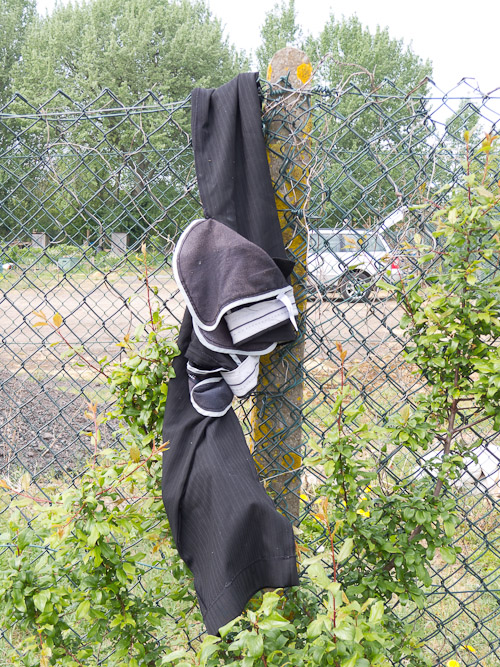
Discarded clothing found in the English countryside. © Quintin Lake
In response to  the renewed interest in the 1986 Chernobyl Nuclear disaster due to the unfolding events at the Fukushima Reactor, Japan and a global re-evaluation of nuclear power as a viable power source I have re-edited my photoshoot from Pripyat (Pripiat) & Chernobyl in 2007 adding a further ten previously unseen images along with captions, maps and satellites images which follow below.

Chernobyl Disaster Radiation Map Showing present Day Exclusion Zone straddling Ukraine and Belarus (red outline at top)

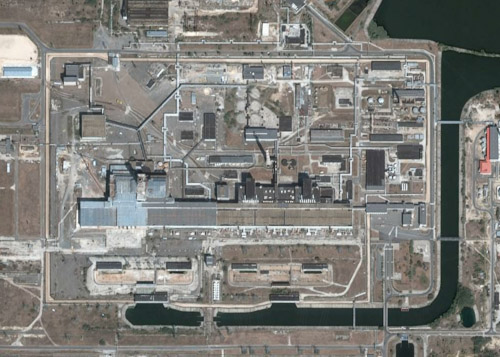
Chernobyl Nuclear Power Plant (Bottom Right) and the town of Pripyat (Top left)

Abandoned Ghost Town of Pripyat (Pripiat) 1km from the reactor note overgrown trees and the yellow ferris when at Top Left

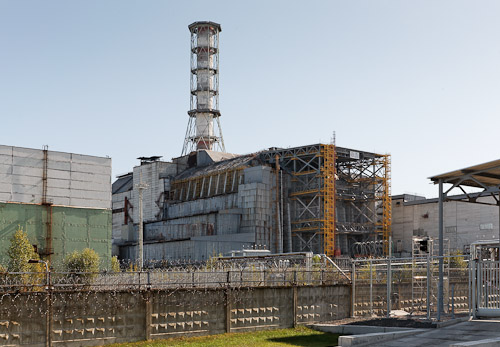
Reactors One to Four at the Chernobyl Nuclear Power Plant. Number four at left was the reactor which exploded seen with the pale grey sarcophagus roof.

Reactor number 4 in 2007: the yellow buttress is due to subsistence of the sarcophagus structure they are holding up. There were plans to cover the entire building with yet another structure to prevent radiation leakage. Photo © Quintin Lake
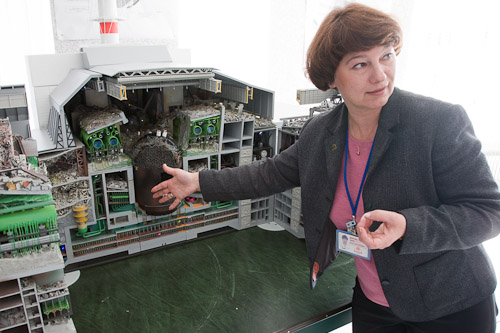
A Ukranian official indicates the fuel rods on a model of Chernobyl Reactor #4 that suffered a catastrophic explosion in 1986. Photo © Quintin Lake
Reactor number 5, which was under construction during the time of the explosion. The cranes date from 1986 when they were abandoned. Photo © Quintin Lake
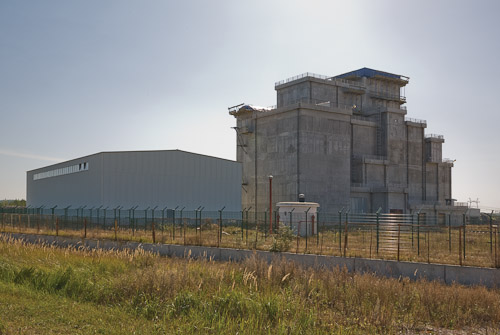
A dry fuel storage facility built in 1999 but later found to be unsuitable for some of the Chernobyl fuel assemblies because they had cracked, soaked up water and changed shape. The facility now stands idle. Photo © Quintin Lake

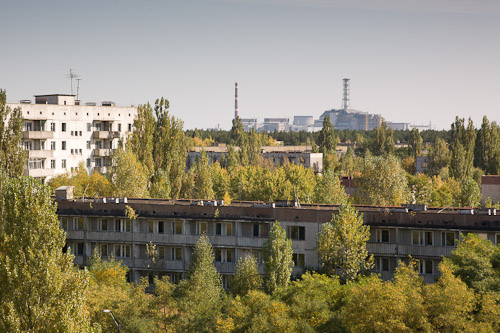
Overgrown abandoned housing in Pripyat ghost town with Reactor #4 Visible in the distance. Photo © Quintin Lake
Concrete entrance sign to Pripyat. Now a memorial, it is surrounded by a steel chain and plastic flowers. Photo © Quintin Lake
Lobby of Hotel Polissia. The checkin desk is in the background. Marble wall cladding has been removed by looters. Photo © Quintin Lake
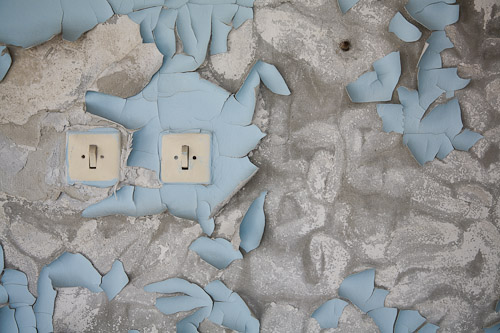
Light switches in a bedroom of Hotel Polissia. Photo © Quintin Lake

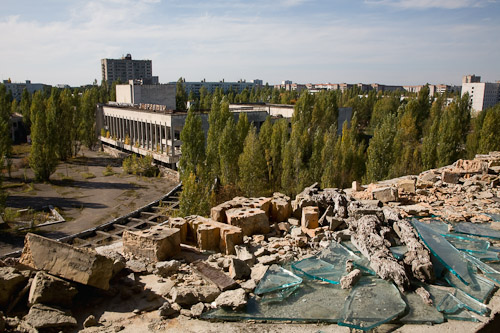
Palace of Culture, central square and apartment blocks viewed from the terrace of hotel Polissia. Photo © Quintin Lake
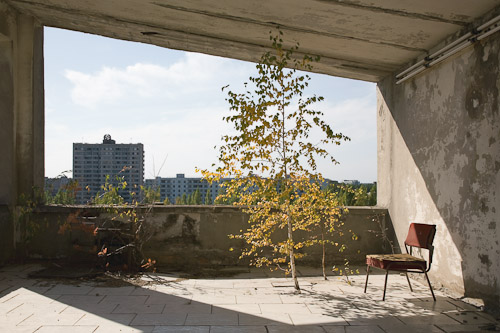
A silver birch tree grows through the floor on the terrace of Hotel Polissia. The hammer and sickle is visible atop the distant apartments. Photo © Quintin Lake
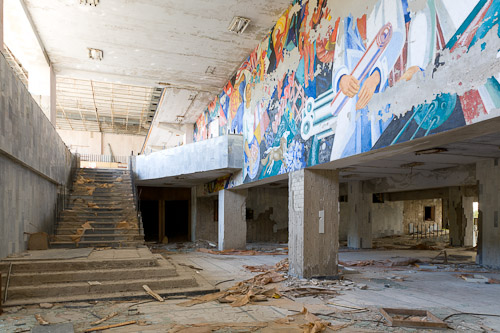
Palace of Culture foyer with Soviet mural. Photo © Quintin Lake

Abandoned dodgems from the fun fair due to open 4 days after the explosion. Photo © Quintin Lake

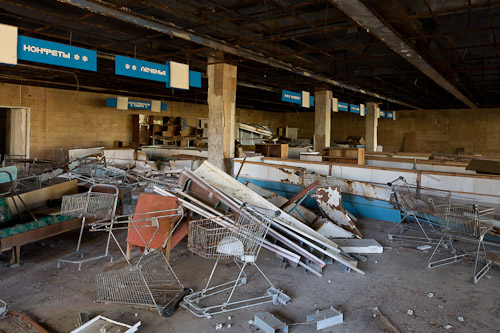
Supermarket interior with abandoned shopping trolleys. Photo © Quintin Lake

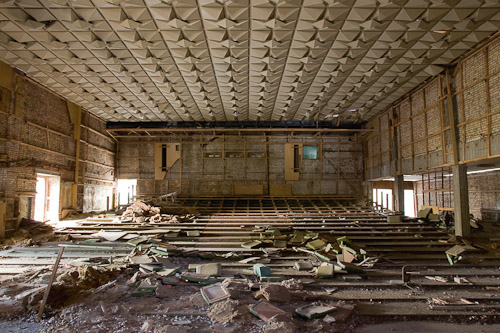
The looted seating area in the Palace of Culture theatre. Photo © Quintin Lake
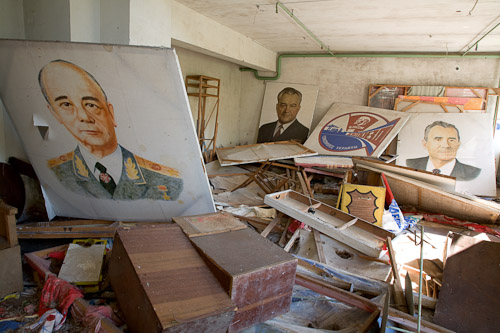
Palace of Culture Theatre prop room with paintings of Lenin and dignitaries. Photo © Quintin Lake

Looted department store next to central square. The floor is covered with decayed ceiling tiles and strip lights. Photo © Quintin Lake

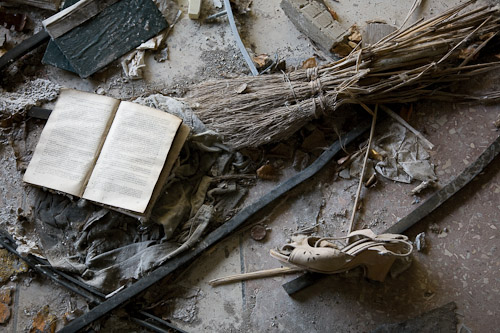
Single shoe, glazing gaskets, book and broom on floor of Department Store. Photo © Quintin Lake

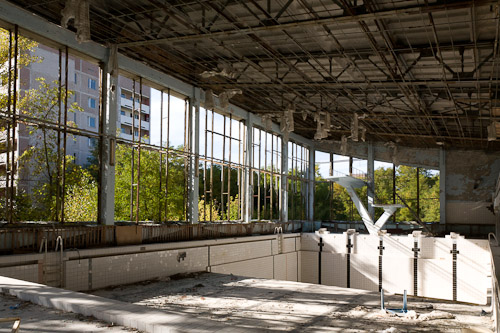
Abandoned Swimming Pool, Pripyat. Photo © Quintin Lake

Light shines across climbing bars and broken basketball hoop in a gymnasium. Photo © Quintin Lake

Abandoned and never used Ferris wheel, Pripyat. The pleasure park was due to open four days after the explosion. Photo © Quintin Lake

Children’s exercise books and broken glass on a classroom floor. Photo © Quintin Lake

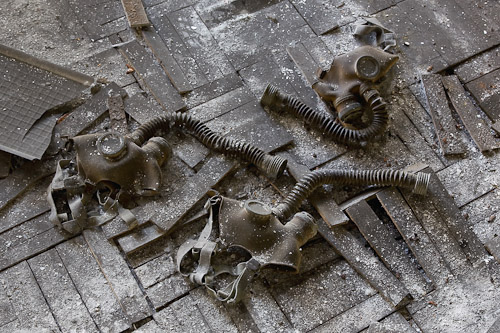
Children’s gas masks, the silver filter elements removed by looters. They had ben issued according to soviet policy in case of nuclear attack from the West. Photo © Quintin Lake

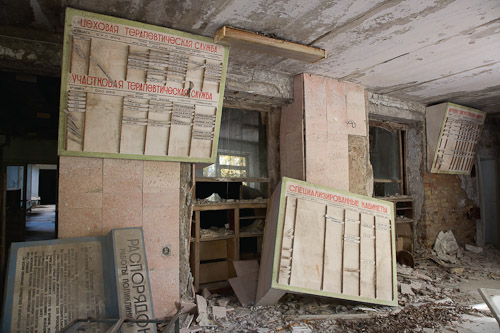
Hospital reception with doctor’s appointment boards. Photo © Quintin Lake

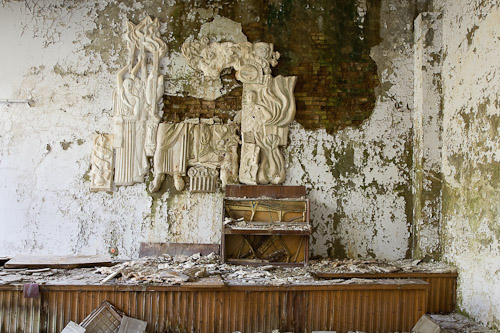
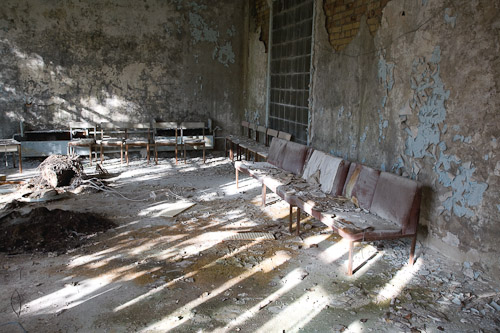
Concert hall with water damaged soviet relief sculpture and piano. Photo © Quintin Lake

Hospital waiting room, Pripyat. Photo © Quintin Lake

Drawing of Lenin with dead house plant in the hospital. Photo © Quintin Lake

When reactor number four at the Chernobyl Nuclear Power Plant exploded in 1986 the result was the worst nuclear accident in history. Large areas of Ukraine, Belarus, and Russia were severely contaminated, requiring the evacuation and resettlement of over 336,000 people.

Pripyat, 1km from the reactor, was designed as an exemplar of Soviet planning for the 50,000 people who worked at the power plant. A funfair, with bumper cars and Ferris wheel, was due to open two days after the reactor exploded.

These photographs, inspired by Robert Polidori’s earlier images of Chernobyl, were shot in 2007 over 5 hours, apparently the safe period of exposure. Although a Geiger counter was carried in case of localised high emissions, certain areas of vegetation which attract a higher concentration of radiation were avoided.

The physical devastation stems from looting and gradual building collapse, not from the explosion. Over the last ten years people have intruded regularly into the military exclusion zone, stealing everything from irradiated toilet seats to the marble cladding from hotel walls. Photographs of the town capture a memory of three traumas: the invisible radiation, the visible looting and the gradual collapse of a ghost town.

Now with the nuclear disaster at Fukushima Reactor, Japan as a result of the 2011 Tōhoku earth quake and tsunami  these images of Chernobyl have a renewed poignancy.

Selected images from this series been exhibited at the Crane Kalman Gallery in Brighton, the Architectural Association in London, the Royal West of England Academy Autumn Show in Bristol  and the Host Gallery in London. Images from the series are also published in my book Drawing Parallels: Architecture Observed

BUY PRINTS / LICENSE IMAGES of Pripyat and the Chernobyl Nuclear Disaster here >>

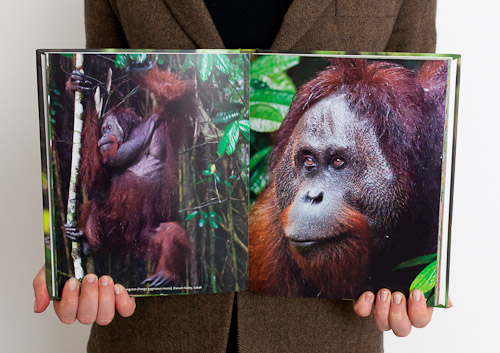
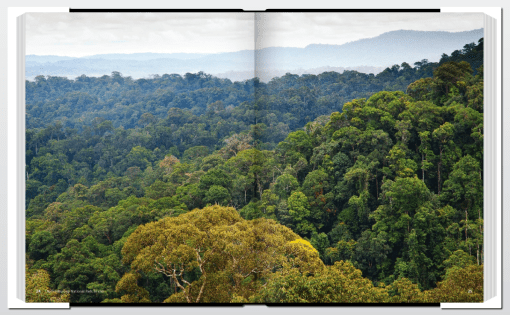
Last of the Borneo Rainforest Cover featuring Southern Pig-tailed Macaque, Danum Valley, Sabah

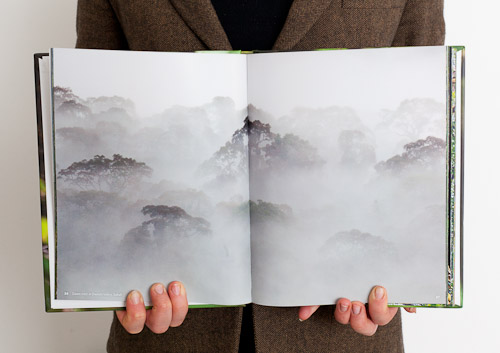
Dawn mist in Danum Valley, Sabah

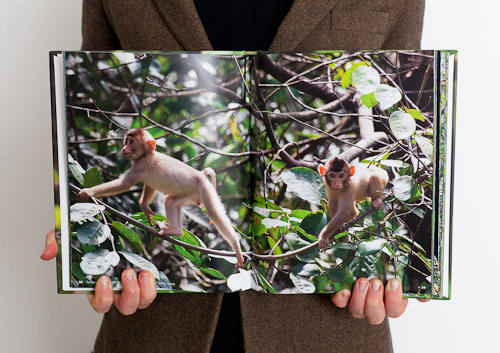
Two juvenile Southern Pig-tailed Macaques in Danum Valley, Sabah

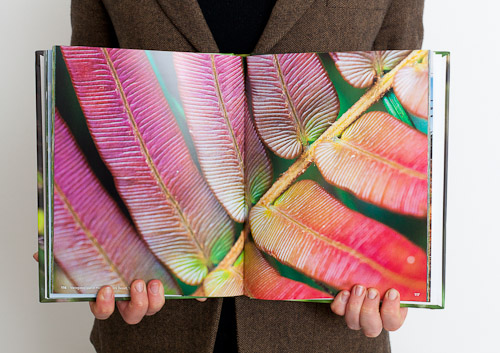
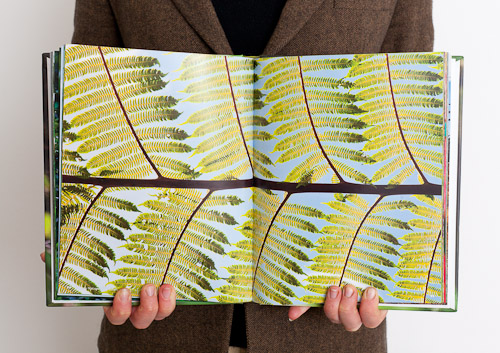
Variegated leaf in Mesilau Nature Resort, Sabah

Orang Utan Sanctuary, Sepilok, Sabah

Kinabalu National Park, Sabah

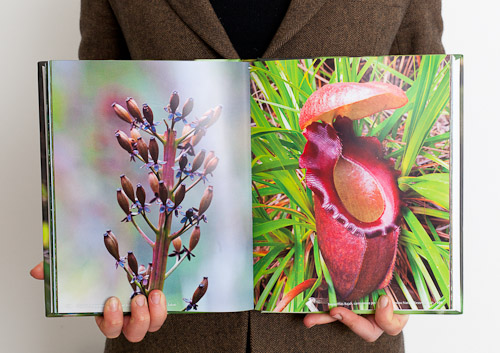
Flower and pitcher Nepenthes Rajah pitcher plant, Mesilau Nature Resort, Sabah

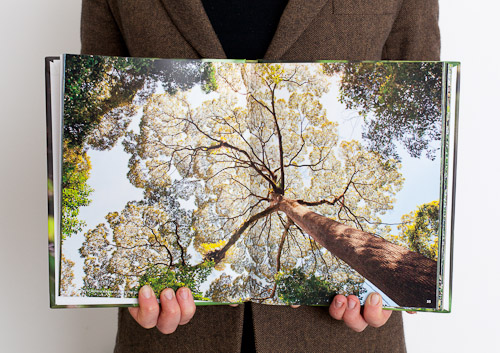
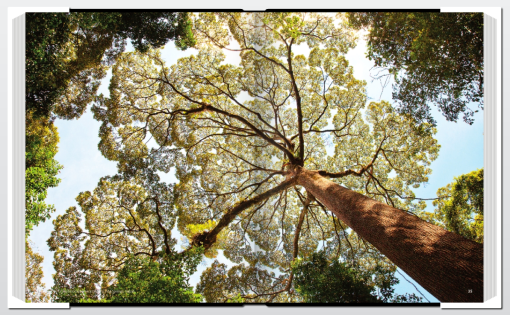
Canopy of Dipterocarp tree at Poring Hot Springs, Sabah

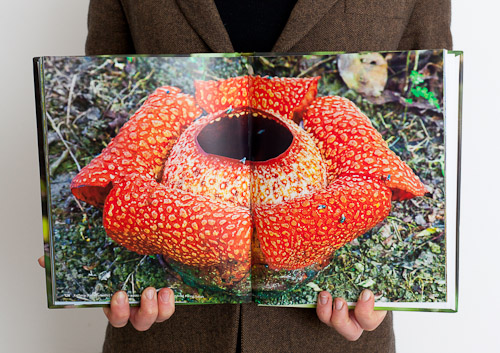
Rafflesia flower 60 cm across with pollinating flies, 4 days old, Poring, Sabah

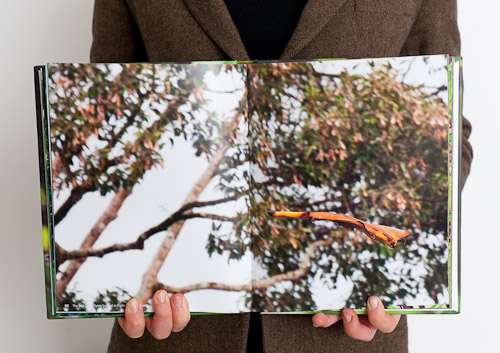
The Red Giant Flying Squirrel in flight, Sepilok, Sabah

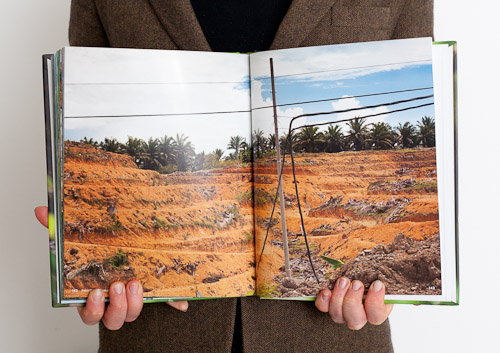
Palm Oil deforestation, Sabah

Image wrap laminated Hardback, 146 pages, 20 × 25 cm, illustrated throughout

I’ve just received the first copy of my latest photo book “The Last of the Borneo Rainforest” this is my first foray into print-on-demand publishing and I’m delighted with the print quality and colour accuracy.

To buy a copy visit the blurb bookstore here

Book cover: The Last of the Borneo Rainforest by Quintin Lake

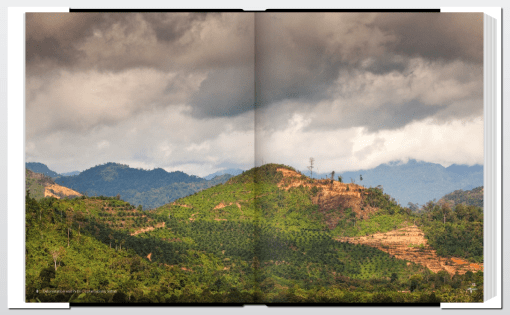
Deforestation in Sabah for Palm Oil plantations

Virgin rainforest in Ulu Temburong, Brunei

Rainforest canopy in Sabah, Borneo

A photostory of deforestation and Palm Oil plantations contrasted with the wildlife of Sabah and Brunei. Featuring Sepilok, Kinabalu National Park, Danum Valley, Kinabatangan River, Peradayan and Ulu Temburong.

Binding: Hardback, 146 pages
Format: 20 × 25 cm, Full page photographs in colour throughout

Preview and order the book here > >

Travel Photographer of the Year Feature in Italy's newspaper , La Repubblica. Photo: Quintin Lake

Read article on La Repubblica website >>

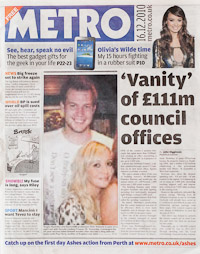
Metro Newspaper Cover 12th Dec 2010

"Britons shine in Travel Photographer Of The Year competition" Metro Centrefold

Read article on Metro website >>

Lux Gallery Italy. Photo: Quintin Lake

Read article on Lux Gallery website >>

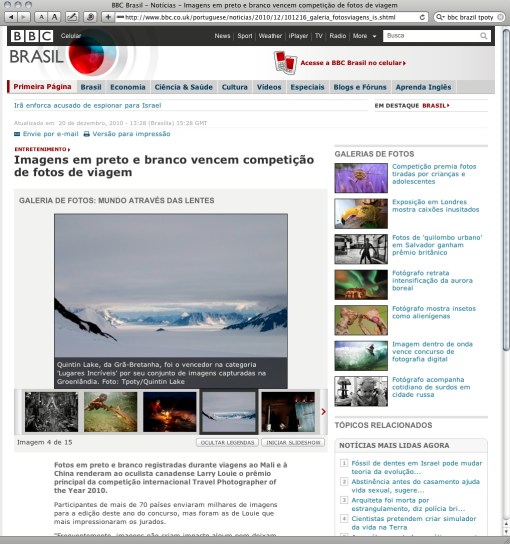
BBC Brazil. Photo: Quintin Lake

Read article on BBC Brazil website >>

Travel Photographer of the Year 2010 on MSN Travel

Read article on MSN Travel website >>

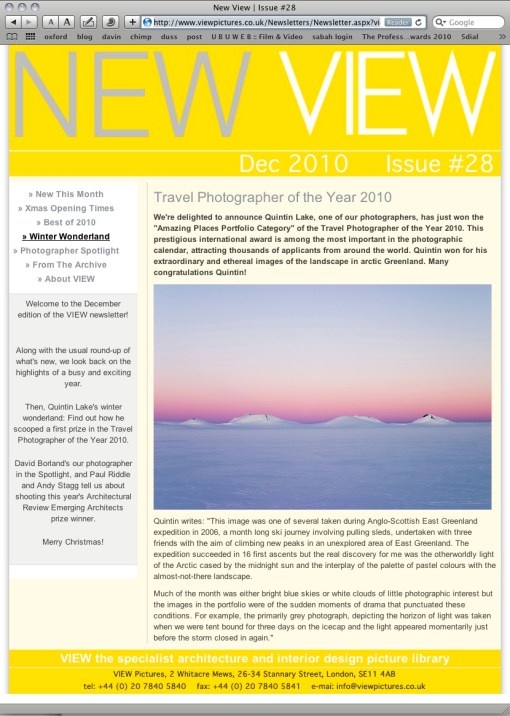
New View # 28 Photo: Quintin Lake

Read article on View Pictures website >>

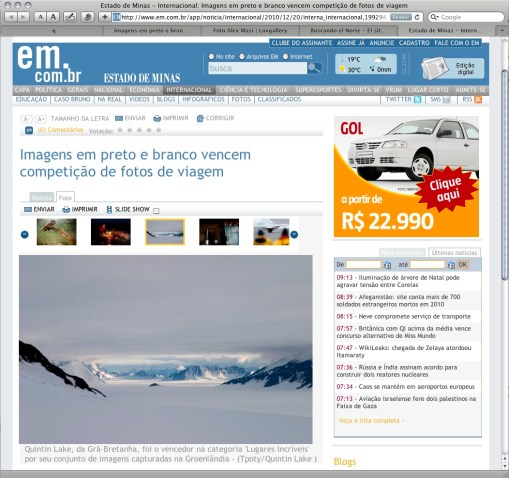
Estado De Minas

Read article on Estado De Minas website >>

UOL Brazil

Read article on UOL Brazil website >>