Archives for posts with tag: Vietnam

Entrance courtyard of Thien Hau Temple, Ho Chi Minh City, Vietnam
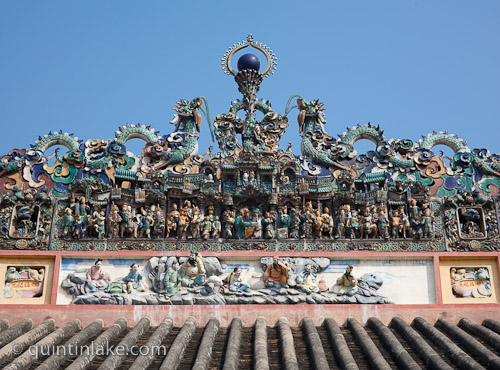
Porcelain dragons and figurines expressing themes from Chinese religion and legends on the roof of Thien Hau Temple, Ho Chi Minh City, Vietnam
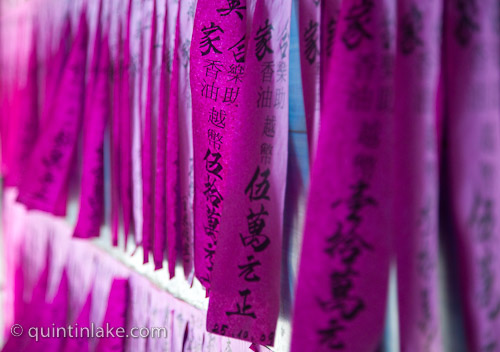
The pink tissue paper prayer flags, contain the names of people who have made donations for the upkeep of the temple, Chua Thien Hau Temple, Ho Chi Minh City, Saigon, Vietnam
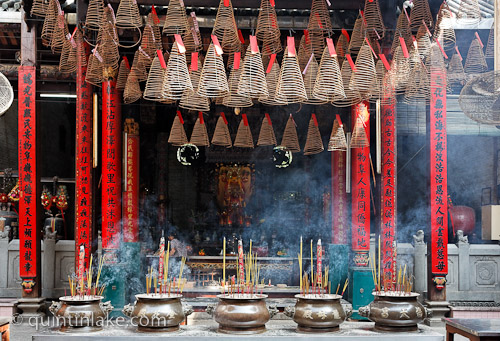
Smoking conical incense coils and urns at Chua Thien Hau Temple in Cho Lon, Ho Chi Minh City, Vietnam.

Conical incense coils hanging on wires below the roof at Chua Thien Hau Temple in Cho Lon, Ho Chi Minh City, Vietnam.

A family lighting conical incense coils and sticks at Chua Thien Hau Temple in Cho Lon, Ho Chi Minh City, Vietnam.

The roof is decorated with small delicately fashioned porcelain figurines expressing themes from Chinese religion and legends. Lanterns and wooden models of Chinese theaters hang over the entrance.Chùa Bà Thiên Hậu (The Pagoda of the Lady Thien Hau) is a Chinese style temple located on Nguyen Trai Street in the Cho Lon (Chinatown) district of Ho Chi Minh City, Vietnam. It is dedicated to Thiên Hậu, the Lady of the Sea (“Tian Hou” as transcribed from the Chinese), who is also known as “Mazu”.

VIEW MORE IMAGES of Thien Hau Temple

Photography © Quintin Lake, 2010

Carved stone dragon pillars by burning incense, Ha Chuong Hoi Quan Pagod

Burning incense cauldron, Ha Chuong Hoi Quan, Fijian Pagoda, Ho Chi Minh City

Detail Ceramic relief of the roof apex of Ha Chuong Hoi Quan, Fijian Pagoda contrast with modern towers, Ho Chi Minh City

The typical Fujian Ha Chuong Hoi Quan Pagoda  is dedicated to Thien Hau, who was born in Fujian. The four carved stone pillars, wrapped in painted dragons, were made in China and brought to Vietnam by boat. There are interesting murals to each side of the main altar and impressive ceramic relief scenes on the roof.

VIEW MORE IMAGES of Ha Chuong Hoi Quan Pagoda

Photography © Quintin Lake, 2010

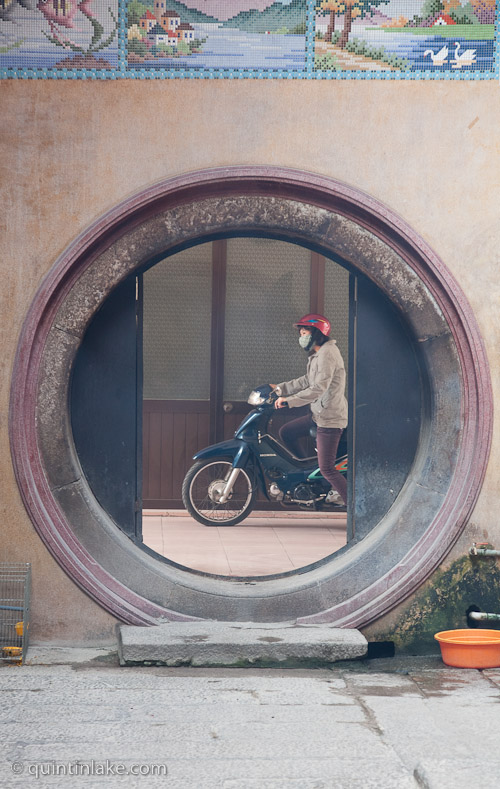
Masked women on a moped seen through a round door of Nghia An Hoi Quan Pagoda, Cholon, HCMC

Built by the Chaozhou Chinese Congregation, Nghia An Hoi Quan Pagoda on 678 Nguyen Trai Street in Cholon, Ho Chi Minh City

VIEW MORE IMAGES of Nghia An Hoi Quan Pagoda

Photography © Quintin Lake, 2010

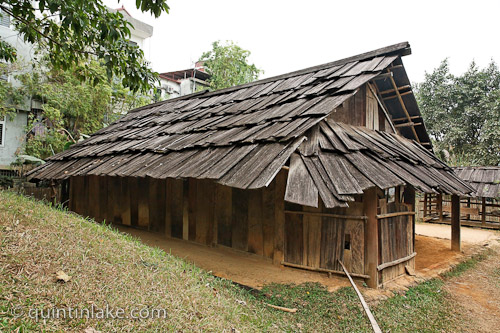
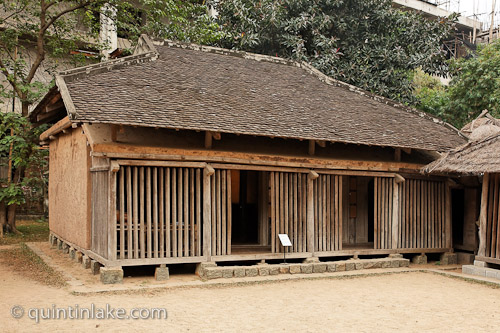
Cham House, Ninh Thuan province, Vietnamese Museum of Ethnology, Hanoi

Cham House, Ninh Thuan province, Vietnamese Museum of Ethnology, Hanoi

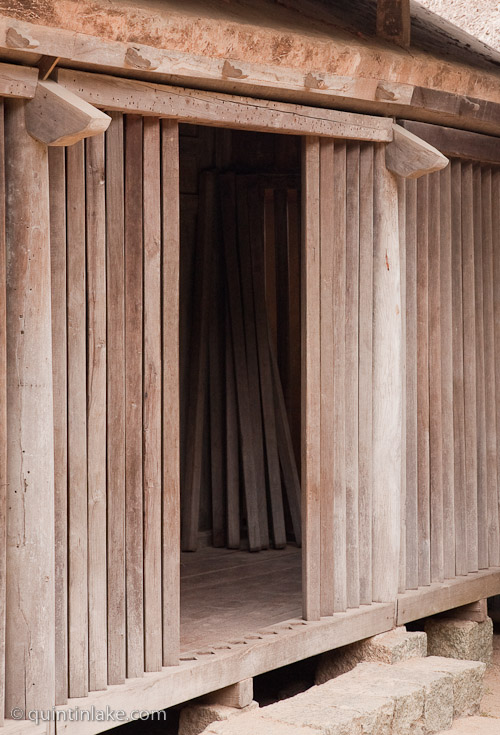
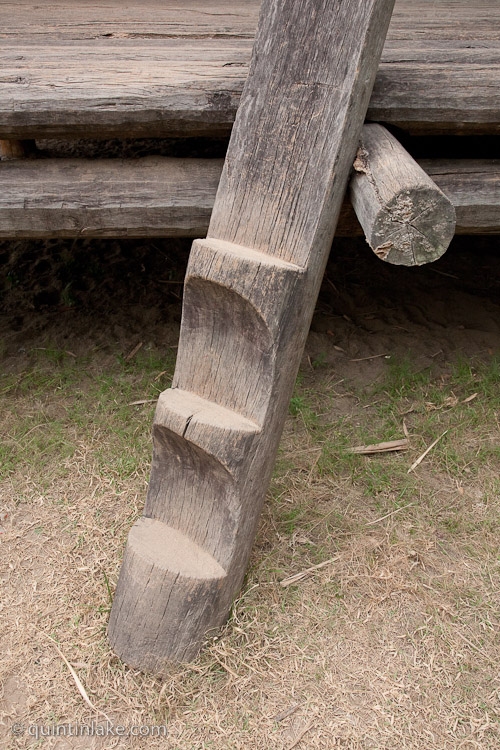
Removable posts allow adjustable entrance door on Cham House, Ninh Thuan province, Vietnamese Museum of Ethnology, Hanoi

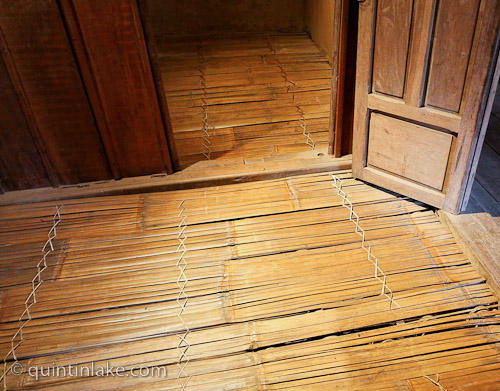
Bamboo floor of Cham House, Ninh Thuan province, Vietnamese Museum of Ethnology, Hanoi

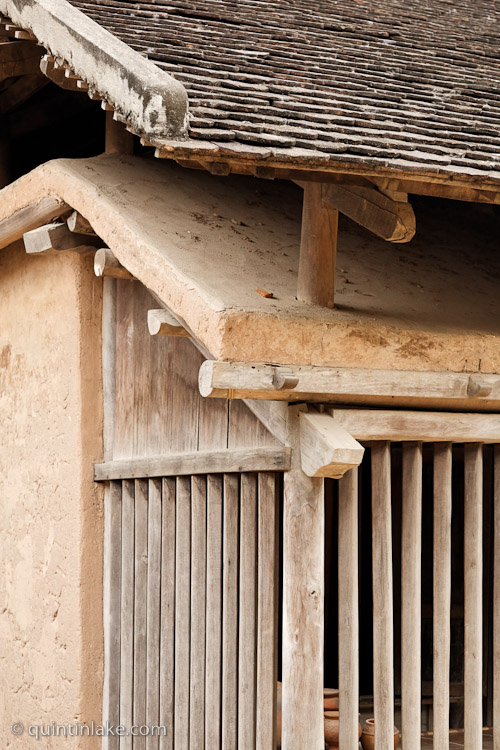
Double roof of Cham House for natural cooling in intense sunlight, Vietnamese Museum of Ethnology, Hanoi

One of the most characteristic tangible cultural heritages of the Cham and also one of the most sensitive to change is their house. The Cham build their houses on the ground and arrange them in orderly rows. Their houses are surrounded by a garden with a wall or hedge. The doors open to the south-west or between. The architectural style is similar to that of the Viet with walls made of brick or a mixture of lime and shells, and covered with tiles or thatch. Houses of more than one storey are rare. In certain localities, houses on stilts are found but the floor is only 30 cm above the ground. The rooms of Cham houses are arranged according to a particular order: the sitting room, rooms for the parents, children, and married women, the kitchen and ware- house (including the granary), and the nuptial room for the youngest daughter. This arrangement reflects the break-up of the matrilineal extended family system among the Cham.

The Cham living in Ninh Thuan and Binh Thuan believe that they have to perform certain religious rituals before the building of a new house, particularly praying for the Land God and asking for his permission to cut down trees in the forest. A ritual is also held to receive the trees when they are transported to the village. A ground-breaking ceremony called phat moc is also held. The precinct of the Cham traditional house is the residence site of a Cham family. It is an assembly of several houses with different functions and these houses relate closely with each others.

VIEW MORE IMAGES of the Cham House

Photography © Quintin Lake, 2010
Text © 2005 Vietnam Museum of Ethnology

Hmong House, Vietnamese Museum of Ethnology, Hanoi

Roof of Hmong House, Vietnamese Museum of Ethnology, Hanoi

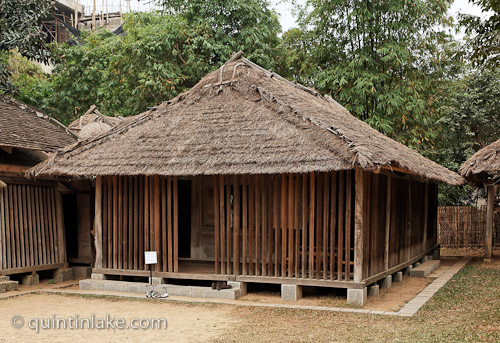
This house was built in 1984 by father of the last owner, Mr. Thao Phang Khay (born in 1972), of De Cho Chua A village, Pung Luong commune, Mu Cang Chai district, Yen Bai province. This was the home of a family of four. Hmong houses are built of wood, directly on the ground. For the flower Hmong of Mu Cang Chai, the wood must be that of the po mu tree (visible growing behind this house). House-building is men’s work. Only axes and knives are used as tools, and all of the pieces are lashed together. This house was reconstructed at the museum in six days in 1999, by a group of seven Hmong villagers.

VIEW MORE IMAGES of the Hmong House

Photography © Quintin Lake, 2010

Text © 2005 Vietnam Museum of Ethnology

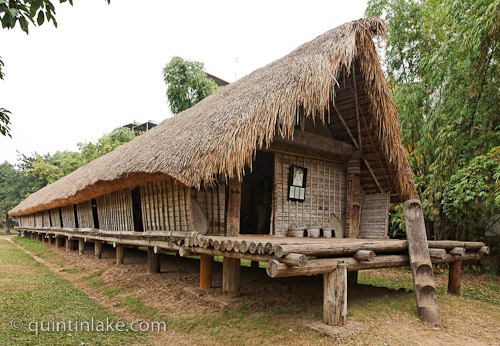
Ede Long House, Vietnamese Museum of Ethnology, Hanoi

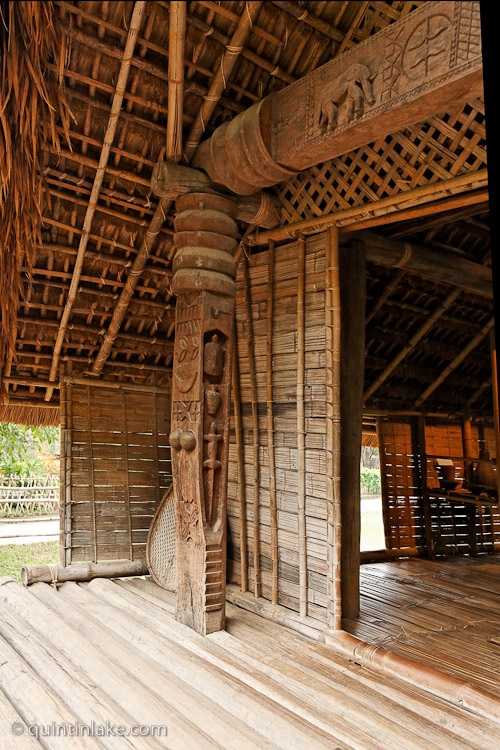
Entrance to Ede Long House, Vietnamese Museum of Ethnology, Hanoi

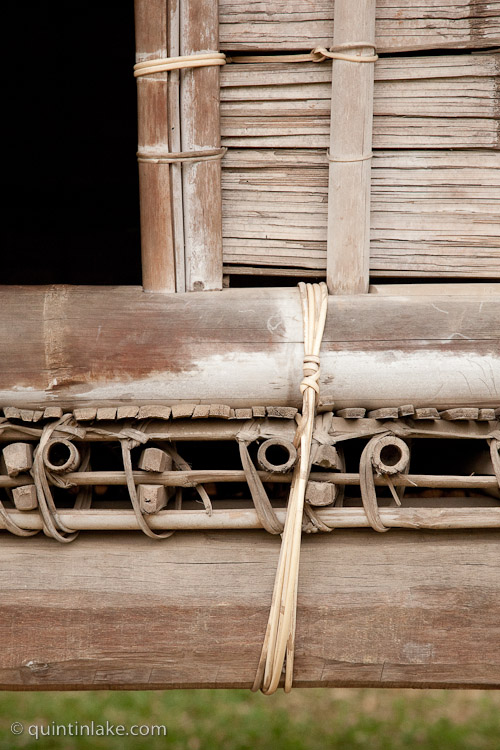
Bamboo construction detail, Ede Long House, Vietnamese Museum of Ethnology, Hanoi

Steps to raised platform of Ede Long House, Vietnamese Museum of Ethnology, Hanoi

The long house and the matrilineal family The long house is the residence of a great matrilineal family. Traditionally, the house accommodates the families of daughters and grand daughters who were the descendants of one mother. Before the middle of the 20th century, there were dozens of families living in the long house. The whole family worked together and shared rice and other food. Property was held in common and customary law of the Ede stipulated that the property should be managed by the household’s most senior woman. After marriage, a son would reside in this wife’s house but still retain a special position in the families of his sisters and his nieces. The important role of women was (and continues to be) a special feature of Ede society.

VIEW MORE IMAGES of Ede Long House

Photography © Quintin Lake, 2010
Text © 2005 by Vietnam Museum of Ethnology

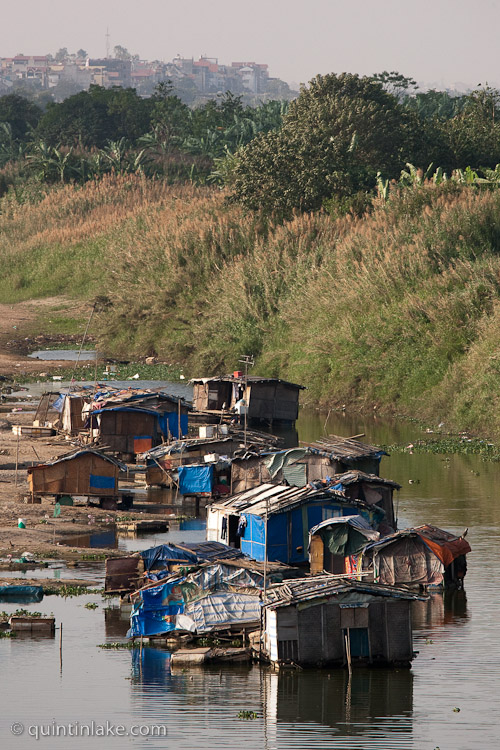
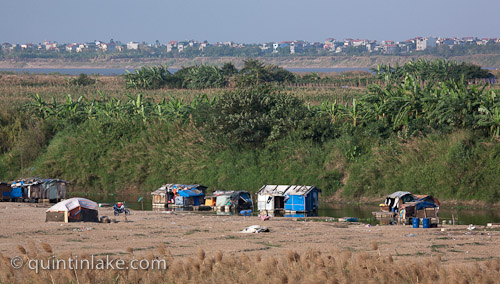
Floating boat houses on the Red River, seen from Long Bien Bridge, Hanoi, Vietnam

Floating boat houses on the Red River with suburban hanoi in the distance, seen from Long Bien Bridge, Hanoi, Vietnam

North of the Long Bien Bridge bridge are poorest of Hanoi who live physically and figuratively at the edge of the city in these makeshift floating shelters.

VIEW MORE IMAGES of Boat houses on the Red River, Hanoi

Photography © Quintin Lake, 2010
Tube Houses, near Long Bien Bridge Hanoi, Vietnam

Pitch roofed Tube House seen from Long Bien Bridge, Hanoi, Vietnam

Facade of Tube Houses on Tran Nhat Duat Street, Hanoi, Vietnam

Pink Tube House seen from Long Bien Bridge Hanoi, Vietnam

Tube Houses next to Tran Nhat Duat Street , by Gustave Eiffel's Long Bien Bridge Hanoi, Vietnam

Laundry and television aerial on a Tube House, Long Bien, Hanoi, Vietnam

With a narrow face on the street (often as narrow as 2 meters) and a long space on the inside (they can be up to 80 meters deep) these houses do indeed resemble tubes.This style dates back to the Le Dynasty (1428-1788), when they were popular as a way to fit as many stores on a street as possible. Typically, the houses had a shop area in the front and used the back areas for relaxing and sleeping. Another theory is that since property used to be taxed based on the width of the property at the street, land was subdivided into very narrow and long parcels upon which correspondingly long buildings were built.

That mixed use of space for commerce and residence remains today, though the buildings have soared to create tall thin “rocket buildings”. Confined to the ground area by the original land deeds, owners have had to expand upwards, creating three, four or five-story ‘rocket buildings.’ With the extra floors shopkeepers were allowed to move the living areas upstairs and expand their stores. Most of these buildings in Hanoi and other cities in Vietnam are usually four stories tall, though some are much taller . The facade and roofs draw liberally from various architectural styles and motifs and the long sides are usually windowless. Due to concerns of theft open balconies are covered with a metal screen.

VIEW MORE IMAGES of Vietnamese Tube Houses and Rocket Buildings

Photography © Quintin Lake, 2010