Archives for category: Architectural Photography

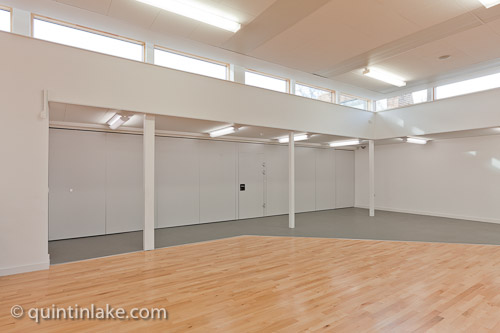
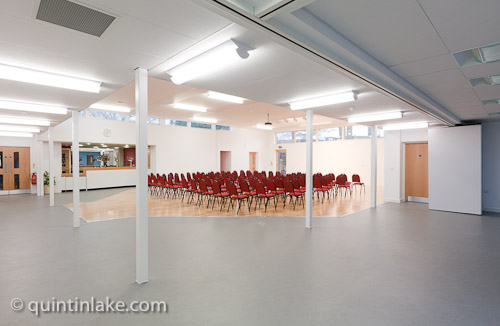
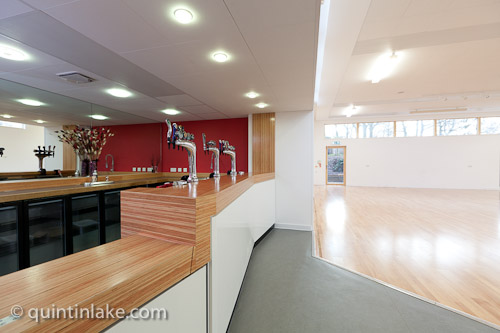
The new bar and hall at Parkwood Community Centre. Photo: Quintin Lake

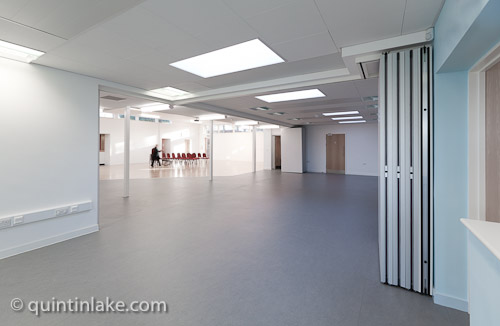
Sliding screens closed at Parkwood Community Centre. Photo: Quintin Lake

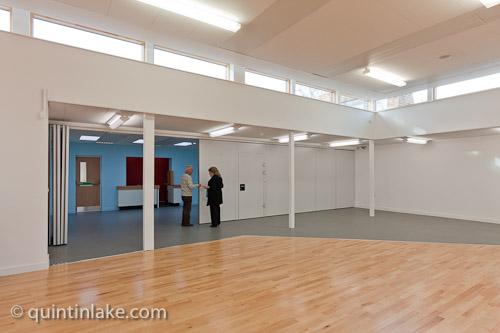
Sliding screens at Parkwood Community Centre. Photo: Quintin Lake

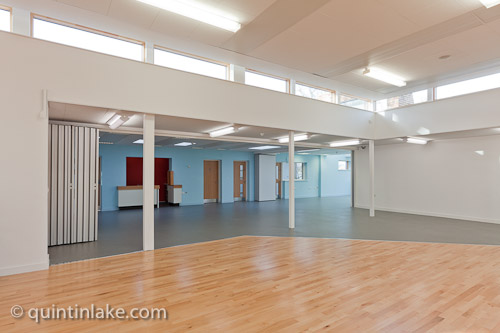
Sliding screens open at Parkwood Community Centre. Photo: Quintin Lake

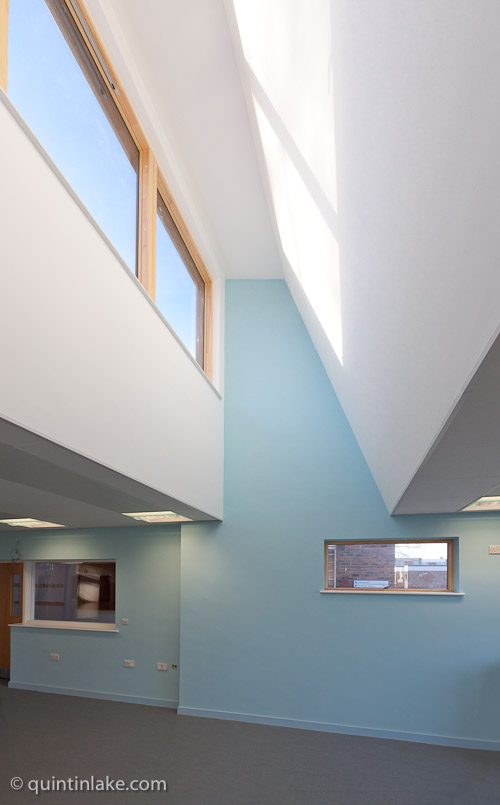
New lantern brings daylight into the heart of the building. Photo: Quintin Lake

Parkwood Community Centre Interior by Clay Architecture. Photo: Quintin Lake

Parkwood Community Centre Interior setup for a concert. Photo: Quintin Lake

An assignment by Clay Architecture Ltd to photograph their extensive remodelling and expansion of the existing building providing a light multi-use space at Parkwood Community Centre, Rainham, Kent

VIEW MORE / BUY images from this photoshoot here >>

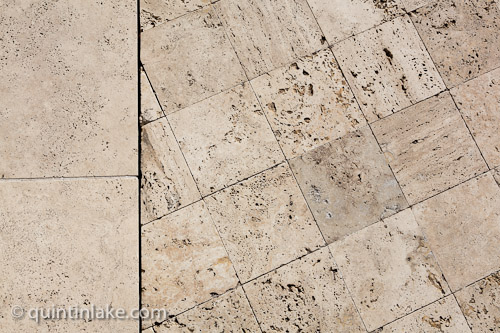
Detail of travertine floor at the Getty Center. Photo: Quintin Lake

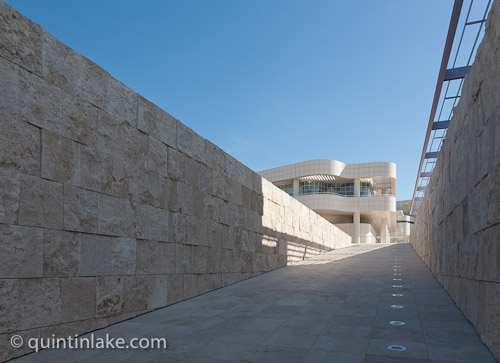
Museum entrance hall seen from the entrance plaza. Getty Center. Photo: Quintin Lake

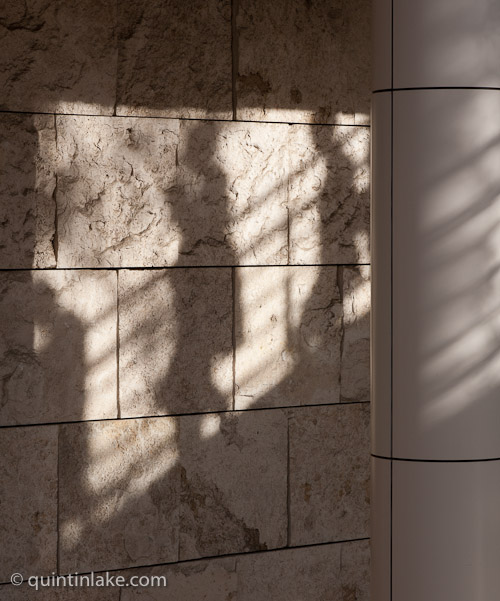
Visitor shadows on the restaurant at the Getty Center. Photo: Quintin Lake

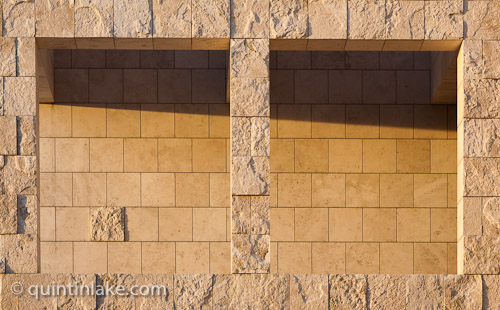
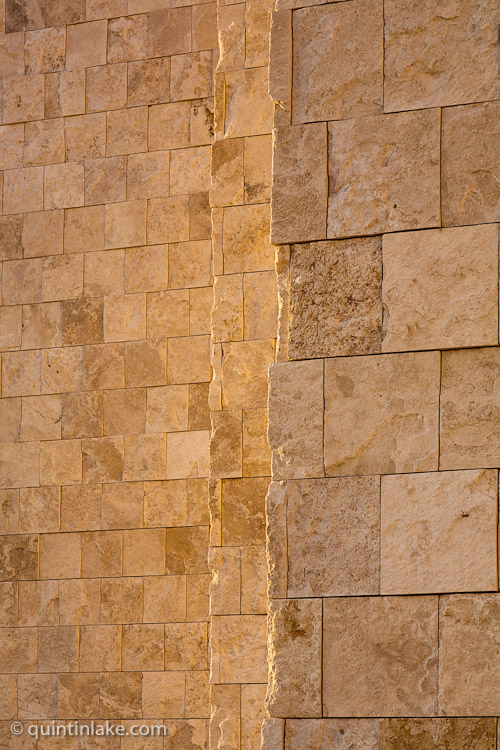
Family room facade detail of polished and rough cut travertine. Getty Center. Photo: Quintin Lake

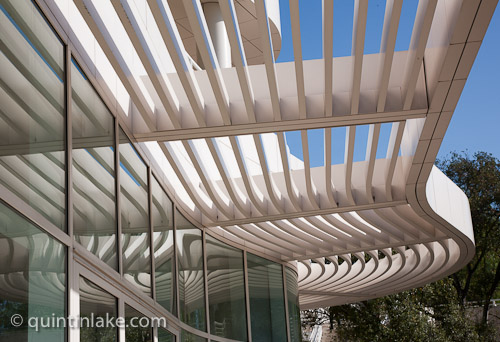
Curving Brise soleil by the cafe. Getty Center. Photo: Quintin Lake

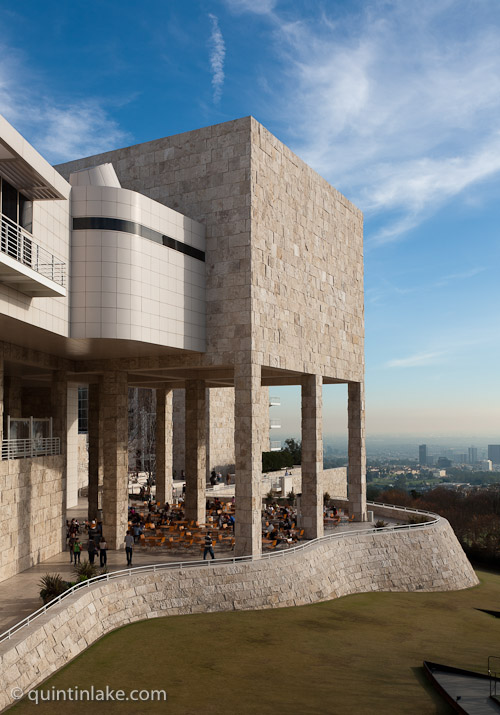
Exhibitions Pavilion with a view to Los Angeles. Getty Center. Photo: Quintin Lake

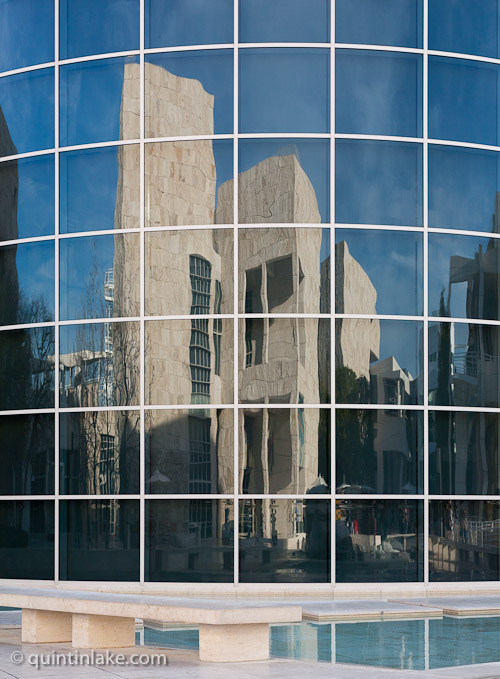
Family room reflected in the west pavilion. Getty Center. Photo: Quintin Lake

Sunset on the Detail of travertine cladding. Getty Center. Photo: Quintin Lake

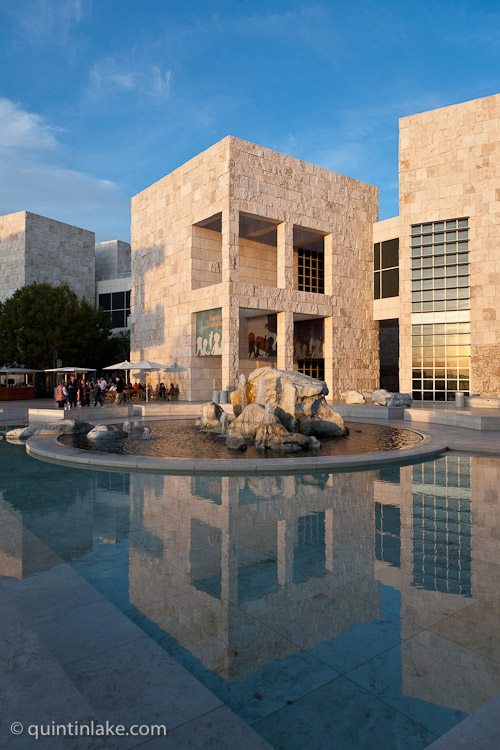
The Family Room and reflection. Getty Center. Photo: Quintin Lake

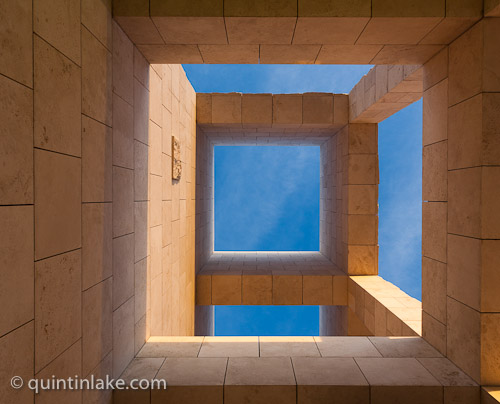
Looking up the Family Room facade. Getty Center. Photo: Quintin Lake

Richard Meier’s Getty center in LA is symphony of pale forms and surface texture which are brought to life by the the beautiful LA light and the immaculate condition in which the building in maintained.

In Andreas Papadakis and James Steele, Architecture of Today (Paris: Terrail, 1991) Meier is quoted as saying:

Architecture is the subject of my architecture…What I seek to do is pursue the plastic limits of modern architecture to include a notion of beauty moulded by light. My wish is to create a kind of spatial lyricism within the canon of pure form. In the design of my buildings, I am expanding and elaborating on what I consider to be the formal base of the Modern Movement…The great promise and richness of some of the formal tenets of Modernism have almost unlimited areas for investigation…I work with volume and surface, I manipulate forms in light, changes in scale and view, movement and stasis.

VIEW MORE / BUY PRINTS / LICENSE IMAGES of the Getty Center here >>

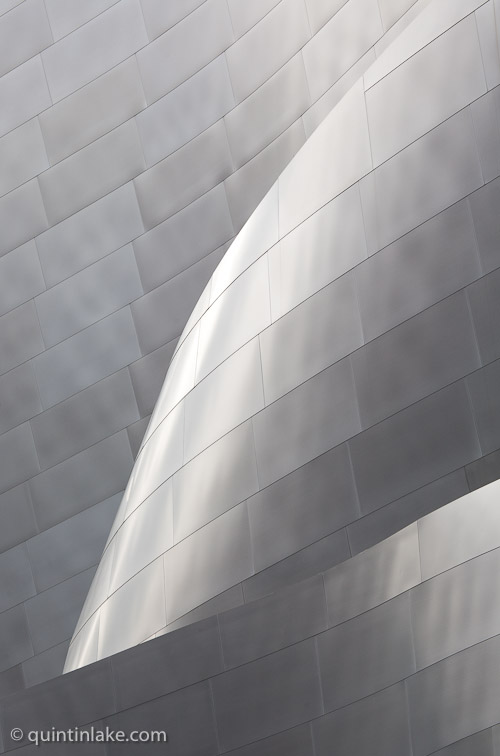
Facade I. Detail of the stainless steel facade of the Walt Disney Concert Hall, LA. Photo: Quintin Lake

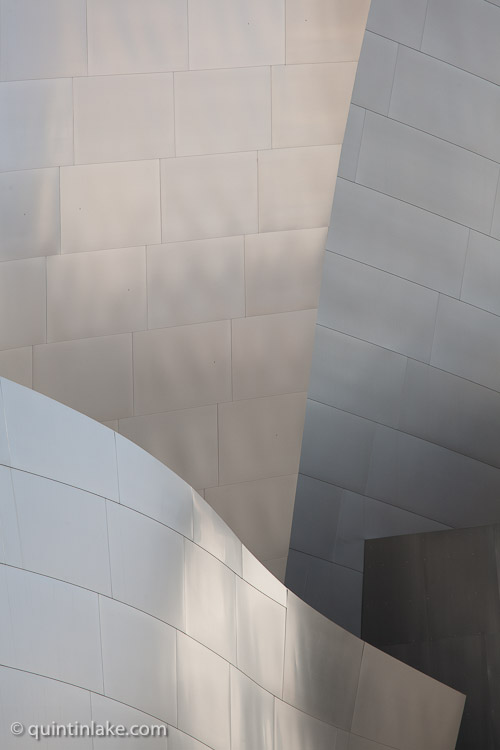
Facade II. Detail of the stainless steel facade of the Walt Disney Concert Hall, LA. Photo: Quintin Lake

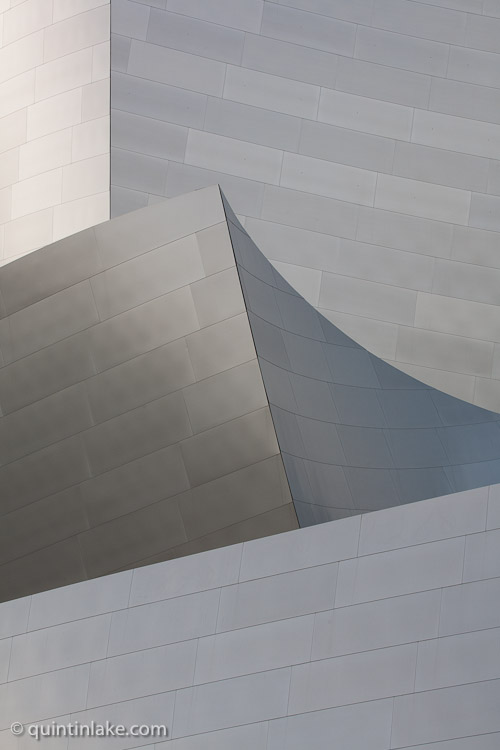
Facade III. Detail of the stainless steel facade of the Walt Disney Concert Hall, LA. Photo: Quintin Lake

The subtle abstract quality of the matte stainless steel panels as they catch the light is what struck me the most about Frank Gehry’s celebrated and much photographed Deconstructivist Walt Disney Concert Hall in Los Angeles built in 2003. Originally, one portion of the building featured highly polished panels; however, these were dulled in 2005 due to heat reflection problems in nearby buildings. See images of the Gehry House, LA from 1978 where his experiments with deconstructivism in architecture began.

See more photos of details, facade elevations and complete views of the building here >>

Caution High Voltage Sign (German: Vorsicht Hochspannung Lebensgefhr) on the electrified barbed wire perimeter fence surrounding the blocks at Auschwitz I Extermination Camp. Photo: Quintin Lake

Space between the two barbed wire perimeter fences overlooked by a guard tower at Auschwitz I Extermination Camp. Photo: Quintin Lake

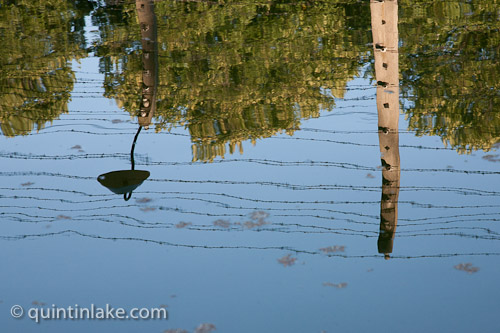
Electrified barbed wire fence and security light reflected in the surface of the Water reservoir / Swimming pool reserved for the SS at Auschwitz I Extermination Camp. The thought of the guards swimming about and taking their recreation as a break between executions is almost incomprehensible. Photo: Quintin Lake

Auschwitz I (German name for Oświęcim) was the original camp, serving as the administrative center for the whole complex as it grew. On September 3, 1941, deputy camp commandant SS-Hauptsturmführer Fritzsch experimented on 600 Russian POWs and 250 Polish inmates by gathering them in the basement of Block 11 and gassing them with Zyklon B, a highly lethal cyanide-based pesticide. This paved the way for the use of Zyklon B as an instrument for extermination at Auschwitz, and a gas chamber and crematorium were constructed by converting a bunker. This gas chamber operated from 1941 to 1942, during which time some 60,000 people were killed therein.

Although the Auschwitz I site remains the symbol of the holocaust in popular culture with its famous “Arbeit macht frei” (Work sets you free) sign above the entrance gate and the fact that industrialised murder was developed in the camp the majority of the killing (approximately 90%) took placed in the purpose constructed extermination camp at Auschwitz II Birkenau a few miles from Auschwitz I.

VIEW MORE IMAGES of Auschwitz I here >>

Electrified barbed wire fence and wooden barracks in Auschwitz II - Birkenau. These barracks were designed as prefabricated horse stables originally made for use on the eastern Front, against the Soviet Union. The wooden bunks, or “hutches” as they are sometimes called, contained as many as six prisoners on each shelf. Originally intended to house 250 prisoners, these barracks sometimes contained as many as a thousand. Photo: Quintin Lake

Barbed wire perimeter fence with brick chimneys belonging to ruined wooden barracks behind. Auschwitz II-Birkenau Extermination Camp (Poland). Photo: Quintin Lake
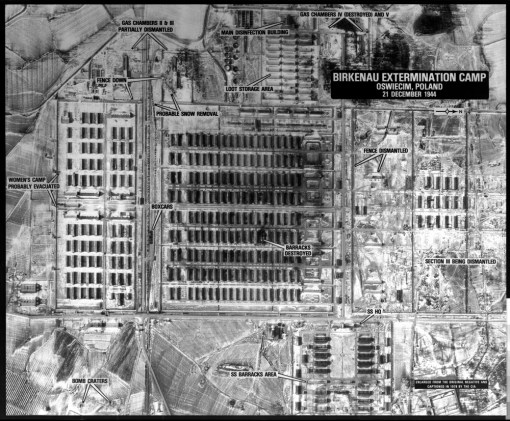
Aerial view of Auschwitz II - Birkenau. Photograph captioned by the Central Intelligence Agency December 21, 1944. Source: mazal.org

Birkenau was the largest of the more than 40 camps and sub-camps that made up the Auschwitz complex. The Birkenau camp is huge, covering 425 acres. The boundaries of Birkenau stretch a mile in one direction and a mile and a half in the other direction. During its three years of operation, it had a range of functions. When construction began in October 1941, it was supposed to be a camp for 125 thousand prisoners of war. It opened as a branch of Auschwitz in March 1942, and served at the same time as a center for the extermination of the Jews. In its final phase, from 1944, it also became a place where prisoners were concentrated before being transferred to labor in German industry in the depths of the Third Reich.

The majority—probably about 90%—of the victims of Auschwitz Concentration Camp died in Birkenau. This means approximately a million people. The majority, more than nine out of every ten, were Jews. A large proportion of the more than 70 thousand Poles who died or were killed in the Auschwitz complex perished in Birkenau. So did approximately 20 thousand Gypsies, in addition to Soviet POWs and prisoners of other nationalities. Source Auschwitz-Birkenau State Museum link

VIEW MORE IMAGES of Auschwitz-Birkenau here >>
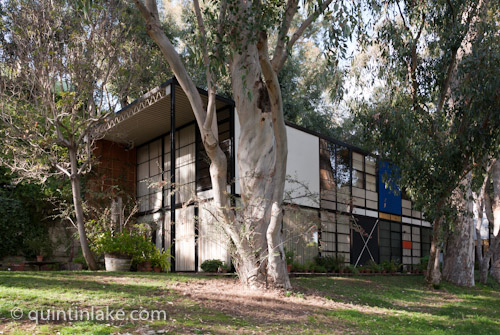
The Eames House or Case Study House No. 8, by Charles and Ray Eames Los Angeles, California. Photo: Quintin Lake

Located upon a cliff overlooking the Pacific Ocean, and hand-constructed in 1949 within a matter of days entirely of pre-fabricated steel parts intended for industrial construction, it remains a milestone of modern architecture. Designed by husband-and-wife design pioneers Charles and Ray Eames, to serve as their home and studio. The Eames’ proposal reflected their own household and their own needs; a young married couple wanting a place to live, work and entertain in one undemanding setting in harmony with the site. Perhaps the proof of its success in fulfilling its program is the fact that it remained at the center of the Eames’ life and work from the time they moved in (Christmas Eve, 1949) until their deaths.

VIEW MORE / BUY PRINTS / LICENSE IMAGES of the Eames House here >>
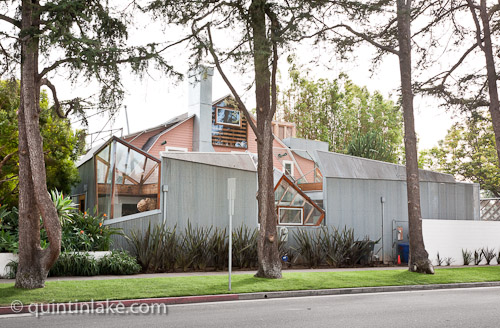
Gehry House at Santa Monica, California, designed by Frank Gehry. built in 1978 this was his first ‘Deconstructivist’ Building. Photo: Quintin Lake

Frank Gehry’s house built in 1978 in Santa Monica represented the first and radical steps of Deconstructivist movement in architecture. Gehry took his seemingly ordinary house in Santa Monica and began changing things in incredibly strange ways. He took a step beyond the playful reworkings of Postmodern architecture, where traditional design symbols were reinterpreted, and instead starting using materials and strategies few applied to architectural projects at the time. Gehry started by tearing the drywall off of interior walls to expose structural studs buried in the old house, then subtracted and added architectural elements seemingly without a coherent plan throughout the building. He added chain link and plywood to the exterior. His transformations were responses to various impulses and were allowed to coexist without a clear rhyme or reason, flying in the face of both Modernism and Postmodernism – designs from which were typically justified in terms of some kind of central concept. This house was the start of Gehry’s freestyle architectural expression which has culminated in recent times in his most well known buildings the Guggenheim Museum in Bilbao and Walt Disney Concert Hall in downtown Los Angeles.

VIEW MORE / BUY PRINTS / LICENSE IMAGES of Gehry House here >>

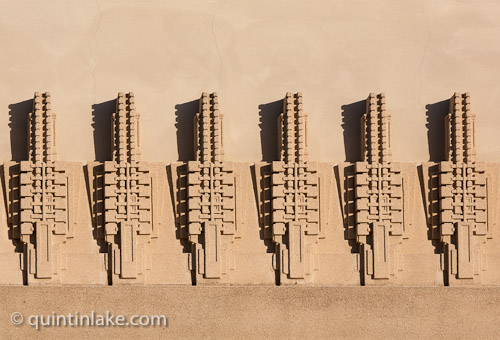
Detail of cast concrete Hollyhock motif on the western facade of Hollyhock House, Los Angeles designed by architect Frank Lloyd Wright. Photo: Quintin Lake

The Aline Barnsdall Hollyhock House,sits at the centre of in Barnsdall Art Park in East Hollywood, California, California was designed by architect Frank Lloyd Wright 1919–1921. Like the Charles Ennis House, executed later, this house illustrates Wright’s fascination with the stylised forms of  pre-Columbian architecture, in this case Mayan temples. Wright called the style rather disingenuously California Romanza. The stylised patterns of hollyhocks repeated in cast concrete and the window design was due to the Aline Barnsdall’s fondness for the flower. The building was restored after undergoing extensive damage from the 1994 Northridge Earthquake.

VIEW MORE / BUY PRINTS / LICENSE IMAGES of Hollyhock House here >>