Archives for category: Photography

The Vítkovice Iron and Steel Works, Ostrava has been declared an Industrial Heritage Site by the Ministry of Culture and is a unique example of industrial architecture from the first half of the 19th century.

The Cathedral of the Divine Saviour (Czech: Katedrála Božského Spasitele), located in the center of Ostrava, is the second largest Roman Catholic cathedral in Moravia and Silesia (after the basilica in Velehrad near Uherské Hradiště). This three-naveneorenaissance basilica with a semi-circular apse and two 67m high towers is dating since 1889 (building started in 1883). The church was designed by Gustav Meretta, the official architect of the Archbishop of Olomouc, and the interior by Max von Ferste.

BUY PRINTS/LICENSE more photographs of Ostrava City, Czech Republic

Cathedral of the Divine Saviour in front of Blast furnaces of Vitkovice Iron and Steel Works, Ostrava, Czech Republic

BUY PRINTS/LICENSE more photographs of Ostrava City, Czech Republic

Photography  © Quintin Lake, 2009

This photoshoot was commissioned by Francis Lincoln Publisher for the upcoming book “Jim Stirling and the Red Trilogy: Three Radical Buildings” edited by Alan Berman. View the entire photoshoot here.

Charles Jencks describes the project in the chapter ‘James Sirling or Function made Manifest’ in the book ‘The modern movements in Architecture’ thus:

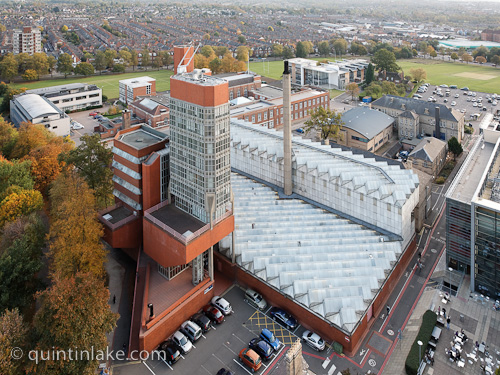
“Yet it was not until their next scheme, the leicester Engineering Building, that they [Stirling & Gowan] developed their idiom in complete maturity. Instead of drawing in perspective they switched to a bird’s eye view which could analyse and dissect the whole project showing the underlying anatomy. This method of drawing really is a method of designing for it allows the architect to work out the space, structure, geometry, function and detail altogether and without distortion.”

BUY PRINTS/LICENSE more images of  Leicester University Engineering Building here

Axonometric style, Aerial view of Leicester University, Engineering Building

The cantilevered lecture theatre, Leicester University, Engineering Building, Designed by James Stirling & James Gowan Architects, Completed 1959

The water tower sits atop glazed seminar rooms which runs at 45 degrees to the workshops

BUY PRINTS/LICENSE more images of  Leicester University Engineering Building here

Photography  © Quintin Lake, 2010

BUY PRINTS/LICENSE more abstract images of Silent Skies. Images of Sydney Opera House Roof Shells here

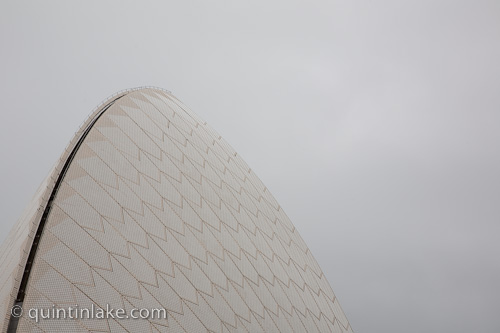
Into Silent Skies #1. Images of Sydney Opera House Roof Shells

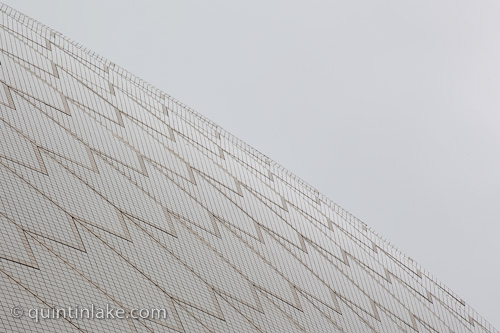
Into Silent Skies #4. Images of Sydney Opera House Roof Shells

Into Silent Skies #5. Images of Sydney Opera House Roof Shells

BUY PRINTS/LICENSE more abstract images of Silent Skies. Images of Sydney Opera House Roof Shells here

Photography  © Quintin Lake, 2010

BUY PRINTS/LICENSE more Bondi to Coogee Coastal Walk, Sydney images here

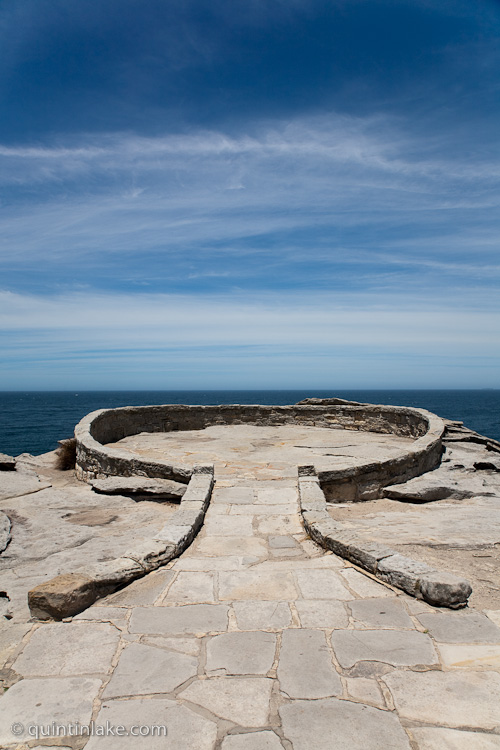
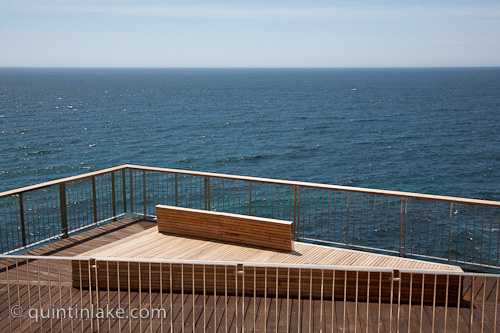
Mackenzies Point lookout, Hunter Park lookout on the Coogee to Bondi Coastal Path

Sesquicentenary Boardwalk, part of the Coogee to Bondi beach Coastal path

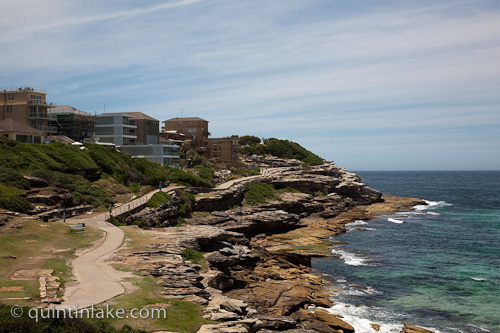
Coogee to Bondi beach Coastal path in Mackenzies bay, Sydney

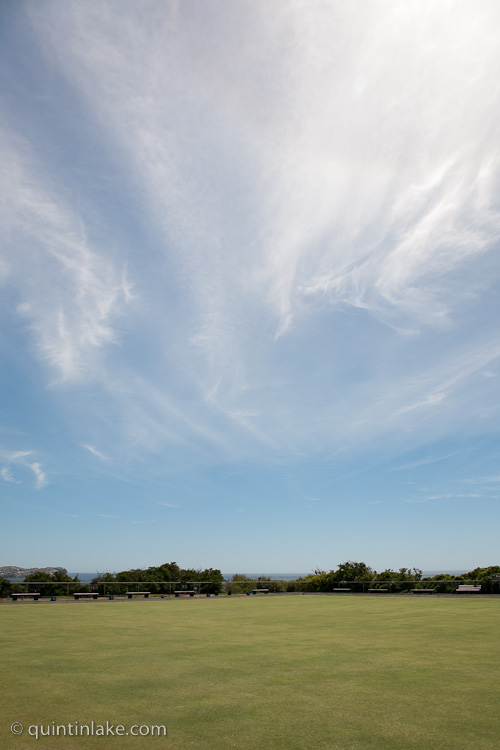
The "Rony Giuliano" Green, Clovelly Bowling Club above the Tasmin Sea by the Bondi to Coogee Coastal path

BUY PRINTS/LICENSE more Bondi to Coogee Coastal Walk, Sydney images here

Photography © Quintin Lake, 2010

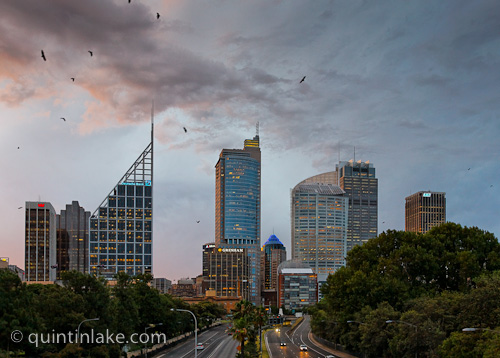
The skyline of downtown CBD Sydney seen from the Botanical Gardens at dusk.
The photograph includes the architecturally prominent buildings: Deutsche Bank Place. Architect: Norman Foster of Foster and Partners (triangular form). Chifley Tower. Architect: Kohn Pedersen Fox (centre) Aurora Place. Architect: Renzo Piano (curved form)

Downtown Sydney at dusk with Flying Fox Bats

BUY/LICENSE more Sydney downtown architecture images here

Photography © Quintin Lake, 2010

The Waverley Cemetery opened in 1877 and is a cemetery located on top of the cliffs at Bronte in the eastern suburbs of Sydney. It is noted for its largely intact Victorian and Edwardian monuments. The cemetery contains the graves of many significant Australians including and the poet Henry Lawson and Australia’s first Prime Minister, Sir Edmund Barton, who is interred at South Head.
View the entire set of Waverley Cemetery, Sydney photographs here

Graves in Waverley Cemetery overlooking the Pacific Ocean

Architecturally, Waverley Cemetery is significant in that it showcases examples of Stonemasonry and funerary art dating back from the 19th century,with features (such as the gates, buildings and fencing) that due to their intact nature are considered of outstanding aesthetic value.

Cross memorial in front of graves at Waverley Cemetery

Poetically, the juxtaposition of the tombs and memorials overlooking the pacific ocean of the sea makes the cemetery a unique place. The cemetery is a popular tourist attraction and is on the route of Bondi to Coogee coastal walk.

Row of graves at Waverley Cemetery, Sydney

View the entire set of Waverley Cemetery, Sydney photographs here

Photography © Quintin Lake, 2010

Thank you for considering Quintin Lake for a commission.

An architectural photography assignment is a commitment of time, of resources and of money. Creating high-quality images on location presents a complex series of challenges. Thorough planning and communication among the client, photographer, location owner and representatives at the site can help ensure maximum efficiency and productivity.

I hope this architectural photography checklist is useful in getting the highest quality results.

1. DESCRIPTION OF ASSIGNMENT

The Client to Specify:

• Exact location map of the site with North point marked.
• Function of building.
• Provide construction progress photos if available.
• Areas to be photographed and number of views expected.
• Are there any key features to highlight – or flaws for the photographer to downplay or avoid?
• What is the purpose of the photographs – how are they to be used and who is the audience.
• Delivery deadline.
• Who is commissioning photography? ie Images for single client only?  Multiple parties sharing photo costs and each using the images? Same rights for all parties?

Photographer to Specify:

• Copyright – this is retained by the photographer unless specifically transferred to the client in writing.
• All pictures are entered into an image archive for potential future publication – unless there is a prior agreement. I believe that getting our pictures seen by a wide audience is good for photographer and client alike.
• For each commission, I would recommend that you sign my building release form as a way of controlling publication of images of your project.

2. SITE CONTACTS AND ACCESS

Contacts – names and numbers should be supplied of:

• Client – office and mobile.
• Building owner.
• Building security personnel.
• Maintenance personnel.
• Any others involved in the project.

Access

• Are the building owners expecting the photographer?
• Do they know what this involves? – doing it properly means using a tripod, maybe lights, taking some time, etc.
• Are the rooms to be photographed accessible? – any keys or security codes involved.
• Can the building lighting be adjusted or controlled for dusk or dawn photography?
• Is there any special security clearance required?
• If photography from a neighbouring building is required, has the necessary permission been obtained?

3. SITE CONDITIONS – Is The Building looking its Best ?

• Has all the construction been completed?
• Has all construction and letting agent signage been removed?
• Are there any skips, scaffolding, fences, debris or portaloos left behind?
• Is the landscaping ready? Has litter been picked up?
• Are the windows and cladding clean?
• Likelihood of delivery vans arriving and staying for long periods?
• Any lights out? Have any been replaced with the wrong colour?
• Any Graffiti on building? Fences? Posters? Signs?
• Christmas or other seasonal decorations?
• Are interior spaces clean?
• Has all the correct furniture been installed?
• Artwork and sculpture in place?
• Flowers and plants available for inclusion in shots? Props arranged?

For information on rates and availability contact Quintin
by telephone on:
07973 139345
or by email at:mail@quintinlake.com

This website is my blog, to view examples of my architectural photography
visit my portfolio at www.quintinlake.com

For further information see the following links:

List of benefits for clients here

List of clients here

Testimonials page here

Frequently Asked Questions here

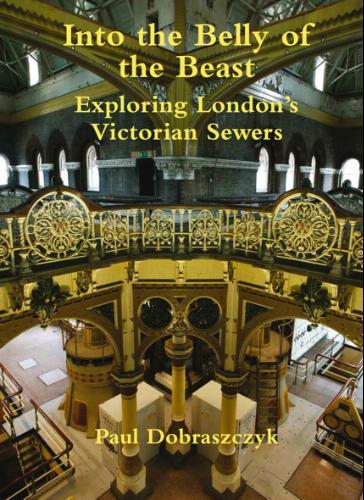
Into the Belly of the Beast: Exploring London's Victorian Sewer Cover

My photograph of the cast iron interior of Abbey Mills Pumping Station Interior was chosen for the cover of recently published book “Into the Belly of the Beast: Exploring London’s Victorian Sewers” by Dr Paul Dobraszczyk published by Spire books.

Into the belly of the beast is a rare pleasure within books on subterranean London and Victorian architecture in that is combines real academic meat, in an easily readable manner, with extensive and sumptuous illustrations. Thus the book can be equally enjoyed as a visual feast or read as a continuous narrative. Paul Dobraszczyk shows us the unexpected fact that the methods of describing and drawing these vast underground spaces at the time of their inception were not the disinterested studies we might expect, but hint at wider aspirations of the Victorian age which he further illuminates in his description of their most noticeable architectural expression, the great pumping stations. An essential addition to the bookshelf of anyone interested in London or Victorian architecture and engineering.

The cover photograph shows Interior of the old Abbey Mills Pumping Station (Station A) showing wrought iron metalwork and modern vertical motors that replaced the original steam beam engine.Located in Abbey Lane, London E15, the building is a sewerage pumping station, designed by engineer Joseph Bazalgette, Edmund Cooper, and architect Charles Driver, it was built between 1865 and 1868 after an outbreak of cholera in 1853 and “The Great Stink” of 1858. It was designed in a cruciform plan, with an elaborate Byzantine style, described as The Cathedral of Sewage. The pumps raise the sewage in the London sewerage system between the two Low Level Sewers and the Northern Outfall Sewer, which was built in the 1860s to carry the increasing amount of sewage produced in London away from the centre of the city.

View, buy prints and licence rights managed images of Abbey Mills Pumping Station

Buy “Into the Belly of the Beast: Exploring London’s Victorian Sewers” from Amazon UK here

Architecture and Interiors Photography © Quintin Lake, 2010