BUY PRINTS/LICENSE more Pripyat (Pripiat) 21 years after Chernobyl images here

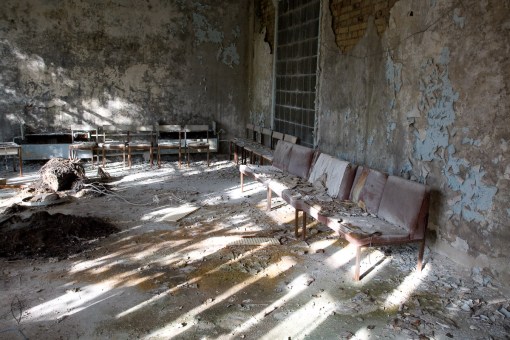
Hospital reception, Pripyat

Hospital reception with doctor's appointment boards, Pripyat

Lenin and the pot plant, Pripyat

Lenin and the pot plant in the hospital, Pripyat, Chernobyl

Hospital waiting room, Pripyat

Hospital waiting room with discarded pot plant.

BUY PRINTS/LICENSE more Pripyat (Pripiat) 21 years after Chernobyl images here

Photography  © Quintin Lake, 2007

Old Abbey Mills Pumping Station (Station A)Half of the sewage of London pases through this building. The pumps used to be driven by massive steam beam engines, no longer visible, these were replaced by electric vertical motors that look like daleks which in term have been augmented by the boring looking white boxes of gadgetry.

The building is the old Abbey Mills Pumping Station (Station A) located in Abbey Lane, London E15, the building is a sewerage pumping station, designed by engineer Joseph Bazalgette, Edmund Cooper, and architect Charles Driver, it was built between 1865 and 1868 after an outbreak of cholera in 1853 and “The Big Stink” of 1858. It was designed in a cruciform plan, with an elaborate Byzantine style, described as The Cathedral of Sewage. The pumps raise the sewage in the London sewerage system between the two Low Level Sewers and the Northern Outfall Sewer, which was built in the 1860s to carry the increasing amount of sewage produced in London away from the centre of the city.

This article may be useful to you if like me you had trouble with the seemingly simple task of sourcing a threaded rod to fit your tripod or camera.

My search for this item was for the following purposes:

1. To attach a Gitzo monopod and tripod to a Really Right Stuff (RRS) Ball head and Manfrotto geared head ( 3/8″ thread)

2. To connect a Hama Accessory Shoe with Insulating Plate to a Lastolite umbrella swivel as I was always breaking the plastic manfrotto style accessory shoe (1/4″ thread)

3. To attach a ball head to a Manfrotto super clamp. (1/4 inch thread with 1/4 – 3/8″ adapter bushing needed on the head)

The problem I discovered is that most camera stores in the UK do not sell the compatible threaded rod. Outside of the photographic world the thread pitch is an old type known as whitworth so cannot be picked up at a regular hardware store. The pitch of whitworth is a 55 degree thread angle, and UNC (coarse) is the size which superseded whitworth is 60 degrees.

However UNC (coarse) is more easily obtainable from specialist suppliers in varied lengths and for photographic purposed they are interchangeable. Stainless steel should be used as it is the strongest which is advisable if you have a heavy camera and lens combination.


The solution and where to source in the UK

Depending on your tripod setup what you need is:

1/4″ UNC stainless steel threaded rod (grub screw) or socket setscrew

3/8″ UNC stainless steel threaded rod (grub screw) or socket setscrew

Required length will vary for your individual use, I found the 1″ length has worked well for ball head to monopod and general head to tripod mounting. This length also worked well to attach a Hama Accessory Shoe to a Lastolite umbrella swivel.

In the uk I have purchased these from http://www.a2stainless.co.uk/ to which I am not connected in any way.


Locking the connection

Once the correct thread has been obtained most people want to lock the threads using a removable threadlocker so their tripod/monopod head does not loosen during normal use.

The often recommended brand is Loctite 242 which is hard to purchase in small quantities in the uk. The difference between this and Loctite 243 is only related to oil repellence so will make no difference for photographic application

In the UK Loctite 243 Lock ‘n’ seal is easily obtainable for less than £3 for a 3ml tube from Halfords

Once this is applied to the thread and the items assembled as required the bond should be allowed to cure overnight.

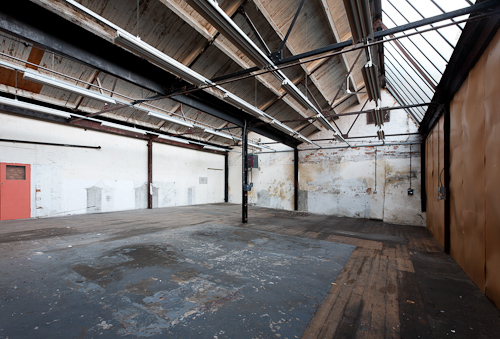
Memories of Hall the Printers in Oxford prior to demolition, who judging scattered ephemera, printed a lot of 2000AD comics. Even though the machinery is long gone I love how resilient the marks and character of the previous occupants remain.

BUY PRINTS/LICENSE more Hall the Printer Ltd, Oxford images here

Hall the Printer, Oxford

BUY PRINTS/LICENSE more Hall the Printer Ltd, Oxford images here

Photography © Quintin Lake, 2009

cities-landsacapes

Private view Thursday 15th January 6-8pm

Exhibition runs from 14th until the 30th January

Dragon School Art Gallery, Bardwell Road, Oxford OX2 6SS

opening times 10am until 6pm daily

Enquiries please contact Luke Osmond on 01865 315457 or luke.osmond@dragonschool.org

http://www.quintinlake.com

Image: Overusage of electricity prohibited, Shanghai, China

2008Explore01

For the second year running I’m delighted to be a panellist on the expedition photography panel at this years “Explore – expedition & fieldwork planning weekend” at the Royal Geographical Society which is always the most exciting event of the year for me.

The event runs 22nd & 23rd November, 2008 and the photography workshop is on Sunday afternoon.

Tom Ang, Who chaired the panel asked us to come up with our personal three golden rules. These are mine aimed at the novice expedition photographer:

1. Make sure your camera is accessible
Its no good if your camera is hidden inside your rucksack, canoe or vehicle. Be prepared that some of the best shots may be when you are most scared or in the worst weather.

2. Don’t get too hung up on kit
Its where you go, how you interact with people, your patience and how you use your camera that makes a good picture. However do backup your digital files and physically protect your camera from dust, moisture and impact.

3. Edit in camera and thematically
With digital its easy to return with too many pictures so edit in camera..before you press the shutter release.
Post-expedition the editing process can tell many stories, choosing themes can help make your editing more distinctive.

Pembroke College, Oxford University

An ongoing assignment to provide Pembroke College, Oxford University with images documenting, archaeology, buildings to be demolished, demolitions and construction  of a major new addition to the college by architects Berman Guedes Stretton.

The portfolio will be an historical archive for the college as well as a recourse of images for marketing purposes.

“Planning consent has been granted for one of Oxford’s largest and most dramatic college developments of recent times. A glass-sided bridge overflies the ancient City wall and Brewer Street to connect Pembroke College’s main site to five new buildings on a site which also capitalises on the view towards Lutyens’ imposing Campion Hall. At the centre of Berman Guedes Stretton’s design is a large new quad shared between the Lutyens and proposed buildings.”

The photo archive, which will be ongoing during the construction process can be seen here

Pembroke College Redevelopment: Archaeological Dig at No 7 & The

Hall the Printer, Oxford

Photography © Quintin Lake, 2008

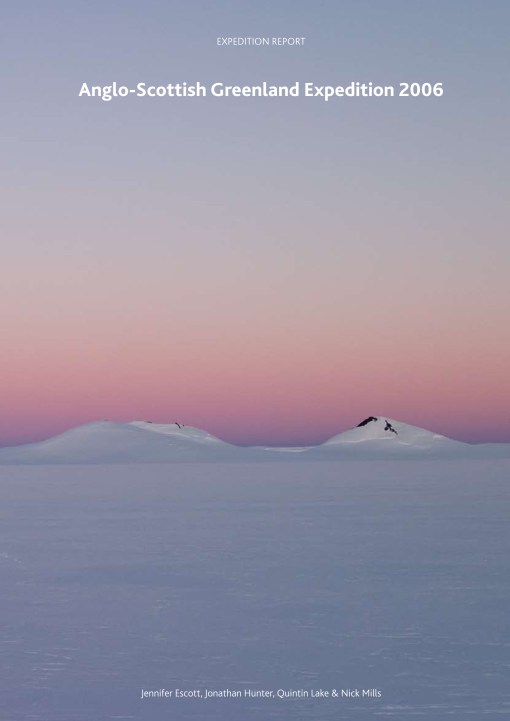
Greenland_Report_Quintin_Lake-1

Download the full expedition report as a PDF here

A printed copy of the report is also available to view at: The Royal Geographical Society, The British Mountaineering council, Tangent Expeditions, The Mountaineering Council of Scotland, The Alpine Club, The Mount Everest Foundation, Arctic Club, Scottish Arctic Club, and the Danish Polar Centre