Archives for posts with tag: Architecture

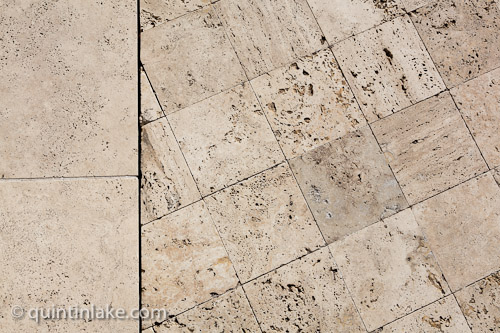
Detail of travertine floor at the Getty Center. Photo: Quintin Lake
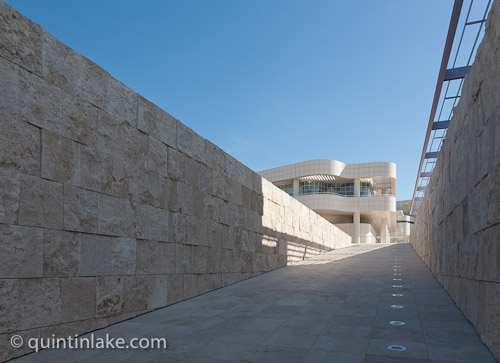
Museum entrance hall seen from the entrance plaza. Getty Center. Photo: Quintin Lake
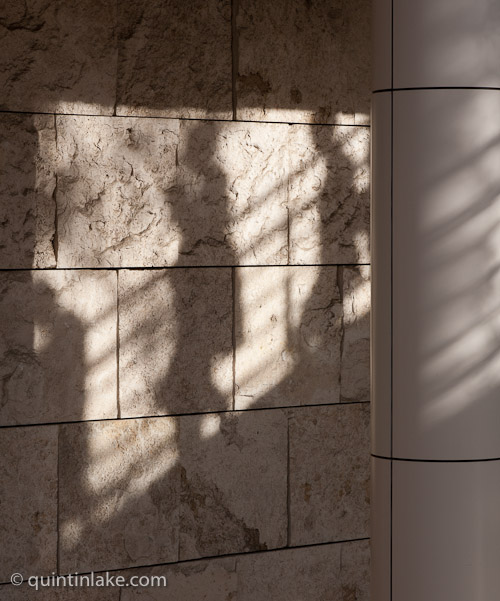
Visitor shadows on the restaurant at the Getty Center. Photo: Quintin Lake
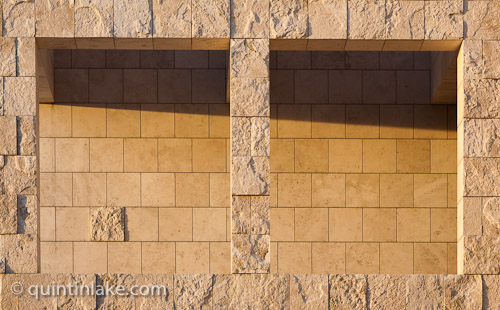
Family room facade detail of polished and rough cut travertine. Getty Center. Photo: Quintin Lake
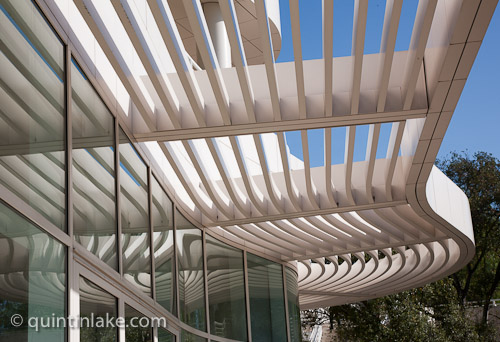
Curving Brise soleil by the cafe. Getty Center. Photo: Quintin Lake
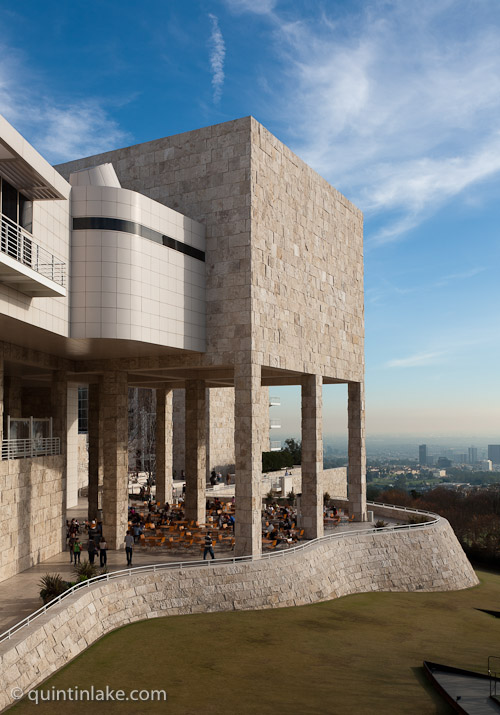
Exhibitions Pavilion with a view to Los Angeles. Getty Center. Photo: Quintin Lake
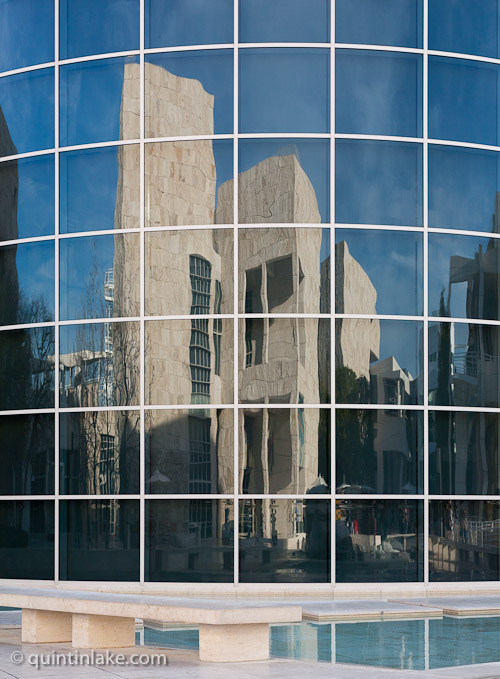
Family room reflected in the west pavilion. Getty Center. Photo: Quintin Lake
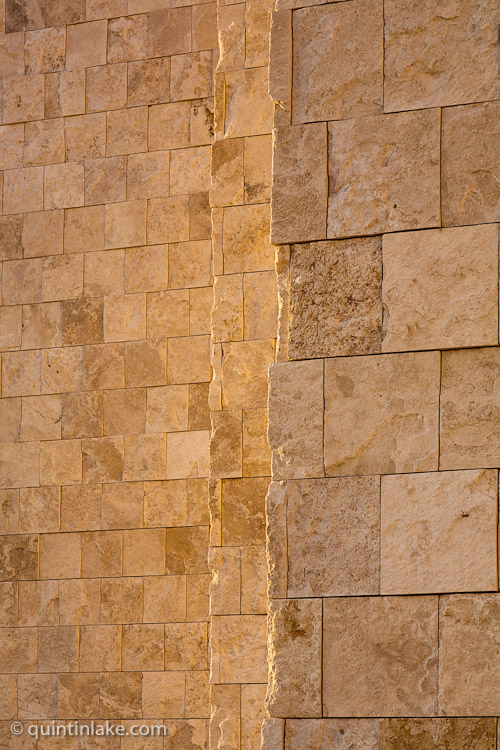
Sunset on the Detail of travertine cladding. Getty Center. Photo: Quintin Lake
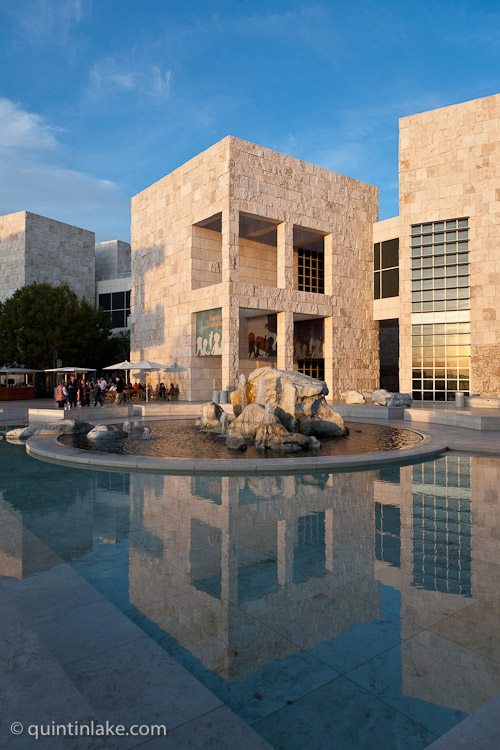
The Family Room and reflection. Getty Center. Photo: Quintin Lake
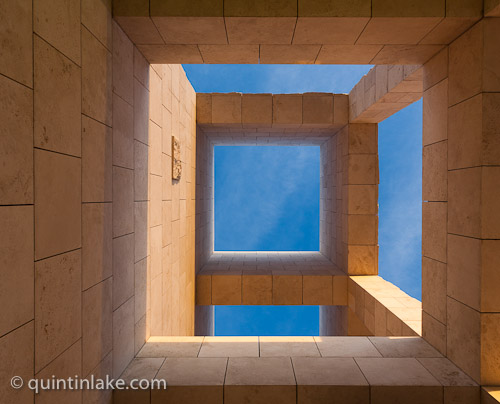
Looking up the Family Room facade. Getty Center. Photo: Quintin Lake

Richard Meier’s Getty center in LA is symphony of pale forms and surface texture which are brought to life by the the beautiful LA light and the immaculate condition in which the building in maintained.

In Andreas Papadakis and James Steele, Architecture of Today (Paris: Terrail, 1991) Meier is quoted as saying:

Architecture is the subject of my architecture…What I seek to do is pursue the plastic limits of modern architecture to include a notion of beauty moulded by light. My wish is to create a kind of spatial lyricism within the canon of pure form. In the design of my buildings, I am expanding and elaborating on what I consider to be the formal base of the Modern Movement…The great promise and richness of some of the formal tenets of Modernism have almost unlimited areas for investigation…I work with volume and surface, I manipulate forms in light, changes in scale and view, movement and stasis.

VIEW MORE / BUY PRINTS / LICENSE IMAGES of the Getty Center here >>

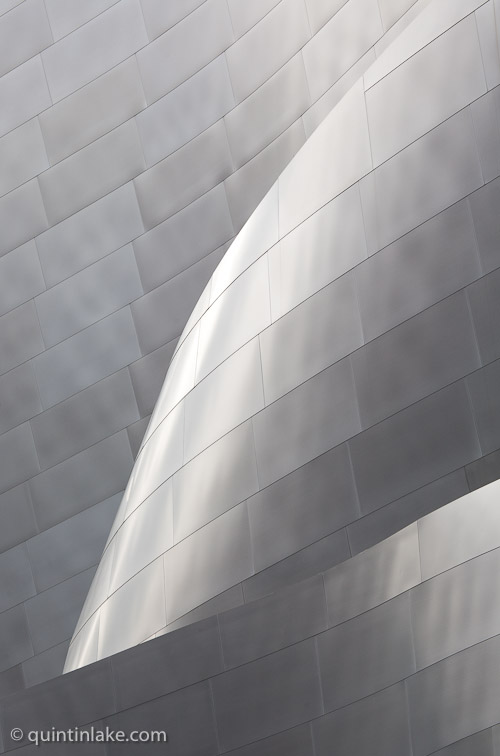
Facade I. Detail of the stainless steel facade of the Walt Disney Concert Hall, LA. Photo: Quintin Lake

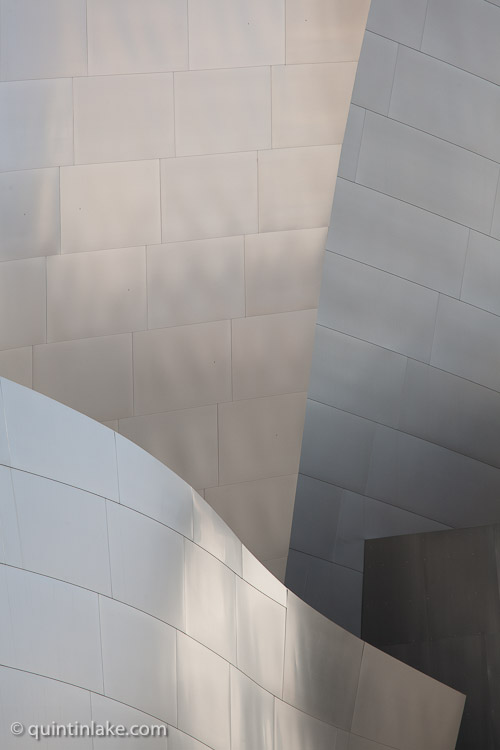
Facade II. Detail of the stainless steel facade of the Walt Disney Concert Hall, LA. Photo: Quintin Lake

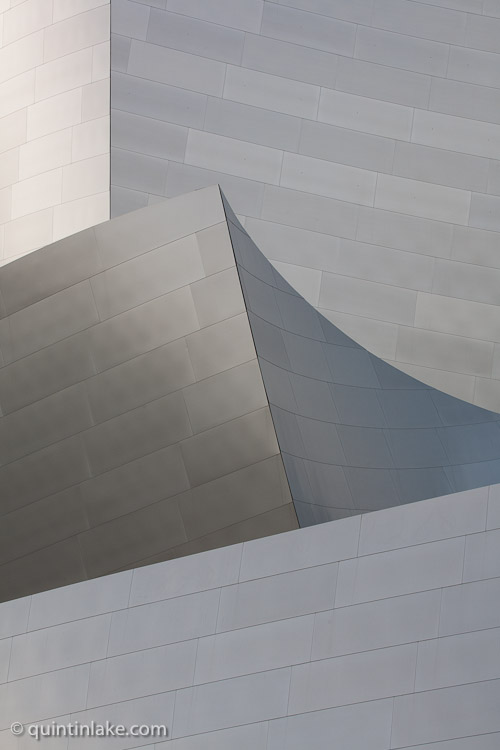
Facade III. Detail of the stainless steel facade of the Walt Disney Concert Hall, LA. Photo: Quintin Lake

The subtle abstract quality of the matte stainless steel panels as they catch the light is what struck me the most about Frank Gehry’s celebrated and much photographed Deconstructivist Walt Disney Concert Hall in Los Angeles built in 2003. Originally, one portion of the building featured highly polished panels; however, these were dulled in 2005 due to heat reflection problems in nearby buildings. See images of the Gehry House, LA from 1978 where his experiments with deconstructivism in architecture began.

See more photos of details, facade elevations and complete views of the building here >>

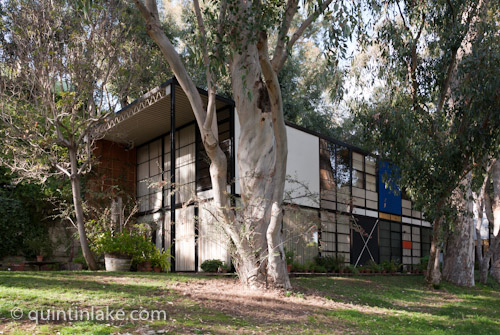
The Eames House or Case Study House No. 8, by Charles and Ray Eames Los Angeles, California. Photo: Quintin Lake

Located upon a cliff overlooking the Pacific Ocean, and hand-constructed in 1949 within a matter of days entirely of pre-fabricated steel parts intended for industrial construction, it remains a milestone of modern architecture. Designed by husband-and-wife design pioneers Charles and Ray Eames, to serve as their home and studio. The Eames’ proposal reflected their own household and their own needs; a young married couple wanting a place to live, work and entertain in one undemanding setting in harmony with the site. Perhaps the proof of its success in fulfilling its program is the fact that it remained at the center of the Eames’ life and work from the time they moved in (Christmas Eve, 1949) until their deaths.

VIEW MORE / BUY PRINTS / LICENSE IMAGES of the Eames House here >>

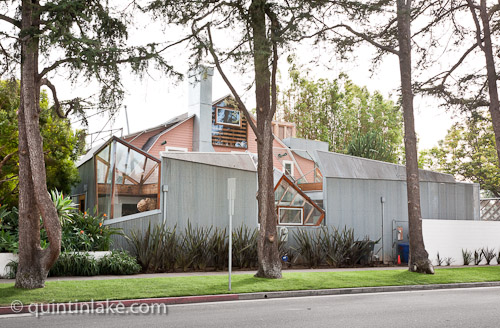
Gehry House at Santa Monica, California, designed by Frank Gehry. built in 1978 this was his first ‘Deconstructivist’ Building. Photo: Quintin Lake

Frank Gehry’s house built in 1978 in Santa Monica represented the first and radical steps of Deconstructivist movement in architecture. Gehry took his seemingly ordinary house in Santa Monica and began changing things in incredibly strange ways. He took a step beyond the playful reworkings of Postmodern architecture, where traditional design symbols were reinterpreted, and instead starting using materials and strategies few applied to architectural projects at the time. Gehry started by tearing the drywall off of interior walls to expose structural studs buried in the old house, then subtracted and added architectural elements seemingly without a coherent plan throughout the building. He added chain link and plywood to the exterior. His transformations were responses to various impulses and were allowed to coexist without a clear rhyme or reason, flying in the face of both Modernism and Postmodernism – designs from which were typically justified in terms of some kind of central concept. This house was the start of Gehry’s freestyle architectural expression which has culminated in recent times in his most well known buildings the Guggenheim Museum in Bilbao and Walt Disney Concert Hall in downtown Los Angeles.

VIEW MORE / BUY PRINTS / LICENSE IMAGES of Gehry House here >>

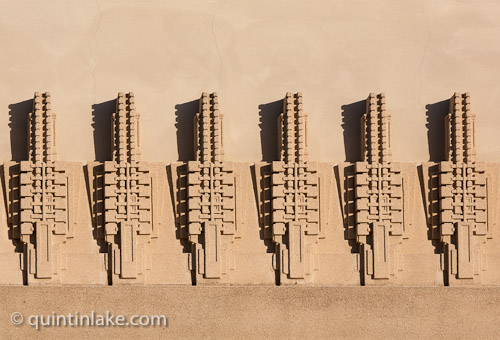
Detail of cast concrete Hollyhock motif on the western facade of Hollyhock House, Los Angeles designed by architect Frank Lloyd Wright. Photo: Quintin Lake

The Aline Barnsdall Hollyhock House,sits at the centre of in Barnsdall Art Park in East Hollywood, California, California was designed by architect Frank Lloyd Wright 1919–1921. Like the Charles Ennis House, executed later, this house illustrates Wright’s fascination with the stylised forms of  pre-Columbian architecture, in this case Mayan temples. Wright called the style rather disingenuously California Romanza. The stylised patterns of hollyhocks repeated in cast concrete and the window design was due to the Aline Barnsdall’s fondness for the flower. The building was restored after undergoing extensive damage from the 1994 Northridge Earthquake.

VIEW MORE / BUY PRINTS / LICENSE IMAGES of Hollyhock House here >>

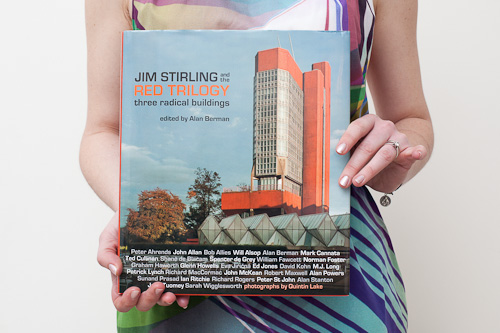
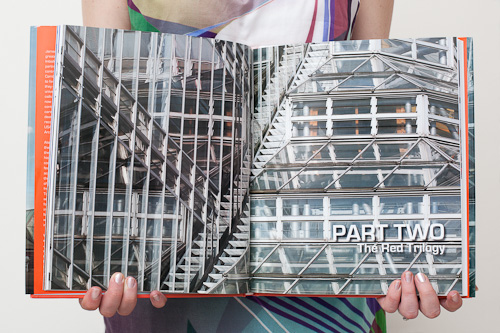
Buy Jim Stirling and The Red Trilogy on Amazon. See more photography from the book

Edited by Alan Berman Published by Frances Lincoln

Photography © Quintin Lake, 2010

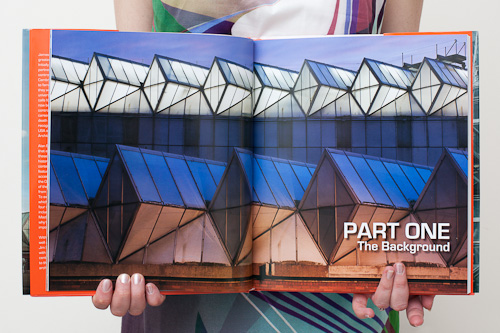
Jim Stirling and The Red Trilogy Review in Icon Magazine. Photography by Quintin Lake

See more  photography from the book  Jim Stirling and The Red Trilogy: three Radical Buildings about which this article refers.

Read the review at IconEYE here

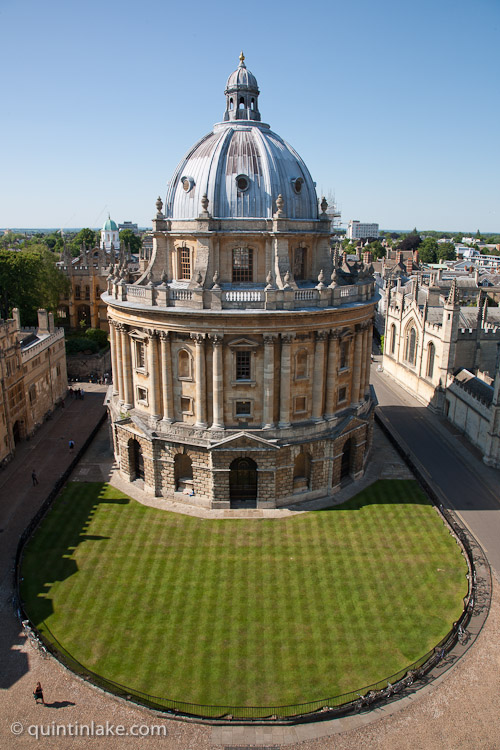
The Radcliffe Camera, Oxford, England, designed by James Gibbs. Photo: Quintin Lake

Architectural Photography of the Radcliffe Camera, Oxford, England, designed by James Gibbs in the English Palladian style and built in 1737-1749 to house the Radcliffe Science Library.

View more / Buy Prints / License Stock images from this photoshoot here

More Stock Photography of Oxford

Photography © Quintin Lake, 2010