Archives for posts with tag: Vernacular architecture

Gateway to Hien Lam pavilion, Hue Citadel / Imperial City, Hue, Vietnam

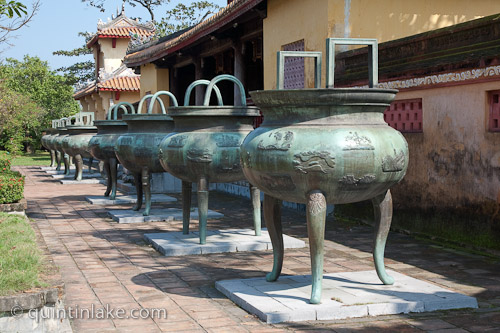
Nine Dynastic Urns, Hue Citadel / Imperial City, Hue, Vietnam

The Hien Lam Cac Pavilion (Pavilion of Everlasting Clarity) was built in 1821-22 in memory of the mandarins who served the Nguyen dynasty. At 13m in height, this is the tallest building in the citadel. In front of the pavilion stand the nine dynastic urns, which were cast in bronze in 1835-37 and which each weigh between 2 and 2.5t. Each urn is dedicated to an emperor, symbolising one of his qualities.

VIEW MORE IMAGES of Hien Lam pavilion & the Nine Dynastic Urns

VIEW IMAGES of Hue Citadel & Imperial City, Hue, Vietnam

Photography © Quintin Lake, 2010

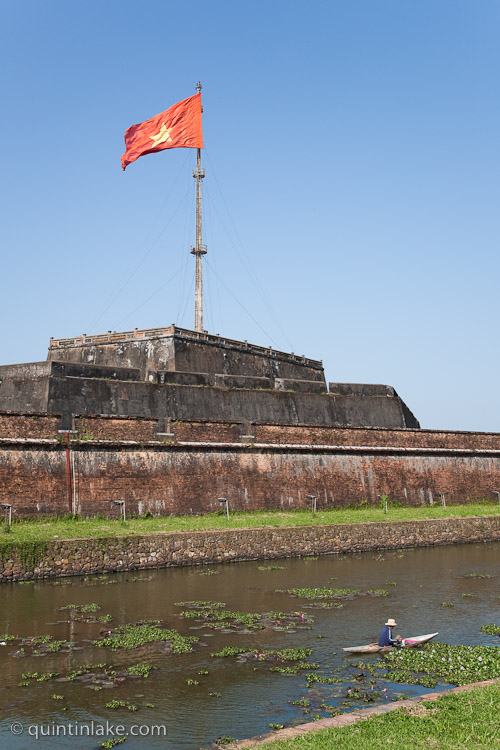
Flag Tower (Cot Co) flying the vietnamese flag above a man in canoe, Hue Citadel / Imperial City, Hue, Vietnam

Looming over the Citadel at a height of 120 ft (37m), the Flag Tower or Cot Co has dominated Hue’s skyline since 1809, when Emperor Gia Long erected it over a big 59 ft brick redoubt. On Jan 31 1968, during the Tet Offensive, Cot Co achieved international recognition when the communist forces seized the Citadel, hoisting the National Liberation Front’s yellowed-starred banner on the Flag Tower’s mast.

VIEW MORE IMAGES of Flag Tower or Cot Co Hue, Vietnam

VIEW IMAGES of Hue Citadel & Imperial City, Hue, Vietnam

Photography © Quintin Lake, 2010

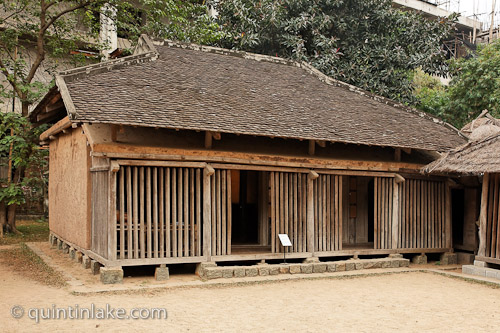
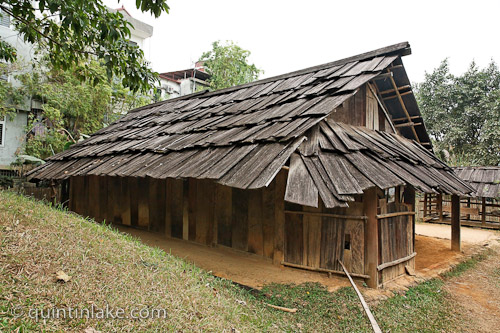
Cham House, Ninh Thuan province, Vietnamese Museum of Ethnology, Hanoi

Cham House, Ninh Thuan province, Vietnamese Museum of Ethnology, Hanoi

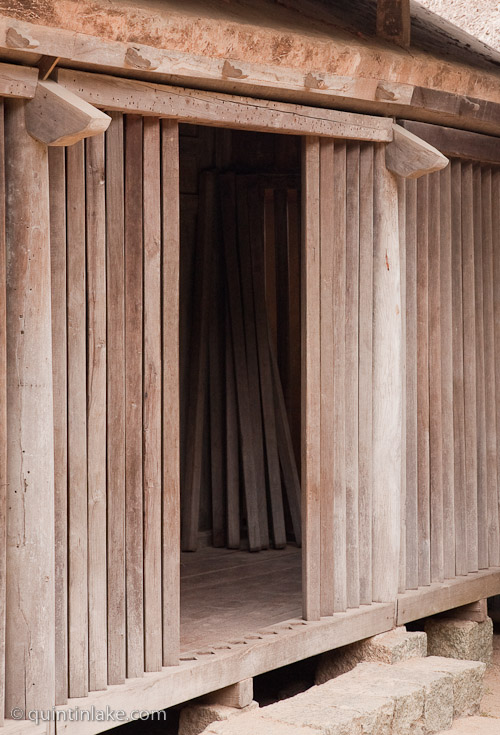
Removable posts allow adjustable entrance door on Cham House, Ninh Thuan province, Vietnamese Museum of Ethnology, Hanoi

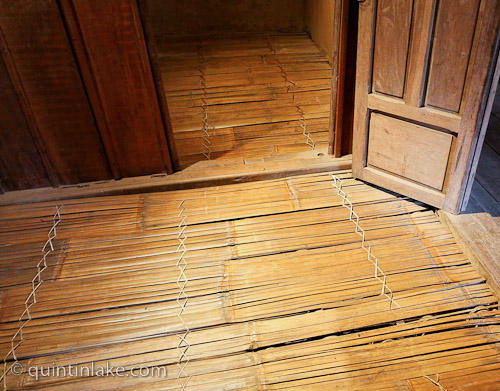
Bamboo floor of Cham House, Ninh Thuan province, Vietnamese Museum of Ethnology, Hanoi

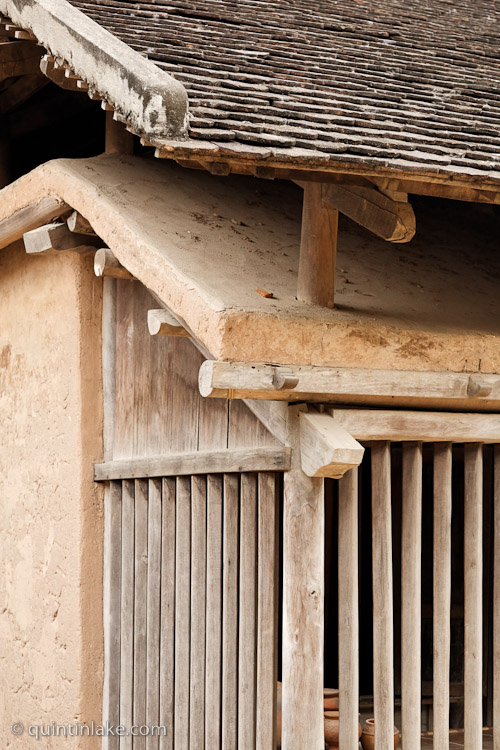
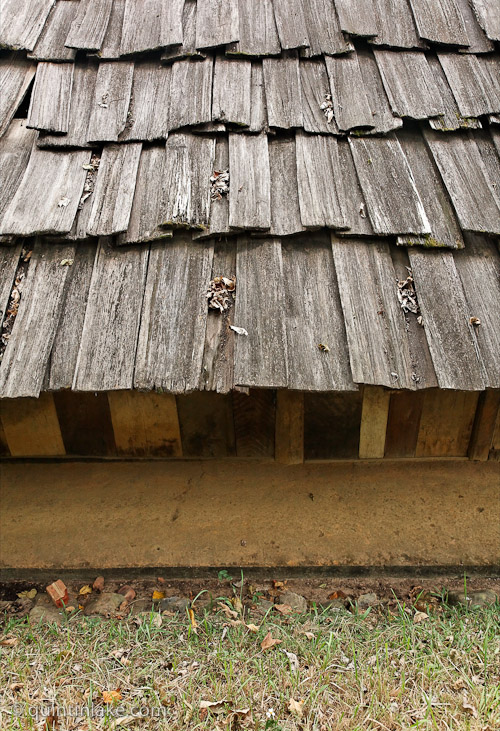
Double roof of Cham House for natural cooling in intense sunlight, Vietnamese Museum of Ethnology, Hanoi

One of the most characteristic tangible cultural heritages of the Cham and also one of the most sensitive to change is their house. The Cham build their houses on the ground and arrange them in orderly rows. Their houses are surrounded by a garden with a wall or hedge. The doors open to the south-west or between. The architectural style is similar to that of the Viet with walls made of brick or a mixture of lime and shells, and covered with tiles or thatch. Houses of more than one storey are rare. In certain localities, houses on stilts are found but the floor is only 30 cm above the ground. The rooms of Cham houses are arranged according to a particular order: the sitting room, rooms for the parents, children, and married women, the kitchen and ware- house (including the granary), and the nuptial room for the youngest daughter. This arrangement reflects the break-up of the matrilineal extended family system among the Cham.

The Cham living in Ninh Thuan and Binh Thuan believe that they have to perform certain religious rituals before the building of a new house, particularly praying for the Land God and asking for his permission to cut down trees in the forest. A ritual is also held to receive the trees when they are transported to the village. A ground-breaking ceremony called phat moc is also held. The precinct of the Cham traditional house is the residence site of a Cham family. It is an assembly of several houses with different functions and these houses relate closely with each others.

VIEW MORE IMAGES of the Cham House

Photography © Quintin Lake, 2010

Text © 2005 Vietnam Museum of Ethnology

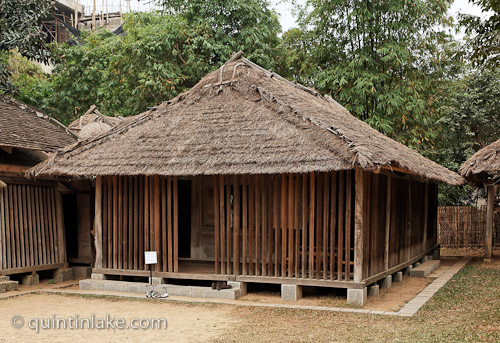
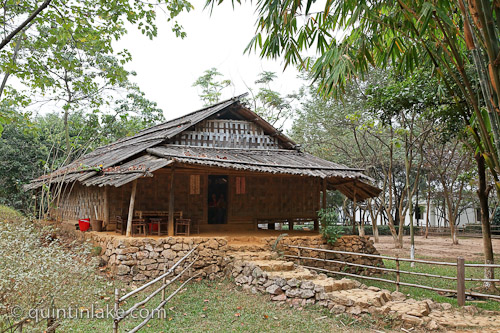
Hmong House, Vietnamese Museum of Ethnology, Hanoi

Roof of Hmong House, Vietnamese Museum of Ethnology, Hanoi

This house was built in 1984 by father of the last owner, Mr. Thao Phang Khay (born in 1972), of De Cho Chua A village, Pung Luong commune, Mu Cang Chai district, Yen Bai province. This was the home of a family of four. Hmong houses are built of wood, directly on the ground. For the flower Hmong of Mu Cang Chai, the wood must be that of the po mu tree (visible growing behind this house). House-building is men’s work. Only axes and knives are used as tools, and all of the pieces are lashed together. This house was reconstructed at the museum in six days in 1999, by a group of seven Hmong villagers.

VIEW MORE IMAGES of the Hmong House

Photography © Quintin Lake, 2010

Text © 2005 Vietnam Museum of Ethnology

Yao Ho Granary, Vietnamese Museum of Ethnology, Hanoi

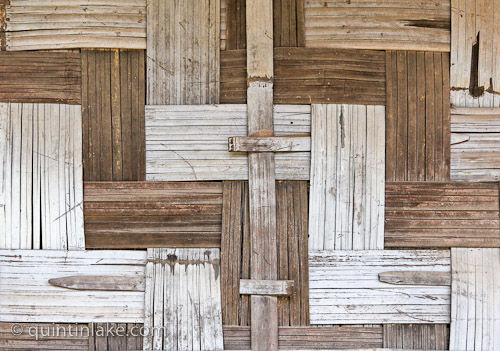
Woven Bamboo wall, Yao Ho Granary, Vietnamese Museum of Ethnology, Hanoi

Woven Bamboo window, Yao Ho Granary, Vietnamese Museum of Ethnology, Hanoi

The Yao Ho people traditionally built a separate granary next to the house. In the past, if the family had many fields, it usually had two or three granaries. the architecture of the  granary is that of a stilt house, with a small door large enough for a person to pass through. the floor, made or plaited bamboo, rests on four columns, and there is a bamboo roof.

VIEW MORE IMAGES of the Yao Ho Granary

Photography © Quintin Lake, 2010

Text © 2005 by Vietnam Museum of Ethnology

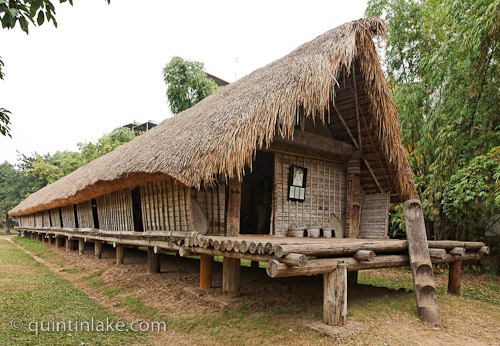
Ede Long House, Vietnamese Museum of Ethnology, Hanoi

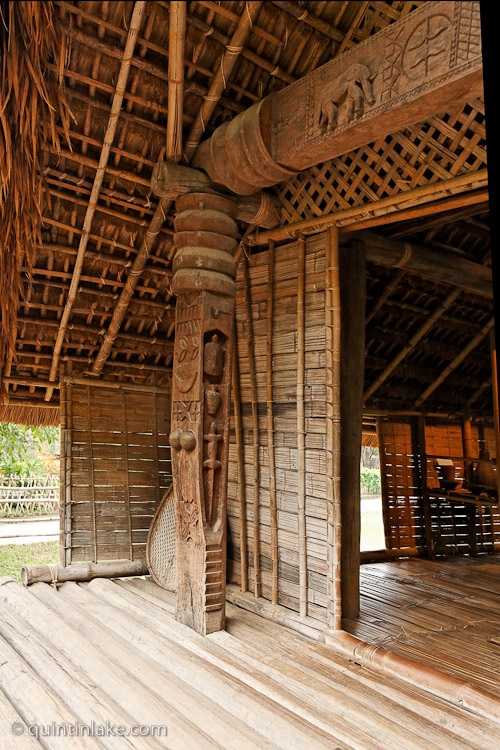
Entrance to Ede Long House, Vietnamese Museum of Ethnology, Hanoi

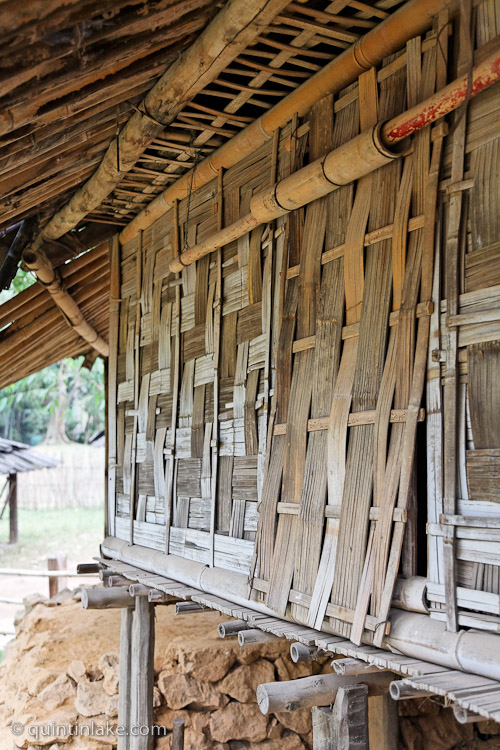
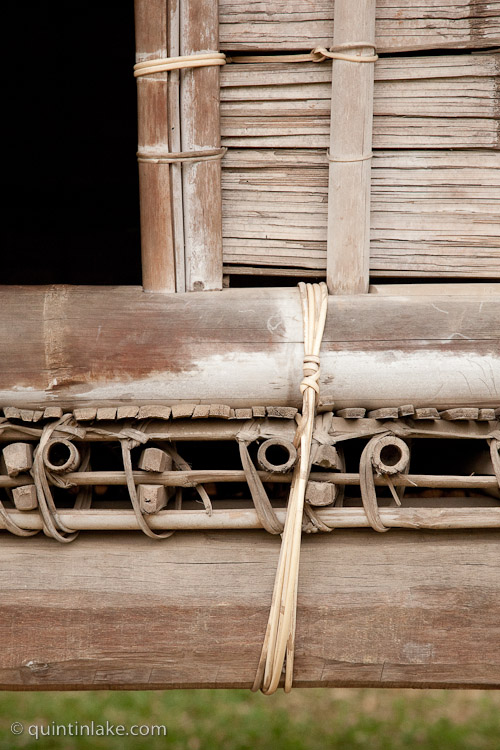
Bamboo construction detail, Ede Long House, Vietnamese Museum of Ethnology, Hanoi

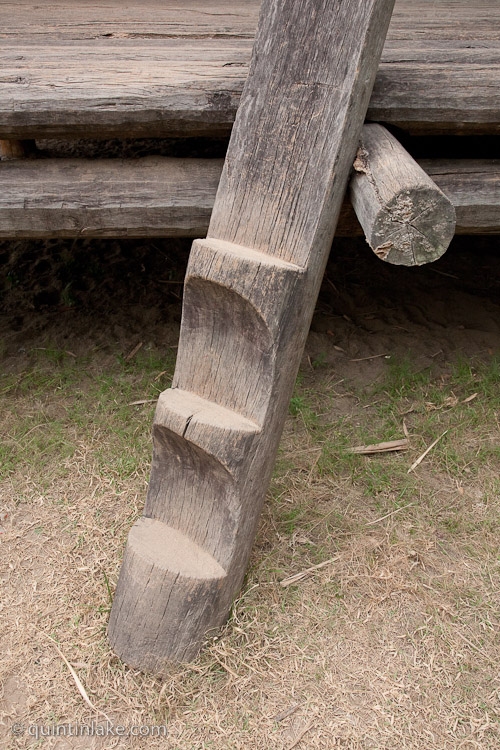
Steps to raised platform of Ede Long House, Vietnamese Museum of Ethnology, Hanoi

The long house and the matrilineal family The long house is the residence of a great matrilineal family. Traditionally, the house accommodates the families of daughters and grand daughters who were the descendants of one mother. Before the middle of the 20th century, there were dozens of families living in the long house. The whole family worked together and shared rice and other food. Property was held in common and customary law of the Ede stipulated that the property should be managed by the household’s most senior woman. After marriage, a son would reside in this wife’s house but still retain a special position in the families of his sisters and his nieces. The important role of women was (and continues to be) a special feature of Ede society.

VIEW MORE IMAGES of Ede Long House

Photography © Quintin Lake, 2010

Text © 2005 by Vietnam Museum of Ethnology

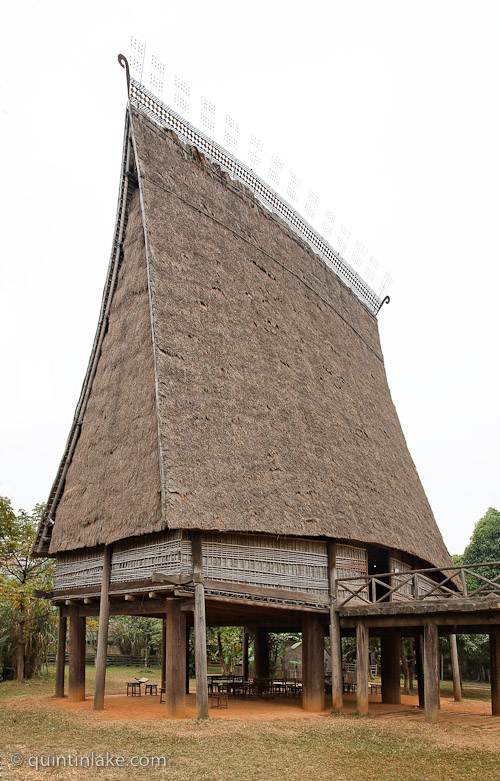
Bahnar Communal House, Vietnamese Museum of Ethnology, Hanoi
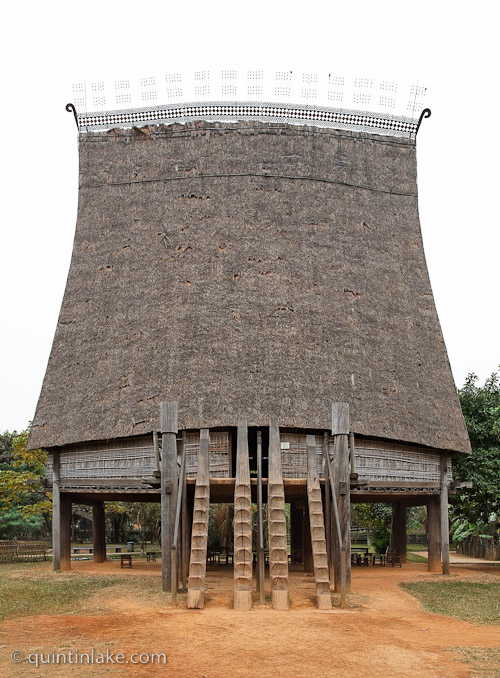
Front of Bahnar Communal House, Vietnamese Museum of Ethnology, Hanoi

The communal house is the most important building in a Bahnar village. Traditionally, communal houses serve as meeting halls for the men in the village and as places where rituals, celebrations, and preparation for war or defense of the village take place. This house was built after the model of the 20th century communal house of Kon Rbang village (Vinh Quang commune, Kontum Town, Kontum Province). This model house in Kon Rbang is the only one that maintains the traditional system of building with poles and beams, which has existed for over 70 years in the Central Highlands. In order to create a traditional communal house untouched by modernisation, museum researchers worked closely with villagers and consulted old photographs to better understand the traditional model. The form, size, and structure of the museum’s communal house replicate those found in the village now, though the house you see here has restored many of the traditional features that have been lost in today’s village houses. The roof here is made of straw rather than corrugated iron. The rafters are made of circle-shaped pieces of wood rather than square ones. The floor is made of bamboo rather than wooden planks. The stairs are rounded pieces of wood rather than cement. The wood, bamboo, rattan, and straw used for making the house were brought from the Central Highlands.

The diameter of the largest poles is 60cm. The length of the beams is 14–15 m. The height of the roof is nearly 19m including the decorative frame, with each of the principal roof beams about 13m long. The 90m2 floor is elevated 3m above the ground and accessed by four sets of stairs. The Vietnam Museum of Ethnology invited 29 Bahnar people from Kon Rbang to construct the house on the museum grounds. The first poles were erected on April 26, 2003. On June 4, 2003, the house was fully completed. Visitors to the VME now have the rare opportunity of experiencing this unique architectural style first-hand and appreciating the traditional culture and craftsmanship of the Bahnar people. The construction of the Bahnar communal house was made possible by the support of the Ministry of Foreign Affairs of the Federal Republic of Germany through the German Embassy.

VIEW MORE IMAGES of Bahnar Communal House

Photography © Quintin Lake, 2010

Text © 2005 by Vietnam Museum of Ethnology

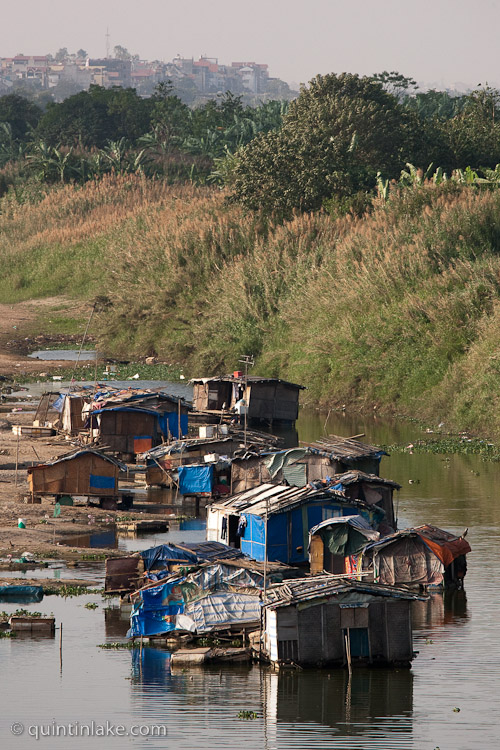
Floating boat houses on the Red River, seen from Long Bien Bridge, Hanoi, Vietnam

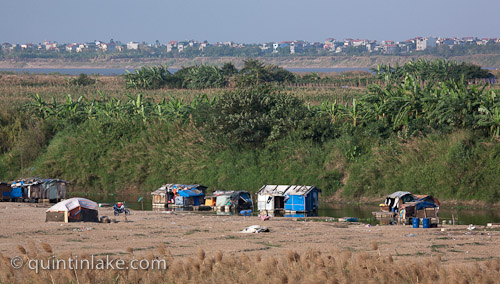
Floating boat houses on the Red River with suburban hanoi in the distance, seen from Long Bien Bridge, Hanoi, Vietnam

North of the Long Bien Bridge bridge are poorest of Hanoi who live physically and figuratively at the edge of the city in these makeshift floating shelters.

VIEW MORE IMAGES of Boat houses on the Red River, Hanoi

Photography © Quintin Lake, 2010