Archives For author

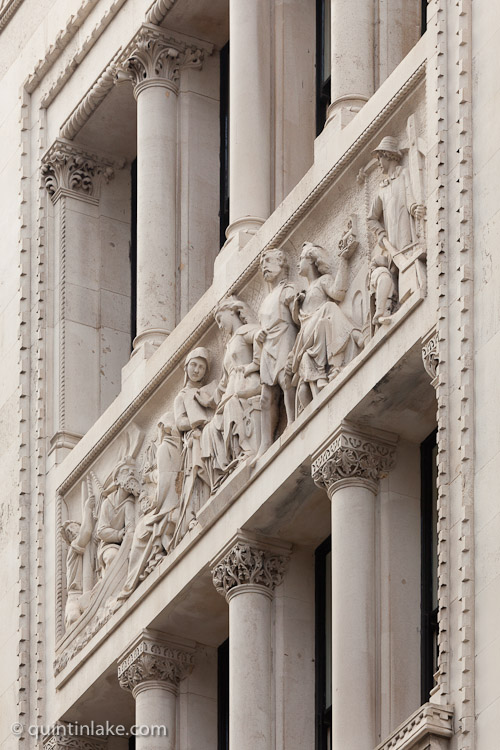
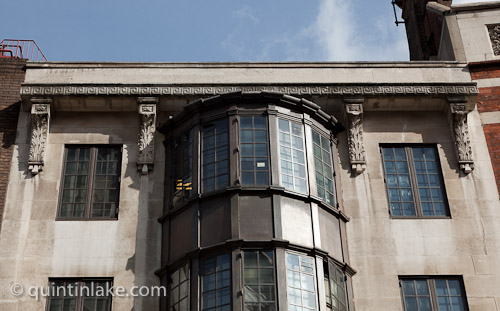
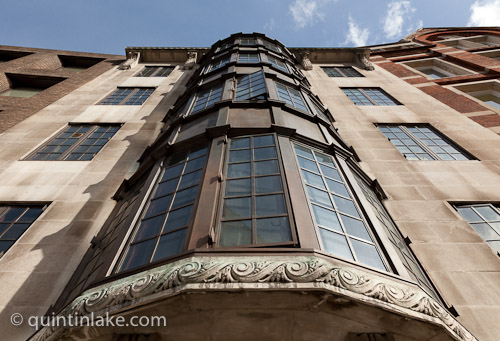
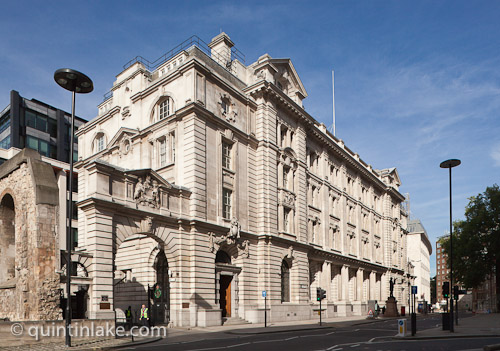
King Edward Buildings (former General Post Office Headquarters) now Bank of America Merrill Lynch London Headquarters. Architect: Sir Henry Tanner (Photo: Quintin Lake)
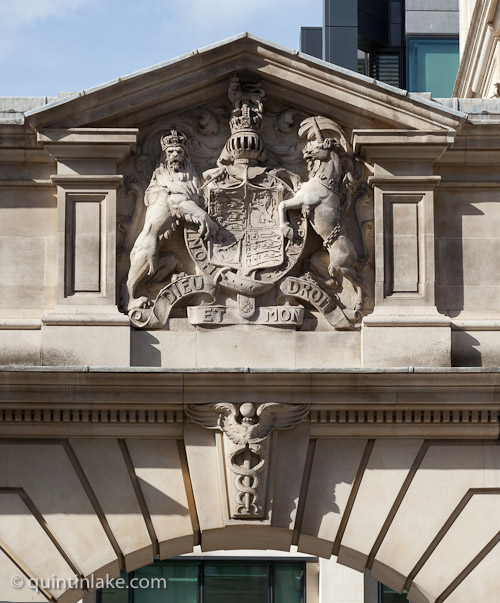
Coat of arms of Edward VII of the United Kingdom above the coach entrance to the King Edward Buildings. The instription Dieu et mon droit is the french motto of the British Monarch meaning "God and my right shall me defend" (Photo: Quintin Lake)
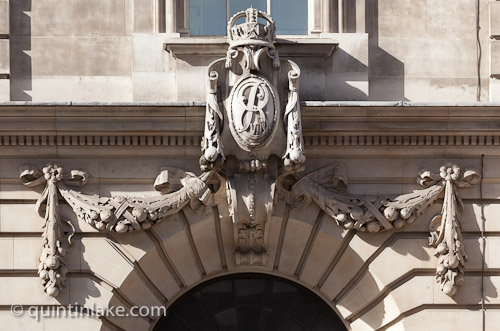
King Edward VII portland stone ornamentation with ERVII lettering above the window King Edward Buildings (Photo: Quintin Lake)
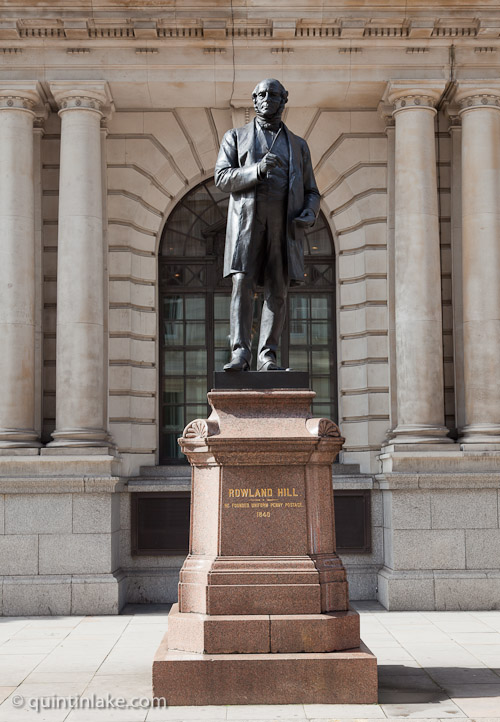
Statue by Onslow Ford of Rowland Hill, with the inscription "HE FOUNDED UNIFORM PENNY POSTAGE 1840" outside the King Edward Buildings (Photo: Quintin Lake)

The King Edward Buildings on the west Side of King Edward Street in the City of London, now part of the Bank of America Merrill Lynch London Headquarters, is one of the remaining buildings of the former General Post Office Headquarters the other being The North Range, now named Namura House across the street.

Built 1907-1911 to the designs of Sir Henry Tanner, architect of the Office of Works. An early example of the use of reinforced concrete construction the building has stronger accents as was fashionable in the Edwardian period  than The North Range (Now named Namura House) over the road completed two years previously. The facade of the building has various ornamental motifs celebrating King Edward VII from which the street takes its name. King Edward Street was known as Butchers Hall Lane until 1843.

In front of the building is a statue by Onslow Ford of Rowland Hill the postal reformer, with the inscription “HE FOUNDED UNIFORM PENNY POSTAGE 1840”

These photographs were commissioned by Thames & Hudson / View Pictures for an upcoming book on the architecture of the City of London

View more images of the King Edward Buildings Here

Photography © Quintin Lake, 2010

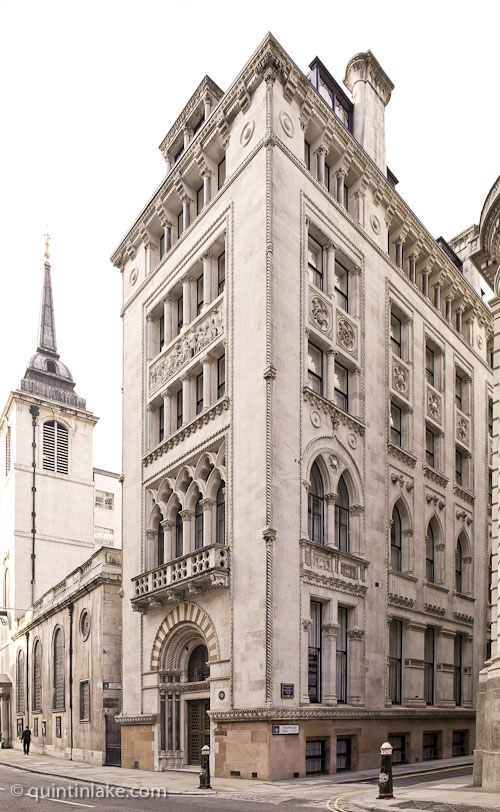
The Venetian Gothic Former Overseas Bankers' Club, 7 Lothbury, City of London. Architect: George Somers-Clarke. St Margarets Church at left. (Photo: Quintin Lake)

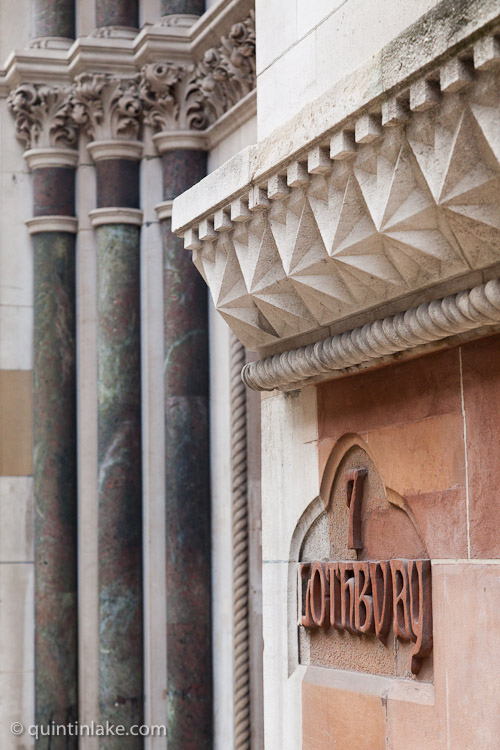
White Portland stone facade above a brown sandstone plinth of the Former Overseas Bankers' Club, 7 Lothbury, City of London (Photo: Quintin Lake)

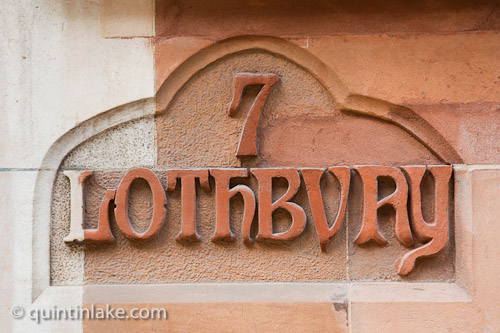
Portland stone meeets brown sandstone behind the carved sign at the former Overseas Bankers' Club, 7 Lothbury, City of London

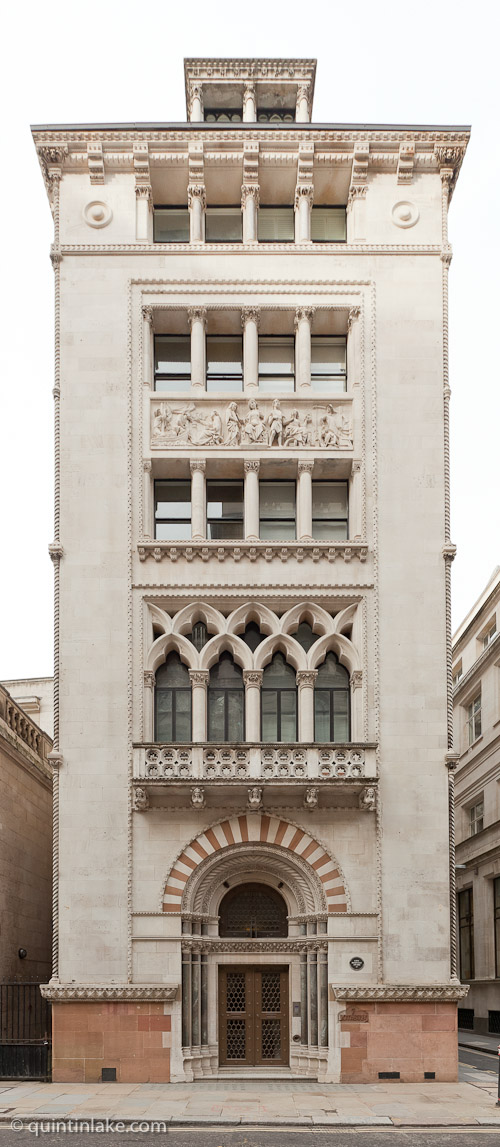
Energetic forms surrounding the entrance of former Overseas Bankers' Club, 7 Lothbury, City of London (Photo: Quintin Lake)

The finely carved medievalizing relief by Redferm on the facade of the Former Overseas Bankers' Club, 7 Lothbury, City of London (Photo: Quintin Lake)

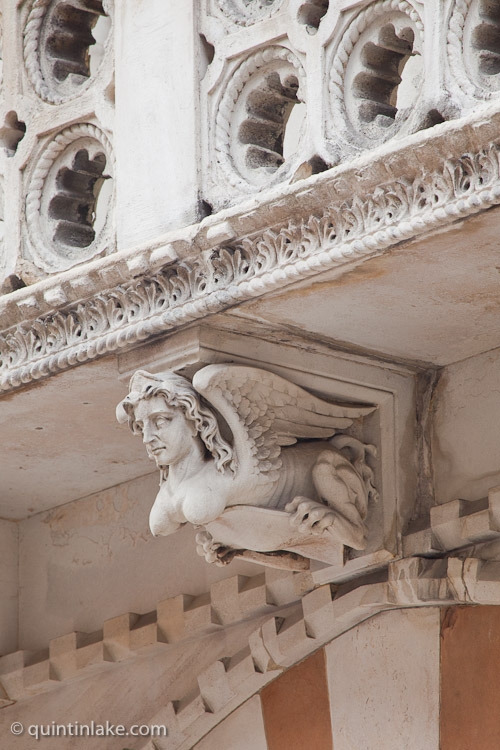
One of the five buxom carved sphinx corbels below the balcony of the former Overseas Bankers' Club, 7 Lothbury, City of London (Photo: Quintin Lake)

Located opposite the Bank of England in the City of London architectural historical Nikolaus Pevsner describes the slender five-storey Venetian Gothic building as being “An amazing building for its date” yet “Stiffer and more rectilinear than anything the Venetian Quattrocento produced”.

Built in 1868 while the  convention was for the neo-classical, architect George Somers Clarke (1825-1882) designed the General Credit and Discount Company’s new head office in a Venetian Gothic style, no doubt inspired by John Ruskin‘s Stones of Venice. It later became the headquarters of Speyer Brothers Banking House before being taken over by the Overseas Bankers’ Club in the Sixties. But by early this century it had fallen into disuse and disrepair, despite its Grade II* listing. In 2005 the buildings new owner investment company Tigerwater, approached specialist niche developer Marldon with a proposal for conversion to residential use.

View the developer’s Website and a Telegraph article on the restoration of the property

These photographs were commissioned by Thames & Hudson / View Pictures for an upcoming book on the architecture of the City of London

View more images of  the Former Overseas Bankers’ Club, 7 Lothbury Here
 
Photography © Quintin Lake, 2010
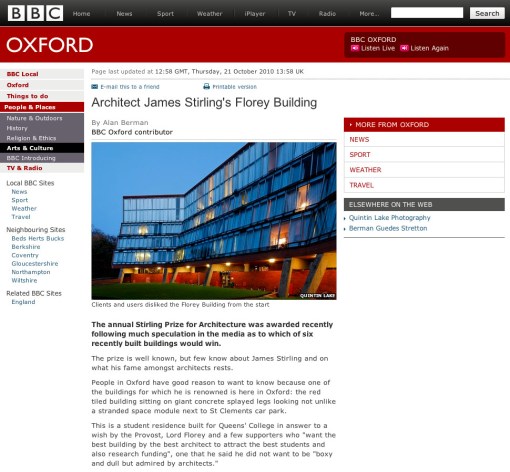
James Stirling's Florey Building article on BBC Oxford by Alan Berman. Photography by Quintin Lake.

Click here to read the full article on the controversial Florey Building by Alan Berman with photographs by Quintin Lake

See more  photography from the book  Jim Stirling and The Red Trilogy: three Radical Buildings about which this article refers.

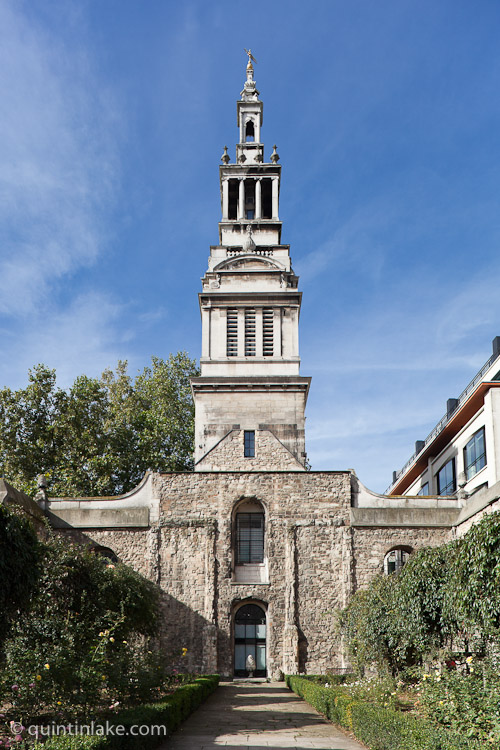
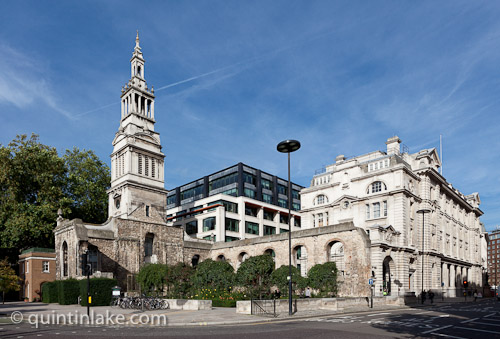
Blitz damaged nave and steeple of Christ Church Greyfriars, by Christopher Wren in the City of London. The tower, rising from the west end of the church, had a simple round-arched main entranceway and, above, windows decorated with neoclassical pediments. Large carved pineapples, symbols of welcome, graced the four roof corners of the main church structure. Unique among the Wren churches, the east and west walls had buttresses. (Photo: Quintin Lake)

Remains of the Second World War damaged nave of Christ Church Greyfriars, London by Christopher Wren, 1687. Former General Post office buildings at right, now Merrill Lynch regional headquarters, contemporary Merrill Lynch offices at rear. (Photo: Quintin Lake)

Christ Church Greyfriars, also known as Christ Church Newgate, was an Anglican church located at the junction of Newgate Street and Montague Street, opposite St Paul’s Cathedral in the City of London. Built first in the gothic style, then in the English Baroque style by Sir Christopher Wren in 1687, it ranked among the City’s most notable pieces of architecture and places of worship.

The church was destroyed in the Second World War during the Blitz on December 29, 1940. A firebomb struck the roof and tore into the nave. Much of the surrounding neighbourhood was also set alight—a total of eight Wren churches burned that night. At Christ Church, the only fitting known to have been saved was the cover of the finely carved wooden font, recovered by an unknown postman who ran inside as the flames raged. The roof and vaulting collapsed into the nave; the tower and four main walls, made of stone, remained standing but were smoke-scarred and gravely weakened. A photograph taken in the light of the following day shows two firemen hosing down smouldering rubble in the nave. The ruins are now a public garden.

In 2002, the financial firm Merrill Lynch completed a regional headquarters complex on land abutting to the north and the west. In conjunction with that project, the Christ Church site got a major renovation and archeological examination. Construction workers put King Edward Street back to its former course so that the site regained its pre-war footprint. The churchyard was spruced up, its metal railings restored. In 2006, work was completed to convert the tower and spire into a modern twelve-level private residence. The nave area continues as a memorial; the wooden font cover, topped by a carved angel, can today be seen in the porch of St Sepulchre-without-Newgate.

These photographs were made during a commission by Thames & Hudson / View Pictures for a book on the architecture of the City of London.

View more images of Christ Church Greyfriars Here

Photography © Quintin Lake, 2010
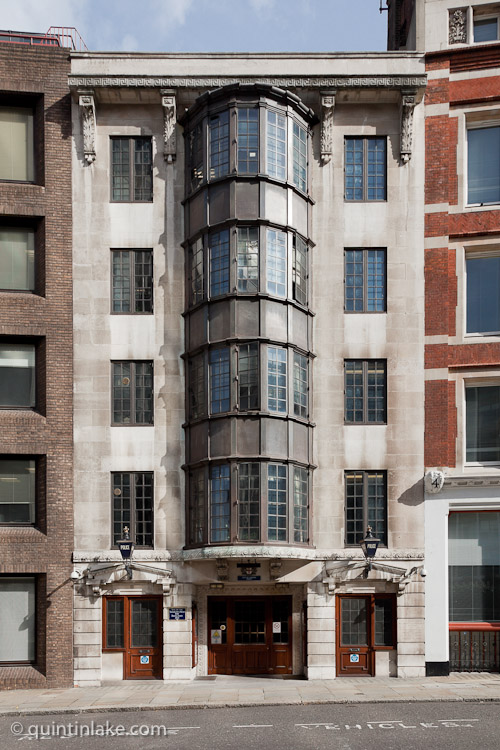
Front elevation of Snow Hill Police Station by Sydney Perks, 1926 (Photo: Quintin Lake)

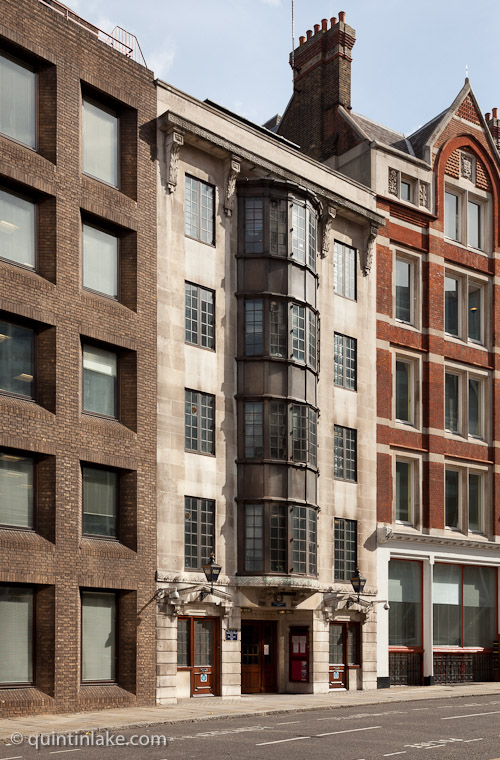
Snow Hill Police at 5 Snow Hill in the City of London (Photo: Quintin Lake)

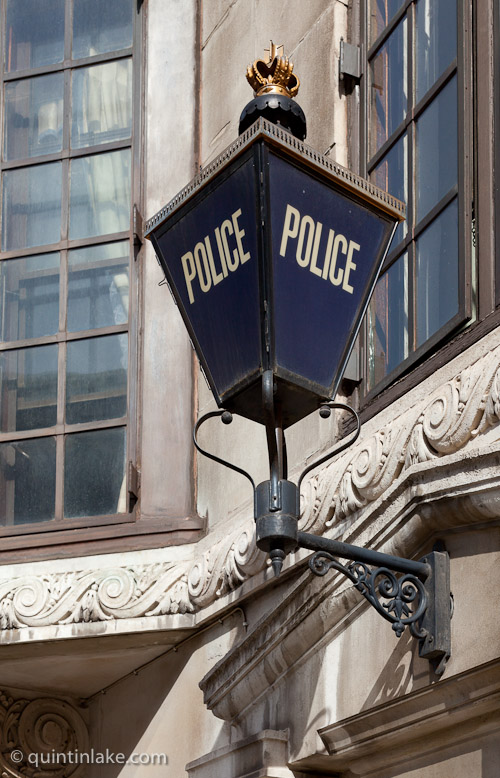
Police lanterns at Snow Hill Police Station (Photo: Quintin Lake)

Cornice cut in a Meander pattern and supported by long acanthus brackets at Snow Hill Police Station (Photo: Quintin Lake)

The elegant metal full-height polygonal bay of five windows at Snow Hill Police Station with Guilloche interlace pattern (Photo: Quintin Lake)

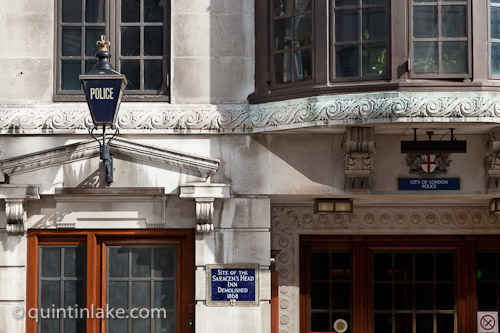
Snow Hill Police Station showing City of London plaque to the Saracen's Head, demolished in 1868 (Photo: Quintin Lake)

Snow Hill Police Station, a 24 hour operational station of the City of London Police. The police station was built on the site of the former Saracen’s Head Inn that was demolished in 1868, and a plaque on the wall outside records that fact.

The building merits Grade II Listed Building status, and the English Heritage website page describes it thus:

Police Station. 1926 by Sydney Perks. Stone with lead to bay; roof of slate. Five storeys over basement. Three-window range. All opening flat arched. Noteworthy and unusual blend of Modern and Arts and Crafts style. Banded rustication to ground floor with three doors, those to sides with one sidelight each, that to centre at rear of rectangular recess set under a full-height polygonal bay of five windows with Tuscan pilaster responds and a cornice at the top cut in a Meander pattern and having long acanthus brackets. Running guilloche to ground floor. Plain parapet with coping. Ornaments are judiciously placed to emphasise the simple expanse of masonry and the elegant metal-faced bay. Police lanterns in parapets over side elevations. City of London plaque to the Saracen’s Head, demolished in 1868.

These photographs were commissioned by Thames & Hudson / View Pictures for a book on the architecture of the City of London

View more images of Snow Hill Police Station Here

Photography © Quintin Lake, 2010
Gary a plumber from G F Cross & Sons installing services below the new servery (Photo: Quintin Lake)

Rich Oliver a carpenter from Benfield & Loxley fabricating new washroom cubicles (Photo: Quintin Lake)

Paul Martin of Polydeck Resins mixes floor sealant in the kitchen (Photo: Quintin Lake)

Matthew a carpenter from Benfield & Loxley works on the new bar area (Photo: Quintin Lake)

Terry & Lloyd from Benfield & Loxley Groundwork Crew (Photo: Quintin Lake)

Ron Cross & Jono of G F Cross & Sons study the services plan (Photo: Quintin Lake)

The new servery next to the main hall starts to take shape (Photo: Quintin Lake)

New bar in the cellars (Photo: Quintin Lake)

October construction progress at Pembroke College, Oxford as part of a larger photographic documentation of the project.

VIEW MORE / BUY PRINTS / LICENSE IMAGES from Pembroke College Hall, Bar and Forte Room Redevelopment here >>

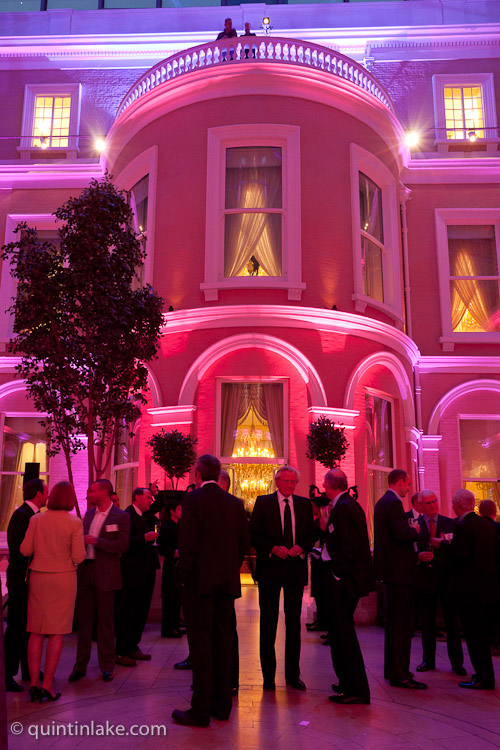
Courtyard at the Wallace Collection, London (Photo: Quintin Lake)

The Master, Giles Henderson (Photo: Quintin Lake)

Courtyard at the Wallace Collection, London (Photo: Quintin Lake)

The Chairman of the Campaign Board, Julian Schild (Photo: Quintin Lake)

Andrew Seton, Strategic Development Director and guests (Photo: Quintin Lake)

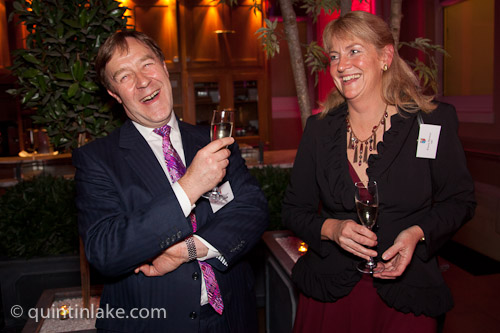
Pembroke College Alumnus Michael Heseltine in the Courtyard at the Wallace Collection, London (Photo: Quintin Lake)

Project architect James Roach (Photo: Quintin Lake)

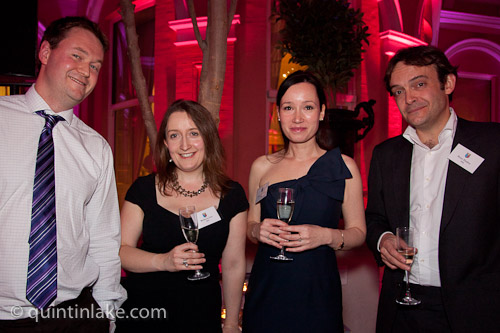
Pembroke College Alumni at the launch (Photo: Quintin Lake)

Pembroke College Alumni at the launch (Photo: Quintin Lake)

Pembroke College Alumni at the launch (Photo: Quintin Lake)

Pembroke College Alumni at the launch (Photo: Quintin Lake)

Courtyard at the Wallace Collection, London (Photo: Quintin Lake)

Gallery at the Wallace Collection (Photo: Quintin Lake)

Pembroke College Bridging Centuries Campaign Launch at the Wallace Collection for more information see www.pembrokebridgingcenturies.org

To view more photographs or purchase prints from the event click here

Photography © Quintin Lake, 2010
Haim Steinbach by his installation at Louis Vuitton Maison, 2010 (Photography: Quintin Lake)

"Display #67 ‐ Forsythia ‐ PLS5/2SB" by Haim Steinbach at Louis Vuitton Maison, 2010 (Photography: Quintin Lake)
Detail of "Display #67 ‐ Forsythia ‐ PLS5/2SB" by Haim Steinbach at Louis Vuitton Maison, 2010 (Photography: Quintin Lake)

In this installation, entitled Display #67 ‐ Forsythia ‐ PLS5/2SB, Haim Steinbach places two bright yellow safety ‘boots’ next to a yellow laser level, on a yellow plastic laminated, wood shelf, which is attached to a free‐standing wall. Laser beams project from the level in five different directions.

Runs from Tuesday 12th October to Tuesday 26th October 2010 at Louis Vuitton Maison, 17/20 New Bond Street, London, W1S 2RB
Photography commissioned by Calum Sutton PR on behalf of Louis Vuitton images of artwork © Haim Steinbach
View more images of Steinbach’s Installation at Louis Vuitton Maison here