Archives For author

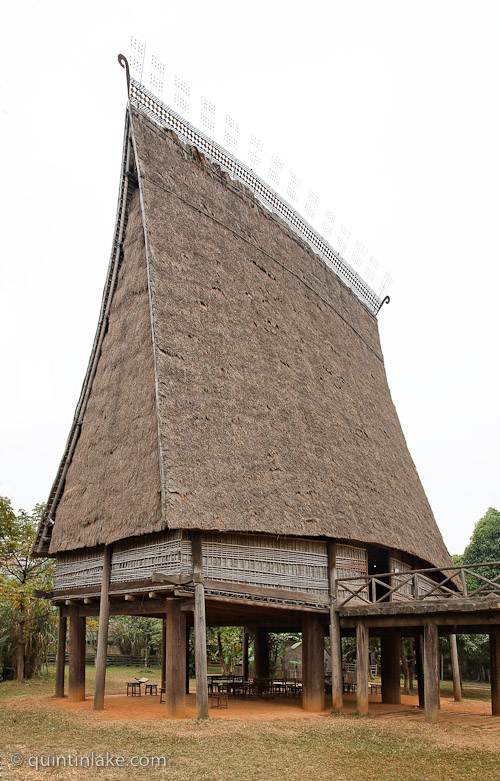
Bahnar Communal House, Vietnamese Museum of Ethnology, Hanoi
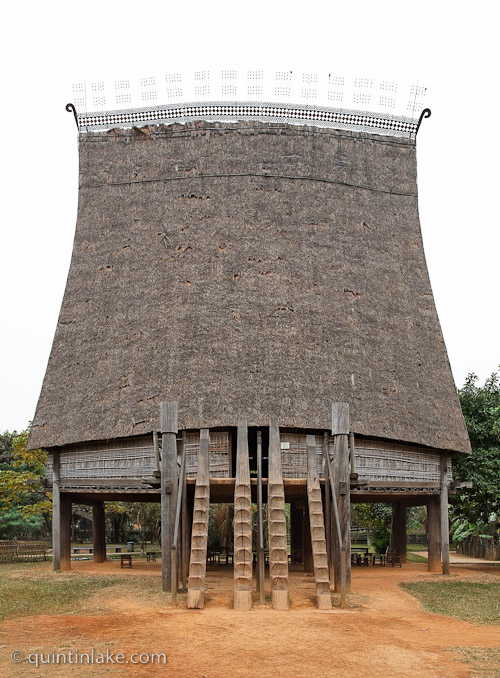
Front of Bahnar Communal House, Vietnamese Museum of Ethnology, Hanoi

The communal house is the most important building in a Bahnar village. Traditionally, communal houses serve as meeting halls for the men in the village and as places where rituals, celebrations, and preparation for war or defense of the village take place. This house was built after the model of the 20th century communal house of Kon Rbang village (Vinh Quang commune, Kontum Town, Kontum Province). This model house in Kon Rbang is the only one that maintains the traditional system of building with poles and beams, which has existed for over 70 years in the Central Highlands. In order to create a traditional communal house untouched by modernisation, museum researchers worked closely with villagers and consulted old photographs to better understand the traditional model. The form, size, and structure of the museum’s communal house replicate those found in the village now, though the house you see here has restored many of the traditional features that have been lost in today’s village houses. The roof here is made of straw rather than corrugated iron. The rafters are made of circle-shaped pieces of wood rather than square ones. The floor is made of bamboo rather than wooden planks. The stairs are rounded pieces of wood rather than cement. The wood, bamboo, rattan, and straw used for making the house were brought from the Central Highlands.

The diameter of the largest poles is 60cm. The length of the beams is 14–15 m. The height of the roof is nearly 19m including the decorative frame, with each of the principal roof beams about 13m long. The 90m2 floor is elevated 3m above the ground and accessed by four sets of stairs. The Vietnam Museum of Ethnology invited 29 Bahnar people from Kon Rbang to construct the house on the museum grounds. The first poles were erected on April 26, 2003. On June 4, 2003, the house was fully completed. Visitors to the VME now have the rare opportunity of experiencing this unique architectural style first-hand and appreciating the traditional culture and craftsmanship of the Bahnar people. The construction of the Bahnar communal house was made possible by the support of the Ministry of Foreign Affairs of the Federal Republic of Germany through the German Embassy.

VIEW MORE IMAGES of Bahnar Communal House

Photography © Quintin Lake, 2010

Text © 2005 by Vietnam Museum of Ethnology

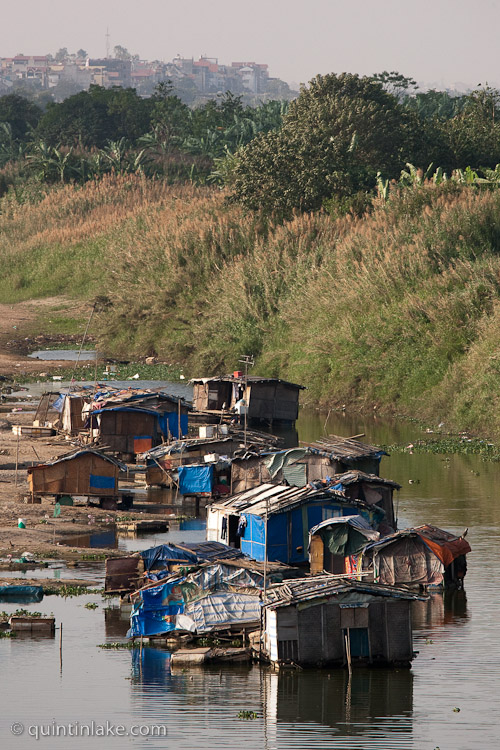
Floating boat houses on the Red River, seen from Long Bien Bridge, Hanoi, Vietnam

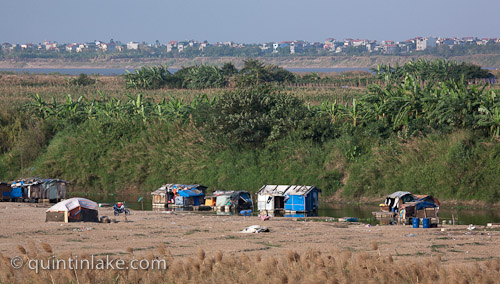
Floating boat houses on the Red River with suburban hanoi in the distance, seen from Long Bien Bridge, Hanoi, Vietnam

North of the Long Bien Bridge bridge are poorest of Hanoi who live physically and figuratively at the edge of the city in these makeshift floating shelters.

VIEW MORE IMAGES of Boat houses on the Red River, Hanoi

Photography © Quintin Lake, 2010

Tube Houses, near Long Bien Bridge Hanoi, Vietnam

Pitch roofed Tube House seen from Long Bien Bridge, Hanoi, Vietnam

Facade of Tube Houses on Tran Nhat Duat Street, Hanoi, Vietnam

Pink Tube House seen from Long Bien Bridge Hanoi, Vietnam

Tube Houses next to Tran Nhat Duat Street , by Gustave Eiffel's Long Bien Bridge Hanoi, Vietnam

Laundry and television aerial on a Tube House, Long Bien, Hanoi, Vietnam

With a narrow face on the street (often as narrow as 2 meters) and a long space on the inside (they can be up to 80 meters deep) these houses do indeed resemble tubes.This style dates back to the Le Dynasty (1428-1788), when they were popular as a way to fit as many stores on a street as possible. Typically, the houses had a shop area in the front and used the back areas for relaxing and sleeping. Another theory is that since property used to be taxed based on the width of the property at the street, land was subdivided into very narrow and long parcels upon which correspondingly long buildings were built.

That mixed use of space for commerce and residence remains today, though the buildings have soared to create tall thin “rocket buildings”. Confined to the ground area by the original land deeds, owners have had to expand upwards, creating three, four or five-story ‘rocket buildings.’ With the extra floors shopkeepers were allowed to move the living areas upstairs and expand their stores. Most of these buildings in Hanoi and other cities in Vietnam are usually four stories tall, though some are much taller . The facade and roofs draw liberally from various architectural styles and motifs and the long sides are usually windowless. Due to concerns of theft open balconies are covered with a metal screen.

VIEW MORE IMAGES of Vietnamese Tube Houses and Rocket Buildings

Photography © Quintin Lake, 2010

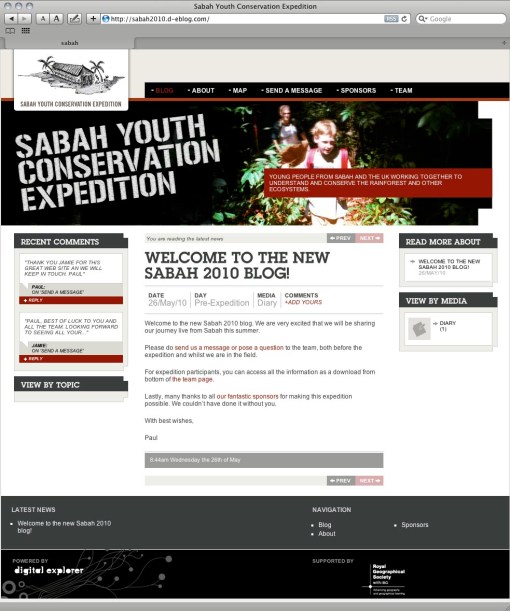
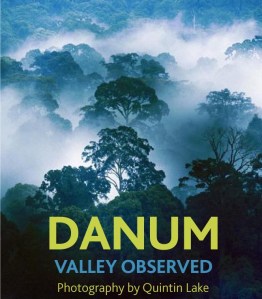
I’m acting as photographer for this expedition arriving a couple of weeks before the group to have more time to make photographs of the rainforest. You can read about the background to the project and follow daily progress and photography on the expedition website from 13-25th July 2010.The expedition will produce the following publications:

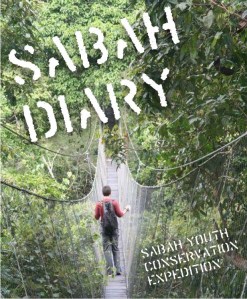
SABAH DIARY EXPEDITION BOOK (via blurb.com)

DANUM VALLEY PHOTOGRAPHY BOOK (via blub.com)

PALM OIL EDUCATIONAL RESOURCE (publisher tbc)

The expedition will also be creating sound recording for potential inclusion in a BBC Voices of Sabah Programme

Football game at Jardim São Marcos Favela, Cubatão adjacent to the Fosfertil Fertiliser Factory, Cubatão, Brazil

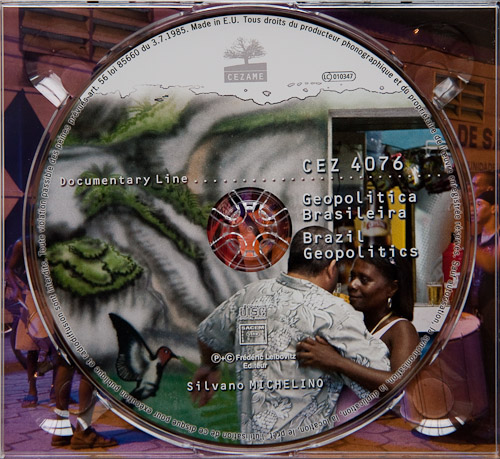
A couple samba in an open-air bar, Cubatão, Brazil

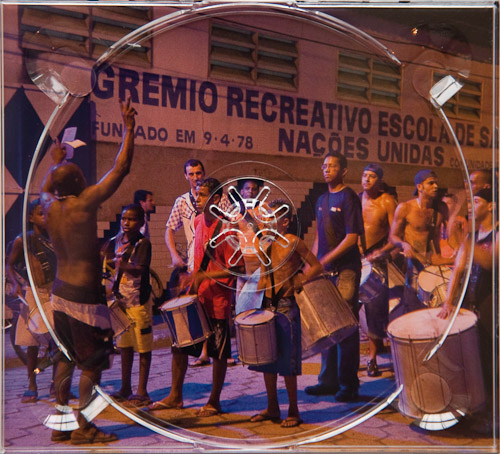
Cubatão Samba School (bateria da escola de samba nações unidas) practice on the street in Cubatão, Brazil

The home of D. Maninha, aged 94, one of the oldest inhabitants of Pylons, Cubatão

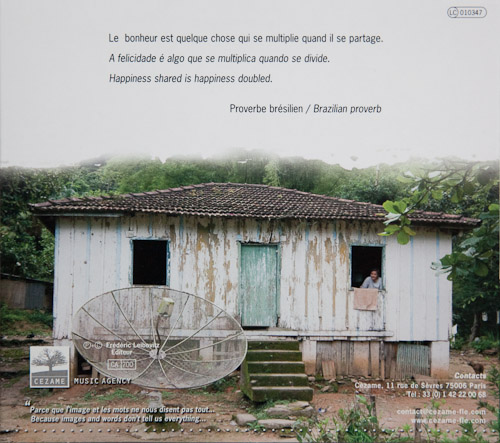
My photographs from Cubatao are featured on the artwork for Geopolitica Brasileira / Brazil Geoplitics (CEZ4076) CD, by Silvano Michelino released by Cezame Music Agency, Paris. Graphic design: Jacques Boucaux, Produced by: Françoise Marchesseau & Frédéric Leibovitz

“An emerging power on the international scene, Brazil is in a period of profound change: industrial, ecological, economic and social. Its famously rich musical culture is perceptibly responding to these changes. Silvano Michelino here presents his personal synthesis of ingrained musical diasporas and evolving trends in a nation in flux.”

The photographs featured on the CD artwork are from Cubatao, Brazil once one of the most polluted places on earth, which were made during the filming of Holiday in Cubatao

My account of the experience can be read in  Cubatao: Life in the Valley of Death

VIEW MORE IMAGES of Cubatao, Brazil here

Photography © Quintin Lake, 2008

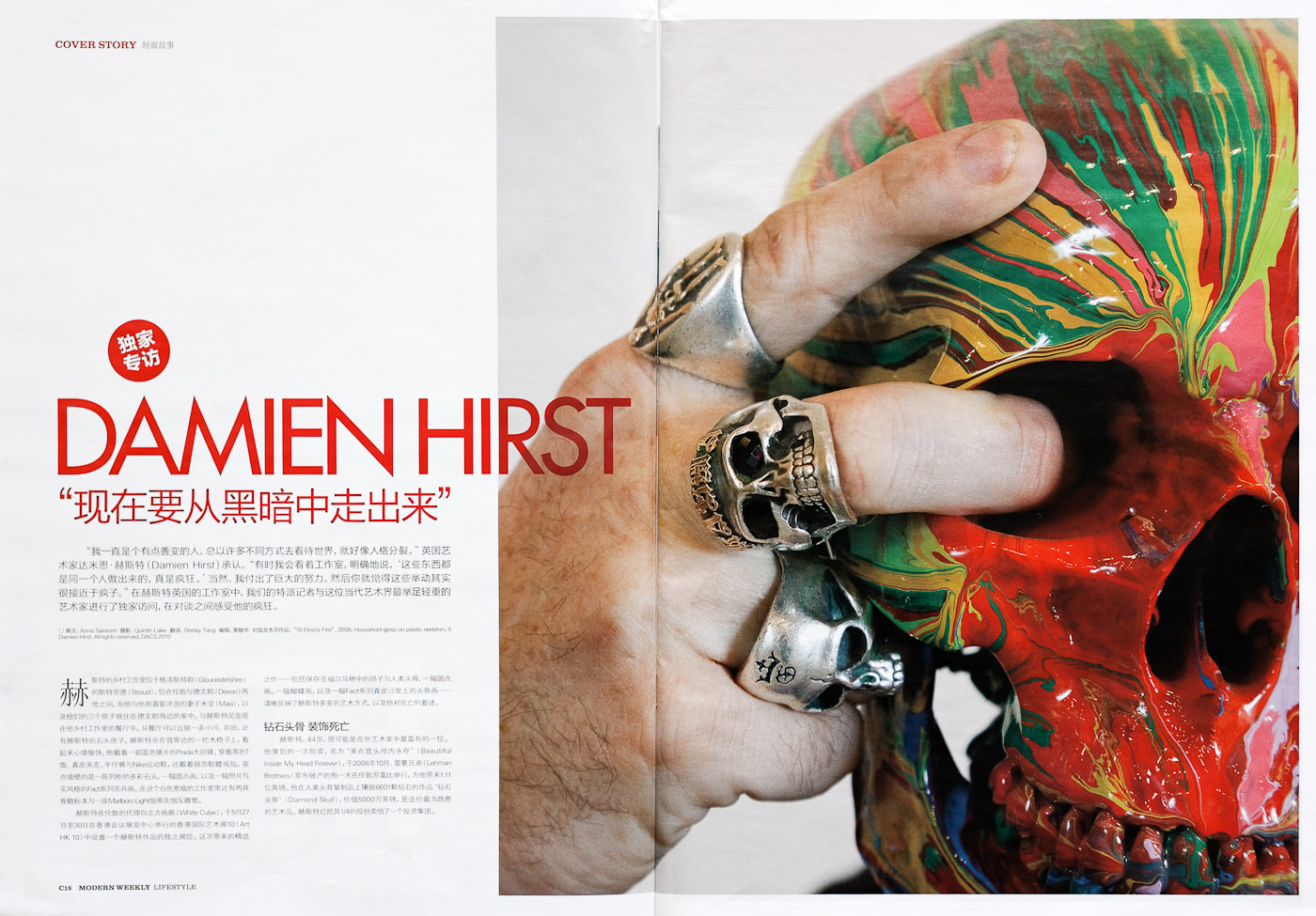
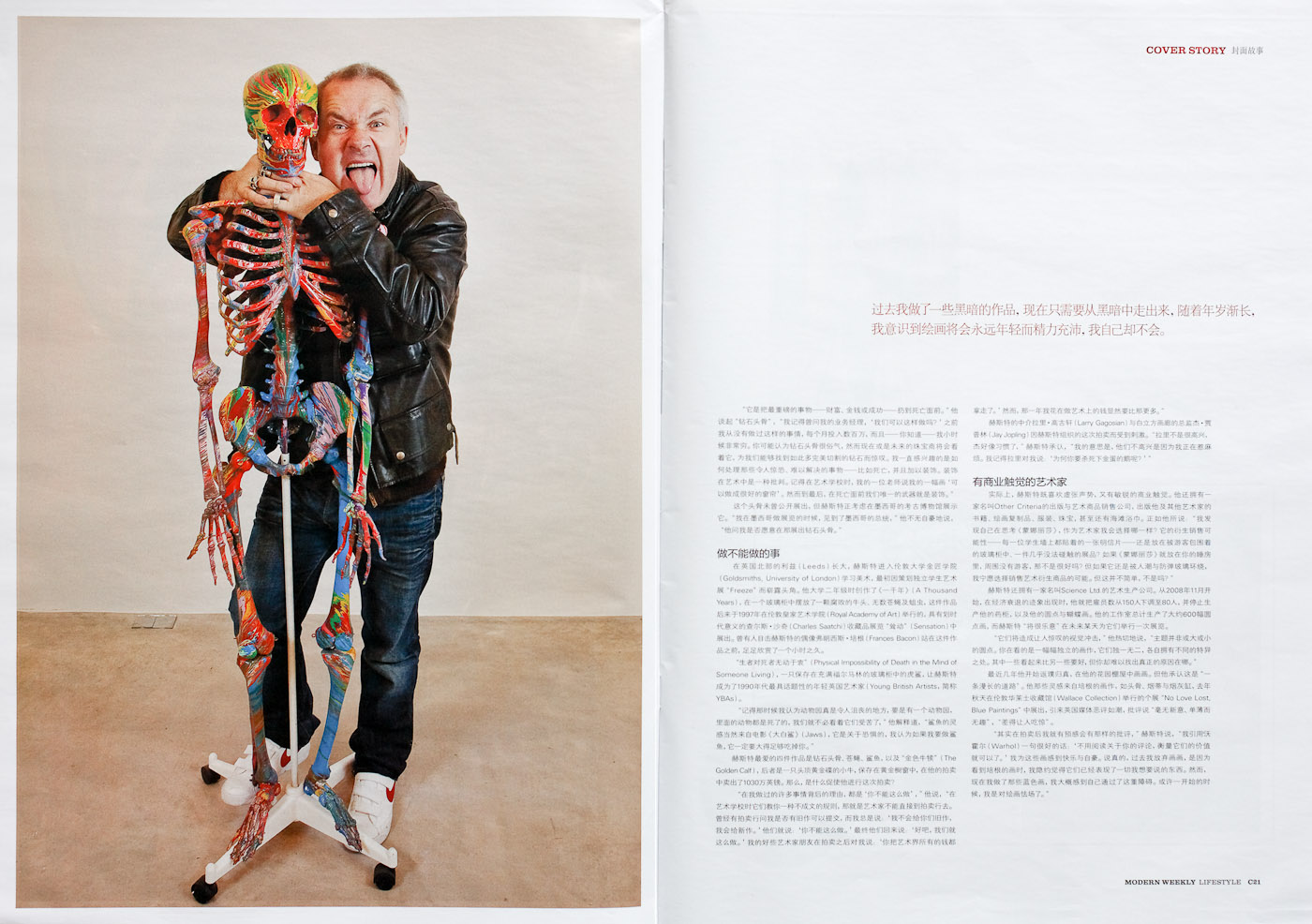
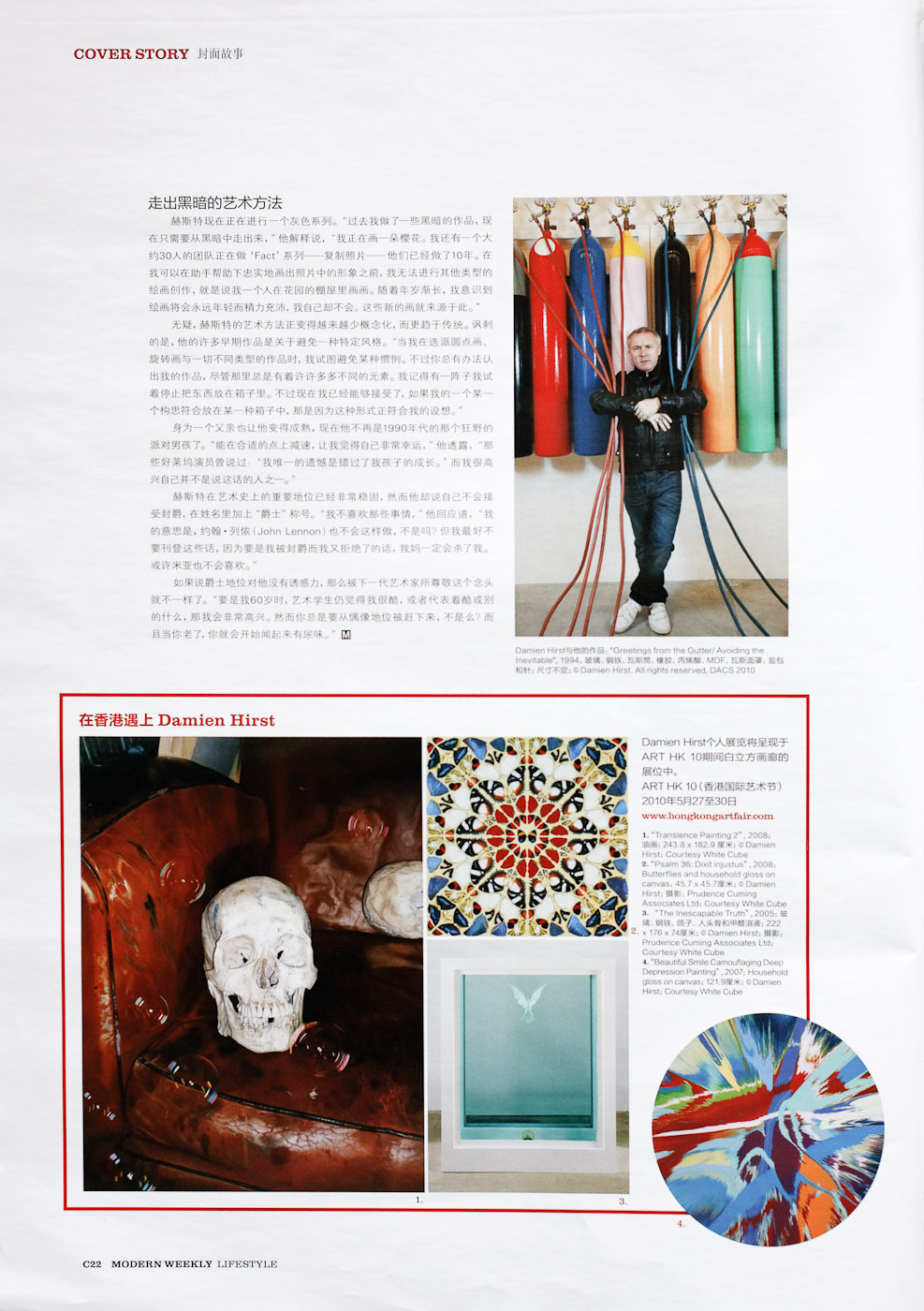
Damien Hirst Cover Feature in Modern Weekly China (Photo: Quintin Lake)

Damien Hirst Cover Feature in Modern Weekly China (Photo: Quintin Lake)

Damien Hirst Cover Feature in Modern Weekly China (Photo: Quintin Lake)

Damien Hirst Cover Feature in Modern Weekly China (Photo: Quintin Lake)

Photoshoot commissioned by Callum Sutton PR for the cover feature of Modern Weekly Lifestyle for the launch of the Hong Kong Art Fair for which Hirst and his gallery White Cube are participating. Interview by Anna Sansom.

Modern Weekly is the grand-daddy of lifestyle weeklies with a circulation of half a million. Published out of Guangzhou, it set the trend of putting out one magazine in several separately-bound sections – for news, life, finance, and urban fashion

VIEW MORE IMAGES of Damien Hirst portrait in his Studio here

Artworks © Damien Hirst. All rights reserved, DACS 2010

Photography © Quintin Lake, 2010

Rainforest Club Annual Dinner 2010: Welcome by Hon secretary Paul Baker, a few words from the founding President – Lord Cranbrook and the launching of a new expedition by Dr Susan Cheyne.
Dinner chaired by Nigel Winser with speeches by Professor Yadvinder Malhi and Paul Goodyear. DVD screening about Ghost Forest by Angela Palmer. Radcliffe Observatory, Green Templeton College, Oxford.

Rainforest Club Annual Dinner 2010, Radcliffe Observatory, Green Templeton College

The Rainforest Club is 42 years old this year. It originally rose from the Mulu Rainforest Expedition that the Royal Geographical Society organised in 1978 This expedition was lead by Robin Hanbury Tenison who with many other Rainforest scientists including the Earl of Cranbrook and Nigel Winser brought the club into existence. The Club has grown over the years and it includes august members of the academic community and rainforest friends who have been involved in Rainforest expeditions and research over many years.

VIEW MORE IMAGES of the Rainforest Club Annual Dinner 2010

Photography © Quintin Lake, 2010


The Southern Upland Way is a 341 km coast to coast walk in Scotland between Portpatrick in the west and Cockburnspath in the east. I walked the route camping and staying in bothy’s during a wet couple of weeks in July 2009 during which time I met less than 10 people on the path.

Finger post at the start of the southern Upland Way long distance path, Portpatrick

Lichen, sedum and grass on the headland by Killantringan Lighthouse Scotland

Loch Derry seen under a cloud from Craig Airie Fell, Borders, Scotland

Ghostly trunks of timber forest next to a recently felled area near Laggangarn, Southern Uplands, Scotland

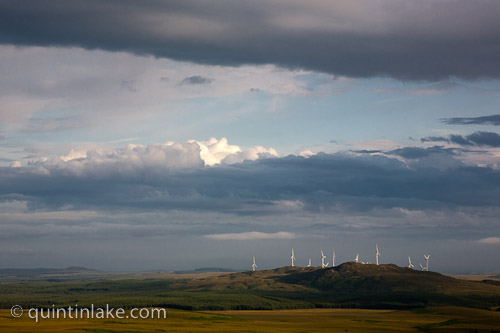
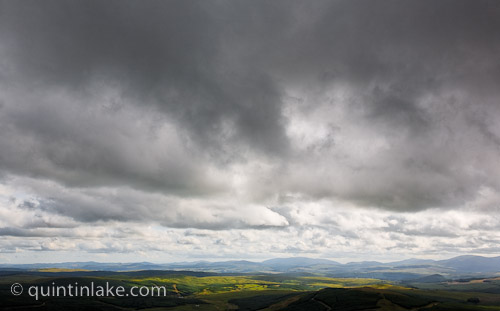
Wind turbines catch the light under a stormy landscape from Craig Airie Fell, Borders, Scotland

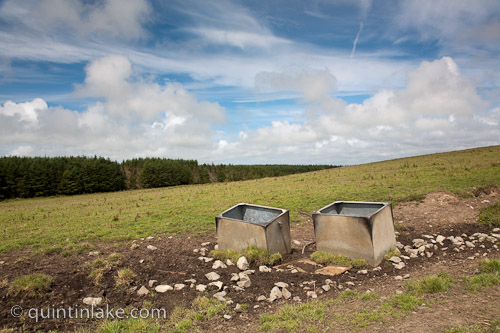
Cattle water troughs in a field near Stranrear, Scotland

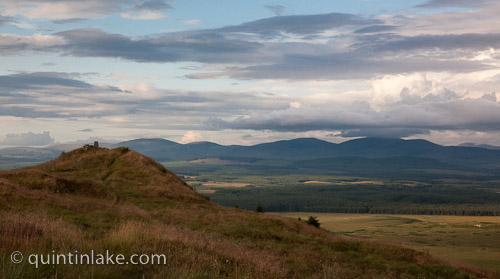
Trig point of Craig Airie Fell looking east towards the Galloway hills, Southern Uplands, Scotland

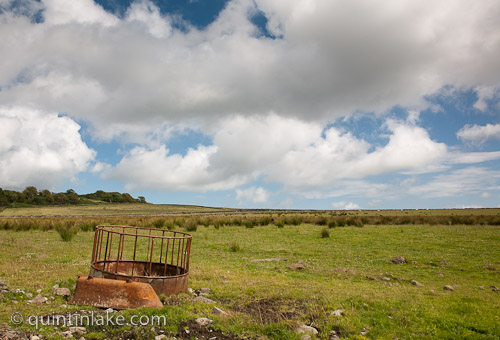
Rusted cattle feeder and discarded cast iron bath Balmurrie, Scotland

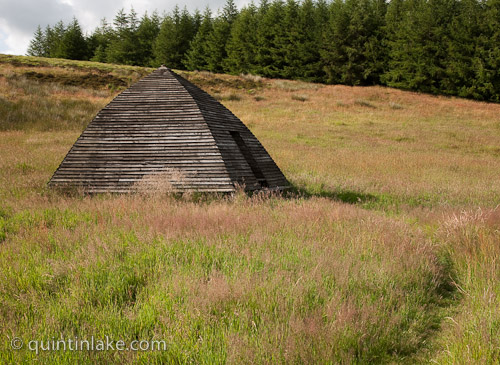
Beehive Bothy, Near Laggangarn on the Southern Upland Way, Scotland

View west of fields in sunlight under a storm cloud from Benbrack near Cairnhead, Southern Uplands, Scotland

Drystone wall near St John's Town of Dalry, Southern Uplands, Scotland

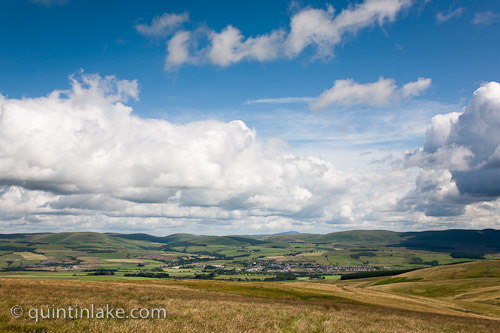
Sanquhar town seen from near Shiel Hill on the Southern Upland Way, Scotland

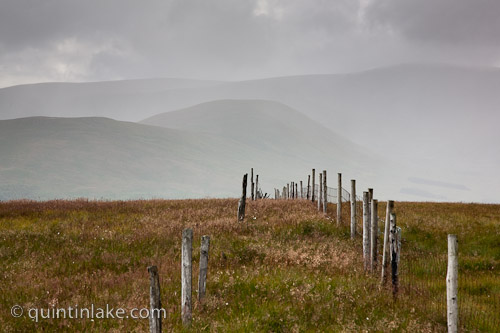
Fence descending Benbrack in the Galloway Hills, Southern Uplands, Scotland.

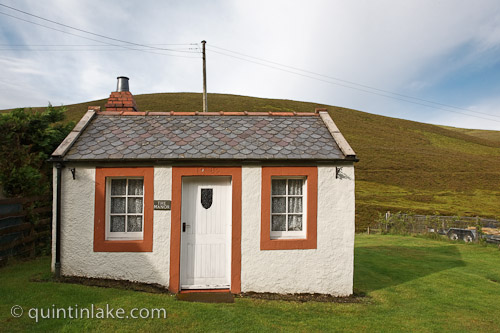
"The manor", Church Street in the village of Wanlockhead, Dumfries and Galloway, Scotland. The sign on the wall says The Manor, the date above the door is 1989.

Markers by the road to Lowther Hill Radar Station from Wanlockhead, Southern Uplands, Scotland

Turf topped stone Sheepfold, Phawhope, Southern Uplands, Scotland

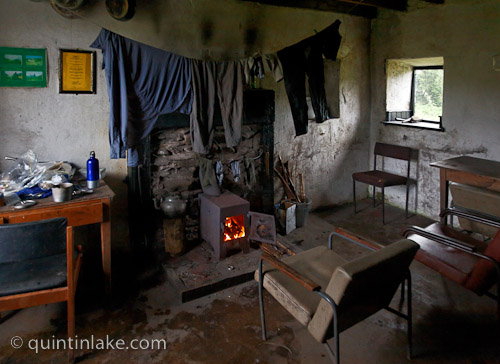
Clothes drying in White Laggan bothy interior South of Loch Dee, Southern Uplands, Scotland

Dryhope Tower built 1535 catches the evening sun, a ruined Scottish pele tower (castle keep) in the valley of the Yarrow Water, Scottish Borders, Scotland

Elidon Hills seen from the Three Brethren, Yair, Scottish Borders, Scotland

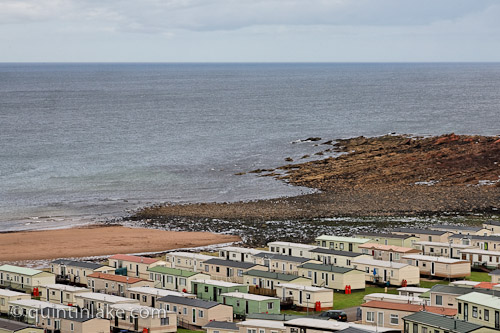
Pease Bay Holiday Home Park, Cockburnspath, Berwickshire, Scotland

More images of Landscapes on the Southern Upland Way

More images of Marks of Man on the Southern Upland Way

More images of Buildings on the Southern Upland Way

More images of Textures on the Southern Upland Way

VIEW MORE IMAGES / BUY PRINTS / LICENCE photographs of the Southern upland way

Photography © Quintin Lake, 2009