Archives for posts with tag: Architecture

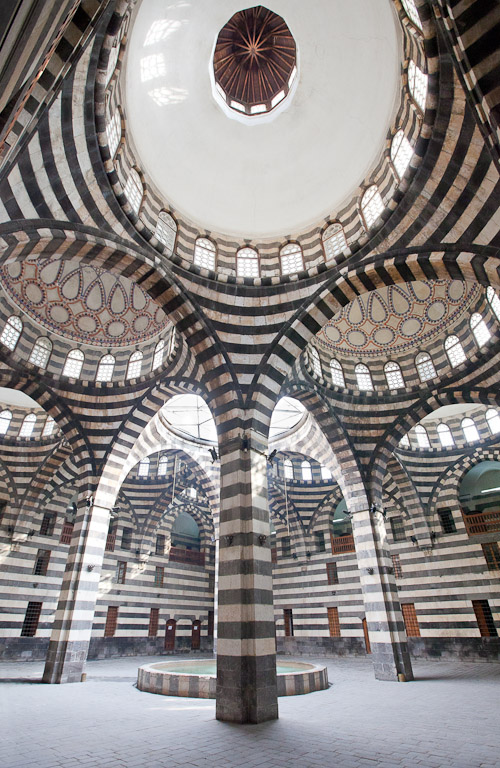
Courtyard of Khan As'ad Pasha Damascus, Syria. Photo: Quintin Lake

The khan or Caravanserai of As’ad Pasha al-Azem is situated along Suq al-Buzuriyyah in the old city of Damascus. It was built between 1751 and 1752 by the city governor As’ad Pasha al-Azem. It is one the most prominent khans of the old city, and covers an area of 2500 square meters.

The building follows a typical khan layout with two floors giving onto a central courtyard. The Khan is entered from Suq al-Buzuriyyah, through a monumental gateway lavishly decorated with stone carvings and roofed by a muqarnas semi-dome. The entrance leads to a square courtyard with shops on the ground floor, used for commerce and storage. The second floor, accessible by a staircase located to the right of the main entrance was used mainly for loadging, and has eighty rooms arranged along a gallery facing the courtyard.
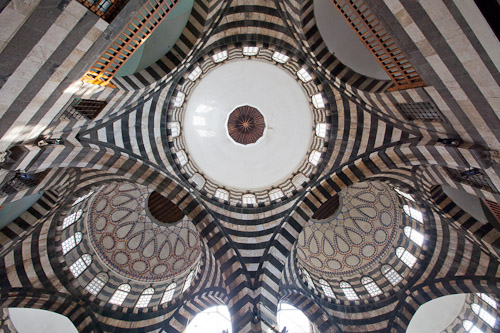
Looking up to the domes of Khan As'ad, Damascus, Syria. Photo: Quintin Lake

The space of the courtyard is divided into nine equal square modules, where each module is covered with a dome raised on a drum pierced with twenty windows. The domes are supported by pendentives that transfer the load onto four piers and to the courtyard walls. An octagonal marble fountain occupies the center of the courtyard below the central dome. Each of the four courtyard walls has three doorways on the ground floor, flanked by two rectangular windows. The symmetry is maintained on the second floor where each gallery façade has three archways flanked by two smaller ones. The khan is built of alternating courses of basalt and limestone.

Three of the courtyard domes were destroyed in an earthquake seven years after the khan’s completion. The openings were covered with wooden planks until 1990 when the khan was restored and the domes rebuilt. No longer used for commerce at the beginning of the twentieth century, the khan was used for manufacture and storage until it was restored in 1990 winning the Aga Khan Award for Architecture.

Click Here for More from this Photoshoot >>

All images available as fine art prints or for publication / licensing contact me for pricing and to arrange use. Photographs © Quintin Lake  

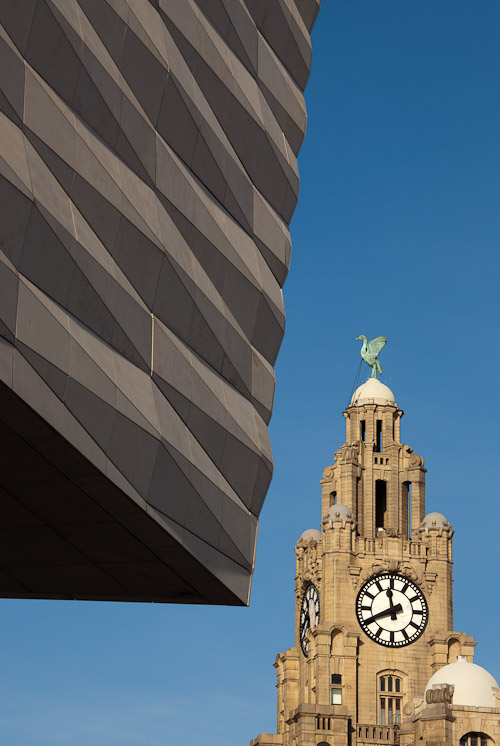
Museum of Liverpool Facade with Royal Liver Building behind topped with the iconic Liver Bird.

The Museum of Liverpool façade’s relief pattern puts forward a new interpretation of the historical architectural detail in the ‘Three Graces”, the UNESCO listed maritime buildings adjacent to the museum. The new building is somewhat underwhelming inside but externally the bold contrast of old and new is very exciting giving the city a modern European feel.  The wave form was inspired by origami and to give the façade an element of variation, as the changing light and shadow affect the facades appearance.  The building opened to the public in July 2011.

Click Here for More from this Photoshoot >>

Photographs © Quintin Lake
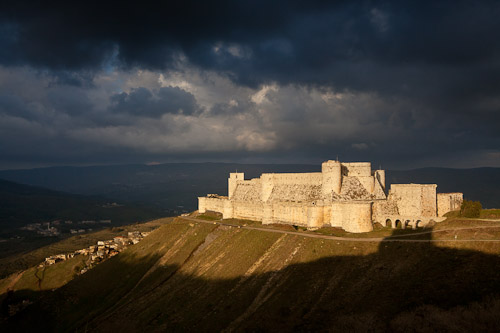
Krak des Chevaliers Castle from the south West, Homs Gap, Syria. Photo: Quintin Lake

“The Krak of the Knights [Krak des Chevaliers], described by T.E. Lawrence as ‘the best preserved and most wholly admirable castle in the world,’ is the easternmost of a chain of five castles sited so as to secure the Homs Gap…The castle stands upon a southern spur of the Gebel Alawi, on the site of an earlier Islamic ‘Castle of the Kurds.’ In 1142 it was given by Raymond, Count of Tripoli, into the care of the Knights Hospitallers, and it was they who, during the ensuing fifty years, remodelled and developed it as the most distinguished work of military architecture of its time.”Sir Banister Fletcher. A History of Architecture

Click Here for More from this Photoshoot >>

Photographs © Quintin Lake


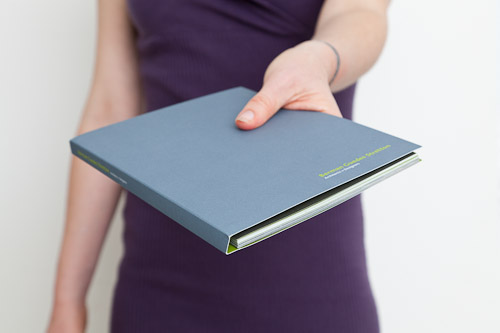
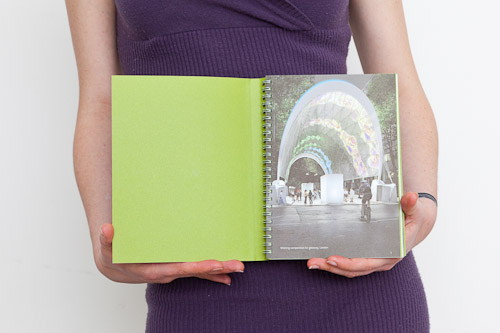
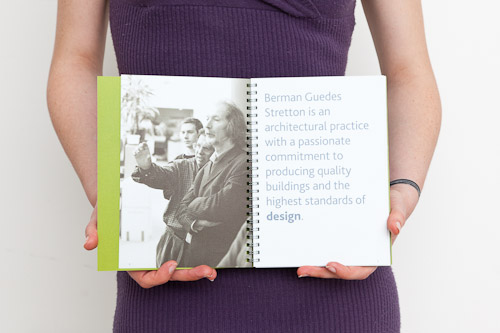
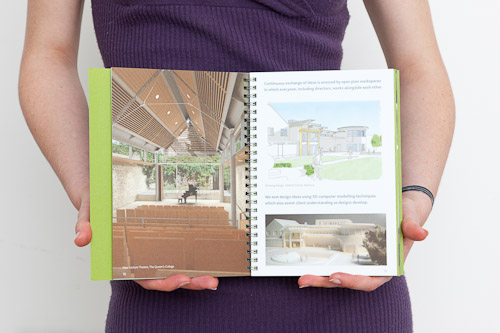
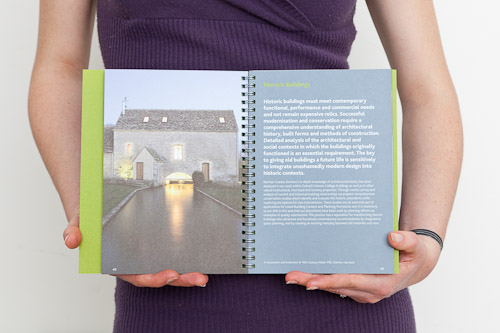
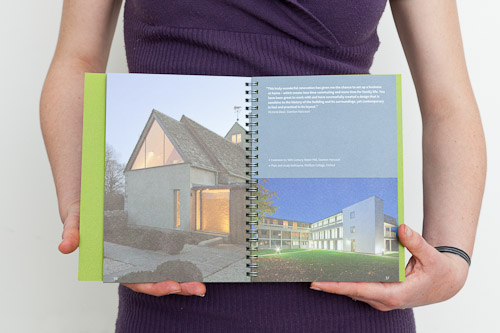
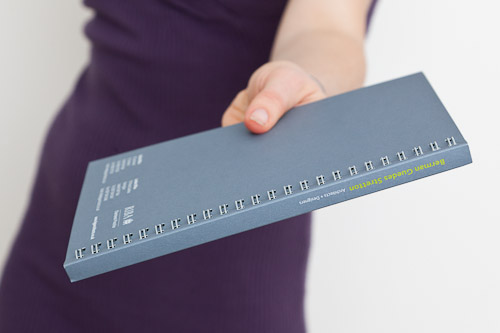
I designed this brochure and produced photography for architects Berman Guedes Stretton with a wrap-around cover which allows them flexibility to update their project pages or add specific pages in the brochure for a particular presentation. The wire bound format also has the advantage that the document lies flat on a desk when opened.

BGS architects pride themselves on their green credentials and this was carried through into the brochure design with uses 100% recycled paper, eco inks and no plastics, laminates or glazes over the print. This was also a factor in choosing the smaller A5 brochure size as it uses less paper.

I’d previously designed their corporate identity based on the beautiful typeface Bliss designed by Jermey Tankard and a green and dark grey colour scheme which are here printed as spot colours lithographically but were chosen to translate well in four colour printing if required.

When photographing their architectural projects for inclusion in the brochure, visualising the format of printed page and the colour scheme the images were intended to work with helped to create suitable photographs on site.

I’m currently documenting each month the major design and redevelopment project Berman Guedes Stretton are undertaking for Pembroke College, Oxford University. The project involves a new quad in Oxford, a radical new bridge, an Art Gallery, Theatre, Cafe and Accommodation due to be finished summer 2012.

Detail of West front of St Paul's Cathedral, London. Completed 1697 by architect Sir Christopher Wren.

Click Here for More from this Photoshoot >>

photographs © Quintin Lake

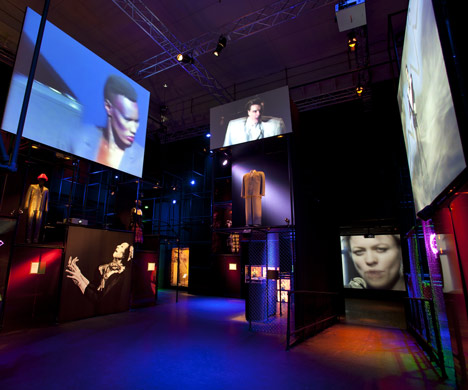
Interior of Postmodernism: Style and Subversion Exhibition at the V&A Museum. Photo: Dezeen

Gehry House, by Frank Gehry, Santa Monica. Photograph featured in V&A Postmodernism Exhibition. Photo: Quintin Lake

My photo of  Frank Gehry’s Santa Monica house is printed alongside other icons of  deconstructionist architecture by Venturi, Scott Brown and Associates. The curators were keen to include Gehry’s residence as it symbolizes an “early venture in bricolage and the postmodern”. The house built in 1978 represented the first and radical steps of Deconstructivist movement in architecture more info and photos on the building.

My personal sentiments on postmodernism which developed as an architecture student are encapsulated by Alastair Sooke who wrote in the Telegraph

Charles Jencks, the architectural theorist credited with inventing the term “postmodernism”, once pointed out that what is exciting and avant-garde one moment tends to feel like old hat the next. No doubt he is right: younger generations often berate the immediate past to assert their own identity. Even so, walking through the V&A’s new exhibition, which traces the rise and fall of postmodernism across different disciplines during the Seventies and Eighties, I was tempted to ask: has there ever been a more irritating movement in the history of art and design?”

Postmodernism: Style and Subversion 1970-1990
24 September 2011 – 15 January 2012 at V&A South Kensington info

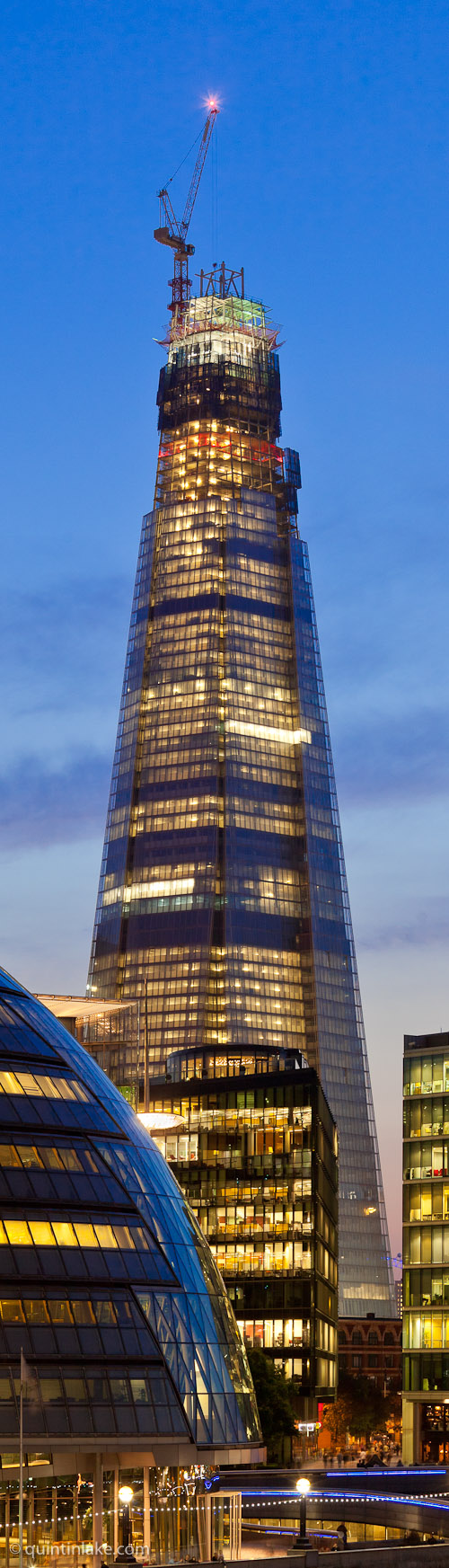
The Shard London during construction (September 2010) behind Norman Foster's City Hall, seen from London Bridge at dusk. Architect: Renzo Piano, Engineer: WSP, Contractor: Mace. Photo: Quintin Lake
The Shard London is presently at a particularly satisfying state of incompletion as the tip of the construction crane marks the apex of the soon to be completed tower. Designed by architect Renzo Piano Building Workshop the 310m tower is due for completion in 2012 when the skyscraper is set to become Europe’s tallest tower.

Know an interesting viewpoint of The Shard? let me know in the comments below…

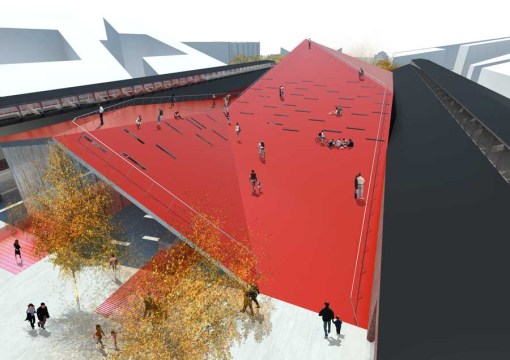
A visualisation of the folded roof of Godsbanen, The Freight Yard Project. Image by 3XN Architects

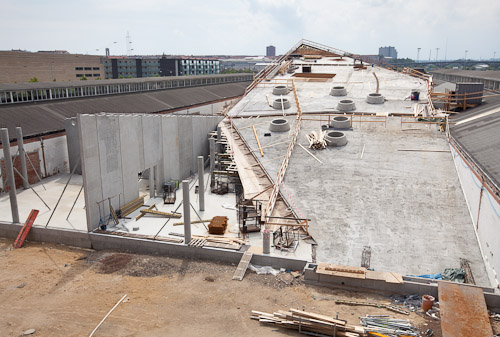
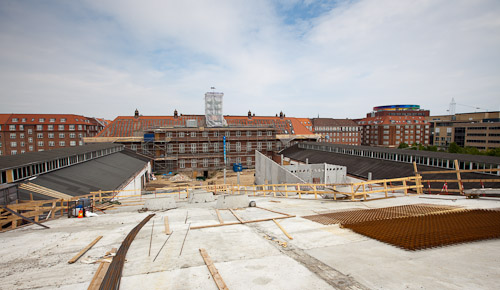
Construction of reinforced concrete roof. Photo: Quintin Lake

An visualisation of the roof of Godsbanen set between existing freight halls. Image by 3XN Architects

The new building provides a link between the two freight halls. Photo: Quintin Lake

The ridge area around the roof-lights adds to the structural stiffness of the roof. Photo: Quintin Lake

The reinforcing bars on the apex of the roof. Photo: Quintin Lake

The roof creates a new public landscape between the old freight halls. Olafur Eliasson's "Your Rainbow Panorama" visible at right. Photo: Quintin Lake
Wavy reinforcing steel provides stiffness against shear forces in the new roof. Photo: Quintin Lake

The main new building contains two new concert halls. The reinforced concrete ramp to the roof is being constructed in the foreground. Photo: Quintin Lake

Temporary concrete shuttering allows for the construction of the building's faceted angles. Photo: Quintin Lake

Sections of the freight yard's original rail tracks. Photo: Quintin Lake

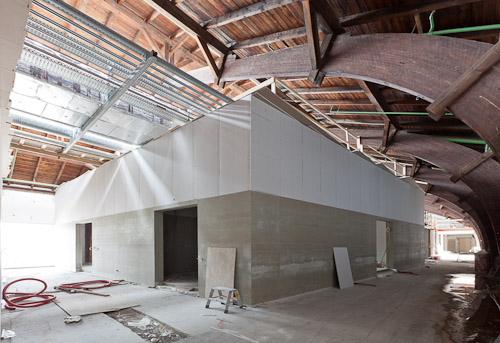
Sound insulated recording studio in the old freight halls. Photo: Quintin Lake

The striking laminated timber beams of the original freight hall. A music venue being constructed at the rear. Photo: Quintin Lake

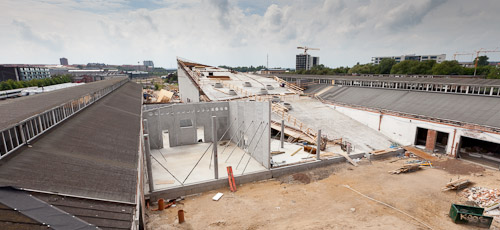
These images show the construction, as of June 2011, for a new cultural hub for scenography, visual arts and literature named Godsbanen /The Freight Yard Project that is being built within a historical framework in Denmark’s second largest city, Aarhus. The new cultural center is meant to be an inspiring setting that stimulates production of the arts and facilitates the interaction amongst the various artistic metiers, business and education.

The project design by Architects 3XN in collaboration with Søren Jensen Engineers is comprised of the renovation of the existing freight halls along with a new building with rooms and large scale auditoria. The roof of the building will appear as an extension of the green space – and will take the form of a green ‘carpet’ over the new building.  The project is expected to be completed in 2012.

These photos were commissioned by Søren Jensen, the engineering firm of the project.

VIEW MORE / BUY PRINTS / LICENSE IMAGES of Godsbanen, The Freight Yard Project here >>

Photography  © Quintin Lake, 2011