Archives For author

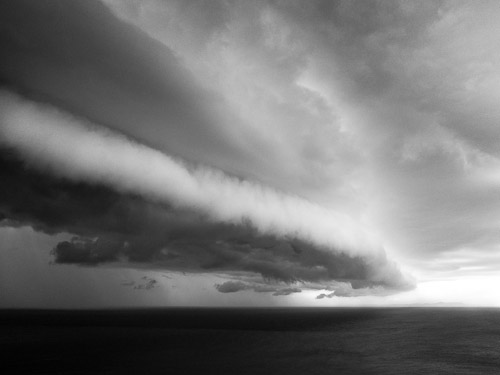
Coast to Coast I. Storm clouds over the Irish Sea.
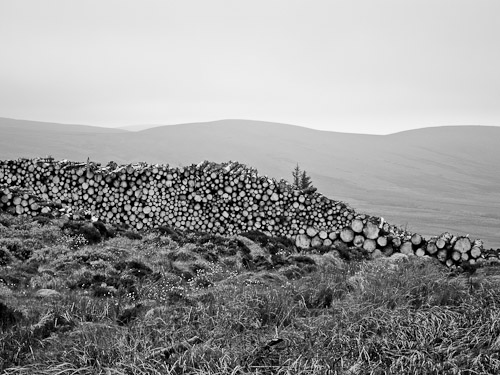
Coast to Coast IV. Forestry in the Lake District.
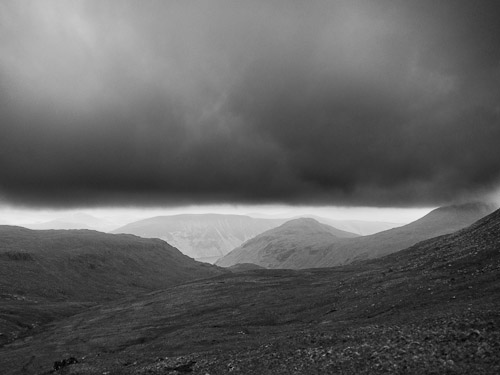
Coast to Coast V. Low cloud in the Lake District.
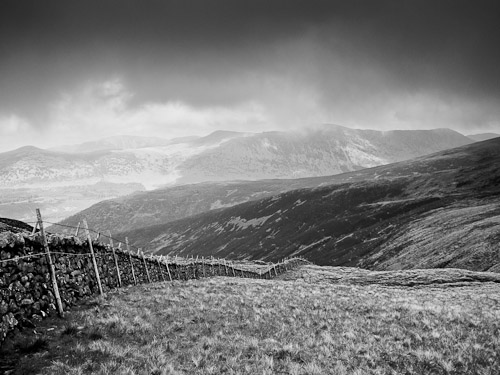
Coast to Coast VI. Stone wall in the Lake District.
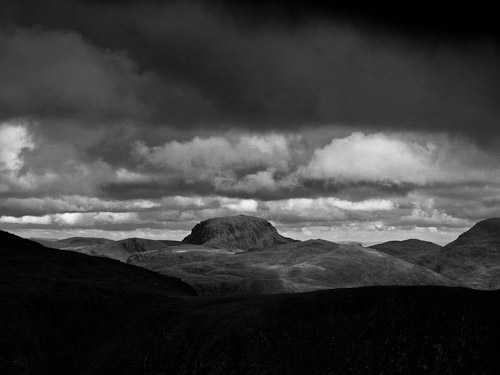
Coast to Coast VII. Great Gable in the Lake District.
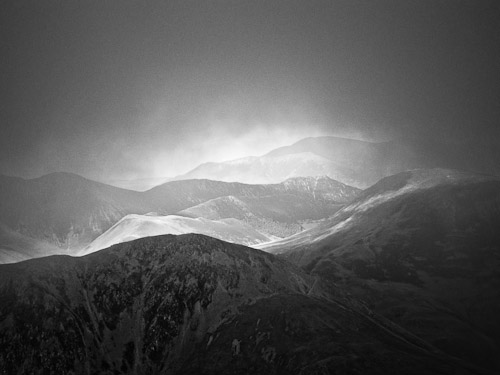
Coast to Coast VIII. Parting clouds in the Lake District.
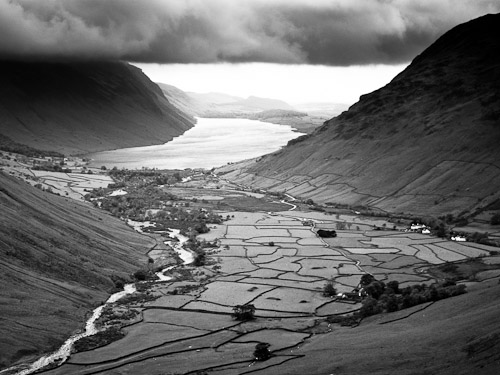
Coast to Coast IX. Wast Water in the Lake District.
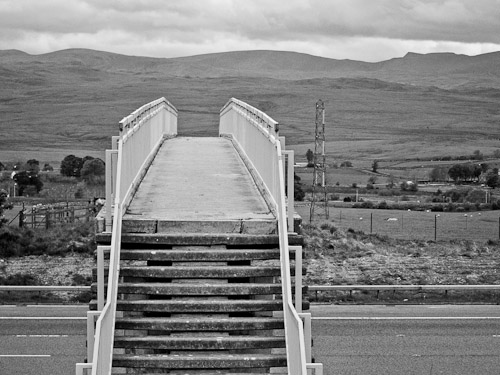
Coast to Coast XI. Footbridge over the M6.
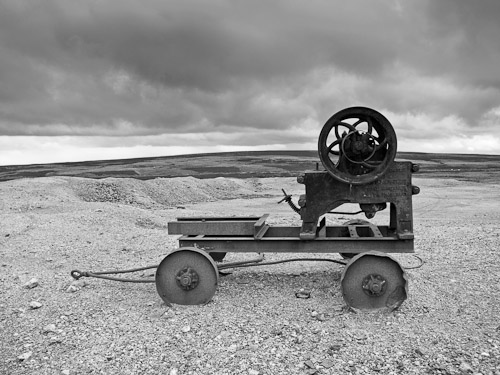
Coast to Coast XII. Stone Breaker at Bunton Hush, Yorkshire Dales.
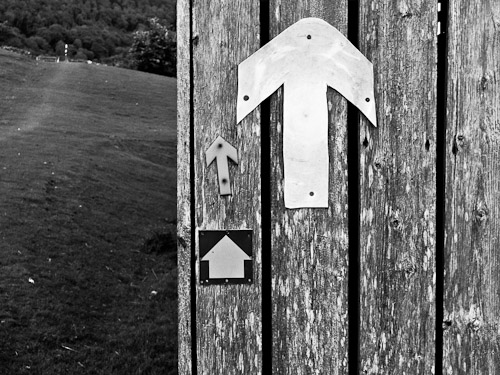
Coast to Coast XVI. Footpath arrows near Richmond.
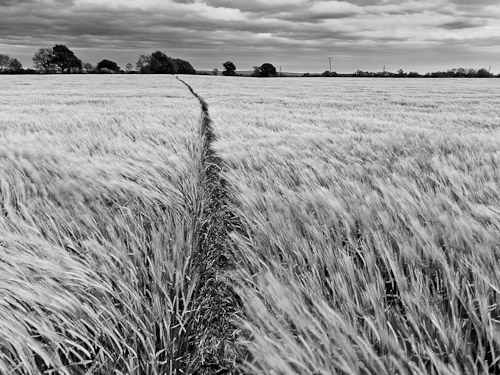
Coast to Coast XIX. Barley field in the Vale of Mowbray.
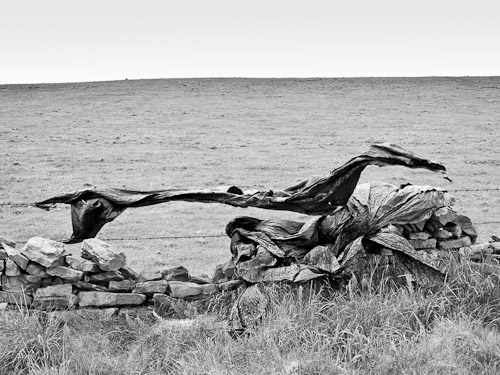
Coast to Coast XXIII. Rubbish bag near Robin Hood's Bay
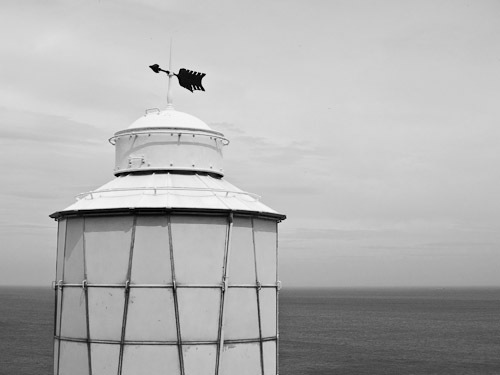
Coast to Coast XXIV. Lighthouse overlooks the North Sea.

This series of twenty four photographs were made during a 20 day 340km solo backpacking trip in May 2011 from the Irish Sea at St Bees to the North Sea at Whitby. My route was based loosely on Wainwright’s classic walk joining the Lake District National Park, the Yorkshire Dales with and the North York Moors National Park. The main additions I made to his route included walking over and camping amongst the summits in the Lakes rather than following the valleys, which added 4 days travel time to the official route, and ending the walk at Whitby, as it seemed a more satisfying end to me than Robins Hood Bay. Of the 20 days travelling I had a lot of storms as you can see in the photos. These became especially frisky during the Yorkshire Dales section – which resulted in the scarcity of photos during this section. I normally think poor weather leads to more interesting photos but here the limit was reached! I hope these photos show an intimate portrayal of the drama and allure of the English Landscape an environment that, for me at least, manages to never look familiar.

All prints 42x58cm, Giclee Print on Cotton Rag, edition of 25 +1 A/P

For queries about pricing or to purchase work please either contact me of order online at the link below.

Click Here for More from this Series >>

Photographs © Quintin Lake 2011

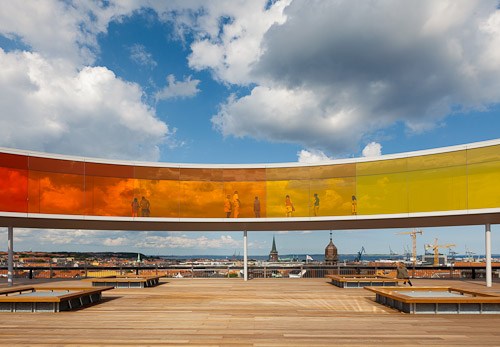
"Your Rainbow Panorama" The 360° multi-coloured glass viewing walkway on the roof of ARoS Aarhus Kuntsmuseum by Olafur Eliasson. Photo: Quintin Lake

Your Rainbow Panorama by Olafur Eliasson on the roof of ARoS Aarhus Kuntsmuseum, Denmark. Photo: Quintin Lake

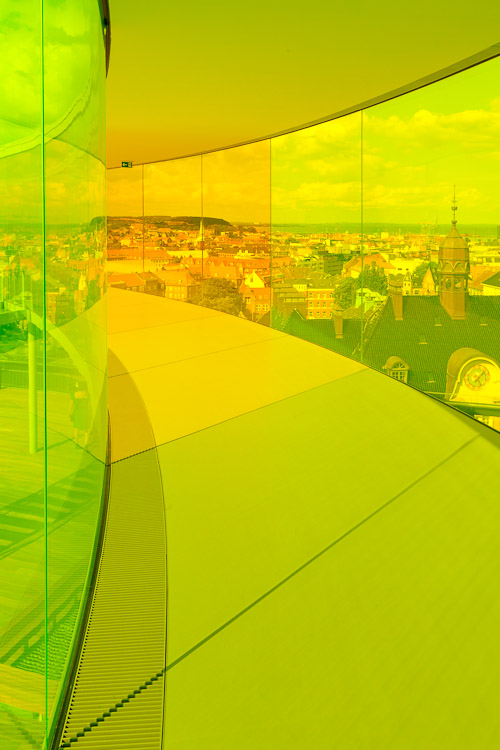
Panorama of Aarhus beyond. Photo: Quintin Lake

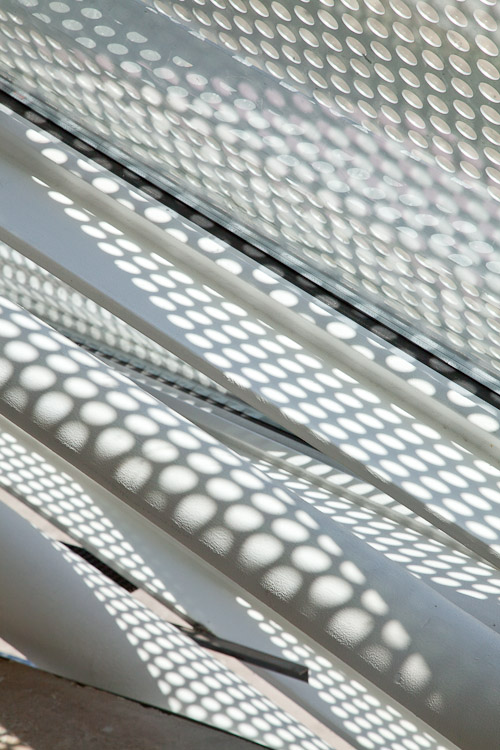
Underside of Your Rainbow Panorama walkway. Photo: Quintin Lake

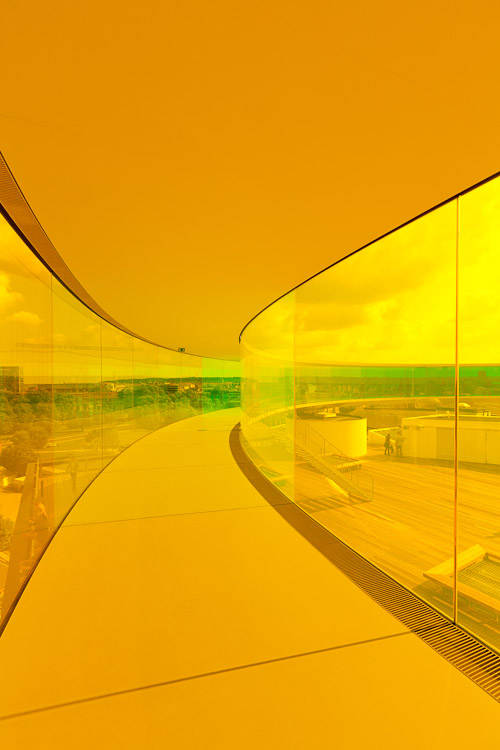
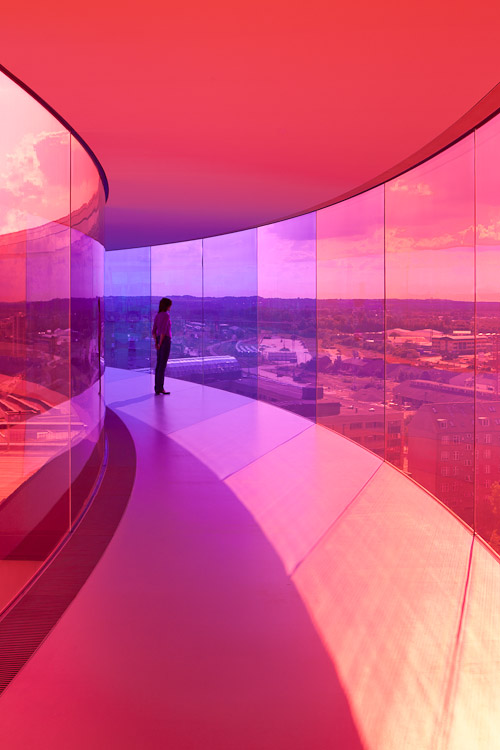
Inside of Your Rainbow Panorama coloured walkway by Olafur Eliasson. Photo: Quintin Lake

Inside of Your Rainbow Panorama coloured walkway by Olafur Eliasson. Photo: Quintin Lake

Inside of Your Rainbow Panorama coloured walkway by Olafur Eliasson. Photo: Quintin Lake

Inside of Your Rainbow Panorama coloured walkway by Olafur Eliasson. Photo: Quintin Lake

“Your Rainbow Panorama” is a Rainbow-coloured glass walkway on the roof of the Danish art museum ARoS Aarhus Kuntsmuseum, by Danish-Icelandic artist Olafur Eliasson. The permanent piece consists of a 150-metre-long and three-metre-wide self-contained circular walkway with glass that moves through all of the colours of the spectrum. The 52-metre-diameter walkway “floats” 3.5 metres above the roof and stretches like a multi-coloured halo — supported by 12 slender columns. The piece opened to the public on 28 May, 2011. In order to access the walkway, visitors can take stairs or a lift from the museum in order to appreciate a panoramic view tinted in different colours.Eliasson describes the work:

Your Rainbow panorama establishes a dialogue with the existing architecture and reinforces what was already there, that is to say the view across the city. I have created a space that can almost be said to erase the boundary between inside and outside — a place where you become a little uncertain as to whether you have stepped into a work of art or into part of the museum. This uncertainty is important to me, as it encourages people to think and sense beyond the limits within which they are accustomed to function.”

Click Here for More from this Photoshoot >>

photographs © Quintin Lake

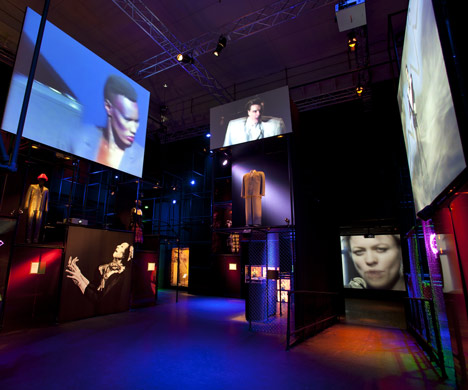
Interior of Postmodernism: Style and Subversion Exhibition at the V&A Museum. Photo: Dezeen

Gehry House, by Frank Gehry, Santa Monica. Photograph featured in V&A Postmodernism Exhibition. Photo: Quintin Lake

My photo of  Frank Gehry’s Santa Monica house is printed alongside other icons of  deconstructionist architecture by Venturi, Scott Brown and Associates. The curators were keen to include Gehry’s residence as it symbolizes an “early venture in bricolage and the postmodern”. The house built in 1978 represented the first and radical steps of Deconstructivist movement in architecture more info and photos on the building.

My personal sentiments on postmodernism which developed as an architecture student are encapsulated by Alastair Sooke who wrote in the Telegraph

Charles Jencks, the architectural theorist credited with inventing the term “postmodernism”, once pointed out that what is exciting and avant-garde one moment tends to feel like old hat the next. No doubt he is right: younger generations often berate the immediate past to assert their own identity. Even so, walking through the V&A’s new exhibition, which traces the rise and fall of postmodernism across different disciplines during the Seventies and Eighties, I was tempted to ask: has there ever been a more irritating movement in the history of art and design?”

Postmodernism: Style and Subversion 1970-1990
24 September 2011 – 15 January 2012 at V&A South Kensington info
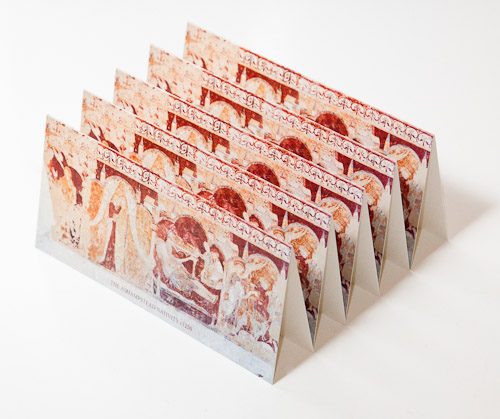
Ashampstead Nativity Greetings Card available at St Clement’s Church. Photo: Quintin Lake

St Clement’s Church, Ashampstead, Berkshire contains fine medieval wall paintings dating from c1250. These four Holy Infancy scenes with their decorative heading are in the nave. They illustrate The Annunciation, The Visitation, The Nativity and the Appearance of the Angels to the Shepherds. The paintings were defaced and covered over at the time of the Reformation. they were rediscovered in 1886 and are now being conserved.

The wall-paintings were specially photographed to reveal the maximum amount of detail in the originals. More images from the photoshoot

Also available at St Clement’s Church are a set of 6 different postcards of the Nativity and a folded card. Proceeds from the sale of the cards go to the maintenance of the church. Map showing location of the Church

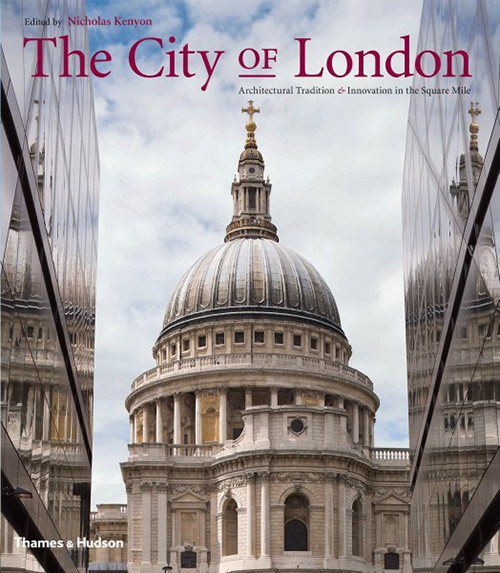
The City of London: Architectural Tradition & Innovation in the Square Mile, Thames & Hudson. Authors: Michael Hall, Kenneth Powell, Alan Powers, Aileen Reid. Editor: Sir Nicholas Kenyon.

I was delighted to be one of the View Picture Agency architectural photographers commisioned to capture the images for this book. The fascinating buildings that I photographed for the book include : Fox’s umbrella Shop, Ironmongers’ Hall, Postoffice Park, General Post Office Headquarters, Overseas Bankers Club & Snow Hill Police Station.

The City of London is a major illustrated celebration of the architecture and of the Square Mile. Beginning with a general introduction that provides an historical overview of the Citys development, the main part of the book is divided into 8 chapters, each devoted to a particular district of the City. Each chapter begins with a 1,500-word introduction (with a specially commissioned map of the district as well as additional illustrations) and then includes approximately 25 entries on individual buildings and urban spaces such as squares and public gardens. Each entry is illustrated with 24 images, including specially commissioned exterior and interior photographs and selected archival images provided by the London Metropolitan Archives and other City sources. In total, there are approximately 200 entries, including major landmarks such as St Pauls Cathedral and 20th-century developments such as the Barbican, and each of the bridges that connects the City with the South Bank. The Tower of London, although not technically in the City, is also covered, as its history has been so bound up with that of the Square Mile.

Buy the book on Amazon.co.uk Here

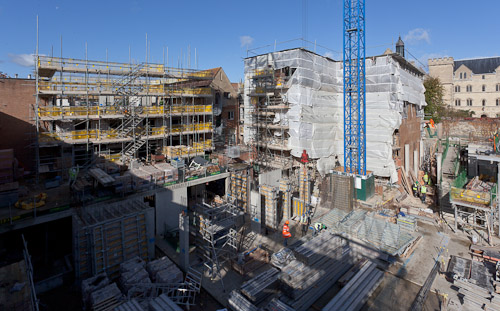
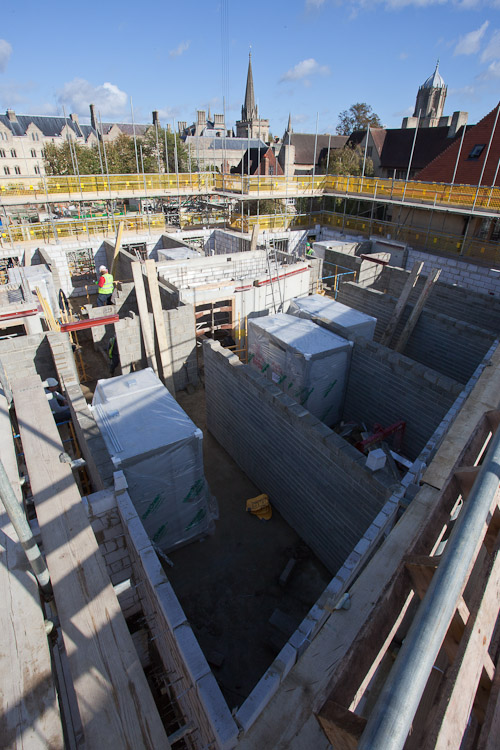
Auditorium & Art Gallery take shape along Brewer Street

St Ebbes Accommodation at left and Roger Bannister building behind white sheeting.

Auditorium / Art Gallery seen from New St Ebbes street accommodation

Auditorium / Art Gallery seen from New St Ebbes street accommodation

Measuring concrete form work

Measuring concrete form-work

New accommodation block at Rose Place

Preparing concrete form-work

Stairs from the Brewer Street bridge (not yet on site) that will link the two sites together

Stairs from the Brewer Street bridge (not yet on site) that will link the two sites together

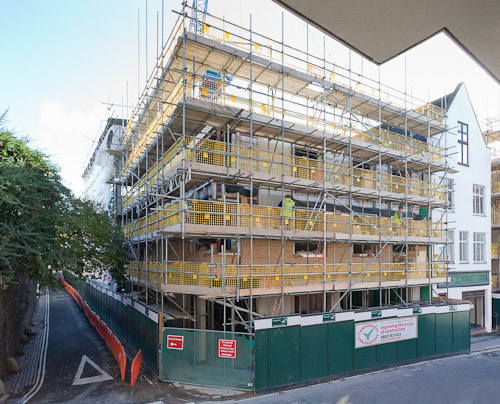
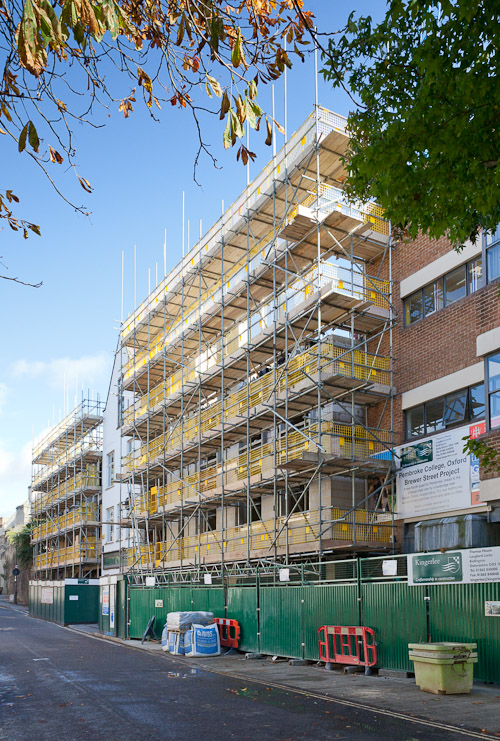
New Brewer Street Accommodation block, street facade

New St Ebbes Street Accommodation block, street facade

These photographs are part of an ongoing monthly assignment to document the building work at Pembroke College, Oxford due for completion summer 2012.  View all previous posts of the Pembroke College Bridging Centuries Project >>

VIEW MORE / BUY PRINTS / LICENSE IMAGES from Pembroke College Redevelopment here >>

Photography  © Quintin Lake, 2011

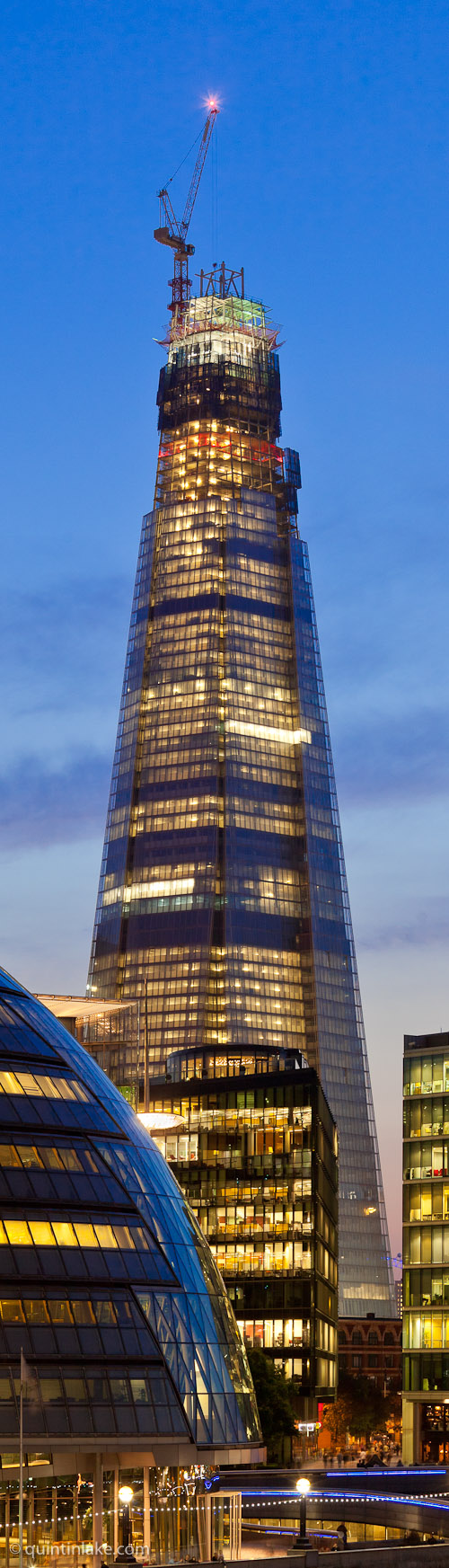
The Shard London during construction (September 2010) behind Norman Foster's City Hall, seen from London Bridge at dusk. Architect: Renzo Piano, Engineer: WSP, Contractor: Mace. Photo: Quintin Lake

The Shard London is presently at a particularly satisfying state of incompletion as the tip of the construction crane marks the apex of the soon to be completed tower. Designed by architect Renzo Piano Building Workshop the 310m tower is due for completion in 2012 when the skyscraper is set to become Europe’s tallest tower.

Know an interesting viewpoint of The Shard? let me know in the comments below…


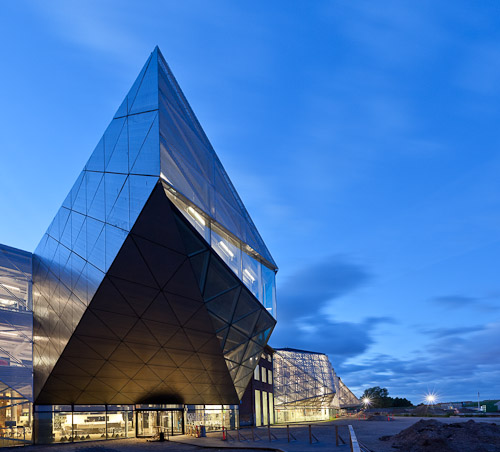
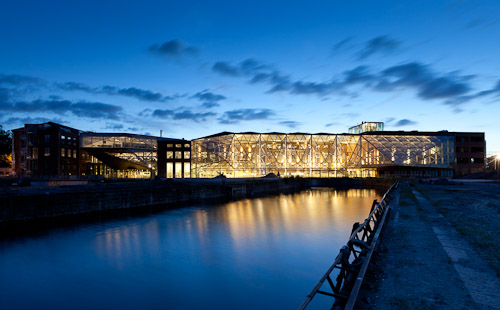
Kulturvaerftet, Culture Yard, Helsigor, Denmark. Architect: Aart

These photos were commissioned by Søren Jensen, the engineering firm of the project.

VIEW MORE / BUY PRINTS / LICENSE IMAGES  here >>

Photography  © Quintin Lake, 2011